
Mingma, our hostess, is a Nepali working mom. Being paid for her work with Radio Nepal, she also spends four hours in her home kitchen each morning getting all the food cooked for breakfast and lunch and prepped for dinner. There’s not prepared foods in Nepal like we have in the US; everything is made from scratch. And most shopping is done from multiple locations. The men in the house help a ton, but Mingma is still the leader of the band. She is a working mom who spends the equivalent of a part-time job in her family kitchen. I got to tag along with Mingma to her side-gig at Radio Nepal one afternoon to see what her paying job entailed.
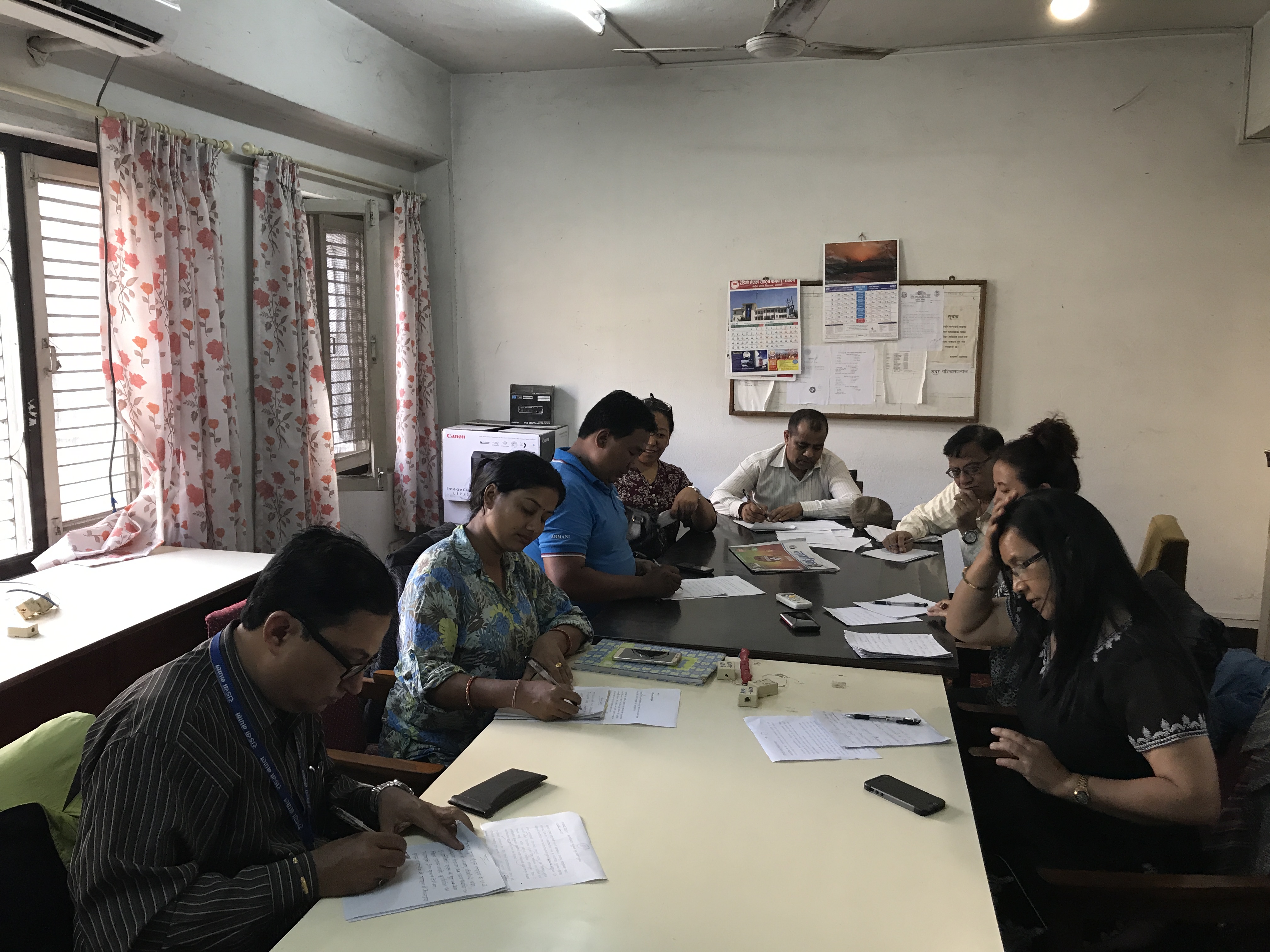
The table of translators
Her job is to translate the news into the Sherpa language and then broadcast it live. She job-shares with another Sherpa speaker and her hours are 11:30am – 6pm. My tagalong day started with a scooter ride through downtown and into the government compound. (The scooter ride itself was one of my Nepal highlights.) The compound encompasses the equivalent of all the major elements of Washington, D.C. and concentrates into about 5 acres of heavily-secured offices. She showed her government I.D. badge and I brought along my passport and guest pass to the checkpoint. Once inside, the Kathmandu hustle and bustle is replaced by quiet order, parking spaces and manicured office parks.

Government Office Park
Radio Nepal has three buildings, but Mingma and I went into just two of them. In the first one, she sat at a table and took the salient news stories that were on half or full sheets of paper and translated the stories, by hand, from Nepali into Sherpa. Her co-workers who shared the table were fluent in other minority languages and did the same. They have some leeway into which stories are relevant to their respective geographical areas. I was struck by the fact that half or more of the translators were female. Most were dressed in punjabis of fantastically bright colors and there was lots of comeraderie and discussion amongst them.
Nepal has a literacy rate of 66%, making the radio a crucial avenue for Nepali people to get their news. I never saw anyone reading a newspaper the whole two months I was there – probably most people read their news online these days. So access to information is limited to those who are literate and own a computer. Add to the mixture that there are twenty-one semi-official languages in Nepal. No other country I can think of needs radio news like Nepal.
When Mingma’s allotted spot for Sherpa Radio was nearing air time, we walked into another building which housed the technical broadcast equipment and various sound studios. This building was donated by the Japanese government and was specifically designed to withstand an earthquake up to 9.0. And indeed the broadcast building was unharmed in the April, 2015 earthquake and Radio Nepal broadcast vital uninterrupted news and information during the earthquake and the months of subsequent aftershocks.

Mingma: Getting it done!
In the sound studio, we met the technicians who were also all female. Again, there was no drab work clothes but bright fuchsia and turquoise outfits. Mingma let me come into the actual sound studio and I stood stock-still while she delivered her news in Sherpa (willing myself not to sneeze or cough). I imagined all those Sherpa people tuning in their radios up in SoluKhumbu to hear the day’s news.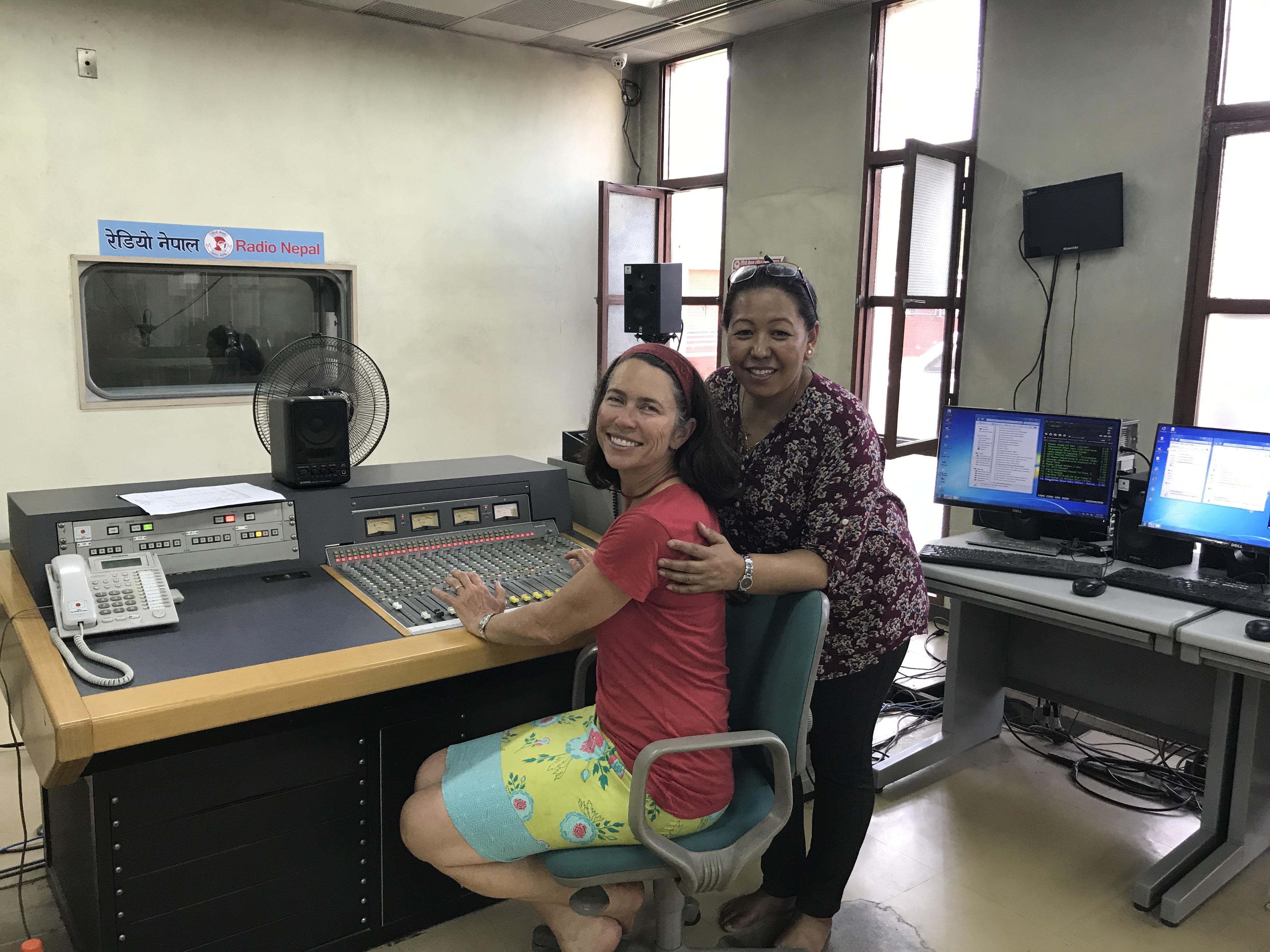
Like modern women all over the world, there is that personal balance between home and career; so many women who do the essential work with, and without, pay to keep our countries running. The 3/4-time positions with options for job sharing are coveted the world over and it was wonderful to be in these Nepali women’s presence. One of the things I miss most of all in this year away is my girlfriends; I coveted my time with Mingma and loved learning more about her.