In March and April of 2018, we spent six weeks in Nosara, or Playa Guiones as part of our one year of world-schooling our three kids.  We arrived in Guiones after more than thirty hours in transit from Bangkok. At seven in the morning in Costa Rica and after skipping two nights of sleep in a bed, Thailand was just getting ready for bed.  Our biological clocks were officially scrambled.  The two-and-a-half hour drive from the Liberia airport to Playa Guiones (Nosara) was a haze – a sleepy montage of trying to a steal few moments of sleep with my head on top of an ice chest and lifting my head to see fields of white cows, dry hills that looked like my California childhood and narrow one-way bridges.  Once we arrived at our Airbnb, we wanted to let the kids do a quick catnap before waking them for a dinner to help get on local time.  Wishful thinking. But after trying to rouse them for about an hour, we gave up, found some snacks at the oxymoronic “mini super” and surrendered to our collective exhaustion.

Playa Guiones, Costa Rica, Nosara

Long, sandy beaches with a regular surf break make Nosara a perennial favorite

Will and the kids woke at 4am to eat some peanut butter and jelly sandwiches and wait to watch the sun rise.  I, surprisingly, stayed asleep.  They found the beach and walked all the way to the end where they came upon a few other gringos in a circle.  There was a large turtle burying her eggs along the edge of the beach.  Dazed and disoriented, they didn’t realize that this was a sight most never see in Nosara.  This momma was seasonally very late and she was on a popular human beach, but not a popular turtle nesting beach.  When we told a few disbelieving people in the days to come, they all wondered if indeed we actually witnessed a nesting turtle.  Perhaps it was a collective dream?

turtle, guiones, costa rica

Momma burying her eggs in March, Playa Guiones

It took us a few days to really feel like humans, knowing night from day and up from down.  We had booked a house in Guiones (Nosara) nine months before and were paid in full but in my first moments, I felt that we had made a huge mistake.  Sleep it off, everyone recommended this place; it will get better.  But it didn’t.  Guiones, is a gringo suburb of Boulder, Toronto, Vancouver and Manhanttan all rolled into one. We felt like we were back home.  Everyone was white except the workers, everyone spoke English to us, quinoa superfood salad was on the menu and shops preferred US dollars to the local currency, colones.

Guiones, Nosara, Costa Rica

Homeschooling poolside, specifically drilling multiplication flashcards

Juan Surfo is one of the first local characters who gave us a glimpse of Tico- gringo relations.  As the only locally-owned surf shop, we took a lesson and rented some boards by the week – a real chance to meet a local, we thought.  Lorna and I walked our long boards about six city blocks to the beach in back of a water truck that looked to be spraying dirty water all over the road. And it smelled a lot like Christmas.  My flip flops were getting sticky and great black blobs were being flipped up on the backs of my legs.  Gosh that smells like molasses, I finally said to Juan.

“It is.  Most gringos break their flip flops on the fresh coat.  You guys actually did well.”


Most Ticos are much kinder but there is the sense of us vs. them.  And with most rentals costing way more than locals could afford, there was not much opportunity to meet a local unless they were somehow working in the tourism industry.  And so being the brunt of the joke in the molasses-flipflop fun seems a fair price to pay.

Nosara, Playa Guiones, Costa Rica, jungle

The trail to town, not a bad way to get around.

In our first week, Will, Lorna and I decided to head to downtown Nosara to check it out and visit the grocery store while the little ones were at Nosara Kids Camp.  It was only a few kilometers so we decided to walk.  It was hot and the dust was intense.  Trucks and bikini-clad ATV riders passed us with goggles and bandanas tied around their necks.  Where are we?!?  The jungle to the side of the dirt road was a muted-green with the dust free layer far to the interior.  After walking just ten minutes three cars pulled over to see if we needed help. Apparently, people don’t walk to town around here.  After lecturing Lorna that she should never do as we are doing by getting into a car in any country with a stranger, we accepted a ride with some of the kindest Ticos we met in our entire stay.  The driver was a tamale maker and the front passenger laid tile – if my Spanish was accurate.


“Just drop us at the plaza,” I said assuming that this was like every other Central American town.

“Where?” asked the tamale maker.

“The center of town.”

“But what do you need to do here?”

“Look around and then buy groceries.”

“We will drop you at the supermarket then.”


There really is no town center except the soccer field that never seemed to have soccer players.  After shopping, the grocery store delivered us back to Playa Guiones.  I sat up front and Lorna and Will sat in the back on a upside down milk crates that bumped and slid from the ride on the dirt road.  The supermarket has free delivery, even it’s mostly delivering the gringos back to their playa, but the supermarket trips were some of our most authentically Tico experiences during our stay.  And when you’re a gringo staying here, you are staying in Guiones, not Nosara, no matter what your AirBnb search tells you.


The best part of living in Guiones was to be near the wildlife.  Our AirBnb had a great garden with a resident iguana in the mohagony tree.  He sidled down the tree each morning and seemed to expect treats poolside.  He particularly liked watermelon and did a series of quick pushups in thanks.  And then the crabs came all at once.  Some said it was because we got the first rains and others said it was simply mating season, but our pool was an obvious hub for the local crabs.  Each day we would try to rescue between four and eight of them out of the pool just to see them run back in.  So we stopped swimming in the pool and started to use our pool for crab watching instead.

Crabs, Nosara, Playa Guiones, Costa Rica

Christmas crabs rule the pool. They’re the most attractive crabs I’ve ever seen.

After we’d been in Guiones for few weeks, we began to relax into the groove of being a gringo.  I mean what were we so bummed about?  Yoga, surfing, easy English, quinoa burgers, and great camps for the kids.  Really, it was prep time to return to our life in Boulder, time to wrap our heads around homecoming.  Unplanned, we ran into friends from Boulder and also had great friends plan to come and visit us for their spring breaks.  We were no longer just our family unit experiencing the world. Our circle widened to include a social life beyond Paradise.  After being on the road for nine months, we have just three more months until we return to our previous yoga/superfood/social American life. This is a glimpse of what it will be like.  And the familiarity of life Guiones, was the culture shock.  We were expecting cultural immersion, but what we got was expat lifestyle.


In our last week, I went out for a run without my phone at about 6am. (I’m convinced that the best things happen in life when there’s no phone for photos. Maybe the universe respects the impulse for the undocumented mystery.) We had been in Guiones for five weeks and for some reason I looked down to see, what looked like, a tiny turtle scurrying to the surf. No way. Then I looked up and perpendicular to the water marched an entire highway of them. Bikes and other runners were zooming by looking out the horizon or out to the sea.  My momma bear impulse kicked in hard and I played crossing guard, slowing people down and asking them to pick their way carefully. Another runner from New York joined me and we spent the next hour doing duty. When we thought they were done, we walked up to their source and watched a whole new bloom bubble up from the sand and make their way toward home. Was this the nest that Will and the kids had watched on our first morning? As we traded details, we think it was. Perfect bookends to our time in Nosara.

Playa Guiones, Costa Rica, Nosara

These little coati, or pizotes, skittered around the jungle on the way to town, bigger than a raccoon.

We often talk of the difference of being a tourist versus a traveler.  The unscripted life of a traveler relies heavily on the luxury of time, the fluency of language and the insider connections. A tourist needs to go no further than TripAdvisor and the information kiosk.  Their path is well worn and marked by Birkenstock and New Balance imprints. What we missed is being a traveler. Would we come back to Guiones? Yes, but for a spring break or quick trip when you’re looking for all the comforts of home with great surf and iguanas in the garden, not for rich cultural immersion.  Sometimes, it’s perfect to be a tourist.

When we first envisioned this year-long roadschooling, I didn’t include Thailand in the itinerary.  There was too much there for me: too many memories, too many friends, too much at stake to bring my family.  How could we do it justice?  It’s THAILAND!  Lorna persisted and said that she really wanted to see it.  Ok, we decided to go for a month.


At 21 years of age, about to graduate from college, I remember taking my large envelope from the US Peace Corps up to my bedroom to open it in private.  A Spanish minor, I had applied to both top-up my conversational Spanish and to, idealistically, make the world a better place.  I was sure that I would go to Latin America.  But when I opened up the envelope, I was shocked to read that my invitation was to Thailand!  …partly, because I honestly didn’t know exactly where Thailand was. I remember sitting cross-legged on the floor of the local bookstore to wrap my head around this curve ball and thought the photos of Thailand showed the most foreign and exotic place on earth. Thailand felt like destiny and I accepted.

Floating market, Bangkok, Thailand, RPCV, family travel, world school

The floating market near Bangkok.

To make a long story short, I spent almost half of a decade living, working or specializing in Asia.  After three years with the Peace Corps, I worked as a guide in Thailand and Laos and later became the Southeast Asia Program Director for Where There Be Dragons.  Then 9/11 happened; student travel dried up; I met Will and started a family.  I hadn’t been back to Southeast Asia in sixteen years.

Peace Corps, Thailand, Bangkok, Terminal 21

Spent the first few days in Bangkok with Pojaman and Patra, my old Peace Corps language teachers.

Arriving back in Bangkok on January 31, 2018 reminded me of the first time I set foot in Asia.  It’s a sensory place: the buzz of the tuk-tuks, the heat, the golden temples, the heat, the flashing lights, and the heat.  The humidity is like a coat you can’t take off.  In one block, you can smell cilantro, garbage, chili peppers, plumeria, and pollution. I watched my kids come to terms with the air, the smells and the chaos that is Bangkok.  I had arranged a van pick-up for all our stuff and surprisingly I chatted with the driver in Thai.  Boulder, Colorado gives very little opportunity to practice Thai.  The few Thai restaurants employ college students with little to no knowledge of Thailand beyond pad thai.  I have one Thai friend in Boulder, but after a few conversational silliness, we have always defaulted to English.

tuk-tuk, Thailand, Bangkok

Tuk-tuks: one of their favorite parts of Thailand.

So the Thai just flowed out my mouth with the van driver.  Instead of trying to translate as I do with Spanish, I just got out of my own way and words just came; words I didn’t even know I knew.  And I could still read the basics too.  Who am I, that this side of myself was hidden even from me?  But my kids and husband weren’t shocked. To them it was just totally normal that I could blabber away in Thai.


After just five nights in Bangkok, we flew down to Krabi where I lived and taught for two years.  Some former students came to pick us up at the airport and brought us to another student’s restaurant. Then we spent two nights up near my site in Khao Phanom.  They threw together an impromptu gathering and others phoned in.  When you’re a teacher in Thailand, you forever have your “lug sit” which roughly translates to “children” but reflects the idea that you are always connected to your students in a familial way.  We were received by all my lug sit as family returning.  From there we spent a day in Laem Sak with a good Thai friend who has worked for various NGO’s.  He drove us all back to the Muslim Sea Gypsy village where I came to visit and help write grants.  The folks in the village hosted us for lunch and a chat.  Their dialect was admittedly tough but most of them can speak Central Thai also.  And there was plenty of time with my coworkers too.  There was laughter and lots of eating and even some tears.  But mostly, years washed away and there was affection; simply love and affection that spans hemispheres, language and decades.

Khao Phanom, Krabi, Thailand, RPCV

Some of my old students and an impromptu dinner in Khao Phanom, Thailand.

I haven’t written much at all because this whole month has been so profound for me.  I can’t quite make this time into a listicle or a punchy blog post.  It’s my life looking back at me with my family as a witness.  I kinda “broke up” with Thailand when I moved back to the States to grow up, but first loves will always welcome you back and they’re especially happy to meet the fam.  Thailand still sees me as the twenty-something idealist who said yes to the unknown adventure and learned how to both dream and dance in Thai.  My Thai friends don’t know me as a mom.

Nakorn, Thailand, RPCV

In Nakorn Sri Thammarat with Ruay and her family.

Some days in Boulder, I feel down at myself for not putting myself – my “career self” – out there.  I can’t quite make the leap to do more than just be a mom.  Most days I seem to spend doing for others what they should better learn to do for themselves.  Perhaps, it’s more stagnation than fear.  But those days in Krabi, I heard over and over how my time there, and my actions, helped lives along: from doors that were opened by their English, to grants that were written.  Boom. Done.  My life has touched others – isn’t that what it’s all about?

Nakorn Sri Thammarat, Thailand

More photos of Ruay and her family visiting the temple in Nakorn Sri Thammarat.

This year has been more than simply “roadschooling”; it has connected some dots that were left floating in our Boulder lives.  Lucy returned to her orphanage.  Will returned to Nepal.  We all stayed with Pasang (our adopted Nepali 24 year-old) and her family in Kathmandu. And now my return to SEAsia and the self-reflection it begs.


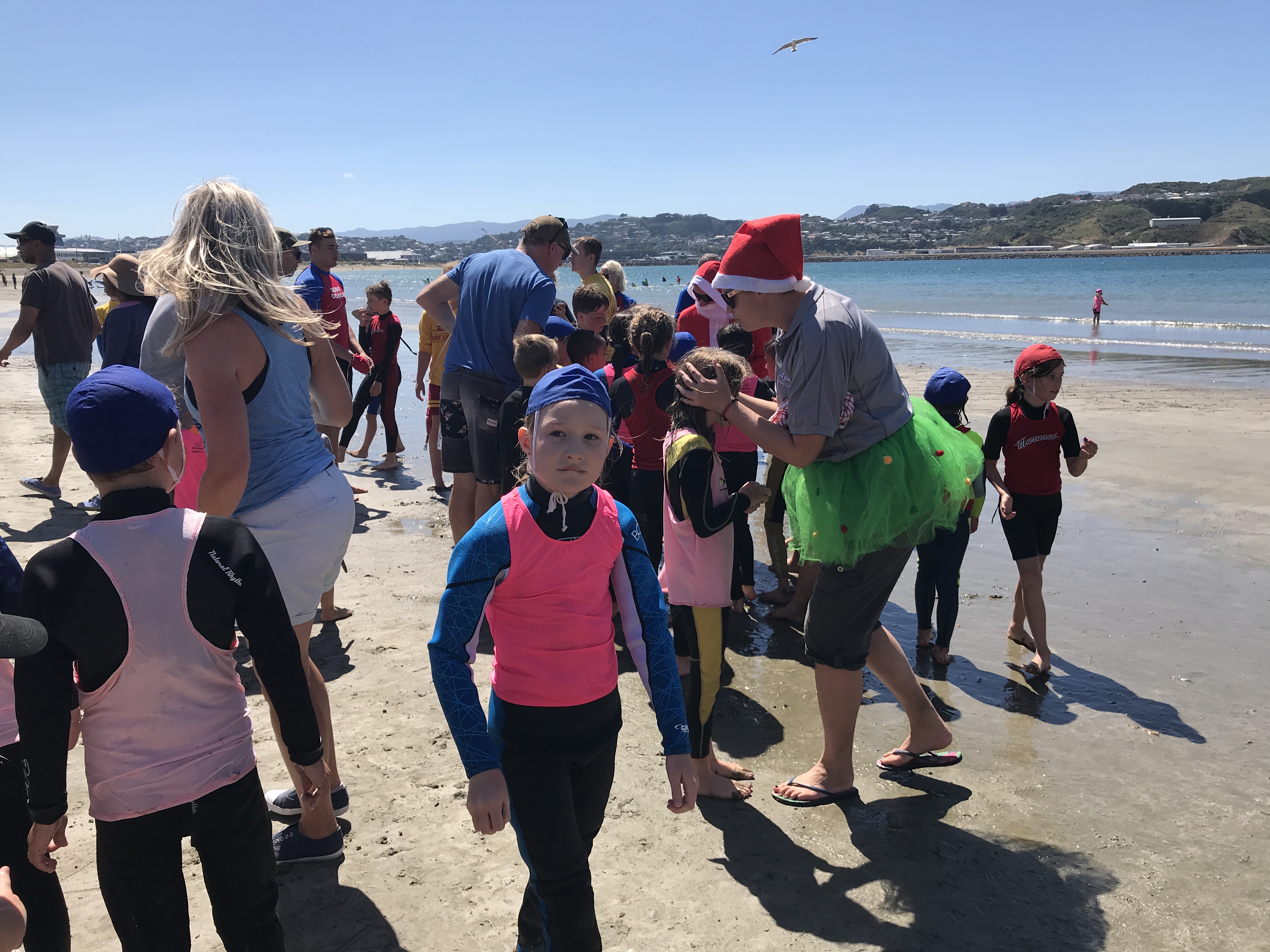
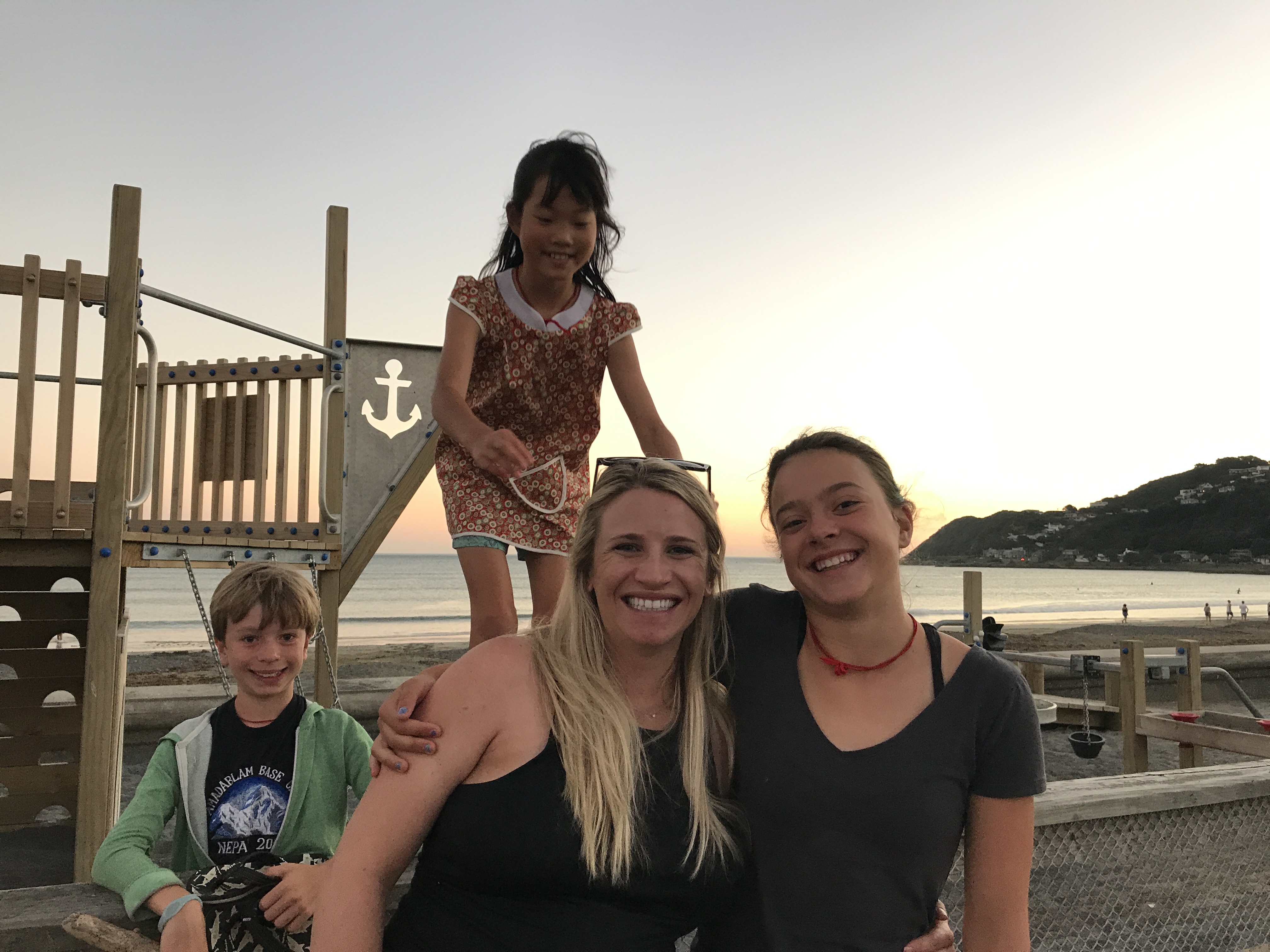
Beginning on the third day in Wellington, New Zealand, the kids participated in Surf Life Saving at Maranui Surf Life Saving Club.  The families and the weekly rhythms of the club quickly became the touchstone for our two-month stay in Wellington.  How did we find Maranui?  Heide Alexander, a fellow parent at Shining Mountain Waldorf School back in Boulder, lived in Wellington with her kids for two years and recommended the Kiwi traditional sport of Surf Life Saving for the kids.  A month before we came, I emailed some life-saving clubs down in Lyall Bay, near where we would be staying. Maranui quickly emailed me back and said that they would happily welcome the kids, even if it was just for two months.

Maranui, Surf Life Saving, Lyall Bay, Wellington, family travel

Surf Life Saving Club with Maranui on Lyall Bay. You’ve got to love the caps on the young kids, or “Nippers”.

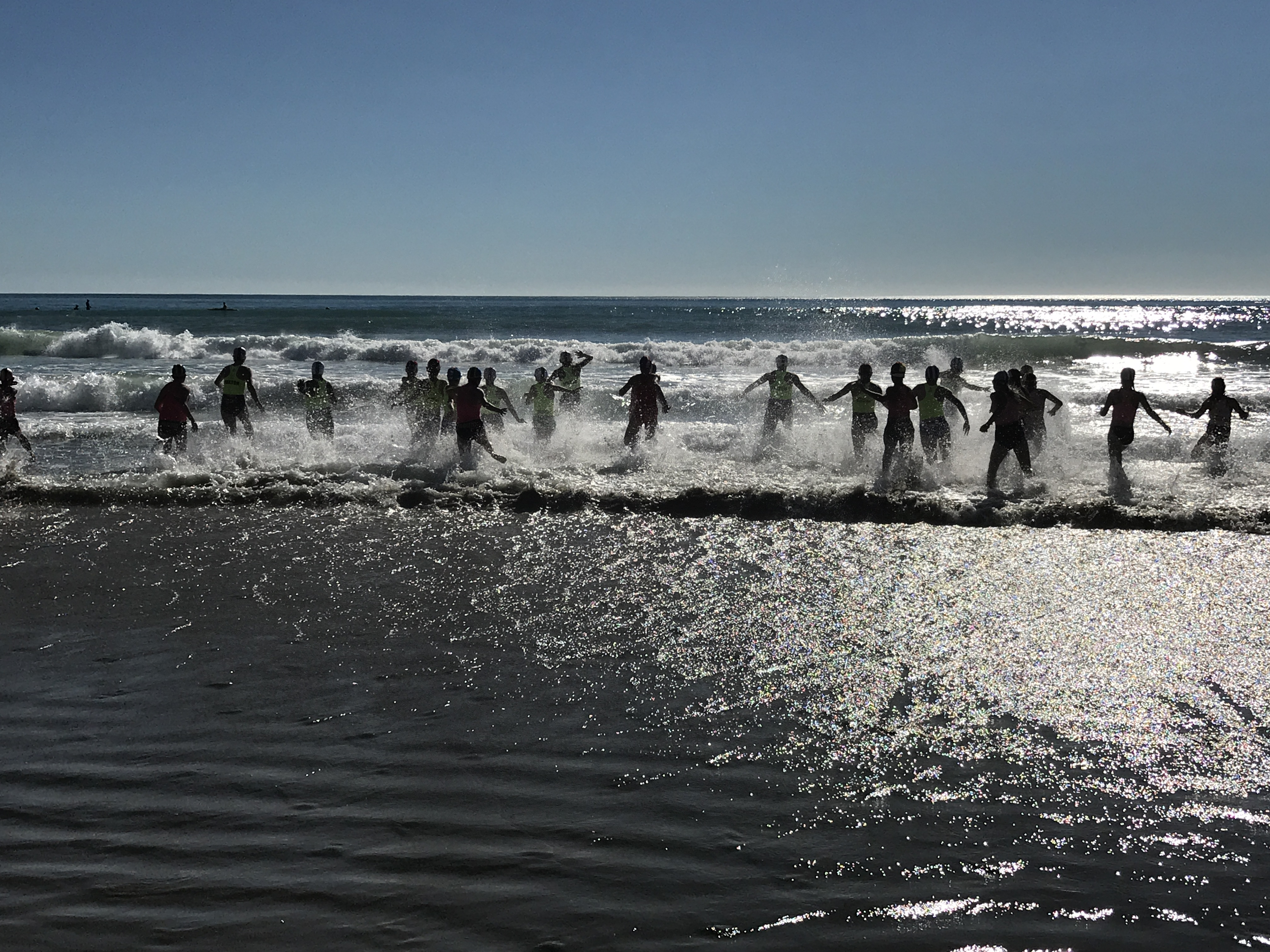
Surf Life Rescue is a combination sport: open-ocean swimming to buoys and back, board surfing, partner rescue and tandem return, and also beach running and relays.  Some athletes excel at the land events, others the water.  It’s a superb athlete who can do them all.  The team events are massive relays with swimmers, boarders and runners that takes up 75 square yards of beach and ocean.

Maranui, Surf Life Saving, New Zealand,

Lorna and her teammates waiting for their events.

Lorna, especially, loves to swim and was really eager to meet kids her own age. She joined the competitive group and trained four days a week.  Kai just came on Sundays and Lucy found the ocean a bit too cold.  Some days were glorious, sunny and postcard-worthy; while on others, the kids swam through clusters of jellyfish or maneuvered long boards in a fierce wind.  At the end of our stay we traveled up five hours to Hawke’s Bay for a three-day training camp and regional competition for Lorna.  The surf was much bigger than in Wellington and tested her confidence.  Lorna has begun looking into university in Wellington so she can continue her new favorite sport.

Flags, surf life rescue, Maranui, Wellington

This event called “flags” is like beach sprint musical chairs, and was Kai’s favorite.

The practices include beach running, swimming through the surf out and around buoys (pronounced “boys” in NZ) and paddle/surfing on long fiberglass boards.  You’re not supposed to stand on the boards, but ideally to kneel on them or lie down while catching a wave.  Lorna, from Colorado, was very new to swimming in surf, let alone maneuvering an eight-foot board through it. But she was motivated to learn.  The little ones surf with foam boogie boards, instead.

Maranui, Surf Life Saving, Nippers, chocolate fish, New Zealand

Santa and the elves dropped in by inflatable boat to pass out Chocolate Fishes to the Nippers.

Our Maranui has been training lifeguards since 1911 and the programs for the teens and younger set (Nippers) is alive and well.  New Zealand needs well-trained lifeguards to patrol their coastline and help to reduce drownings each year.  With 9300 miles of coastline, drowning is a real issue.  Surf Life Saving is also a fun way to foster a love for their ocean and a comfort in all her moods.  The word “Maranui” is Maori for the area of Lyall Bay in New Zealand but has now become synonymous with the café upstairs from the club.  The unreal location of the club allows them to lease out the top to the café, the bottom to conferences, maintaining the club itself swimmingly viable.

Waimarama, Maranui, surf life rescue

Lorna’s competitive ocean swim at Waimarama. She’s in there!

For me, I enjoyed that universal parenting stance: standing on the sidelines, elbow to elbow with other parents while cheering for one another’s kids and chatting.  I realized how much I missed my friends back home, missed sharing the highs and lows, empathizing and laughing about being a parent.  The Maranui family gave me and my kids those daily rhythms we missed most.  On our last night in Wellington, there was a small, impromptu bar-b-que farewell.  We were so touched – the beauty of travel comes through these people we meet, witnessing real life not just ticking off landmarks. I hope we can welcome some Maranui friends back in Colorado soon.

Each country we visit, schools me ways that I find humbling.  I just don’t know how much I don’t know.  It’s a good exercise to appreciate my own American-ness.  After three months traveling and homeschooling in New Zealand with my family of five, these are my life takeaways.

chocolate fish, New Zealand, family travel

The beloved chocolate fish.

Chocolate Fish as metaphor.  Chocolate Fish are these super-sweet-pink-marshmallow-chocolate-covered fish.  They seem to be a Kiwi icon and they’re pretty gross by most standards.  Will won’t try one.  But to me they’re a metaphor for the laidback Kiwi living.  They’re the retro treat that can come with a cappuccino; Santa brought them to the kids’ surf life-saving club when he pulled up on the inflatable motorboat; and eating them as fast as possible was a step in the team relay.  But here’s the thing: no one asked if my kids could eat artificial colors, or gluten or sugar as they would back home.  They still give candy to kids here without permission slips.  It’s refreshing not to overthink everything.


Car Loan Offers came rolling in after staying in Wellington just ten days.  We were taking the bus, some ubers and a few car rentals.  After using public transport exclusively in China, we were trying not to revert to our default American suburban habits. But the steep hills and swim practices were wearing our resolve.  We had three offers for long term car loans from people we had just met.  They were leaving for the holidays and we were car-less – it’s that simple.  This wouldn’t happen in the States, I thought.  “It’s just a car,” was the Kiwi reasoning.  And it’s true; it is just a car.

Maori, Maori language, family travel, Wellington

The entry way to our local primary school. We visited their playground often.

Maori comes first in any government building.  The relationship between the indigenous people and those of European-descent appears to be one of more equality than anywhere else I’ve traveled.  The students all learn the Maori language, dances and culture in school.  Any government building has signage in Maori first and English second.  I’ve never heard anyone organically speaking Maori with one another, but at least the gesture and intention is legit.  By the time the bulk European settlers arrived in New Zealand in the late 1800’s, the US had done a pretty good job of destroying the lives of our Native Americans.  Perhaps the New Zealand timing was simply better to catch a global shift in perspective or maybe they’re just better humans. But whatever they reason, the Maori indigenous culture is truly held in reverence.


Female power is real.  New Zealand was the first country to give women the right to vote in 1893. (Colorado was the first state to grant the vote in the same year.)  Today they have a female prime minister, supreme court justice and governer-general.  Not only is the prime minister, Jacinda Ardern, a young, feminine leader, but she is pregnant.  The public debate is not: are we ready for a female leader.  The questions are: is there a changing table in the Parliament Building, can a stay-at-home dad get the support he needs and are Baby Bjorns allowed through the security?  Good on ‘ya, Jacinda!

chocolate fish cafe, family travel, Wellington,

The bikes and sun hats are all provided by the cafe. No helmets, no waivers.

A “No Waiver” Mentality.  We never signed waivers here; not for glacier heli-hiking, nor kids’ summer camps nor the neighborhood Crossfit.  Frivolous law suits are simply “forbidden”.  Coming from a highly litigenous society to New Zealand, there’s a palpable mentality that everyone is simply doing their best.  When I dropped my nine and ten year-old’s off at a day camp, they simply wrote my cell number down in pencil next to their names.  That’s it.  No forms with the insurance numbers and sunscreen waivers.  Does this lack of paranoia contribute to the overall happy, community-mindedness?  I think so.


World Class Parks.  Every town seems to have a park.  Without worry of lawsuits, small towns reflect the local color and one even had a slide coming out of an old WWII era plane.  It seems that US parks are designed by lawyers, but Kiwis have a lot more fun in the planning process.  The city parks are truly state of the art and must be a purposefully large sector of the city budgets.  There are water elements and jumping pillows, skate parks and massive zip lines (called flying foxes).  The park in downtown Christchurch boasted that it was the largest park in the Southern Hemisphere.  I’d be proud too.

Christchurch, New Zealand, family travel

The largest park in the Southern Hemisphere, Christchurch.

Travel is an important part of an education.  Most Kiwis we met, had lived and worked overseas.  Many met their life partners while traveling.  They reason that New Zealand is so isolated down here that, aside from Australia, the rest of the world is pretty far away and a twenty year-old can easily get island fever.  Also, the commonwealth as global network, makes entry requirements and work visas easy to get.  New Zealanders never questioned our decision to take the kids to the road, but instead, most actively encouraged this crazy year.  That’s not a universal reaction, but definitely a solid stance in New Zealand.

After being pretty much on the go for four months, we arrived at our Airbnb in Wellington, New Zealand on December 4th where we have stayed put for two whole months.  It was, with a breath of excitement, that we actually unpacked all of our bags and put things in drawers.


The major goal for the first week was to find outside groups and activities so the kids could interact with other kids.  We wanted to set the groundwork to find a short-term life here instead of seeing the sights and looking for the touristy things to do in Wellington.  We wanted to go from “tourist” to “traveler”.  We got library cards, bus passes, wetsuits and a swim membership at the local rec center. We signed the kids up for the neighborhood “Surf Life Saving” club –which we’ve learned is THE thing to do in Lyall Bay from some Kiwi-American friends from Boulder.

Maranui, Surf Life Saving, Lyall Bay, Wellington, family travel

Surf Life Saving Club with Maranui on Lyall Bay. You’ve got to love the caps on the young “Nippers”.


Will toured the grocery and vinyl stores (favorite was Death Ray Records in Newtown) to get the lay of the land.  He thankfully did all the food shopping and cooking, so I could focus on schooling and organizing the kids’ activities.  We found gyms to work out and the perfect running route down along the coast.  I never found my yoga-home, but did my own thing in the morning.


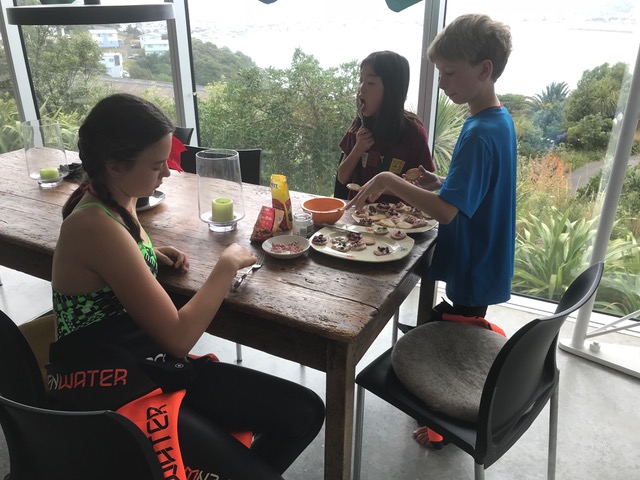
This time in Wellington was also intended to be a time for traditional school sit-down-and-learn-work.  We dedicated three solid hours, five days per week, to school – some were autonomous tasks and others are direct instruction and help from me.  (Lorna is teaching Kai violin.) They worked on individual writing portfolios and we had a fun unit on poetry.  Lorna has written reviews for her books on Amazon and even a coherent, “polite yet deeply concerned” email to Trump.  We drilled math facts each morning for the Littles and then did half an hour of math per day from some grade-level books purchased back home. The kids have been receptive and enthusiastic for “school”.  Lucy made place cards for everyone and enjoys organizing the books.  And we decided that a 100% on spelling tests will earn them (and me) a Friday ice cream.  I can’t stump them: they all get words like “photosynthesis” and “rhythm” correct.  Ice cream is an excellent motivator.

Kilbirnie, Wellington, family travel, world school

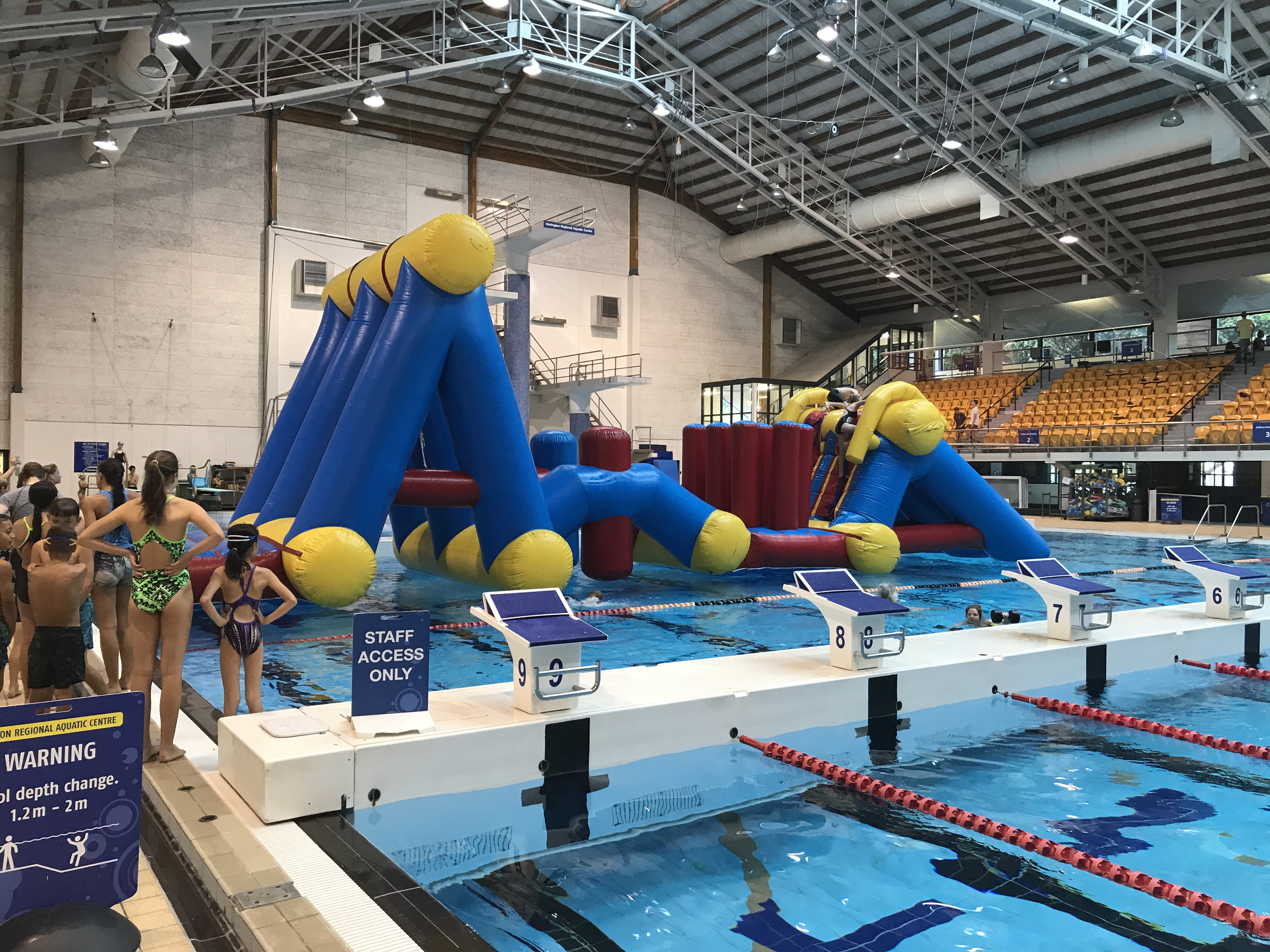
The local rec center 50 meter pool, and Olympic high dive platforms. Their “inflatable” play time does NOT disappoint.


There’s been plenty to keep us busy here in Wellington.  We have typically spent the morning homeschooling, and then played for the afternoon.  When the weather is good, we enjoy the ocean with the boogie boards that Santa brought, walk the shoreline or visit one of the world-class parks.  And when it’s too cold or rainy, we spend days at the free Te Papa Museum, swim inside or find our way to the neighborhood trampoline park.

Maori, Te Papa, Wellington, family travel

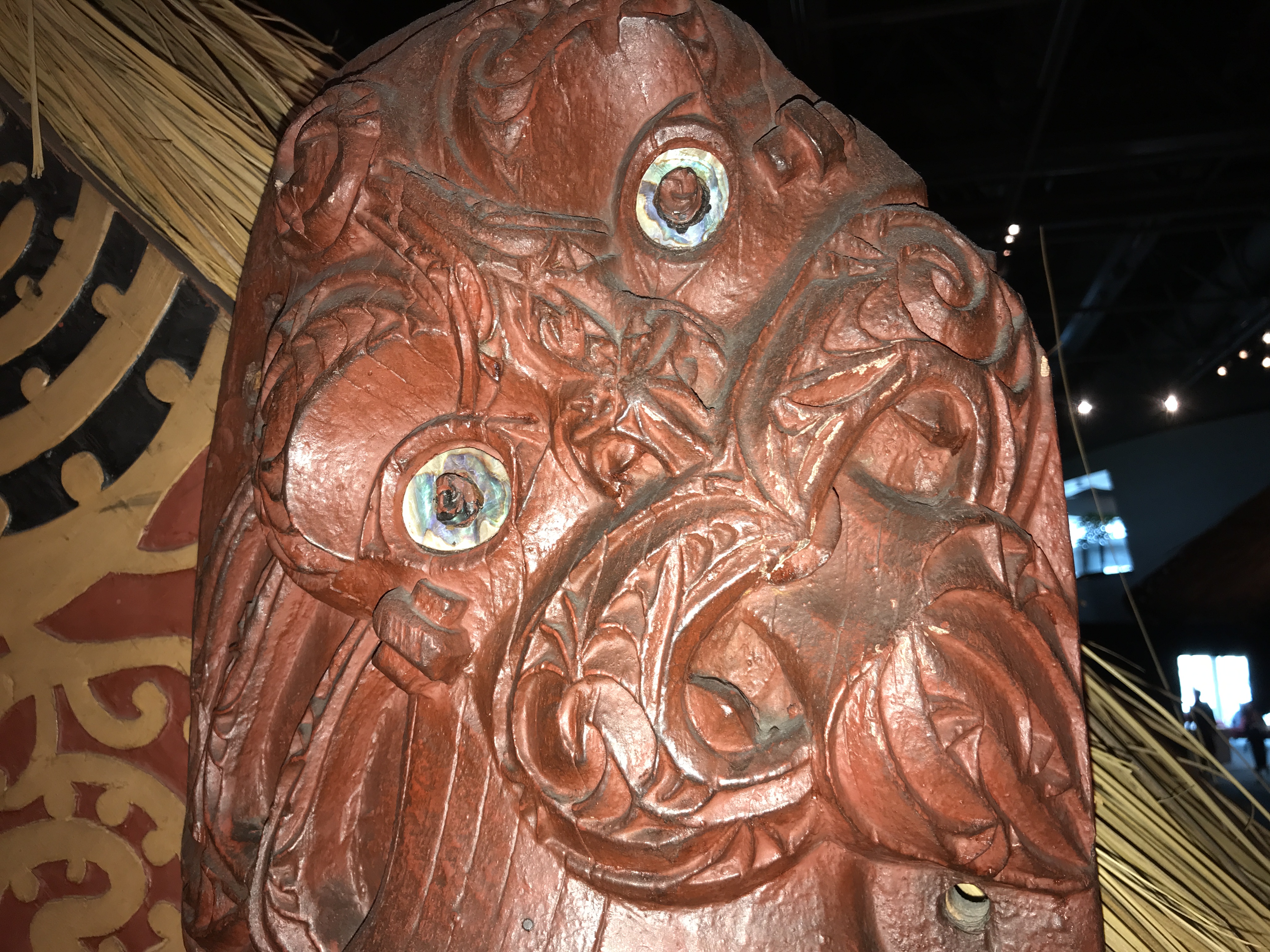
Maori carving at Te Papa. Love the Abalone (paua) shell accents.


We needed a home for Christmas: a tree, homemade stockings and a kitchen for baking.  We sang our carols at night; Santa came to eat our cookies; and the reindeer nibbled at the carrots.  We missed our family back home so these little traditions meant so much.  But we also got to incorporate some new, purely Kiwi Christmas traditions… pinkie bars and jaffas in the stockings, a brisk ocean swim on Christmas Eve and best of all, some wonderful new friends invited us to a family holiday afternoon potluck and gift exchange.  And it gets better – it was at their croquet club guesthouse!  So, we got to eat pavlova, drink champagne and play croquet all before the main events.  I will miss these wonderful Christmas twists next year.  The pavlova-champagne-croquet may need to a permanent addition.

Christmas, Wellington, family travel, lyall bay

Decorating our Christmas cookies in wetsuit.

Truth be told, I was humbled with sickness for a good two weeks.  I had a fever for five days and then had not a squeak of a voice for another week.  I’m still a bit Demi Moore-ish, but I’ve got my strength back and am thankful that it happened in a place with great, English-speaking medical care and access to Netflix.  It took a lot out of me and the rhythms and routines that we intended, went out the window for two weeks, but they rolled with it.


Wellington has been the perfect spot to hunker down.  I was feeling behind in the homeschooling department when we arrived, and now I’m feeling like we’re 80% finished for the year.  The kids have made friends and had play dates.  We have met so many lovely people and we all conclude that we could definitely live here forever.  We chose Wellington because we wanted more of the Maori influence than the South Island, wanted a city and ocean and all of that came within arm’s reach of Melanie.  She was our beloved babysitter when she went to CU Boulder and has moved to Wellington when her husband got a contract job to work on the government tax code.  Her first baby is crushingly due just the week after we leave but at least we hopefully distracted her a bit in this final trimester.

Wellington, family travel, world school

We will miss you, Melanie and Zach! So wonderful to spend time with our beloved former babysitter.

Goodbye Wellington!

In November of 2017, we had the great fortune to spend a month tramping around the South Island, discovering both her natural wonders and quirky present.  These are our greatest hits:

  • Swimming with the Dolphins
  • Spontaneous play dates between our kids and the others of the campgrounds.  Our kids met penpals from New Zealand, China and the US.  Some campgrounds like the Top10’s have state-of-the-art play spaces and others have downhome, sweet ones.  But kids just love a playground and the ice, broken easily between kids, can build bridges to parents connecting and talking the way that parents do.  Parenting is universal.

    campervan, New Zealand, tramping, kids

    Our home for a month. Room to sleep six humans, a guitar, cello, violin and viola.

  • Watching the Blue Penguins ascend from the Oamaru coast in “rafts”. Hundreds came in wave after wave of rafts – a mosh pit of tiny blue torpedoes.  They land, shake it off and toddle up the rocks, unknowingly on display in front of bleacher seats of spectators.  The hushed voices of the commentators, educate and make certain there are no flashes or loud noises… in English and Mandarin.
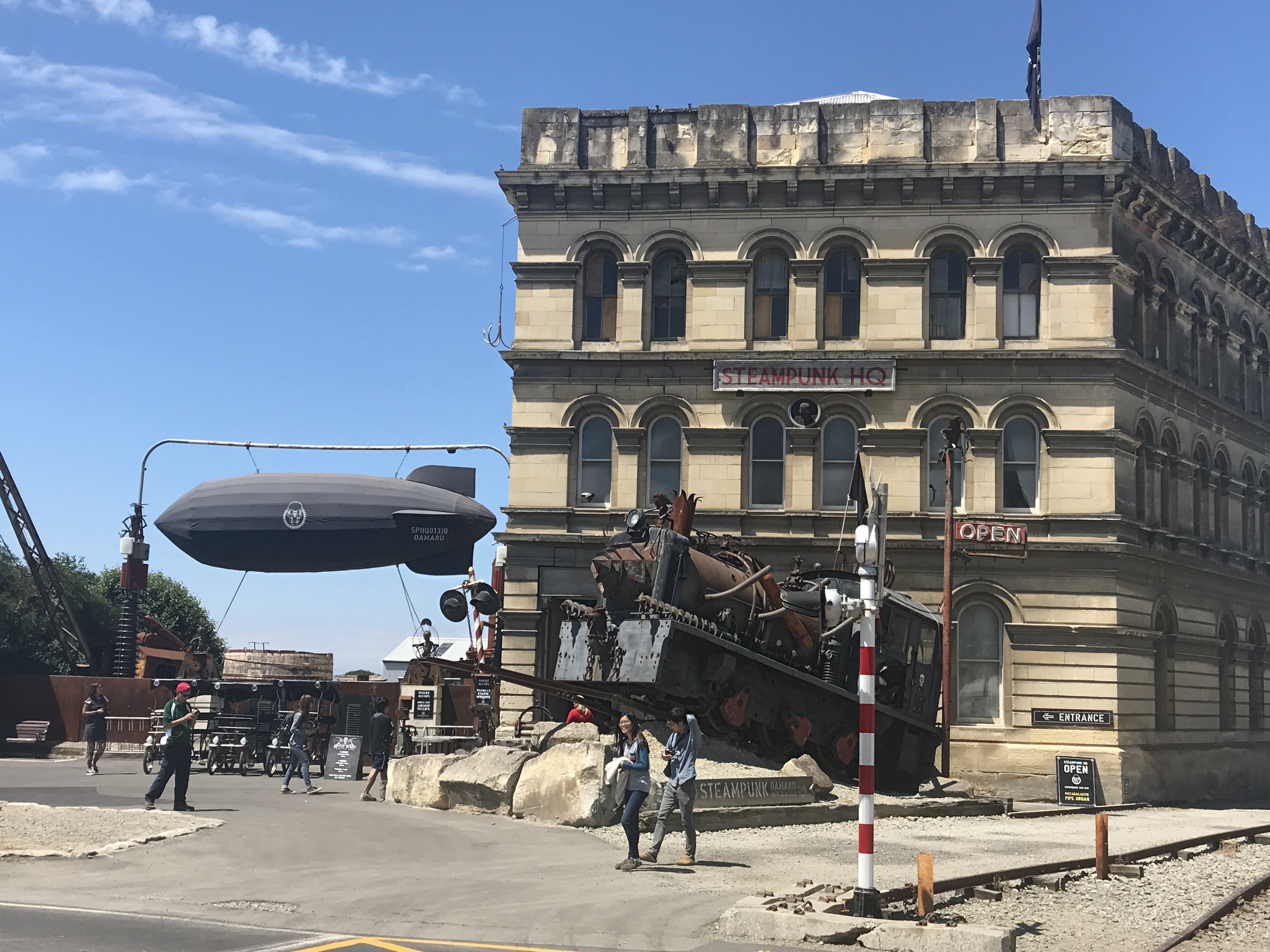
  • Oamaru – coolest place we almost didn’t visit. There’s a hip retro vibe with the Steampunk HQ and the Michael O’Brien Bookbinders shop.  The pristine Victorian architecture and nostalgic museums lent an element of time travel to the journey.

    Oamaru, Steampunk, Penguins

    Oamaru and the wacky Steampunk World HQ. Sometimes mini blue penguins walk by.

  • Glow Worm Caves We didn’t go for the fancy tour but instead walked through the mining tunnels of an old gold mine in Charleston, just south of Westport, on the West Coast.  In the early evening, we panned for gold and learned about the West Coast’s mining history.  (Roadschooling “mining history”, check!) With this price of admission we could camp in the parking lot for free AND the owner took us on a tour of the glow worm caves.  In a tour of just nine people, we held hips as if we were doing the bunny hop and walked through pitch dark tunnels save the glowing of the worms on the ceilings.

    Milford Sound, South Island, New Zealand

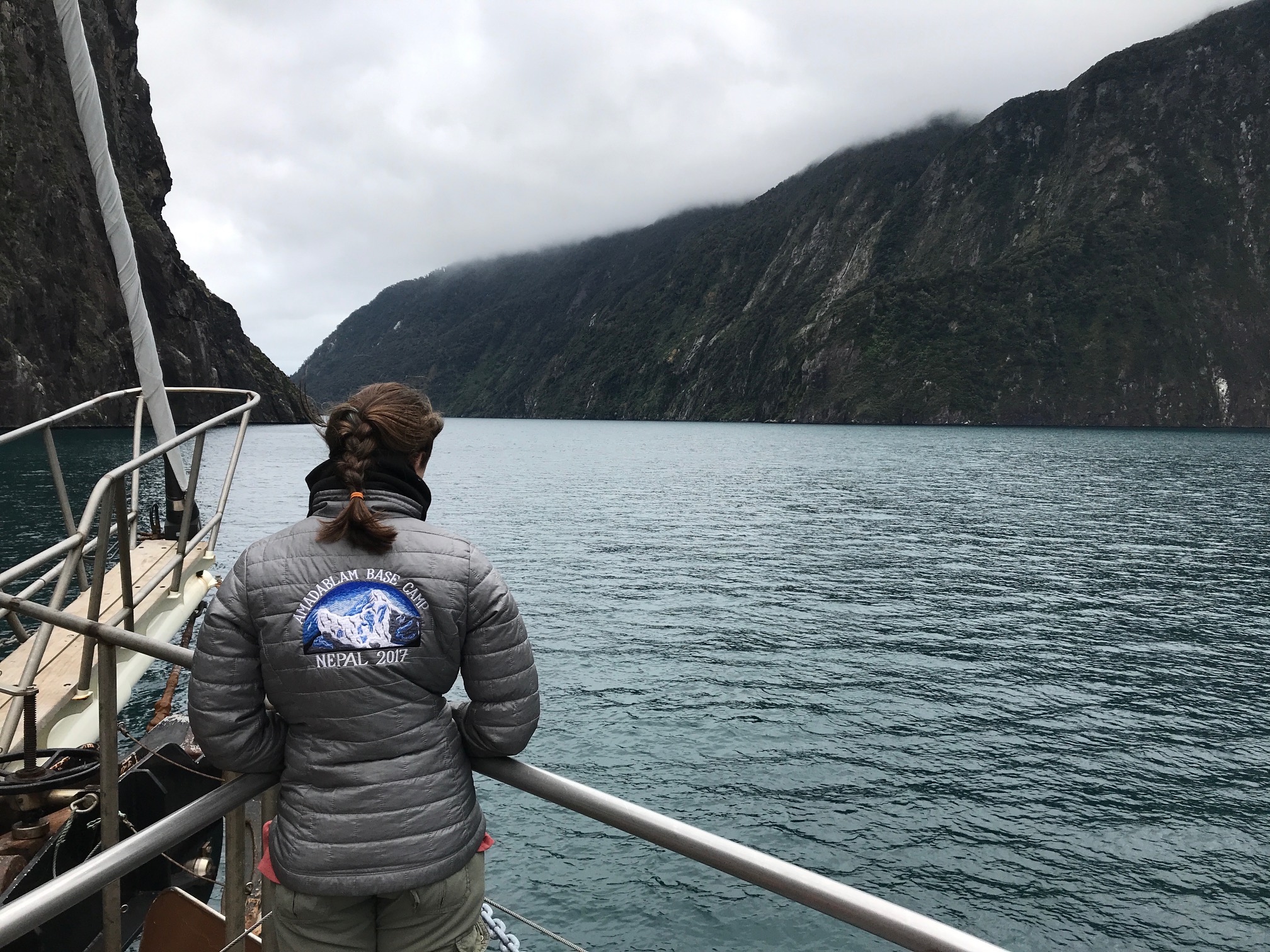
    Lorna communing with nature in Milford Sound.

  • Milford Sound It’s the top destination in the South Island for a reason. The grand scale of its glacial bank cuts are humbling – Mother Nature’s perspective shift that cannot be captured in a photo, reminding us that humans are but a blip in the history of this earth.  We saw a sleeping whale, crested penguins and seals.
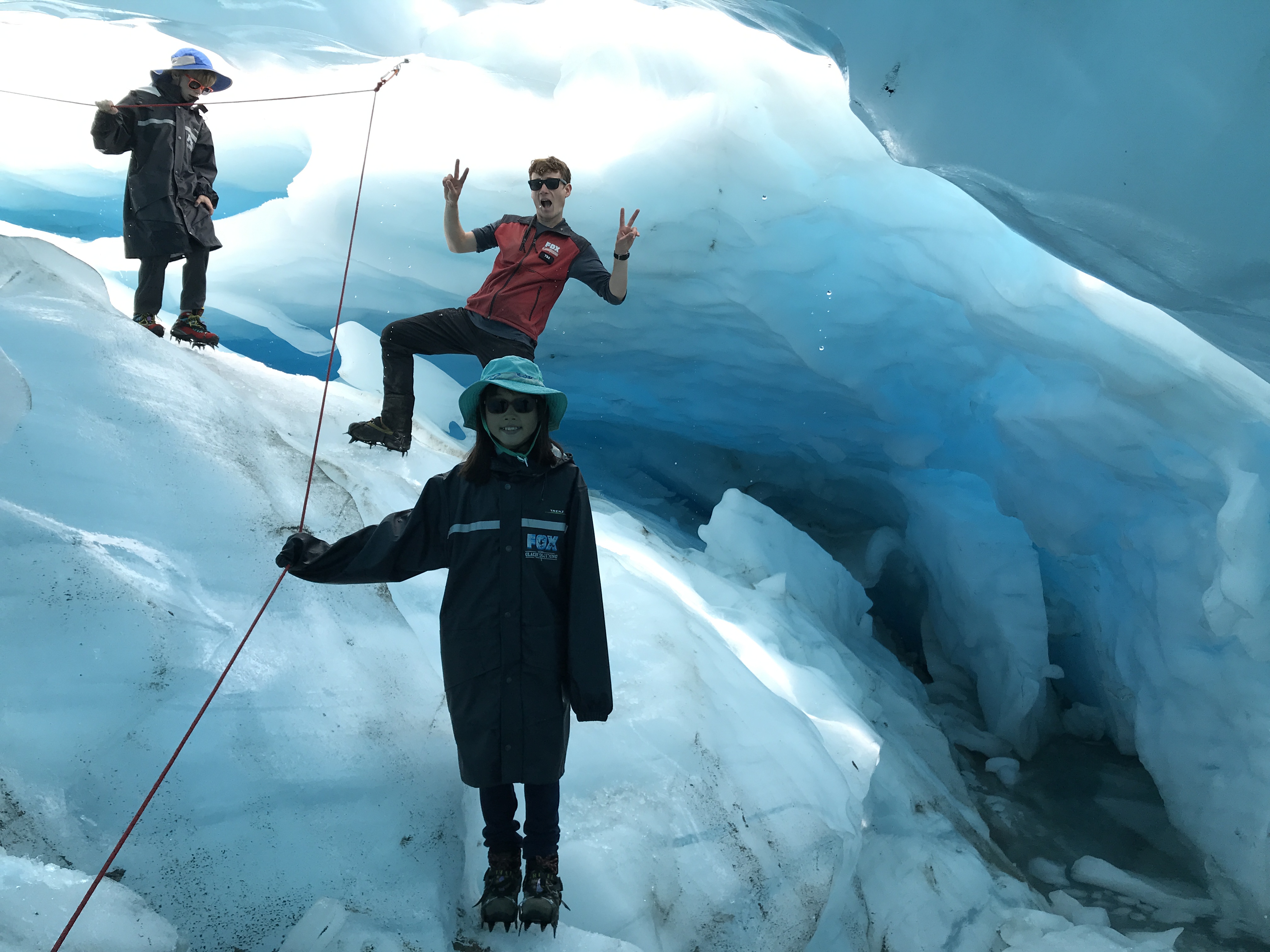
  • Fox Glacier There are so many fantastic and fantastically expensive experiences in New Zealand that we didn’t do. But we did splurge on the heli-hike trip up Fox Glacier, reasoning that there’s a chance these won’t be around in another generation.  Maybe our kids will be spinning yarns to their grandkids about that helicopter ride up to the glacier to tramp around with crampons.  You can explain it to me scientifically all you want, but the color blue of a glacier just feels beyond logic.

    Fox glacier, Helihike, glacier, crampons

    Exploring Caves on Fox Glacier with crampons. No waiver signed.

  • Fern tree forests So many tramps and hikes through the dense forest of fern are awe-inspiring; the birdsong; the prehistoric riff on a rare rainforest; the moss and lichens catching the light just so; the peek-a-boo of the turquoise waters; the veil of sandflies when you stop to admire.  (You only notice them when you stand still – so don’t stop.)

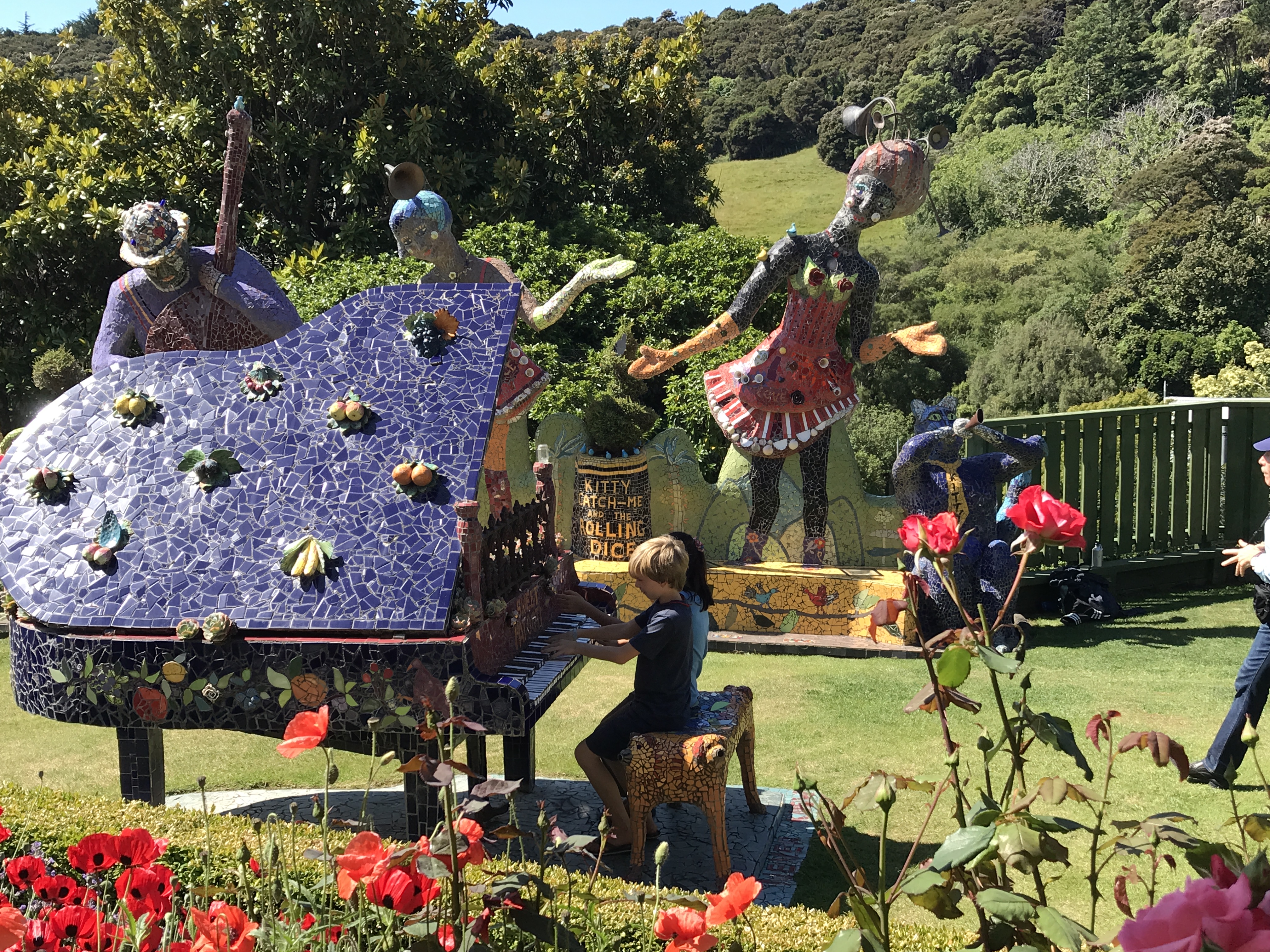
    Akaroa, mosaic piano, The Giant's House

    The Giant’s House in Akaroa. Great place to practice piano.

  • We expected the natural beauty and the friendly Kiwi people, but we did not expect the quirky, lively art scene and rich culture. We loved the “Giant’s House” in Akaroa, the cardboard cathedral and public art of Christchurch, the Puzzling World and wines of Wanaka, the Scottish architecture and Cadbury factory tour in Dunedin and the shark boat and sheepdogs of Queenstown.

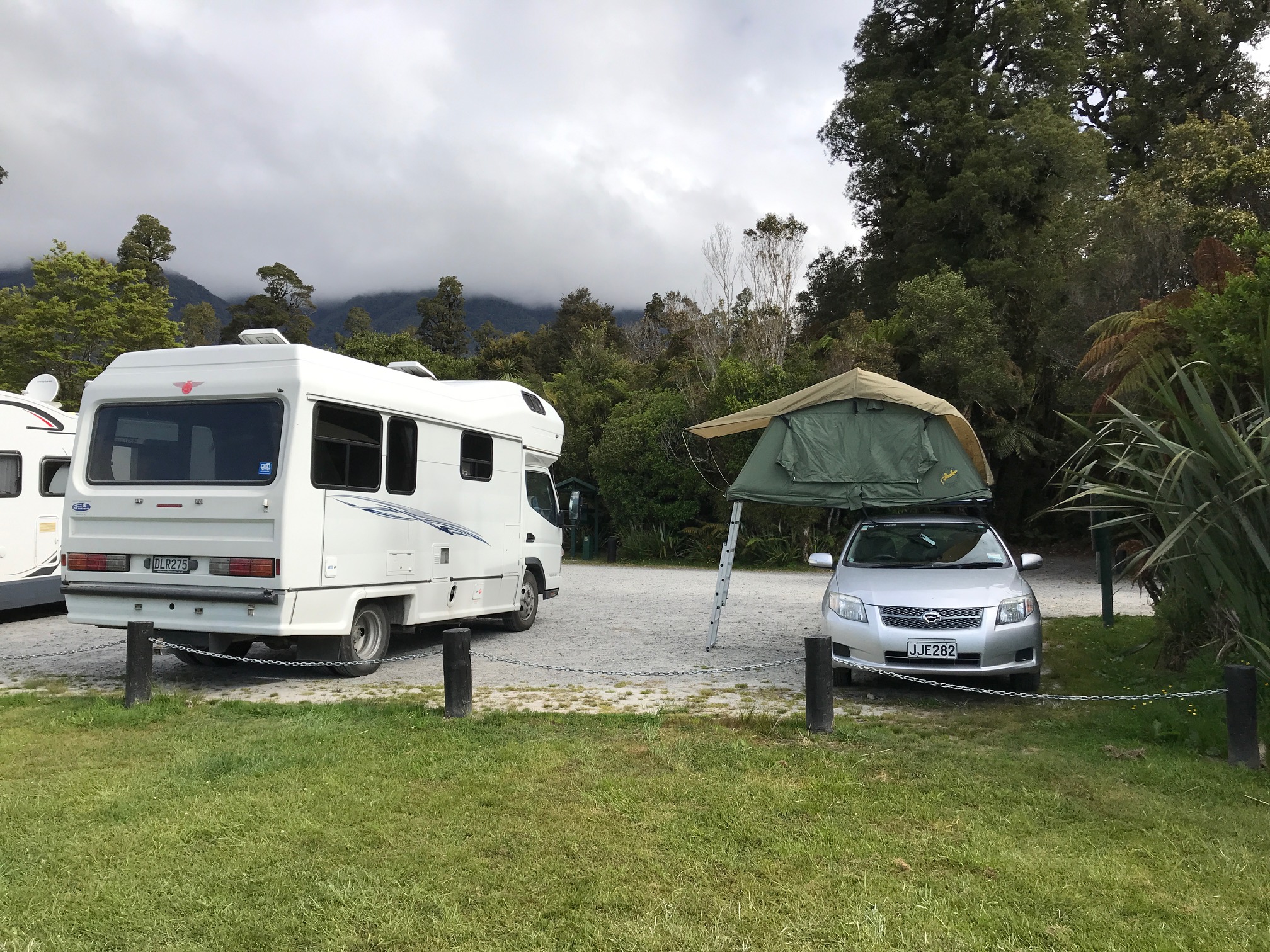
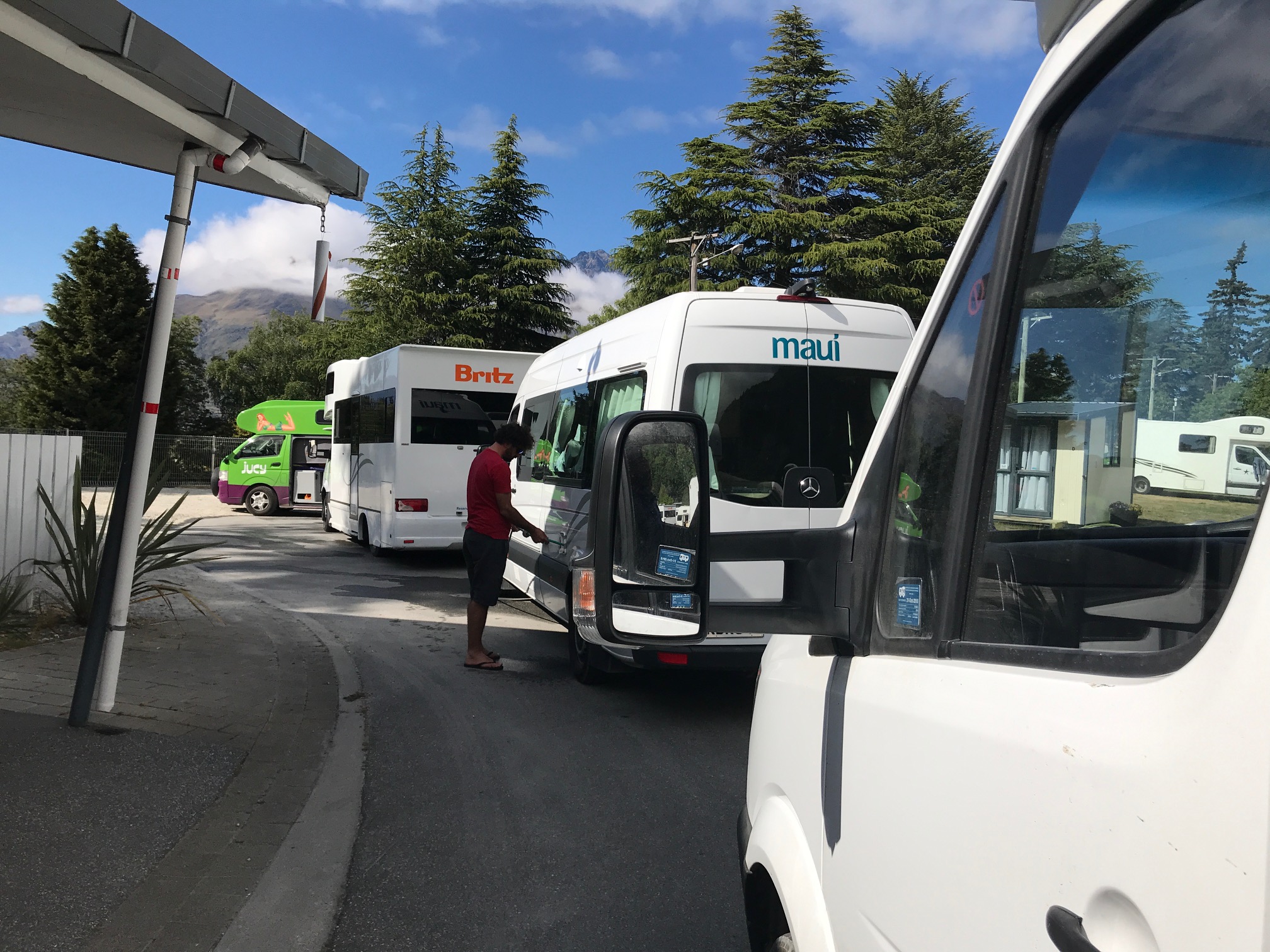
Camping, caravanning, glamping or tramping goes by many names in New Zealand. But whatever you call it, the rest of the world has a lot to learn. From the sheer amount of rented campervans on the road, to the number of parked vans in the cities, my educated guess is that New Zealand probably has more campervans per capita than any other place in the world.  Camping is a national identity and they know how to do this right.  There are free camping app’s that list dump sites, water sources, and up-to-the-date user-contributed postings as to the cleanliness of the toilets, the toilet paper supply or the road conditions.  After spending one month in a six-sleeper campervan touring the South Island of New Zealand, I am already inspired to camp more at home.

I envied these smaller, more nimble cars, but it might get exciting on a windy night.

With Christmas Season coming in the summertime (and it is “Christmas”, no “Happy Holidays” here), many families camp for Christmas and have used the same sites for generations.  Santa can visit the site by boat to give out presents and Christmas lights and fireworks are part of the packing list.  Just another reason that Christmas is less commercial here, who would want to schlep all the trappings to a DOC campsite?
waiting for the free dump and fill station.

When I come home from a camping trip in the US, there’s that pioneering feeling of having “roughed” it.  But here, camping includes chilled wine, Wi-Fi and level ground.  It includes tricked out Mercedes bases and architecturally-designed canteen kitchens at your campsite with a million dollar lake view.  And nightly sites span the range between free government-approved pull-outs for self-contained vehicles all the way up to $100/night (for a family of five) powered sites with amenities such as private hot tubs, unlimited Wi-Fi and a kids’ “jumping pillow”.
Queenstown, Top10, Campervan, New Zealand

The view from Queenstown Top10, a powered site with a million-dollar view.

Back in Colorado, the older camper set seems to be buttoned up in massive RV’s.  It feels like there is a divide between the tent-ers and those sequestered inside their fortresses next to us.  But here in New Zealand, the campers span all ages and the vehicles have more in common with one another than not, with most people staying in some form of a converted van.  This perhaps levels the camping field and makes interaction among the campers feel easier.  In most sites, we met our neighbors, learned a bit about them, publicly apologized for Trump and then moved on to quality conversation.  Our kids met other kids on the playground or other shared areas.

Converted kitchen off the back of the van, that stows away while driving.


With darkness coming about 9:30pm, we were on the late-to-sleep, late-to-wake routine.  (One of the very fun rules to break on this year abroad.) Oftentimes, we would wake, do the basics to turn our sleeping vehicle into a driving vehicle and find a picturesque spot for breakfast still in our jammies.  Food is very expensive in New Zealand and breakfast out for a family of 5 can easily be $60 USD or more. Pulling over to whip up a quick snack for kids is the ideal way to break up the driving, save on the money and hunt out the perfect picnic spot before the others arrive.

Breakfast spot on the beach – we had this cove to ourselves!

However you do it, just “glampervan” with your family in New Zealand.  There are no predators in New Zealand: no poisonous snakes, no bears, no mountain lions, just really aggressive sand flies.  The entire South Island is the real soul of what amusement parks are trying to capture.  It’s just real – one massive play park.  We spent one month and we could easily have spent two.  And if you’re looking for specific tips, click here.


Ship Creek Beach just before we swam! There are very few photos when you’re really living in the moment…

Sometimes, you need to take off your shirt in public if you want to swim with the dolphins.  And you need to be prepared to get cold.  Really, really cold if you want to follow a dream.  This was the unscripted lesson plan on November 18, at Ship Creek Beach, New Zealand.  We pulled off to do a short hike, stretch our legs while heading down south to Queenstown.  This was a diversion, a rest stop, on the way to the destination.

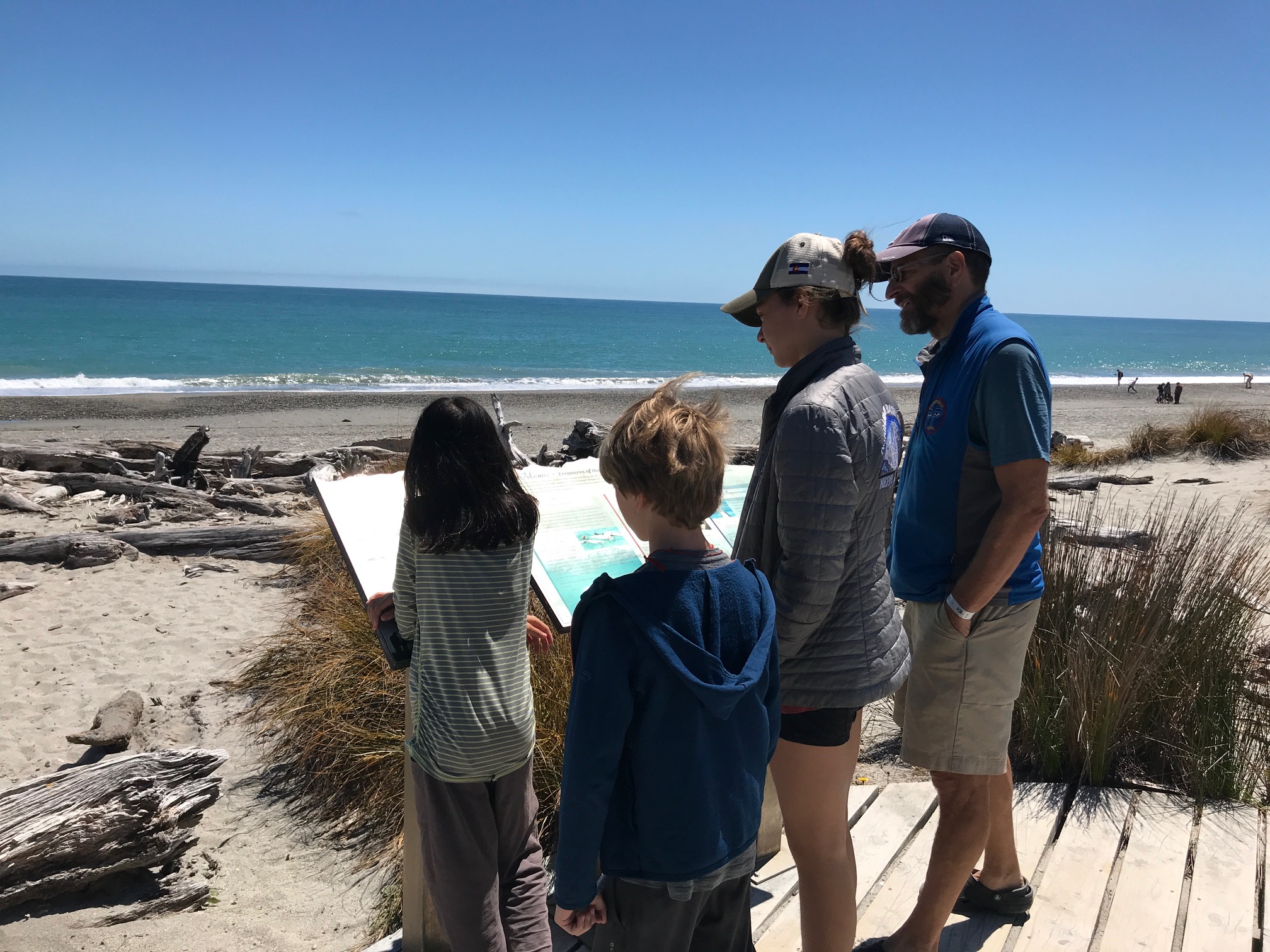
As we were reading the informational placards about dolphins outside the bathroom, a kind woman interrupted to say that there was a pod of Hector’s dolphins over the dunes, swimming just off shore.  Come quick.  So we scratched our systematic roadschooling schema to race toward the beach.  In the crystal-clear turquoise ocean down below were these rare, diminutive dolphins jumping, surfing and surfacing in tandem. We watched them in wonder for ten minutes. “Let’s go in,” my 13 year-old daughter says to me in her puffy jacket.

“Gosh, we should.” I reply standing beside her in my fleece and leggings, as if someone should but not the 47 year-old mother that I have become. Not the woman who sees each and every potential hazard around her.  Not the woman who had a plan to get to the town of Haast by lunchtime.

“We might never get this chance again,” she says.

And in me was this cavalcade of why nots: Sweet Jesus, that will be cold. Doesn’t this ocean flow toward us from Antarctica?! There’s a ton of people here so I will ruin their videos and selfie-stick-photos of dolphins behind their shoulders. What if the surf is too strong? What if I can’t really swim out past that surf break?  But when I look at her, I know what a good mom should do.

I don’t see any offending offshore rocks or signs of a riptide and secure in the knowledge that my daughter is a competitive swimmer, I take off my fleece, T-shirt and shoes and stand next to her in my jog bra and leggings.  “Come on.”

And we do it.  We watch for a break in the waves and wade into the frigid turquoise waters of the Tasman Sea to swim towards this pod of wild dolphins.  As a way of encouragement, a man towards the shore says that we should make clicking noises to attract them once we’re in.  Duly noted. So we time our entry in between wave sets and easily swim past the break.  Once I can finally catch my breath about fifty feet off shore, I start making a frantic clicking noise and look back to my husband on the beach to direct us toward the dolphins.  And Lorna and I swim side-by-side for more than twenty minutes next to these gorgeous creatures with squeals of delight shared between us.  They never surfaced closer than five feet away, but we could feel them and hear them swirling underneath.  Click click sounds at our feet.  It was one of the highlights of my life.

But the lesson here is to swim with dolphins if life gives you the opportunity.  Be willing to bear your 47 year-old torso or your 13 year-old self-consciousness to onlookers.  Be willing to get uncomfortable for a while, to even spend hours reheating yourself for the chance to look a wild dolphin in the eye, to look your daughter in the eye, to fulfill a life dream. Be willing to get publicly pummeled by a wave on entry to look your daughter in the eye after a breaching dolphin dives before you both and know that you’re striving to be the kind of adult that you want your daughter to become.

This is what “roadschooling” is really about: to live a life outside the box, to follow your passion and your dreams.  Maybe it’s ok that we haven’t been making as much time for math lessons, as we’d planned.  Maybe these learning standards that we are living will fuel them to conquer future long division in ways that are unmeasurable.

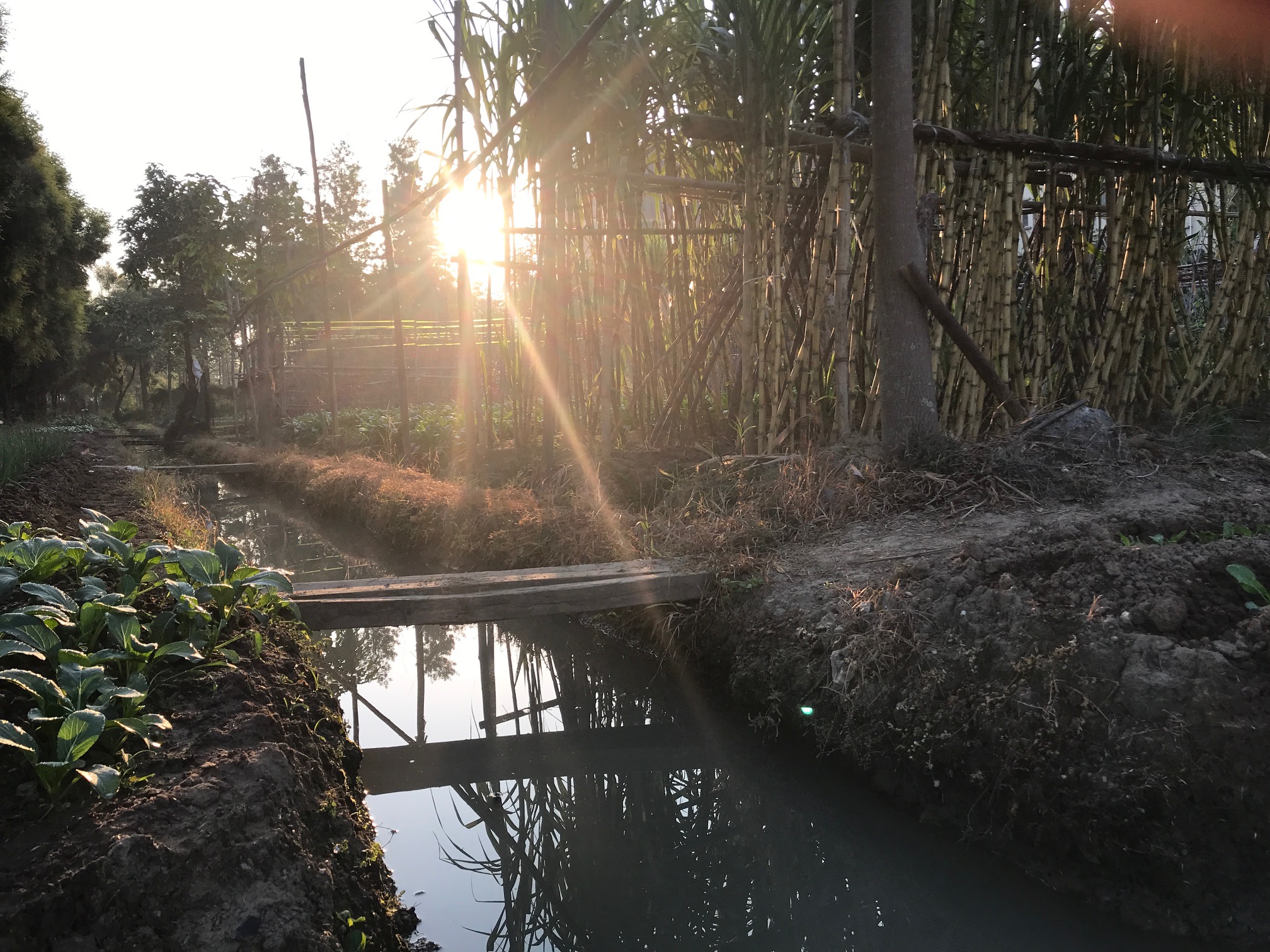
It’s not all instagrammable days.  Some days it’s a yearning for space: a second of solitary time or a place to completely unpack my things.  It’s a wish for a predictable routine. And sometimes, it’s literally a slog to get from one place to another.  The twenty-four hours from Guangzhou to Christchurch was one of those times.  We left Guangzhou after a makeshift Halloween in our airport hotel.  This hotel is just ten minutes from international check-in but still a drive along a dirt road through fantastic, hand-watered vegetable plots.  As we leave China, we will transit through two more countries to reach our terminus, traveling through continents, customs, climate and histories through and beyond language and human priority.

Guangzhou Airport, Chinese vegetable garden

The morning view from our airport hotel – so far from those villages of chain hotels near our major airports.


In transit, we must look like a modern Partridge Family traveling with a guitar, cello, viola and violin.  Each leg of the flight begins with an unknown answer as to a nation’s weight limit of a carry-on or how they will work with a cello.  First, we had a forty-five-minute flight to Hong Kong, but it’s still considered an international flight… kind of. (I will never understand how Hong Kong is part of China, but also not part of China.  There are some very arbitrary lines there.)  We had an eight-hour layover in Hong Kong so we left our carry-ons and stringed instruments at left luggage, hopped on the train into downtown, walked and gawked, found the BEST vegetarian restaurant called Mana! and then retraced our steps back to the boarding gate for an eight-hour red-eye to Brisbane, Australia.  There we had a two-hour layover and then a four-hour flight to Christchurch.

Hong Kong, street cars, family travel

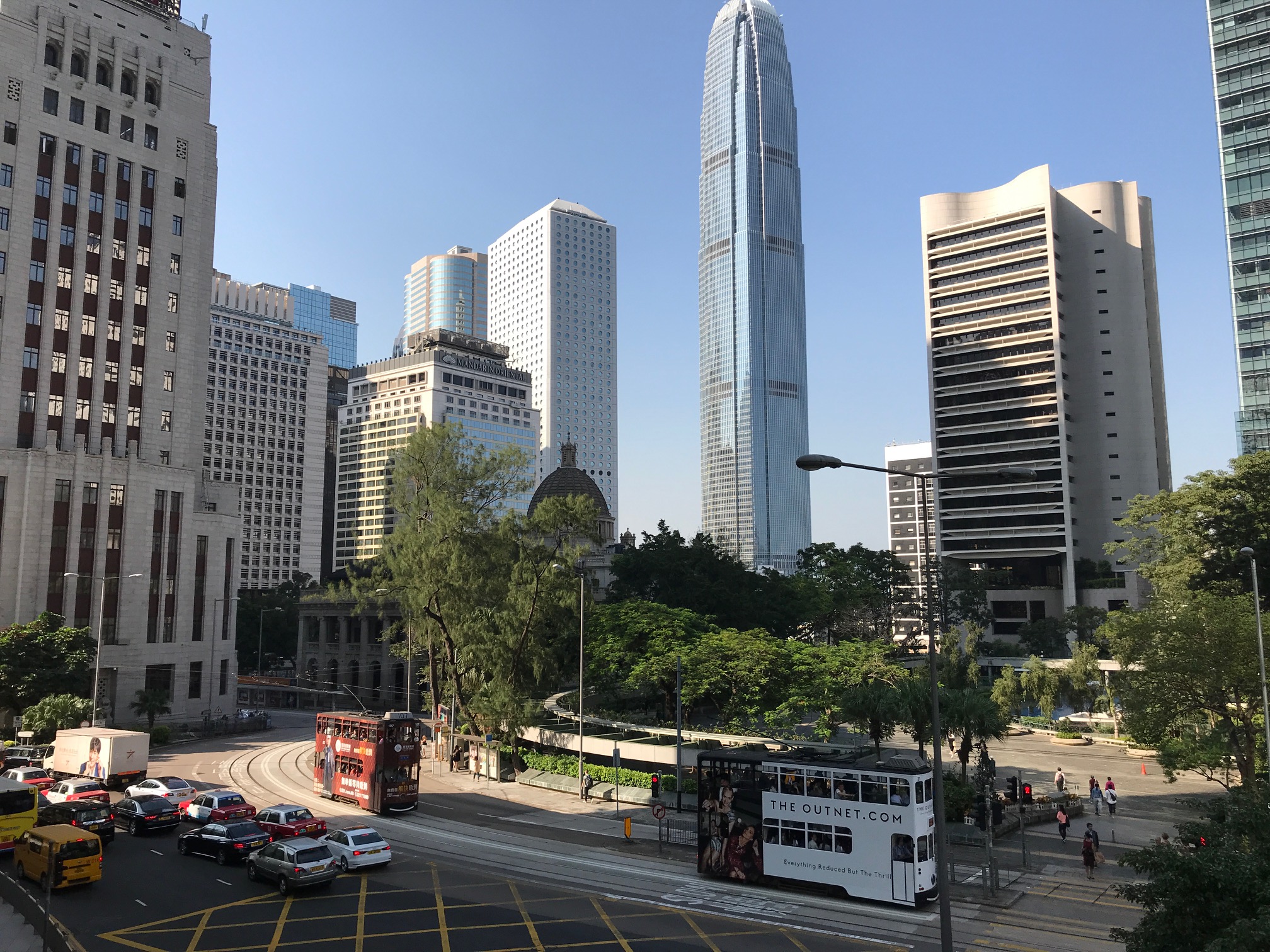
Double decker street cars in Hong Kong from one of the many raised walkways that crisscross the city.

Our first night in Christchurch, after finding a gorgeous kids’ public park and a fantastic Mexican restaurant with a real margarita, we all slept for fifteen hours.  Those three days in Christchurch are a blur, like something I dreamed about but didn’t actually live through.  More than the exhaustion, was the culture shock.  For three months, we have lived between Nepal and China.  For three months, no one has stopped for me at a crosswalk or followed the driving norms we have in the States.  That first jetlagged morning in this new country, that claims more sheep that people, I realized, after more than a minute, that a car was stopped and waiting patiently for me to cross the street.  For the better part of three months, the air has been thick with smog and trash on the street standard.  That first day in Christchurch, I stood stock still on a walk through the city’s central park to stare at the clarity of the stream.  You could see the contours of the rocks at the bottom of the stream. I could not have predicted how that would shock me, that I would grow accustomed to traffic, smog, trash and pollution.

Kaikoura, family travel, New Zealand

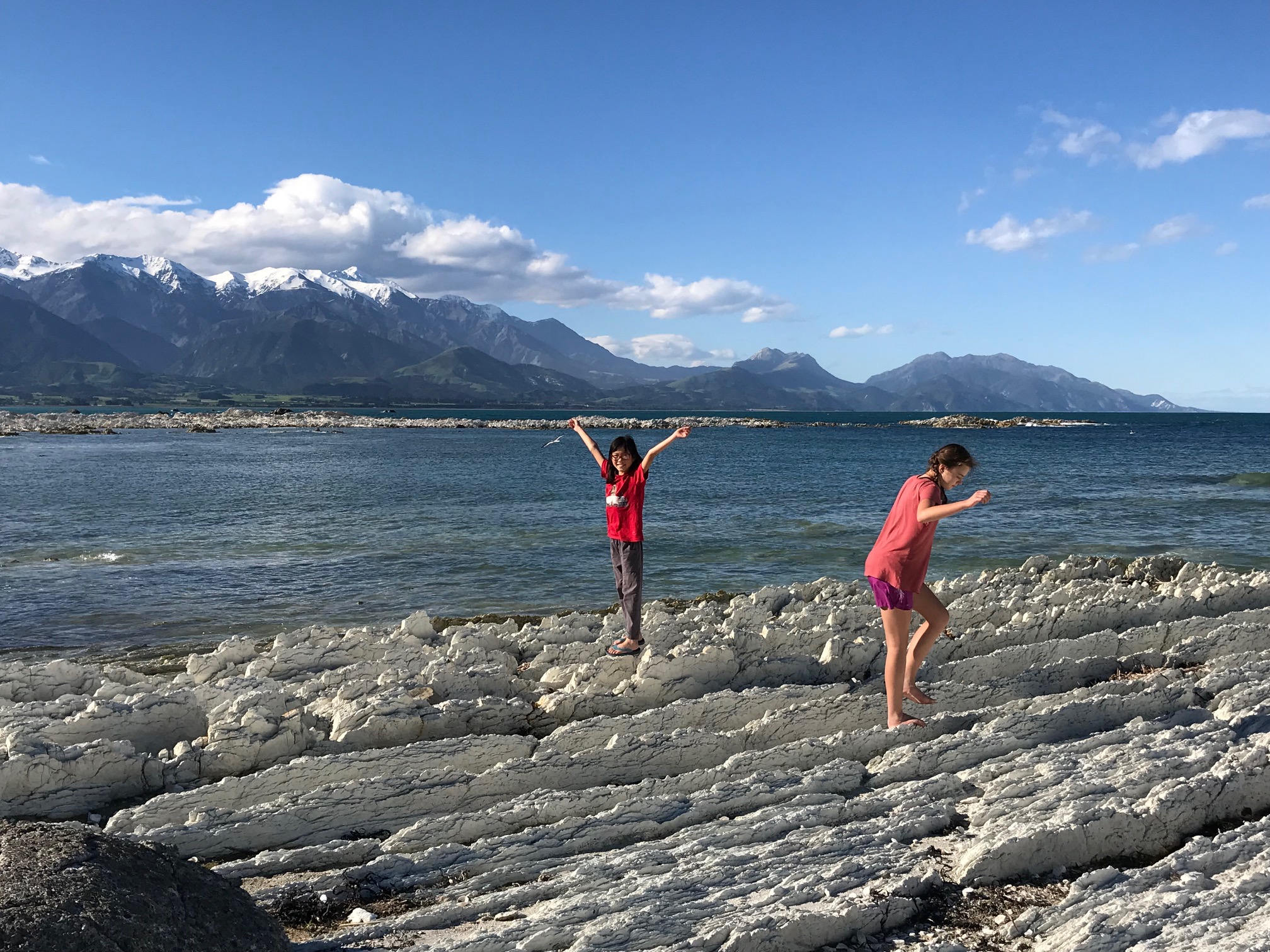
Kaikoura, NZ and clean air and beaches!


Back to the slog: travel between countries for us includes five large suitcases, five carry-on suitcases, five daypacks, one guitar, one cello, a viola and a violin.  When we arrive in a place, we sort, repack light and store the remaining stuff until it’s needed somewhere else.  One suitcase is filled entirely with sleeping bags. Another would be filled with roadschooling books, but then the weight has to be redistributed to keep all the bags within the weight limit for flights, causing it to all jumble.  So, the sorting and storing days are intense.  And I’m reminded how much lovelier “the days of few things” are to us both in travel and life.

Hong Kong, family travel, road schooling

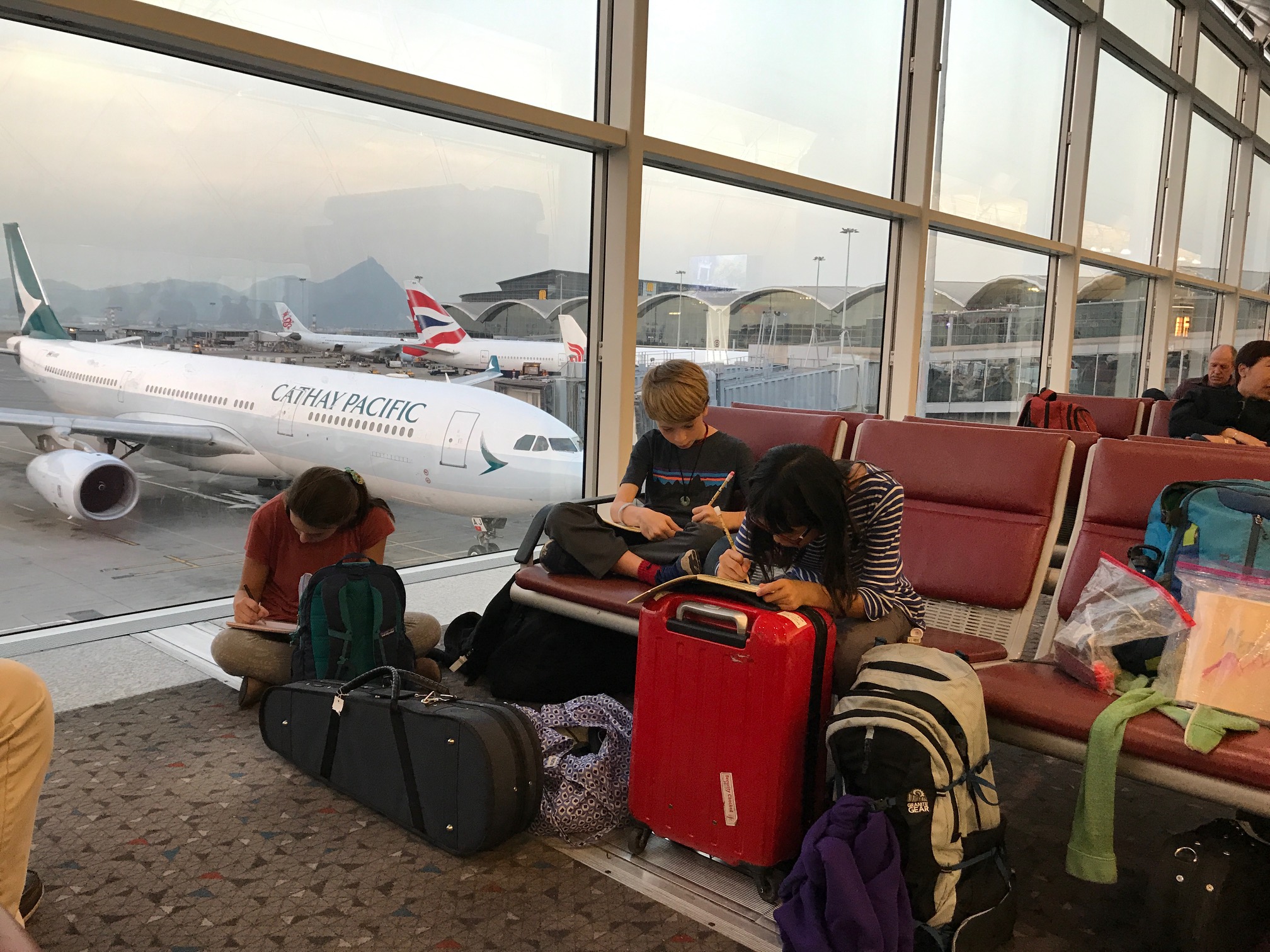
Math work at the departure gate in Hong Kong. Traveling light.


While still exhausted, we repacked ourselves, ventured to the campervan office, moved our few things into our moveable new home, moved the other things to a storage room, downloaded the appropriate new NZ camping apps, plotted our route, learned how to operate this new home, drive on the left, shift with the left, loaded up with groceries and away we drove.  We didn’t get far that first day, but instead drove less than an hour, exited the highway and aimed towards the beach. We parked and slept at the end of a lane, fully self-sufficient, to the sound of the waves.  The locals walked by and wished us a nice “Guy Fawke’s Day” while we enjoyed the sunset and some fireworks.


And that’s the slog from Halloween to Guy Fawke’s Day and from space-limited Guangzhou to crystal clear beach-sleeping in New Zealand.

We officially love the train as a mode of transport and took five extended train trips to kris-cross China.  By taking different types of trains, we could interact with the different socio-economic groups in China and see more of the countryside than we could have in a plane.

road schooling, family travel, China, trains

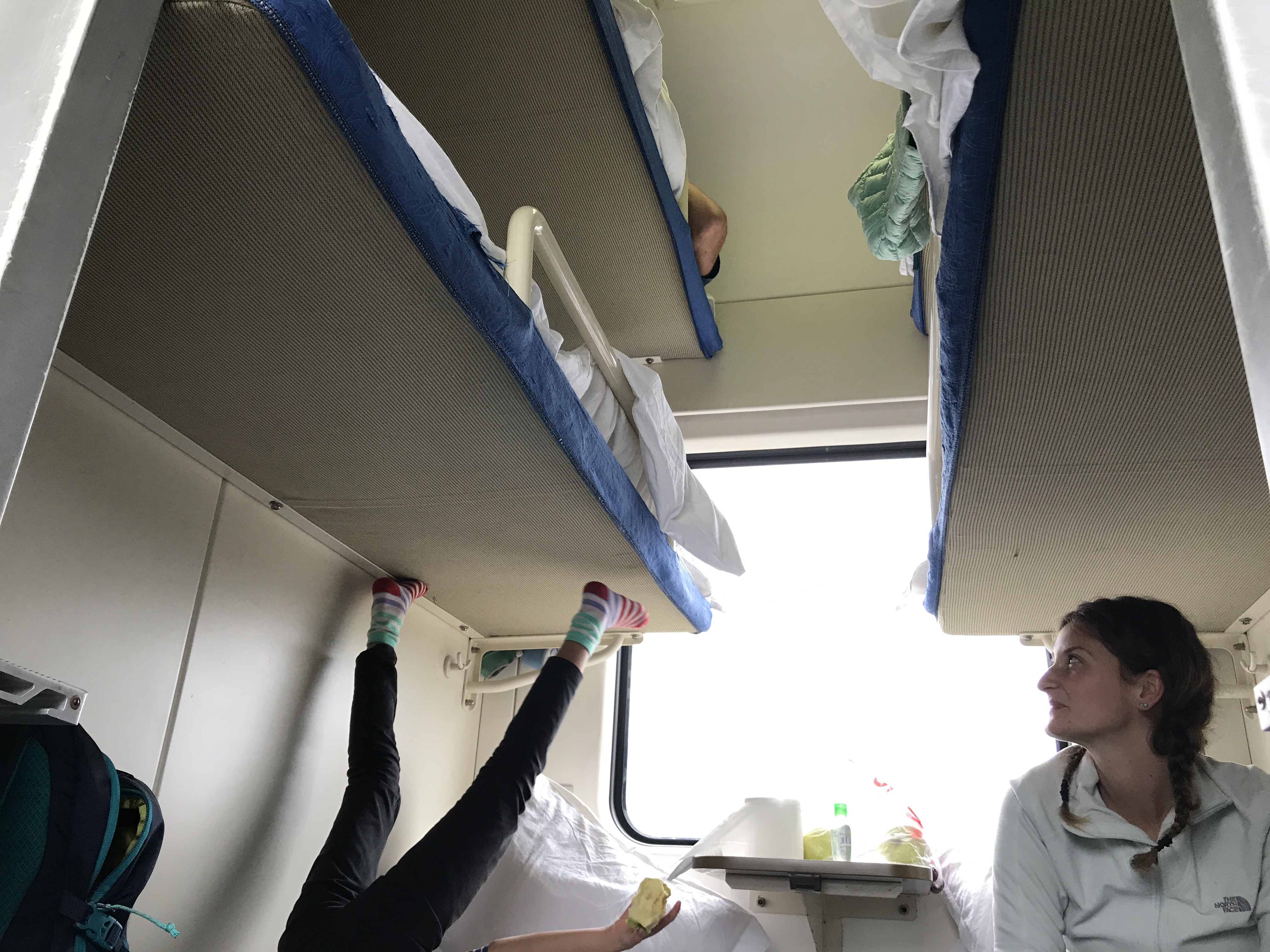
Waking up on the overnight train: lots to learn about Chinese geography just by looking out the window.

Overnight Train

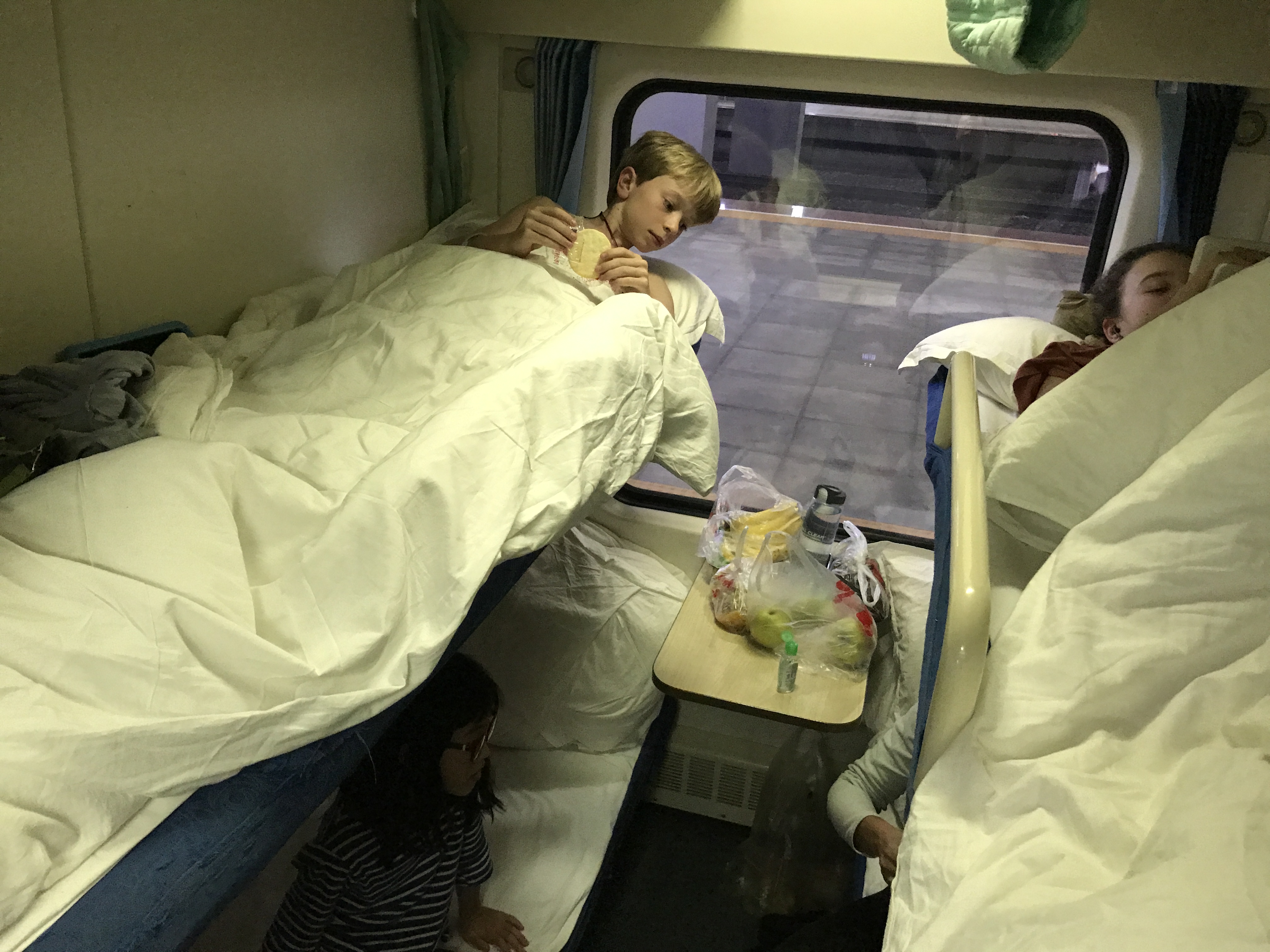
From Chengdu to Beijing, we took a 23-hour overnight train.  That sounds long, but actually, it was quite painless.  Fun even.  We all had a bunk with sheets, pillow and comforter.  Everyone slept soundly.  We did our roadschool math, journaling and even had some time for reading, movies and card games.  Squat toilets on a jostling surface is a bit like surfing but with more intense consequences.

family travel, overnight train, china, road schooling

Six bunks in one compartment without a closing door, but we all slept well, felt safe and stayed healthy!


High Speed Trains

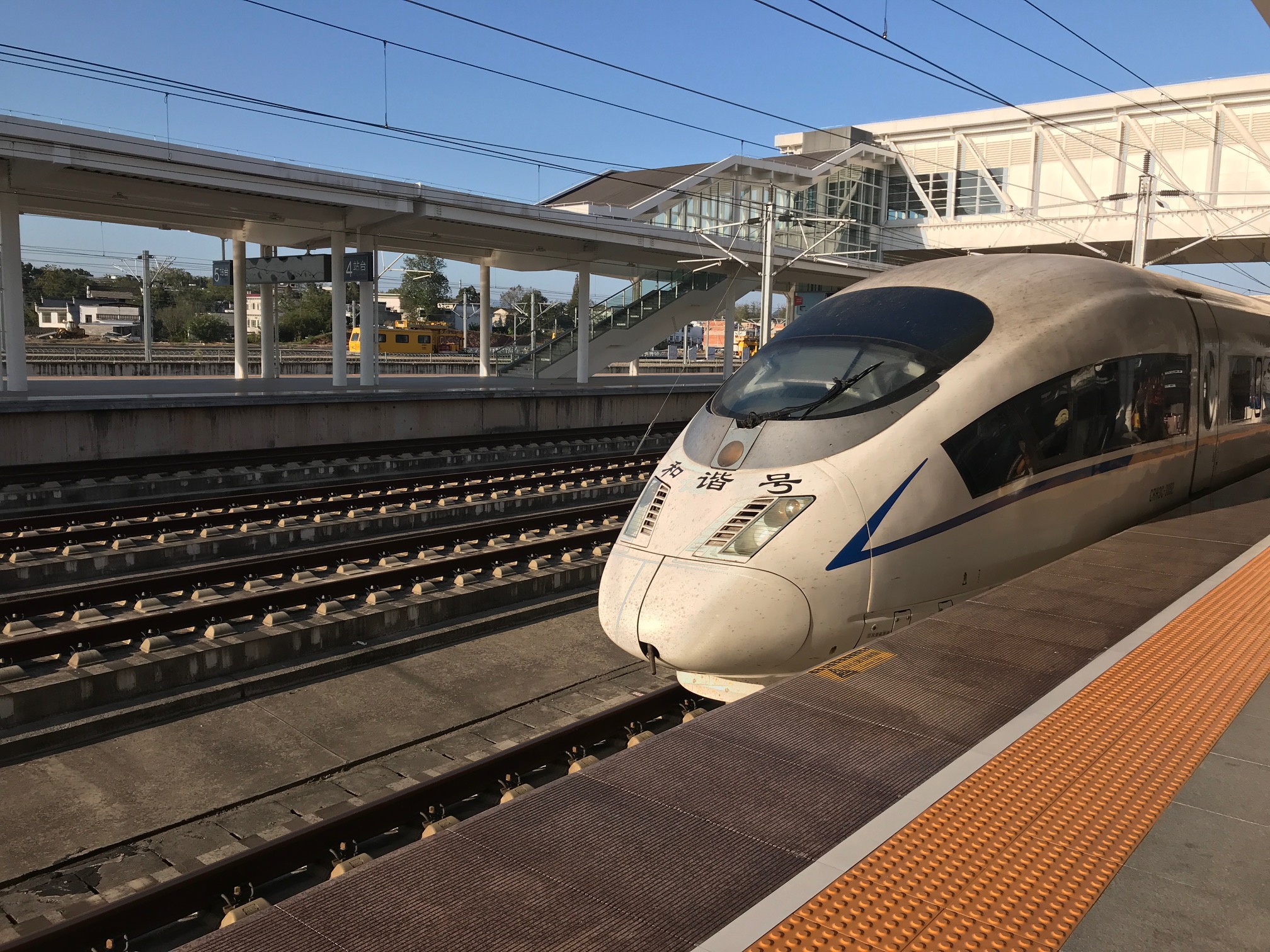
For the rest of our time in China, the kids asked to take another slow overnight train, but mostly we took the high-speed trains which had few stops and maxed out at 304 km/hr. (186mph).  Our first high-speed train, from Beijing to Shanghai, had clean sit-down toilets, toilet paper and only took 4.5 hours.  This felt like a huge step up from the slower and more basic train service.  From Anhui Province, back to Guangzhou we had a large group of Cantonese speakers in front of us and the volume at which they spoke was insane!  I was sure they were in an argument.

high-speed train, China, family travel, road schooling

This speedy train goes close to 200 mph!


Security

There is a security check point similar to an airport to get onto a train with X-rays.  If there is any water in your water bottle, they ask you to take a sip while they watch.  You are screened once again when you get off the train.  Once seated, they come and check tickets and passports again; we even had a special policeman enter our cabin to go through all our luggage by hand. (Probably because this coincided with the five-year Communist Party meeting and there was extra scrutiny.) You also need to present your valid ticket to exit the train station.

family travel, China, road schooling, train

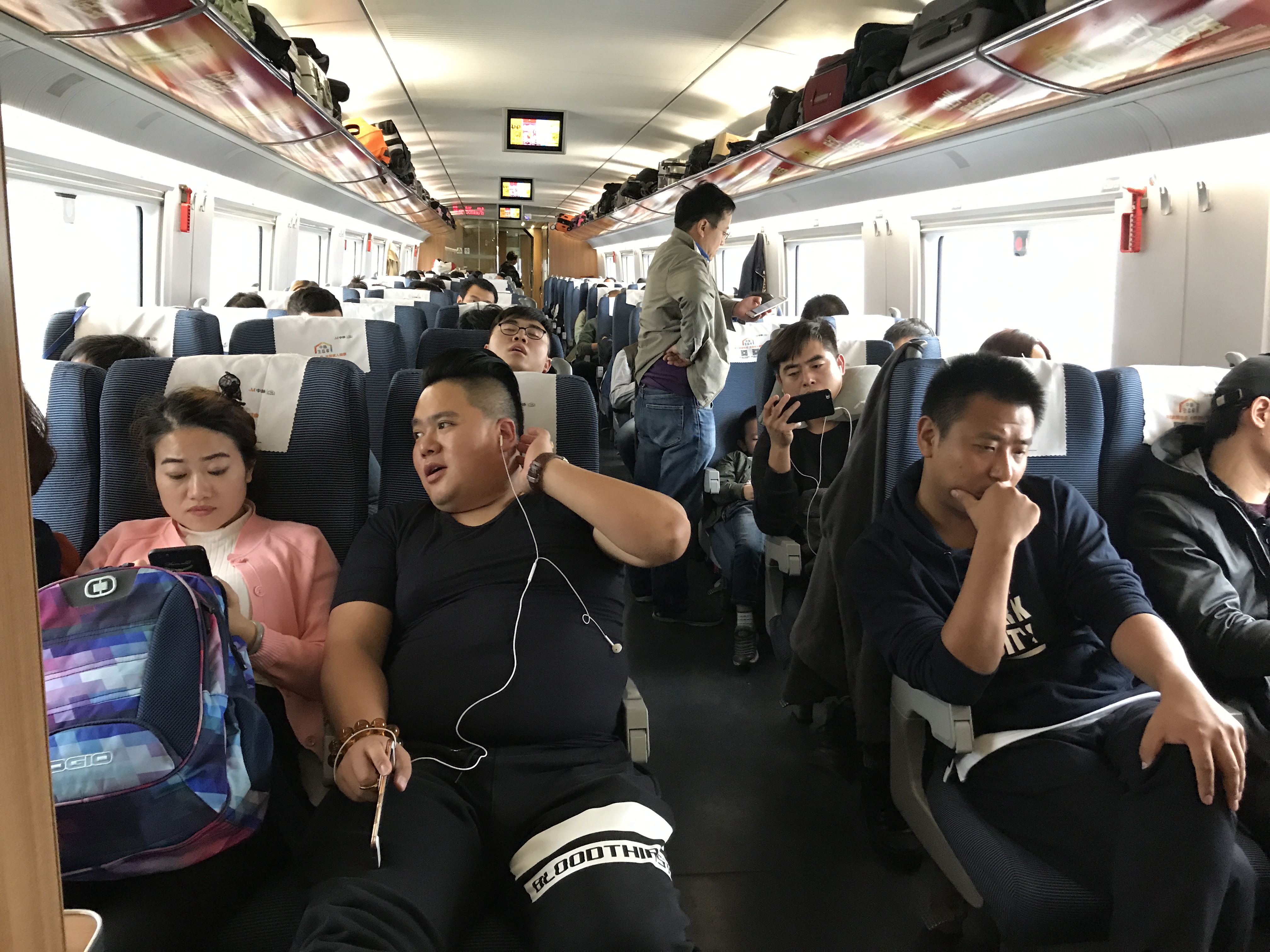
The interior of a high-speed train. There’s free Wi-Fi if you have a Chinese phone number.


Train snacks

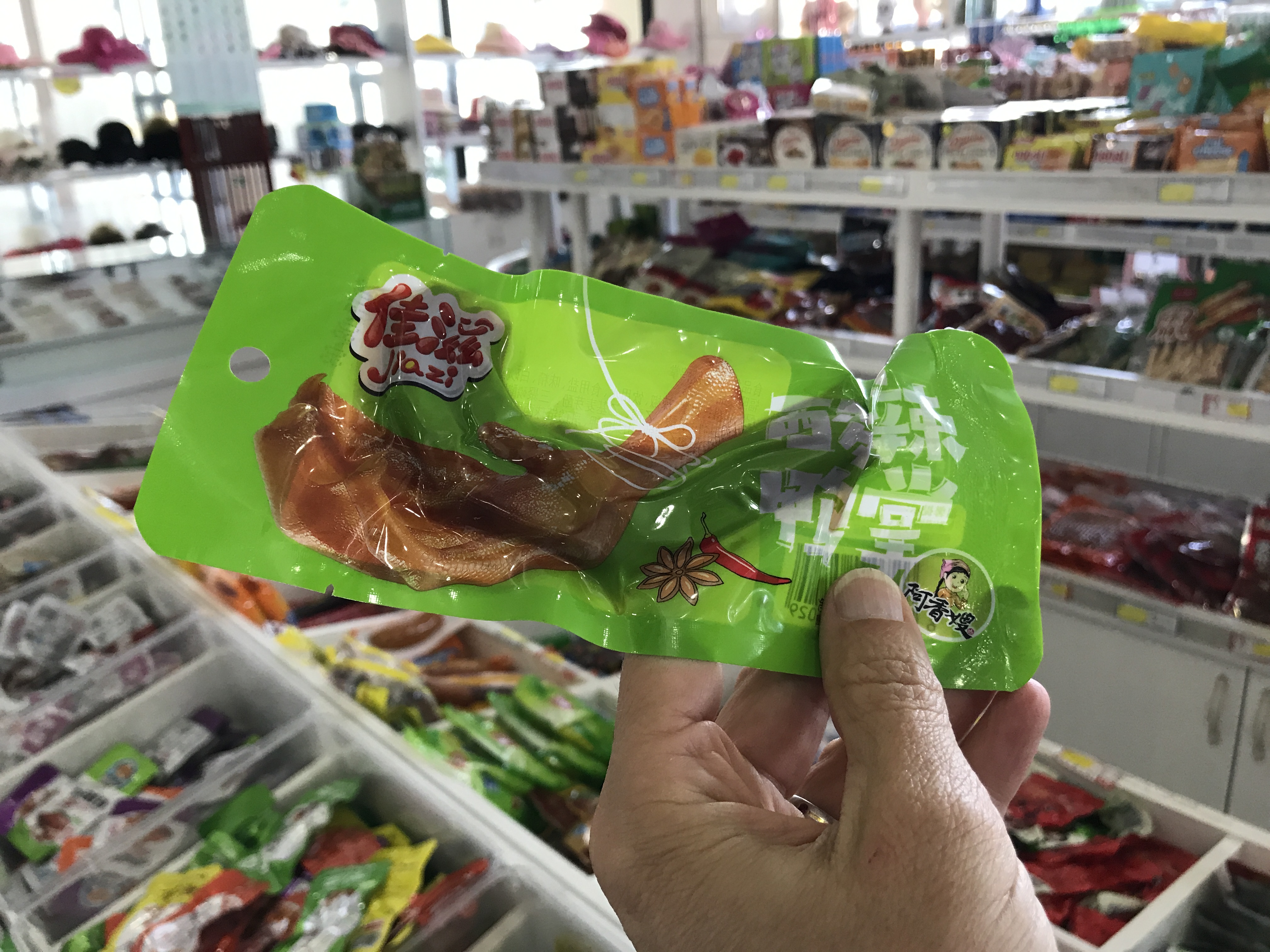
This is a huge part of the Chinese train experience.  People load up on snacks to bring and once, we even saw an old couple with a bamboo pole between them loaded with plastic bags of snacks.  Most popular snacks include: noodle soup, sunflower seeds, endless cookies/crackers and chicken feet.  Other crazy ones are dried squid, meat bones eaten with plastic gloves, Peking-Duck-in-a-Bag, and pomelos (like a grapefruit, but almost the size of a volleyball here.)

We had offers of train snacks from others and we offered ours – a great way to break the ice.  The end of each hall has hot water on tap for the thermoses of green tea or to use as drinking water.  This was another line-up and place to interact.  Much to my dismay, good coffee is nowhere to be found.

family travel, chicken feet, roadschooling, china, trains

Chicken feet are a super-popular train snacks, especially for women. They believe that sucking out the tiny bits of meat from the bone helps promotes collagen.

Train Roadschooling

It’s sometimes difficult to get kids to look out the window, so you can make a Bingo Board or scavenger hunt list in your kids’ journal.  (Popular prizes / bribes include an ice cream cone or train snack of choice.)

  • Train Bingo: draw a BINGO board in their journals ahead of departure and make it age/ability appropriate: a Chinese Flag, a bicycle, farmer in the fields, Western-looking model in an ad, construction crane, demolished building, tunnel, hydro project, a bird, a boat, drying laundry, a building taller than 30 stories, etc.
  • For a scavenger hunt: describe the most exciting train snacks you see, find five products that are being advertised inside the train, describe the differences between the old houses you see and the newer houses.
  • To really learn something about the agriculture you might need to ask for help: find five different kinds of vegetables being grown in view of the train tracks.
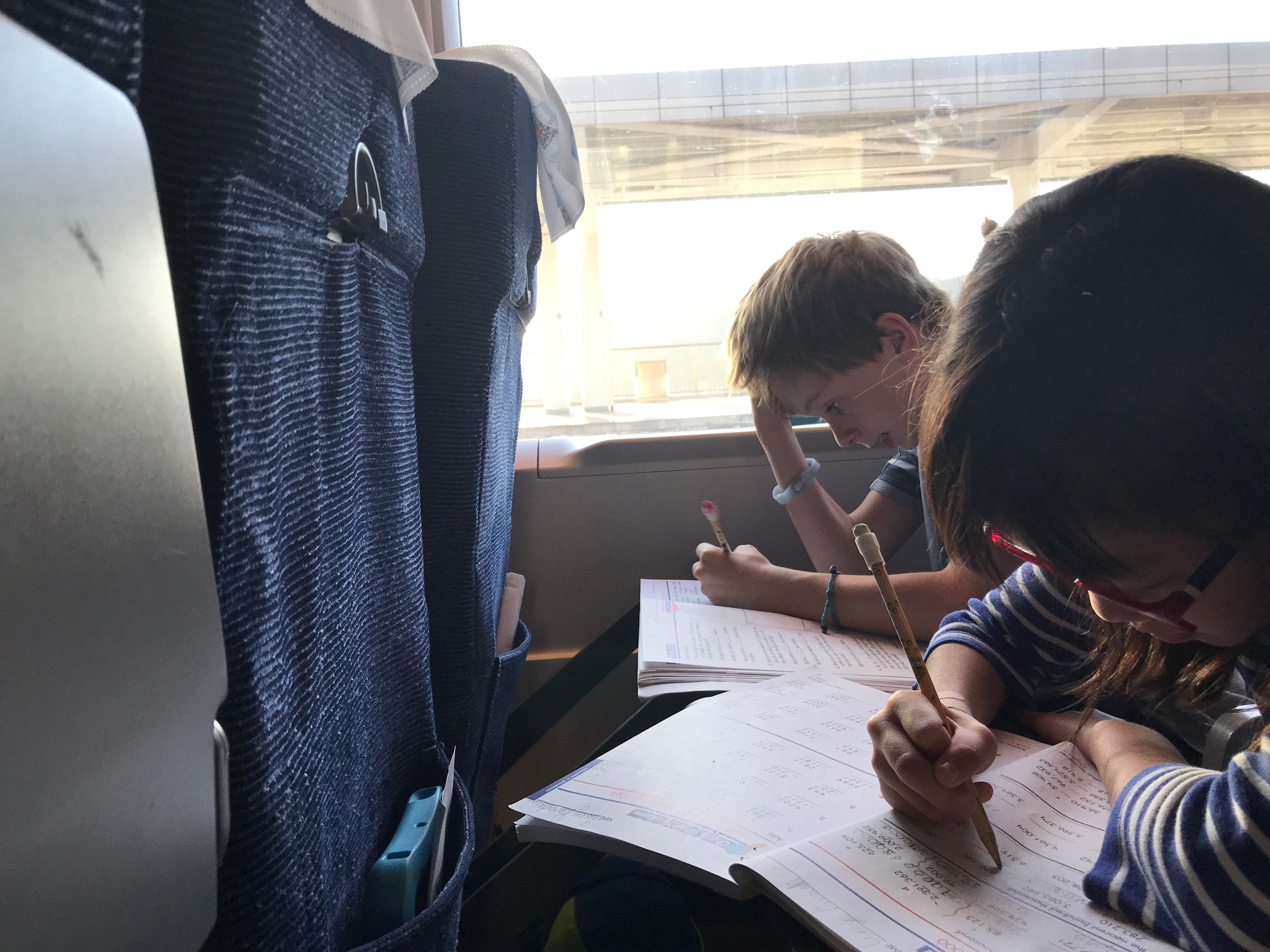
  • And our required acitivity on each train trip was to do a free journal entry and thirty minutes of math.  (Don’t glue the train ticket in the journal until after you get off.  You will need it to exit the train station.)

    road schooling, train, china

    Train trips are the perfect classroom to get math work done before journaling and reading.