Posts

On a cold and rainy October day, we visited the Panda Sanctuary in Chengdu. Fat Pandas snoozing in trees make me happy. The big, cuddly guys find a fork in the tree, wedge themselves in, flop over and doze off. It takes a lot of energy to digest nine hours of bamboo eating.
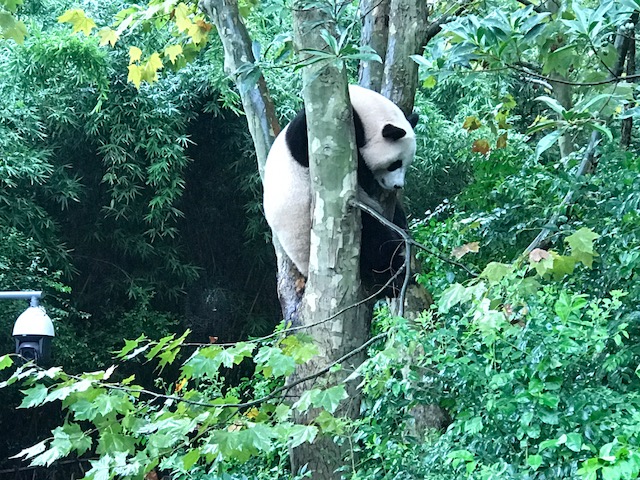
Chengdu, Panda Sanctuary

If you don’t know what to look for, you could miss these guys!

There’s a reason panda’s popularity is so unwavering. They are objectively adorable and there’s nothing scary. They maneuver bamboo with big paws, roll around and snooze in trees. What’s not to love?
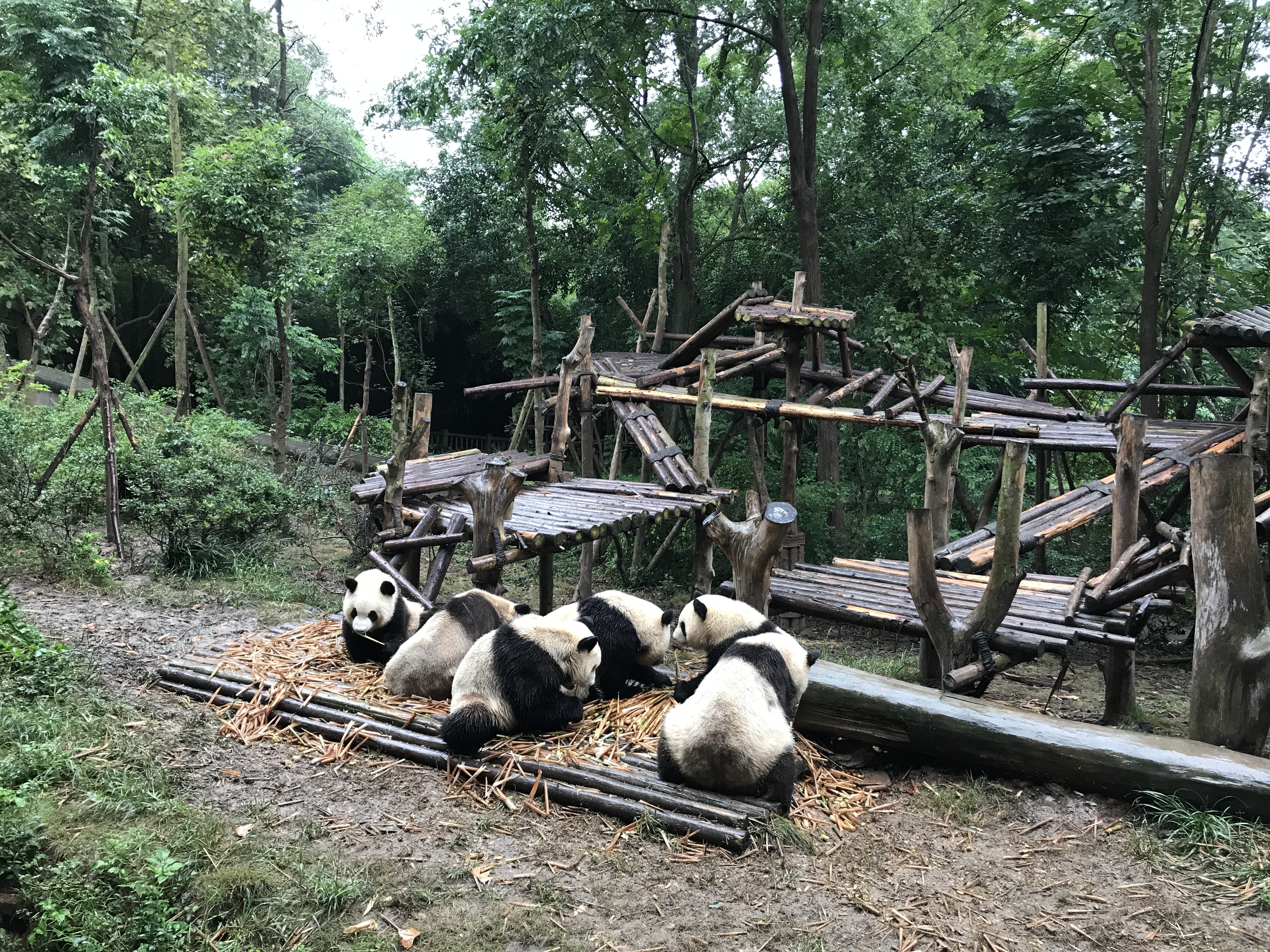
Eating Pandas

The Panda Sanctuary has birthing facilities for both the red and giant pandas as well as veterinarian centers and research buildings.  For the many bamboo-lined miles of walking, there are tea houses and bus lines to help make a day of the visit.  For our October visit, there were very few Western visitors but crowds of Chinese tourists.  We were told that the pandas are more active in the colder weather and that it keeps most tourists away so we were glad for the cool day.
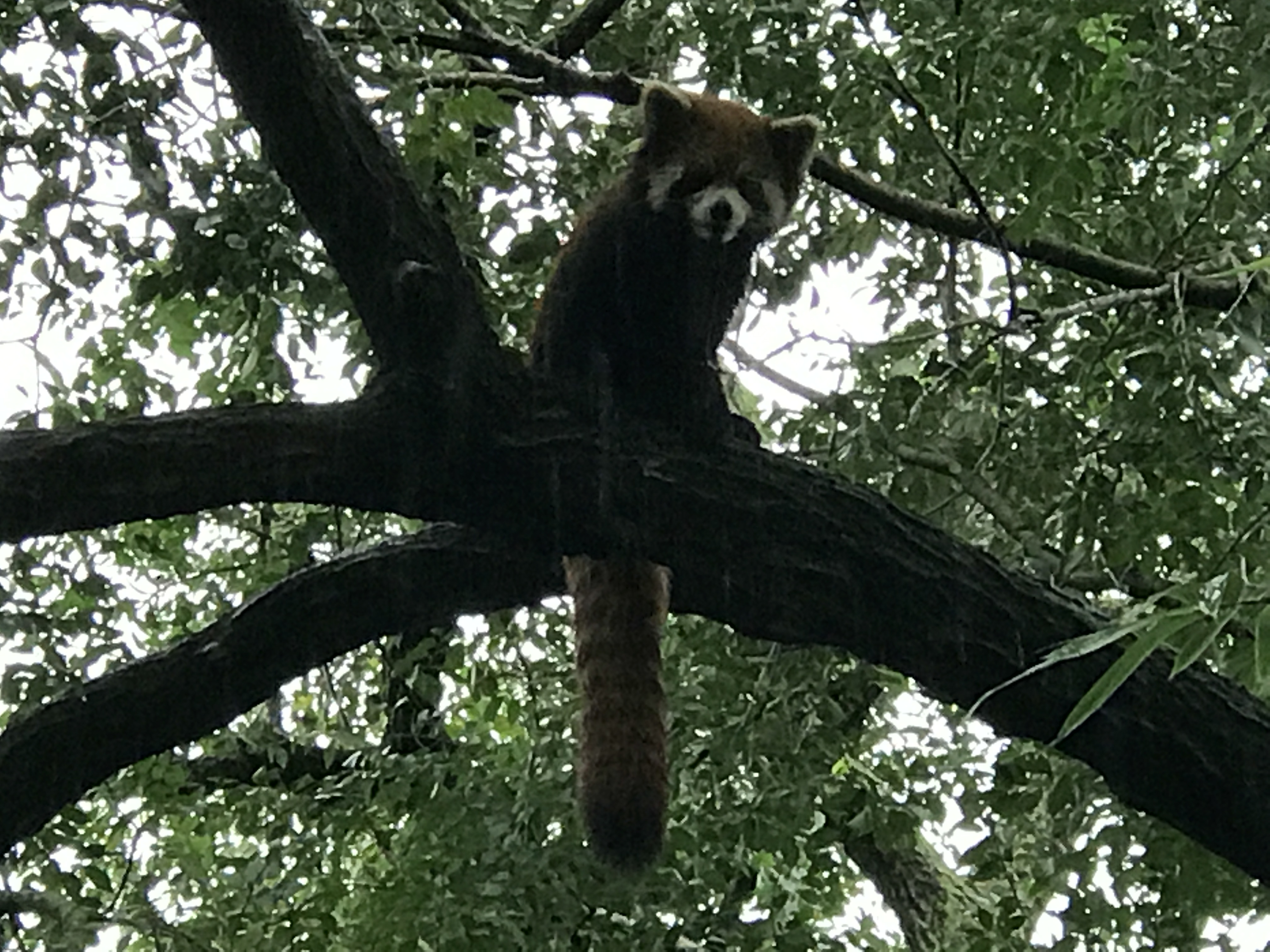
Red Panda, Chengdu

Red Pandas too! There are still some of these guys in the wilds of China, Nepal and India.

Chengdu, though the Panda Sanctuary, is home to the movement to reintroduce them into the wild. “Panda” is the city’s logo and you can feel the pride of ownership to this movement. The current guess is that there are ten or less pandas living in the wild, so you cannot simply release pandas born in captivity into the wild to reintegrate with the others. They need to find enough food, water and open space to find a mate and raise their young. How can they learn these things if not from other pandas? Do they have predators? (Besides humans?)Panda Sanctuary, Chengdu
We saw a film about the protected wilderness just outside the city limits where researchers are trying to reintroduce them. There are actually humans dressed in panda suits (think high school mascot suit) who are acting out what pandas should do and where to go. It’s, at first, funny to watch, then it starts to feel pathetic – a kind of groveling to the wildness we once knew. Maybe it’s more like complete dedication? I just hope it works because it’s sad to think that these gentle creatures won’t survive without such extreme intervention. And what happens to the mascot people in mating season?
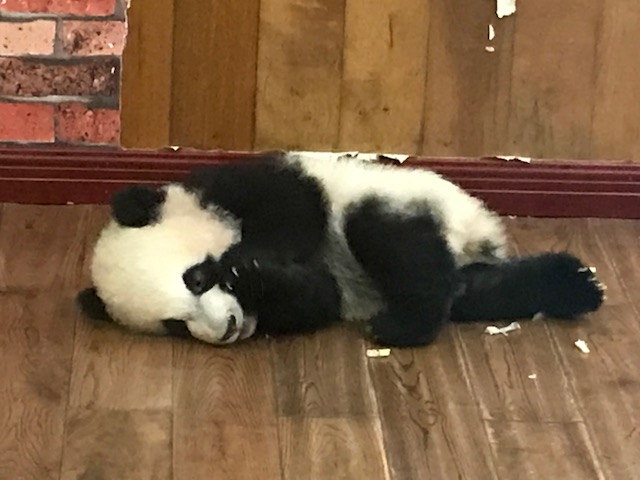
Baby Pandas in the nursery

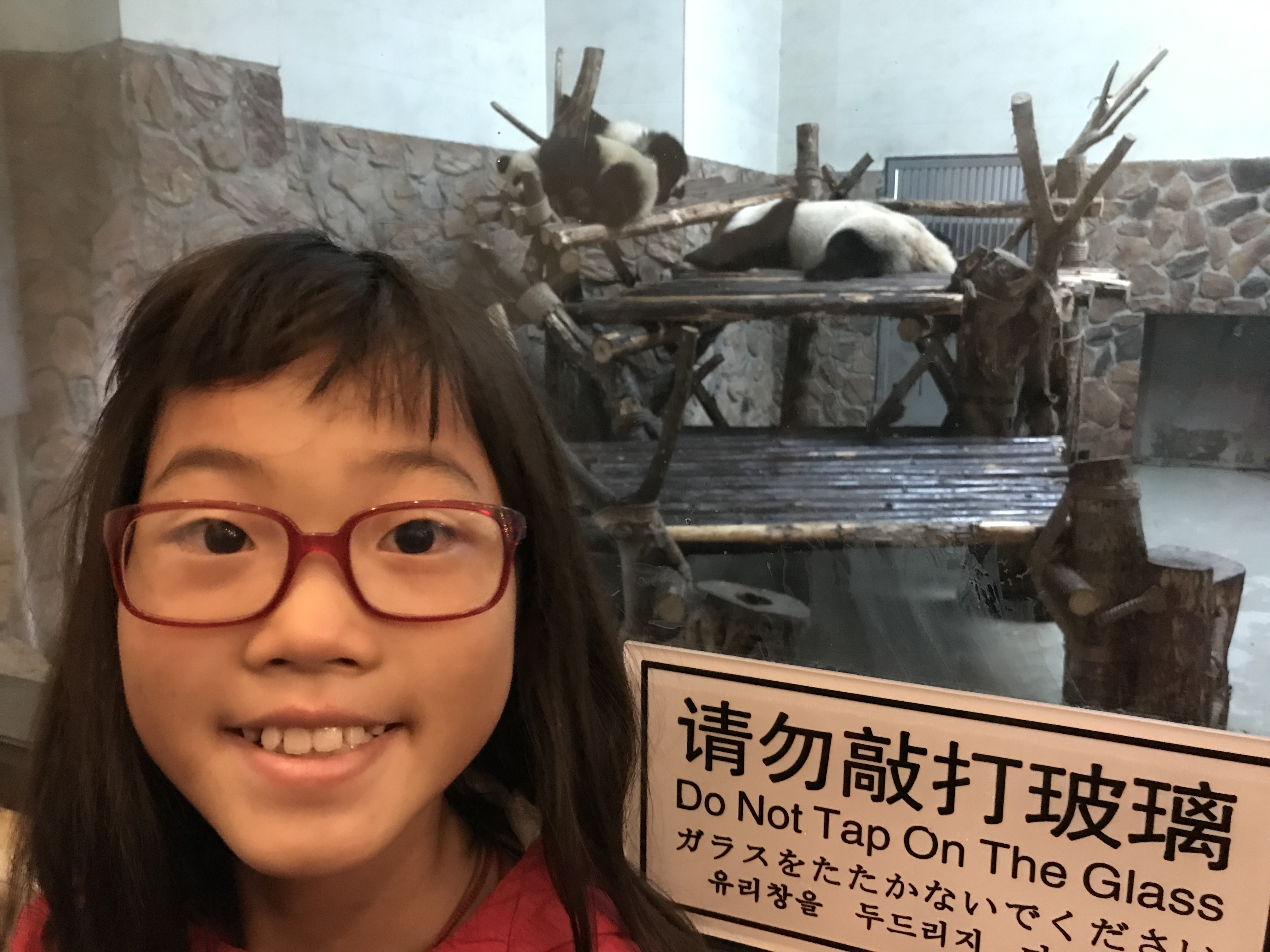
The Paradise Family happily stood in the drizzle to watch them snooze peacefully. We all giggled in wonder. Even Will. And that’s saying something. The kids walked away asking, “What can we do?” “How can we help?” (The best kind of road schooling!) And I guess the answer is the same as it is for most environmental issues: reduce, reuse, recycle and don’t eat meat. Meat consumption, and the need for grazing lands, is the leading cause of wildlife habitat destruction. Through our time at the Panda Sanctuary and their educational kiosks, our kids really saw the connection of it all.  Kids will grow into adults who will protect what they love.  And we definitely love the pandas.
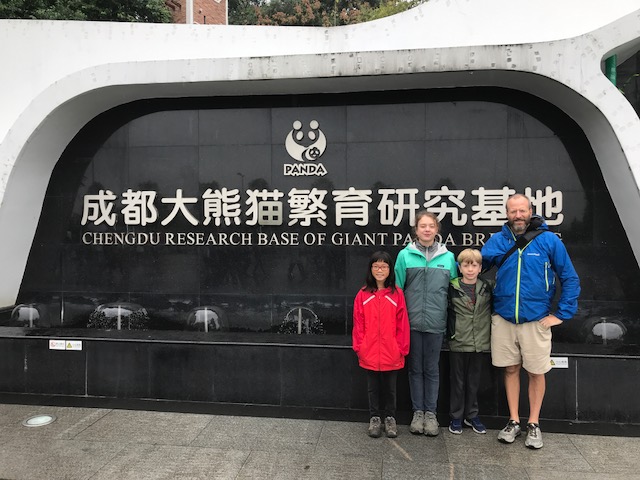
Panda Sanctuary, Chengdu

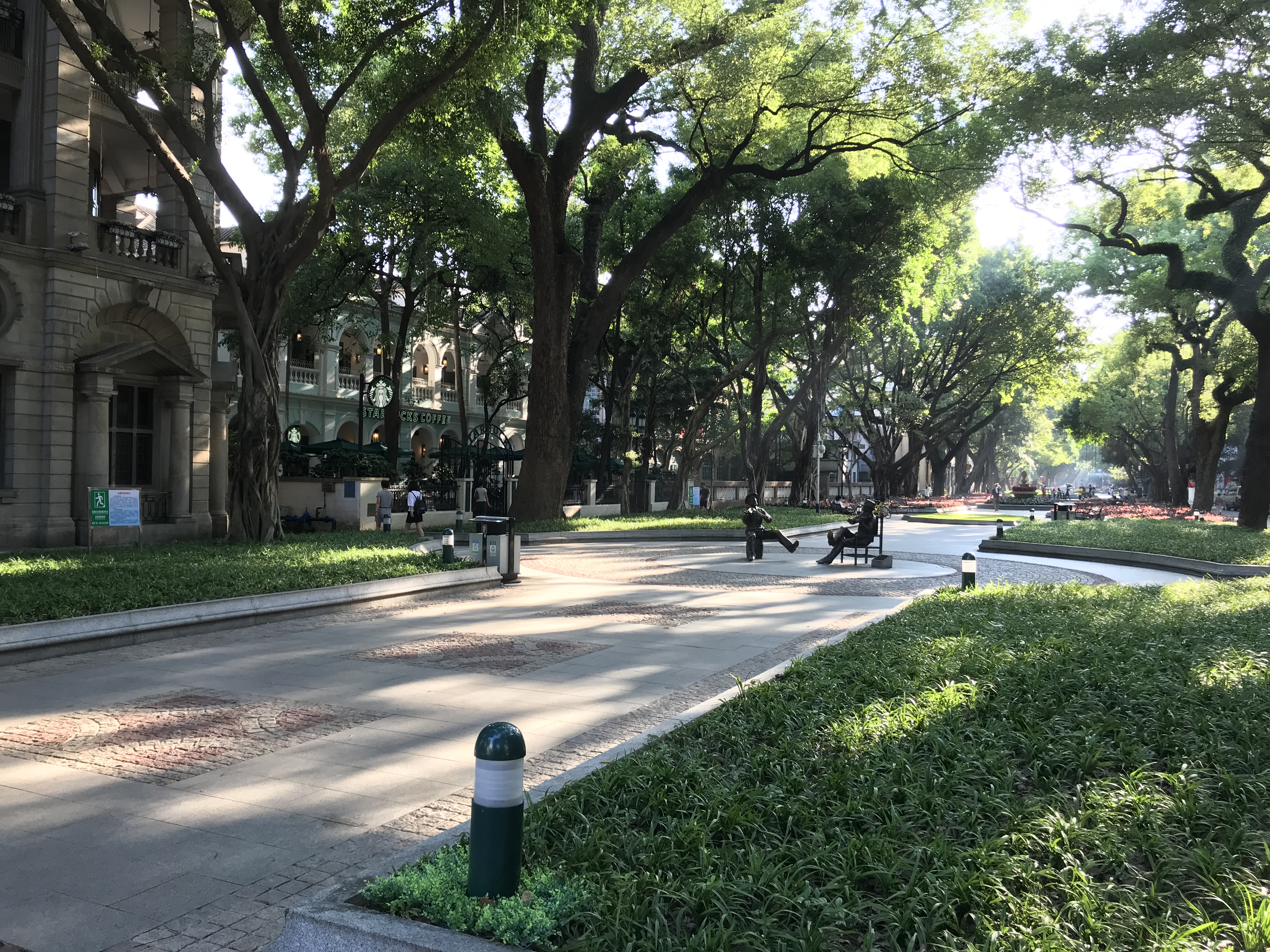
On October 1, after spending two months in Nepal, we flew from Kathmandu to Guangzhou.The last time we were here was seven and a half years ago to meet Lucy and bring her home. There are so many emotions and memories that floated around us when we arrived in Guangzhou, China’s third largest city.  Shamian Island, a quiet enclave within this massive city, is where the American Consulate was located, so all the adopting families needed to stay here while their paperwork processed. All the streets near the old consulate had stores filled with clothing and shoes for little girls, laundry by the kg, a Starbucks and necklaces that said, “mother” and “daughter” in Chinese characters.

Shamian Island

Early morning peace on Shamian Island

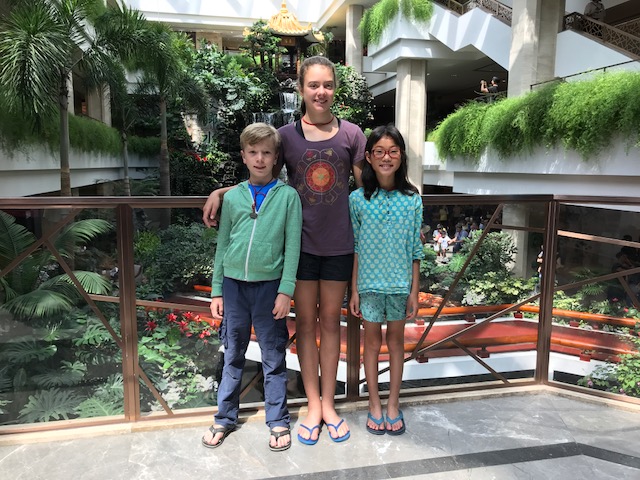
On this trip we wanted to again stay at The White Swan Hotel because we stayed there for two solid weeks for the adoption process. Back in 2010, I remember asking the adoption service travel person if she could send us three hotel options to choose from and her response was something like, “You adopt? You stay White Swan. Everyone stay White Swan.” And indeed, the hotel was totally set up for families adopting from China. When we checked in, the clerk gave us an “Adoption Barbie” by Mattel. Barbie was blonde and she had an Asian baby in her arms. There was a play room, pool, American doctor on staff and a breakfast buffet with both croissants and congee, or other familiar foods from an orphanage.

Chinese adoption, Shamian Island, the White Swan

The inside of the White Swan

The consulate has since moved to Beijing and the amount of adoptions has drastically dwindled so The White Swan, like the rest of China, has completely transformed itself in the last seven years. (Actually, China has probably transformed itself twice since we were here last.) We arrived on National Day and the hotel was packed with Chinese tourists – we only saw one other Western customer the whole three-day stay.  There was not a trace of the adoption system left at the White Swan, only a few of the old neighborhood shops still remained but they looked like business was slow.

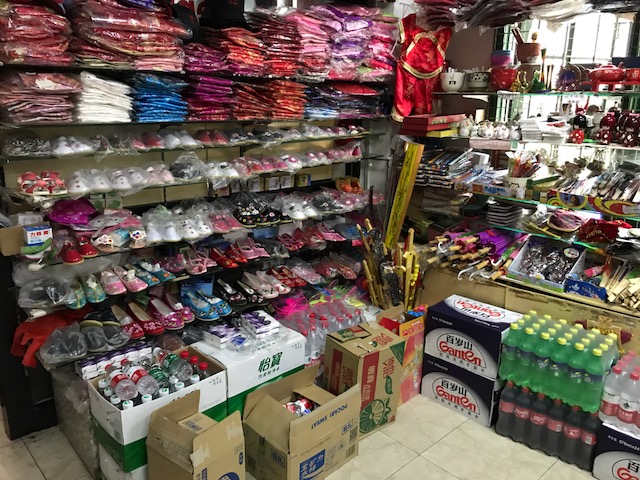
Shamian Island, Jenny's Place

Shamian Island shops still offer shoes and clothing for newly adopted girls.

I’m behind on blogging but we are so glad that we decided to include China in this itinerary. Already Lucy has said that she is proud to be Chinese. Done. Everything has been worth it.

First impressions of China:

  • We are not in Kathmandu any more.
  • The sheer number of people and size of the city is incomprehensible.  The ride from the airport was 45 minutes and we were in a city for the whole time.
  • People here smoke.  My taxi driver was smoking, while texting, while driving to the hotel.
  • The modern dress and affluence of the people.
  • China feels like it has leap-frogged in infrastructure. (We read in Evan Osnos’ book, The Age of Ambition that during the 2008-10 downturn, China invested 50% of its GDP into infrasctructure!)  Everywhere you look, there is a tunnel, massive bridge, irrigation canal or hydro project.  There are cranes and massive building sites in every view and piles of rubble where something outdated has come down.
  • Everyone has a smartphone and they’re using it constantly.  Even more than the US.  Not all phones are iPhones or Samsung’s. There are millions of other brands I’ve never seen before.
  • The selfie stick was a bad invention. They are EVERYWHERE.
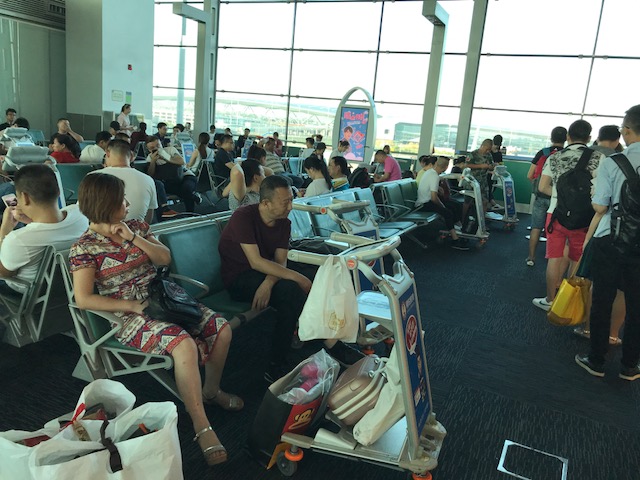
  • China feels way more high-tech than the US. People pay at convenience stores with their phones, they board planes through kiosks, the airport luggage carts have screens so people can play video games or watch TV.  This is not your parents’ China.
  • Outside the tourist areas, virtually no one speaks English.
  • People speak to Lucy in Chinese and are confused when she cannot speak back to them.
  • Random people want to take photos with us.
  • Advertisements use Western models or Western-looking Chinese people.
  • Public transportation is clean, easy to use and cheap.
  • Why isn’t Chinese food served in the US restaurants nearly as good as the food people actually eat in China?

    Guangzhou Airport

    Look closely to see how many people are playing video games on their luggage carts…