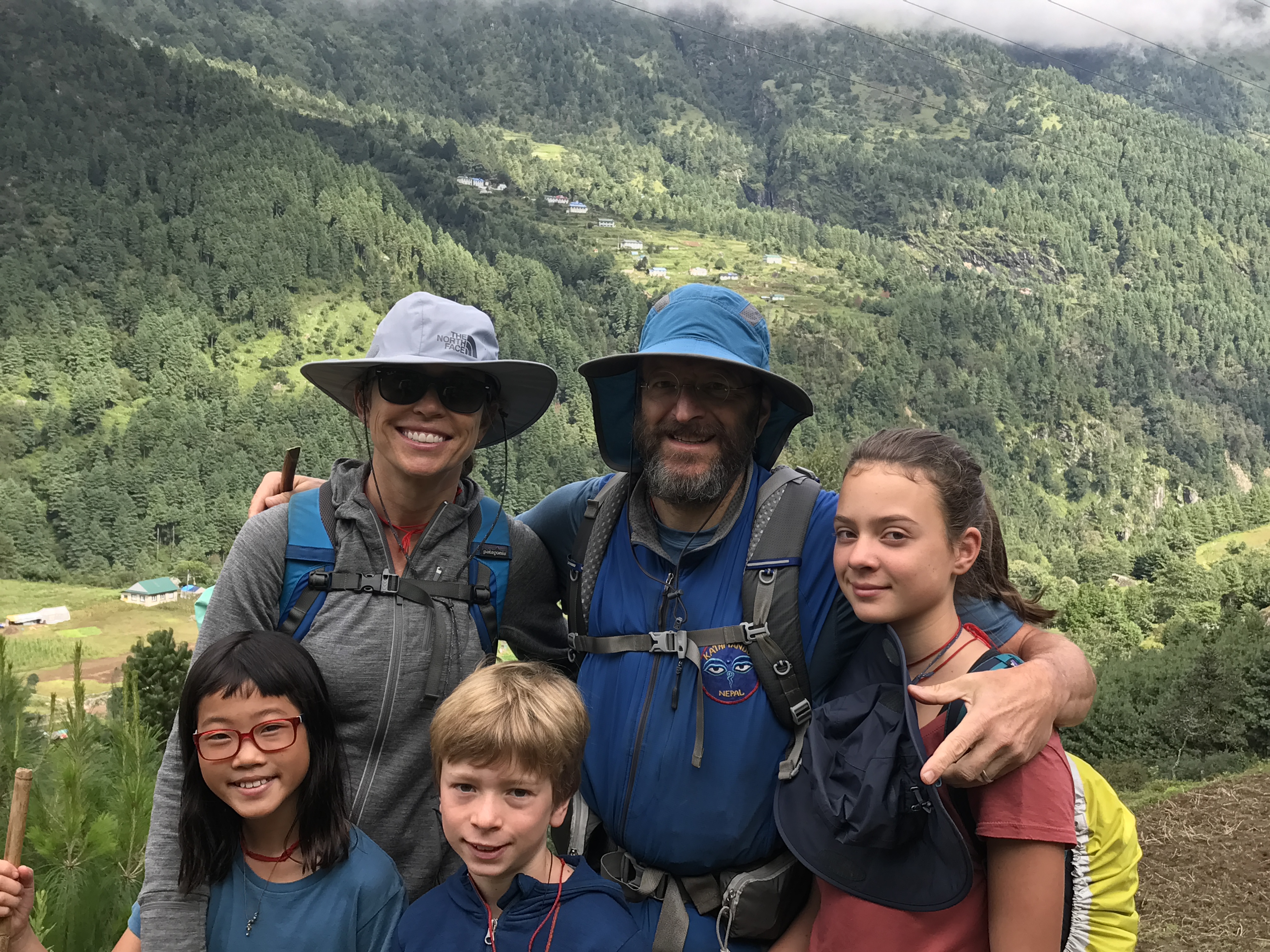
Happy kids!

With direct flights to Liberia, Costa Rica, from most major cities in North America, a family trip to Nosara is easier than ever.  Nosara is a family-friendly beach town on the Nicoya peninsula where you never need to convert your dollars or habla espanol. Unless you want to.  As a blue zone, the peninsula has attracted more and more travelers to the “American Project”, a development project begun in the 1990’s. The beach is actually called Playa Guiones so don’t be confused when “Guiones” and “Nosara” are used interchangably. Our family of five had the privilege of spending six weeks in this gem of a town, enjoying the warm Pacific waters and these are our greatest hits.  See our travelogue here:


Sunset

The major “to-do” on your Playa Guiones agenda will be the sunset.  The entire town comes out to watch it go down. Most of the photos on my phone were the sunset miracle.  There are horses, a bubble performing guy, some belly-dancing ladies, Instagram photos shoots and my personal favorite – sunset surfing, boogie boarding or swimming. (Be warned that there are rumors of more and more burglaries happening at this time.  With all the gringos communing on the beach, it can be a great time for burglars. So make sure to lock up!)
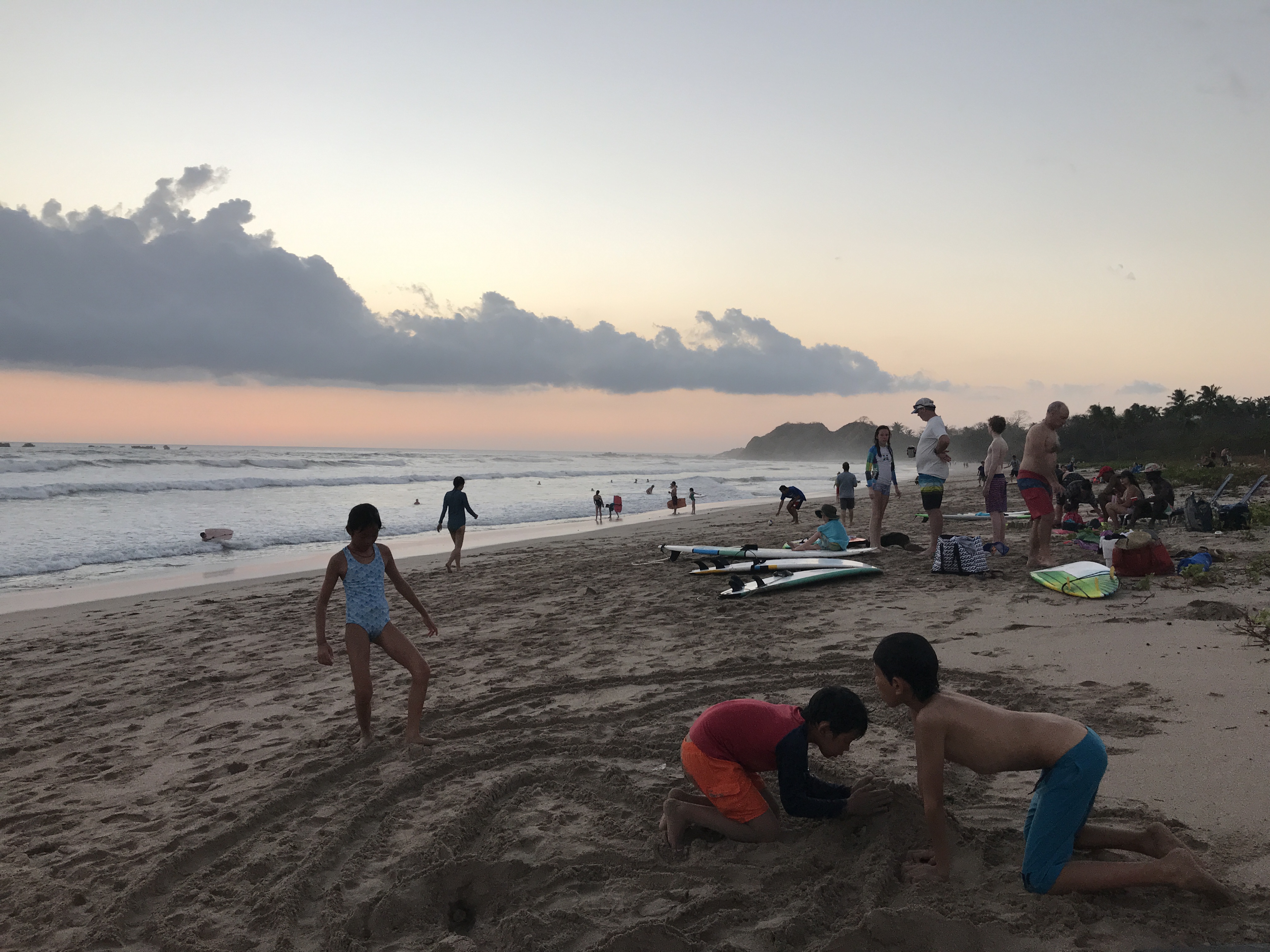
Playa Guiones, Nosara, Costa Rica, sunset

Lots of action on the beach every evening. There’s a collective pause as it finally goes over the horizon.

Nosara Kids Camp

There are two daycamps for kids in Nosara: one is called Nosara Kids Camp and the other is Nosara Day Camp.  We loved Nosara Kids Camp and I couldn’t even get them to try the other one so I cannot comment on “Day Camp”, but I do know that “Day Camp” does get full and they were in town first.  Our “Kids Camp” has daily surfing and an activity, like: cooking or baking a local treat, visiting the climbing wall, arts and crafts, ocean study, beach clean-up or jiu-jitsu.  Activities rotate daily and the schedule is on their website.  They slather the kids with zinc and require a sunshirt for surf. My kids adored the counselors, learned some Spanish and the 4.5 hour break was perfect!
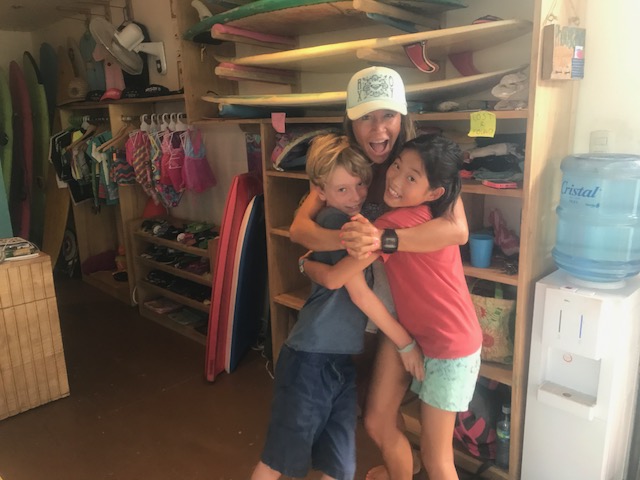
Nosara Kids Camp, nosara, play guiones

Hard to say goodbye to Paola, who ran the camp.

Mariposa Popsicles

These are locally made by an entrepreneurial mom and available at most local grocery stores: Delicias del Mundo, Super Nosara and Organico.  Sugar free, vegan, full of superfoods AND kids can’t get enough of them!  All parts of the popsicle are compostable so there’s no plastic trash.  Each one comes with a beautiful, reusable sticker too.  We just wish they were available back home.
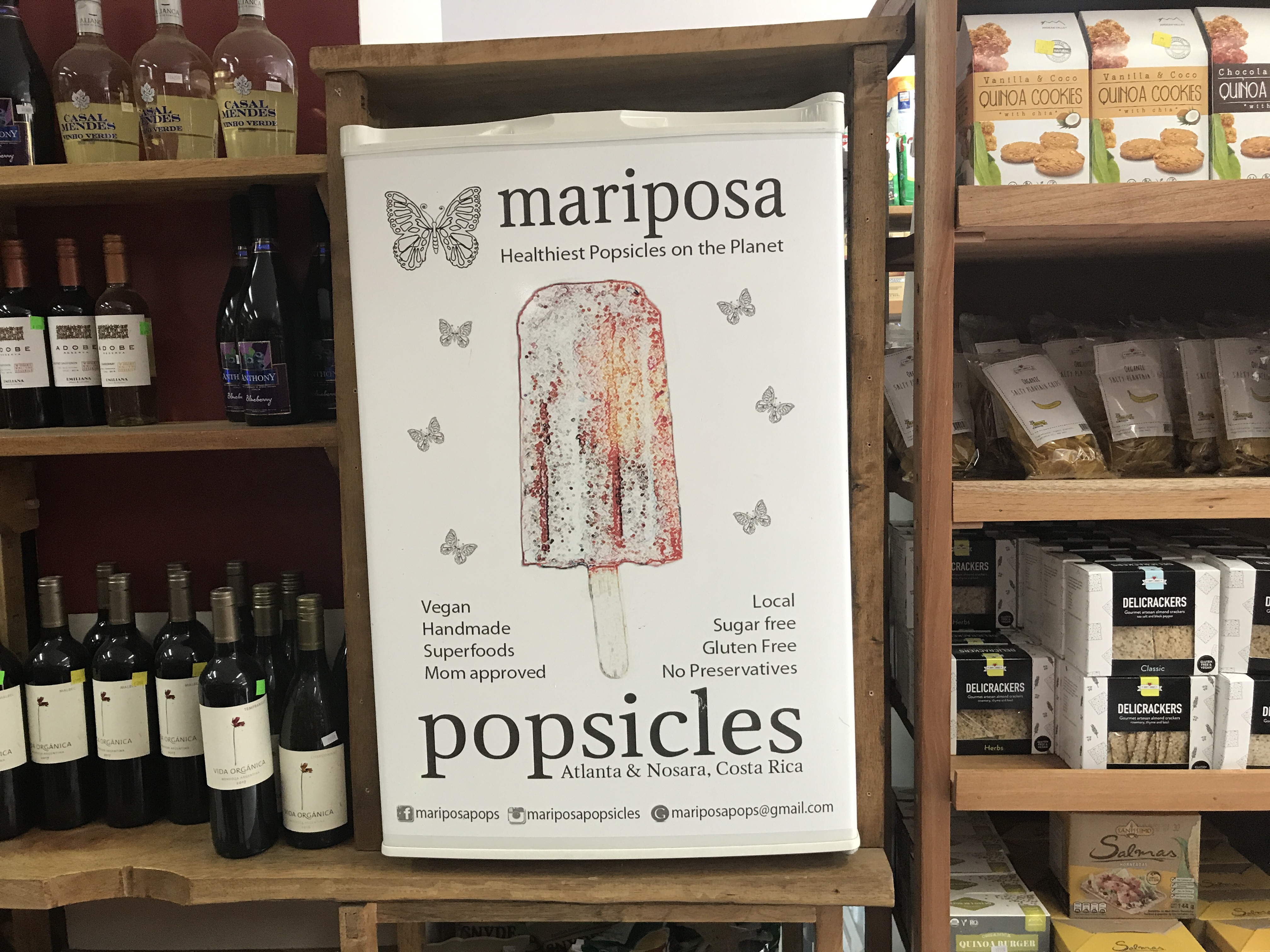
popsicle, Mariposa, Nosara, Playa Guiones

The Mariposa fridge stocked full at the Organico grocery store.

Family Nosara Surf and Boat Trips

We used Natalie’s Family Nosara Surf to plan two outings for us. Natalie takes the guesswork out of the logisitics: she organizes the transportation, communicates to the local operators and sends and invoice by paypal so we don’t have to always pay with a wad of dollars.  Contact her before you arrive in Guiones and she will organize as much or as little as you need.  And she’s a wealth of local knowledge. She helped to organize a four- hour trip with another visiting family on a fishing boat to snorkel around a pink sand island and then went chasing the pods of spinner and bottle nose dolphins.  We had social dolphins playing in bow and breaching along our sides.  She also organized a stand-up paddle or kayak tour on a nearby river.  Family Nosara Surf also organizes horseback riding, and surfing lessons and beach bonfires.

standup paddle boarding, SUP, playa guiones, nosara

Standup paddling on the local estuary. Once we heard there was a local crocodile, we were very happy to spring for the guide.

Surfing

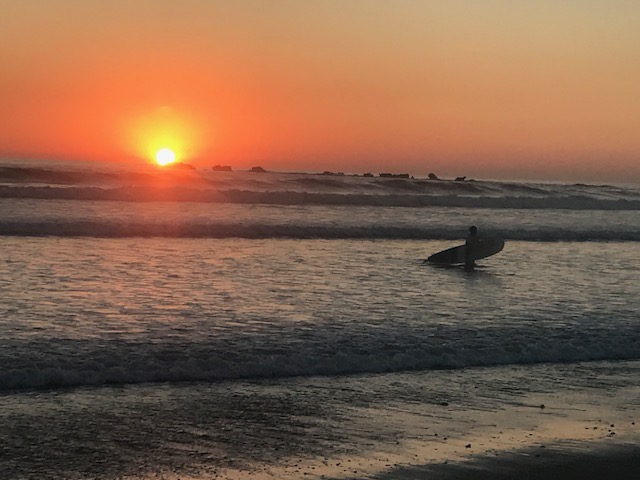
You will be amazed at how much easier it is for your kids to surf than you. There are loads of places in town to teach, but find one that specifically caters to kids. I recommend Nosara Family Surf. If you’re already competent, it’s still smart to start out with an instructor to point out the personality of the break, the beach and the tides.  Sunset surf?  Perfect!
nosara, sunset, playa guiones

Family surf sessions in the evening are the best: no sunscreen worries and it’s not too hot.


Aerial Yoga

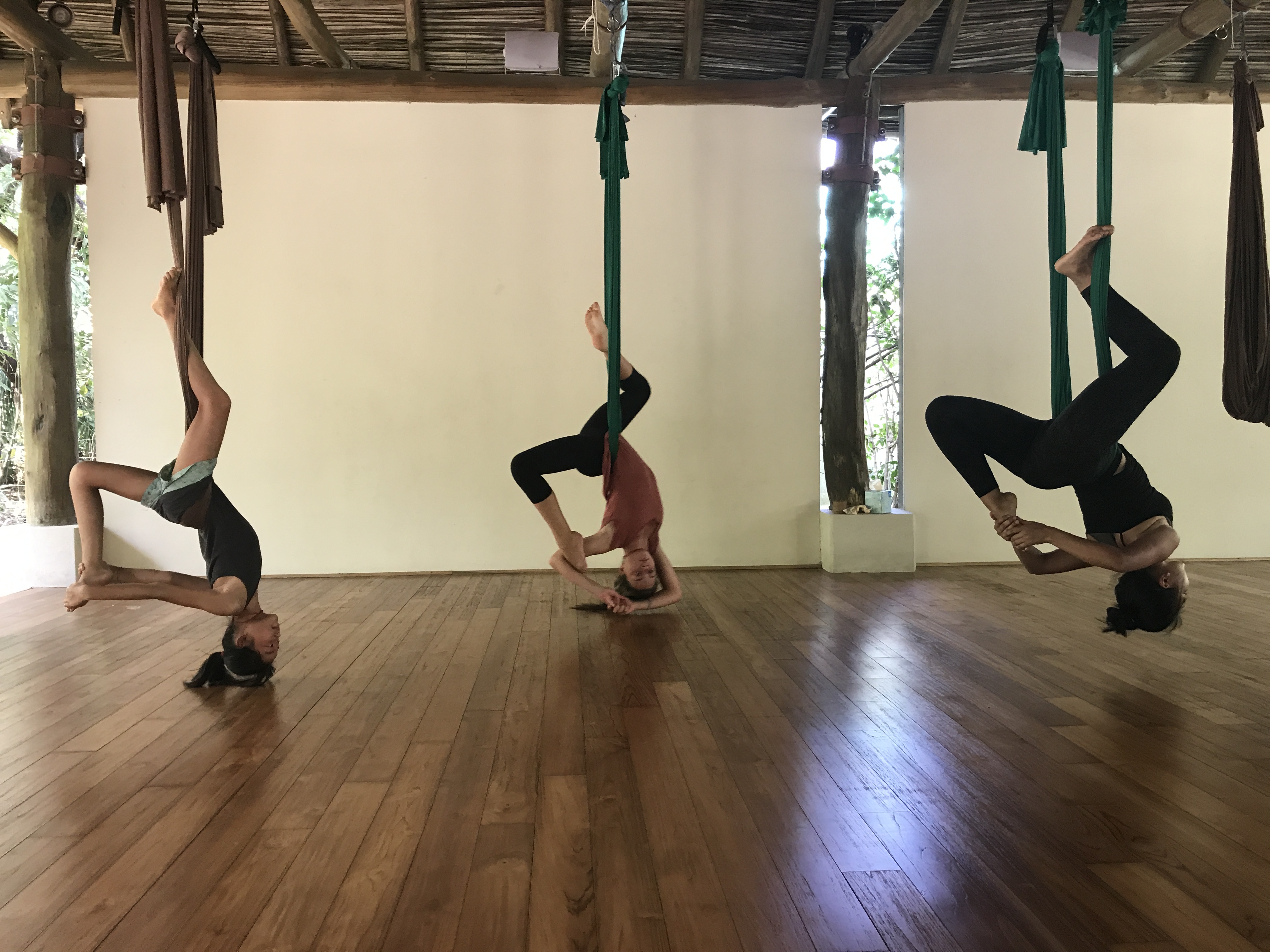
Surprisingly, it’s a big thing down here.  It combines the “silks” aspect of circus classes with regular yoga and you get to soar like a super hero. Try it. The cocoon-like moments can get a bit hot mid-day but it’s great to try out. You can check out their schedule and website from their facebook page: or look at the schedules from these two local studios: Bodhi and Harmony House.
aerial yoga, Harmony House, Playa Guiones, Nosara, yoga

Hanging around at the Harmony House’s aerial yoga class.

Zipline

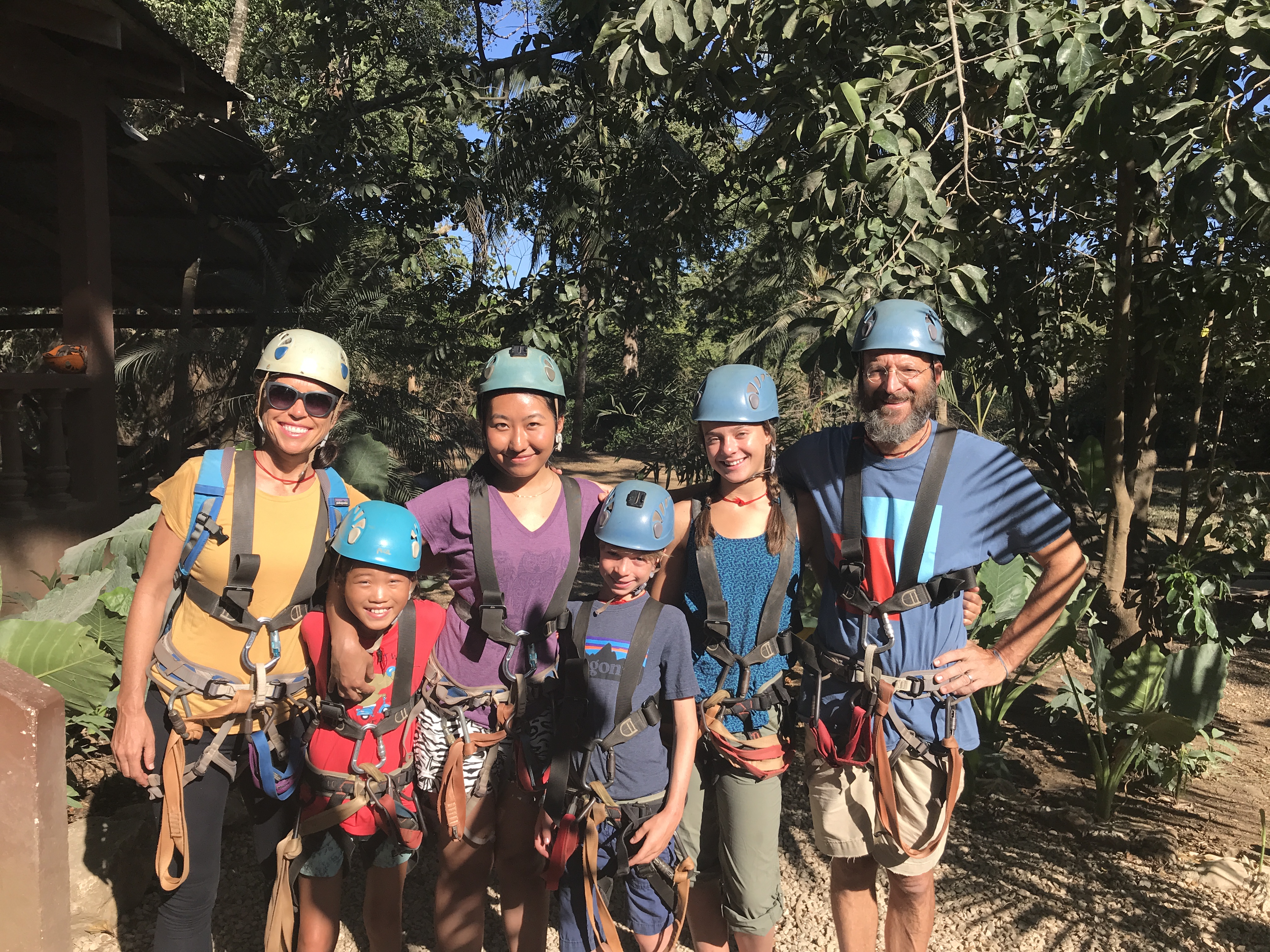
Behind surfing, this is my kids’ top recommendation.  The guides for Miss Sky Canopy Tours are fantastic and they will ham it up and do tricks. We always felt safe – kids younger than 12 or extra small need to be attached to an adult for some added mass.  There are 13 segments of line spanning  11 kilometers.  Half of the fun is loading up with your gear and riding in the truck to the course.  The ziplines are open for kids ages seven and up.
zipline, costa rica, nosara, kids

Getting ready for the zipline! Little kids were fine if they were attached to us.

Coconuts from the Cat in the Hat

The friendly rasta man on the corner pushes “pipas” or coconuts for $1. They are the perfect thirst-quencher and hydrator – a daily activity for us and don’t get a straw please, says my nine year-old.    There’s a whole ocean that will thank you.


Beach Bonfire

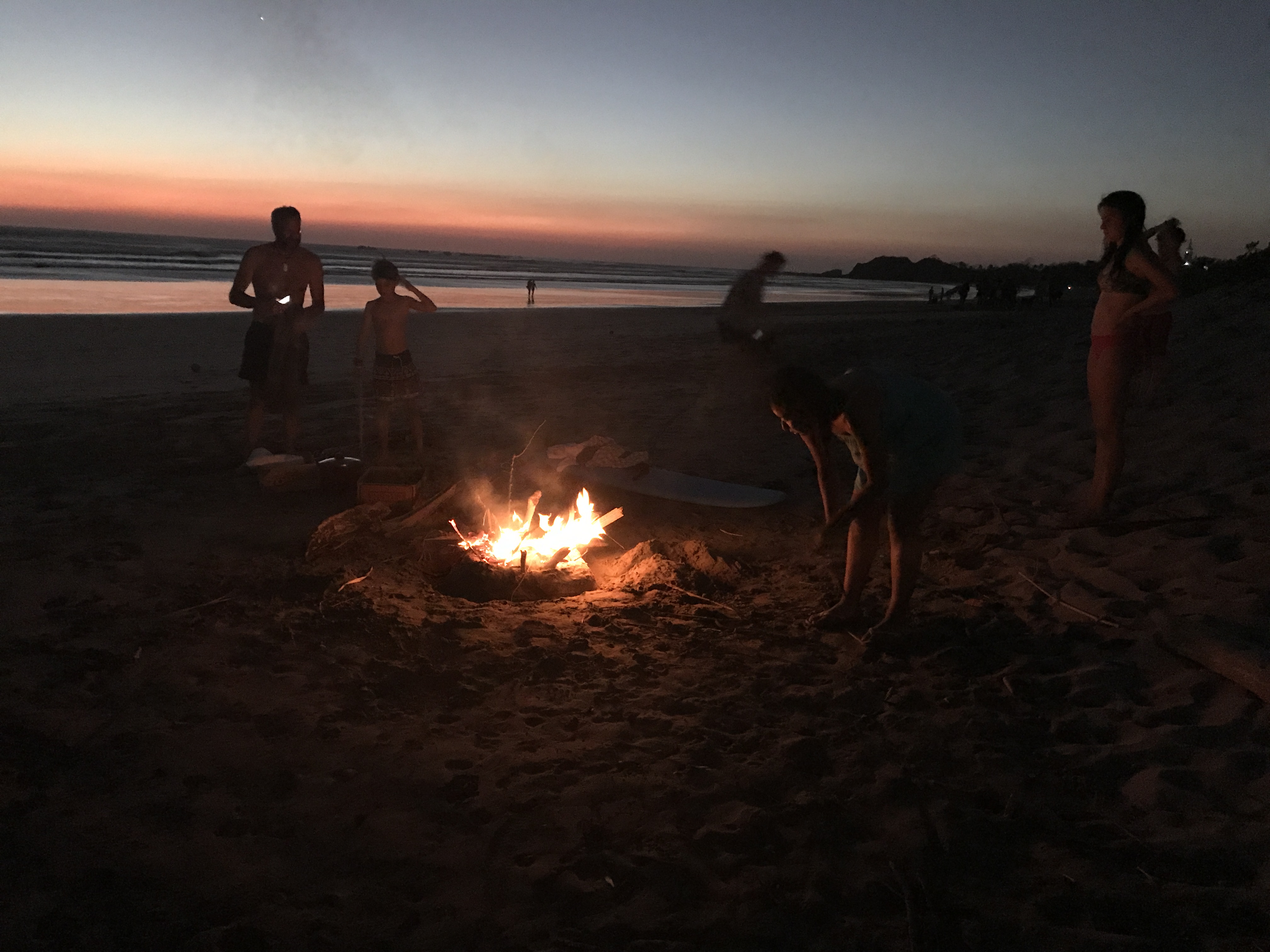
Nosara Kids Camp does their own beach bonfire each Friday, but if you can swing it, make one yourself on a low tide sunset.  All the grocery stores sell marshmallows (with wacky flavors, like chocolate-filled) and chocolate bars. We used local the local Tico “Maria” crackers instead of graham crackers.  We prepped our s’mores on the surfboard under a blue moon.  I hope you get the same stroke of luck.
s'mores, bonfire, nosara, Costa Rica

With all the dead driftwood on the edge of the beach, the beach bonfire is a cinch!

SIBU

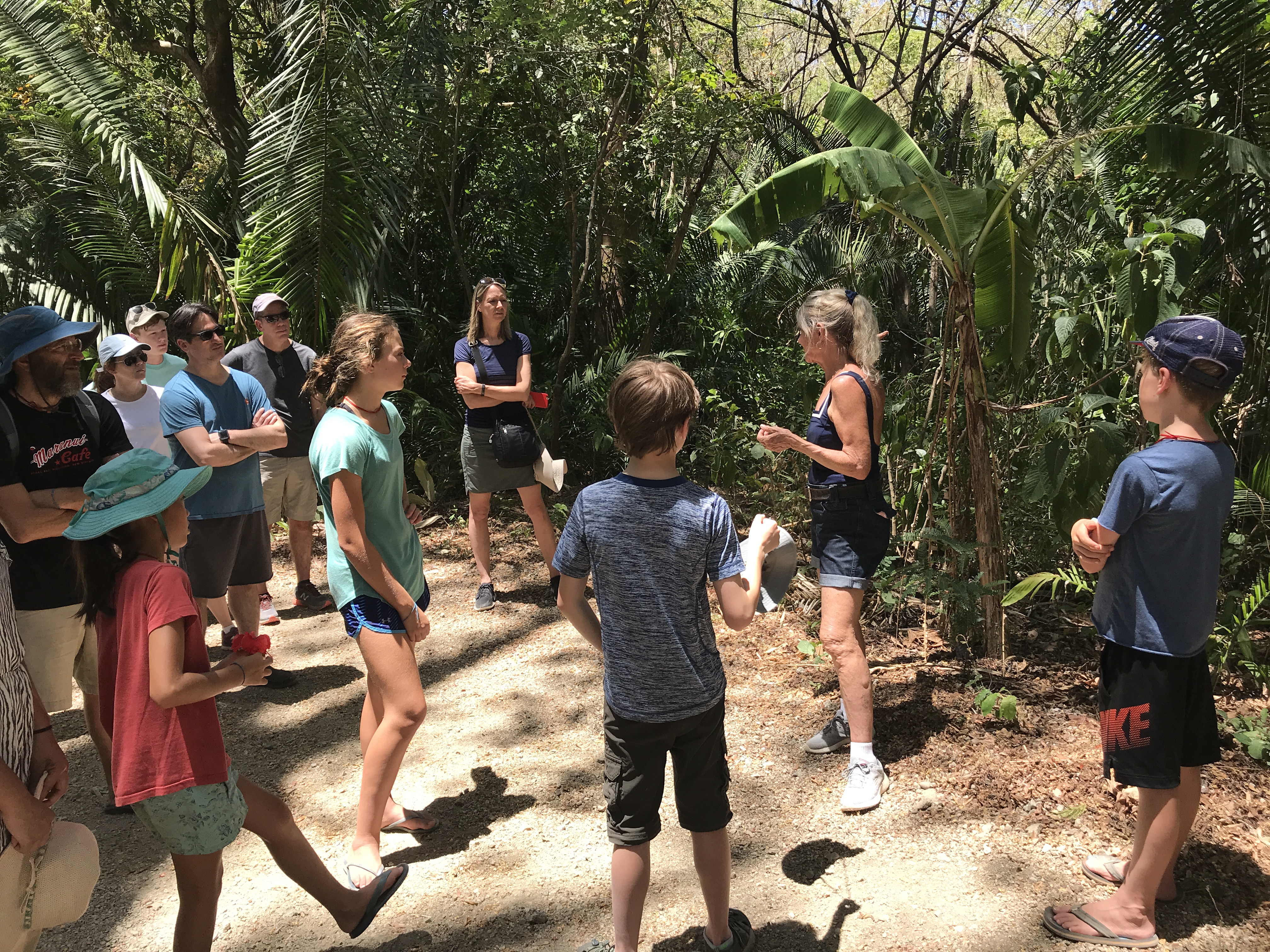
There are two wildlife sanctuaries in town and they are both doing great work. We chose to go to SIBU and it was one of the highlights of our trip.  The founder, Vicki Coan, is a passionate protector of the area’s Howler Monkeys, fights against the local government to rewire the area’s power lines to monkey-friendly wiring, and tells stories of waking in the night to wrestle boas off of her baby monkeys.  She is a fiercely protective and passionate conservationist and it’s always worth the price of admission to support her endeavors and show your kids an inspiring role model.
SIBU, nosara, howler monkeys, wildlife sanctuary, costa rica

Learning all about the effect of tourism on the local Howler Monkeys from founder Vicki Coan.

Golf Carts

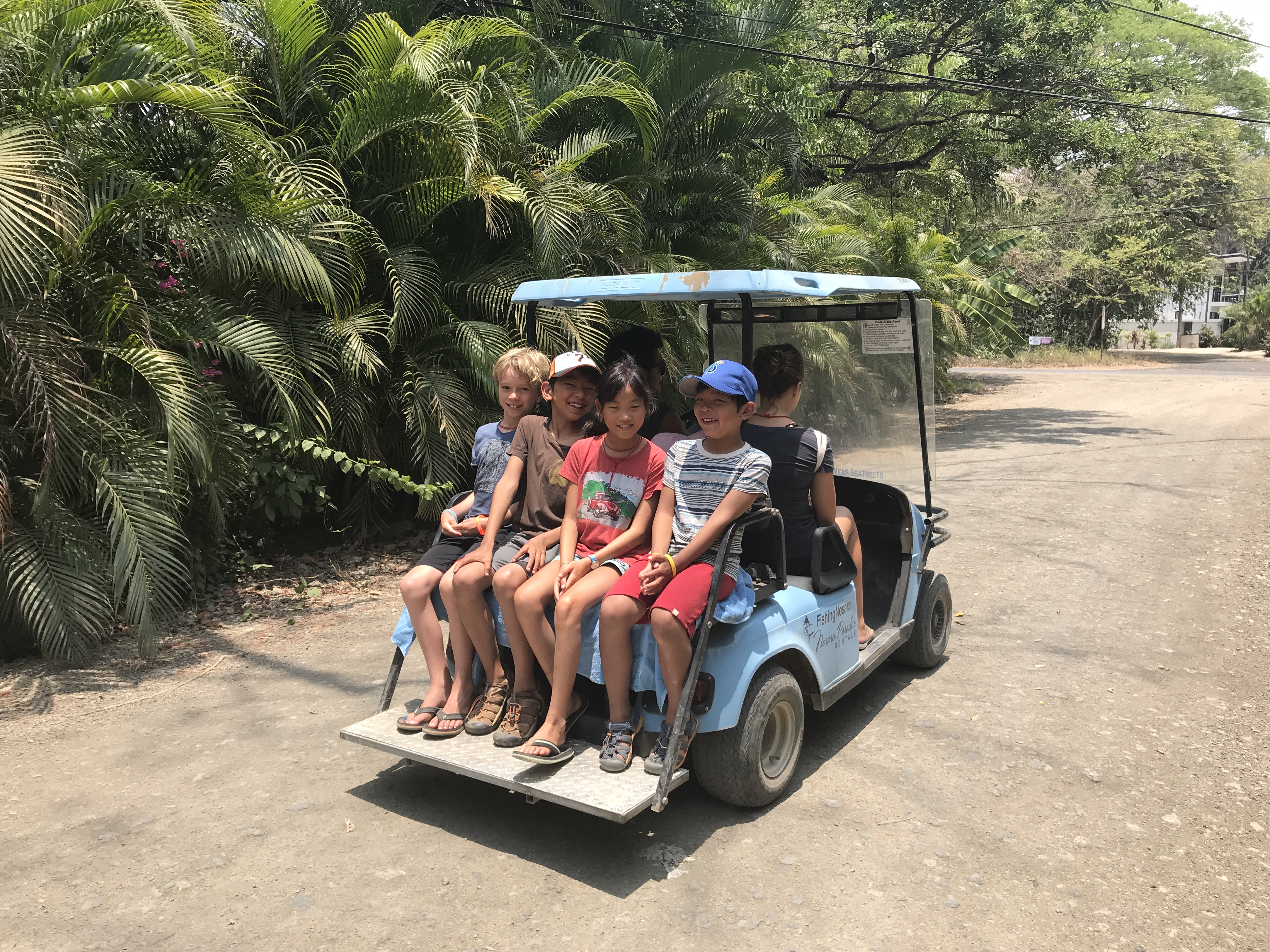
If your kids are young or you want the ease of carting around kids and boards, there are numerous places to rent golf carts.  They are expensive, but the kids sure are having fun!  Our kids are all more than nine years old and we like walking, but it did mean walking home from dinner in the dark and there was definitely some golf cart envy.  You can rent from Paradise
playa guiones, nosara, costa rica, golf cart

Everyone loves a golf cart!

Favorite Eats:

10 Pies for pizza, salads and regular Tico faire.  Call ahead for a reservation. +506 2573 3236

Robins Cafe in North Guiones has fresh, healthy food.  It’s reasonably fast and fairly-priced.

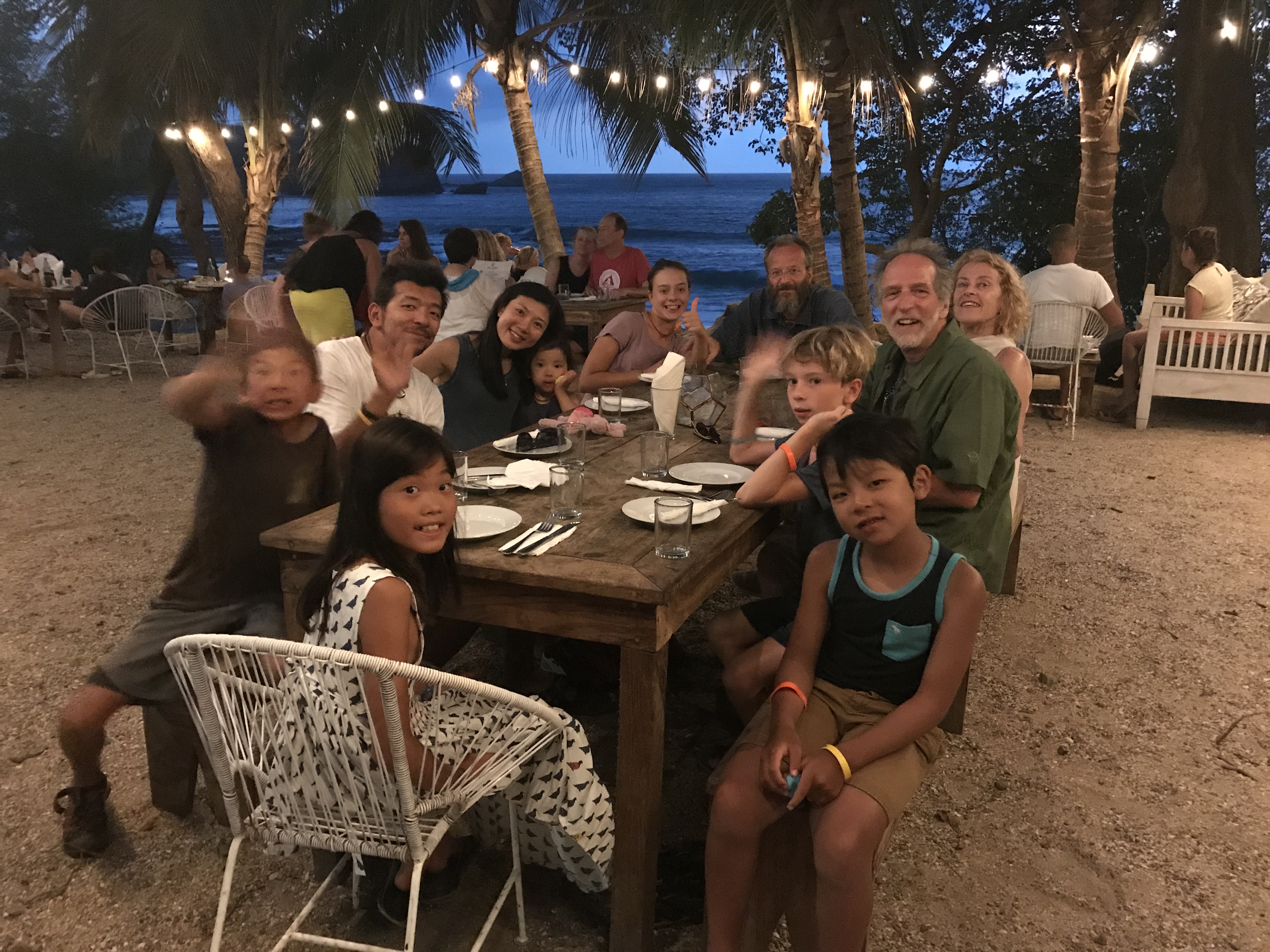
La Luna is the only beach-front restaurant around and has incredible food. The waitstaff are notoriously grumpy, but for us, it was part of the charm and great entertainment.  You can take the trail from Guiones, drive or plan a cab. (no website or email) +506 2682 0122 but reservations are a must!

Beach Dog Café has great margaritas and pickle-mole.  The live music in the evenings would be great if you didn’t have kids so go for lunch or a pre-sunset snack.  Service, food and T-shirts are all impeccable.+506 2682 1293
La Luna, nosara, playa guiones, costa rica

Enjoying the beachside restaurant, La Luna

On Friday the 23rd of February, we visited Elephant Nature Park in Chiangmai Thailand. We learned lots about elephant tourism, and just elephants in general.

Elephant Nature Park, elephant tourism, Chiang Mai, trekking, Thailand

This is an adoptive family at the sanctuary. They have all been rescued from different places, but now have formed a family where they communally care for their blind and baby family members.

Elephants by nature are very sweet and gentle animals with the exception of a few aggressive males, but the intense training and abuse they must go through in order to perform in any way shape or form traumitizes them so that they are essentially crazy. We learned from our friend that elephant tourism is very complicated. Elephants in the wild are captured and taken to circuses and elephant trekking companies, but first they must go through “The Crush” or domestication. For about seven days they are tied up, starved and beaten to such extent that they are terrified of humans, and easier to train. Since they know that they will be hit if they don’t do what they are told, they are scared into painting, performing, or learning how to be ridden.

Chiang Mai, Elephant Nature Park, elephant, elephant tourism

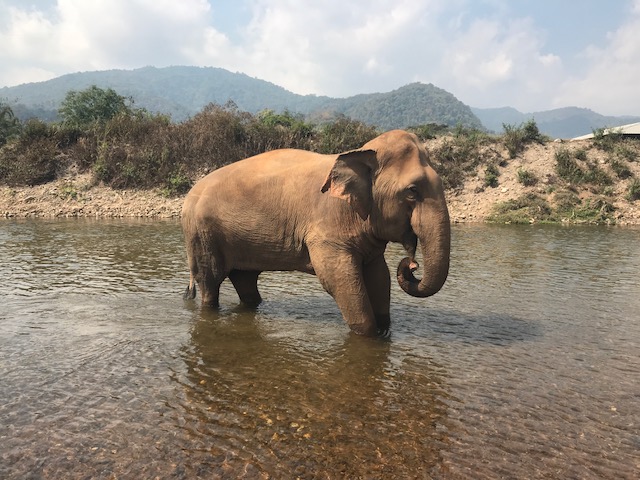
Happy elephant. Lots of room to roam and loving to rehabilitate her leg injury.

Sanctuaries like Elephant Nature Park will buy them out of this situation and put them into a free habitat without being chained up or any type of restraints, just acting like a normal elephants. But, since these sanctuaries are paying big money for these elephants, they’re accidentally creating a market for elephant buying. People will smuggle elephants over the border from the Burmese wilderness, and sell them to the sanctuaries telling them if they don’t buy the elephant they’ll sell it to a circus. But if the elephants stay in the wild, they are captured by trainers and the males are poached for their tusks. Also in Burma using elephants for logging isn’t illegal, so that just causes a whole new problem. Me and my family decided that they best thing we can do is support the sanctuaries, because at least these elephants are living in Paradise.  And we can spread the word to discourage elephant tourism.

You can look up Elephant Nature Park, and there’s a good video that shows you the truth behind Elephant tourism. And, if you ever come to Thailand, DON’T RIDE THE ELEPHANTS

elephant, elephant sanctuary,

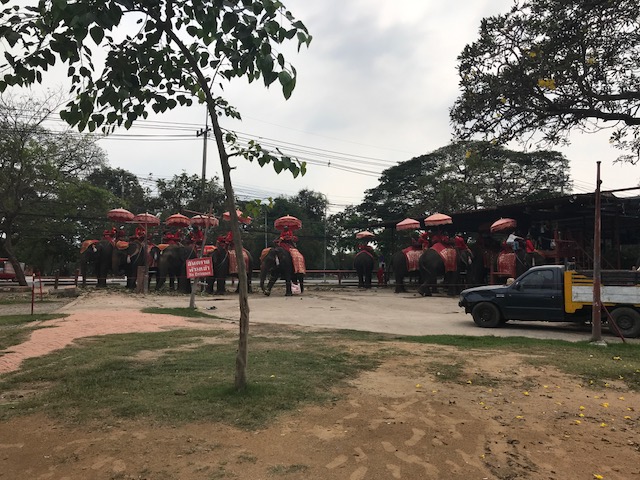
This is not normal. These elephants were ridden by tourists in Ayuthaya, central Thailand. Just common intuition tells you that they’re not happy in costume and walking down the highway.

In November of 2017, we had the great fortune to spend a month tramping around the South Island, discovering both her natural wonders and quirky present.  These are our greatest hits:

  • Swimming with the Dolphins
  • Spontaneous play dates between our kids and the others of the campgrounds.  Our kids met penpals from New Zealand, China and the US.  Some campgrounds like the Top10’s have state-of-the-art play spaces and others have downhome, sweet ones.  But kids just love a playground and the ice, broken easily between kids, can build bridges to parents connecting and talking the way that parents do.  Parenting is universal.
    campervan, New Zealand, tramping, kids

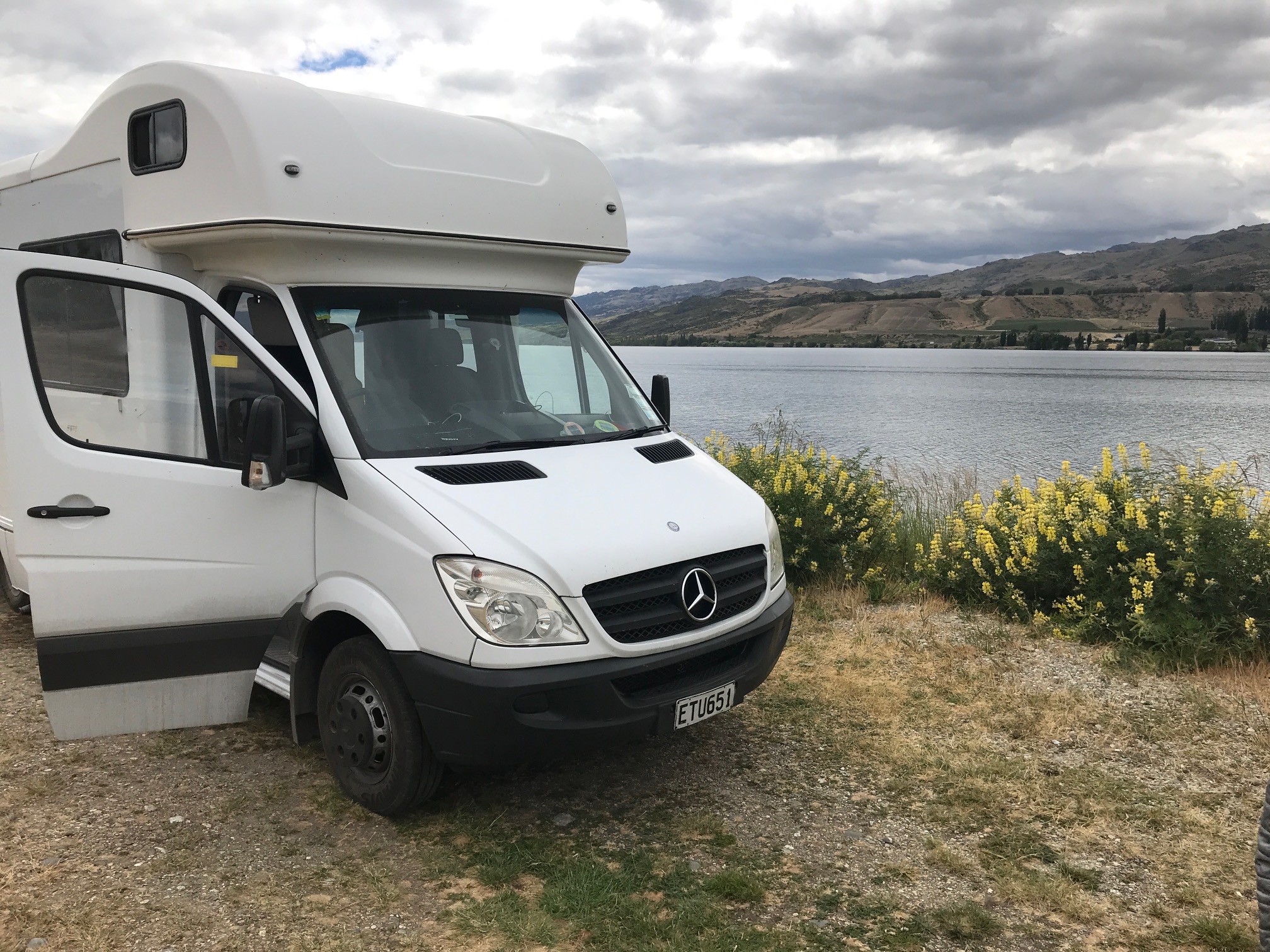
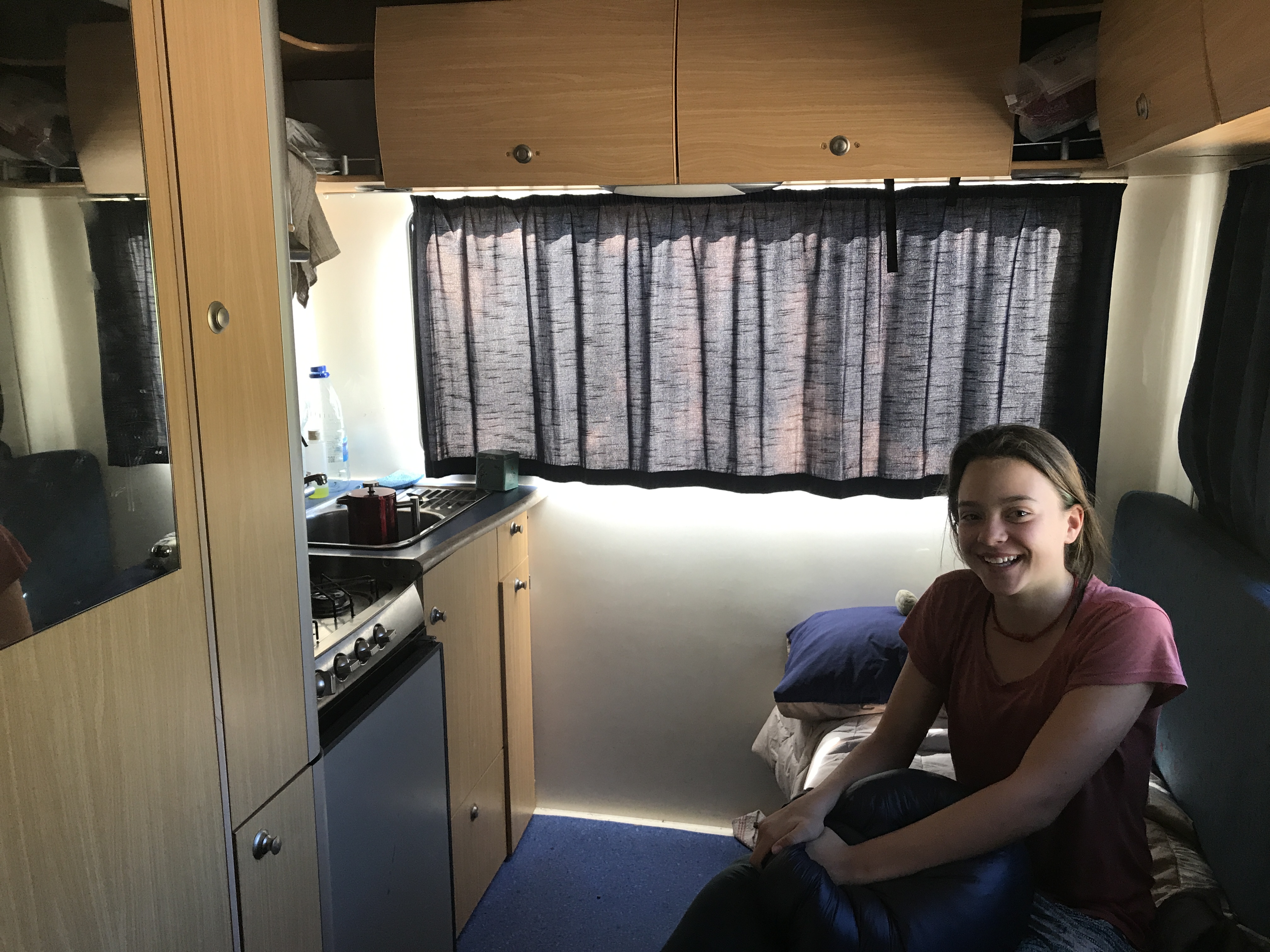
    Our home for a month. Room to sleep six humans, a guitar, cello, violin and viola.

  • Watching the Blue Penguins ascend from the Oamaru coast in “rafts”. Hundreds came in wave after wave of rafts – a mosh pit of tiny blue torpedoes.  They land, shake it off and toddle up the rocks, unknowingly on display in front of bleacher seats of spectators.  The hushed voices of the commentators, educate and make certain there are no flashes or loud noises… in English and Mandarin.
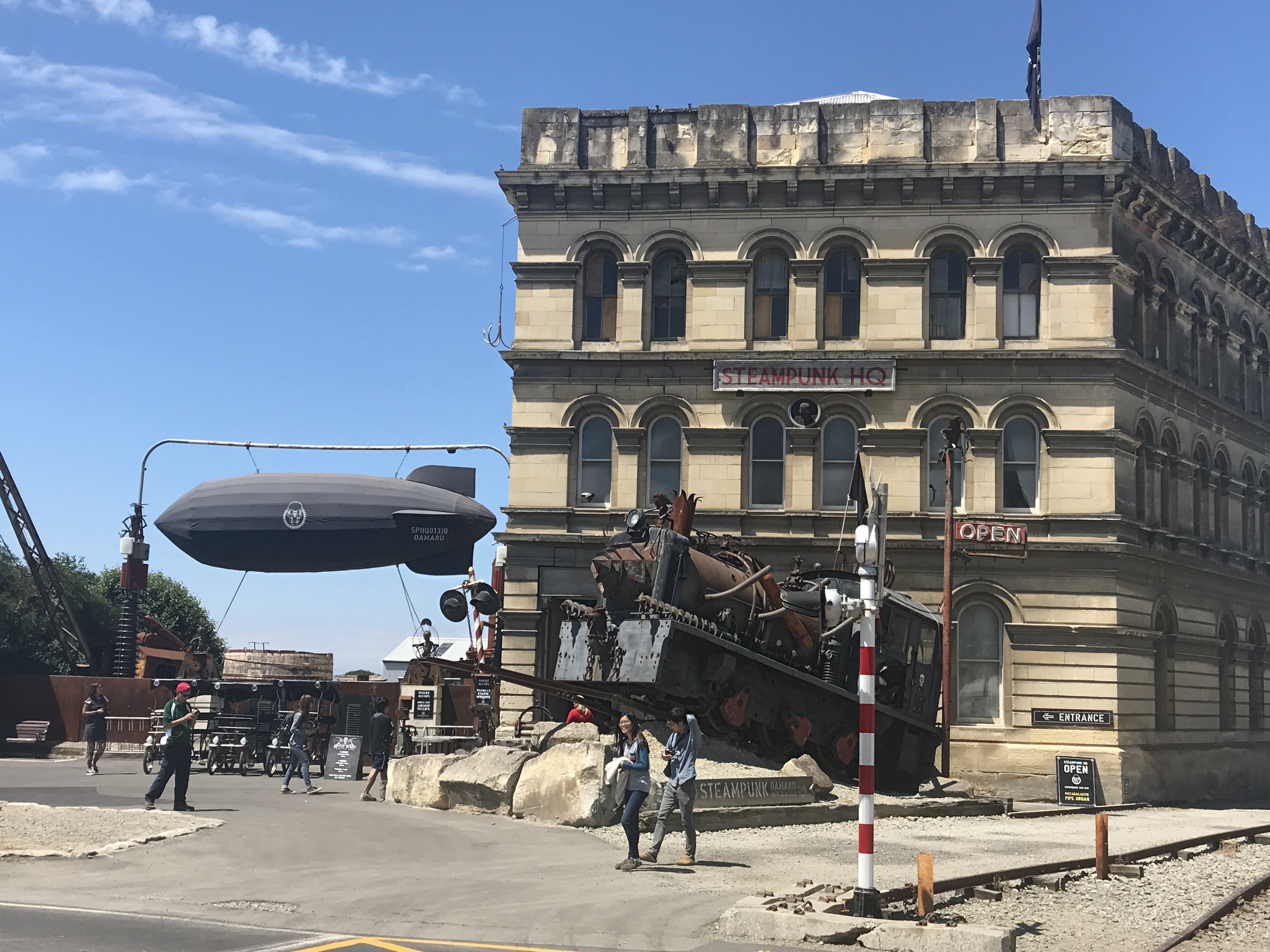
  • Oamaru – coolest place we almost didn’t visit. There’s a hip retro vibe with the Steampunk HQ and the Michael O’Brien Bookbinders shop.  The pristine Victorian architecture and nostalgic museums lent an element of time travel to the journey.

    Oamaru, Steampunk, Penguins

    Oamaru and the wacky Steampunk World HQ. Sometimes mini blue penguins walk by.

  • Glow Worm Caves We didn’t go for the fancy tour but instead walked through the mining tunnels of an old gold mine in Charleston, just south of Westport, on the West Coast.  In the early evening, we panned for gold and learned about the West Coast’s mining history.  (Roadschooling “mining history”, check!) With this price of admission we could camp in the parking lot for free AND the owner took us on a tour of the glow worm caves.  In a tour of just nine people, we held hips as if we were doing the bunny hop and walked through pitch dark tunnels save the glowing of the worms on the ceilings.

    Milford Sound, South Island, New Zealand

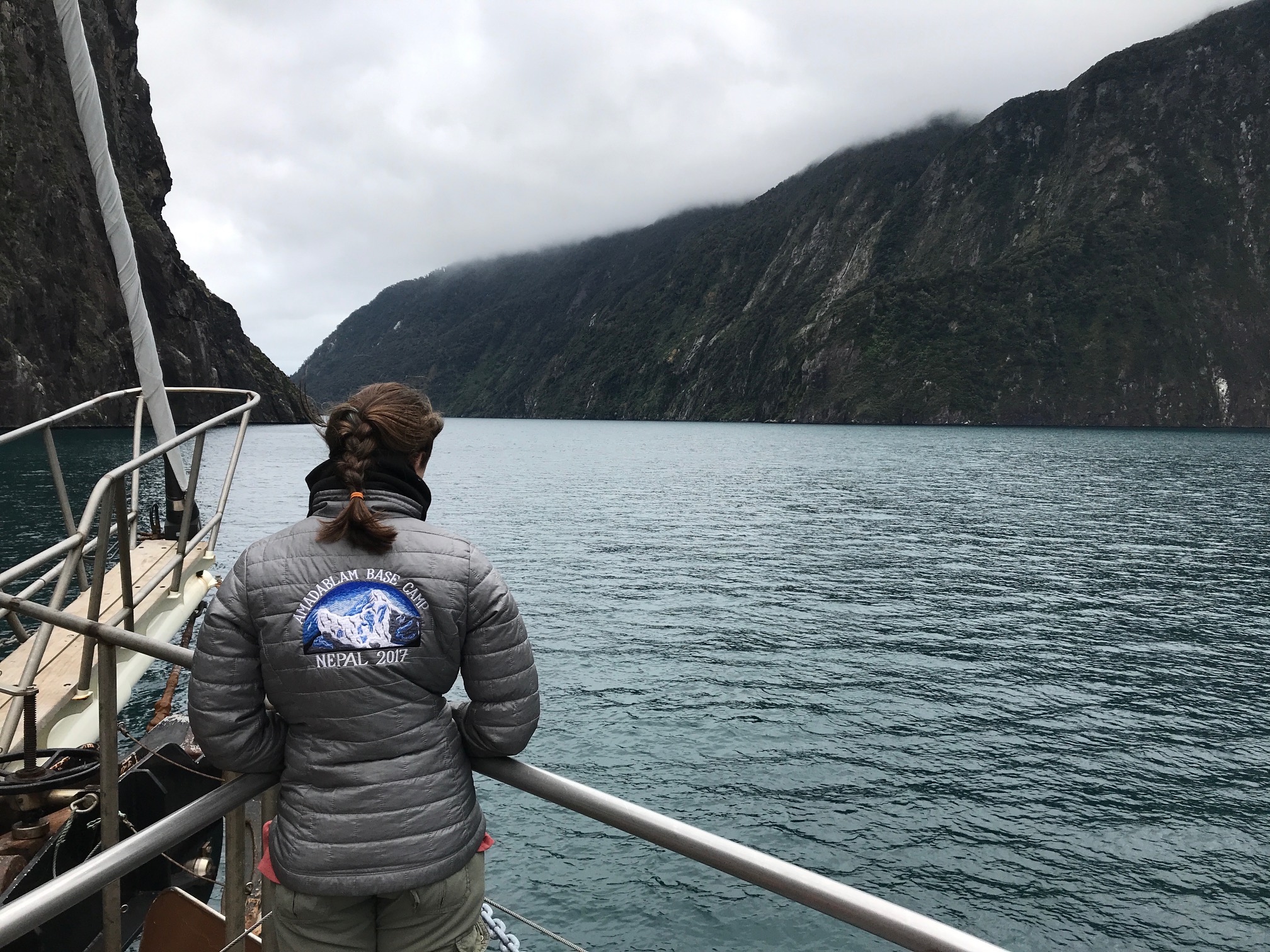
    Lorna communing with nature in Milford Sound.

  • Milford Sound It’s the top destination in the South Island for a reason. The grand scale of its glacial bank cuts are humbling – Mother Nature’s perspective shift that cannot be captured in a photo, reminding us that humans are but a blip in the history of this earth.  We saw a sleeping whale, crested penguins and seals.
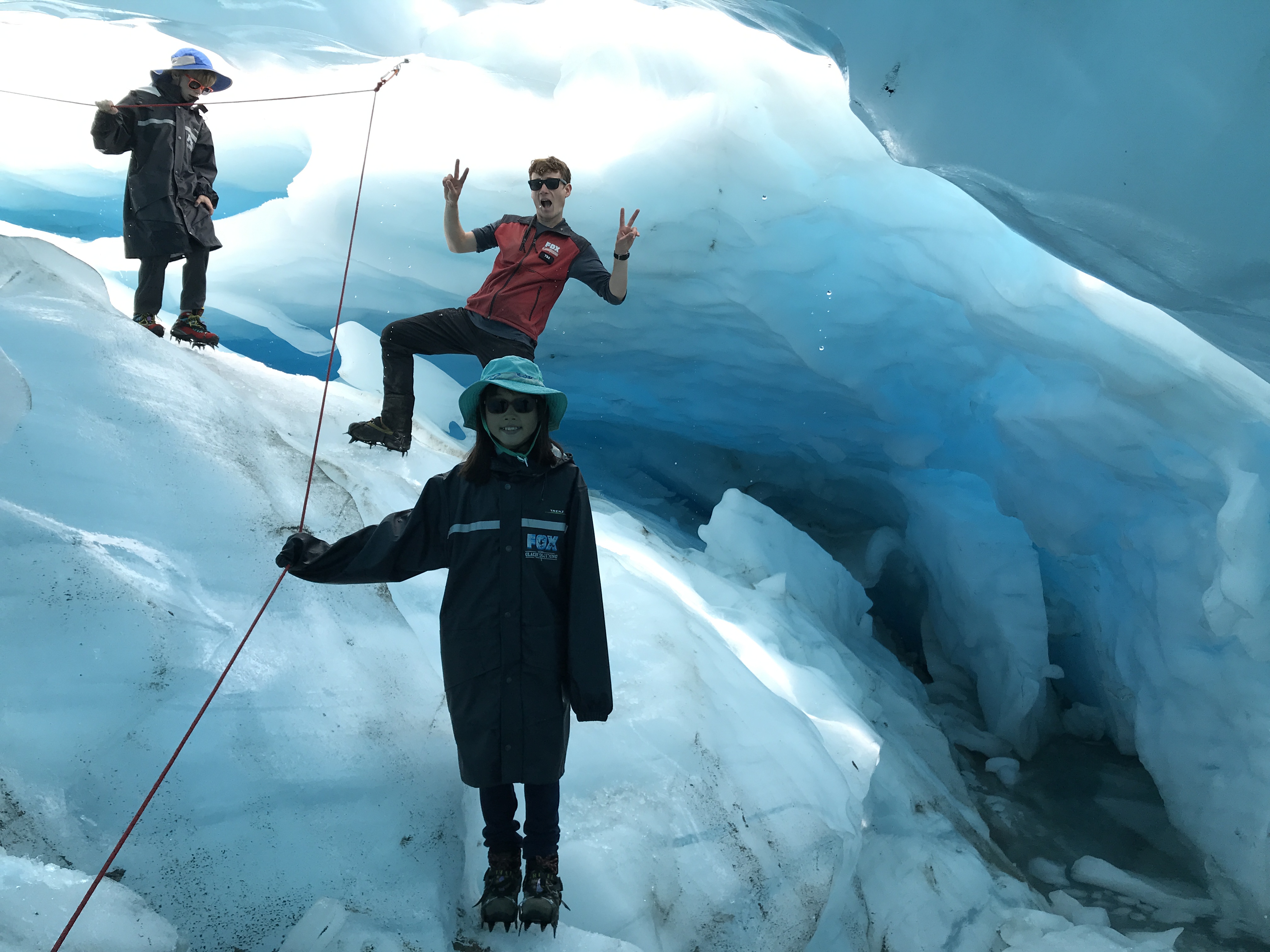
  • Fox Glacier There are so many fantastic and fantastically expensive experiences in New Zealand that we didn’t do. But we did splurge on the heli-hike trip up Fox Glacier, reasoning that there’s a chance these won’t be around in another generation.  Maybe our kids will be spinning yarns to their grandkids about that helicopter ride up to the glacier to tramp around with crampons.  You can explain it to me scientifically all you want, but the color blue of a glacier just feels beyond logic.

    Fox glacier, Helihike, glacier, crampons

    Exploring Caves on Fox Glacier with crampons. No waiver signed.

  • Fern tree forests So many tramps and hikes through the dense forest of fern are awe-inspiring; the birdsong; the prehistoric riff on a rare rainforest; the moss and lichens catching the light just so; the peek-a-boo of the turquoise waters; the veil of sandflies when you stop to admire.  (You only notice them when you stand still – so don’t stop.)

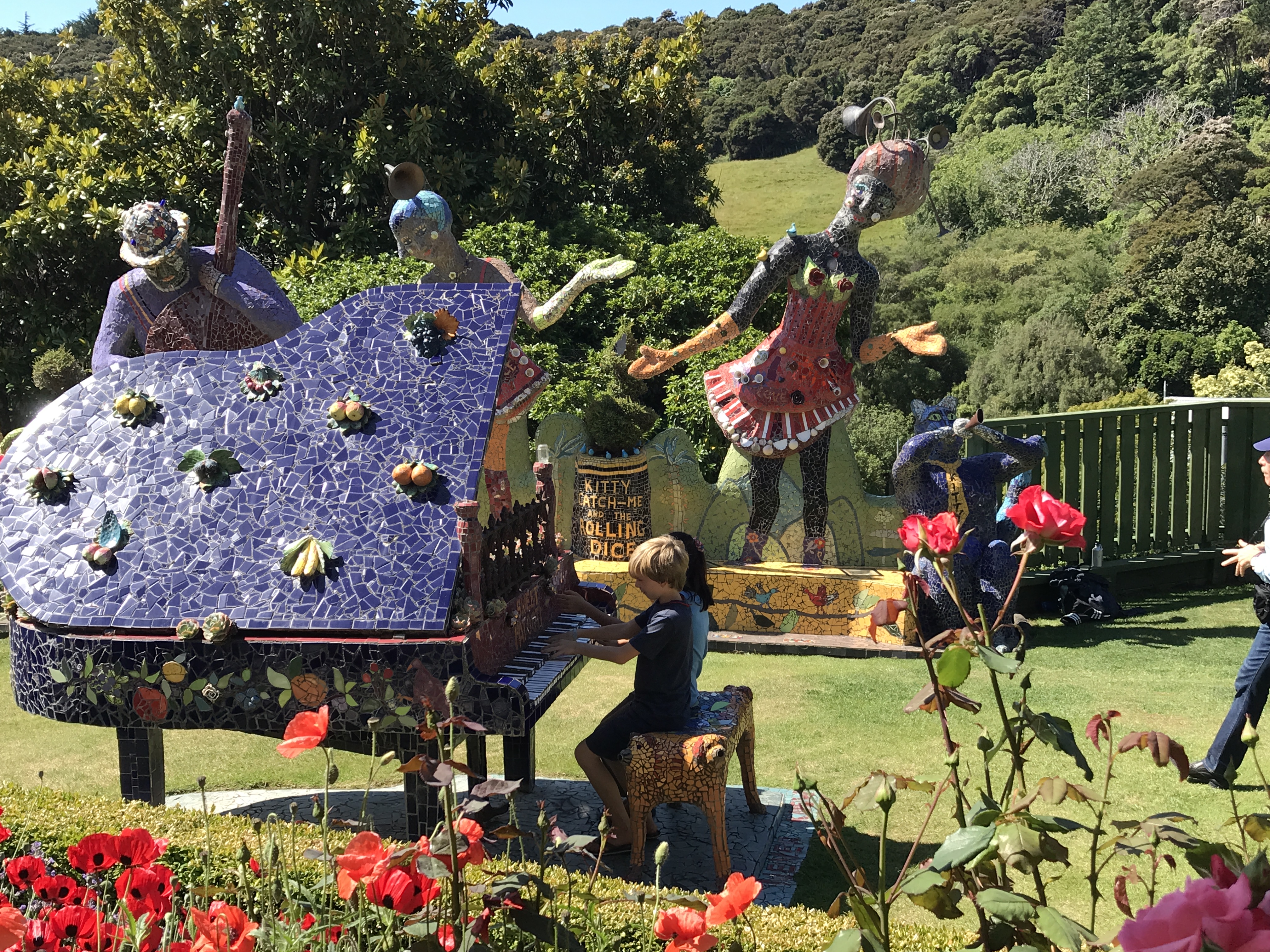
    Akaroa, mosaic piano, The Giant's House

    The Giant’s House in Akaroa. Great place to practice piano.

  • We expected the natural beauty and the friendly Kiwi people, but we did not expect the quirky, lively art scene and rich culture. We loved the “Giant’s House” in Akaroa, the cardboard cathedral and public art of Christchurch, the Puzzling World and wines of Wanaka, the Scottish architecture and Cadbury factory tour in Dunedin and the shark boat and sheepdogs of Queenstown.

If you get the opportunity to travel New Zealand in a campervan with your kids, here are some tips to maximize the fun and minimize the headaches.  These are ten tips from the Paradise Family who traveled with their three ‘tweeners in November of 2017.

  1. Don’t go far on Day One It’s daunting to pull out of the campervan parking lot with a large, heavy vehicle, drive on the left, maneuver narrow roads and single lane bridges and navigate where you want to go.  The last thing you need is pressure to be at a certain place because you have a reservation.  You may very well push yourself past your instinct for safety.

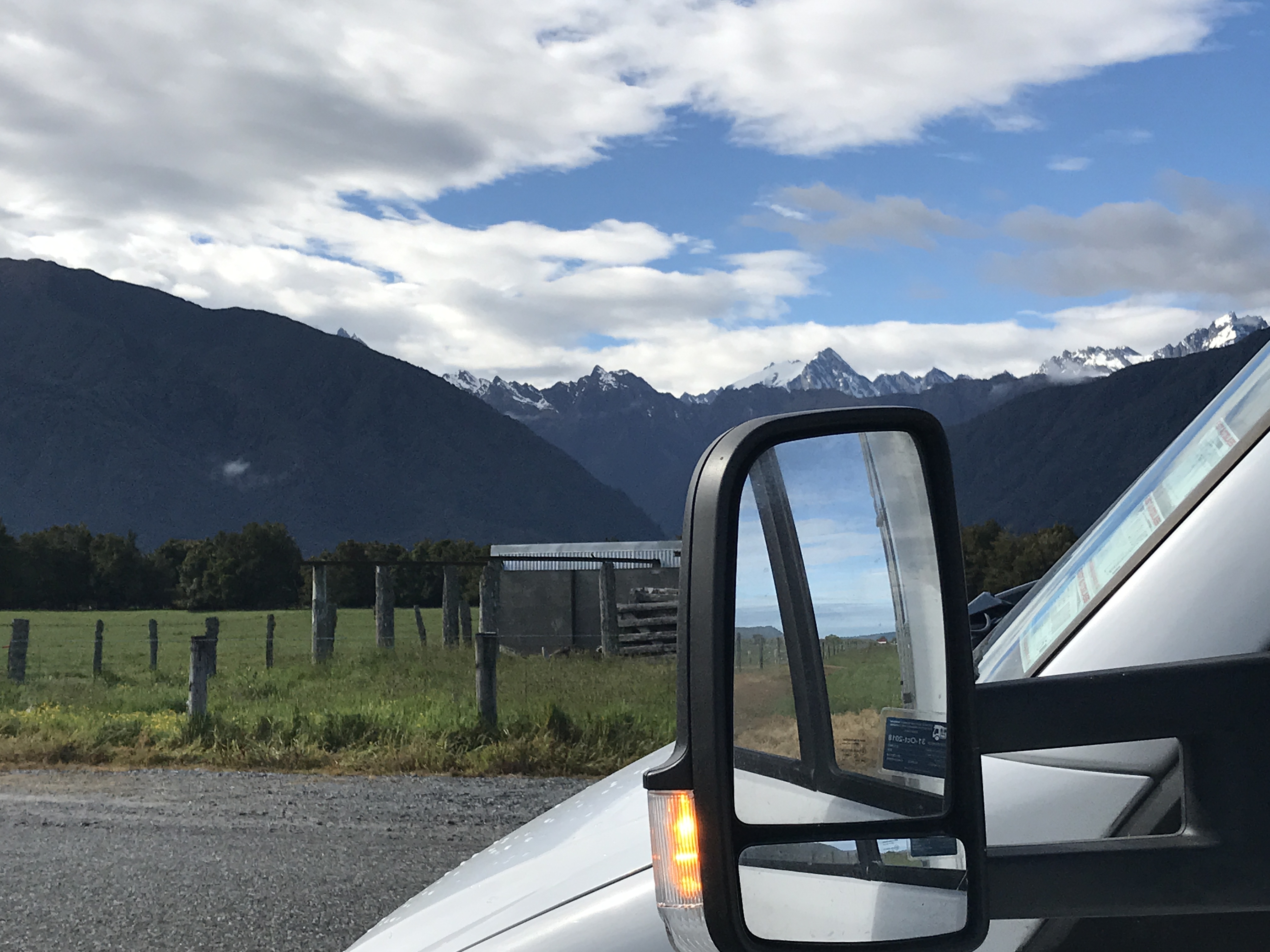
    You can enjoy views like this and stop whenever you need to stretch your legs.

  2. Driving is a two-person job One person needs to be the co-pilot: a second set of eyes, a reminder to stay left and navigate.  Copilot also gets the lovely job of entertainer (arbitrator) of the kids, if they’ve come along.
  3. Stay connected Get a local SIM card for your phone. I got the $19 rollover card from Spark and used it once or twice a day to book places while driving, keep in touch with fellow travelers or to call the rental company with various campervan mysteries (deflating tires and missing knobs, etc.). Seriously consider the mobile wifi unit that your rental company will offer you.  They work wherever you can get cell service and it’s so nice to be able to read the NYT while drinking the morning coffee.  It takes the whole experience from camping to glamping.

    Another perfect and free camping spot.

  4. Structure There’s a dance between leaving space for the spontaneous event, like swimming with dolphins, and having a set itinerary. On the one hand, last minute bookings for activities and campgrounds may be impossible and on the other hand, who wants to be stressed out to stay on schedule when you’re on a vacation. This is all personal preference, but what worked best for us was to reserve the “bones” of the trip:  heli-hike on Fox Glacier, the cruise on Milford Sound the Thanksgiving dinner with cousins in Dunedin the powered camp sites; and then be as fluid day-to-day as possible.  A few times, I called to change the reservations without consequence, but the really popular spots do book up.
  5. Solar Bring solar chargers for your devices. We are not big tech people, but even our few devices were hard to keep charged when you’re only powering up every three or four days.  Our two solar chargers were great to keep phones and readers with a minimum charge for navigation, reading and a few email check-ins.  We kept them going on the dashboard all day and out on the picnic tables while we were at camp.  Here are our favorites.
  6. Bug protection! Make sure you have spray and long sleeve / pants.  The sandflies are vicious outside of the cities (which is where you’re most likely headed in the South Island.)
  7. Download the Apps It’s a modern world and the easiest way to navigate is by the internet… when you can get the internet… and keep your devices charged.  Campermate is THE app.  I also toggled between Rankers Camping NZ and FreedomCampingNZ.  On these sites, you can get up-to-the-day user suggestions and comments, like another social media avenue.  You can get the pin drops for google map directions to trail heads or make dinner reservations.  If a dump station is not maintained, other campers will let you know.  Incredibly useful.  And you won’t need to get the extra GPS navigation gizmo’s like Tom-tom or Garmin that the rental company will offer you.
  8. Check online for current road conditions We did our initial research for the driving itinerary from books and (apparently) out-of-date online sources.  A major earthquake near Kaikoura had recently closed the entire access to the Northeast coastal route we quickly realized in talking with people and confirmed with the Campermate app.  If your time is limited, you will want to know these things before you leave home.

    Kitchen, otherwise known as Lorna’s bedroom

  9. Pack for All Weather We traveled in November and we had all kinds of weather: hot, cold, rain, wind.  The Kiwis we met all said that their weather is totally unpredictable the last few years so plan for all four seasons of weather – no matter the season you’re going.  We were mostly in camping clothes, but it was also nice to spiff up a bit for the city or a nice dinner out.  If you want to have some nice dinners, perhaps pack a top that will make you feel as if you’re not camping for the night.
  10. Consider a Three-Hour/Day Driving Goal We had a LONG driving day on our fourth day out and the kids never let us forget that that was too long.  It’s great to break up the driving so that there’s just a bit each day.  It seemed that the rear-facing seats and the sway to the larger vehicle make it more difficult to take the motion for long periods.  Our three kids had strict daily rotation plans so that they all got to sit in each seat.

But whatever you do, do it.  These are days you will remember.  Here are our highlights and road schooling plans.

The Huangshan area of Anhui province is the misty mountain landscapes and red-lanterned villages of Asian paintings.  It’s the water buffalo in rice paddies and the farmers with conical hats picking chrysanthemum flowers for tea.  Every vista is postcard-worthy.  Our original draw to this area was to visit Master Zhou, a Chi Gong and Chinese Medicine practitioner and friend-of-a-friend.  Many Westerners travel to the city of Tunxi to get treatments from him and he has come to the US to teach and treat.  Our friend put us in touch with Master Zhou’s interpreter and we planned our stay around an introduction to the Master.

Hongcun, Huangshan, Family Travel, Roadschooling

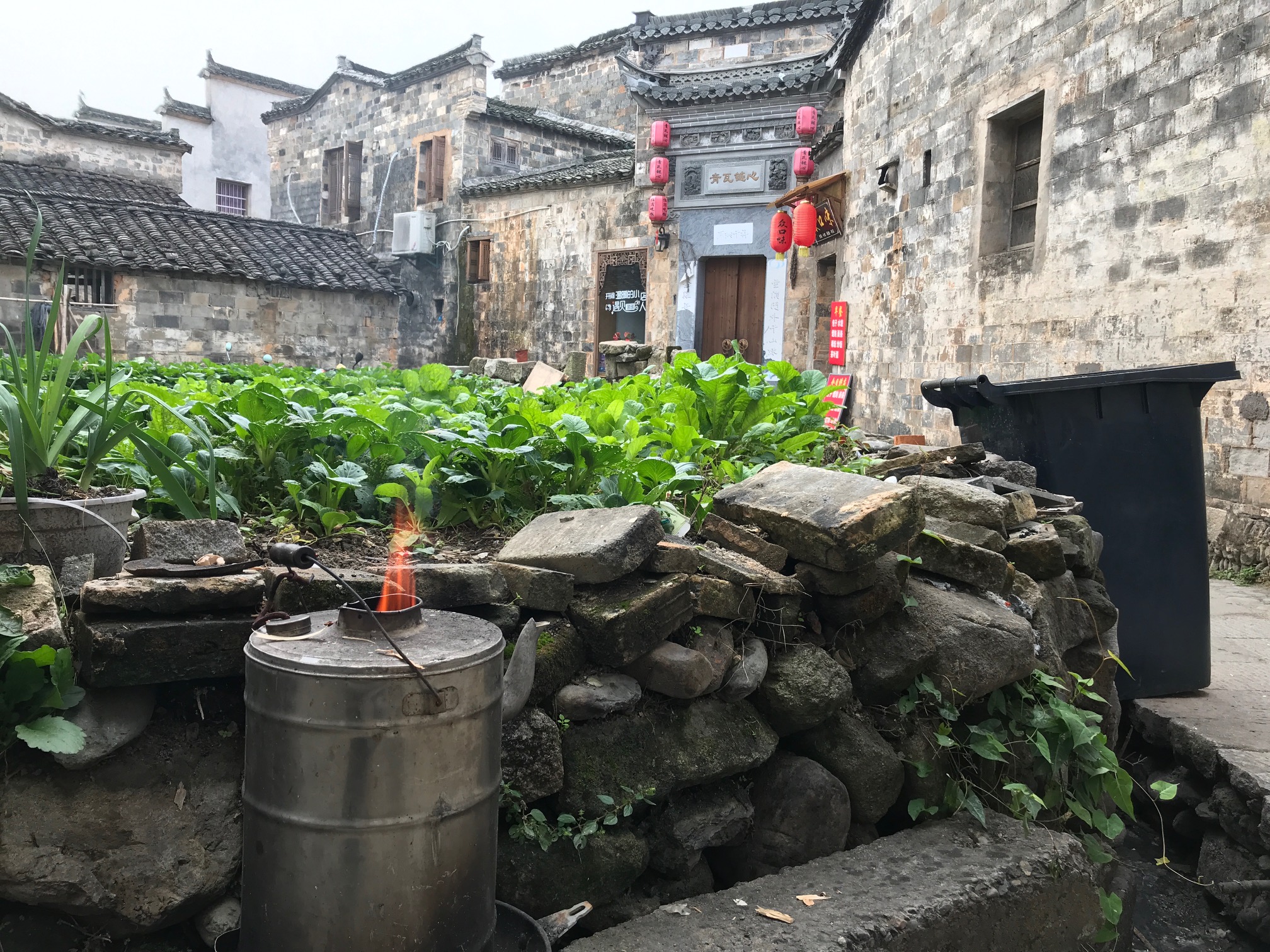
A quiet section of Hongcun – outdoor kettle and greens growing in every corner.


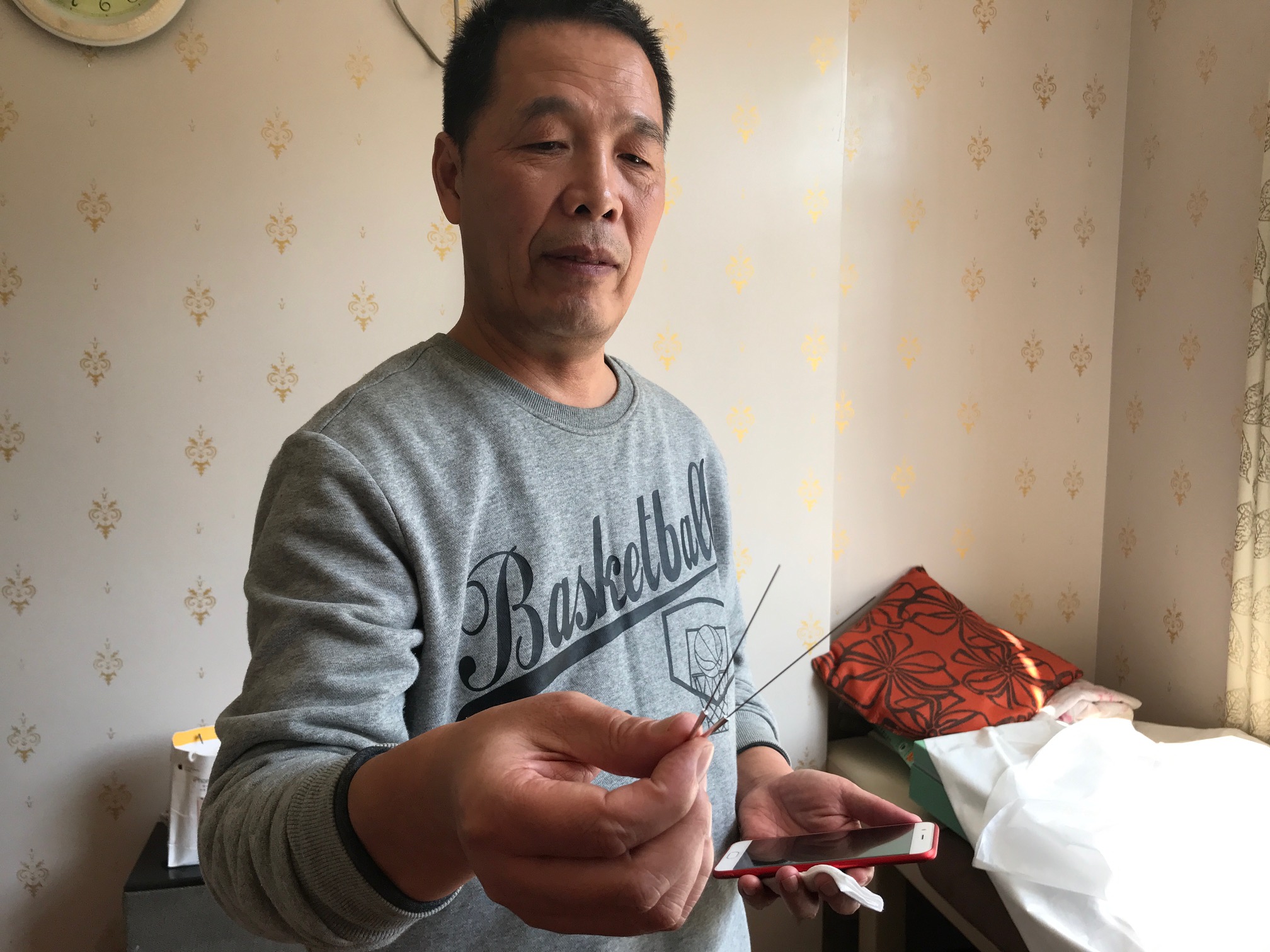
We had some Chi Gong movement demonstrations and even saw the master do a “trick”.  (You’ll have to wait for the YouTube.) The kids each had a private session with the Master and the three adults each had two treatments.  This is not whimpy needling.  His needles are an inch and a half long and he delights in showing you just how deep he went in each session.  When he described his technique, he said that you need to “chop up the blockages, like with a knife”.  And even before this was translated to us, his enthusiastic hacking motions made it plain for all to see what would be translated.  Master Zhou’s family took in a Shaolin Master during the Cultural Revolution and Zhou became his apprentice from a young age, preserving a lineage that spans eight generations of Traditional Chinese Medicine.

Tunxi, Master Zhou, road schooling, Huangshan

Master Zhou proudly presenting his healing tools.

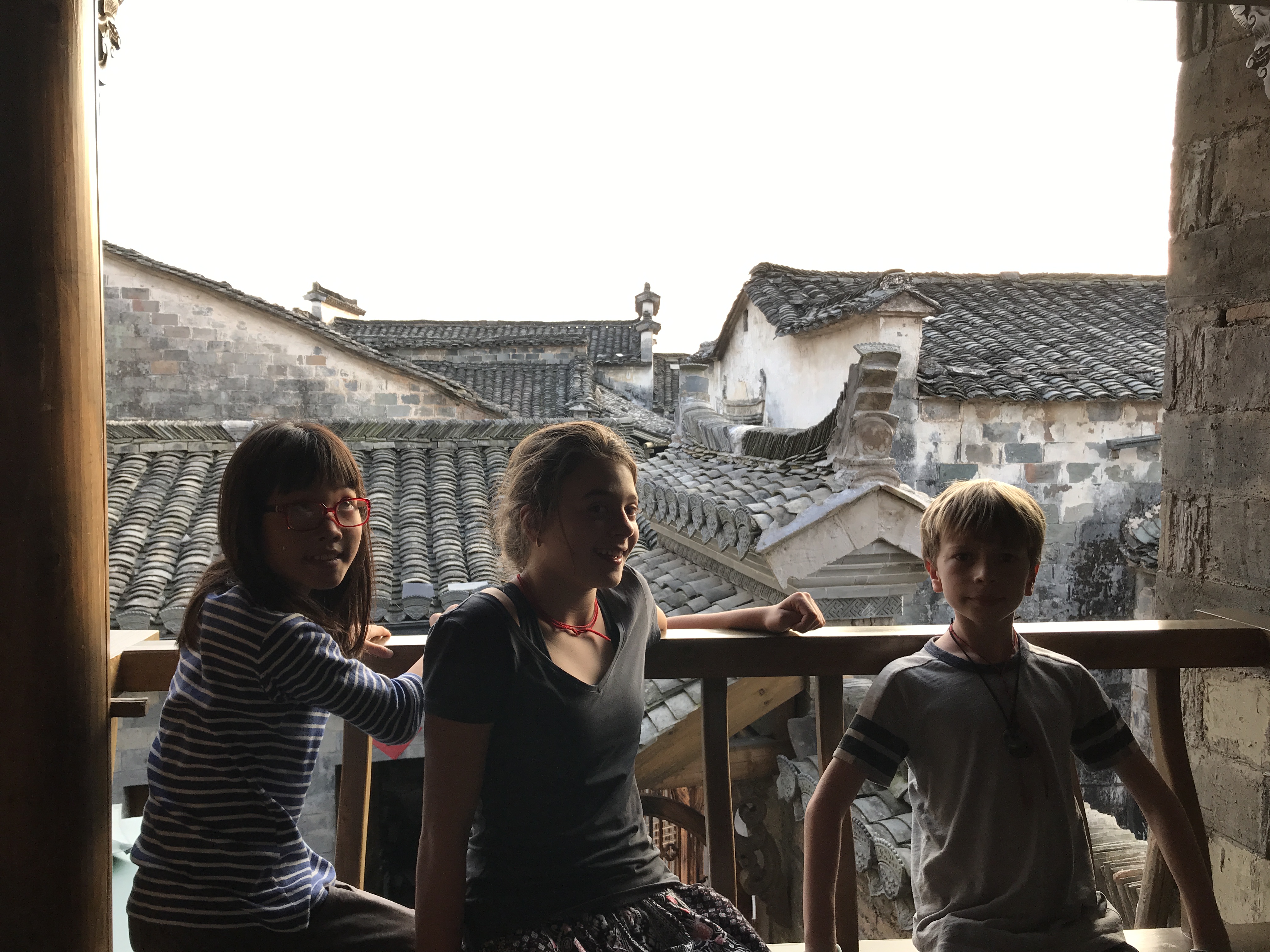
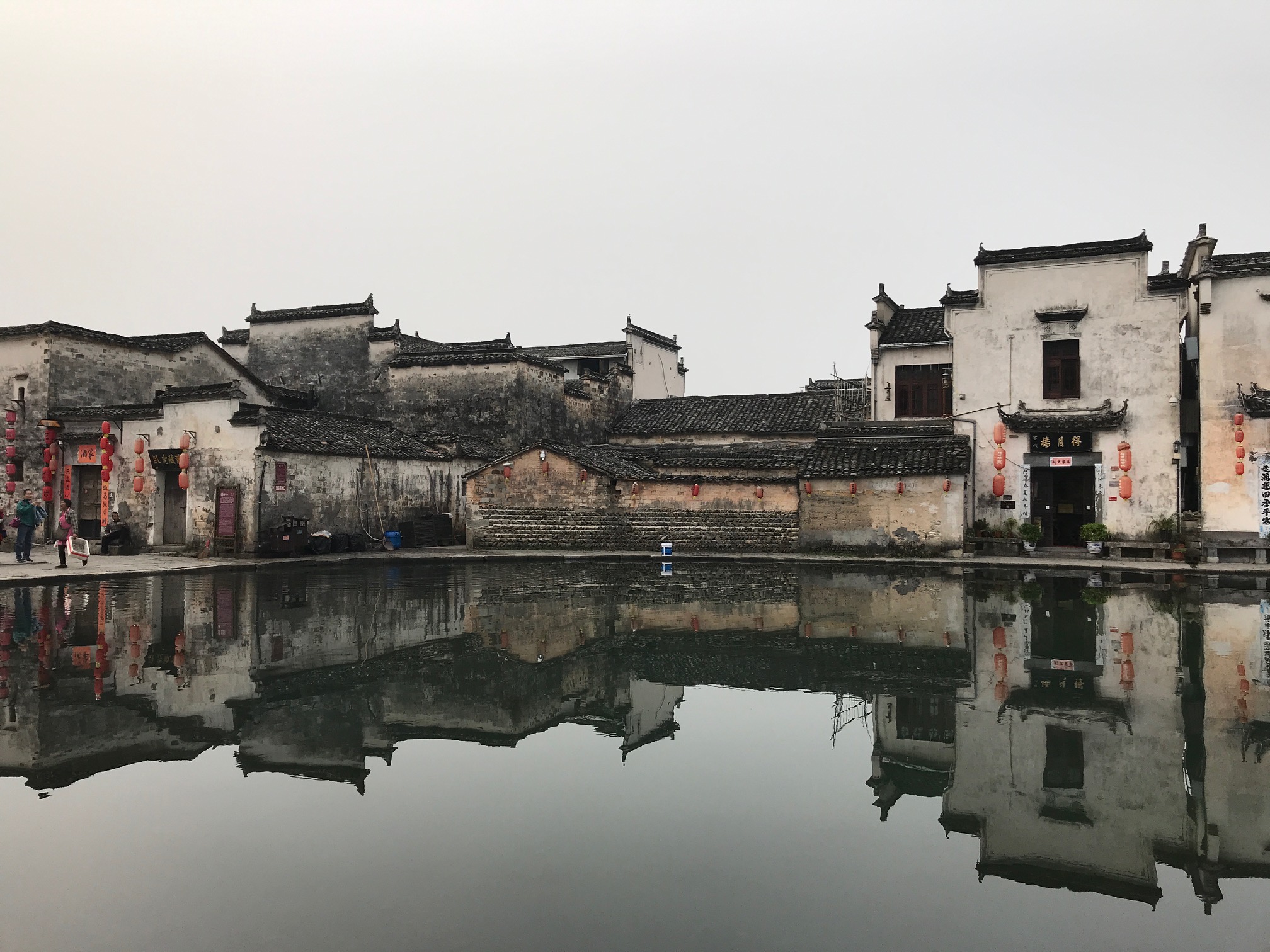
We stayed near Tunxi, in the well-preserved ancient village of Hongcun.  The town was full of selfie-taking Chinese tourists, art students sketching and locals, beeping their scooter horns in frustration at the crowds.  The movie Crouching Tiger, Hidden Dragon was filmed here and we could imagine the rooftop fight scenes.  Grand halls and intricate drainage systems traced back the 1400’s.  Vibrant green vegetables grow in every available piece of real estate.  We remind Lucy (adopted from China) often, that while Europe was wallowing in plague and mud, China was thriving – creating sophisticated art, philosophy and architecture.

Hongcun, Huangshan, family travel, road schooling

The rooftops of Hongcun, where Crouching Tiger, Hidden Dragon was filmed.

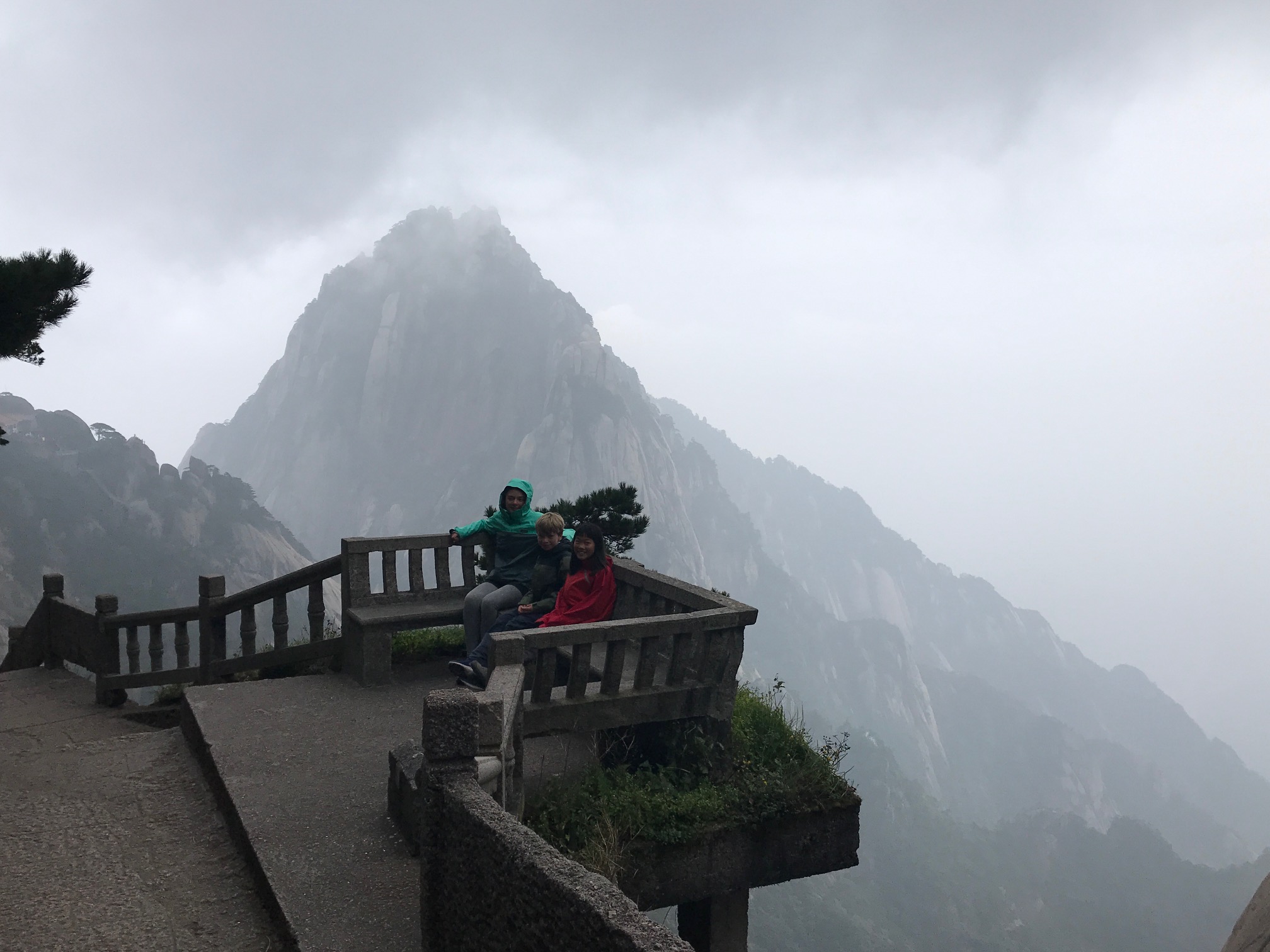
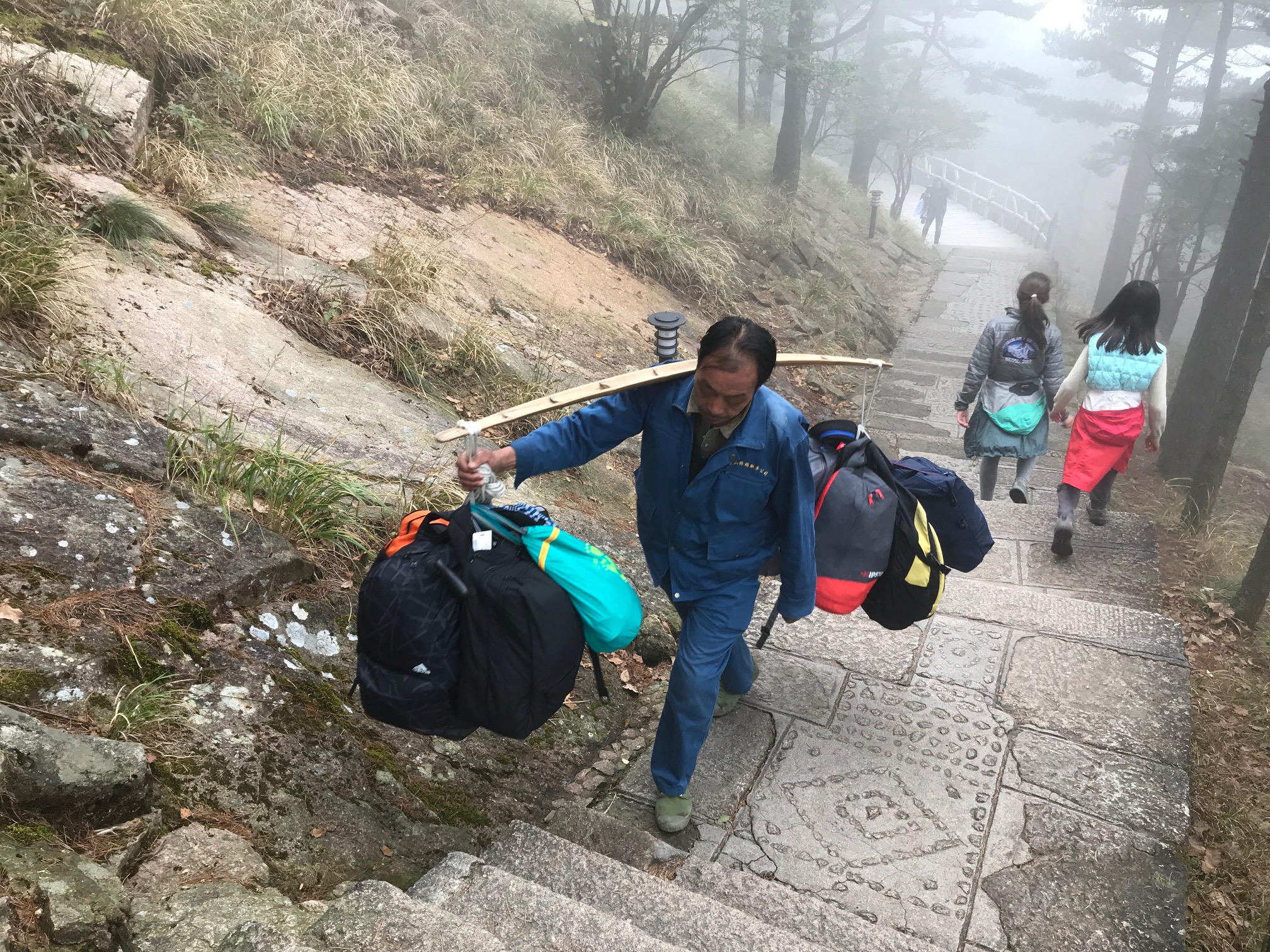
On the off day between acupuncture treatments we hiked in the Yellow Mountain area of Huangshan.  It was a cold day, which I think kept the crowds at bay; but, it was still a popular spot.  We clocked 21,000 steps that day and that included a tram ride up and a gondola down.  The paths are cement with perfect steps cut into the hillside.  Although it was beautiful, the mountains felt like a cross between a national park and Disneyland.  Six hotels and snack stops peppered the mountain park, requiring porters to carry food, laundry and other supplies.  These porters not only carried leg-wobbly weight, but had to navigate their bamboo poles through the packs of tour groups.

Huangshan Mountains, family travel, road schooling, Yellow Mountains

Cloudy day hiking in Huangshan added to the area’s mystique.

Yellow Mountains, Huangshan, family travel, road schooling

Porter balancing impossible load.


The area is picturesque and the clean mountain air was wonderfully refreshing but the word is out, and you will share the Huangshan area with many, many other people.

And one more of Hongcun…

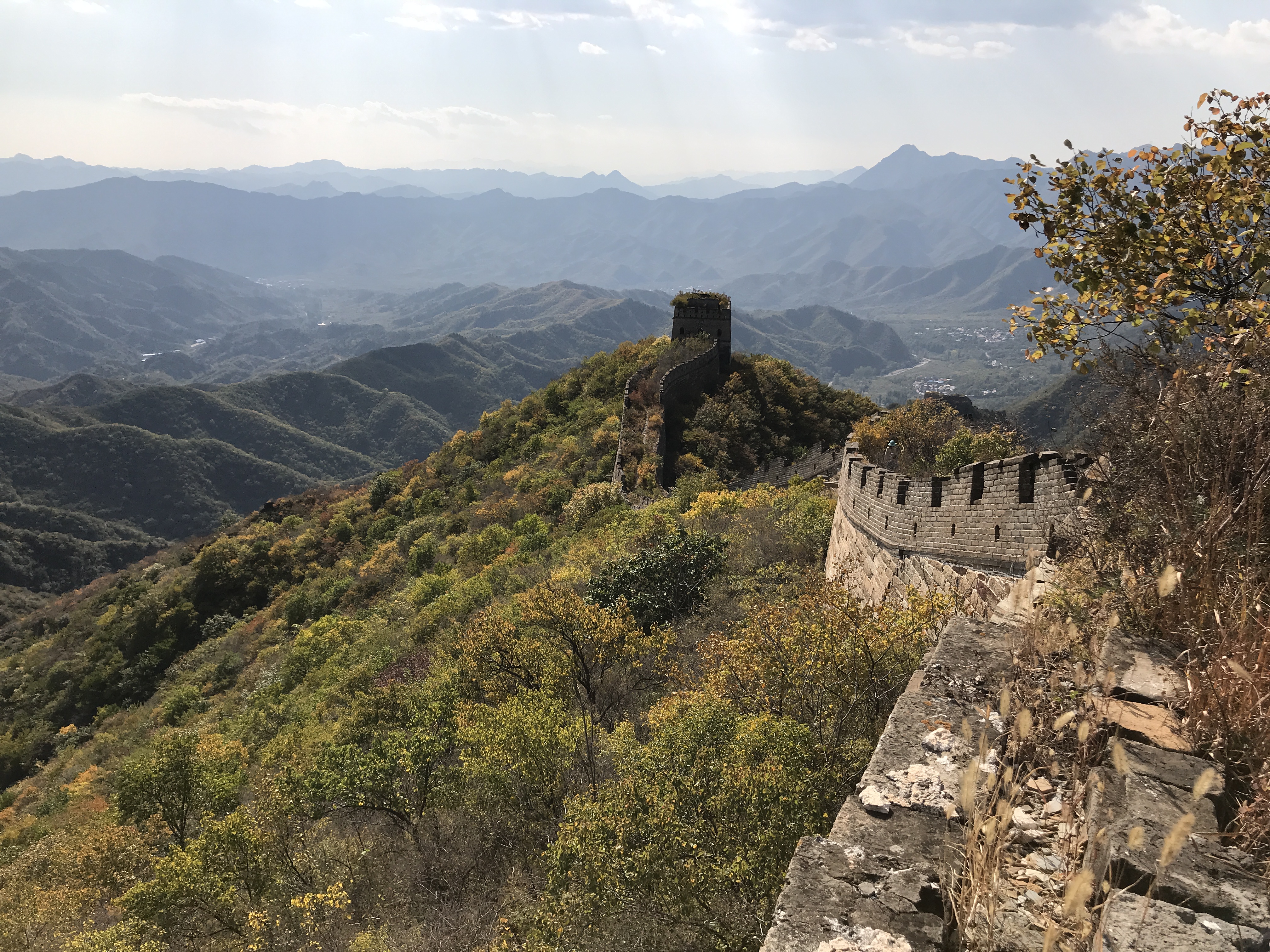
My daughter, Lucy, has been slightly obsessed by The Great Wall of China for years. We have read lots of books on The Great Wall and even watched some travel videos about it, but we were unprepared for just how cool it is. The most famous and trafficked section of The Great Wall has a McDonald’s and a chair lift at its base. This is the section made famous by Mao himself, but there are many uncrowded sections of the Wall to visit if you have the ability to get off the main track.

The Great Wall, watchtower

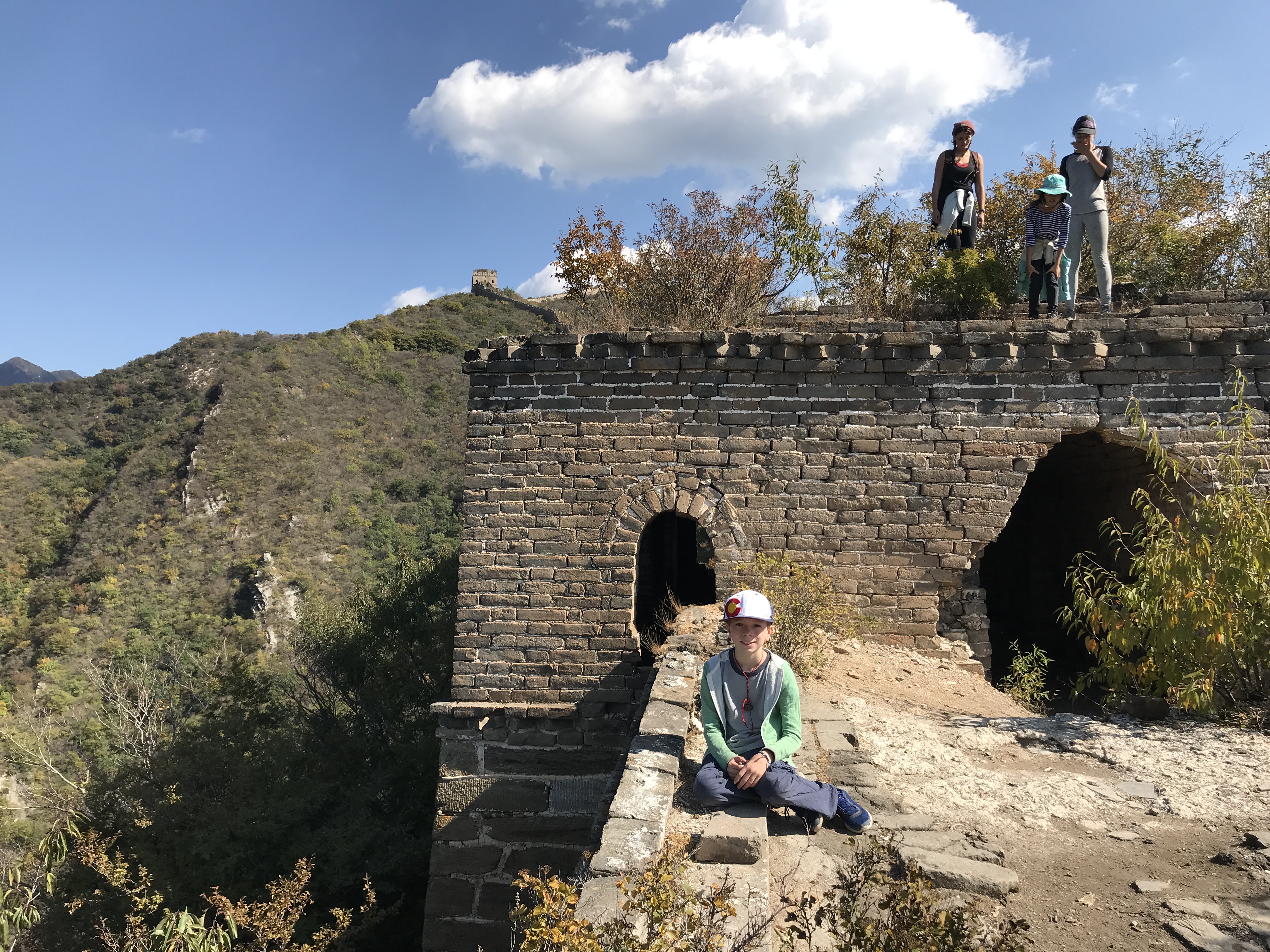
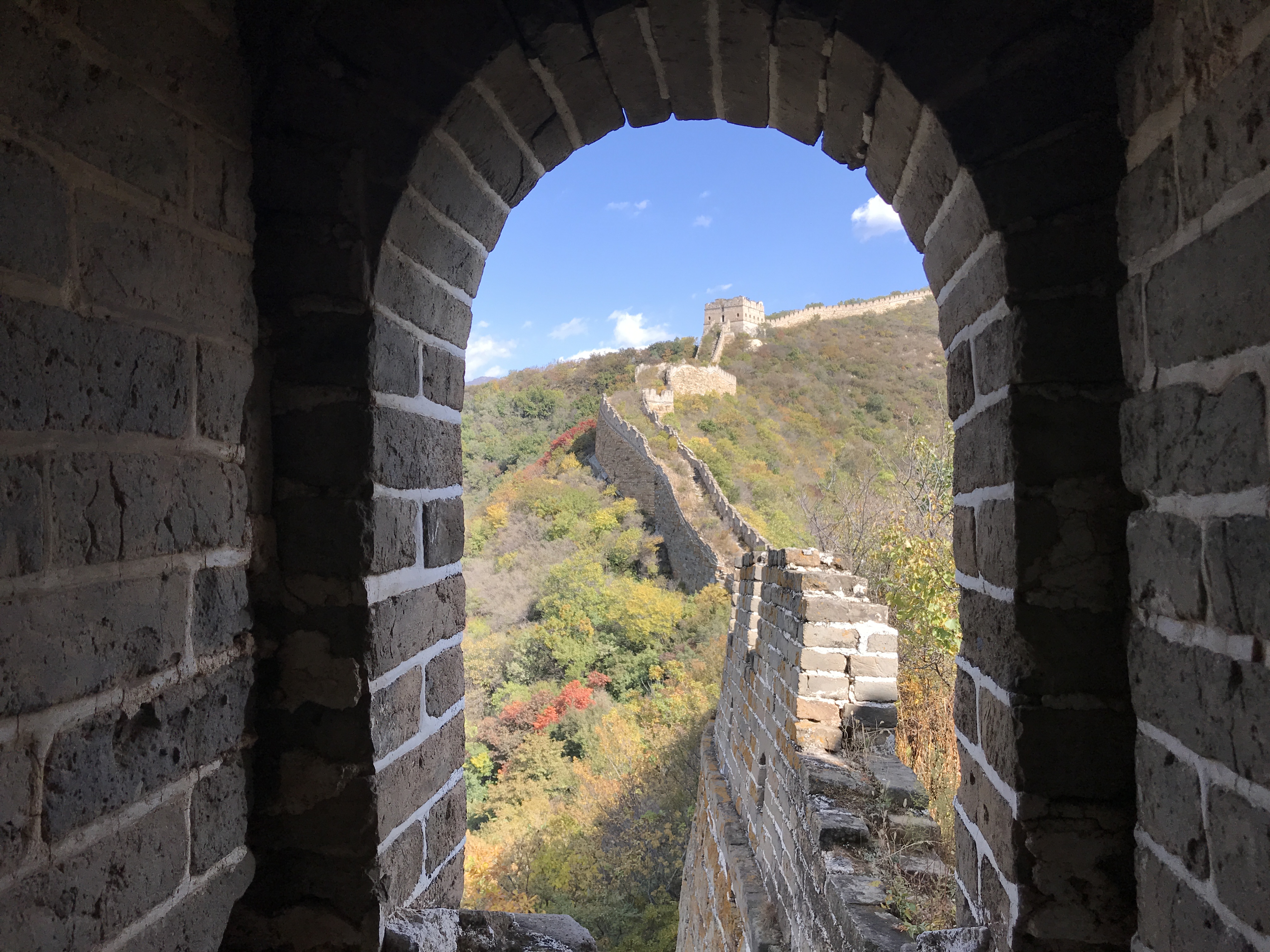
Watchtower exploration on The Great Wall.

We were lucky enough to go the Xiangshui Lake Area for three nights – just two hours from downtown Beijing but it felt like worlds away. We hiked through fall colors for six miles along this remote section; we never passed another person although the path was easy to follow. Some watchtowers were easy to climb and others looked too unstable to attempt. This part of the wall had no signs or warnings, and we really felt like explorers finding our way and judging safety for ourselves. Lucy and I had read about the many, many people who died in the building of the Great Wall and it all made sense when we could see the steepness of some sections. The hand-etched lines on the bricks against the magnitude of the wall, made us stop and feel the generations and generations that it took to build this architectural masterpiece. Without any fellow tourists to bring us back to the present, there was an intimacy and timelessness to exploring this worldly wonder.The Great Wall, Xiangshui Lake

This is road schooling at its best.  History becomes alive and real to a child when you have an opportunity to tangibly experience a link to the ancient past.  And as Lucy was born in China, there is a sense of her heritage and the power of her lineage that likely explains her attachment to the Great Wall.  We had quiet moments to imagine what it might have been like as a soldier waiting for the possible Mongol invasion.  Or, the difficulty for the Mongol invader to actually scale this wall.

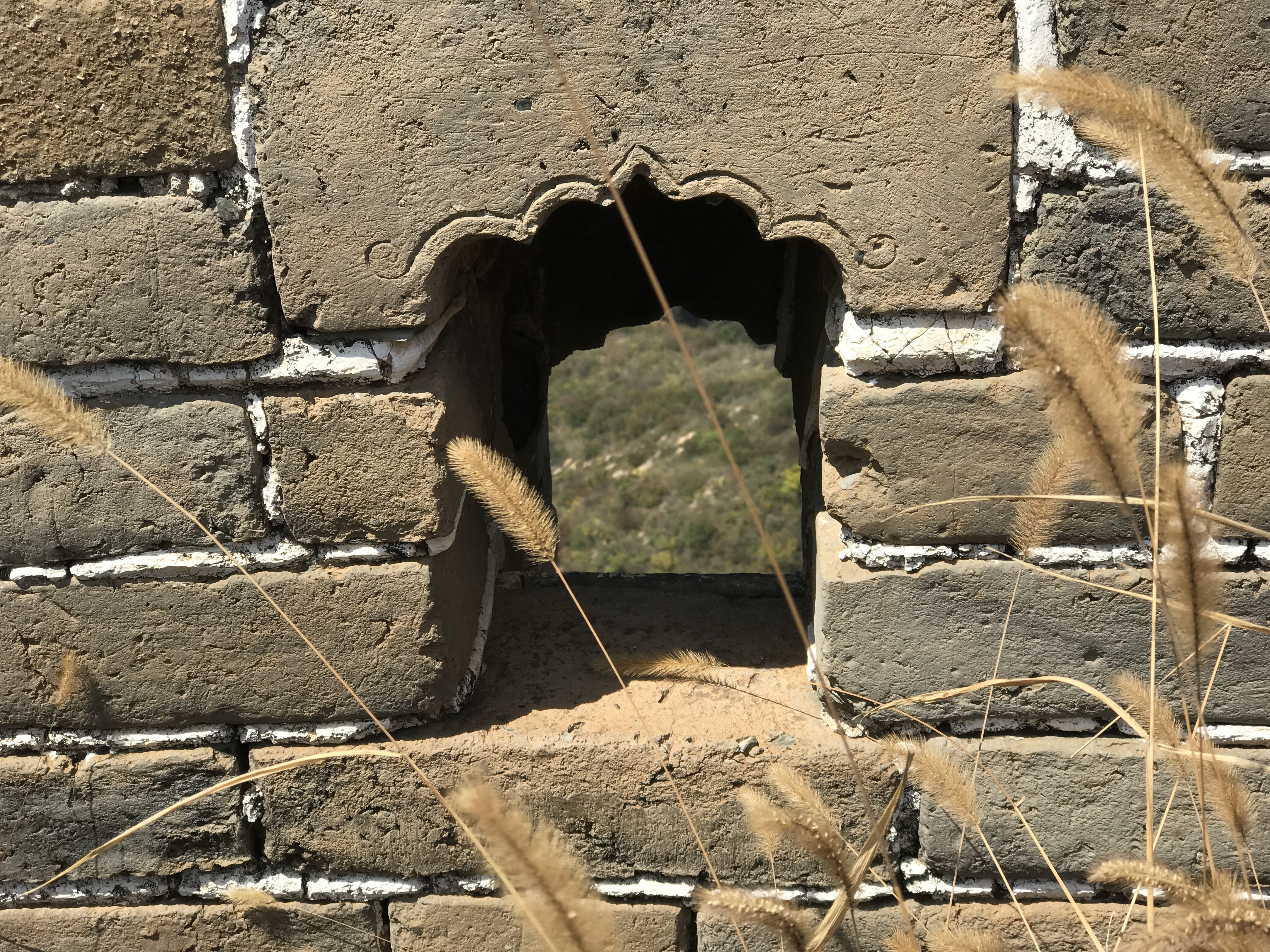
The Great Wall of China, road schooling, arrow hole, watchtower

The arrow-shooting hole has a simple artistic detail and angles down toward the invaders who might try to scale The Wall.

The town of Xiangshui Lake offers official homestays in the farmhouses around town – which seems like an excellent way for the local farmers to have some extra income and keep the Chinese tourist mega-hotels at bay. We loved the quiet feel of this town, but a stay there would be tough if no one in the group spoke Mandarin. Where There Be Dragons has frequented Farmhouse 69 for seven or more years and we could see why. Our hosts gave us a warm welcome, incredible vegetarian food and some cooking demos. Greens, like bok choi and cabbage, grow in every square inch of this town, like all small towns in China, and the persimmons and chestnuts were just coming ripe.

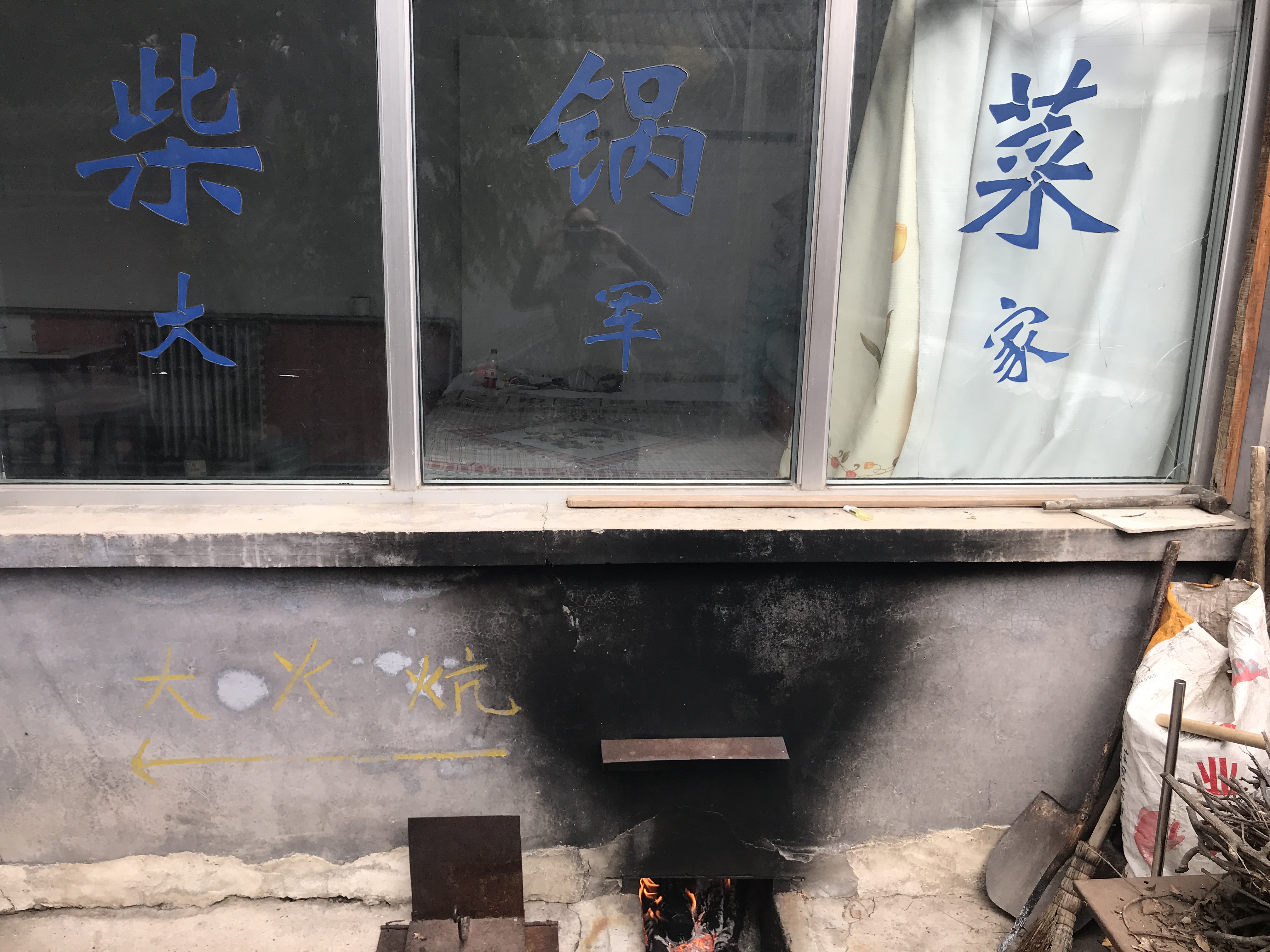
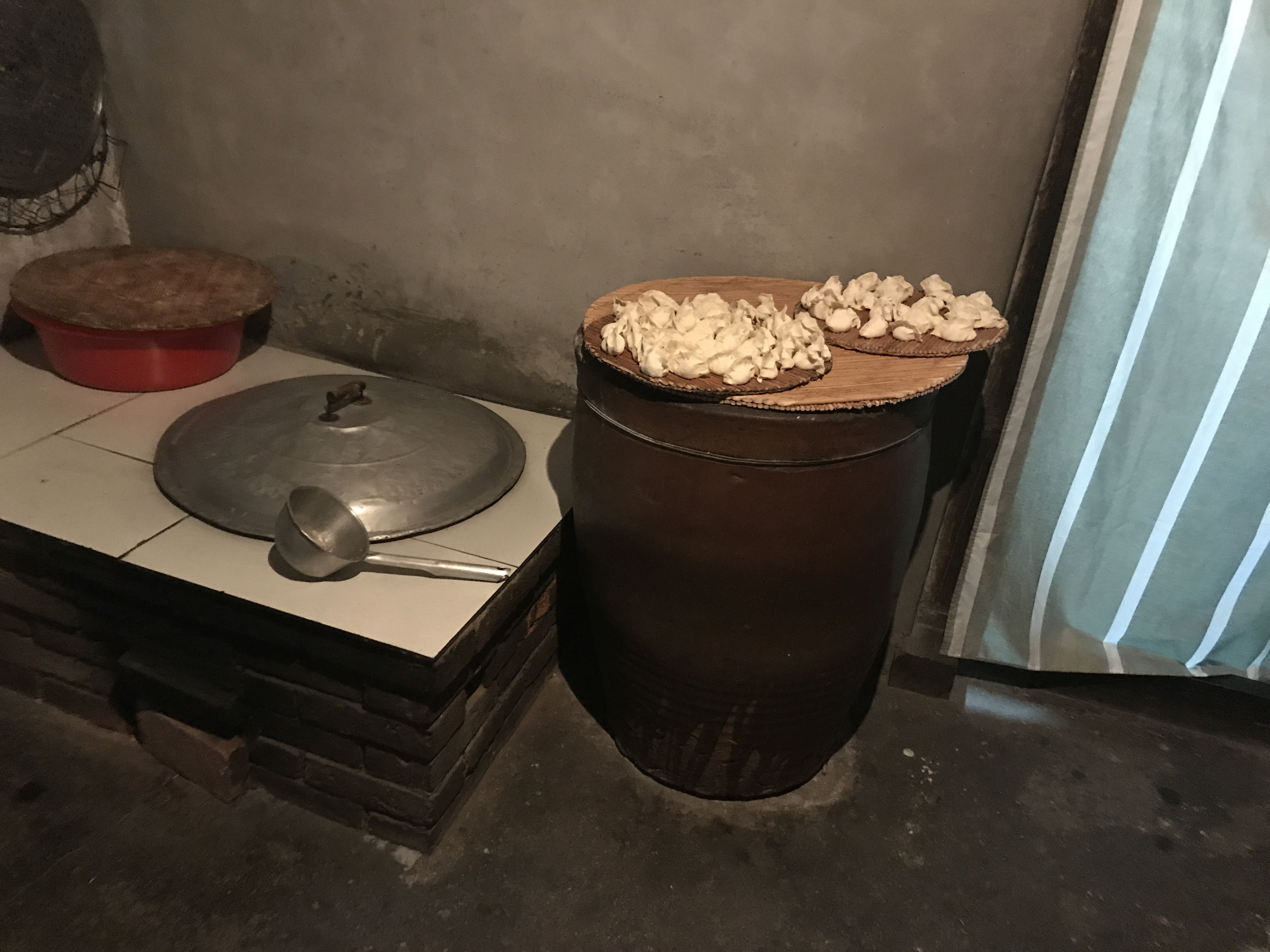
We loved our “hotbed” or khang bed, which are typical to the cooler north: there is literally a fire lit under the platform bed in the evening and the warm coals keep your bed toasty warm all night. Why heat the whole room, when you really just need a cozy bed? Ours also had a large, shallow bowl that doubled as a water kettle – helping to heat, humidify and create the perfect place for the yeasted bread to rise…ingenious!

Khang bed, Xiangshui Lake, The Great Wall

The new style of “Khang Bed” will keep you cozy warm through a cold night.

Khang bed, The Great Wall

Old-style khang bed with a kettle of water over the warming fire. Our bed was just on the other side of this wall. Chinese style dumplings (momos) ready for steaming.

In the center of Xiangshui Lake, there was another entrance to a restored Wall section and accessed by a large gate and golf carts. Massive tour buses whizzed in and out, ferrying hundreds of Chinese tourists but no one ventured just off the path to our section. We never went through this popular, preserved section. The wildness and privacy of the our remote segment of The Great Wall made it all the more memorable.

The Great Wall

Fall colors 2017

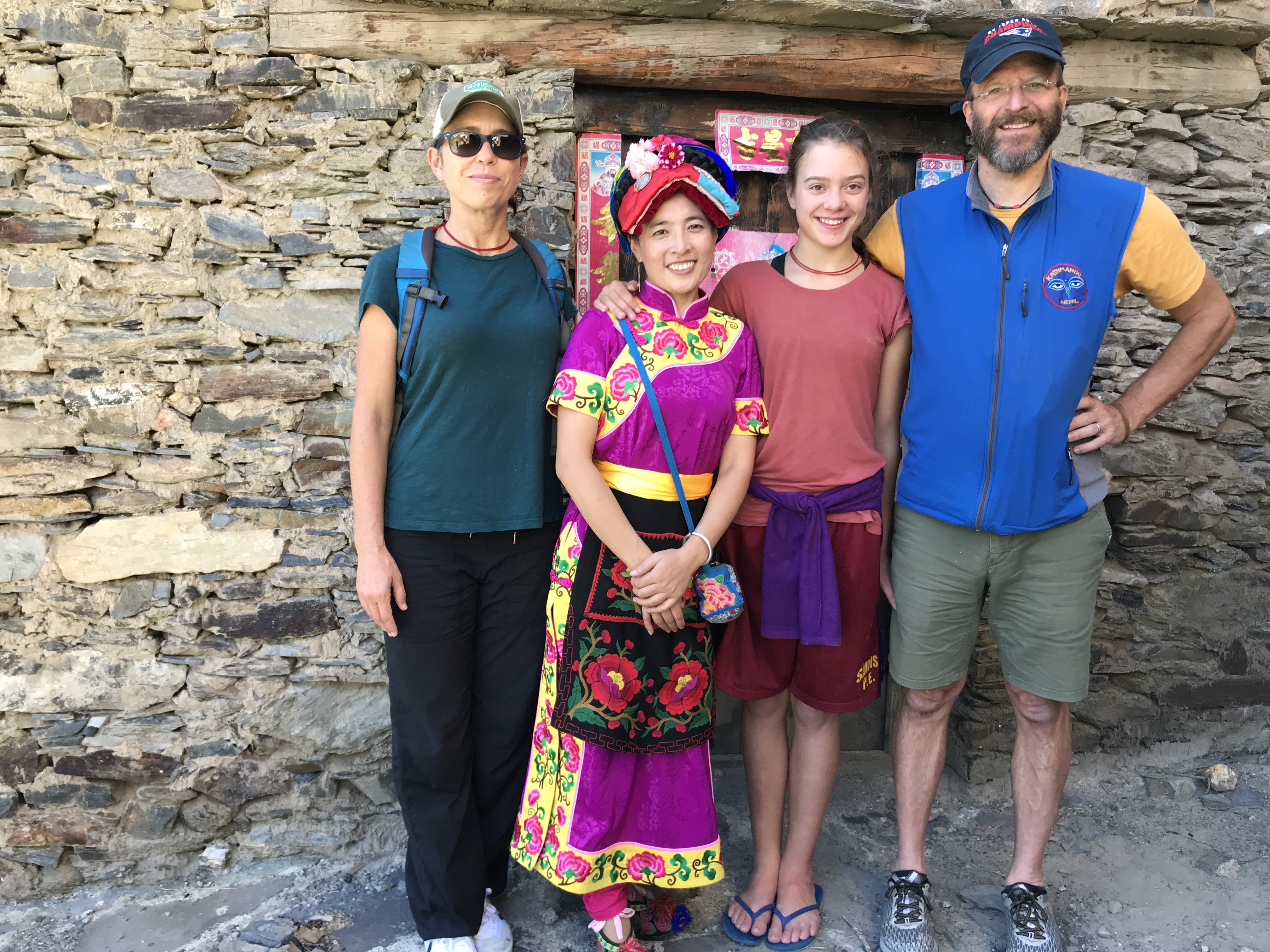
From Chengdu, we took a van for about three hours to Muka, a “minority” village. China is 94% Han Chinese. But that leaves approximately 69 million people who fall into the category of “minority”: Tibetans, Southeast Asian Hilltribe, Uigurs, and many more. This village is home to the Qiang ethnic group who were neither Buddhist nor Muslim, but had their own belief system before the Cultural Revolution.  This Qiang village had a few guesthouses, but no large large hotels.  We never saw other Western tourists in our three-night stay.

Qiang, Sichuan, family travel

Qiang, Sichuan travel, family travel

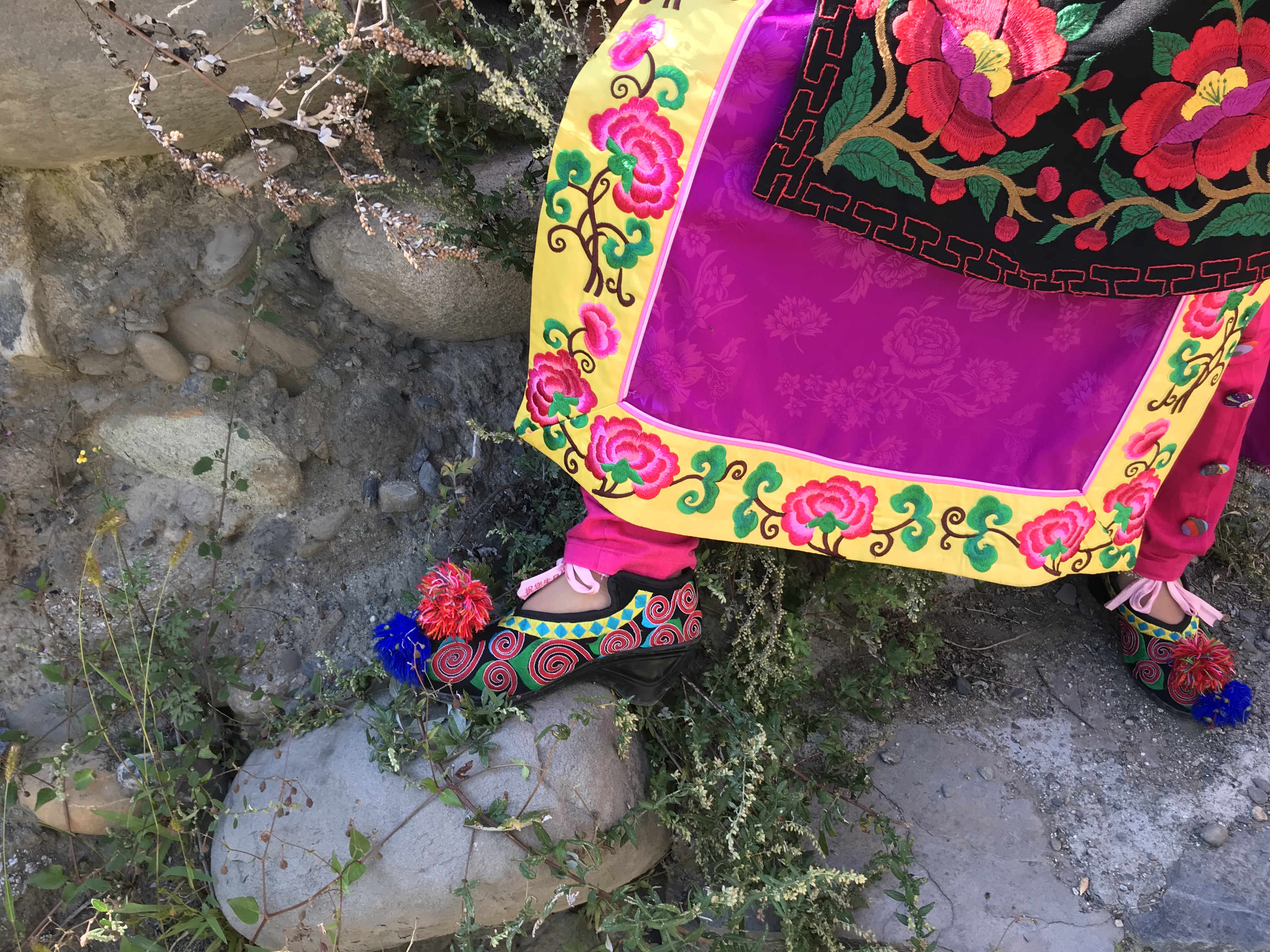
I want those shoes! Who’s with me?

The drive from Chengdu was surprisingly easy. The road was new and very well-maintained. This area was the epicenter of a massive earthquake in 2008, so that may answer why there had been so much money poured into it. I kept seeing mountains and wondering how Lucy’s tummy would fare, and then bup! into a tunnel. Tunnels through mountains: a novel concept after months in Nepal.  In this Qiang area there are loads of hydro projects, irrigation canals and tunnels.

Qiang, stone houses, Sichuan

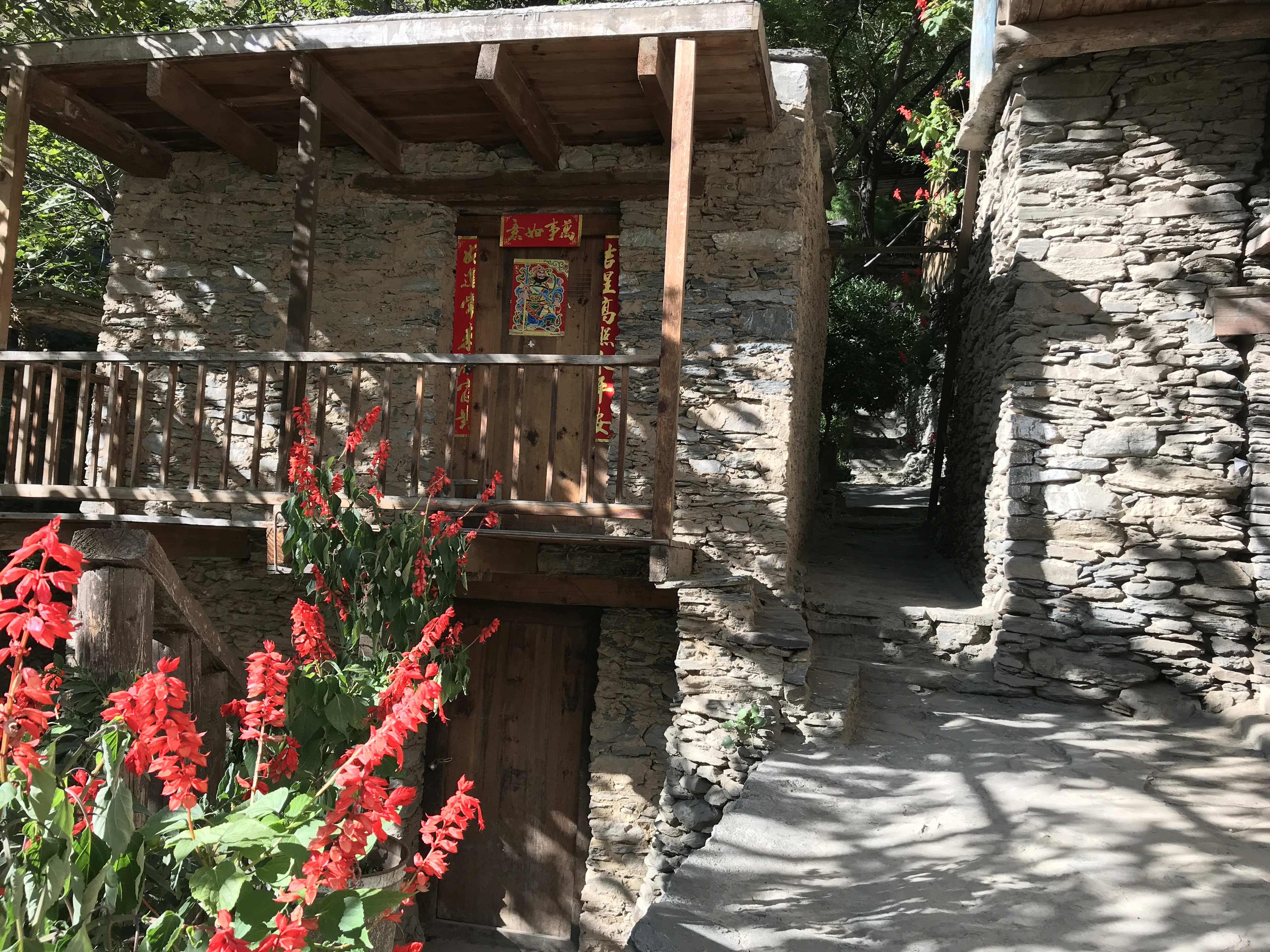
Not your stereotypical China. Grateful to off the tourist circuit and seeing some diversity!

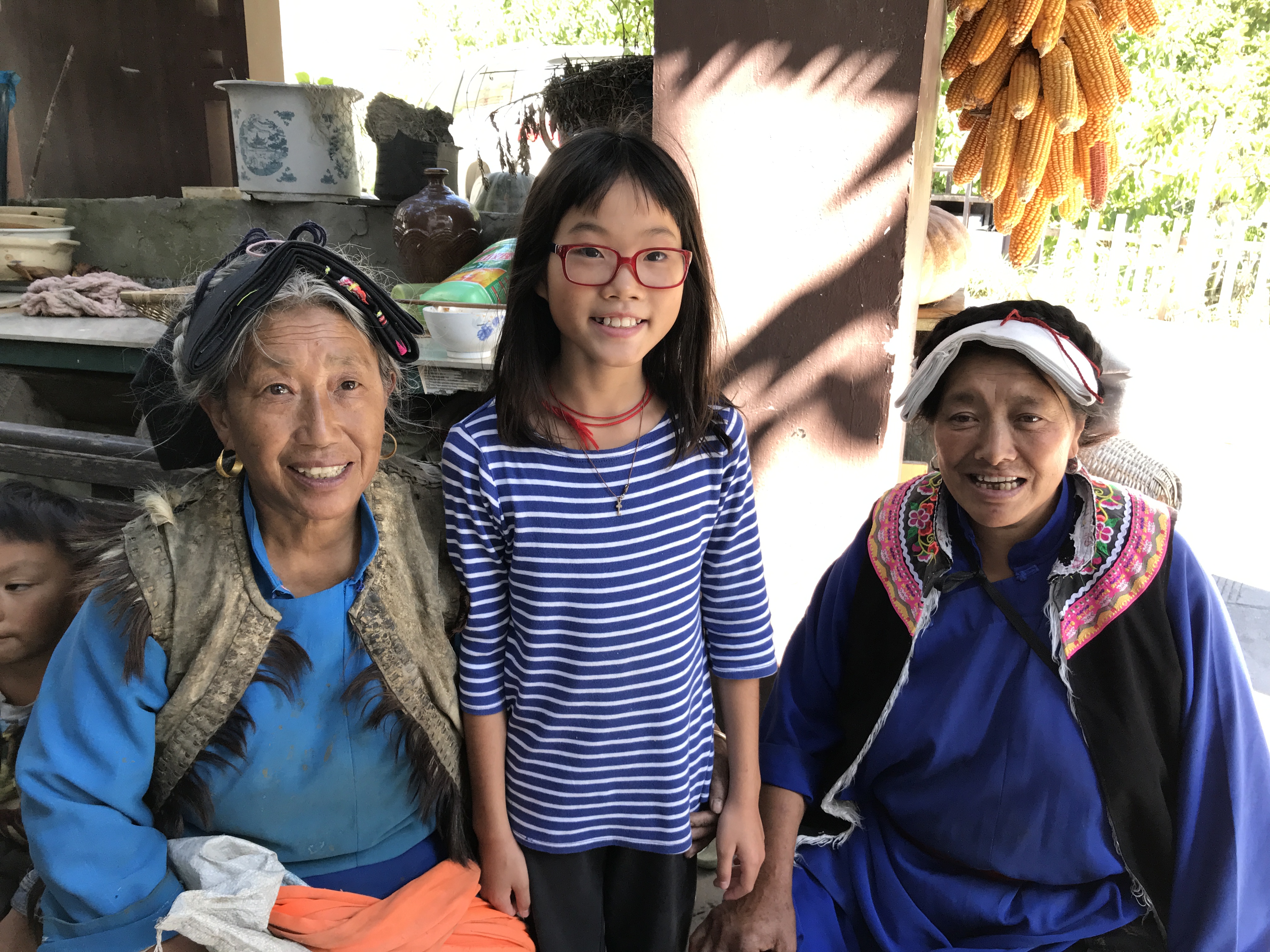
The Qiang are known for their stone houses (not a great mix in earthquake country), embroidered shoes and fascinating hats. The womens hats look like a folded dinner napkin on the top of the head and then held into place by two braids, Heidi-style. Like most places in the world, it seems, the grandparents are still wearing the traditional clothing and anyone under thirty is wearing the mono-cultural Western attire.

Qiang, family travel, road schooling

Qiang grandmas doting on Lucy. We loved their hats.

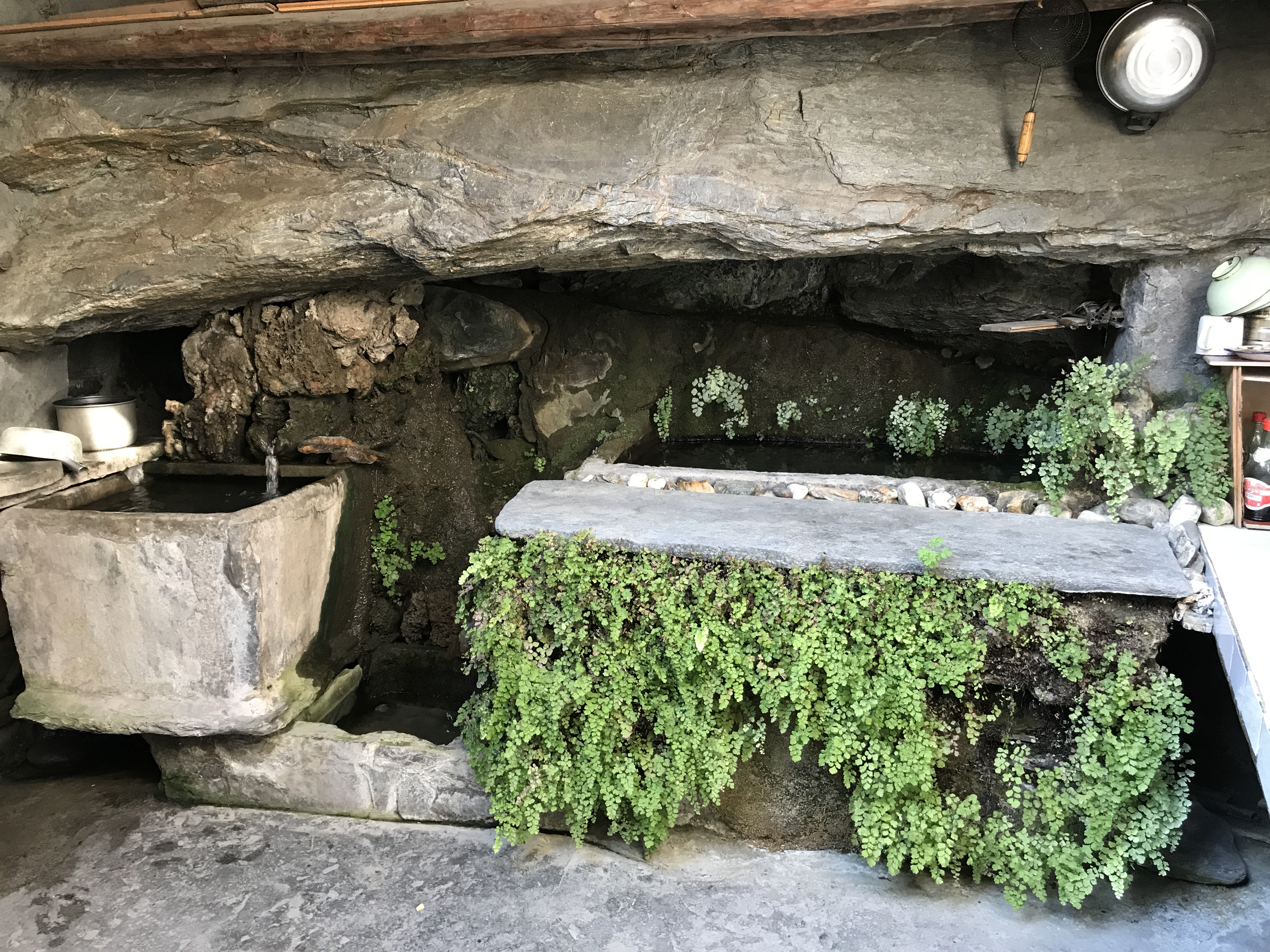
We looked around the old village a bit and found a home that Julie had stumbled upon before. We walked right in and looked around. A doorway is more of a suggestion than a fixed boundary and the TV-watching man of the house, beckoned us in to look around. The kitchen could be a feature in Sunset Magazine. A fern-covered stone trough for a sink with a constant flow of water. It had an open ceiling and led to a courtyard with stone table and benches. I couldn’t place myself – American Southwest? Big Sur? Xinjiang? Mexico? There were cactuses and oaks, pomegranate trees and grape vines, roses and gingko trees, hanging chilis and drying corn, live ferns and pet chipmunks.

This just may show up in Sunset Magazine, mark my words.

We all sat, mesmerized by this most-cool house and I wonder what Kai, Lucy and Lorna will remember of this place? Will they wake in the morning one day at forty years old, wondering if this place were real or a dream? Will they be inspired to follow design as an adult and incorporate some of these foreign, natural concepts that will seem to simply come to them as inspiration? I wonder what these remote places will mean to the adults my kids will become.

There is absolutely no way that we could have the moxie and foresight to come to a place like this without Julie. (I found here through the alumni board of Where There Be Dragons, a student travel company where we have both worked.) No one speaks a lick of English and your guesthouse serves your meals which need to be ordered up ahead, especially our vegetarian preferences. There are so many interesting things happening around us and Julie’s language, cultural knowledge and patience can answer our constant questions.

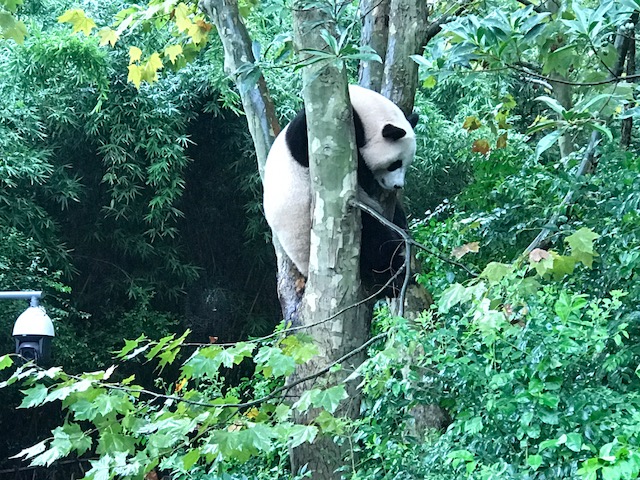
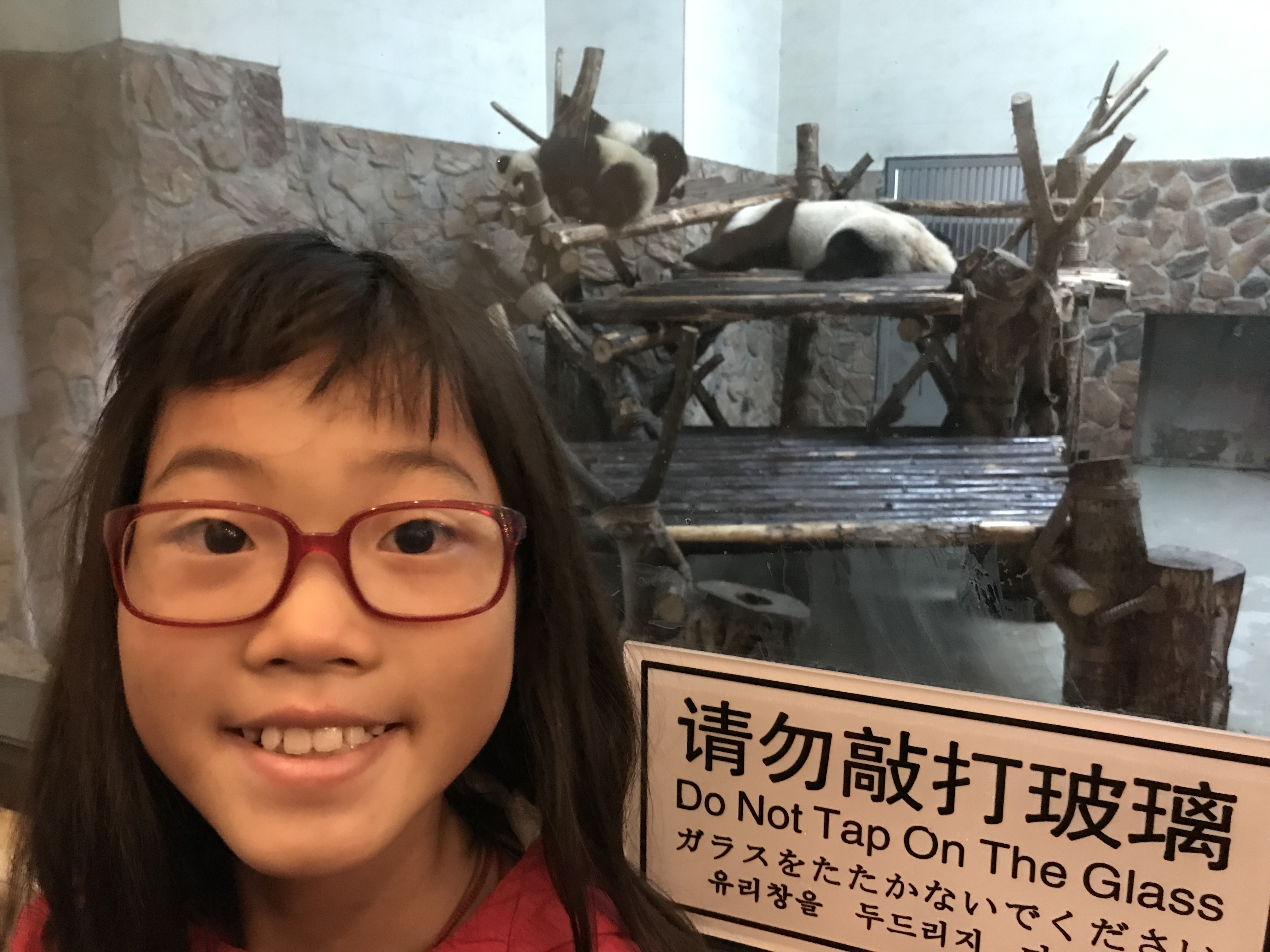
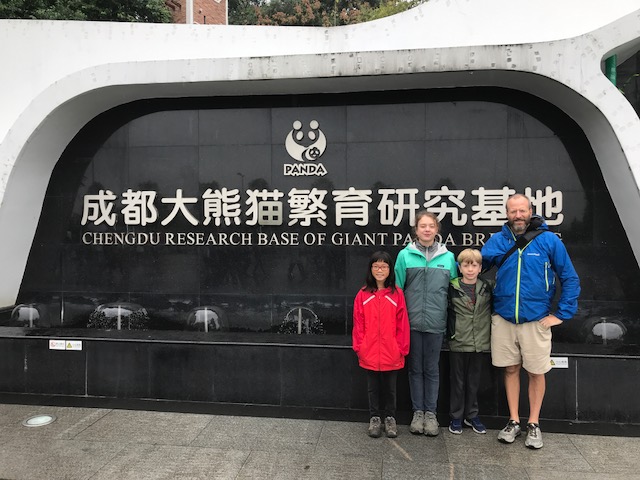
On a cold and rainy October day, we visited the Panda Sanctuary in Chengdu. Fat Pandas snoozing in trees make me happy. The big, cuddly guys find a fork in the tree, wedge themselves in, flop over and doze off. It takes a lot of energy to digest nine hours of bamboo eating.

Chengdu, Panda Sanctuary

If you don’t know what to look for, you could miss these guys!

There’s a reason panda’s popularity is so unwavering. They are objectively adorable and there’s nothing scary. They maneuver bamboo with big paws, roll around and snooze in trees. What’s not to love?

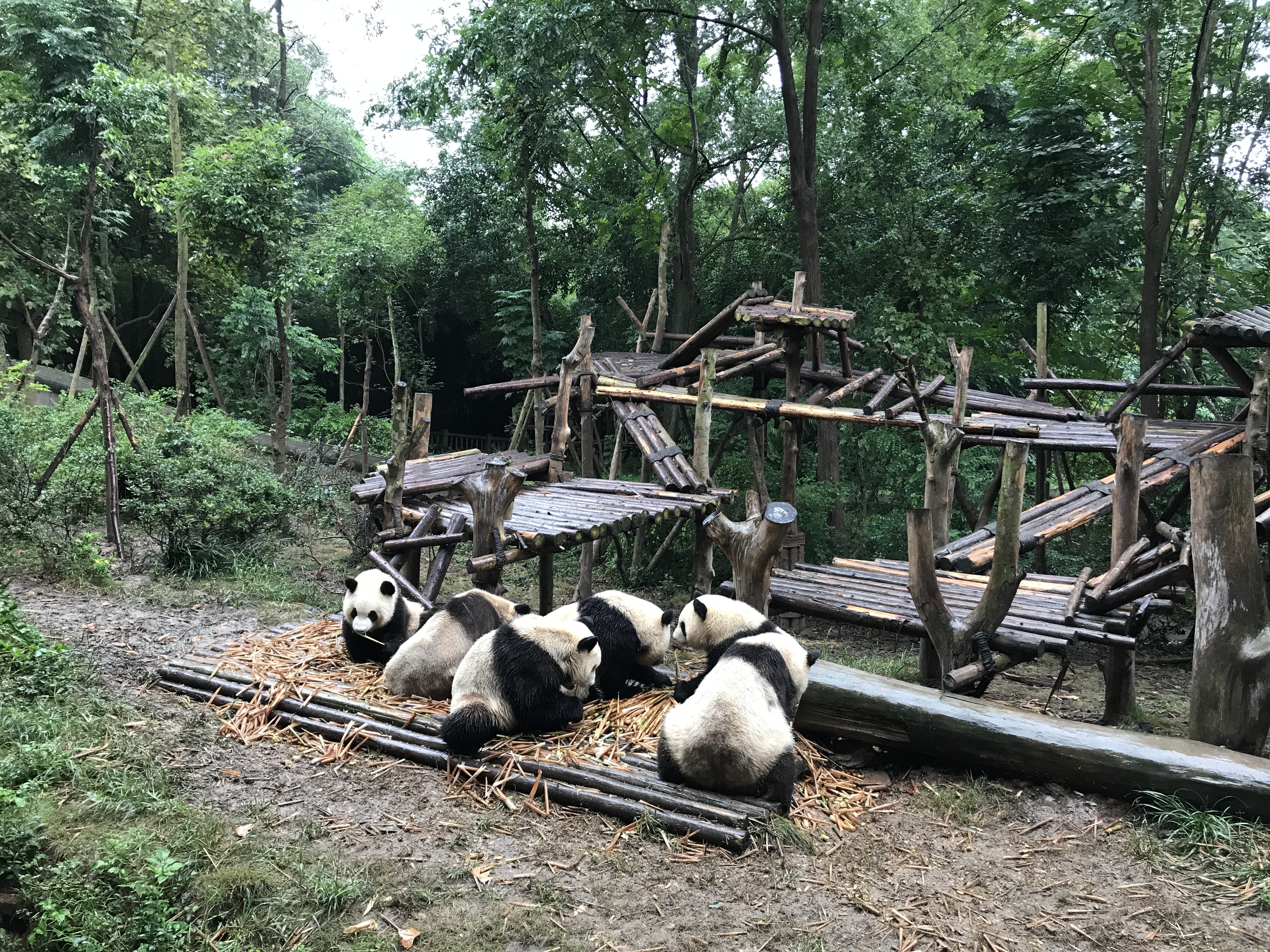
Eating Pandas

The Panda Sanctuary has birthing facilities for both the red and giant pandas as well as veterinarian centers and research buildings.  For the many bamboo-lined miles of walking, there are tea houses and bus lines to help make a day of the visit.  For our October visit, there were very few Western visitors but crowds of Chinese tourists.  We were told that the pandas are more active in the colder weather and that it keeps most tourists away so we were glad for the cool day.

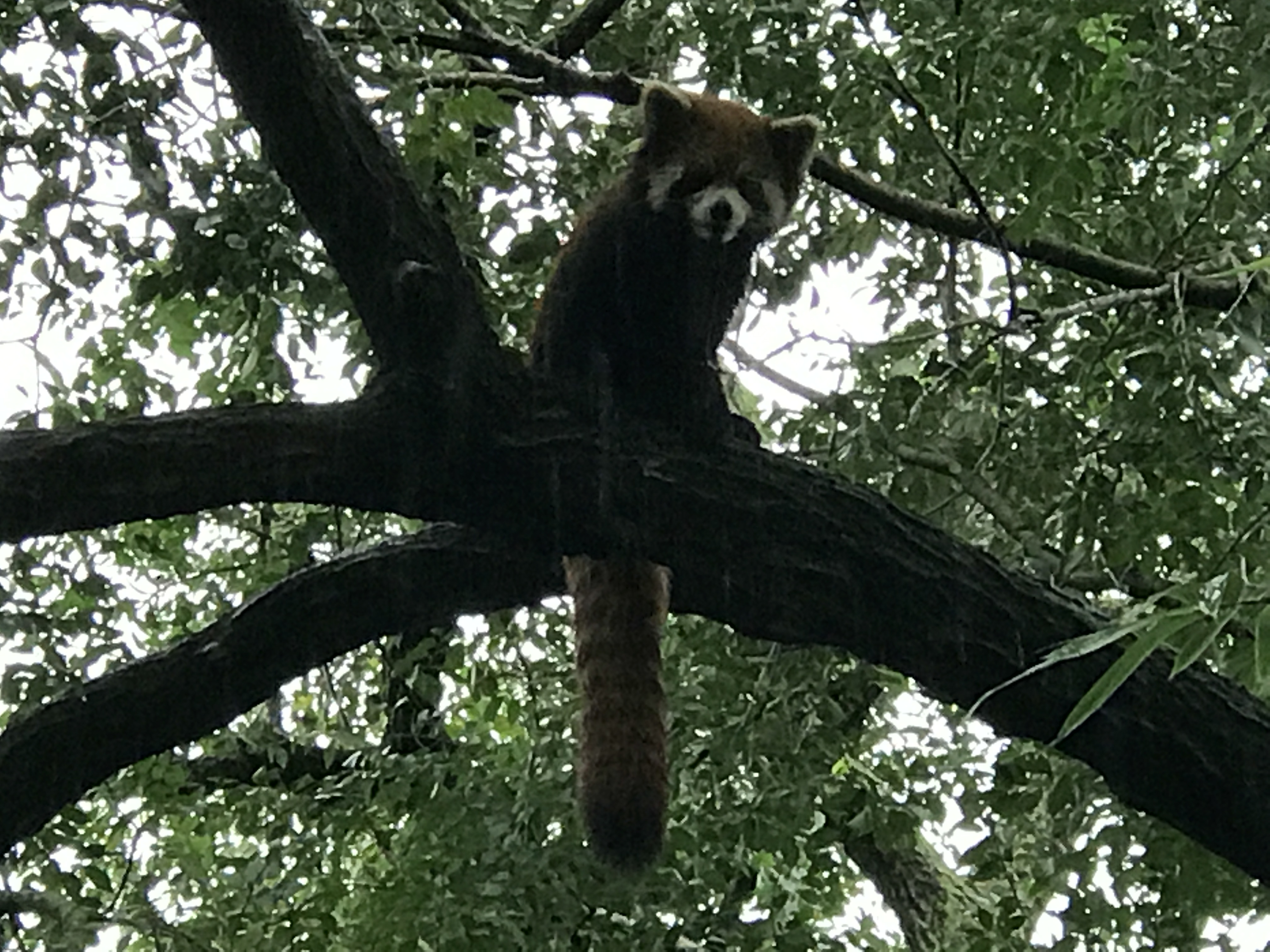
Red Panda, Chengdu

Red Pandas too! There are still some of these guys in the wilds of China, Nepal and India.

Chengdu, though the Panda Sanctuary, is home to the movement to reintroduce them into the wild. “Panda” is the city’s logo and you can feel the pride of ownership to this movement. The current guess is that there are ten or less pandas living in the wild, so you cannot simply release pandas born in captivity into the wild to reintegrate with the others. They need to find enough food, water and open space to find a mate and raise their young. How can they learn these things if not from other pandas? Do they have predators? (Besides humans?)Panda Sanctuary, Chengdu

We saw a film about the protected wilderness just outside the city limits where researchers are trying to reintroduce them. There are actually humans dressed in panda suits (think high school mascot suit) who are acting out what pandas should do and where to go. It’s, at first, funny to watch, then it starts to feel pathetic – a kind of groveling to the wildness we once knew. Maybe it’s more like complete dedication? I just hope it works because it’s sad to think that these gentle creatures won’t survive without such extreme intervention. And what happens to the mascot people in mating season?

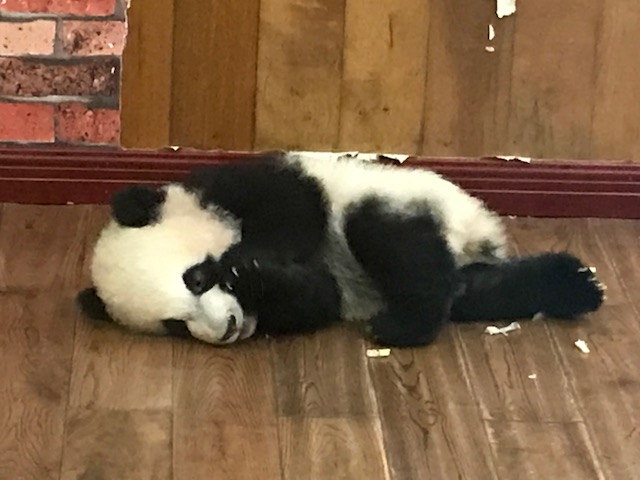
Baby Pandas in the nursery

The Paradise Family happily stood in the drizzle to watch them snooze peacefully. We all giggled in wonder. Even Will. And that’s saying something. The kids walked away asking, “What can we do?” “How can we help?” (The best kind of road schooling!) And I guess the answer is the same as it is for most environmental issues: reduce, reuse, recycle and don’t eat meat. Meat consumption, and the need for grazing lands, is the leading cause of wildlife habitat destruction. Through our time at the Panda Sanctuary and their educational kiosks, our kids really saw the connection of it all.  Kids will grow into adults who will protect what they love.  And we definitely love the pandas.

Panda Sanctuary, Chengdu

By Lorna Paradise, twelve years old, contributing to her family travel blog.  These are her impressions of Nepal after roadschooling and spending two months in Kathmandu, Solukhumbu and the tropical lowlands.

Nepal is not a very big country. In fact, the state of Colorado is bigger than the country of Nepal. But, Colorado does not feel very big to me, because I’ve driven around a lot of it. But, to me, Nepal feels much bigger, because I’ve walked across a lot of it. And, to walk across it, you have to walk up, up, up, cross a pass, then walk down, down, down. One day we walked over a twelve thousand-foot pass, and slept at four thousand feet. I personally think that’s kind of depressing. You feel so amazing for climbing over this pass, then you sleep lower then you started.  Here is a post about trekking with kids and another about our Sherpa homestays.family travel, Everest, tween blogger

Nepal is an amazing country in a lot of ways:

  • Nepal is sandwiched between two giants, and has been for more than two hundred years. It’s still its own country, somehow, without a stable government.
  • No matter what Nepali people have to give, they give it.
  • On one side of Nepal, you have the Terai at sea level: jungle, tigers, like India. On the other side, at nine thousand feet and up, you have villagers who are extremely lucky to go to school, mountains, yaks, suspension bridges, (I can say a lot more about this area cause I went here.) But these two extremely different places are within two hundred miles of each other.

    Khumjung, travel blog,

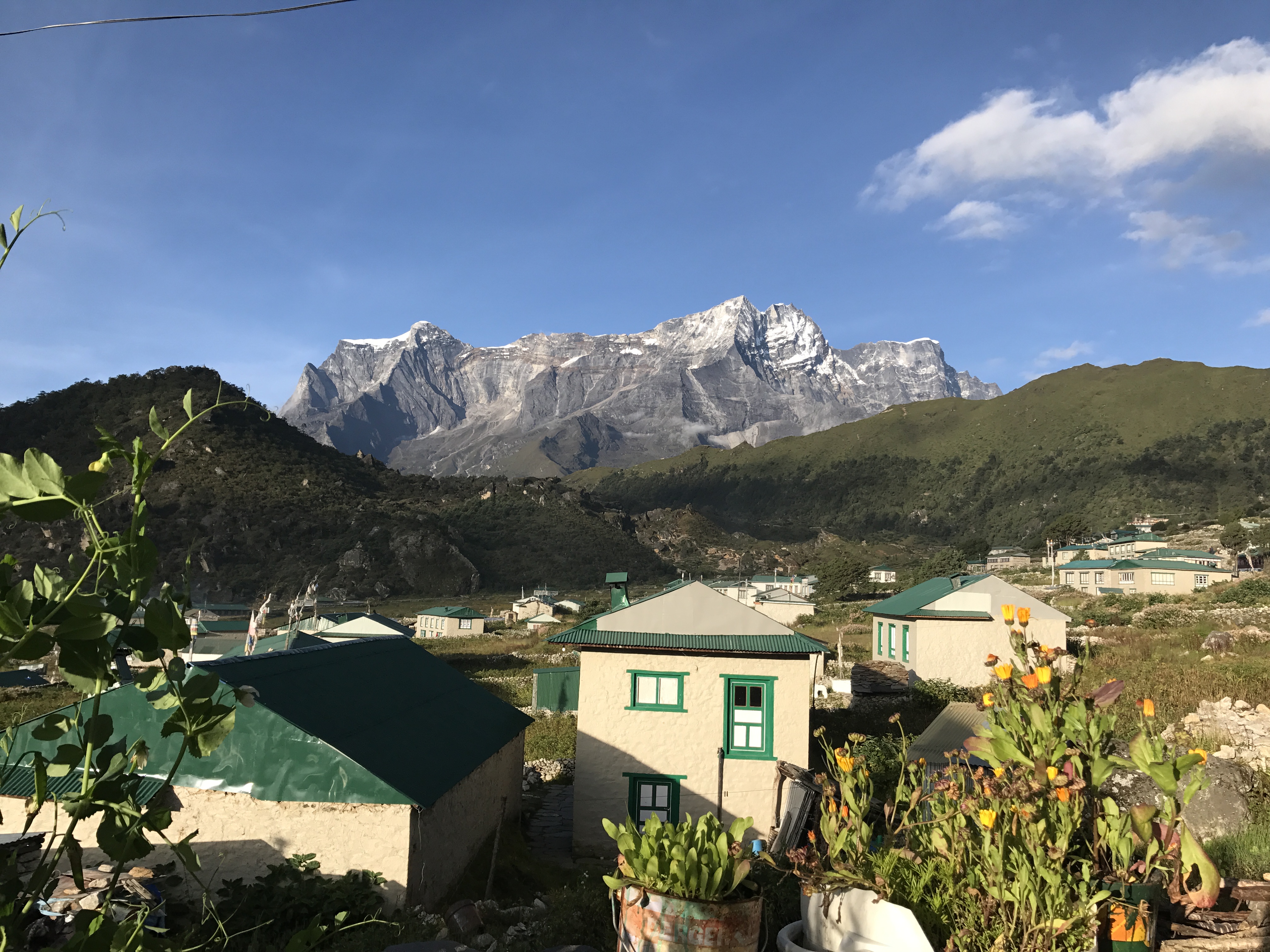
    We spent five nights here in Khumjung at 12,000 ft.

  • Somehow the villagers live with no fruit and very little veggies. To the extent that once we get back to Kathmandu, we eat all their fruit, all their fruit juice, and all their veggies.
  • the average Nepali knows 4 languages. 1)their ethnic group language,2) Nepali,3) English,4) Hindi. (For TV.)
  • Somehow doctors are allowed to go on strike.
  • The clothing is so colorful! Who cares about matching?
  • It has a ton of World Heritage Sites!
  •  It has so many cultures within its borders, all of which are celebrated with gusto ( that sounds really dumb, but I don’t know how else to say it)

We travel to China in 5 days. Nepal went by fast!! I loved it here, and now have some weird recommendations. (If you go to Namche Bazaar, stay at Nirvana Home Guest House.)

family travel, Namche, duo

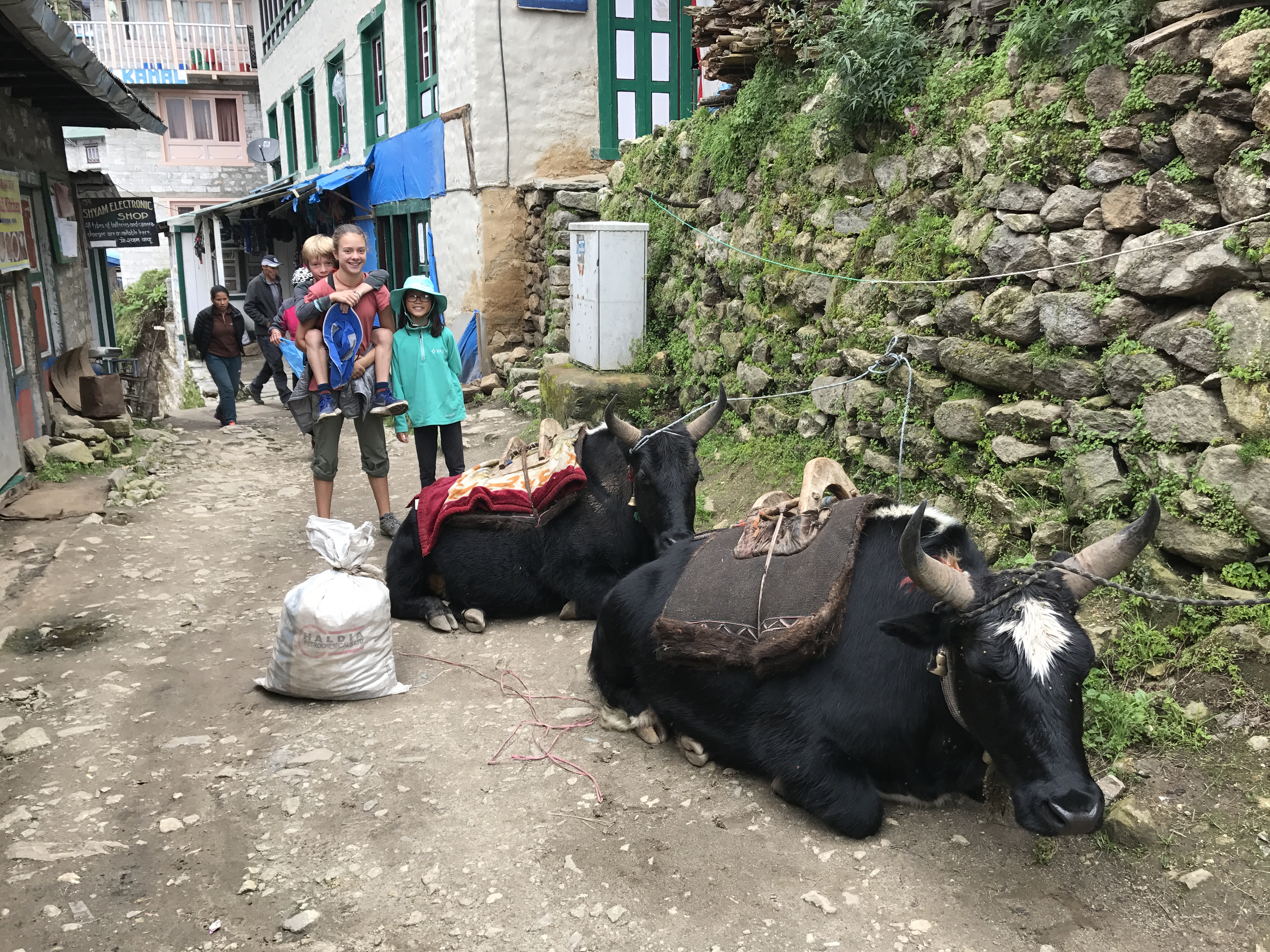
These are dzo’s (a cross between a yak and a cow). They carry the really heavy stuff to the market.

I REALLY miss friends, and things that are anything like home, but I’ve been so busy I haven’t had much time to think about it. My birthday is coming up. I’ll have it in China. Somehow I don’t think it’s gonna be anything like previous birthdays… I got to go paragliding in Pokhara as an early birthday present! That was awesome! Ive never had a birthday present quite like that before.

I’m ready to travel to China, and exited to see Kai and Lucy’s reaction to the fish market that neither of them remembers. You can also read about my first impressions of Nepal.

tween blogger, family travel, Nepal

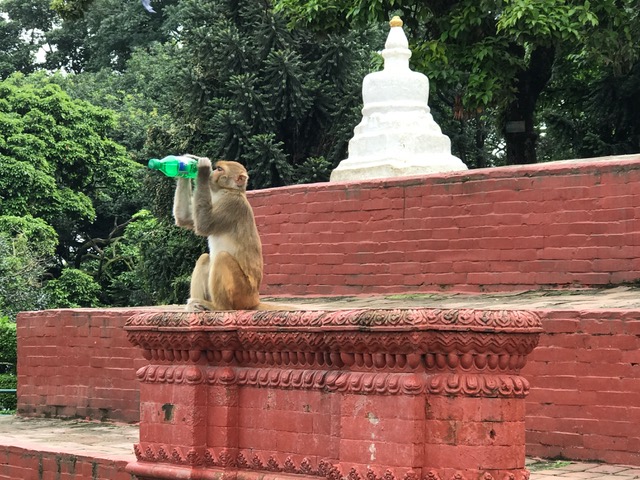
This monkey grabbed my drink right out of my hands and then bit a hole into the bottom to drink it!

When we pulled into Nirvana Home guesthouse in Namche Bazaar, I was most excited for a hot shower, a latte and some wifi.  But the true gem of our time in Namche was spending time with the presiding grandfather of the guesthouse, the Kancha Sherpa.  Truth be told, we had no concrete plans about places to stay.  We just followed our friend, Pasang Lama, to his old classmate’s place.

At first Kancha Sherpa impressed me because he is the last surviving member of the 1953 Hillary-Norgay summit of Everest.  (Around the Khumbu, you can’t swing a cat without a statue or reference to Sir Edmund Hillary and THE expedition that started it all.) Kancha waited with one other guy on the South Summit, just out of view of the tippy-top, for the two headliners to return.

At 85 years old, he is a bit of a local legend.  We gathered around the dining room’s “chimney” to warm up with some story time from grandfather.  The kids were into it.  This was road schooling at its best: learning from the source something that cannot be taught in a classroom.

Namche Bazaar, Kancha Sherpa, Everest

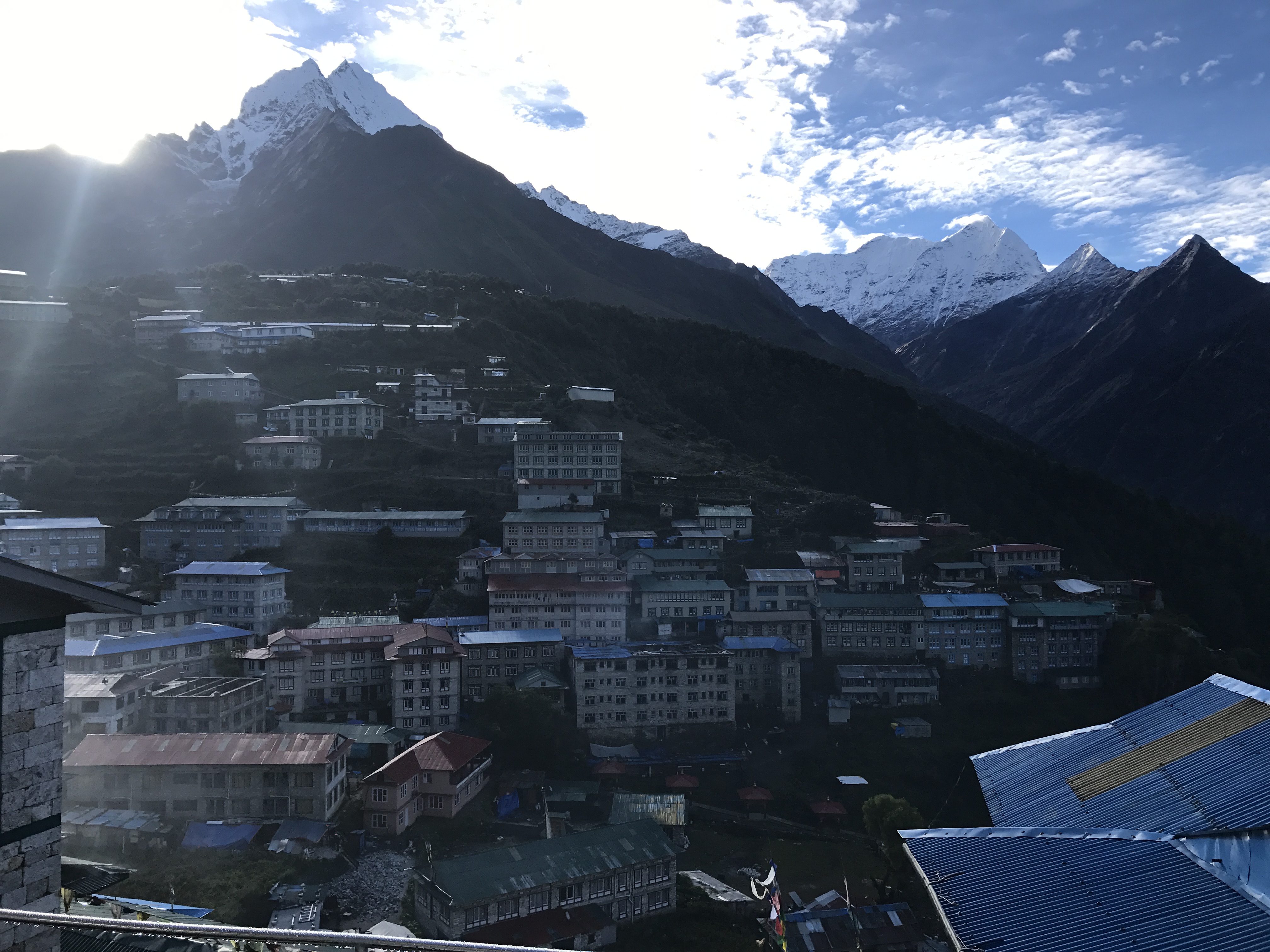
Namche Bazaar in 2017.

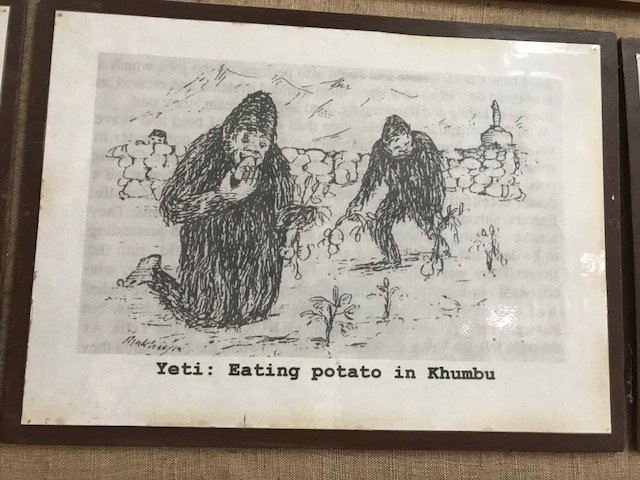
When Kancha was a child, there were just six houses in Namche and they would all band together, for fear of bears, to walk down to the stream for water.  When asked what other animals were plentiful back then, he said the yeti.  A “yeti” is like a extra-hairy big foot and many people in the Khumbu know someone who has seen one or been attacked by one.  Down in Kathmandu the yeti is more of a mascot – the symbol of airlines and silly tourist T-shirts.  But up high, he’s more real. There is even a yeti scalp you can see at a local monastery (for a fee).

yeti, Kancha Sherpa, Namche,

police sketch of a mischief-making yeti

As a young man Kancha Sherpa ran away from home to Darjeeling, India, in search of  work and an adventure.  Once in India, Kancha found his old Khumbu friend Tenzing Norgay, who hooked him up with a temporary job and eventually got him named on the Hillary Expedition.  The expedition walked with their gear from India, across Nepal and up toward Everest Base Camp – nothing like today’s quick flight to Lukla followed by a seven day walk.

His first impression of Hillary was: TALL, very tall.  But mostly, people revere Hillary because he never forgot the Sherpa people and spent the rest of his life as an ambassador of Nepal and, more specifically, the Sherpa ethnic group.  He funded the first school in the area, the hospital, most major building projects and more. (By the way, “Sherpa” refers to an ethnic group, not people who carry bags.  Those people prefer to be called “porters”.)

Kancha Sherpa, Namche, Everest, Hillary Expedition

Lorna with Kancha Sherpa

The girls and I stayed in a triple room up on the third floor of Nirvana and I thought we were the only ones staying up there… until the blowing of the conch shell down the hall on the first morning.  Then there was a drum.  Then there was someone pacing the floor with a mumble.  As I put my ear to the door, it was a low, “om mani padme om.”  I cracked my door to see him shuffle along counting his prayers on his prayer beads.  Over the five nights we stayed there, he did this ritual each morning and each evening.  He walked in a sacred circle around the town each day, praying for the freedom from suffering for all sentient beings.  Kancha showed the kids and I his prayer room, let us try out the drum and admire the letters from the Queen of England and the Nepali dignataries that were pinned to his wall.  Above and below the royal letters were the many photos of his wife, and some of his kids.  His daily routine included special prayers for his wife who passed just two years before.  He prayed for her safety and welcome in the spiritual realm.  He daily changed the water of seventeen bowls as an offering.  He had a tall daily to-do list and it was all truly for others.

Soon, he will spend the cold months with his son in Kathmandu and I wondered that he could still make the walk.  But no, he just tells the helicopter companies that he needs a lift and they get him the next free seat heading down.  His reputation (or all the good karma?) has earned him a VIP frequent flyer status.  Sometimes logistics can be that simple.

Kancha Sherpa, Namche Bazaar, Everest

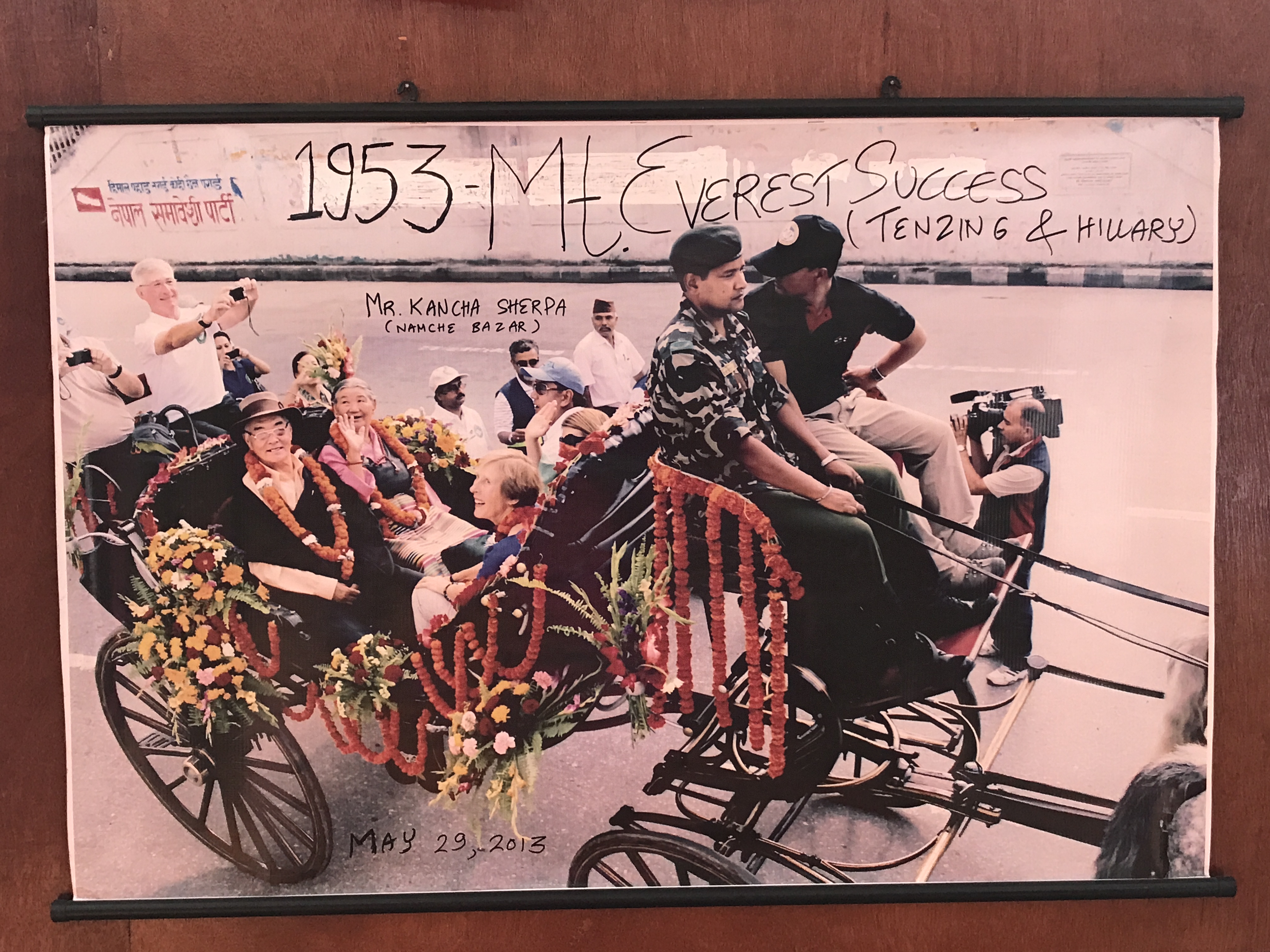
One of the posters in the Nirvana Home Guesthouse

Just meeting a human, like Kancha Sherpa with one humble foot in the past and a mind so focused on the spiritual future, I was just as “roadschooled” as my kids.  The elderly here have a purpose – not a token value – but a true purpose.  They have the time and inclination to slow down and pray for us all, to remind us what it is all about from the perspective of age.