“Education is not the filling of a bucket, but the lighting of a fire.” -William Butler Yeats
We’ve completed our eighth month on the road and “roadschooling” or worldschooling is not as I envisioned it before we left. It’s morphed into something that is fluid and alive. Our kids go to a Waldorf School and yet I taught traditional public middle and high school. So I’ve been trying to do a blend of the two, looking for a middle path that makes us both comfortable. If there is one piece of advice that I got from three friends who have done their version of a year worldschooling before, it’s: don’t stress about school; they will learn a ton no matter what you do. But I’ve got teacher blood in my veins and we like to plan, set measurable goals and make sure all the learning modalities are reached.
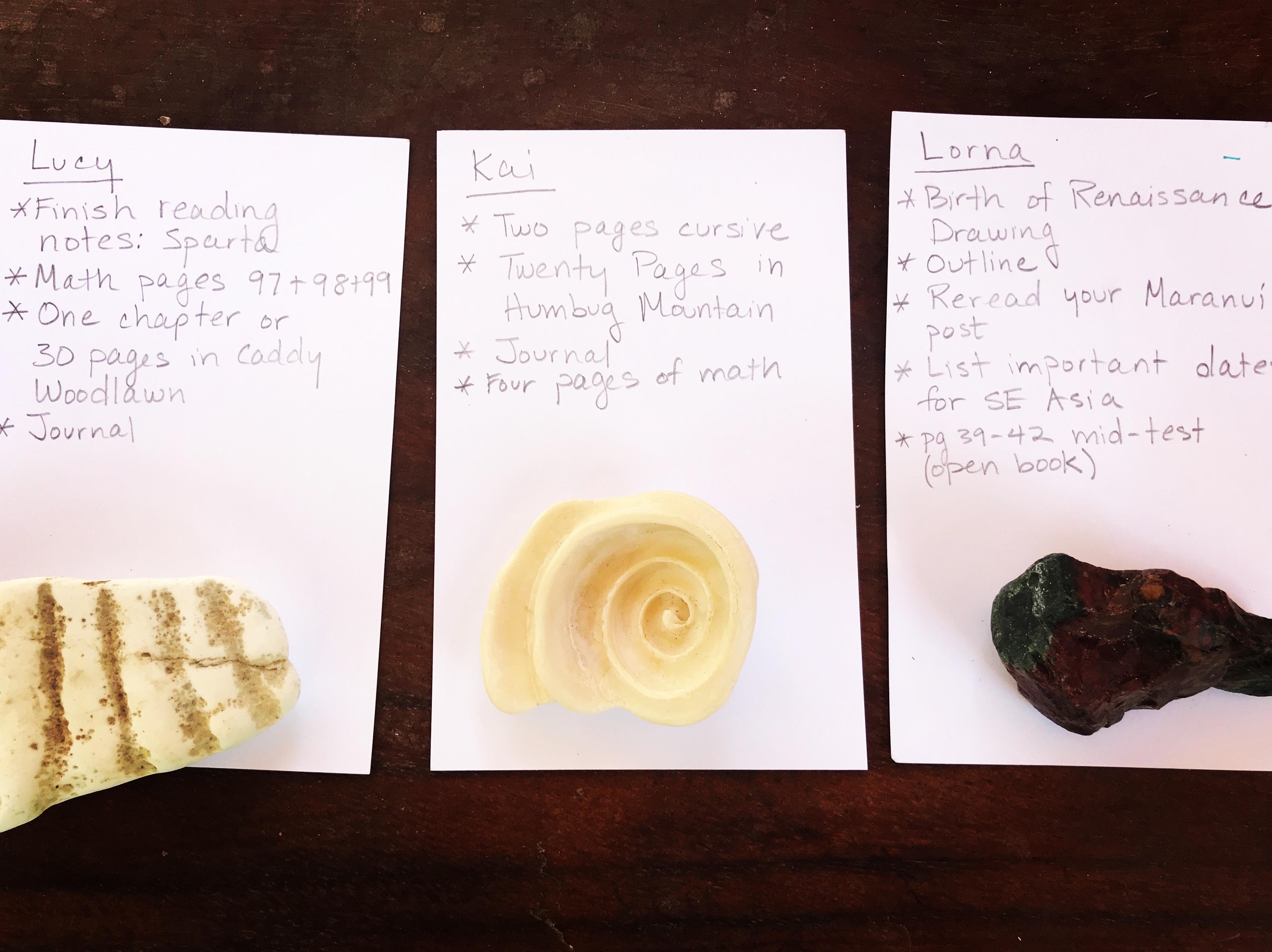
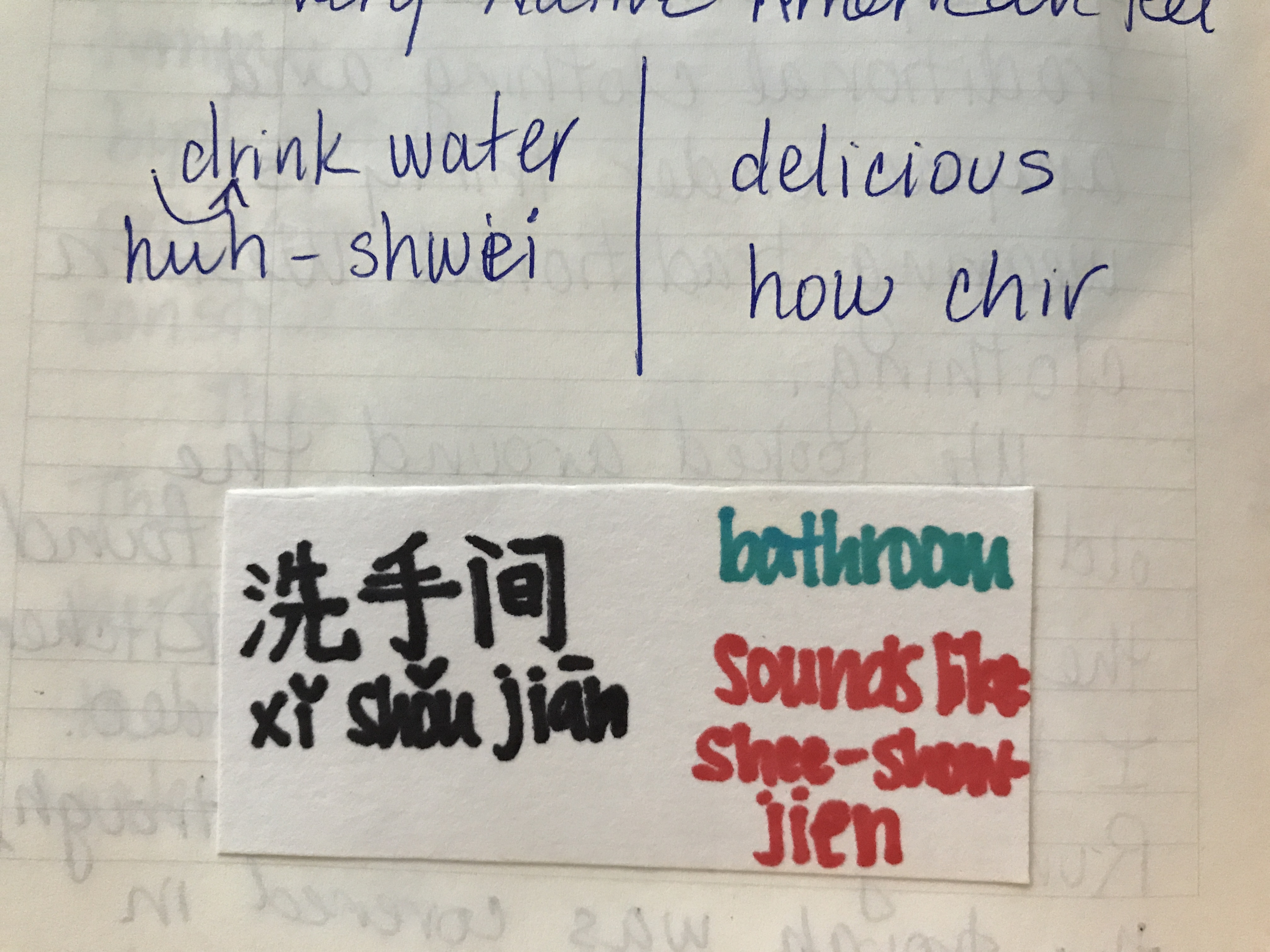
Daily assignments written on index cards. Usually come up with some great breaks and done by lunch.
Math
The idea that I am the “math teacher” makes me itchy. I needed the crutch of a math workbook so we picked up some of those from Barnes and Noble. They’re light, sequential and there’s an answer sheet for mom. Most days we do math of some sort. Lucy and Kai quiz each other with their flash cards. And then I can riff off of their workbooks with fractions, measurements, word problems and the like. Lorna is doing simple algebra and geometry, and with a little prep work on my part, I can make it work. It may not be out-of-the-box creative, but we’re rocking the Pythagoream Theorem. The hardest part has been to find a protractor and rulers that use inches. (And that’s learning in itself – we are the only country that sells inch rulers.)
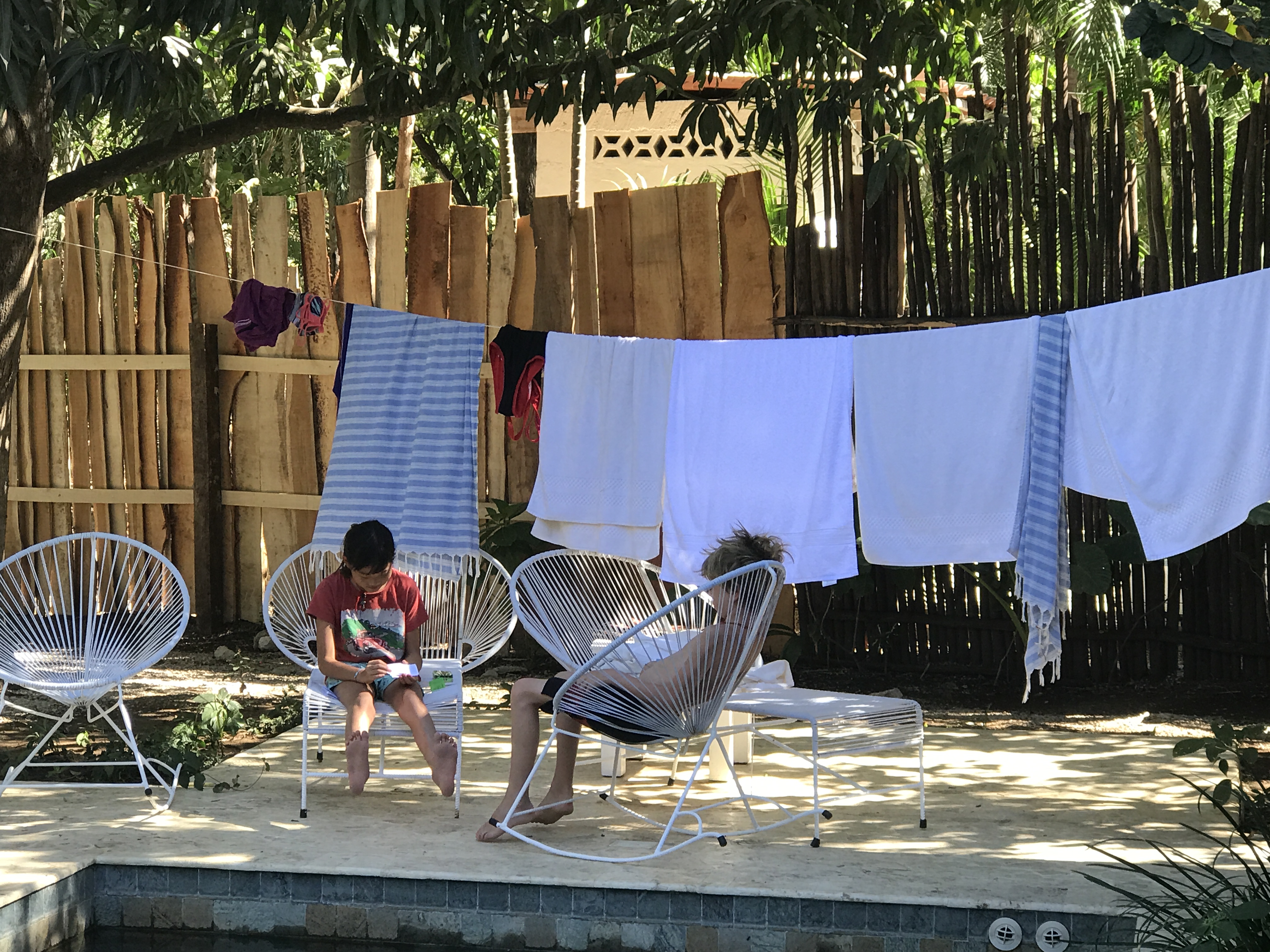
Lucy and Kai quizzing each other with math flashcards – Costa Rica.
Reading
The kids are reading a ton. Lorna has read over sixty books since July; Lucy over forty and Kai over twenty. They are keeping track of their books and doing some simple projects and book reports. Lorna wrote a review of her favorite book for Amazon. We have the luxury of time and space to read with our kids. I’m convinced that reading aloud with an adult is the best way for a child to improve their reading skills. There’s the actual reading itself and learning how the punctuation works, then there’s the predictions, the personal connections and shared delight in the written word. Lorna read The Giver, by Lois Lowry with her grandmother over email. When kids read with an adult, there’s no need for those formal comprehension worksheets, but instead comprehension becomes organic. One of my top favorite parts of parenting is reading with my kids.
Nonfiction reading is also easily incorporated by reading the displays at museums, animal sanctuaries and national parks. In New Zealand, we had access to a great English library and we made reports, with drafts, all ready to give to their teachers in Boulder. We have also read history textbooks, as described below.
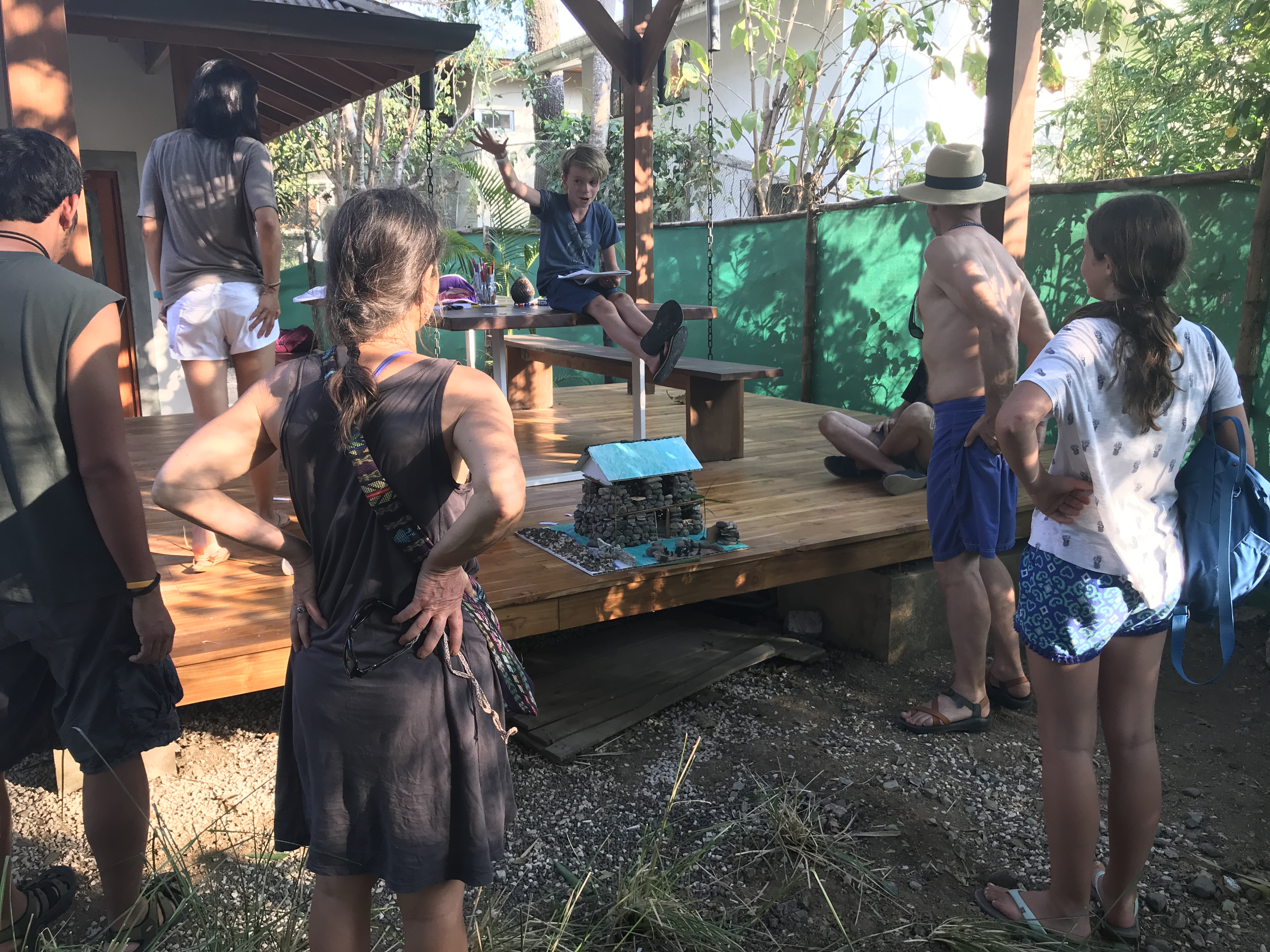
Kai presenting his shelter project to a gathering of visiting friends. He decided to build a traditional Sherpa home complete with clay yaks and potato field. And then fielded questions.
Writing
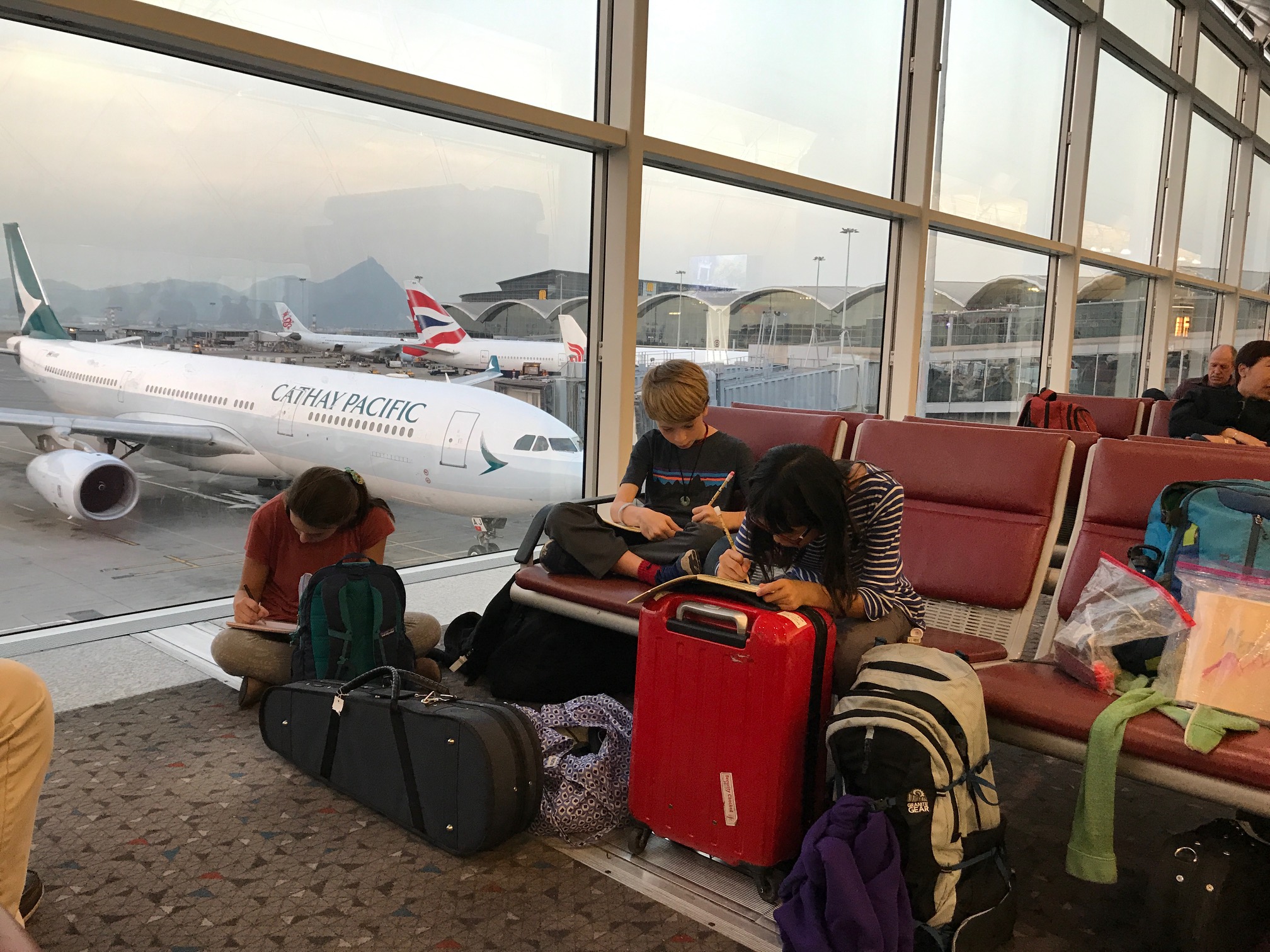
Ok, maybe writing is the most fun. Most days when we’re on the go, we journal. I use their writing from their journal to tailor their “writing lessons.” I give them a card with obvious errors and they need to correct it. Easily individualized. We are keeping writing portfolios to show the writing process (prewriting and drafts), and all the different types of writing that we have done: postcards, thank you notes, Amazon book reviews, personal letters, formal letters, etc. We also did a great poetry unit together which I will write up soon with a link. We did group poems and memorized poems. My seventh grader is writing five paragraph essays and my fourth grader did her first report on the lion.
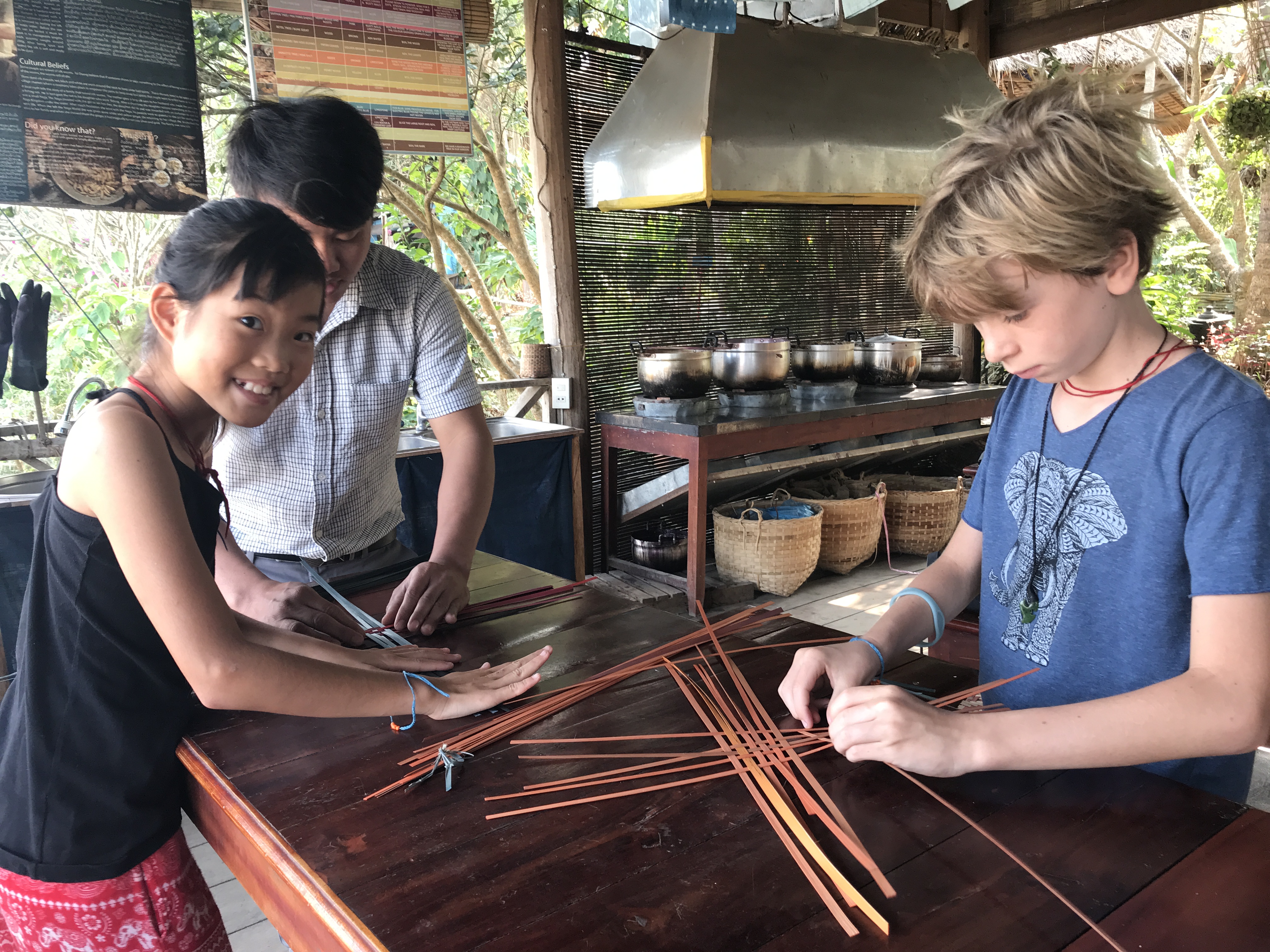
Learning to make baskets and placemats with Ockpoptok in Luang Prabang, Laos
Social Studies / History
This really is the easiest subject for my kids to learn. We learn through museums, monuments, place names, and shared meals. All we need to do is recognize the teachable moments and be ready to expand on them. It’s more improv than scripted. But there are a few caveats to that.
- Through every country we have taken notes on pivotal historical events and plotted them into our 20 foot-long traveling timeline. Unlike a history class which moves chronologically, we arrive at history geographically. My intention was that the timeline would hold it all together and make order and sense across world movements.
- Two history textbooks that are compact-ish and cover ancient humans the imperialism. I like the TCI books and you can buy them used on Amazon.
Science and Conservation
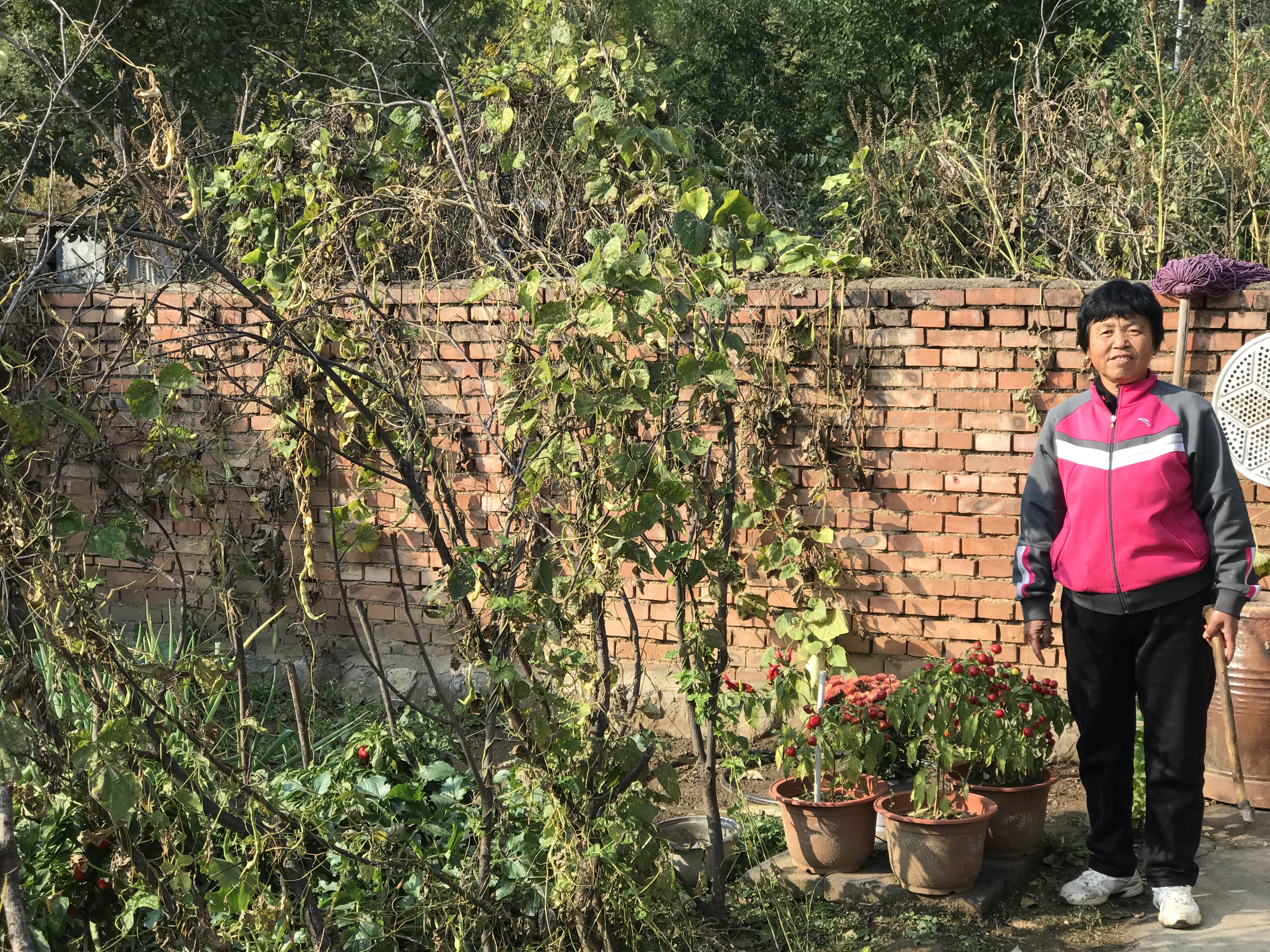
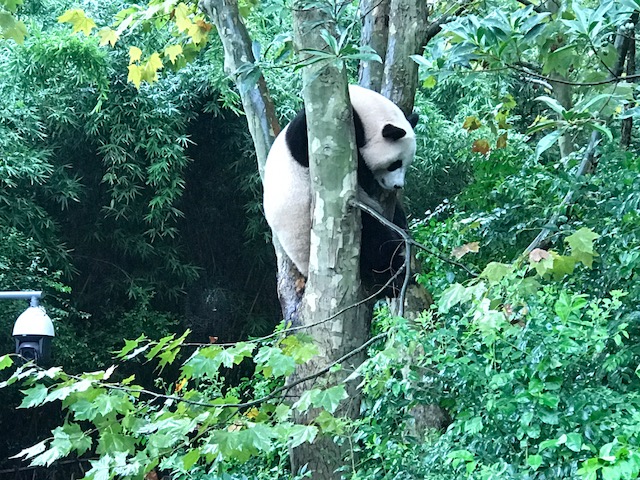
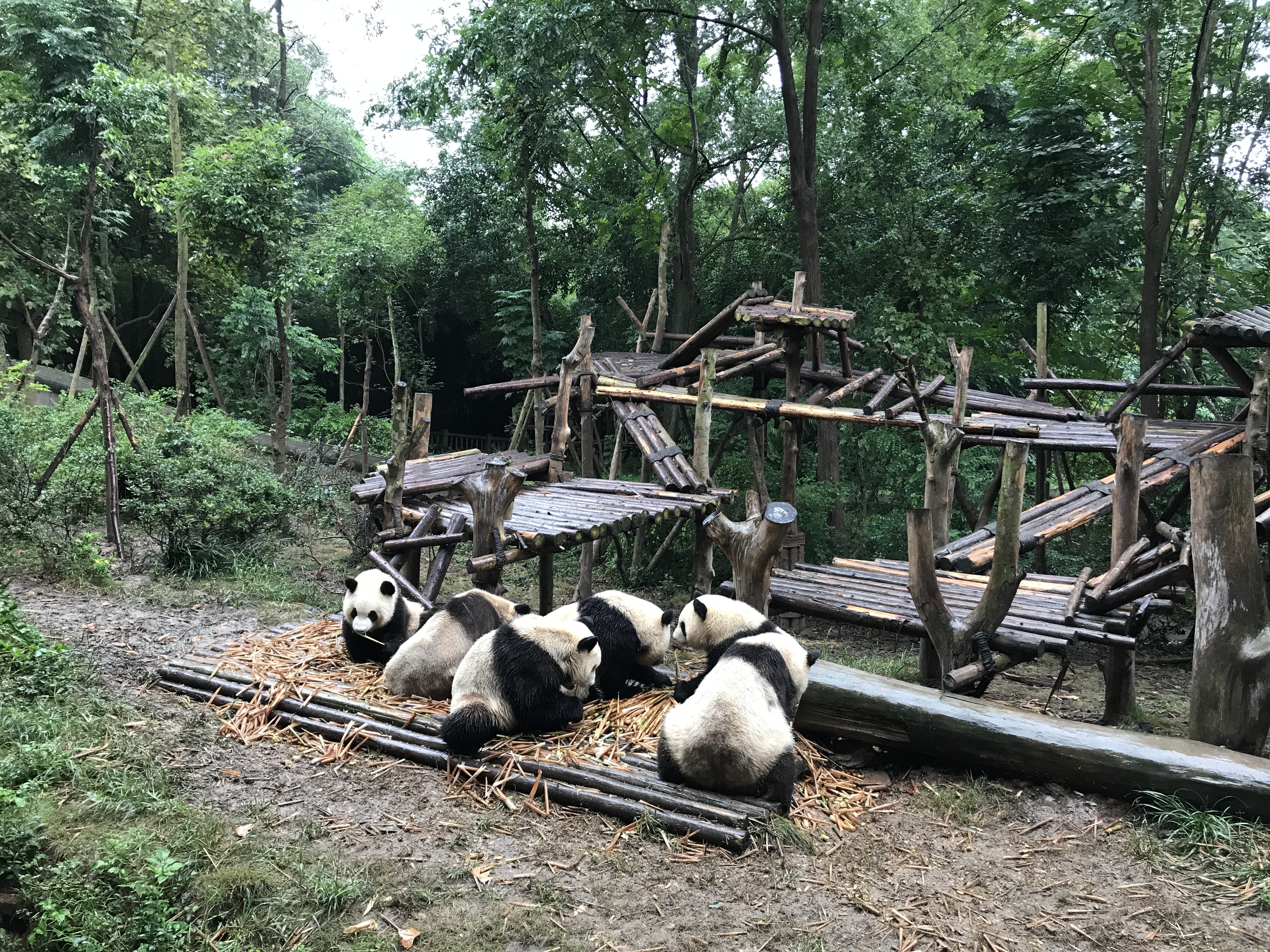
Science is still focused on farming, animals and the environment. Traveling through national parks, the visitor centers teach so much. And instead of just learning about our global environmental problems, we are meeting people who working on a solution. We have visited penguin, elephant and howler monkey sanctuaries to learn about animals and about that dangerous intersection between human development and wildlife habitat. We will visit an organic farm in Costa Rica for three nights and have already dug potatoes in the Himalayas and tapped rubber trees in Thailand.
And then there’s foreign language, both tonal ones and flat ones, and the outdoor education and physical education and the art and geography. Oh my.
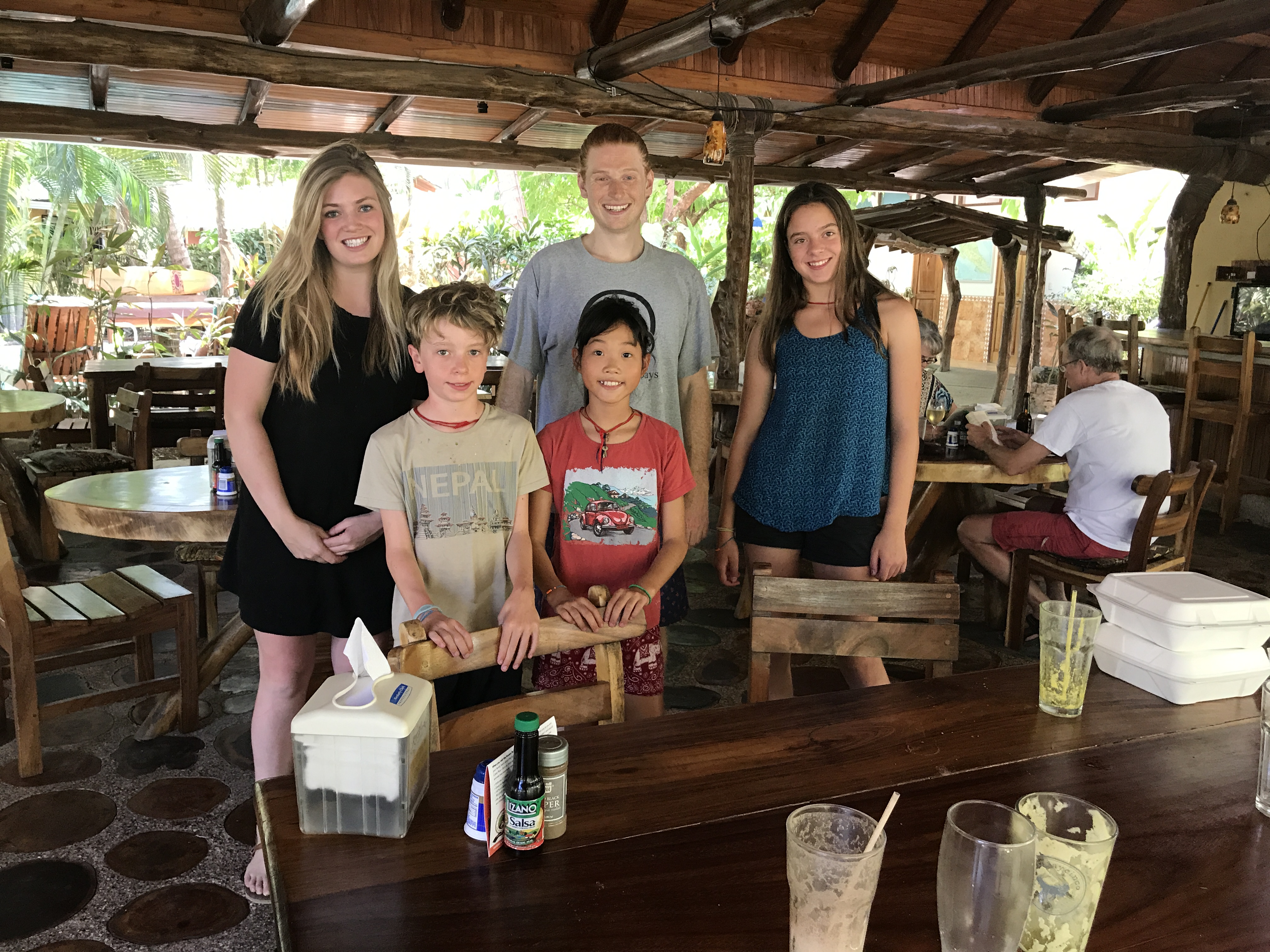
Some lovely young Canadian environmentalists whom we took out for lunch to ask them what surfrider was doing to clean up the oceans. The kids had their questions ready.
As a “retired” classroom teacher, I can say that direct instruction time in a public school setting is less than three hours per day. There’s the classroom management, the collecting of permission slips, the off-topic comments, the recess and the weeks of testing. In schools kids learn so much more than state standards, like how to be social, how to work as a group, how to be a friend – than the actual lessons: I’m not dissing schools. But if you can take a year to teach your kids, they will have oodles of time to do more than the traditional sit-in-a-desk-and-answer-the-questions kind of learning. There will actually be more time to swim with the big questions before answering someone else’s.
I could go on and on, but that is a glimpse into “how is the teaching going?”