“Education is not the filling of a bucket, but the lighting of a fire.” -William Butler Yeats

We’ve completed our eighth month on the road and “roadschooling” or worldschooling is not as I envisioned it before we left.  It’s morphed into something that is fluid and alive.  Our kids go to a Waldorf School and yet I taught traditional public middle and high school. So I’ve been trying to do a blend of the two, looking for a middle path that makes us both comfortable.  If there is one piece of advice that I got from three friends who have done their version of a year worldschooling before, it’s: don’t stress about school; they will learn a ton no matter what you do.  But I’ve got teacher blood in my veins and we like to plan, set measurable goals and make sure all the learning modalities are reached.
homeschool, unschooled, world school

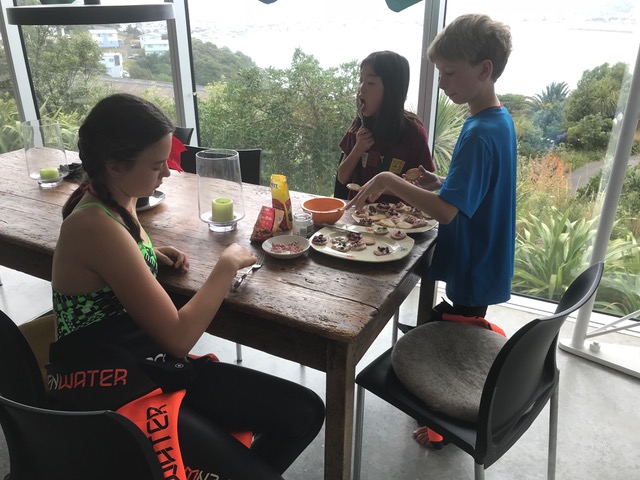
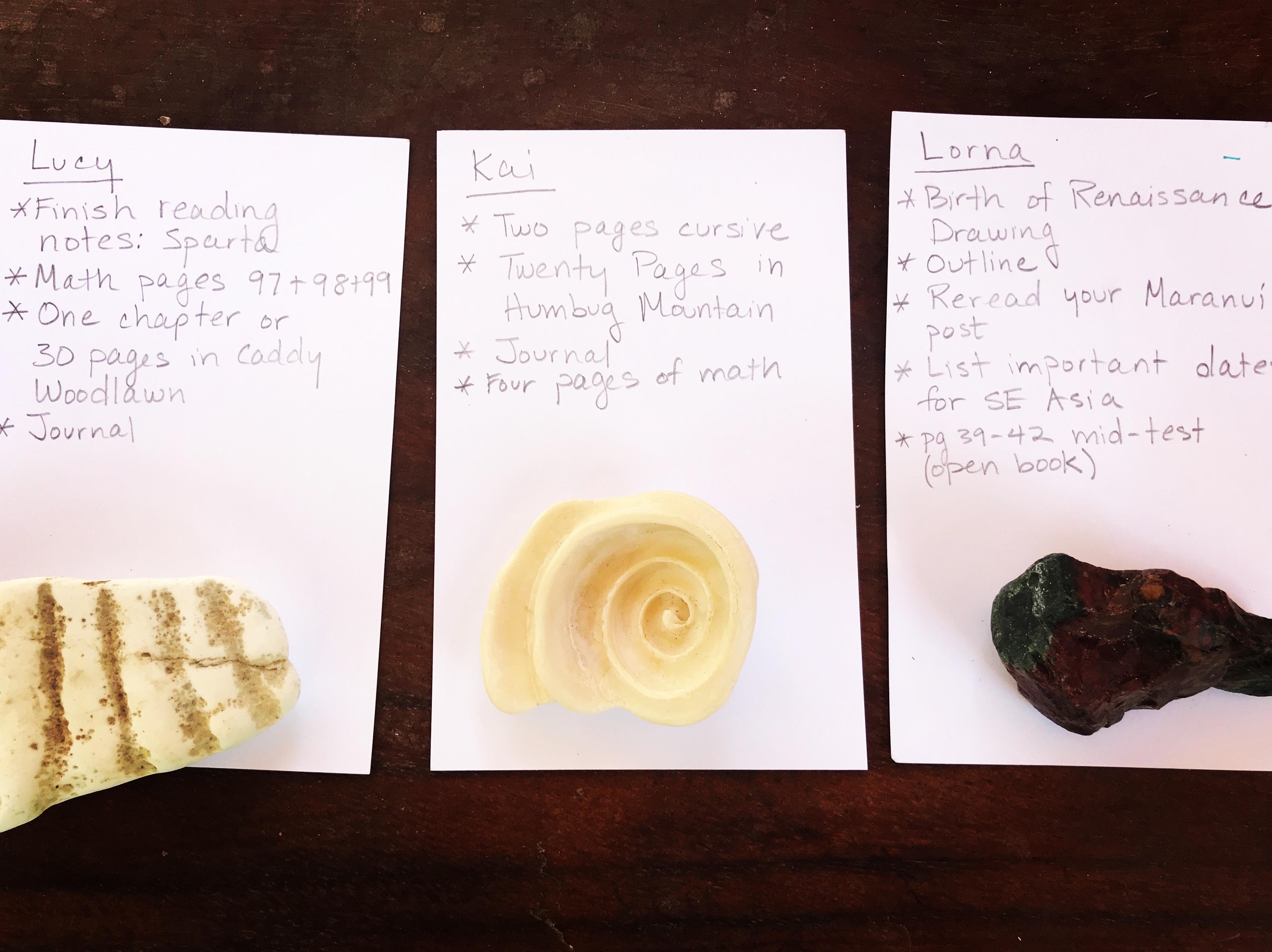
Daily assignments written on index cards. Usually come up with some great breaks and done by lunch.

Math

The idea that I am the “math teacher” makes me itchy.  I needed the crutch of a math workbook so we picked up some of those from Barnes and Noble.  They’re light, sequential and there’s an answer sheet for mom.  Most days we do math of some sort.  Lucy and Kai quiz each other with their flash cards.  And then I can riff off of their workbooks with fractions, measurements, word problems and the like.  Lorna is doing simple algebra and geometry, and with a little prep work on my part, I can make it work.  It may not be out-of-the-box creative, but we’re rocking the Pythagoream Theorem.  The hardest part has been to find a protractor and rulers that use inches.  (And that’s learning in itself – we are the only country that sells inch rulers.)
road schooling, Costa Rica, world schooling, homeschooling,

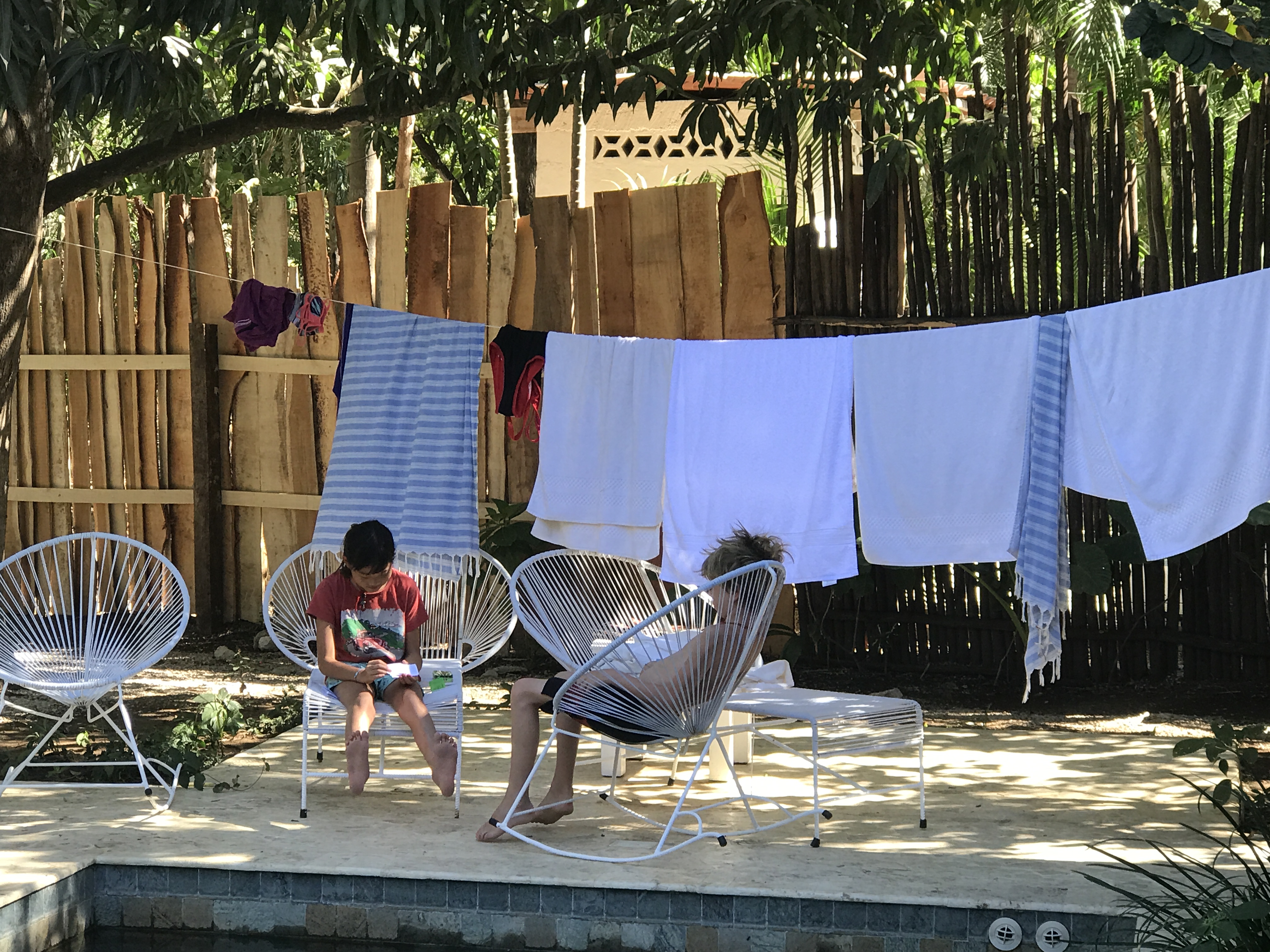
Lucy and Kai quizzing each other with math flashcards – Costa Rica.

Reading

The kids are reading a ton.  Lorna has read over sixty books since July; Lucy over forty and Kai over twenty.  They are keeping track of their books and doing some simple projects and book reports.  Lorna wrote a review of her favorite book for Amazon.  We have the luxury of time and space to read with our kids.  I’m convinced that reading aloud with an adult is the best way for a child to improve their reading skills.  There’s the actual reading itself and learning how the punctuation works, then there’s the predictions, the personal connections and shared delight in the written word.  Lorna read The Giver, by Lois Lowry with her grandmother over email.  When kids read with an adult, there’s no need for those formal comprehension worksheets, but instead comprehension becomes organic.  One of my top favorite parts of parenting is reading with my kids.


Nonfiction reading is also easily incorporated by reading the displays at museums, animal sanctuaries and national parks.  In New Zealand, we had access to a great English library and we made reports, with drafts, all ready to give to their teachers in Boulder.  We have also read history textbooks, as described below.
Shelter Project, 3rd grade, sherpa home, world schooling, homeschool, unschooled

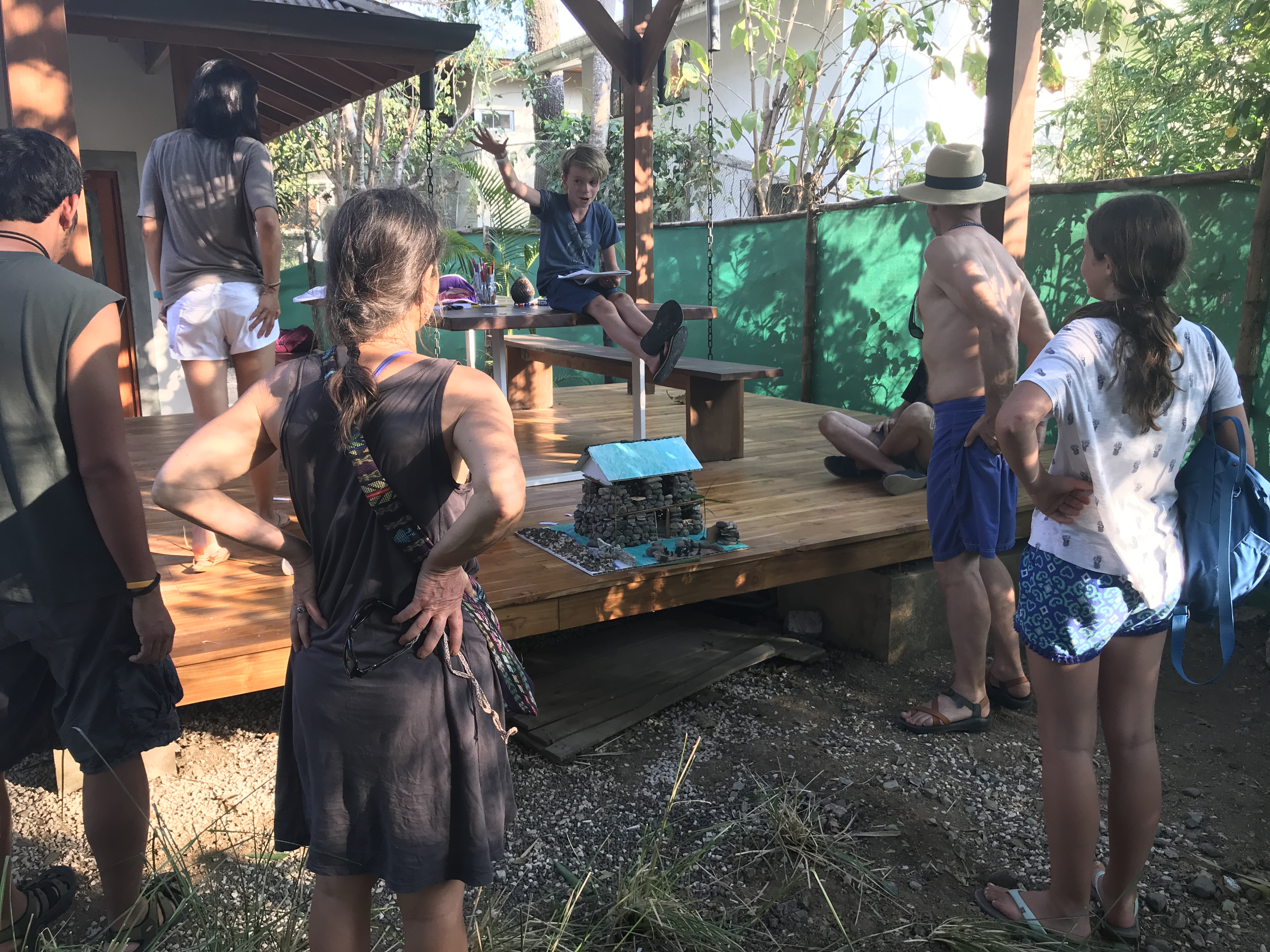
Kai presenting his shelter project to a gathering of visiting friends. He decided to build a traditional Sherpa home complete with clay yaks and potato field. And then fielded questions.

Writing

Ok, maybe writing is the most fun.  Most days when we’re on the go, we journal.  I use their writing from their journal to tailor their “writing lessons.”  I give them a card with obvious errors and they need to correct it.  Easily individualized.  We are keeping writing portfolios to show the writing process (prewriting and drafts), and all the different types of writing that we have done: postcards, thank you notes, Amazon book reviews, personal letters, formal letters, etc.  We also did a great poetry unit together which I will write up soon with a link.  We did group poems and memorized poems.  My seventh grader is writing five paragraph essays and my fourth grader did her first report on the lion.
ockpoptock, Luang Prabang, Laos, worldschool, homeschool, roadschool

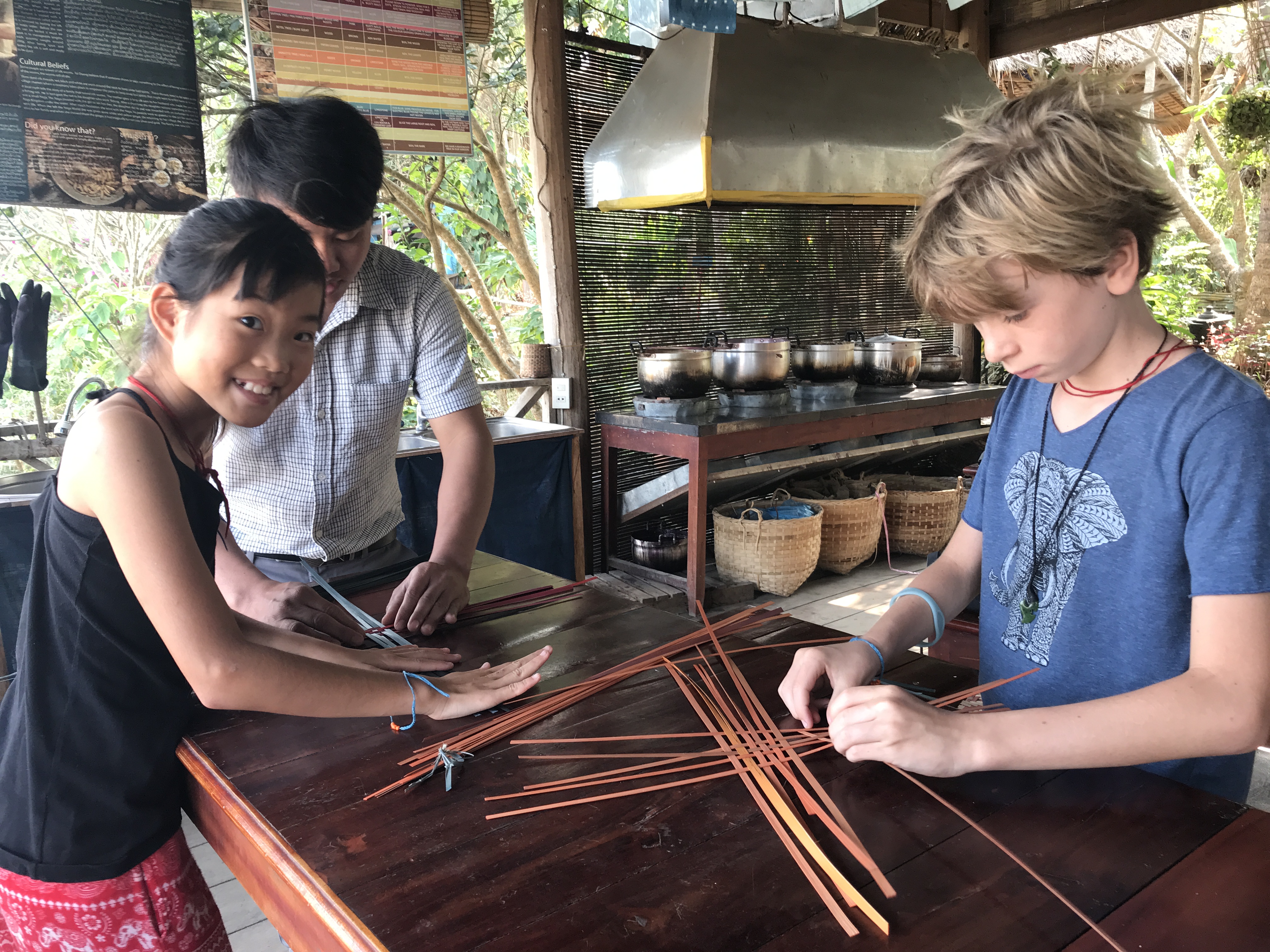
Learning to make baskets and placemats with Ockpoptok in Luang Prabang, Laos

Social Studies / History

This really is the easiest subject for my kids to learn.  We learn through museums, monuments, place names, and shared meals.  All we need to do is recognize the teachable moments and be ready to expand on them.  It’s more improv than scripted.  But there are a few caveats to that.


  • Through every country we have taken notes on pivotal historical events and plotted them into our 20 foot-long traveling timeline. Unlike a history class which moves chronologically, we arrive at history geographically.  My intention was that the timeline would hold it all together and make order and sense across world movements.
  • Two history textbooks that are compact-ish and cover ancient humans the imperialism. I like the TCI books and you can buy them used on Amazon.


Science and Conservation

Science is still focused on farming, animals and the environment.  Traveling through national parks, the visitor centers teach so much. And instead of just learning about our global environmental problems, we are meeting people who working on a solution.  We have visited penguin, elephant and howler monkey sanctuaries to learn about animals and about that dangerous intersection between human development and wildlife habitat.  We will visit an organic farm in Costa Rica for three nights and have already dug potatoes in the Himalayas and tapped rubber trees in Thailand.


And then there’s foreign language, both tonal ones and flat ones, and the outdoor education and physical education and the art and geography.  Oh my.
surfrider, ocean plastic, young environmentalists, world school, home school, unschooled

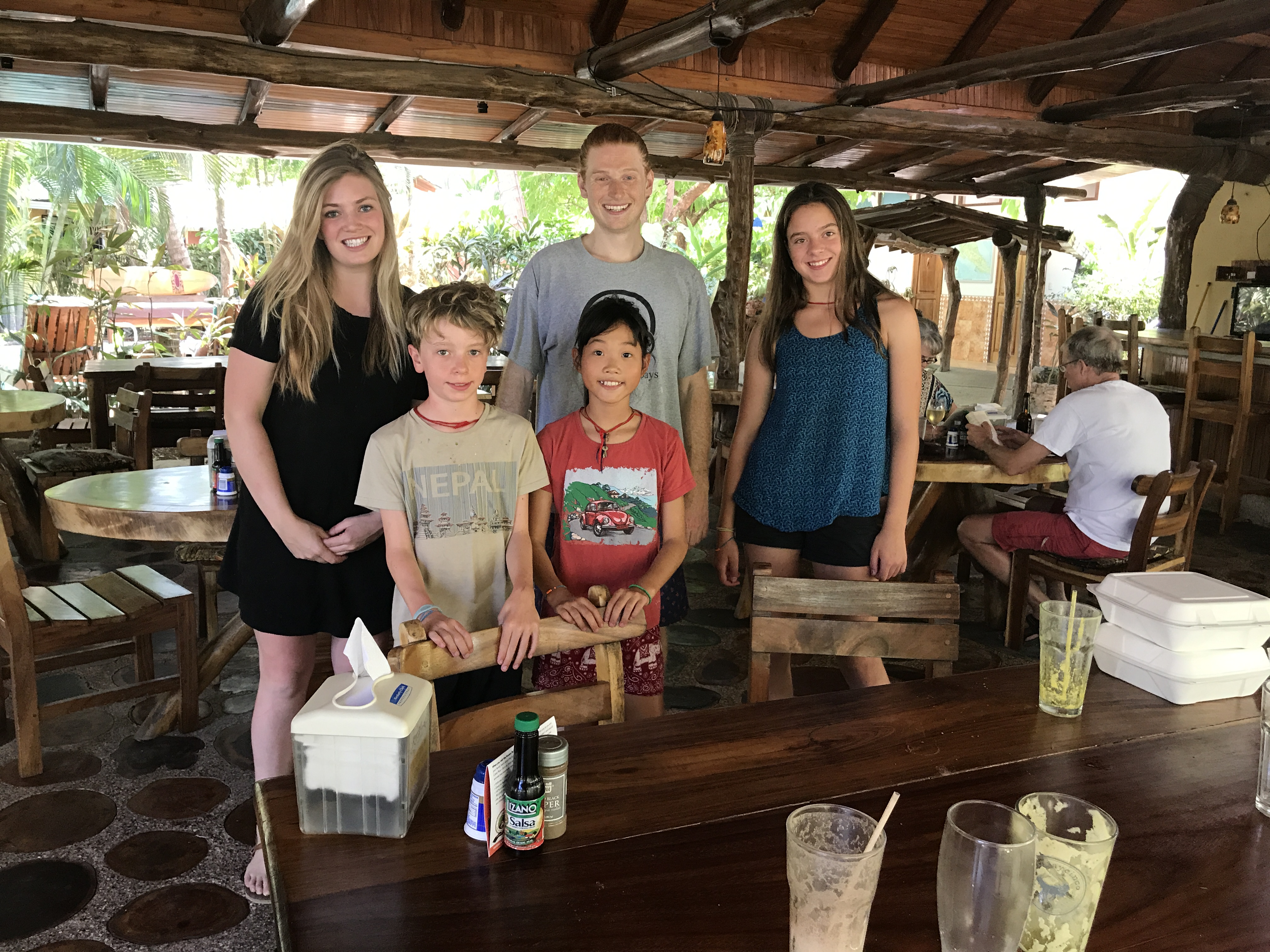
Some lovely young Canadian environmentalists whom we took out for lunch to ask them what surfrider was doing to clean up the oceans. The kids had their questions ready.

As a “retired” classroom teacher, I can say that direct instruction time in a public school setting is less than three hours per day.  There’s the classroom management, the collecting of permission slips, the off-topic comments, the recess and the weeks of testing.  In schools kids learn so much more than state standards, like how to be social, how to work as a group, how to be a friend – than the actual lessons: I’m not dissing schools.  But if you can take a year to teach your kids, they will have oodles of time to do more than the traditional sit-in-a-desk-and-answer-the-questions kind of learning.  There will actually be more time to swim with the big questions before answering someone else’s.


I could go on and on, but that is a glimpse into “how is the teaching going?”

On Friday the 23rd of February, we visited Elephant Nature Park in Chiangmai Thailand. We learned lots about elephant tourism, and just elephants in general.

Elephant Nature Park, elephant tourism, Chiang Mai, trekking, Thailand

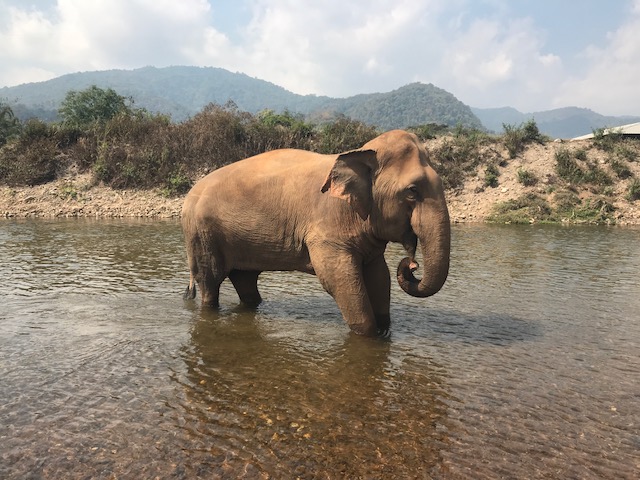
This is an adoptive family at the sanctuary. They have all been rescued from different places, but now have formed a family where they communally care for their blind and baby family members.

Elephants by nature are very sweet and gentle animals with the exception of a few aggressive males, but the intense training and abuse they must go through in order to perform in any way shape or form traumitizes them so that they are essentially crazy. We learned from our friend that elephant tourism is very complicated. Elephants in the wild are captured and taken to circuses and elephant trekking companies, but first they must go through “The Crush” or domestication. For about seven days they are tied up, starved and beaten to such extent that they are terrified of humans, and easier to train. Since they know that they will be hit if they don’t do what they are told, they are scared into painting, performing, or learning how to be ridden.

Chiang Mai, Elephant Nature Park, elephant, elephant tourism

Happy elephant. Lots of room to roam and loving to rehabilitate her leg injury.

Sanctuaries like Elephant Nature Park will buy them out of this situation and put them into a free habitat without being chained up or any type of restraints, just acting like a normal elephants. But, since these sanctuaries are paying big money for these elephants, they’re accidentally creating a market for elephant buying. People will smuggle elephants over the border from the Burmese wilderness, and sell them to the sanctuaries telling them if they don’t buy the elephant they’ll sell it to a circus. But if the elephants stay in the wild, they are captured by trainers and the males are poached for their tusks. Also in Burma using elephants for logging isn’t illegal, so that just causes a whole new problem. Me and my family decided that they best thing we can do is support the sanctuaries, because at least these elephants are living in Paradise.  And we can spread the word to discourage elephant tourism.

You can look up Elephant Nature Park, and there’s a good video that shows you the truth behind Elephant tourism. And, if you ever come to Thailand, DON’T RIDE THE ELEPHANTS

elephant, elephant sanctuary,

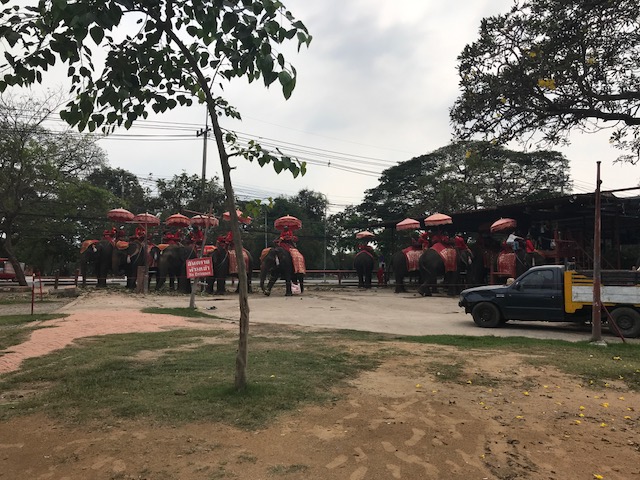
This is not normal. These elephants were ridden by tourists in Ayuthaya, central Thailand. Just common intuition tells you that they’re not happy in costume and walking down the highway.

After being pretty much on the go for four months, we arrived at our Airbnb in Wellington, New Zealand on December 4th where we have stayed put for two whole months.  It was, with a breath of excitement, that we actually unpacked all of our bags and put things in drawers.


The major goal for the first week was to find outside groups and activities so the kids could interact with other kids.  We wanted to set the groundwork to find a short-term life here instead of seeing the sights and looking for the touristy things to do in Wellington.  We wanted to go from “tourist” to “traveler”.  We got library cards, bus passes, wetsuits and a swim membership at the local rec center. We signed the kids up for the neighborhood “Surf Life Saving” club –which we’ve learned is THE thing to do in Lyall Bay from some Kiwi-American friends from Boulder.

Maranui, Surf Life Saving, Lyall Bay, Wellington, family travel

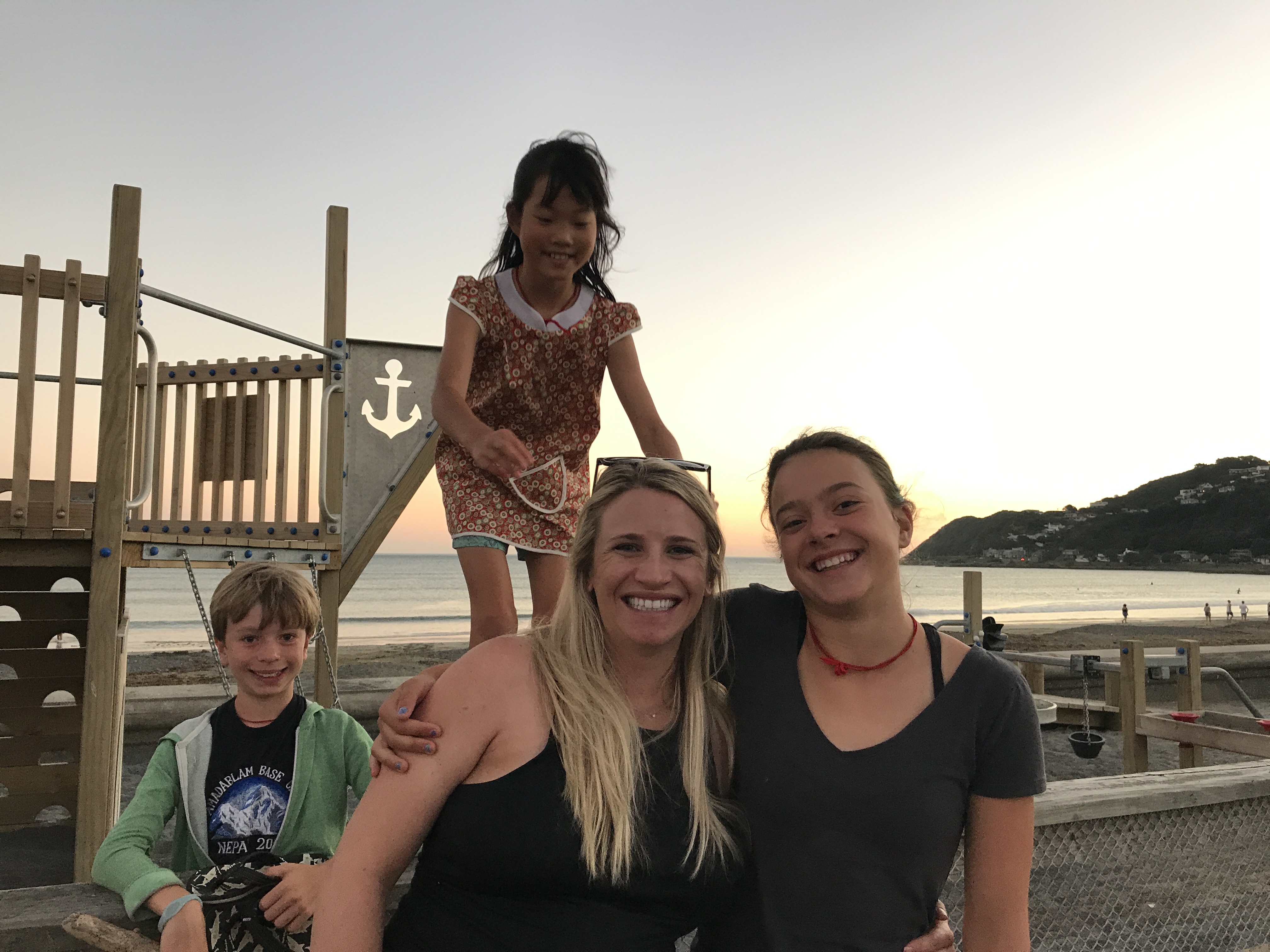
Surf Life Saving Club with Maranui on Lyall Bay. You’ve got to love the caps on the young “Nippers”.


Will toured the grocery and vinyl stores (favorite was Death Ray Records in Newtown) to get the lay of the land.  He thankfully did all the food shopping and cooking, so I could focus on schooling and organizing the kids’ activities.  We found gyms to work out and the perfect running route down along the coast.  I never found my yoga-home, but did my own thing in the morning.


This time in Wellington was also intended to be a time for traditional school sit-down-and-learn-work.  We dedicated three solid hours, five days per week, to school – some were autonomous tasks and others are direct instruction and help from me.  (Lorna is teaching Kai violin.) They worked on individual writing portfolios and we had a fun unit on poetry.  Lorna has written reviews for her books on Amazon and even a coherent, “polite yet deeply concerned” email to Trump.  We drilled math facts each morning for the Littles and then did half an hour of math per day from some grade-level books purchased back home. The kids have been receptive and enthusiastic for “school”.  Lucy made place cards for everyone and enjoys organizing the books.  And we decided that a 100% on spelling tests will earn them (and me) a Friday ice cream.  I can’t stump them: they all get words like “photosynthesis” and “rhythm” correct.  Ice cream is an excellent motivator.

Kilbirnie, Wellington, family travel, world school

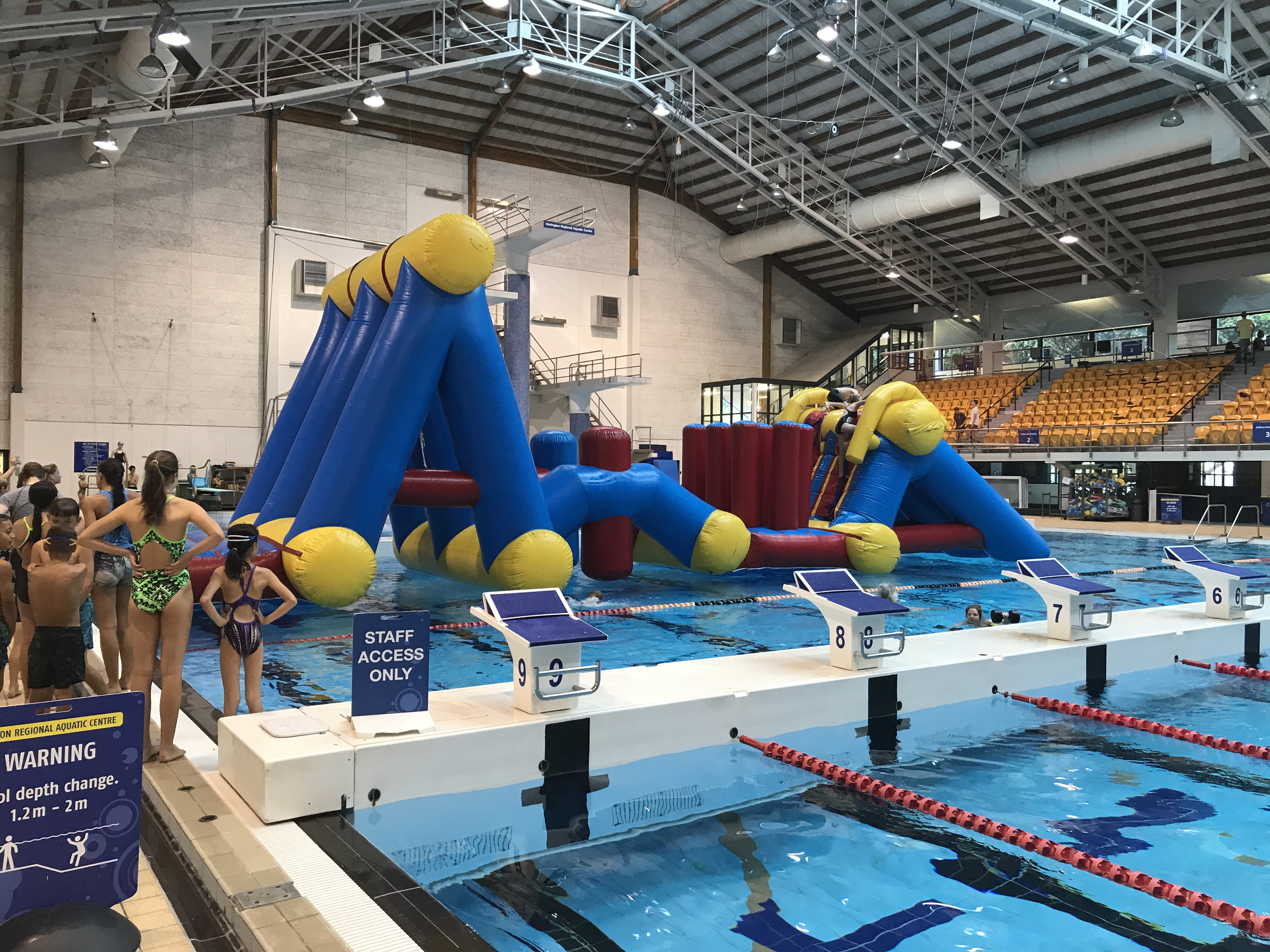
The local rec center 50 meter pool, and Olympic high dive platforms. Their “inflatable” play time does NOT disappoint.


There’s been plenty to keep us busy here in Wellington.  We have typically spent the morning homeschooling, and then played for the afternoon.  When the weather is good, we enjoy the ocean with the boogie boards that Santa brought, walk the shoreline or visit one of the world-class parks.  And when it’s too cold or rainy, we spend days at the free Te Papa Museum, swim inside or find our way to the neighborhood trampoline park.

Maori, Te Papa, Wellington, family travel

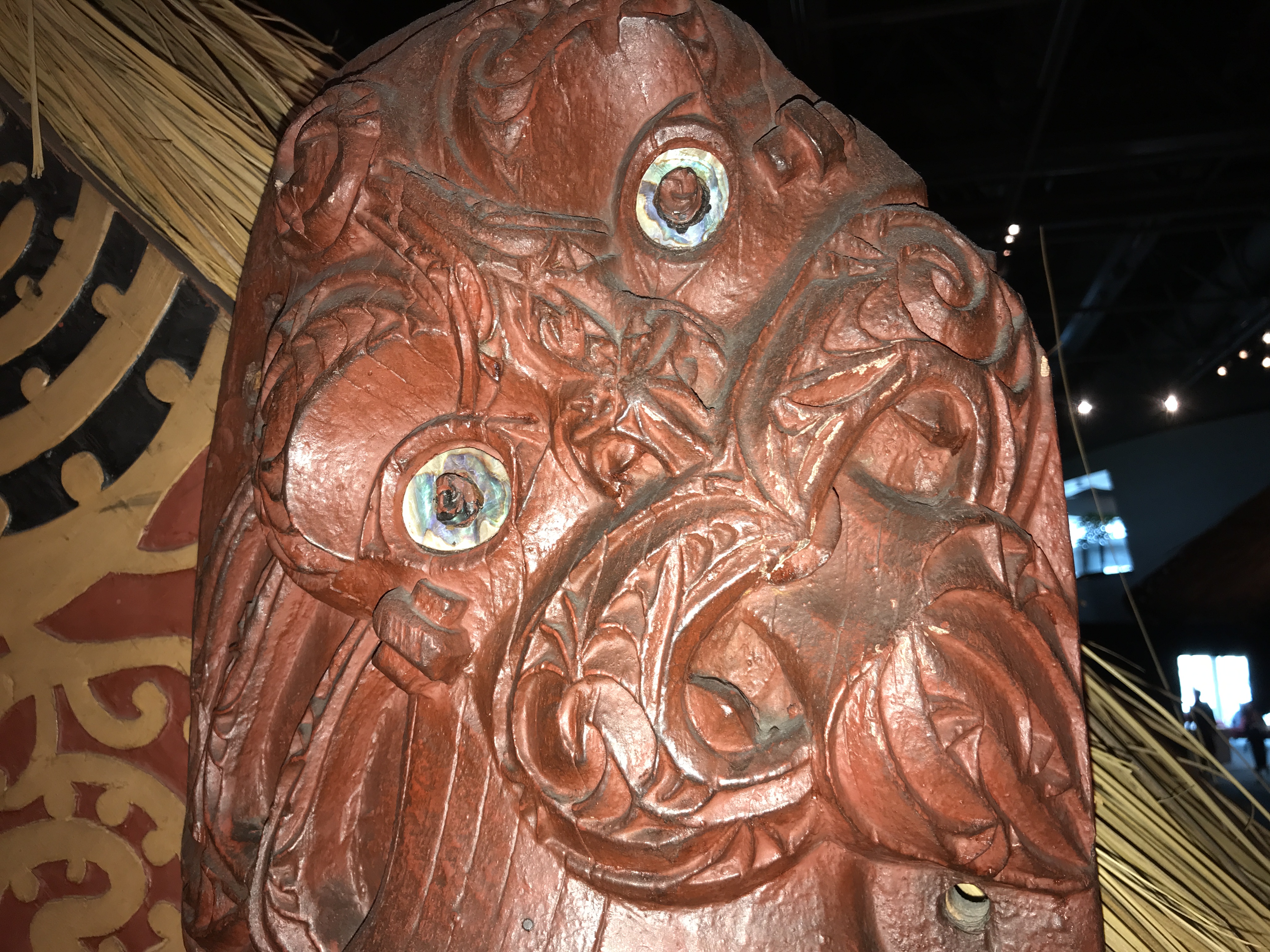
Maori carving at Te Papa. Love the Abalone (paua) shell accents.


We needed a home for Christmas: a tree, homemade stockings and a kitchen for baking.  We sang our carols at night; Santa came to eat our cookies; and the reindeer nibbled at the carrots.  We missed our family back home so these little traditions meant so much.  But we also got to incorporate some new, purely Kiwi Christmas traditions… pinkie bars and jaffas in the stockings, a brisk ocean swim on Christmas Eve and best of all, some wonderful new friends invited us to a family holiday afternoon potluck and gift exchange.  And it gets better – it was at their croquet club guesthouse!  So, we got to eat pavlova, drink champagne and play croquet all before the main events.  I will miss these wonderful Christmas twists next year.  The pavlova-champagne-croquet may need to a permanent addition.

Christmas, Wellington, family travel, lyall bay

Decorating our Christmas cookies in wetsuit.

Truth be told, I was humbled with sickness for a good two weeks.  I had a fever for five days and then had not a squeak of a voice for another week.  I’m still a bit Demi Moore-ish, but I’ve got my strength back and am thankful that it happened in a place with great, English-speaking medical care and access to Netflix.  It took a lot out of me and the rhythms and routines that we intended, went out the window for two weeks, but they rolled with it.


Wellington has been the perfect spot to hunker down.  I was feeling behind in the homeschooling department when we arrived, and now I’m feeling like we’re 80% finished for the year.  The kids have made friends and had play dates.  We have met so many lovely people and we all conclude that we could definitely live here forever.  We chose Wellington because we wanted more of the Maori influence than the South Island, wanted a city and ocean and all of that came within arm’s reach of Melanie.  She was our beloved babysitter when she went to CU Boulder and has moved to Wellington when her husband got a contract job to work on the government tax code.  Her first baby is crushingly due just the week after we leave but at least we hopefully distracted her a bit in this final trimester.

Wellington, family travel, world school

We will miss you, Melanie and Zach! So wonderful to spend time with our beloved former babysitter.

Goodbye Wellington!

In our one-month China itinerary, we tried to pack in lots of sites and were often on the go and unable to carry books.  Formal roadschooling took a back seat and instead we tried to incorporate more organic day-to-day learning.  Here are some ideas to try if you are traveling with your kids in China (adaptable any country) and looking for informal ways to leapfrog their learning.

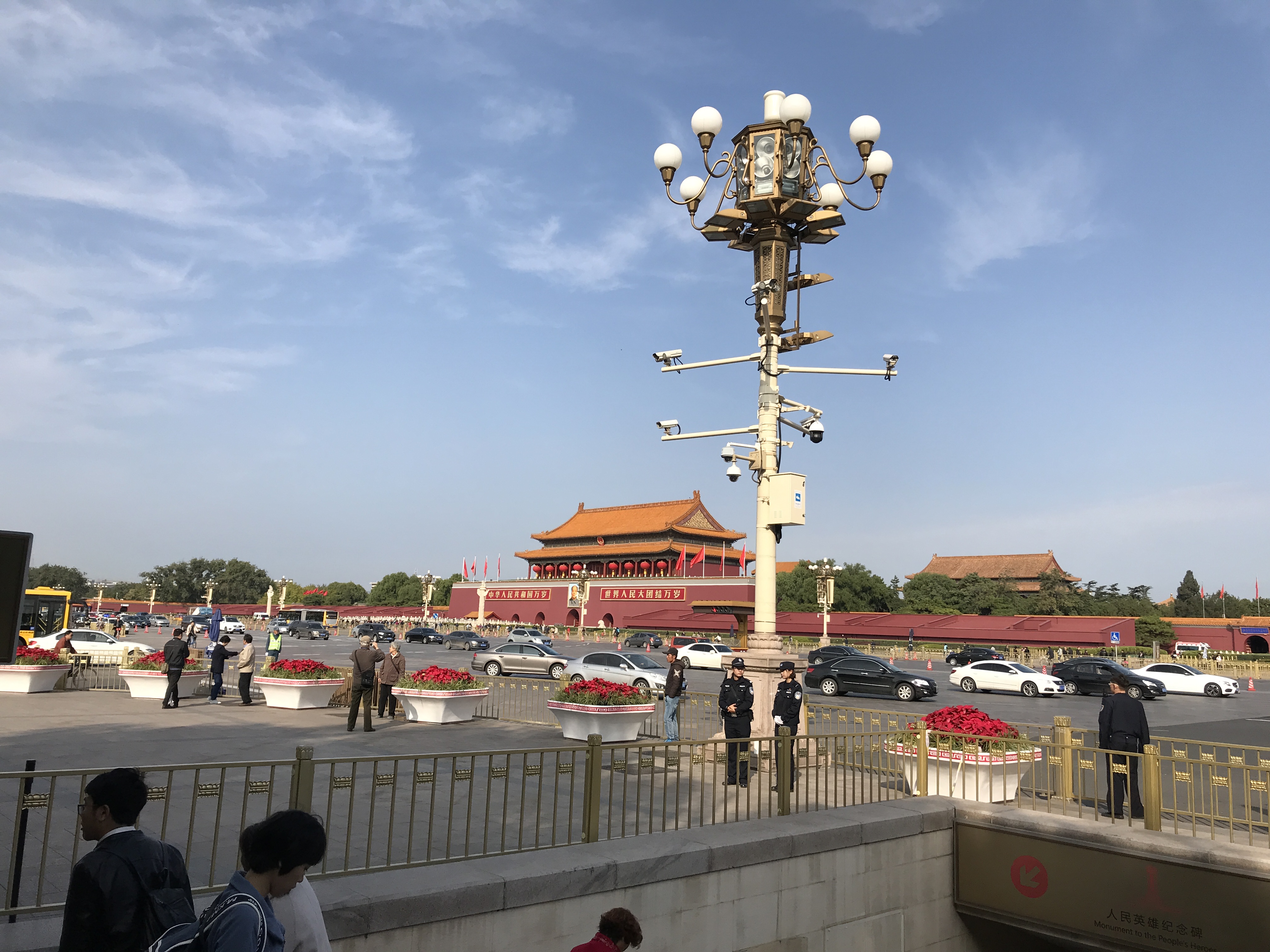
Lots to discuss with the mass of cameras at Tiananmen Square. Is this a Brave New World or 1984?

Journal:  We tried to journal every afternoon.  There is so much to take in, that the moment of silence to digest all that was seen and experienced, worked wonders.  You can give your kids a leading question or simply let them write whatever they want.  Most days we did a combination of the two.

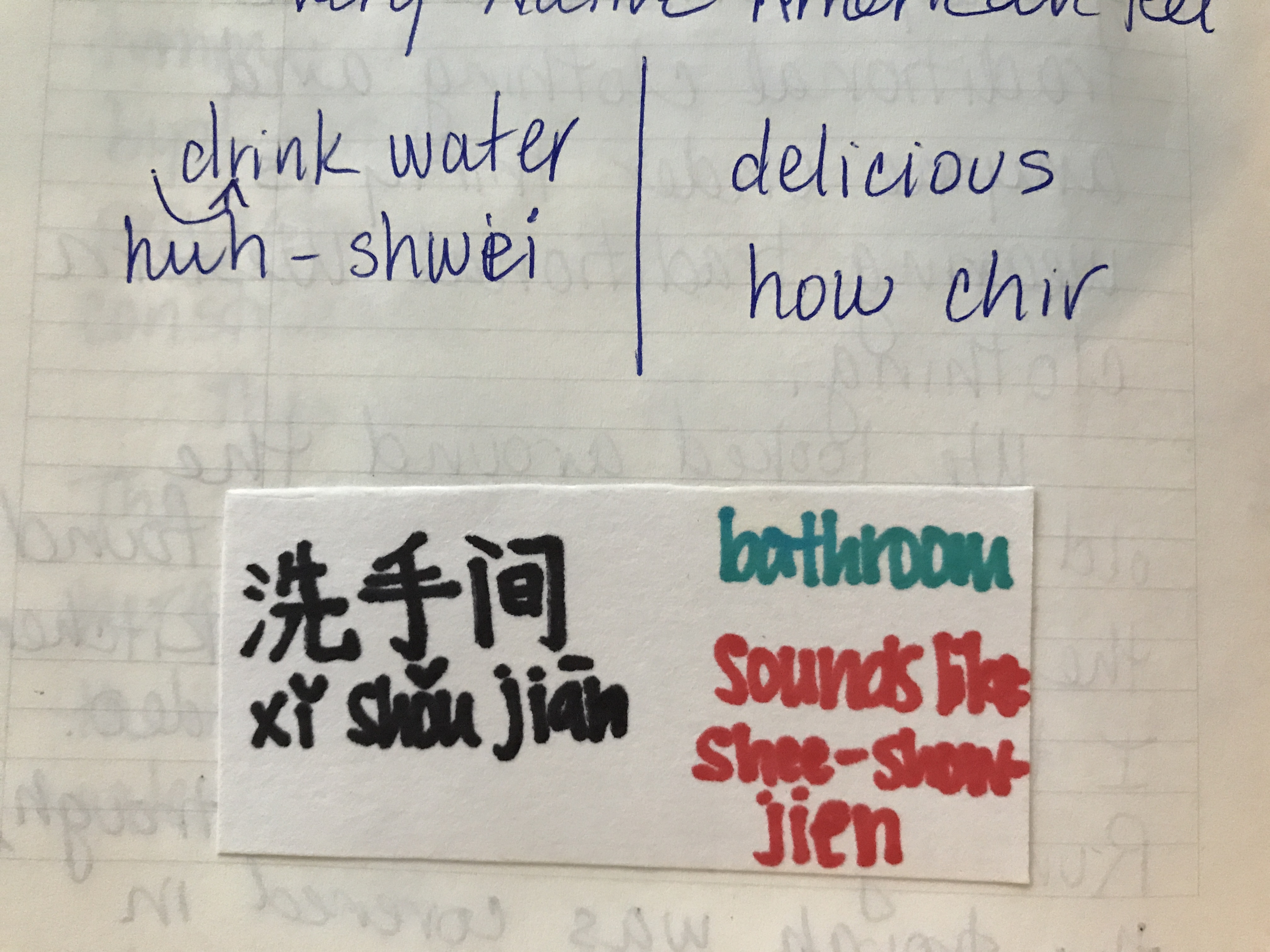
Word of the Day: Give your child one Chinese phrase or word of the day to practice, use with locals and teach the other members of the group.  Try expressions that they will actually use like: “where’s the bathroom?” “how much does this cost?” “I don’t speak Chinese” “this is delicious” “No, really. I’m full, thanks.”
word of the day cards, saved in my journal.

Bizzbuzz Hydration Game:  To practice the numbers in a new language, you can play the old college drinking game with a twist: when you get it wrong, you drink water.  It’s tough to get kids to drink enough water.  Warning: make sure you play this game near an accessible bathroom. To play: Go around the circle saying the numbers in order.  The first person says “one” in Chinese, the second says “two”, etc. Every multiple of 7 is replaced by a “bizz” and every multiple of 11 is replaced by a “buzz”.  Seventy-seven is “bizz-buzz”.  Kids can practice both multiplication tables and their Chinese numbers.  Win-win.

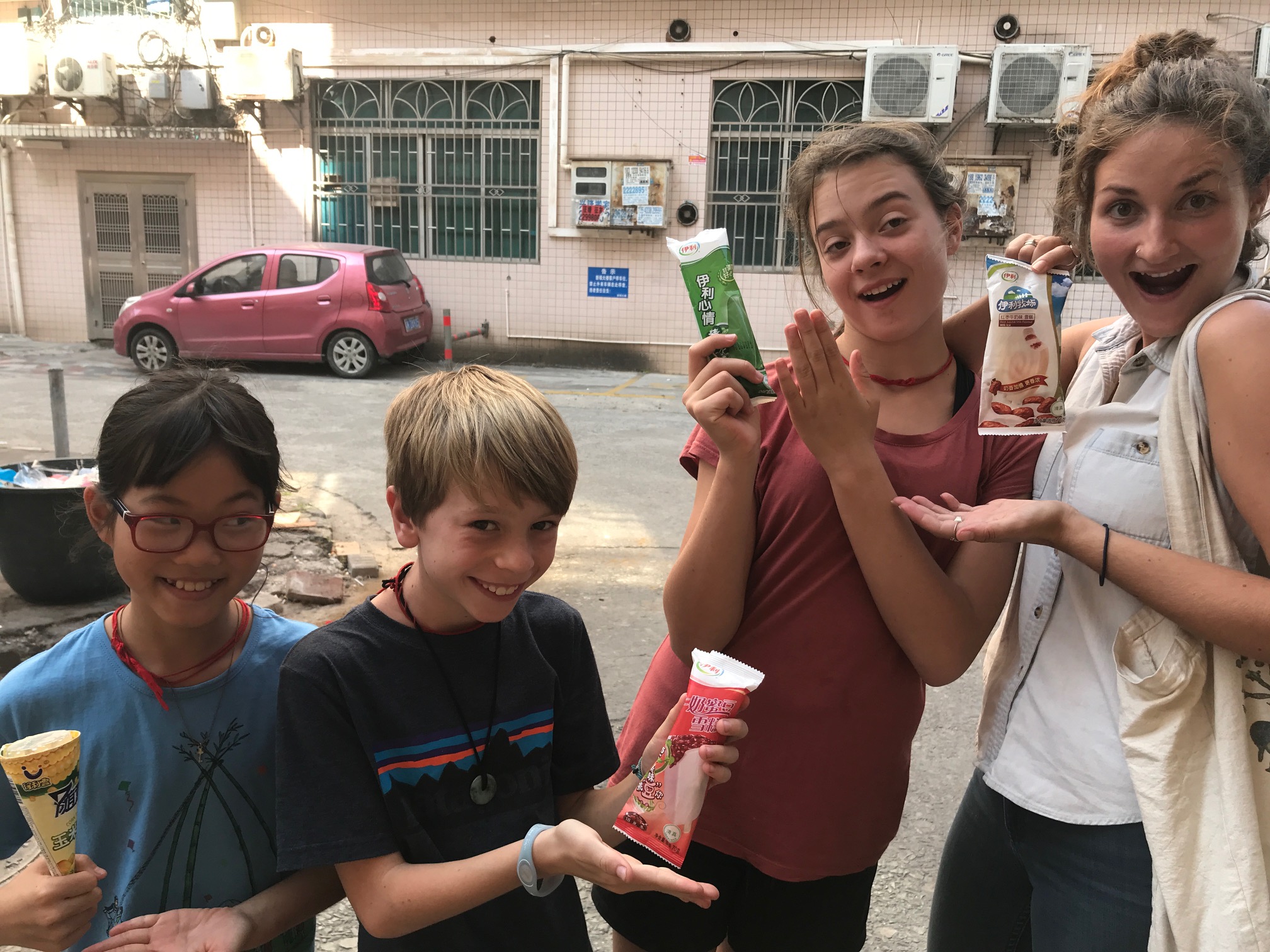
City Scavenger Hunts: In pairs or small groups, go off to find the wackiest stuff.  We went in search of strangest ice cream flavors or beauty supplies.  It could also be “most surprising thing you can buy for $10 at the market”.  We did this once with Dragons and one leader came back with a shaved head, another a copper pot, etc.  There are endless adaptations.

road schooling, family travel, china,

Your mission: find the wackiest popsicle. The results: pea, corn, red bean and durian

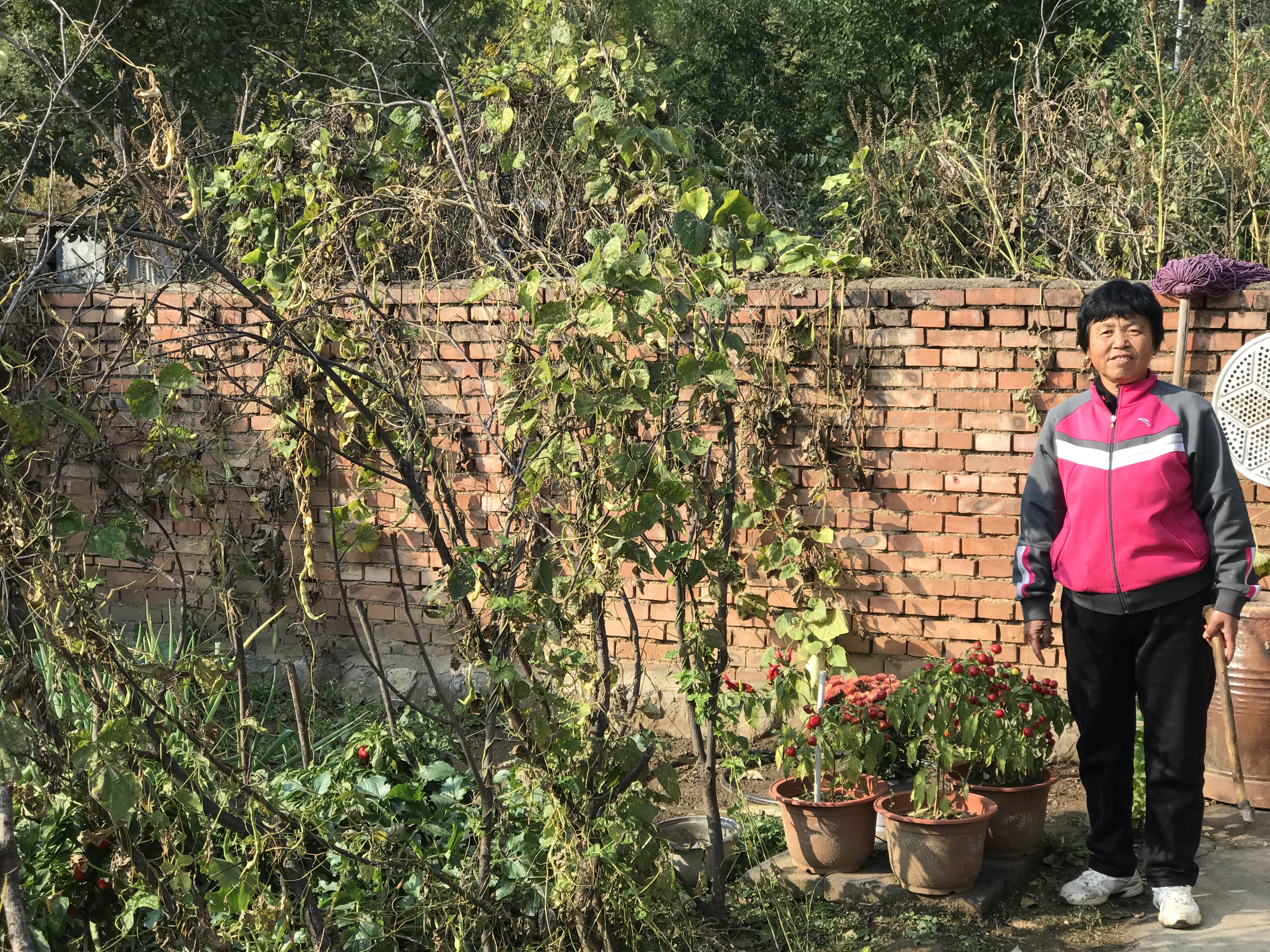
Talk to People: It’s nothing that’s necessarily planned or scripted, but if you have someone who can effectively translate, there’s interesting learning opportunities everywhere.  Model curiosity and the courage to connect.

travel, china, road schooling, vegetables

This woman gave us a tour of her vegetable garden and gardening techniques.

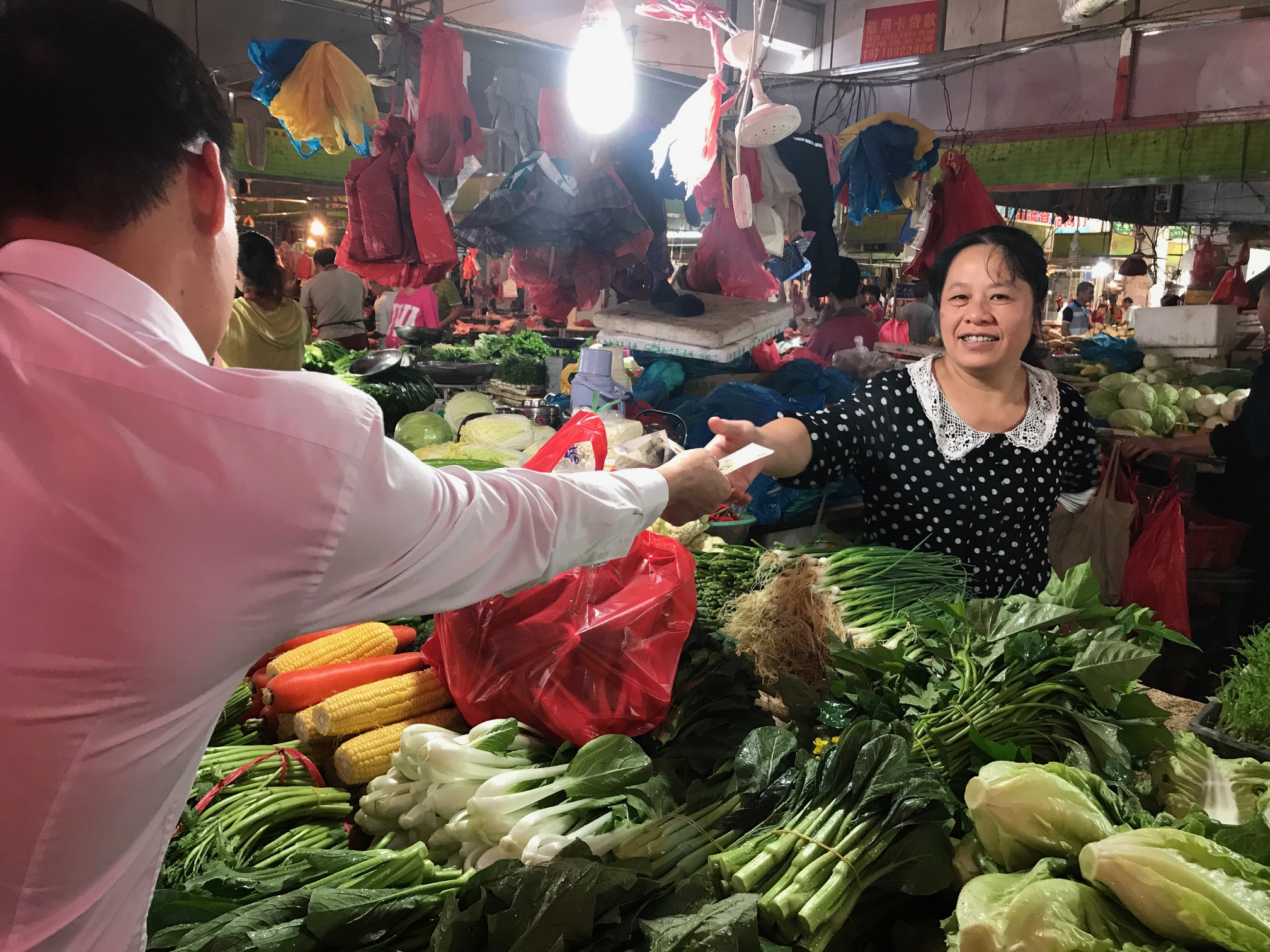
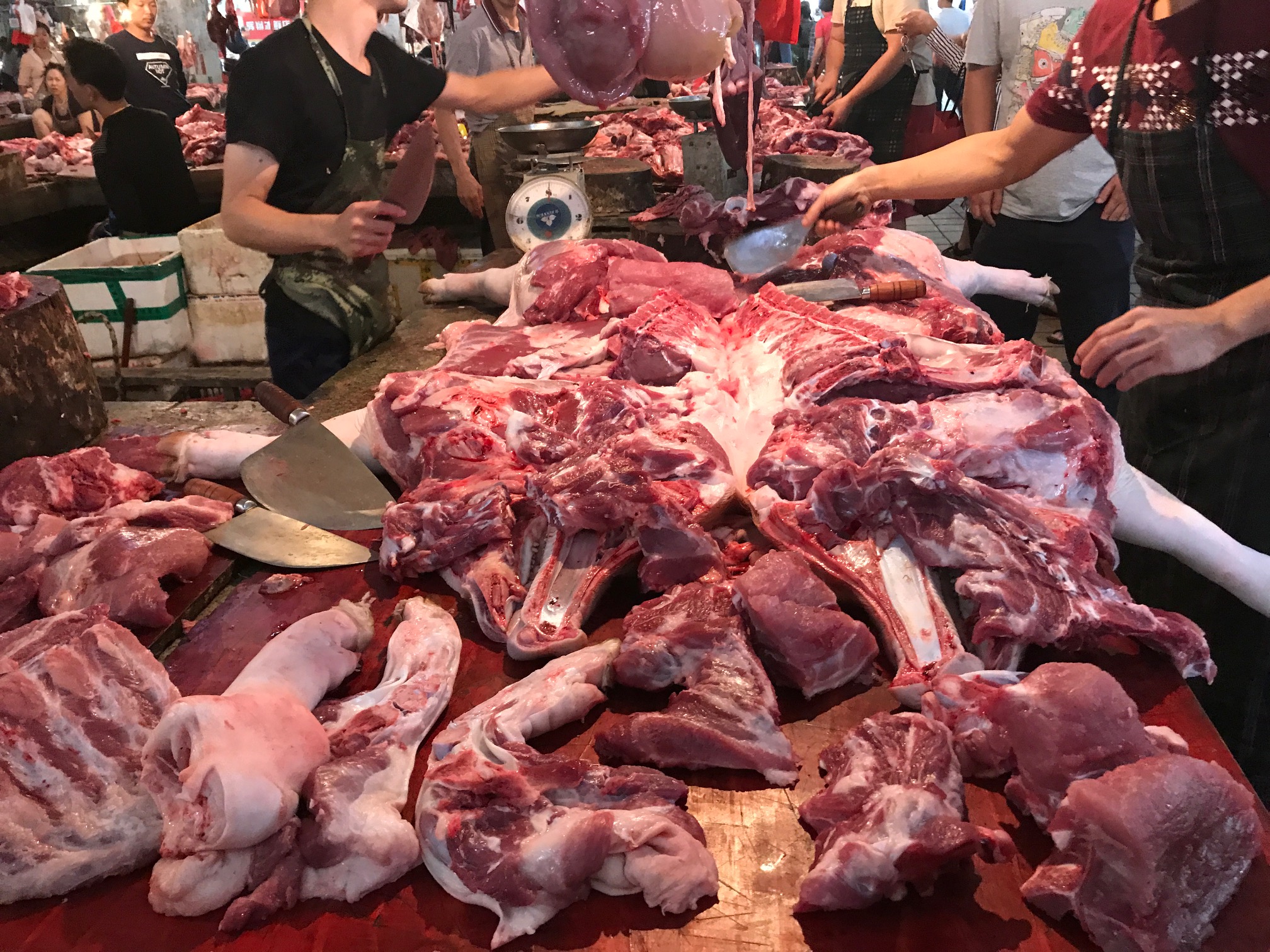
Go to the Market: Kids will have a lot to process from the Chinese market: the local fruit (try something new), watch fresh-pulled noodles, what the “meat section” incorporates, the butchering process, and use your language to buy some snacks.  We loved the variety of bulk nuts and dried peas.  Our grocery stores are a very sanitized version.

The colors and life to the old school markets are potent classrooms

Look Out the Window Games:  We made some scavenger hunts to get the kids to really look out the window on train and van rides.  You can write their scavenger hunt items directly into their notebooks and let them answer directly in their notebooks.  (Find 50 Chinese flags, a water buffalo, drying chili, etc.  Or, list the crops being grown outside.  Draw old China and new China scenes you can see out the window.)


Books for China:

These books run the gamut from picture books to political philosophy. There are oodles of books for children and adults out there, but here are some that I can personally and emphatically recommend.

The Story About Ping My father’s favorite childhood book; I grew up with it too.  The illustrations will stay with you for a lifetime.

Chang And the Bamboo Flute This tale takes place in the Li River Valley.  It was a good story for a second to fourth grade reading level.  The poverty described in this older book is hard to reconcile with the China of today.

Where the Mountain Meets the Moon, by Grace Lin

My third grader and I read this contemporary book together as a “read aloud”.  Lin explains in the afterword that this book is a personal mixture of Chinese folktales and could be set anywhere in China.  The illustrations are especially fun to spot these elements in what we see each day.

The Good Earth, by Pearl S. Buck

It’s a classic for a reason.  Appropriate for middle school through adult.

The Kitchen God’s Wife, Amy Tan  As a High School World History teacher, we used this book in Cupertino, CA.  It sketches the World War II in China and the segue into the Civil War and Cultural Revolution.

Brave New World, Aldous Huxley and 1984, George Orwell

There is so much to talk about with a high school-age kid about modern China and these books will deepen the discussion.  Is order and safety more important than a few civil liberties?  Are capitalism and media the new soma?  How do you feel with all these security cameras on you? The philosophical questions are limitless.

road schooling, family travel, china

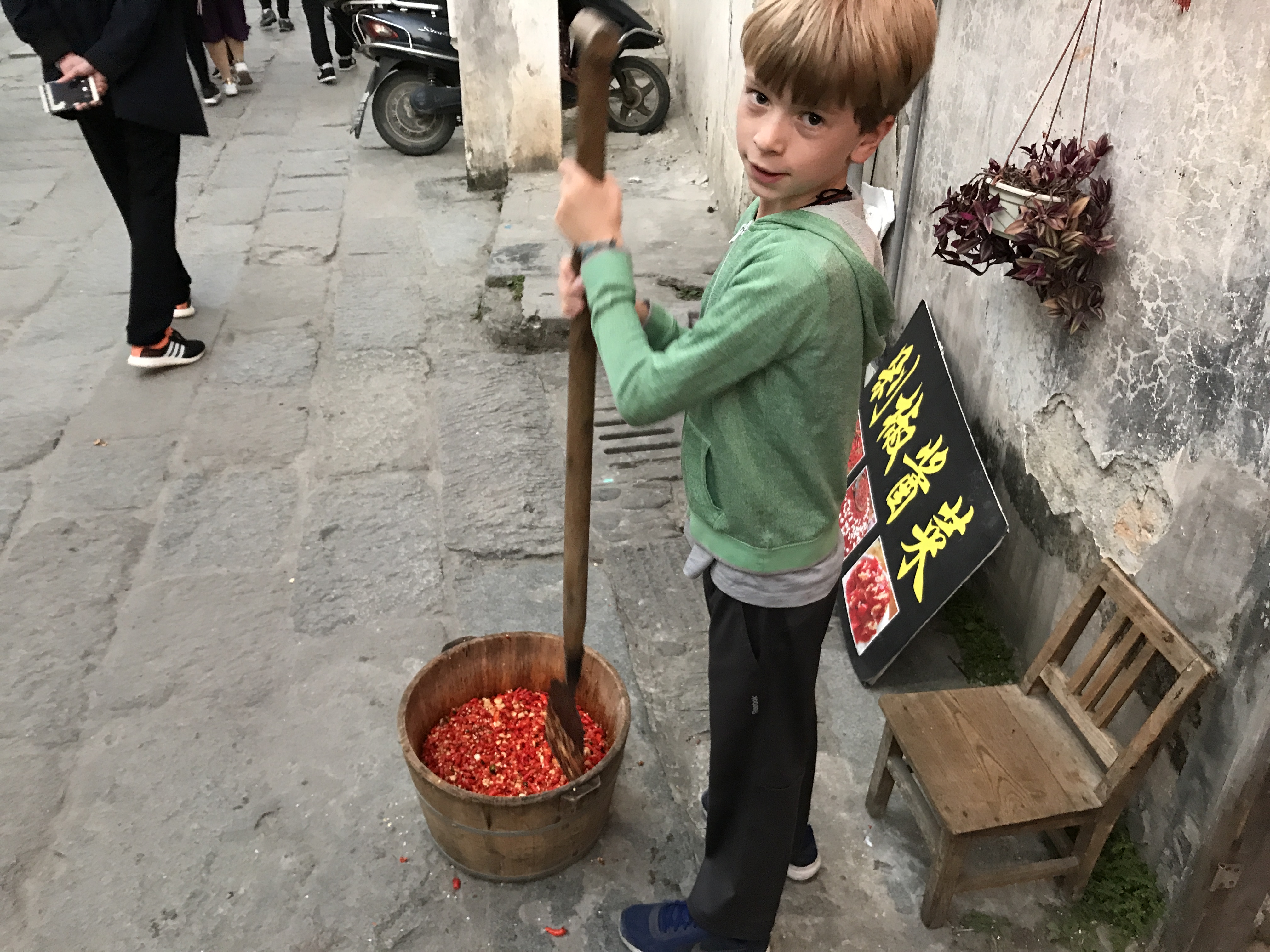
And a boy can learn an unconventional way to chop chili peppers.

Ship Creek Beach just before we swam! There are very few photos when you’re really living in the moment…

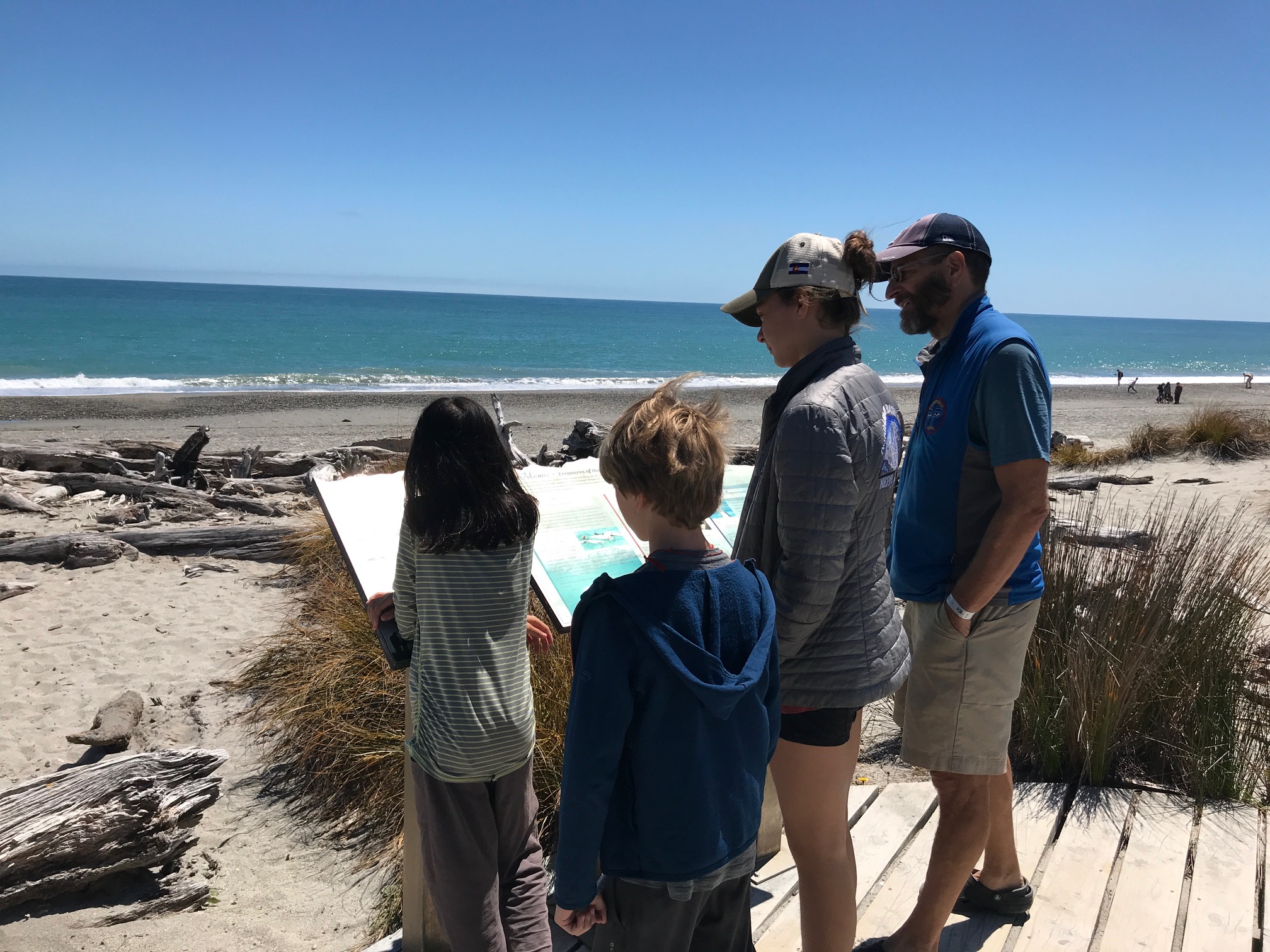
Sometimes, you need to take off your shirt in public if you want to swim with the dolphins.  And you need to be prepared to get cold.  Really, really cold if you want to follow a dream.  This was the unscripted lesson plan on November 18, at Ship Creek Beach, New Zealand.  We pulled off to do a short hike, stretch our legs while heading down south to Queenstown.  This was a diversion, a rest stop, on the way to the destination.

As we were reading the informational placards about dolphins outside the bathroom, a kind woman interrupted to say that there was a pod of Hector’s dolphins over the dunes, swimming just off shore.  Come quick.  So we scratched our systematic roadschooling schema to race toward the beach.  In the crystal-clear turquoise ocean down below were these rare, diminutive dolphins jumping, surfing and surfacing in tandem. We watched them in wonder for ten minutes. “Let’s go in,” my 13 year-old daughter says to me in her puffy jacket.

“Gosh, we should.” I reply standing beside her in my fleece and leggings, as if someone should but not the 47 year-old mother that I have become. Not the woman who sees each and every potential hazard around her.  Not the woman who had a plan to get to the town of Haast by lunchtime.

“We might never get this chance again,” she says.

And in me was this cavalcade of why nots: Sweet Jesus, that will be cold. Doesn’t this ocean flow toward us from Antarctica?! There’s a ton of people here so I will ruin their videos and selfie-stick-photos of dolphins behind their shoulders. What if the surf is too strong? What if I can’t really swim out past that surf break?  But when I look at her, I know what a good mom should do.

I don’t see any offending offshore rocks or signs of a riptide and secure in the knowledge that my daughter is a competitive swimmer, I take off my fleece, T-shirt and shoes and stand next to her in my jog bra and leggings.  “Come on.”

And we do it.  We watch for a break in the waves and wade into the frigid turquoise waters of the Tasman Sea to swim towards this pod of wild dolphins.  As a way of encouragement, a man towards the shore says that we should make clicking noises to attract them once we’re in.  Duly noted. So we time our entry in between wave sets and easily swim past the break.  Once I can finally catch my breath about fifty feet off shore, I start making a frantic clicking noise and look back to my husband on the beach to direct us toward the dolphins.  And Lorna and I swim side-by-side for more than twenty minutes next to these gorgeous creatures with squeals of delight shared between us.  They never surfaced closer than five feet away, but we could feel them and hear them swirling underneath.  Click click sounds at our feet.  It was one of the highlights of my life.

But the lesson here is to swim with dolphins if life gives you the opportunity.  Be willing to bear your 47 year-old torso or your 13 year-old self-consciousness to onlookers.  Be willing to get uncomfortable for a while, to even spend hours reheating yourself for the chance to look a wild dolphin in the eye, to look your daughter in the eye, to fulfill a life dream. Be willing to get publicly pummeled by a wave on entry to look your daughter in the eye after a breaching dolphin dives before you both and know that you’re striving to be the kind of adult that you want your daughter to become.

This is what “roadschooling” is really about: to live a life outside the box, to follow your passion and your dreams.  Maybe it’s ok that we haven’t been making as much time for math lessons, as we’d planned.  Maybe these learning standards that we are living will fuel them to conquer future long division in ways that are unmeasurable.

We officially love the train as a mode of transport and took five extended train trips to kris-cross China.  By taking different types of trains, we could interact with the different socio-economic groups in China and see more of the countryside than we could have in a plane.

road schooling, family travel, China, trains

Waking up on the overnight train: lots to learn about Chinese geography just by looking out the window.

Overnight Train

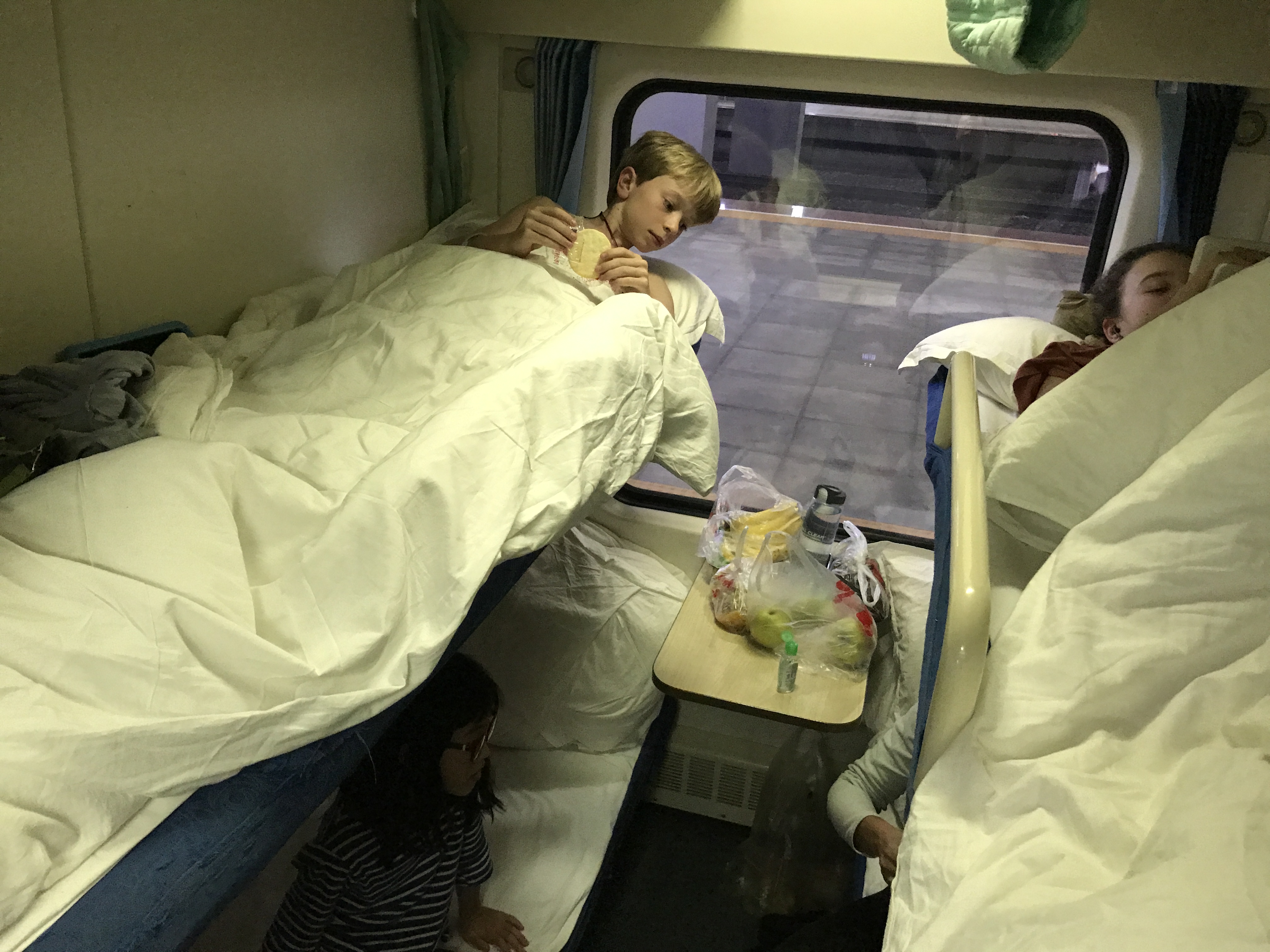
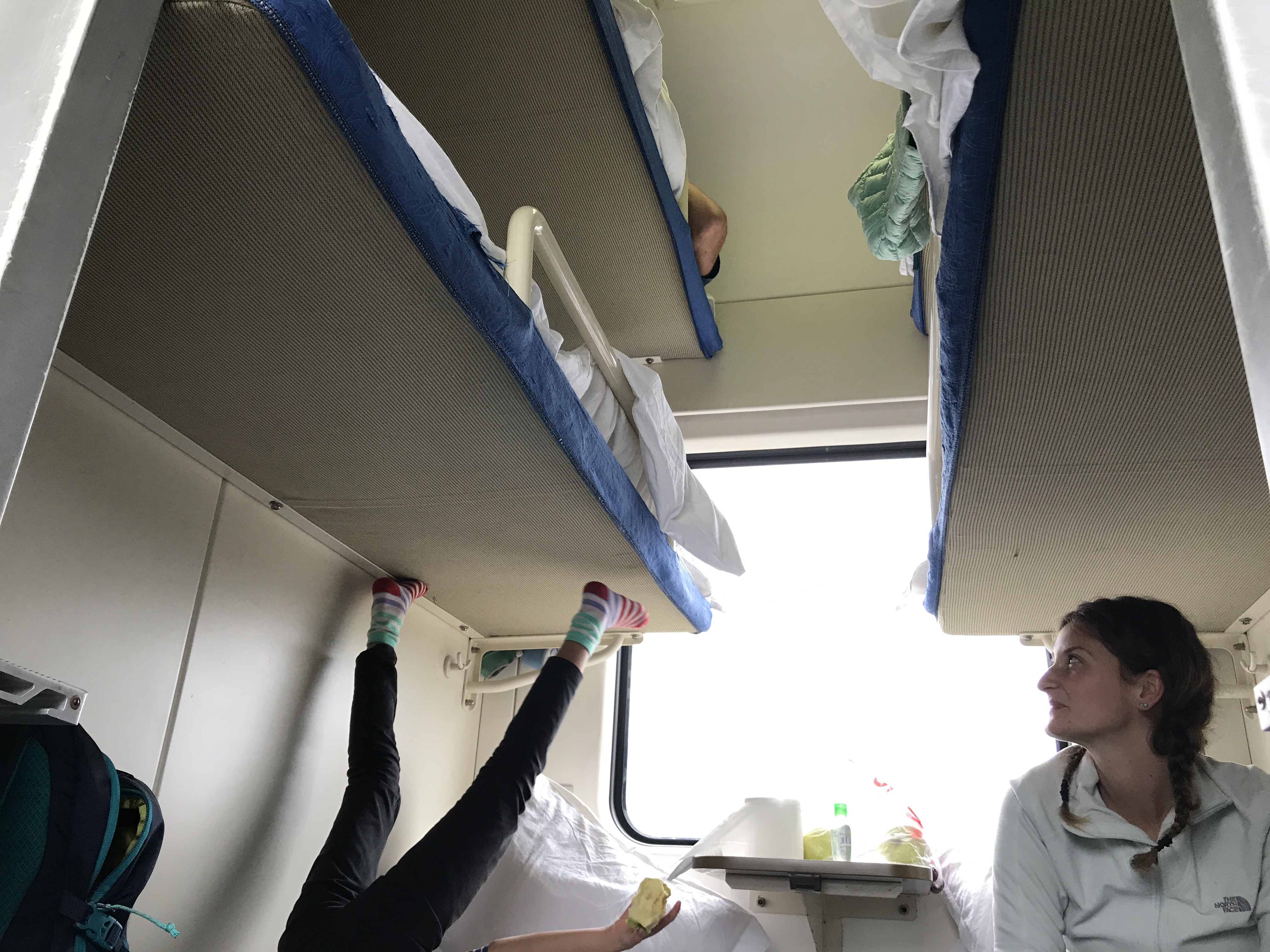
From Chengdu to Beijing, we took a 23-hour overnight train.  That sounds long, but actually, it was quite painless.  Fun even.  We all had a bunk with sheets, pillow and comforter.  Everyone slept soundly.  We did our roadschool math, journaling and even had some time for reading, movies and card games.  Squat toilets on a jostling surface is a bit like surfing but with more intense consequences.

family travel, overnight train, china, road schooling

Six bunks in one compartment without a closing door, but we all slept well, felt safe and stayed healthy!


High Speed Trains

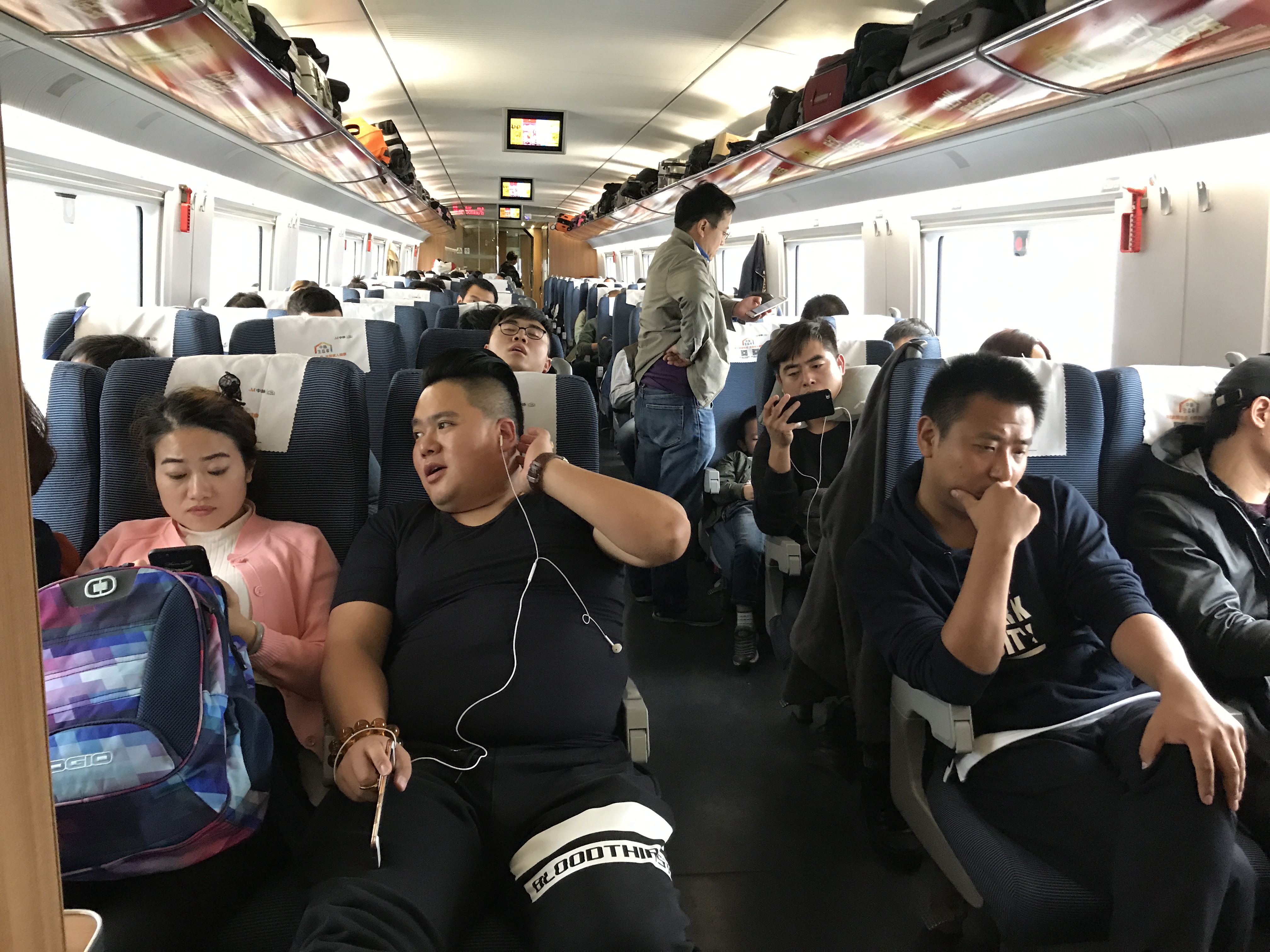
For the rest of our time in China, the kids asked to take another slow overnight train, but mostly we took the high-speed trains which had few stops and maxed out at 304 km/hr. (186mph).  Our first high-speed train, from Beijing to Shanghai, had clean sit-down toilets, toilet paper and only took 4.5 hours.  This felt like a huge step up from the slower and more basic train service.  From Anhui Province, back to Guangzhou we had a large group of Cantonese speakers in front of us and the volume at which they spoke was insane!  I was sure they were in an argument.

high-speed train, China, family travel, road schooling

This speedy train goes close to 200 mph!


Security

There is a security check point similar to an airport to get onto a train with X-rays.  If there is any water in your water bottle, they ask you to take a sip while they watch.  You are screened once again when you get off the train.  Once seated, they come and check tickets and passports again; we even had a special policeman enter our cabin to go through all our luggage by hand. (Probably because this coincided with the five-year Communist Party meeting and there was extra scrutiny.) You also need to present your valid ticket to exit the train station.

family travel, China, road schooling, train

The interior of a high-speed train. There’s free Wi-Fi if you have a Chinese phone number.


Train snacks

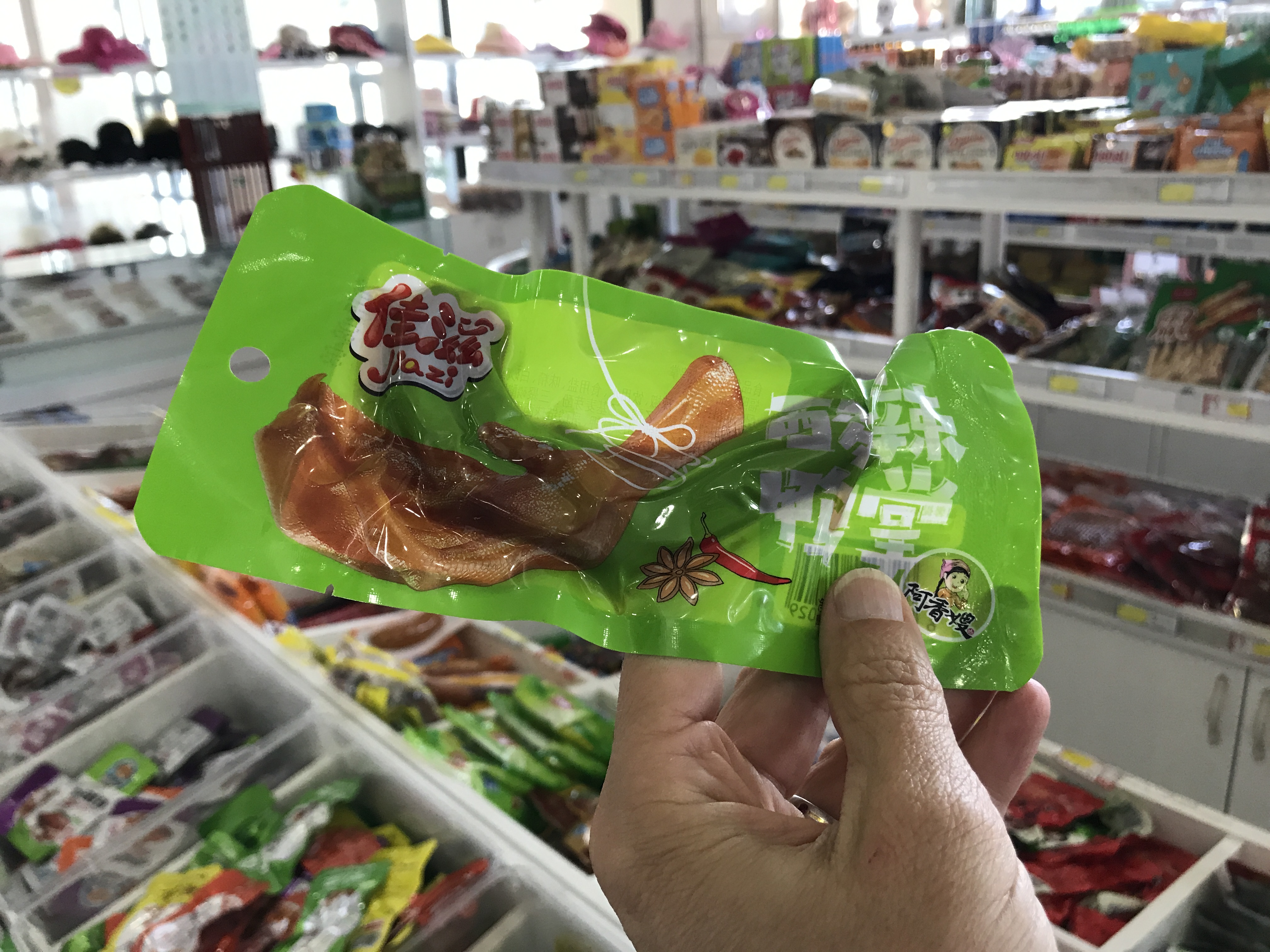
This is a huge part of the Chinese train experience.  People load up on snacks to bring and once, we even saw an old couple with a bamboo pole between them loaded with plastic bags of snacks.  Most popular snacks include: noodle soup, sunflower seeds, endless cookies/crackers and chicken feet.  Other crazy ones are dried squid, meat bones eaten with plastic gloves, Peking-Duck-in-a-Bag, and pomelos (like a grapefruit, but almost the size of a volleyball here.)

We had offers of train snacks from others and we offered ours – a great way to break the ice.  The end of each hall has hot water on tap for the thermoses of green tea or to use as drinking water.  This was another line-up and place to interact.  Much to my dismay, good coffee is nowhere to be found.

family travel, chicken feet, roadschooling, china, trains

Chicken feet are a super-popular train snacks, especially for women. They believe that sucking out the tiny bits of meat from the bone helps promotes collagen.

Train Roadschooling

It’s sometimes difficult to get kids to look out the window, so you can make a Bingo Board or scavenger hunt list in your kids’ journal.  (Popular prizes / bribes include an ice cream cone or train snack of choice.)

  • Train Bingo: draw a BINGO board in their journals ahead of departure and make it age/ability appropriate: a Chinese Flag, a bicycle, farmer in the fields, Western-looking model in an ad, construction crane, demolished building, tunnel, hydro project, a bird, a boat, drying laundry, a building taller than 30 stories, etc.
  • For a scavenger hunt: describe the most exciting train snacks you see, find five products that are being advertised inside the train, describe the differences between the old houses you see and the newer houses.
  • To really learn something about the agriculture you might need to ask for help: find five different kinds of vegetables being grown in view of the train tracks.
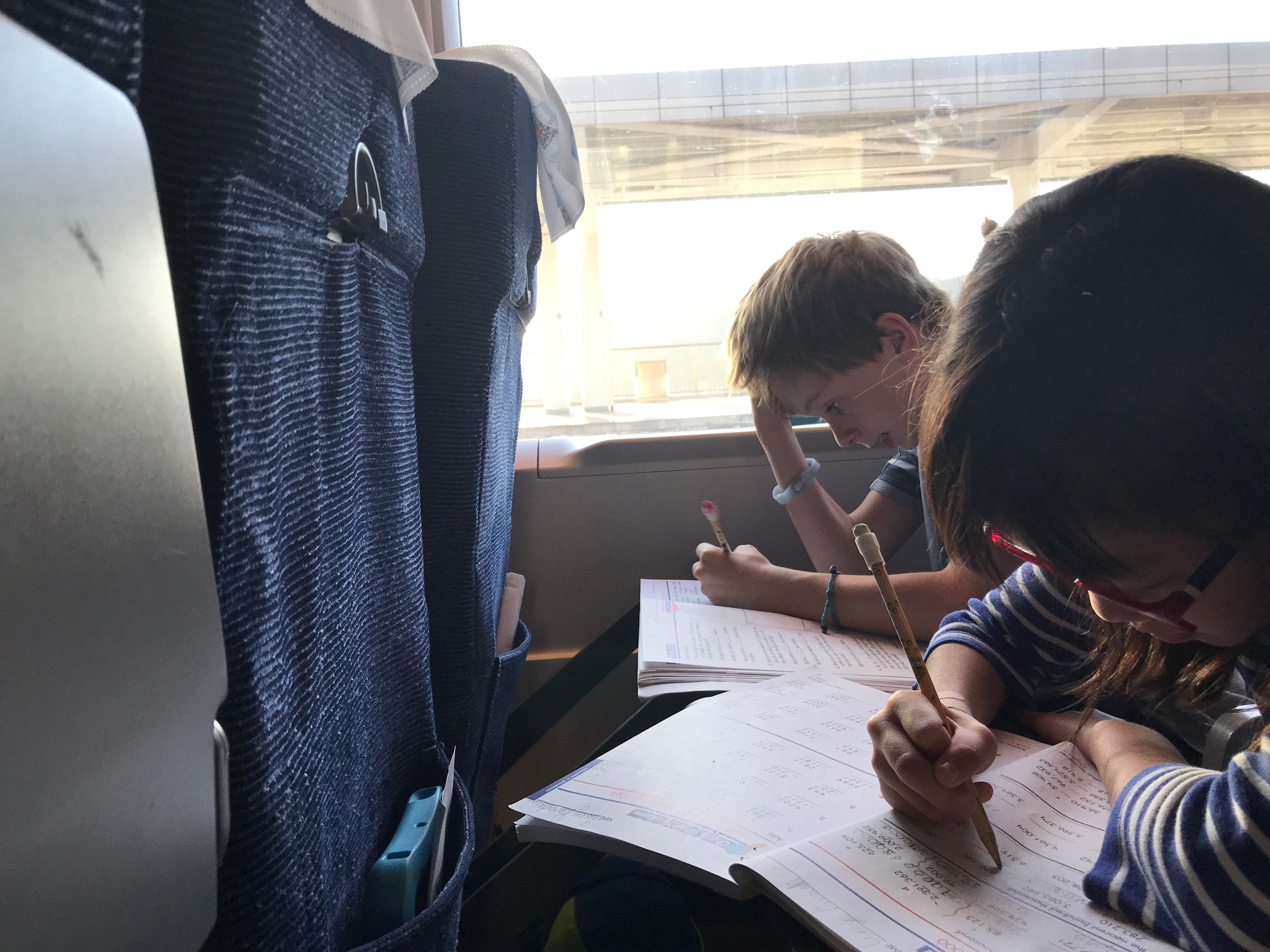
  • And our required acitivity on each train trip was to do a free journal entry and thirty minutes of math.  (Don’t glue the train ticket in the journal until after you get off.  You will need it to exit the train station.)

    road schooling, train, china

    Train trips are the perfect classroom to get math work done before journaling and reading.

Coming to China was kind of a shock. Imagine taking a time-machine all the way back to the Middle Ages in Nepal, then going twenty years or more years into the future – that’s what landing in Guangzhou was like. There were a few places in Nepal that we stayed that had no running water. Sure, there were plenty of streams, but no faucets. Then you come to China: everyone’s on a cellphone; there are subways that go everywhere in all the major cities; and the pollution levels are crazy.

shanghai skyline, family travel, road schooling

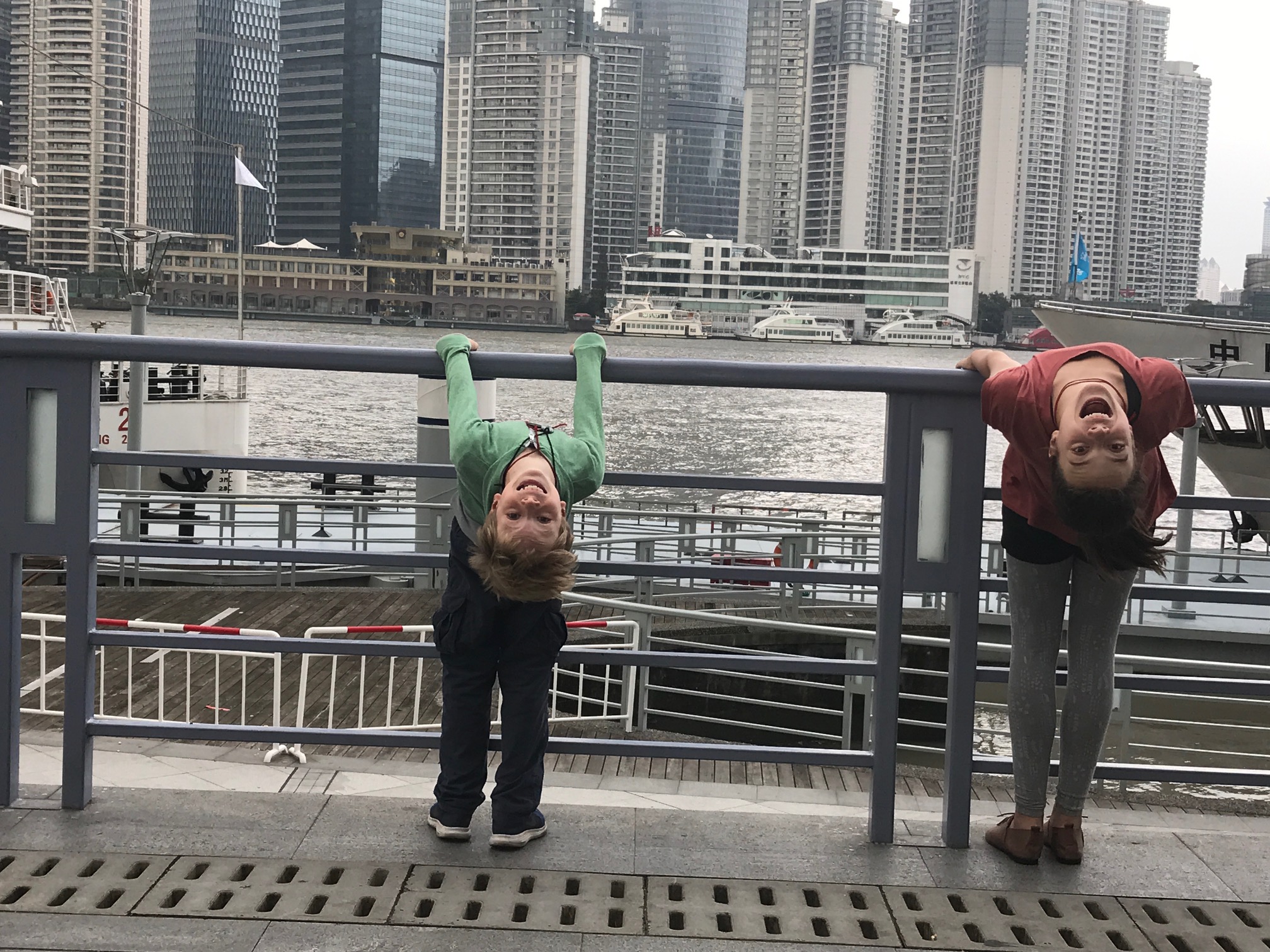
Hangin’ in downtown Shanghai.

Right now the pollution level is at two hundred, and in California they cancel PE if the pollution is at fifty. The highest pollution level ever recorded was in Beijing, and it was at one thousand! In Maoming, it’s hard to see the buildings that are like fifteen blocks down, yet in the distance you see smoke stacks just pouring smoke into the atmosphere. And it gets me thinking: it’s pretty likely that Lucy’s birth parents are migrant factory workers, and could be working in the factories I’m looking at. I pass a woman on the street, is that Lucy’s birth mom? Our hotel maid, is that Lucy’s birth mom? The woman selling us bananas? The man trying to sell us fish? The woman sweeping up leaves? You just never know.

The Great Wall of China, China, family travel

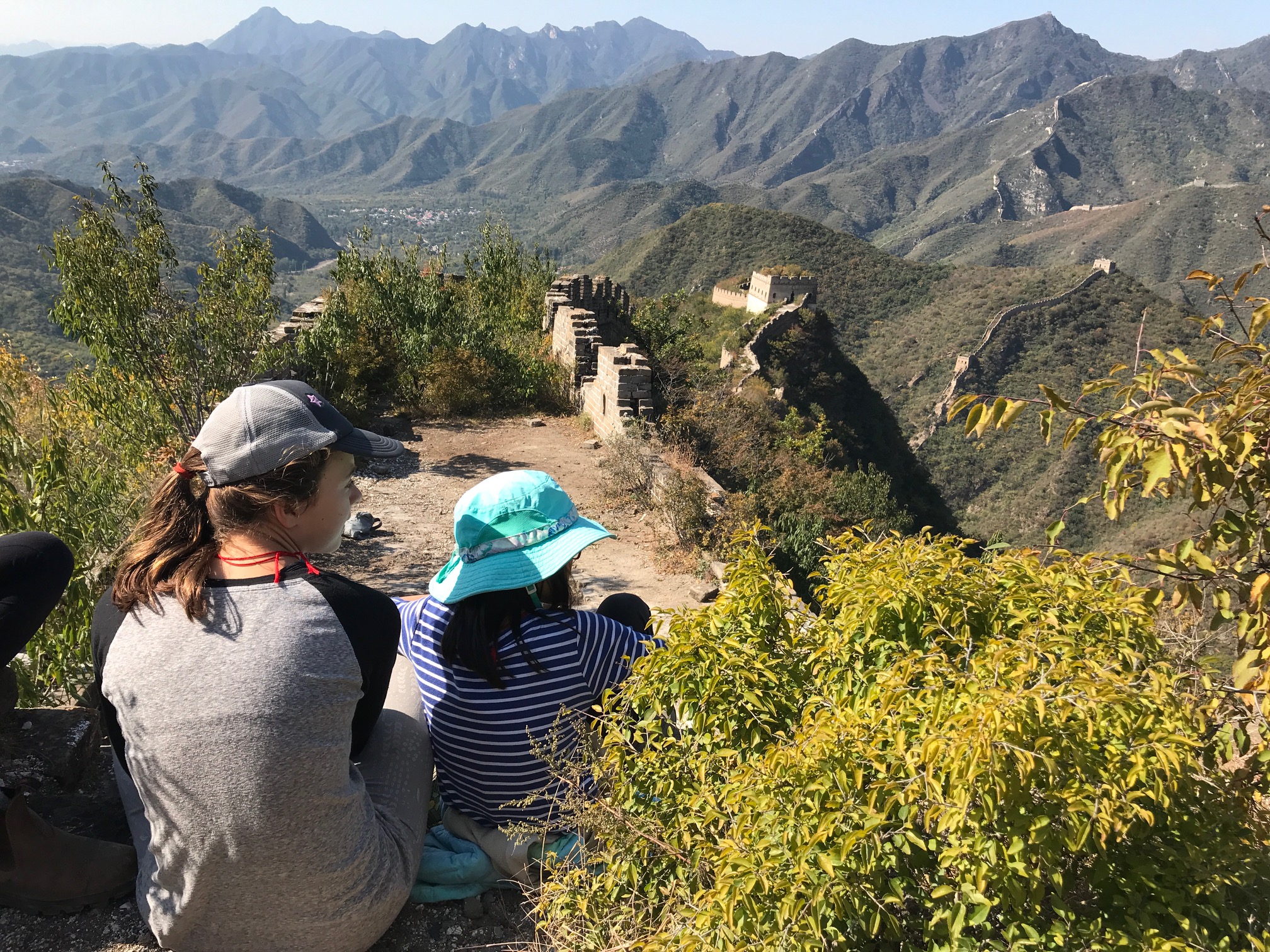
On The Great Wall of China with my sister. The air was so clear up there!

When I see those smoke stacks at first it’s like, why do they just keep pouring smoke into the already over-polluted air? Then you have to realize, it’s ’cause people like me want our plastic shovels. We want our stupid water guns. We want our plastic throw-away dishes and plastic spoons and forks (and chop sticks if we’re talking China) if we’re throwing a party. We need our plastic wrap. We need our plastic bags to put our vegetables in at the grocery store. We need our plastic containers to put lunch stuff in for school, and if you care less about the environment, plastic sandwich bags for lunch stuff too. It’s a serious reality check. We are all part of a huge problem thats killing the ocean, and polluting Planet Earth. When you walk into a lot of restaurants here, your dishes are wrapped in plastic to ensure sanitarity. (That’s not a real word; I made it up.) In pretty much all the restaurants the chop sticks are wrapped in plastic, again, to ensure sanitarity. This is insanitary!

Meat market, Maoming, China,

Pork sold at the market. Every part of the animal is used.

We visited Lucy’s orphanage yesterday. It was really sweet, and heartbreaking. All the women when they saw Lucy were like, “Xin Feng! Xin Feng!” And hugging her. It was really different then when just me and my dad (and Kelsey) visited seven years before. There are much nicer sleeping spaces, and a whole new building. I also learned that if you don’t get adopted by the time you are fourteen, which means you probably have a major physical or mental disability, you spend your whole life at the orphanage! We saw fifty and sixty year olds! And everyone seemed to remember Xin Feng. (The first bit means heart, and the last part means wind bird, or Phoenix.) All of her old nannies were there, except one. We asked them if it was really hard to let kids go. Those nannies are the ones that took care  of Lucy from when she was one month old to when she was two and three quarters. Through Julie (our guide and friend), they told us that it was ‘cause they are like parents to those kids. But they had to remember that the child was going somewhere that would have more food, more possibilities, and most importantly, a family.

green eggs, Chinese food

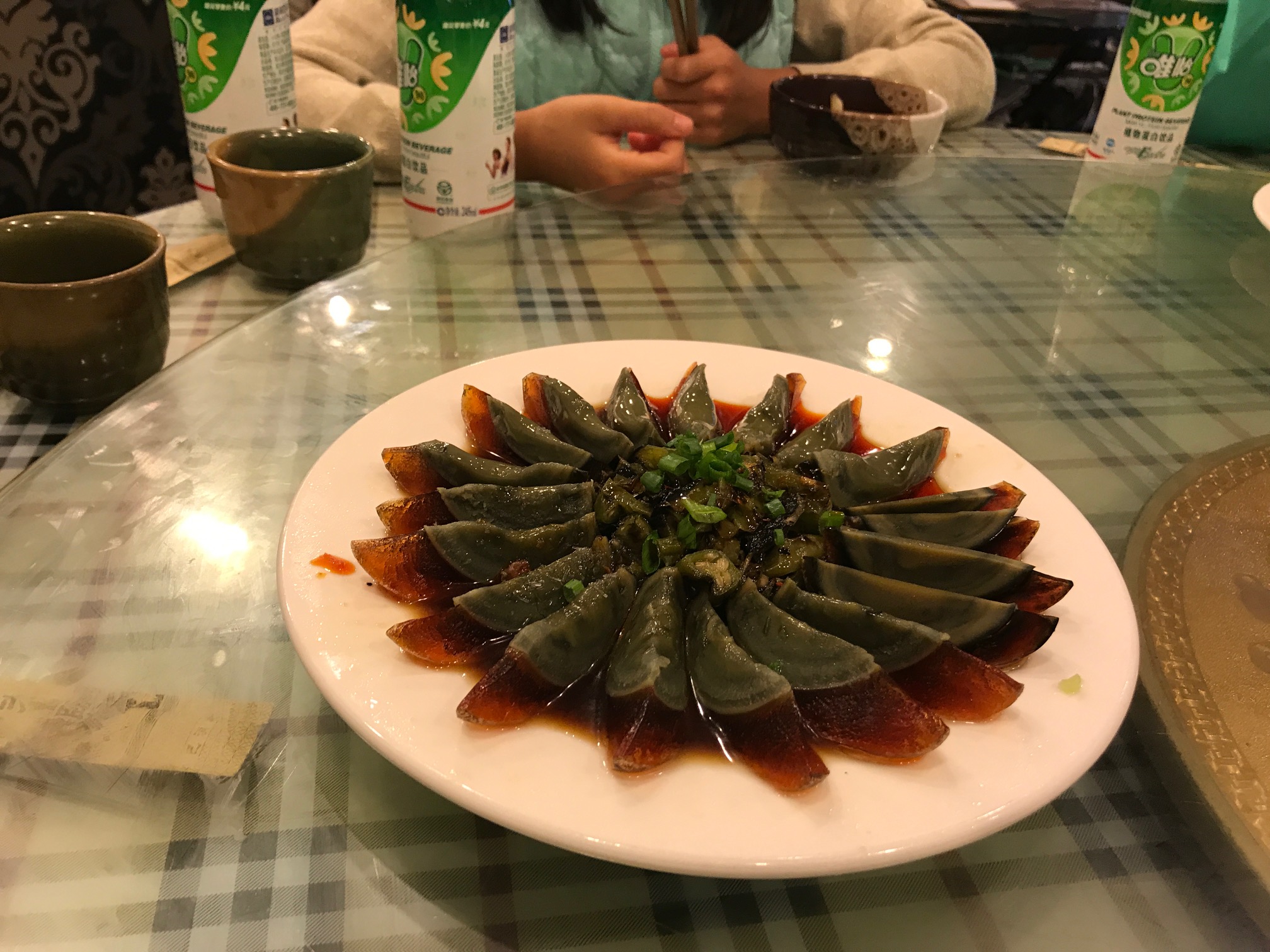
Green eggs, not with ham. These are called “buried eggs”

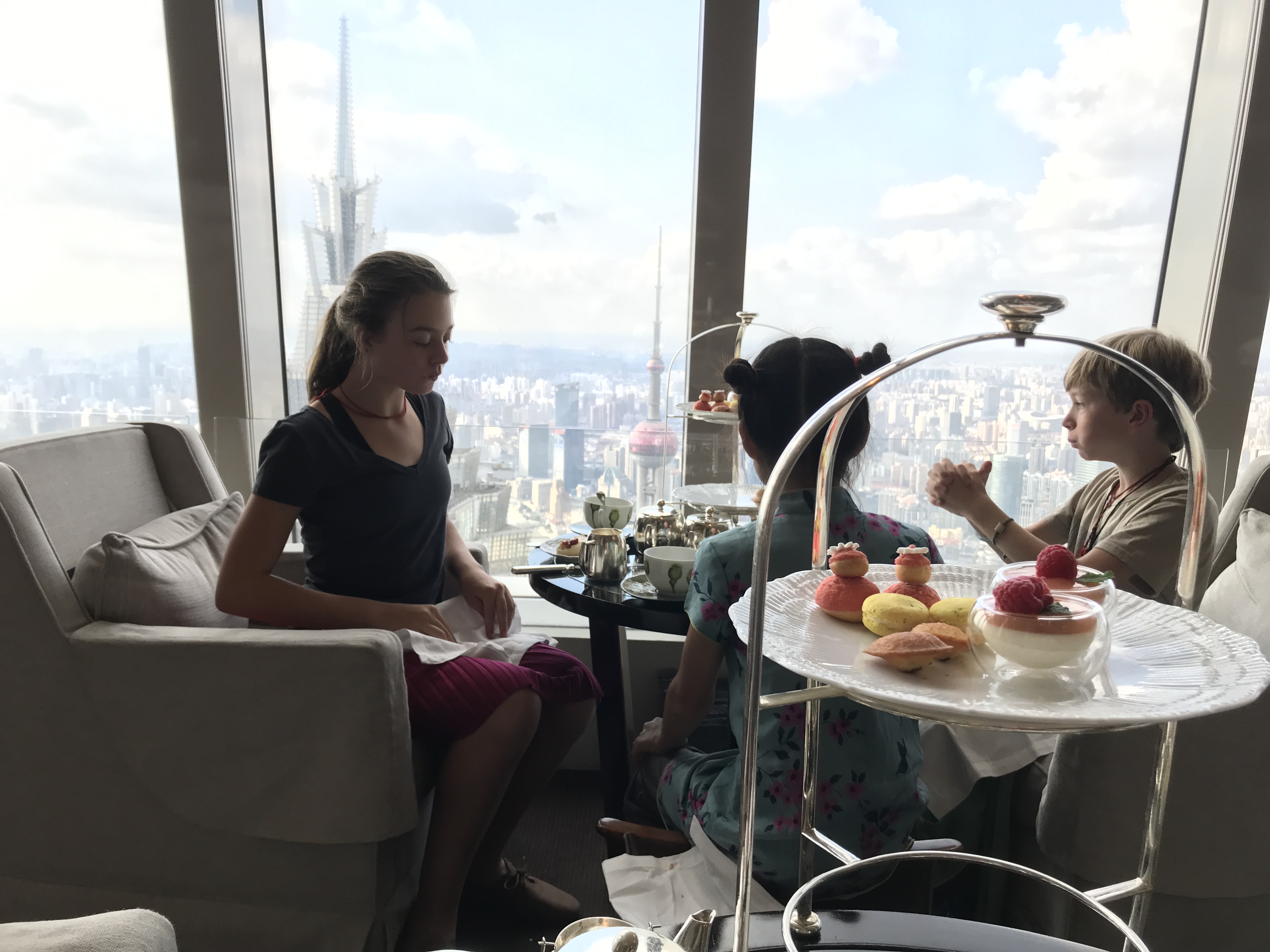
It is very hard to get around China if you don’t speak the language. We have been to some wild markets, and eaten crazy food (like buried eggs). We have also eaten a lot of crazy good food! We have walked on the Great Wall, had high tea on the eighty seventh floor of the seventh-tallest building in the world, (for my bday) and gone shoe shopping in Shanghai (also for my bday). China has been really great, especially the food. I really miss friends, but modern communication is keeping me updated. My birthday was really awesome, and I think I will always remember my thirteenth birthday.

family travel

High tea in Shanghai for my 13th birthday!

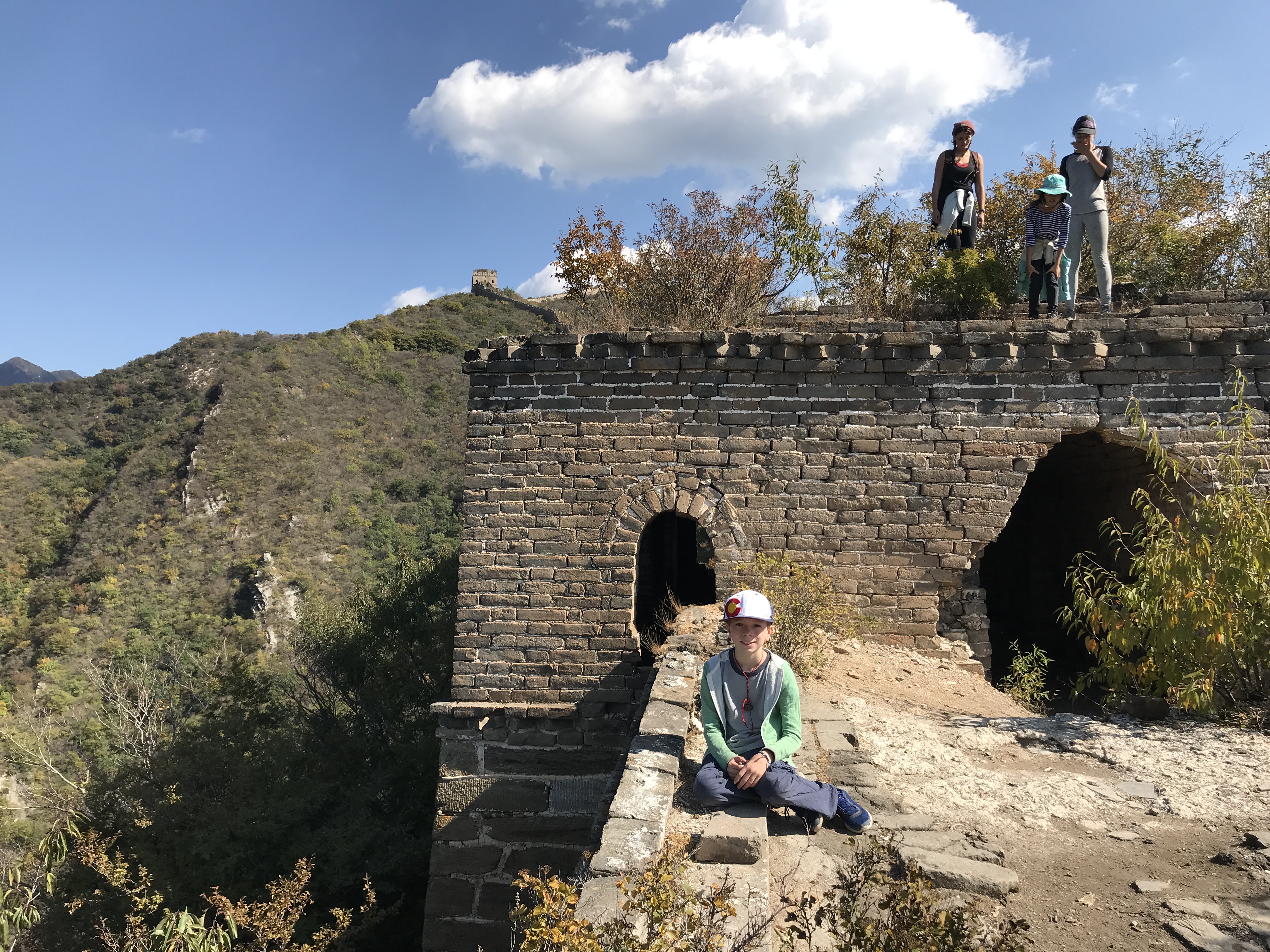
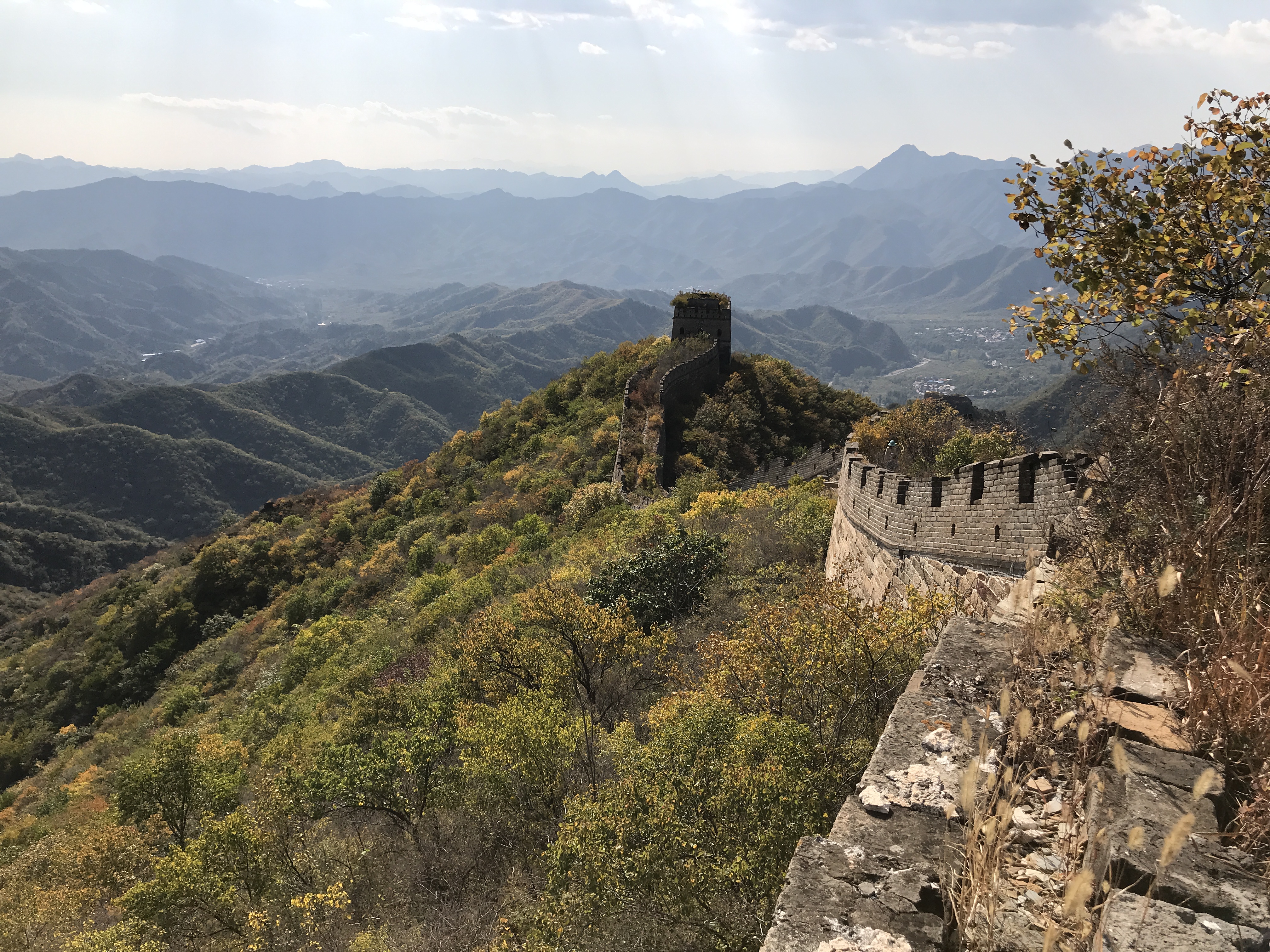
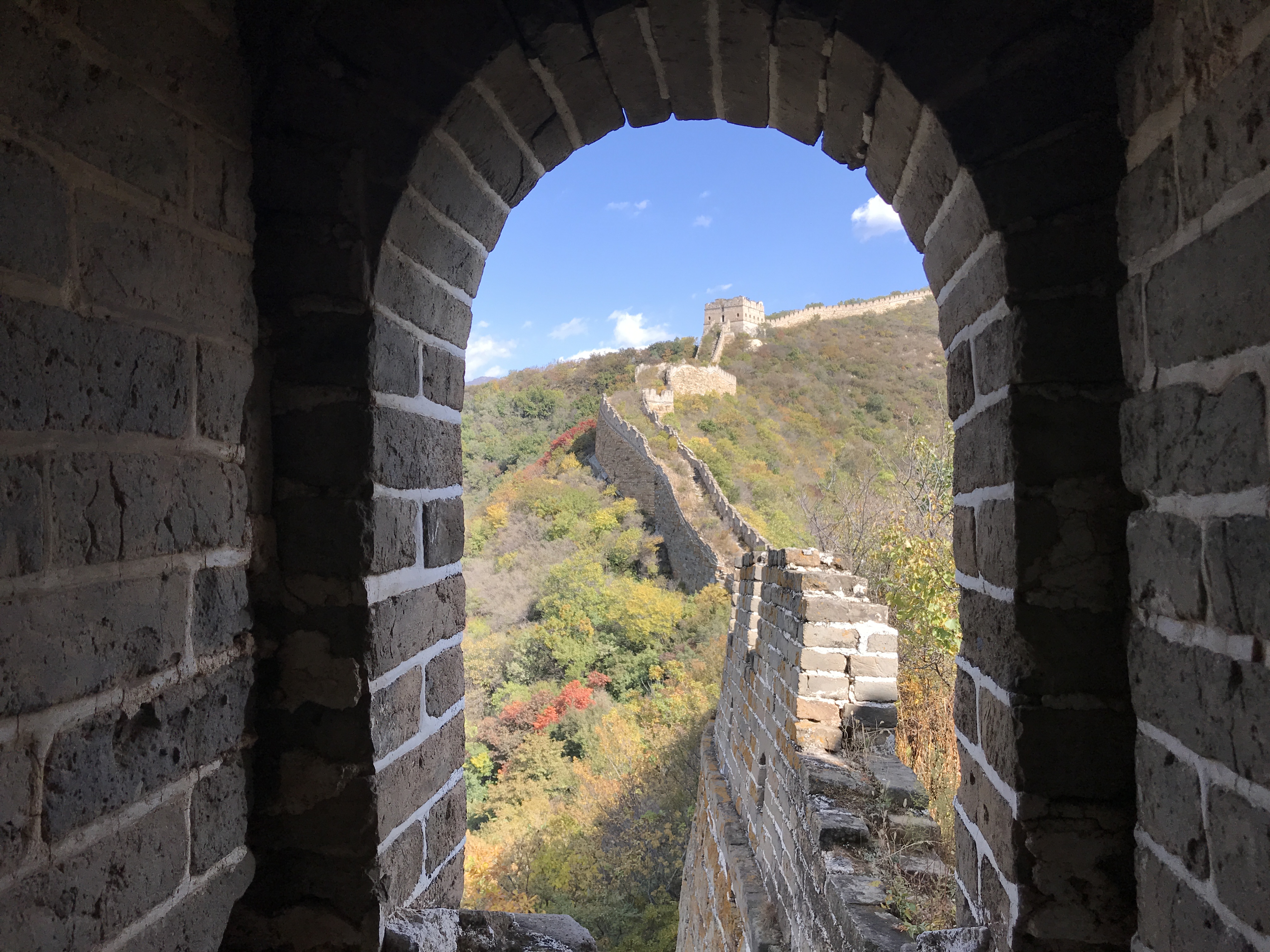
My daughter, Lucy, has been slightly obsessed by The Great Wall of China for years. We have read lots of books on The Great Wall and even watched some travel videos about it, but we were unprepared for just how cool it is. The most famous and trafficked section of The Great Wall has a McDonald’s and a chair lift at its base. This is the section made famous by Mao himself, but there are many uncrowded sections of the Wall to visit if you have the ability to get off the main track.

The Great Wall, watchtower

Watchtower exploration on The Great Wall.

We were lucky enough to go the Xiangshui Lake Area for three nights – just two hours from downtown Beijing but it felt like worlds away. We hiked through fall colors for six miles along this remote section; we never passed another person although the path was easy to follow. Some watchtowers were easy to climb and others looked too unstable to attempt. This part of the wall had no signs or warnings, and we really felt like explorers finding our way and judging safety for ourselves. Lucy and I had read about the many, many people who died in the building of the Great Wall and it all made sense when we could see the steepness of some sections. The hand-etched lines on the bricks against the magnitude of the wall, made us stop and feel the generations and generations that it took to build this architectural masterpiece. Without any fellow tourists to bring us back to the present, there was an intimacy and timelessness to exploring this worldly wonder.The Great Wall, Xiangshui Lake

This is road schooling at its best.  History becomes alive and real to a child when you have an opportunity to tangibly experience a link to the ancient past.  And as Lucy was born in China, there is a sense of her heritage and the power of her lineage that likely explains her attachment to the Great Wall.  We had quiet moments to imagine what it might have been like as a soldier waiting for the possible Mongol invasion.  Or, the difficulty for the Mongol invader to actually scale this wall.

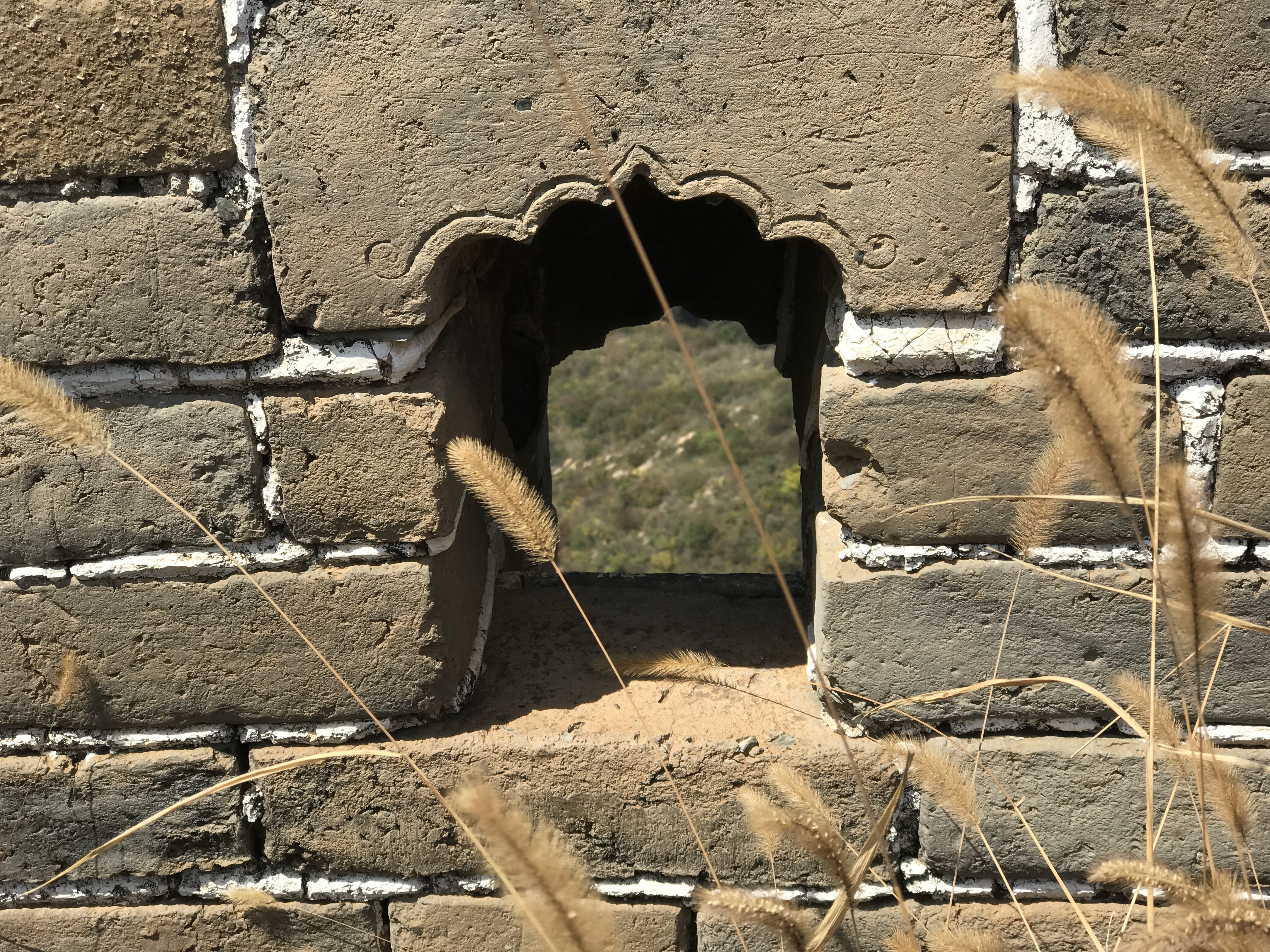
The Great Wall of China, road schooling, arrow hole, watchtower

The arrow-shooting hole has a simple artistic detail and angles down toward the invaders who might try to scale The Wall.

The town of Xiangshui Lake offers official homestays in the farmhouses around town – which seems like an excellent way for the local farmers to have some extra income and keep the Chinese tourist mega-hotels at bay. We loved the quiet feel of this town, but a stay there would be tough if no one in the group spoke Mandarin. Where There Be Dragons has frequented Farmhouse 69 for seven or more years and we could see why. Our hosts gave us a warm welcome, incredible vegetarian food and some cooking demos. Greens, like bok choi and cabbage, grow in every square inch of this town, like all small towns in China, and the persimmons and chestnuts were just coming ripe.

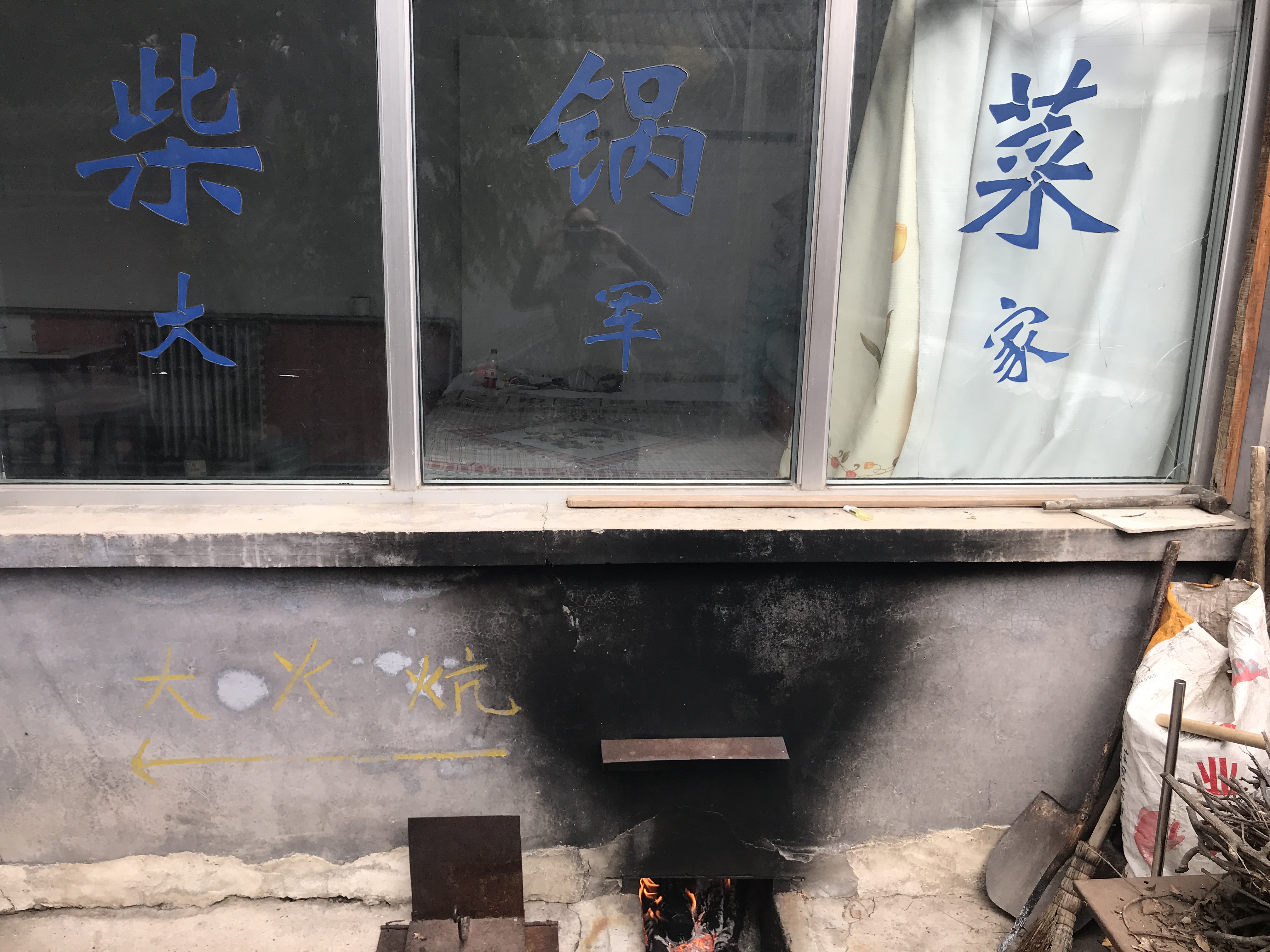
We loved our “hotbed” or khang bed, which are typical to the cooler north: there is literally a fire lit under the platform bed in the evening and the warm coals keep your bed toasty warm all night. Why heat the whole room, when you really just need a cozy bed? Ours also had a large, shallow bowl that doubled as a water kettle – helping to heat, humidify and create the perfect place for the yeasted bread to rise…ingenious!

Khang bed, Xiangshui Lake, The Great Wall

The new style of “Khang Bed” will keep you cozy warm through a cold night.

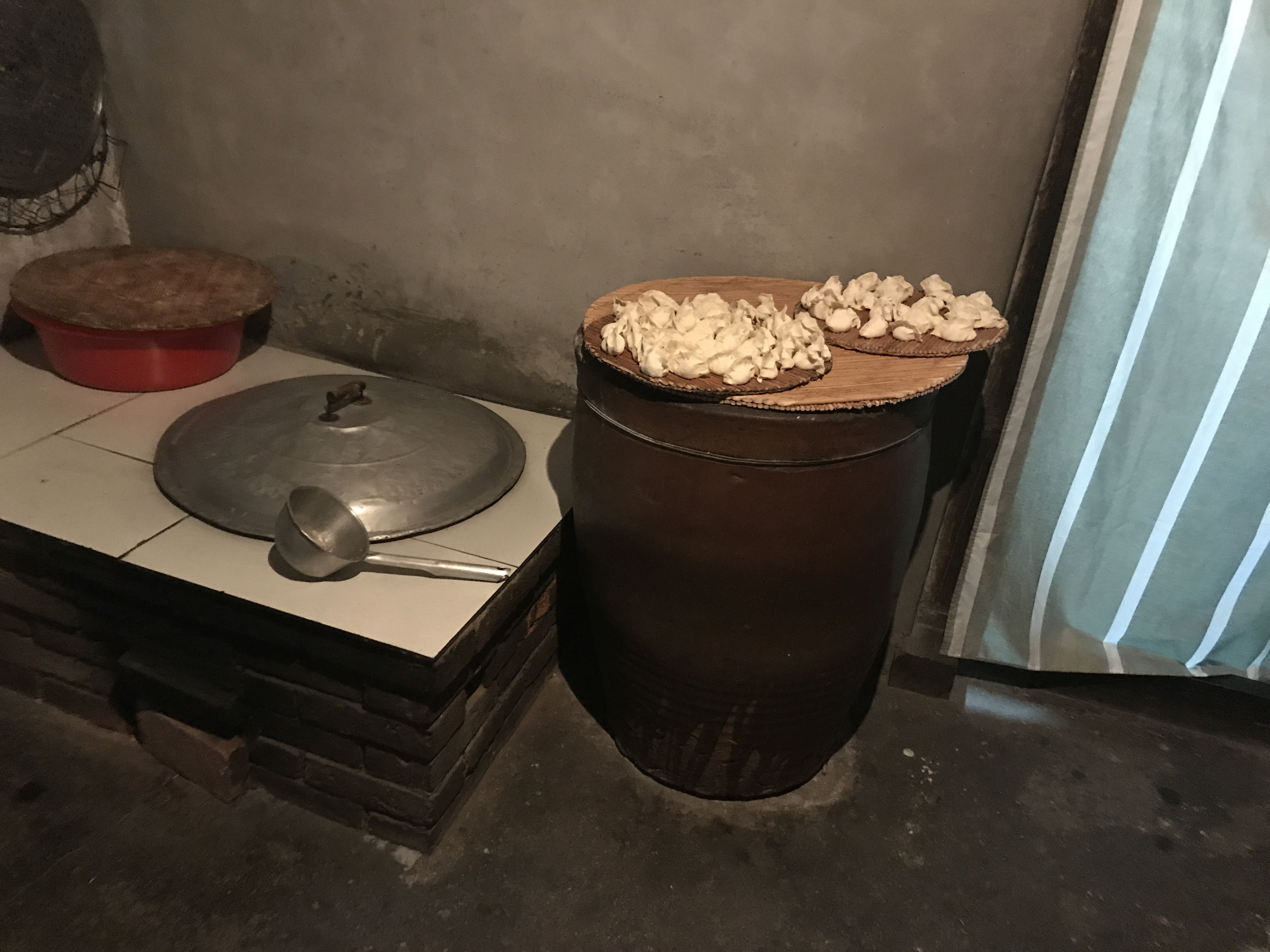
Khang bed, The Great Wall

Old-style khang bed with a kettle of water over the warming fire. Our bed was just on the other side of this wall. Chinese style dumplings (momos) ready for steaming.

In the center of Xiangshui Lake, there was another entrance to a restored Wall section and accessed by a large gate and golf carts. Massive tour buses whizzed in and out, ferrying hundreds of Chinese tourists but no one ventured just off the path to our section. We never went through this popular, preserved section. The wildness and privacy of the our remote segment of The Great Wall made it all the more memorable.

The Great Wall

Fall colors 2017

Before this year-long educational odyssey of fun and adventure, I created my own brand of curriculum for my kids. I thought of books to read, projects to enjoy and fantacized about all the real-world learning that would happen for my kids. But Nepal schooled me too. Here is my listicle for the ten lessons I learned from Nepal.

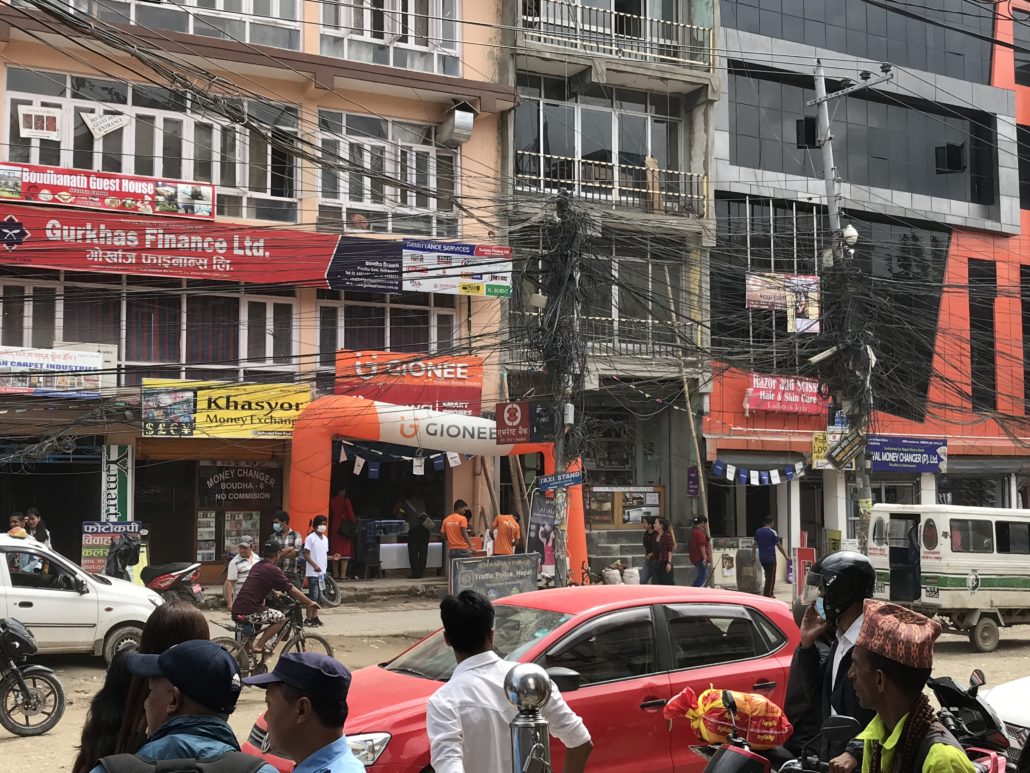
1. Bureaucracy ain’t that bad Boulder’s building codes and seemingly arbitrary development restrictions used to drive me crazy, but after witnessing a real laxity of rules, from snarls of wires to newly built homes that crumbled in the earthquake, I have a newfound respect for red tape.

Kathmandu, Nepal,

Wires and Traffic…

2. Generosity Yes, Nepal has a free market economy, but the people don’t really think that way. There is a collective happiness mode of thinking that is absent in the US. People, even the poorest of the poor, will offer whatever they have to Patagonia-clad travelers. I had people offering me corn, or biscuits or tea… lots of tea. It will boggle you.

3. Spirit Worship is in Every Vista Prayer flags, altars, statues, stupas, chortens, even these tiny offerings on the floor of a tea shop that went unnoticed through the first month or so before I realized where to look. There are little altars to the spiritual world everywhere. The bathrooms in most of Nepal (not ours) are not nearly as clean as the US, but there’s a different sense of where to put your efforts. As a traveler, you notice the grime before you notice what takes its place. And what takes its place is, ultimately, more important than a sparkly potty. I hope to create more of these gestures to spirit when I return… and have a clean bathroom.Altars on the phone box

4. We are Preoccupied with Safety After the first few days in Kathmandu, I gave up on seatbelts. Crossing the street, I gave a wide berth to oncoming traffic and then realized we would never cross the street. So, we just started to cross and indeed, we stayed safe. As a mom, I am wired to scan the situation for potential hazards, but watching moms cradle newborns in one arm while balancing, helmetless, on the back of a motorbike through potholed traffic, rejiggered my sense of what is safe. There was no sense of safety’s ground zero. And isn’t the cocooning of our American children a bit more about frivolous lawsuits and consumerism than actual statistics? I still will have a hard time being too lax but it really makes you think.

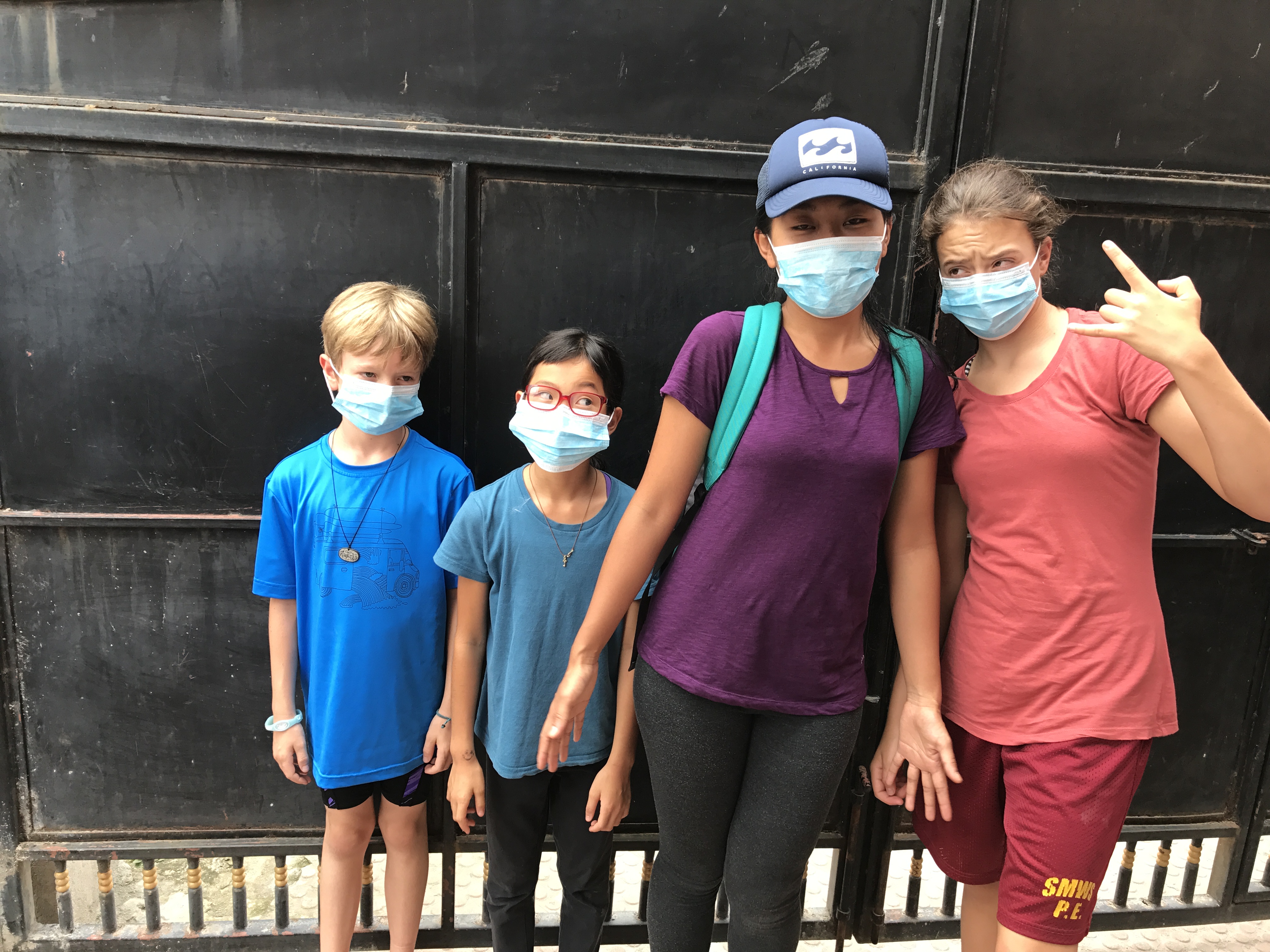
5. Clean Air I really don’t think I can live long-term in a place that requires me to wear a pollution mask. I love Nepal, love Kathmandu, but I have a new-found appreciation of the air of Colorado and look forward to no grit in the eyes and teeth at the end of the day.Masks for the road

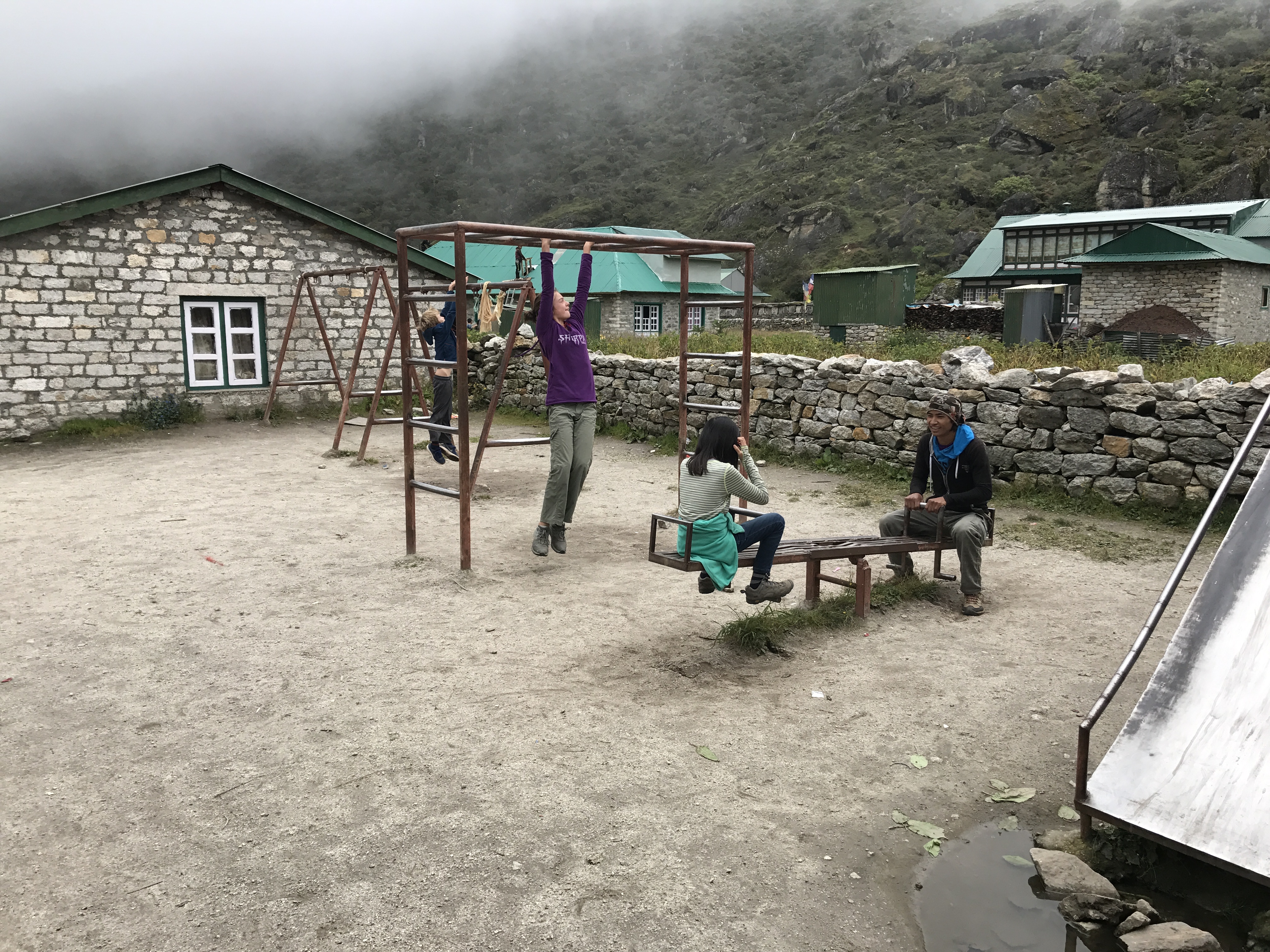
6. Kids Need Space I love the parks and open space for kids in the US. Kids need a safe place to run and be physical. Kai played soccer of the roof terrace and threw the football in the street, but cars came and wires were overhead. And it often went into the neighbors’ yards. We spent three afternoons at hotel pools so the kids could swim and splash and run on the big, expansive lawns. They were going stir-crazy without a place to run.

Khumjung, Hillary School, Nepal, Solukhumbu

We co-opted the playground at the Hillary School in Khumjung.

7. Women Juggle Work and Family The World Over It isn’t a Western woman’s balancing act, it’s a worldwide issue. Many guesthouse owners were moms who put their kids in front of the TV or video game to make us dinner or tend to the guesthouse. Professional working moms in Kathmandu were happy for job shares or three-quarter time opportunities. Women want and/or need to work outside the home and balancing family care is tricky wherever you are. But here cooking and housework, seems to be less automated and there is no alternative to slow food.

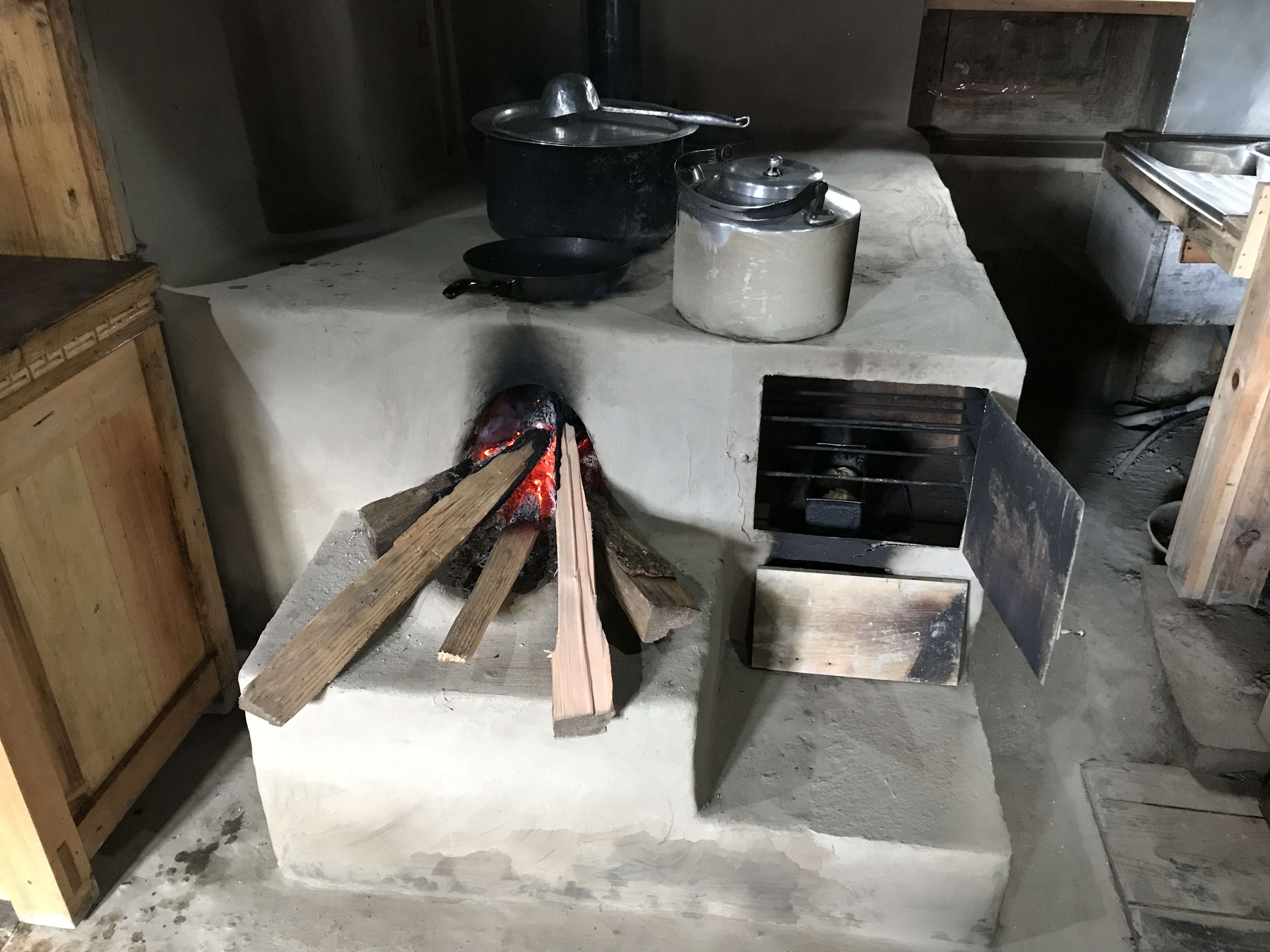
A typical Sherpa kitchen. Dinner starts with procuring firewood.

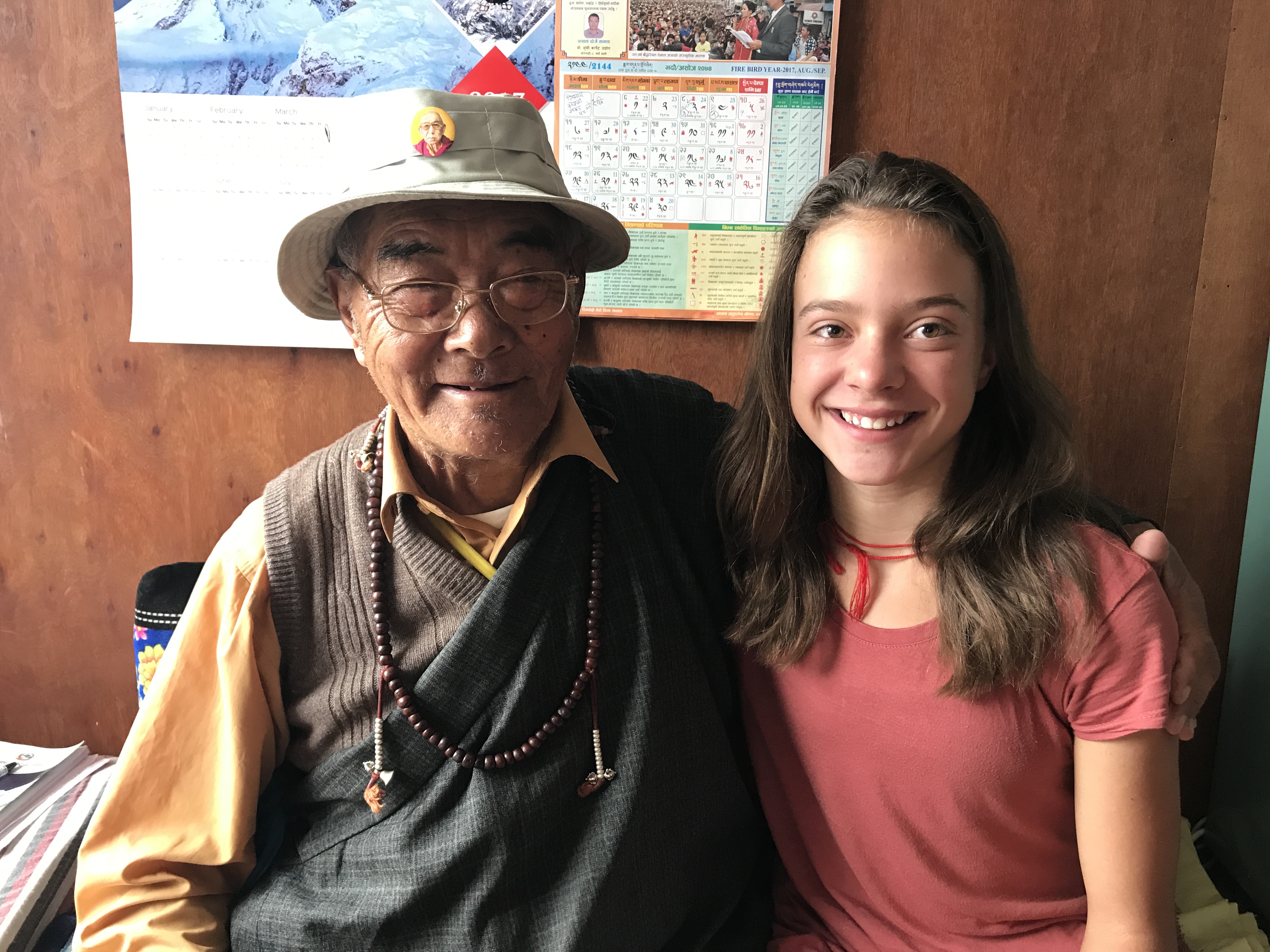
8. The Elderly Have a Purpose in Our Society I learned that life is richer when the elderly are enfolded into daily life. Actually, I relearned this from my time living in Thailand. I have so little interaction with older people in Boulder; I simply forget the calm and wisdom gained from spending time with a grandma or grandpa. The elderly in this country are visible and spend so much of their day in prayer.  Read here about Kancha Sherpa.

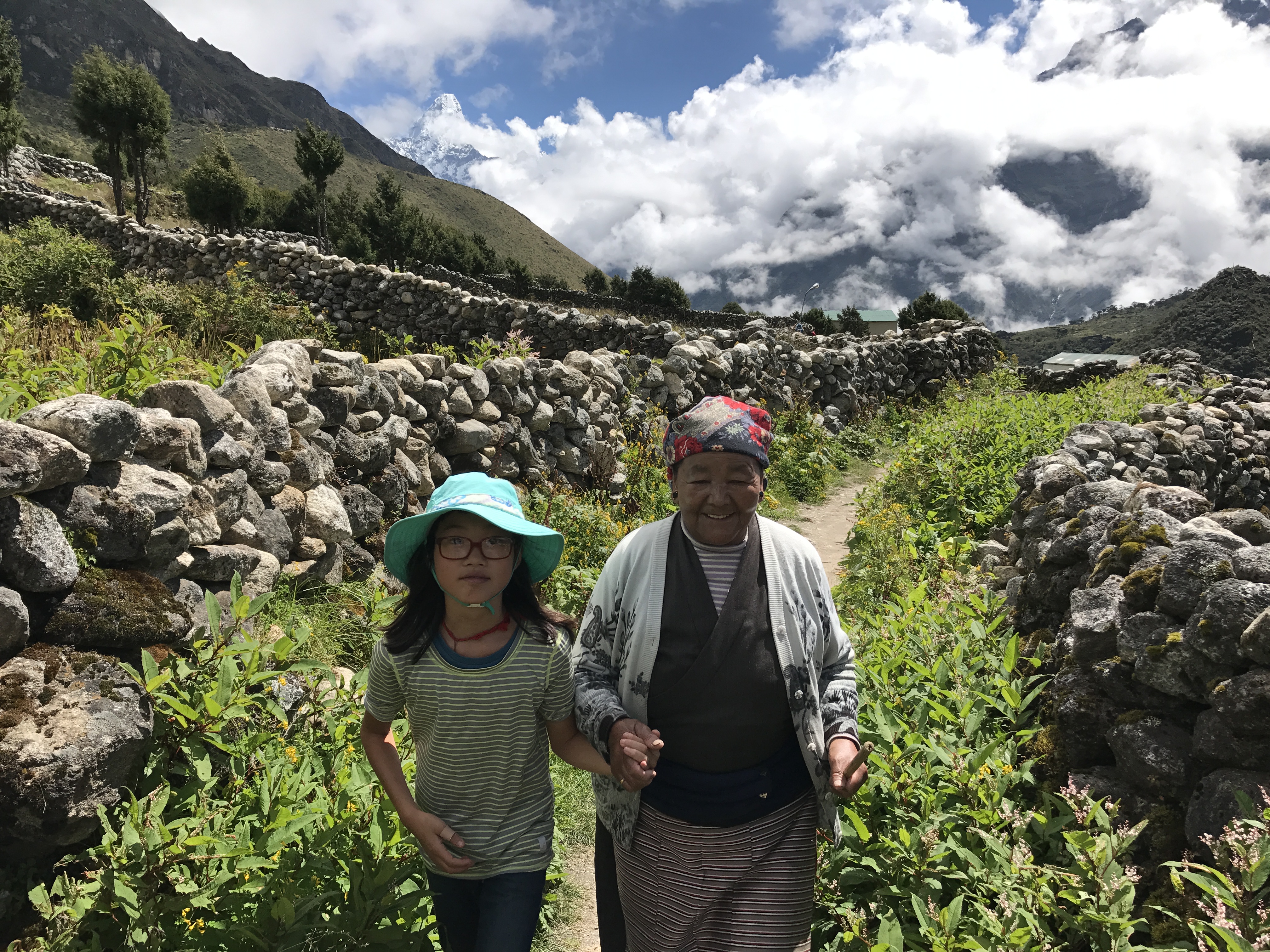
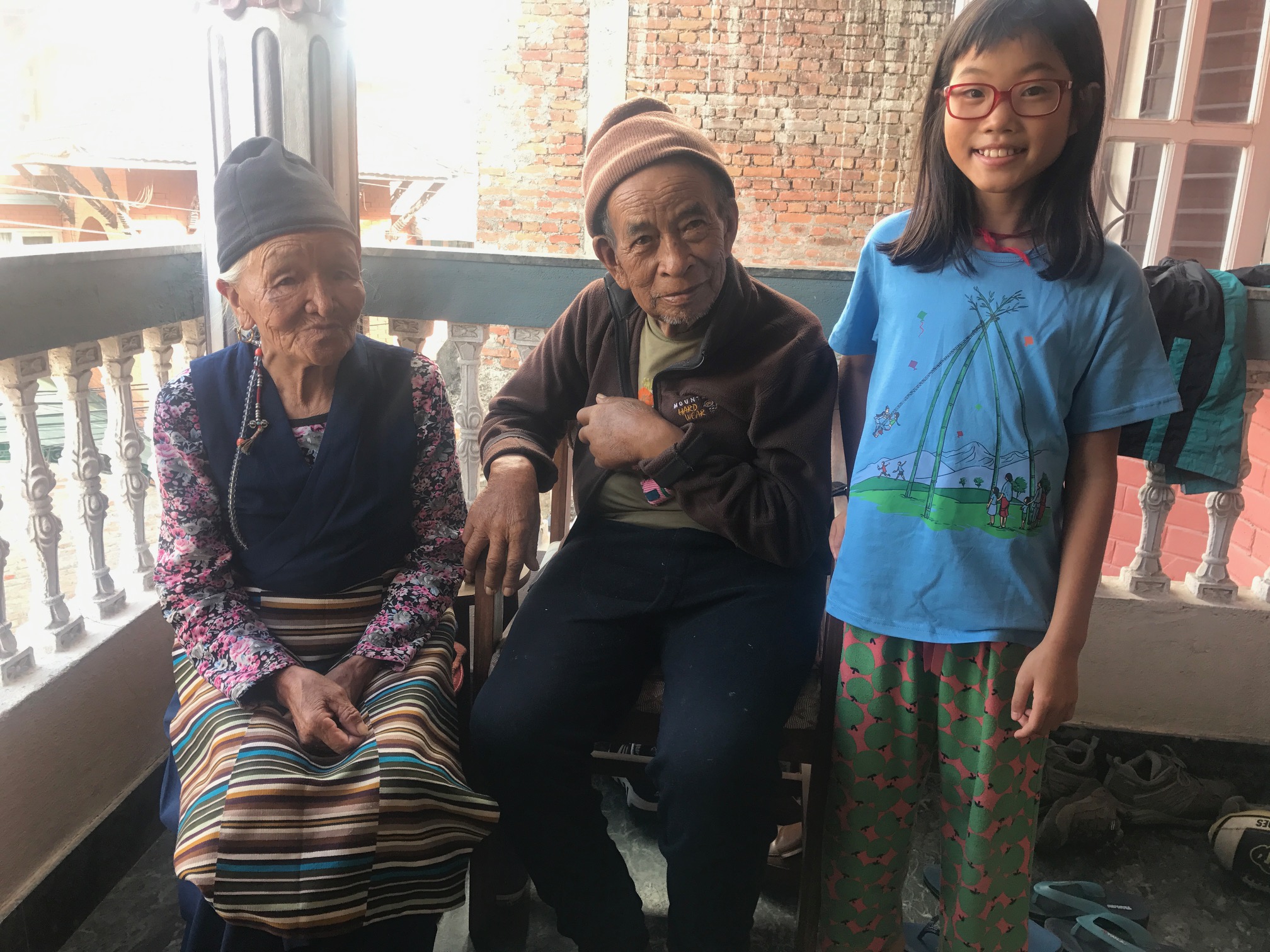
Lorna with Kancha Sherpa

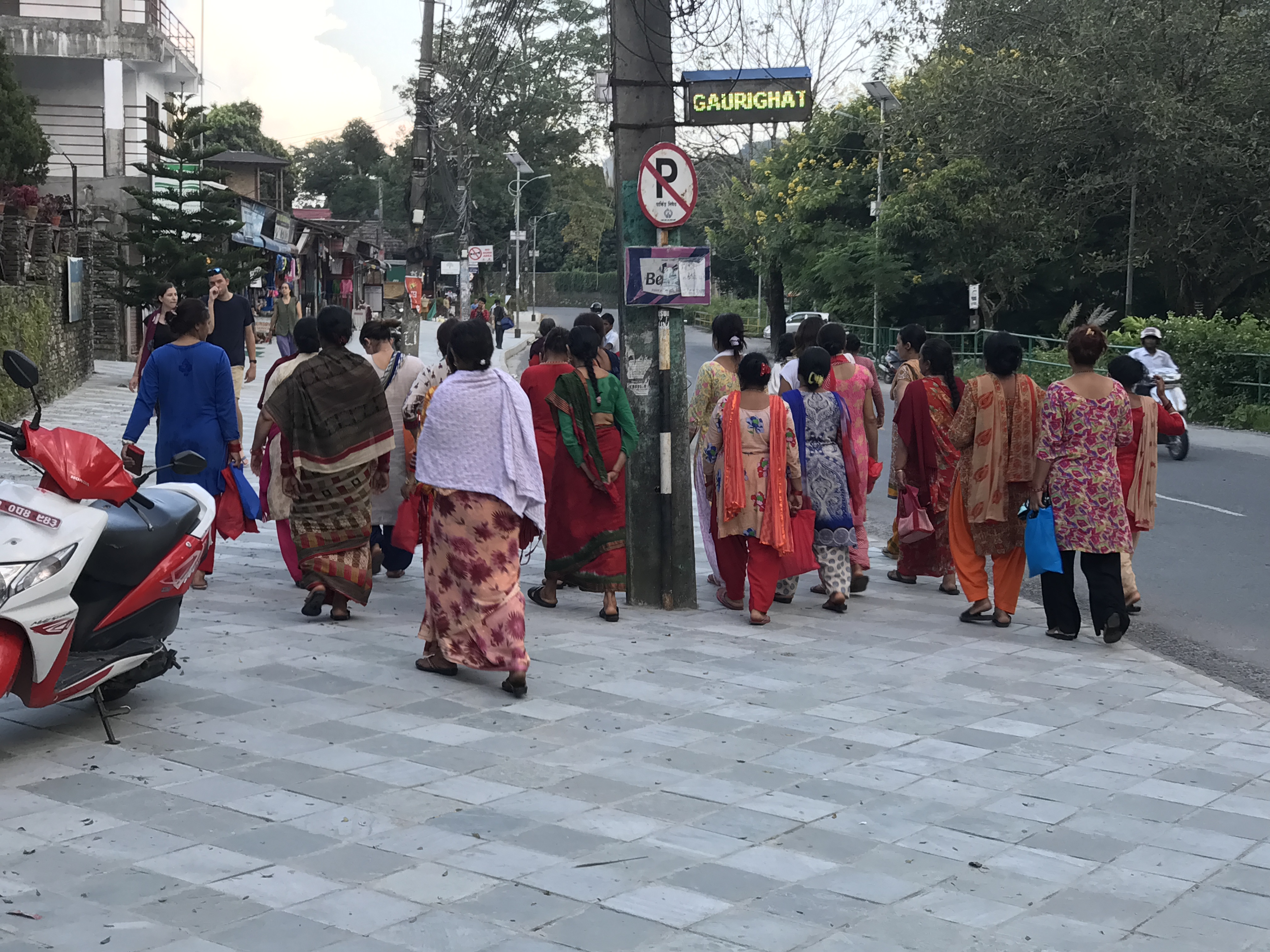
9. Commit to Color Nepali women don’t go half way with color. Their comfy cotton Punjabis are bright with surprising contrasts. There’s very little gray, or black or navy in the typical Nepali wardrobe. There are more and more people wearing Western dress and that lack of color does stand out. Why not live life more colorfully?

A group of colorful women out for a stroll in Pokhara

10. Walking and A Whole Foods Diet Help You Live a Long Healthy Life And in spending more time with older people, I was amazed at how fit and healthy the older people are. They walk (because their generation simply doesn’t drive) and they eat a whole foods diet – no prepared or fast food. One of our adopted 72 year-old grandmothers walked with us up to 13,000 ft. Another leaped to the potato patch in front of us and hoed up enough for dinner in five minutes. (We fumbled around with her and could admire her technique.) Keep walking and cook your food.

Solukhumbu, Nepal, grandmothers

This grandma can climb over 13,000 ft and chops her own wood.

All three of our kids have been Waldorf kids since kindergarten and a big part of that Waldorf curriculum is “handwork”.  Handwork includes: knitting, hand sewing, crocheting and woodwork.  This is absolutely, an unofficial rationale of Waldorf handwork pedagogy, but instead what I’ve gleaned from years of parent nights: learning to make things with one’s hands connects the children with confidence to the world around them as they learn how things are made; knitting also encourages hands to “cross midline” which helps prepare the young minds for reading; and, the manual dexterity and pattern recognition fires up all kinds of learning centers and helps to improve handwriting.  Once the kids know what to do, the Waldorf handwork classroom usually looks like kids silently knitting or crocheting while the teacher reads them a story.


Two of my three kids LOVE handwork and felt that the biggest downside to this year of travel and road schooling was to miss their regular handwork class for a year.  Aside from knitting and hand sewing, I am clueless.  The idea of being a year-long handwork teacher, makes me sweaty.  How could we pack light and keep this up?  In no way can I reproduce their school’s wonderful curriculum, with purposefully chosen projects for each grade.

family travel, handwork, Waldorf

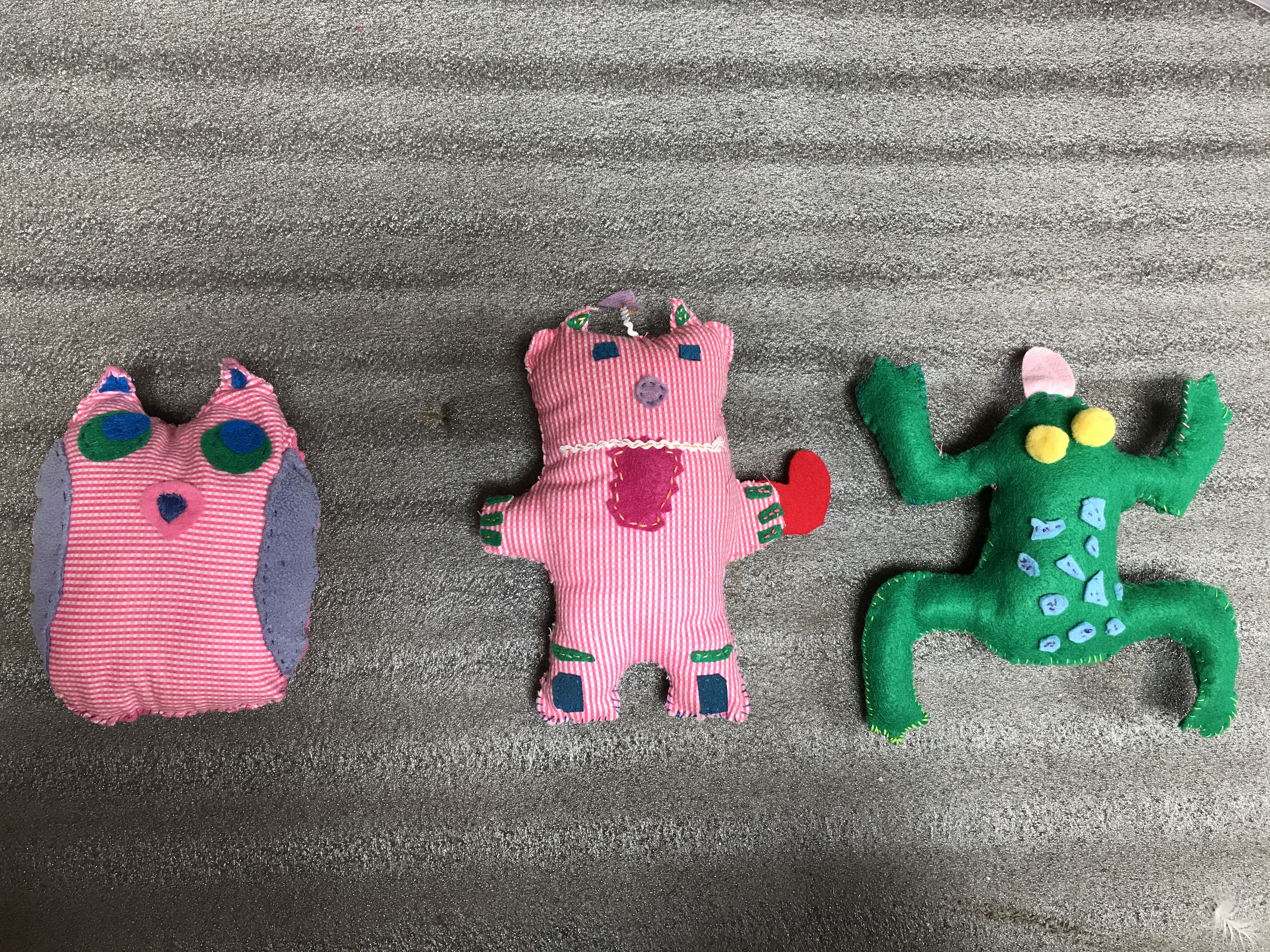
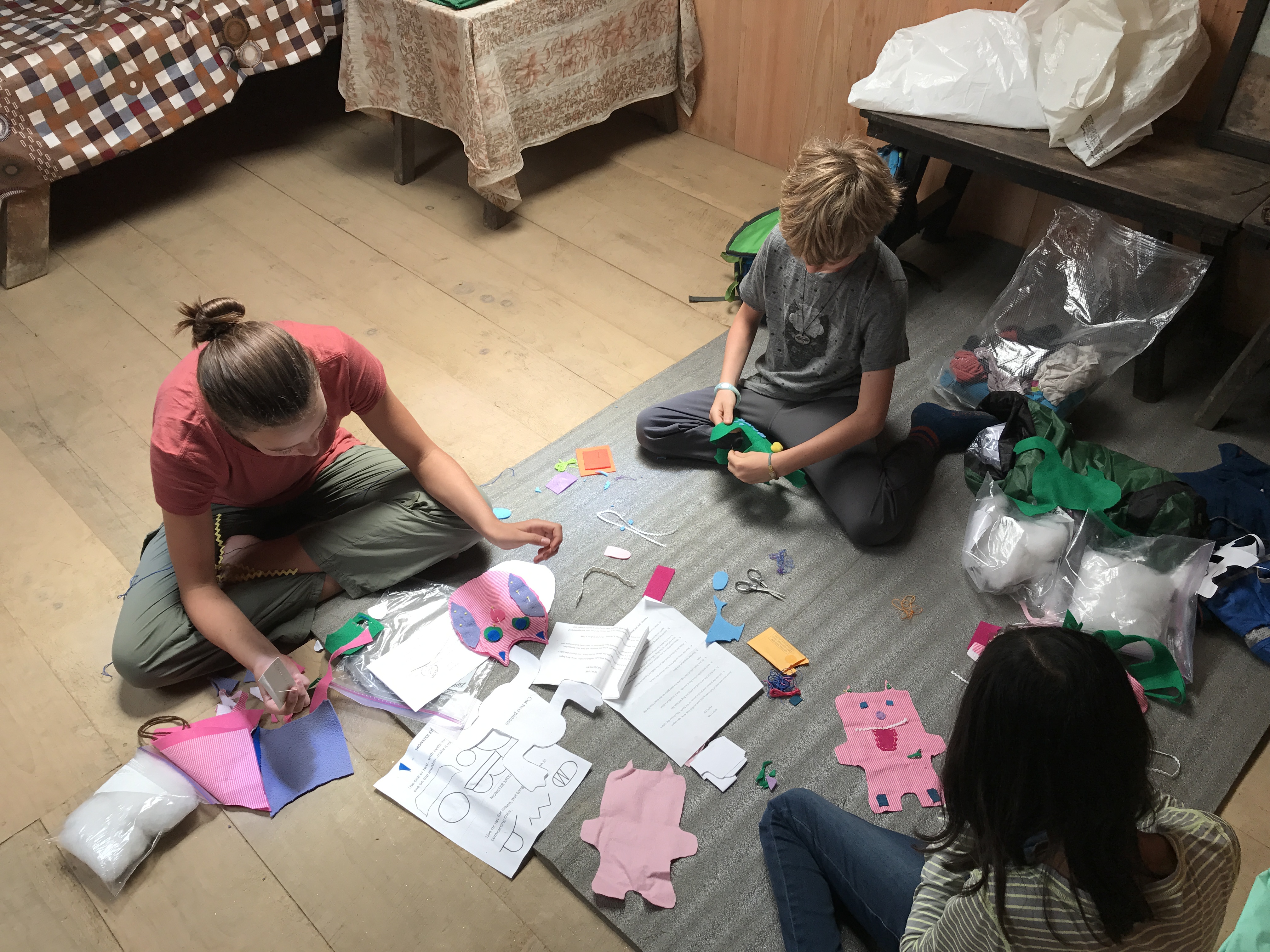
So we brought three sewing kits that the kids had gotten for Christmas.  They were wonderful gifts, but with our busy lives in Boulder the kits had been pushed to the back of the craft cabinet, waiting for a snow day that never came.  All the materials were neatly packed away to make three plush toys: an owl, a monster and a frog.  At the last minute, I threw them in a suitcase.


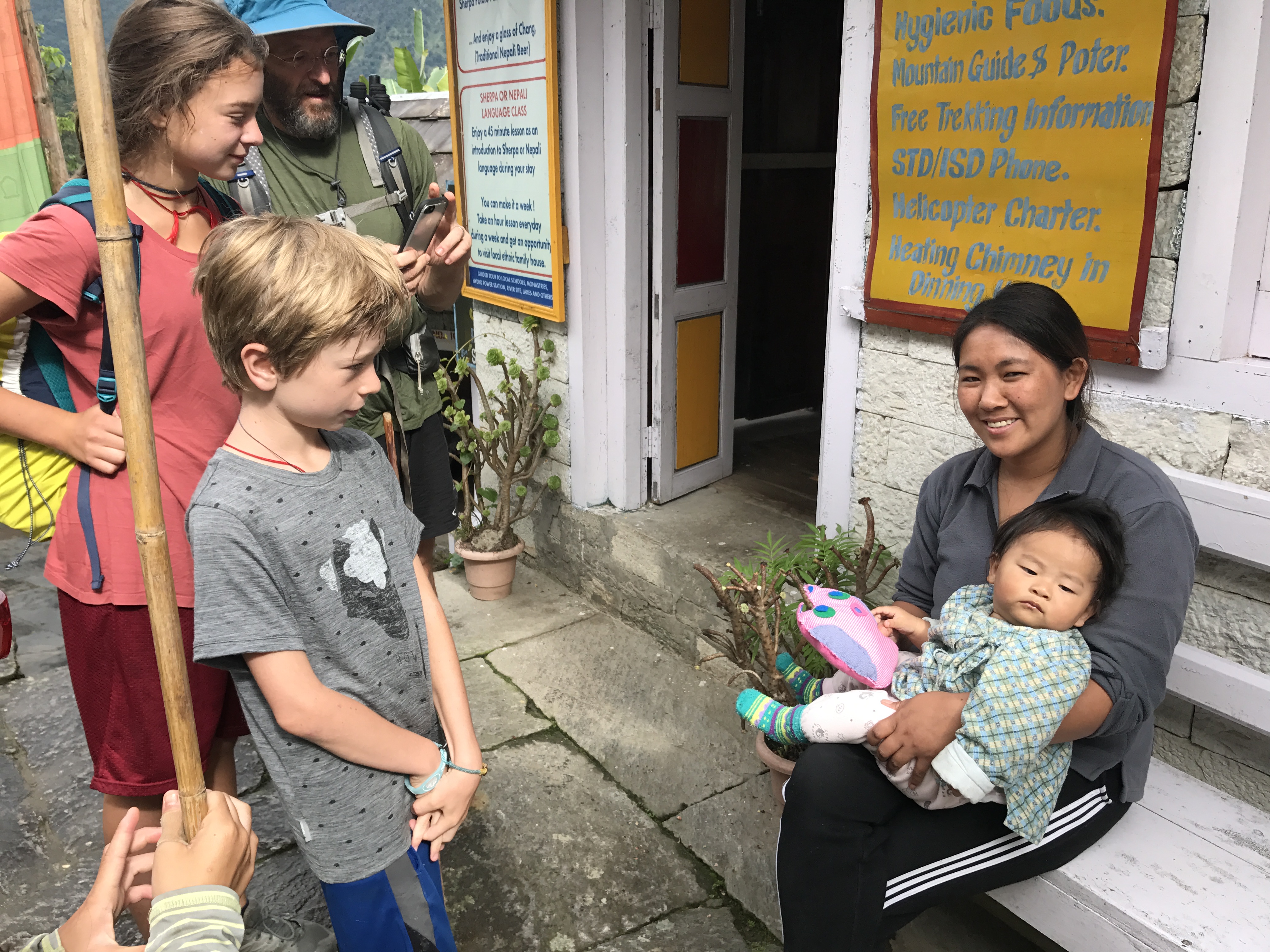
During our Sherpa homestay we broke them out on a few rainy afternoons and the kids happily got to work and were proud of their personalized creations.  The kids were really excited to give them away.  Everywhere we looked in Nepal, there were local kids with few toys to play with.  Kai had the easiest time and gave it to a guesthouse owners’ young child on the first day.  As far as we could tell, they were very happy with the gift and Kai was happy to see the young child with a “lovie” like the one he slept with each night.  Lorna similarly gave hers away a few days later, happy that she had created something that would make another child happy.  These kids have so few possessions.

family travel, handwork, Waldorf

Constructing the “lovies” took three rainy afternoons


Lucy has brought hers all the way to Everest region and back, about six weeks since she created it.  It was harder for her to separate with her creation.  I didn’t want to force her, but I also know that this is part of the lesson.  She has a stuffed bunny who she sleeps with each night and has never been interested in cuddling with her “monster” but it’s also hard to say goodbye to something that she created.  I could easily psychologize about reasons why, but her gifting ended up being the sweetest of all.

handwork, family travel, Waldorf, road schooling

Lorna giving her creation away…

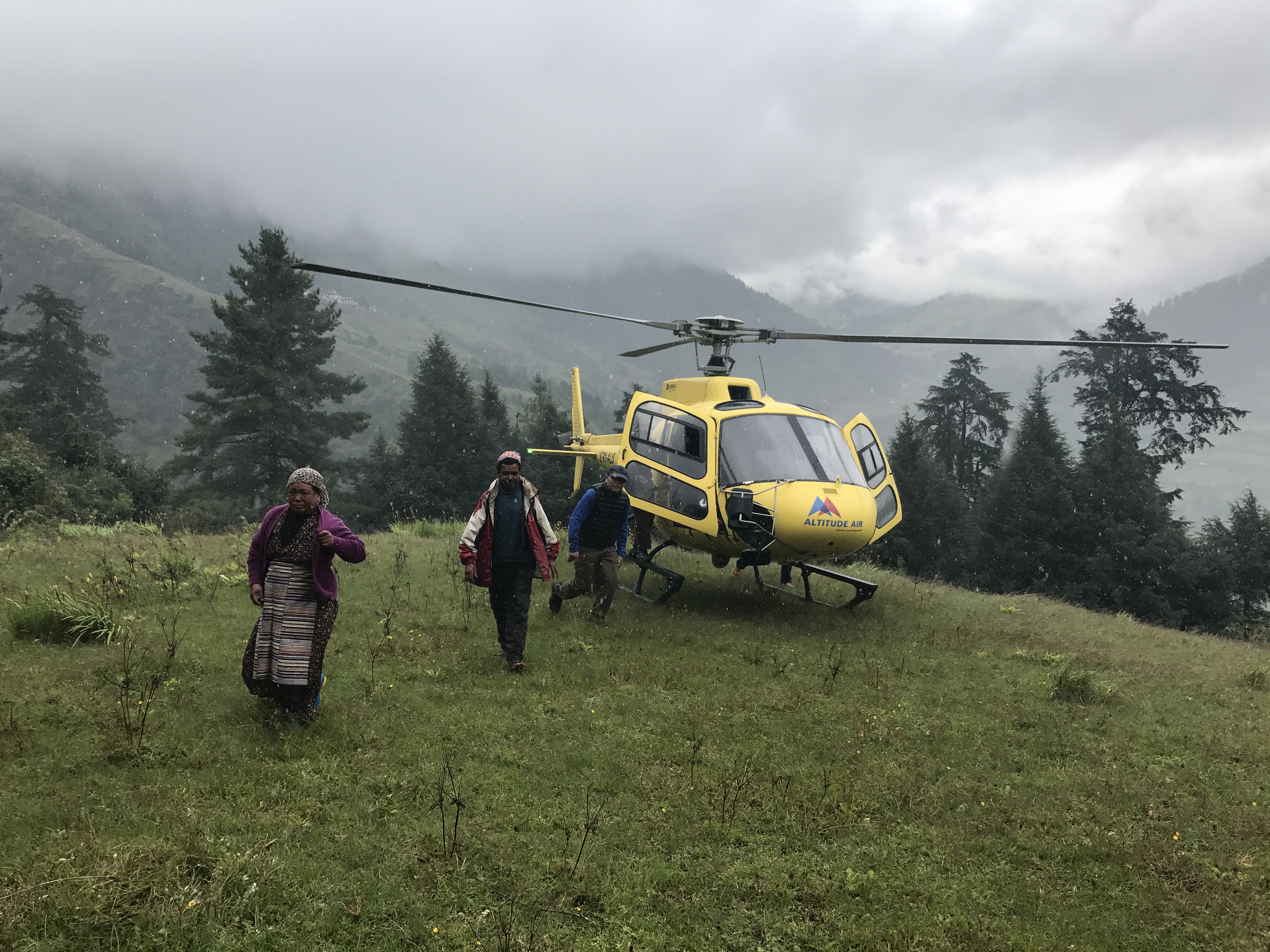
Back in August, our Nepali family’s grandfather was sick and needed to be helicoptered out of the village.  This is the house we stayed in for a week.  Grandfather, eight-five years old, was barely able to come to the kitchen and was moaning in pain.  How do elderly people survive in villages with no roads and no access to healthcare?  Well, they have family that can afford and finagle a helicopter airlift to Kathmandu.  (It would have been extremely difficult to carry him to the road and then it would have been an eight-hour jeep ride! This man needs to lay down.)

Helicopter arriving in Thumbuk. Monsoon clouds make it tough to find.


We all waited patiently in Thumbuk for the weather to clear and the helicopter to locate the field by GPS.  I stood in the clearing with a red umbrella and we lit a smoky fire.  Grandfather, Grandmother and Lhakpa flew with him to Kathmandu where he saw a doctor to relieve his pain and got further testing.  Spending time with Grandfather back in Kathmandu a month later, meant the world to the kids. You could tell that Grandfather was feeling better and interacted more with the children.  And watching the mountain helicopter rescue will be a clear memory for years.


Lucy gave her lovie to Grandfather just two days before leaving Nepal.  Grandfather took it, smiled and then quickly tucked it under his jacket, close to his heart.  Another reminder that it’s best to let Lucy lead.  And the best reason for us all to learn handwork is to create something of meaning to give.  It can mean so much more than a store-bought token of caring.family travel, handwork, Waldorf