Posts

Before this year-long educational odyssey of fun and adventure, I created my own brand of curriculum for my kids. I thought of books to read, projects to enjoy and fantacized about all the real-world learning that would happen for my kids. But Nepal schooled me too. Here is my listicle for the ten lessons I learned from Nepal.

1. Bureaucracy ain’t that bad Boulder’s building codes and seemingly arbitrary development restrictions used to drive me crazy, but after witnessing a real laxity of rules, from snarls of wires to newly built homes that crumbled in the earthquake, I have a newfound respect for red tape.
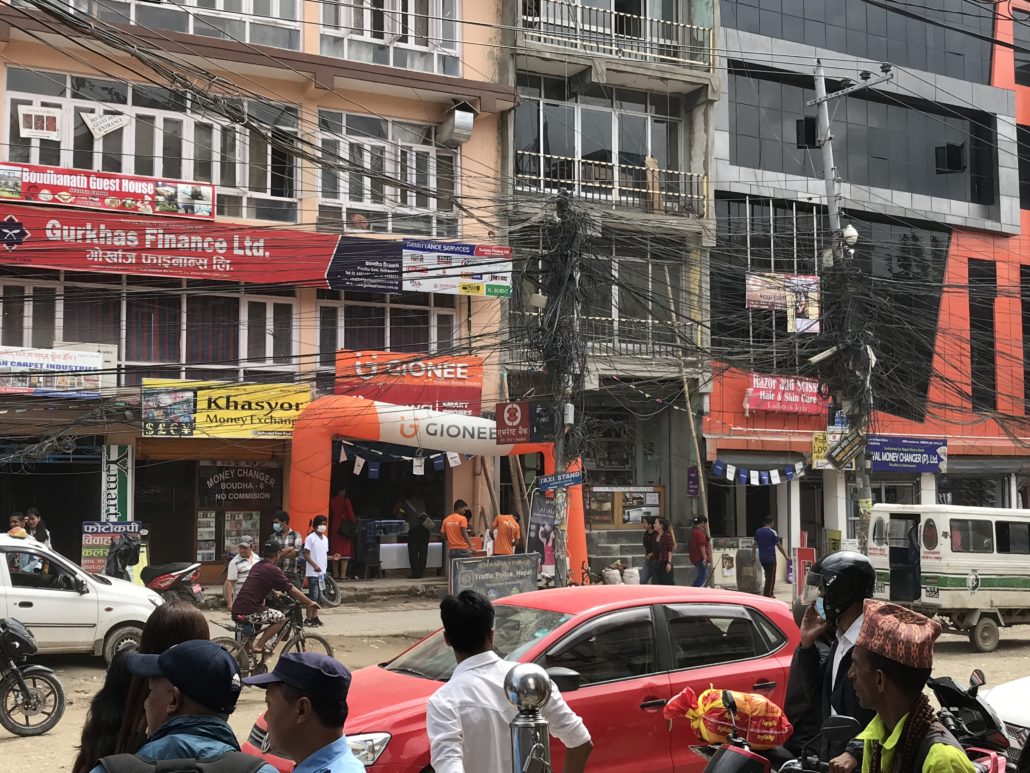
Kathmandu, Nepal,

Wires and Traffic…

2. Generosity Yes, Nepal has a free market economy, but the people don’t really think that way. There is a collective happiness mode of thinking that is absent in the US. People, even the poorest of the poor, will offer whatever they have to Patagonia-clad travelers. I had people offering me corn, or biscuits or tea… lots of tea. It will boggle you.

3. Spirit Worship is in Every Vista Prayer flags, altars, statues, stupas, chortens, even these tiny offerings on the floor of a tea shop that went unnoticed through the first month or so before I realized where to look. There are little altars to the spiritual world everywhere. The bathrooms in most of Nepal (not ours) are not nearly as clean as the US, but there’s a different sense of where to put your efforts. As a traveler, you notice the grime before you notice what takes its place. And what takes its place is, ultimately, more important than a sparkly potty. I hope to create more of these gestures to spirit when I return… and have a clean bathroom.Altars on the phone box

4. We are Preoccupied with Safety After the first few days in Kathmandu, I gave up on seatbelts. Crossing the street, I gave a wide berth to oncoming traffic and then realized we would never cross the street. So, we just started to cross and indeed, we stayed safe. As a mom, I am wired to scan the situation for potential hazards, but watching moms cradle newborns in one arm while balancing, helmetless, on the back of a motorbike through potholed traffic, rejiggered my sense of what is safe. There was no sense of safety’s ground zero. And isn’t the cocooning of our American children a bit more about frivolous lawsuits and consumerism than actual statistics? I still will have a hard time being too lax but it really makes you think.

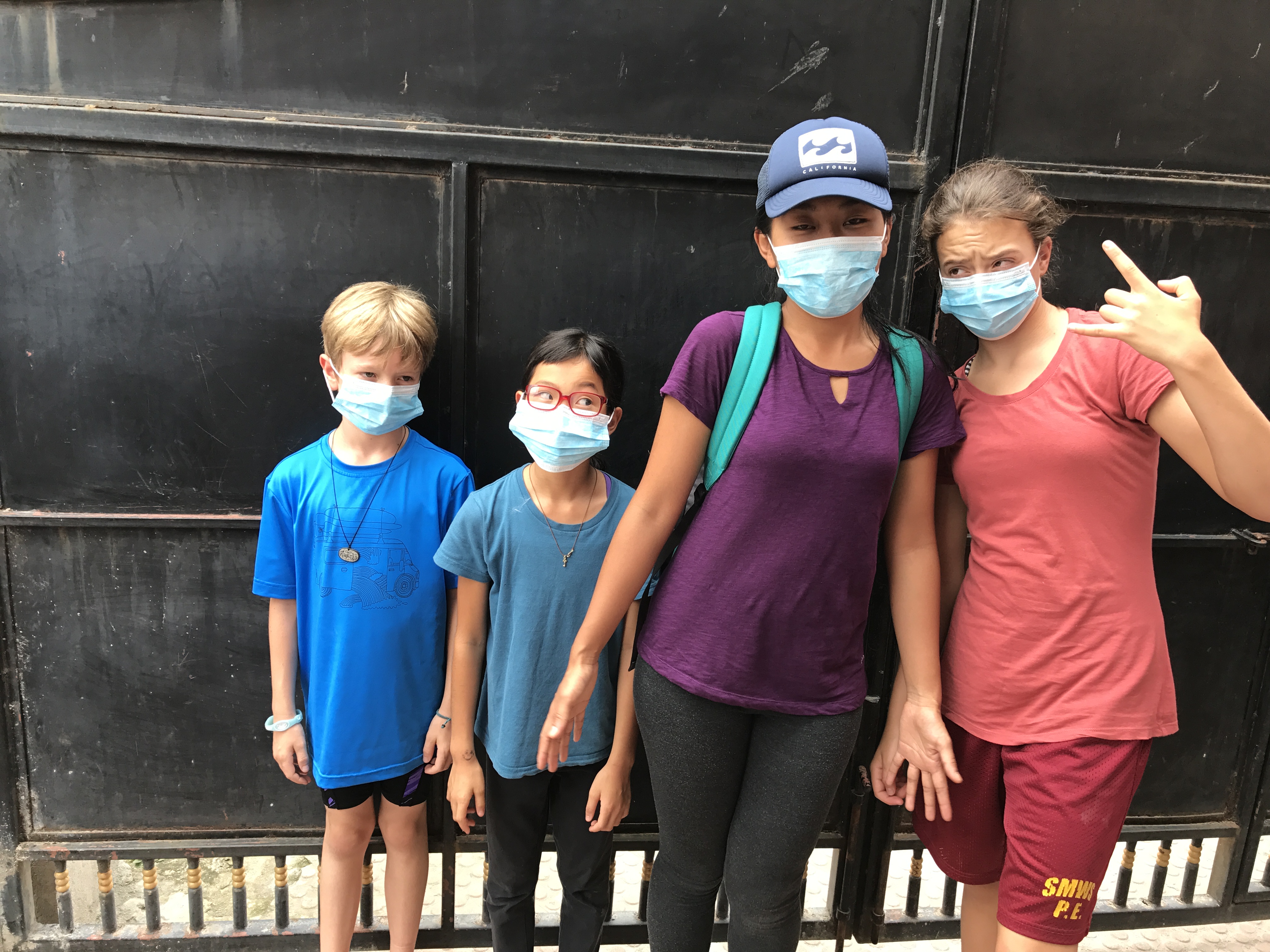
5. Clean Air I really don’t think I can live long-term in a place that requires me to wear a pollution mask. I love Nepal, love Kathmandu, but I have a new-found appreciation of the air of Colorado and look forward to no grit in the eyes and teeth at the end of the day.Masks for the road
6. Kids Need Space I love the parks and open space for kids in the US. Kids need a safe place to run and be physical. Kai played soccer of the roof terrace and threw the football in the street, but cars came and wires were overhead. And it often went into the neighbors’ yards. We spent three afternoons at hotel pools so the kids could swim and splash and run on the big, expansive lawns. They were going stir-crazy without a place to run.
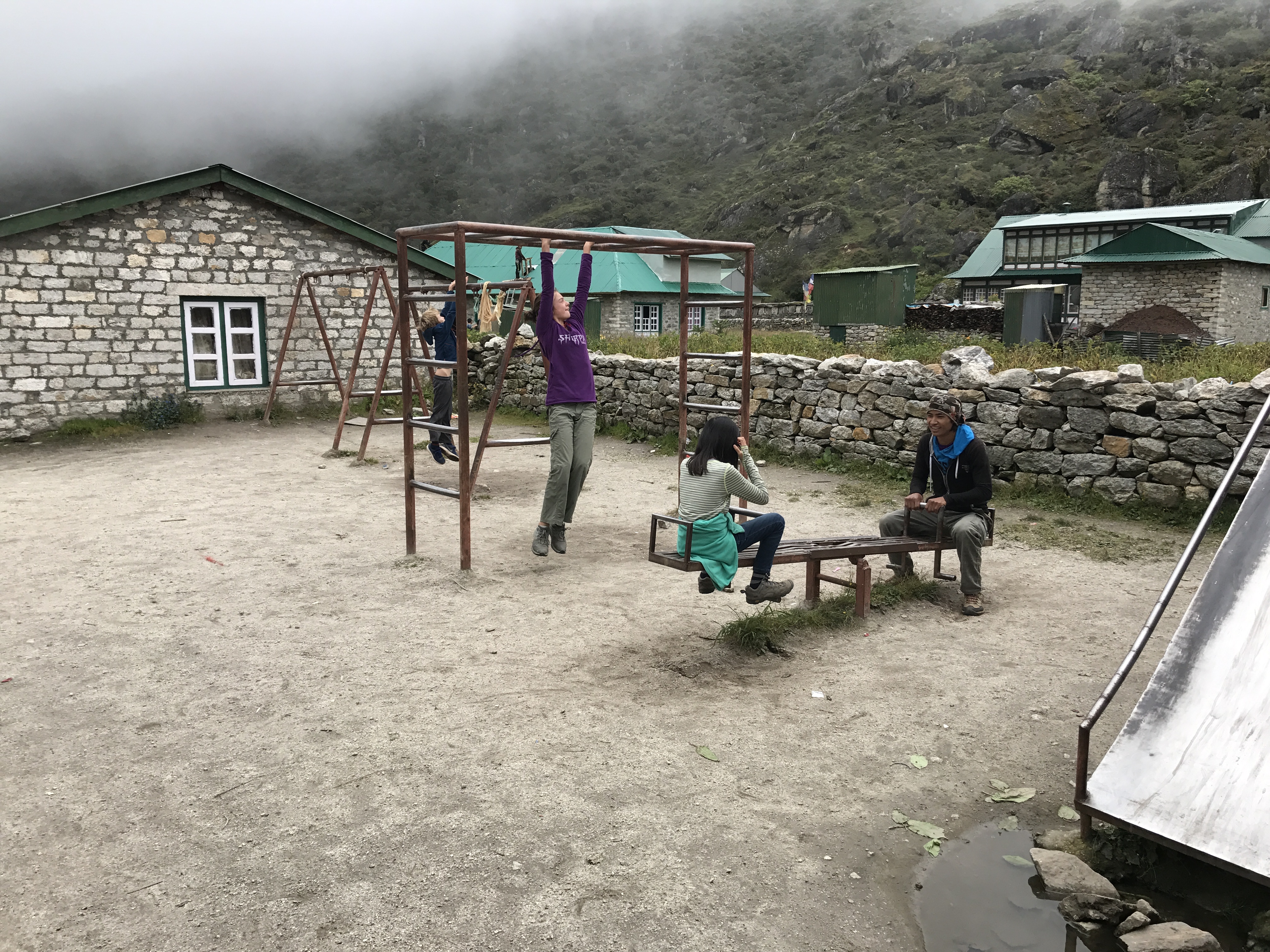
Khumjung, Hillary School, Nepal, Solukhumbu

We co-opted the playground at the Hillary School in Khumjung.

7. Women Juggle Work and Family The World Over It isn’t a Western woman’s balancing act, it’s a worldwide issue. Many guesthouse owners were moms who put their kids in front of the TV or video game to make us dinner or tend to the guesthouse. Professional working moms in Kathmandu were happy for job shares or three-quarter time opportunities. Women want and/or need to work outside the home and balancing family care is tricky wherever you are. But here cooking and housework, seems to be less automated and there is no alternative to slow food.
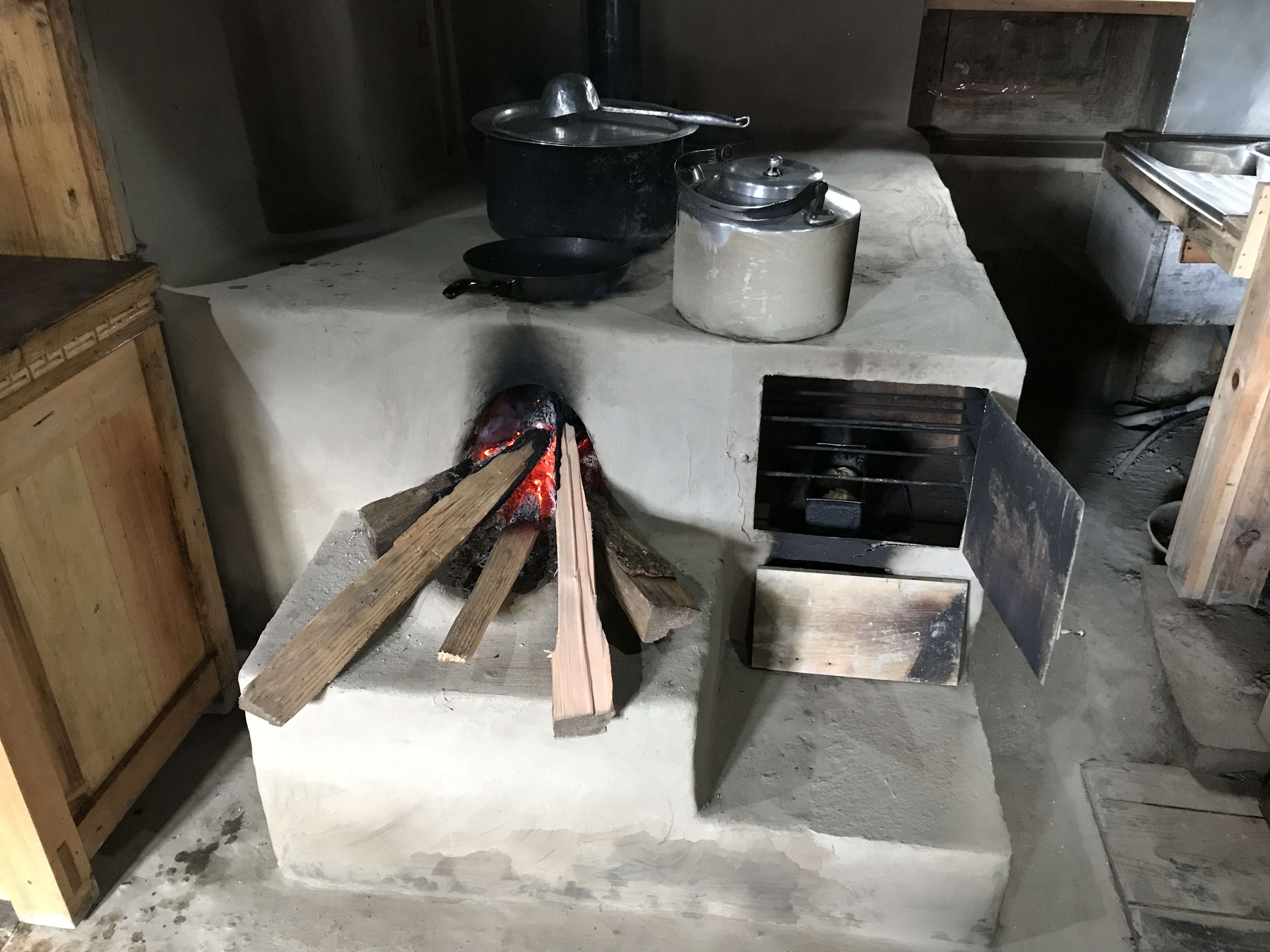
A typical Sherpa kitchen. Dinner starts with procuring firewood.

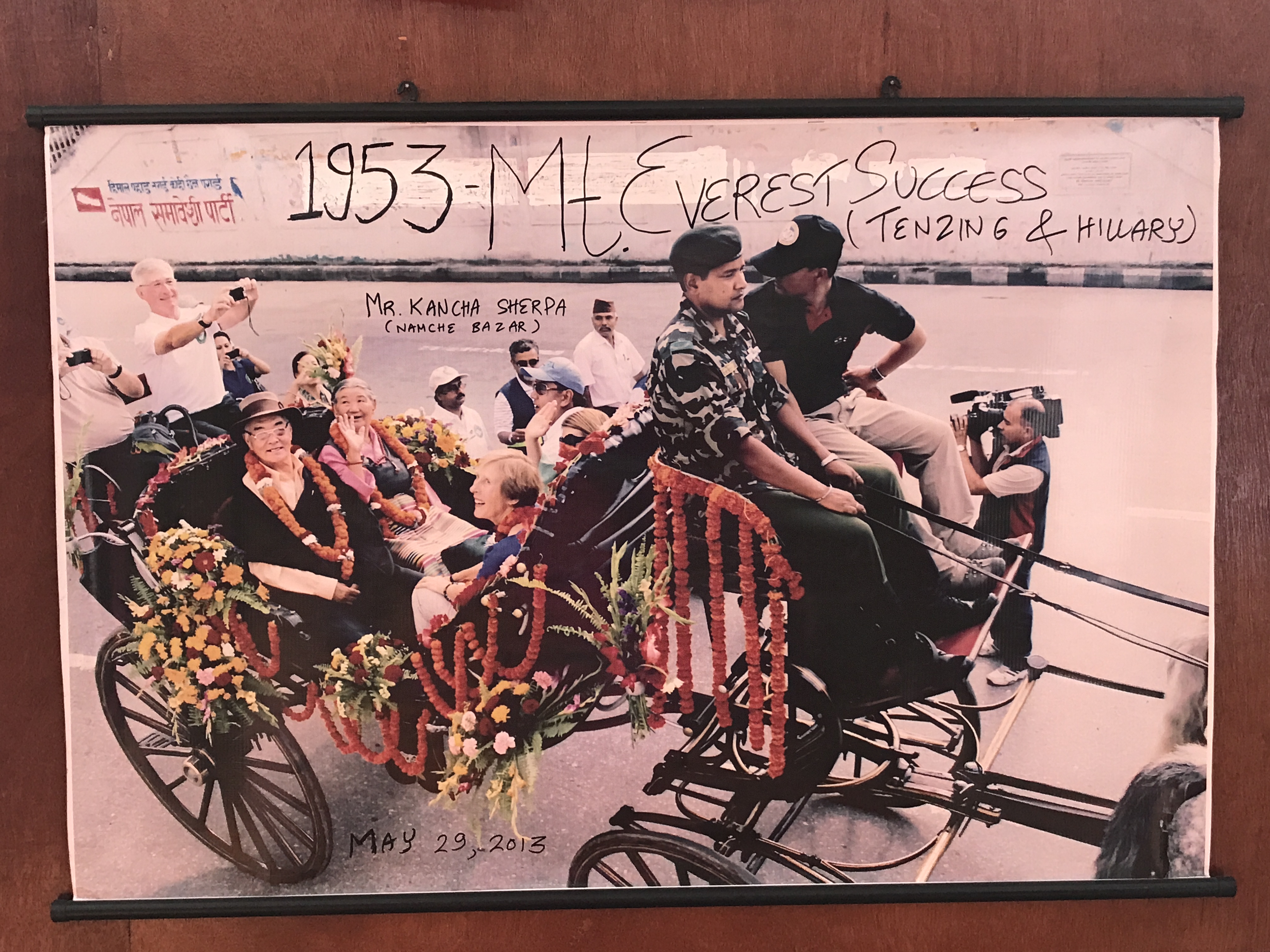
8. The Elderly Have a Purpose in Our Society I learned that life is richer when the elderly are enfolded into daily life. Actually, I relearned this from my time living in Thailand. I have so little interaction with older people in Boulder; I simply forget the calm and wisdom gained from spending time with a grandma or grandpa. The elderly in this country are visible and spend so much of their day in prayer.  Read here about Kancha Sherpa.
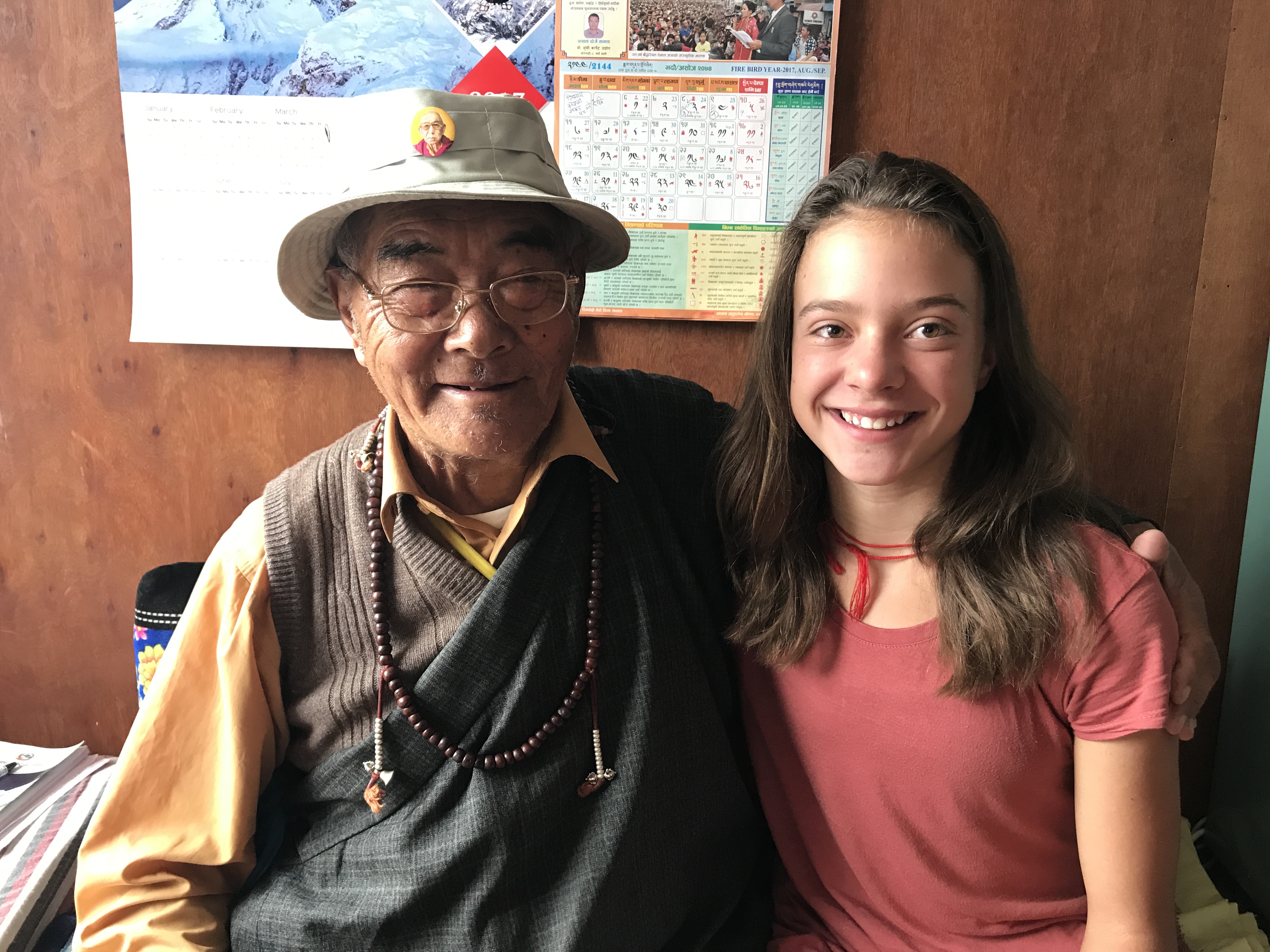
Lorna with Kancha Sherpa

9. Commit to Color Nepali women don’t go half way with color. Their comfy cotton Punjabis are bright with surprising contrasts. There’s very little gray, or black or navy in the typical Nepali wardrobe. There are more and more people wearing Western dress and that lack of color does stand out. Why not live life more colorfully?
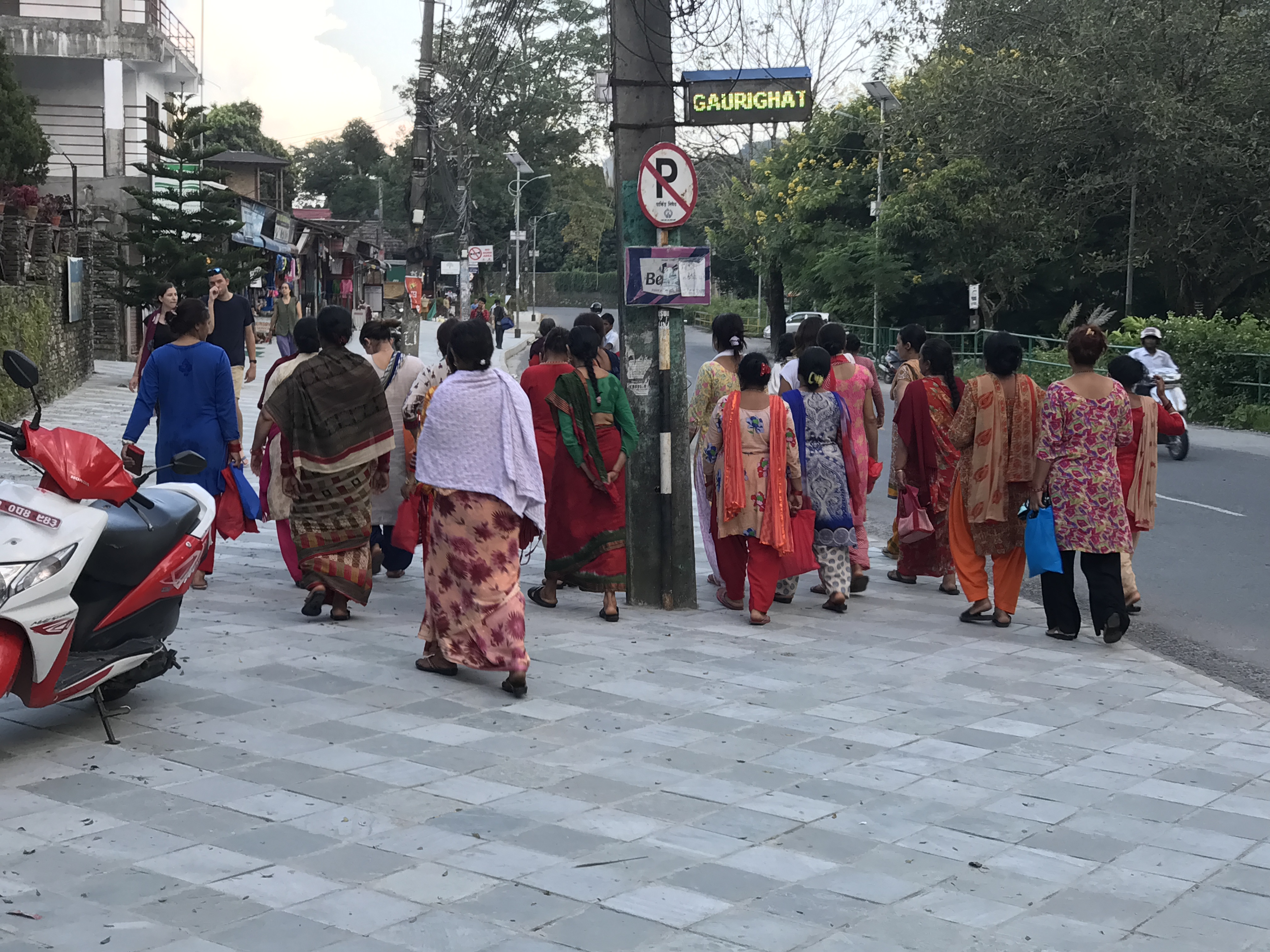
A group of colorful women out for a stroll in Pokhara

10. Walking and A Whole Foods Diet Help You Live a Long Healthy Life And in spending more time with older people, I was amazed at how fit and healthy the older people are. They walk (because their generation simply doesn’t drive) and they eat a whole foods diet – no prepared or fast food. One of our adopted 72 year-old grandmothers walked with us up to 13,000 ft. Another leaped to the potato patch in front of us and hoed up enough for dinner in five minutes. (We fumbled around with her and could admire her technique.) Keep walking and cook your food.
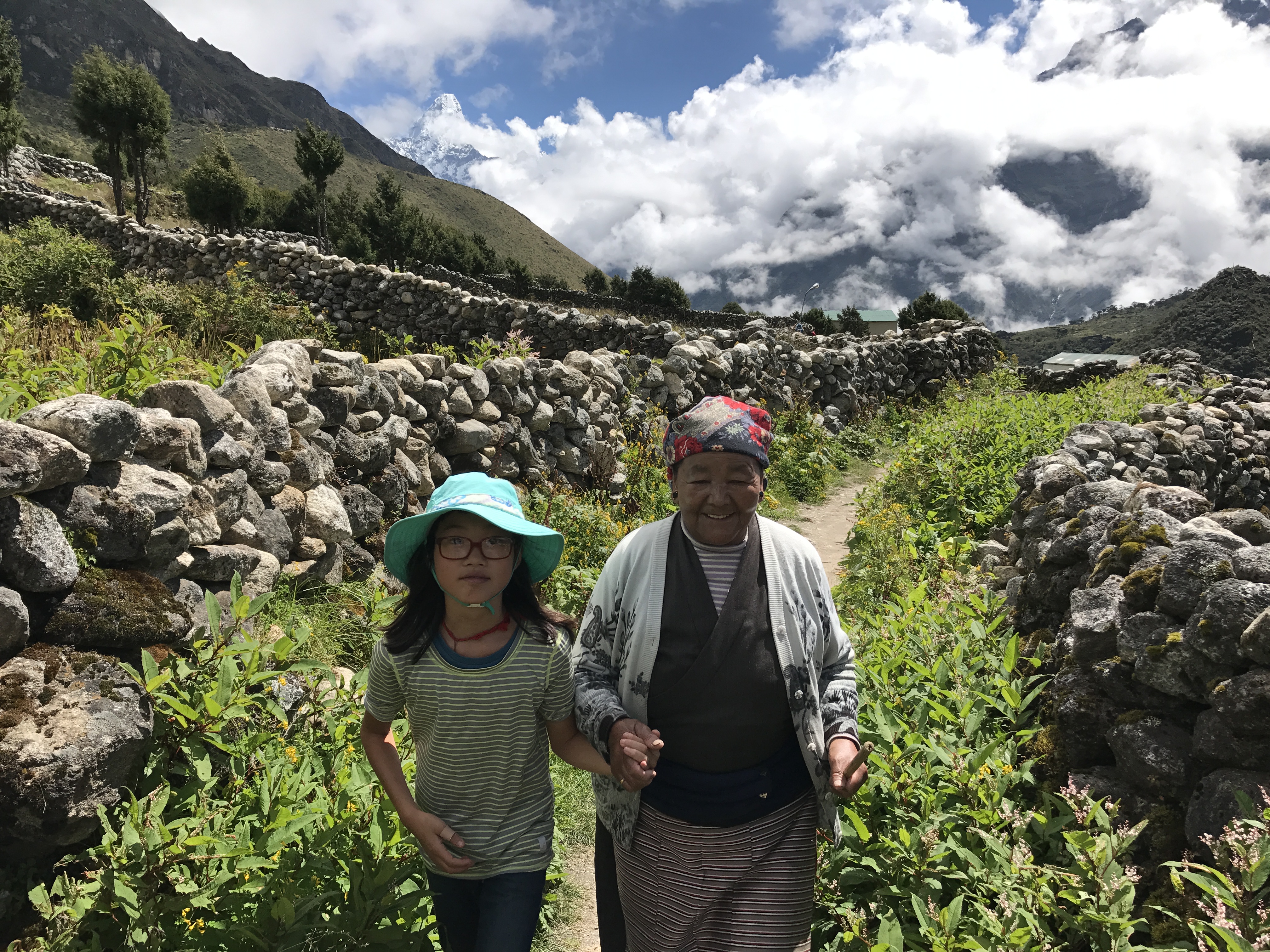
Solukhumbu, Nepal, grandmothers

This grandma can climb over 13,000 ft and chops her own wood.
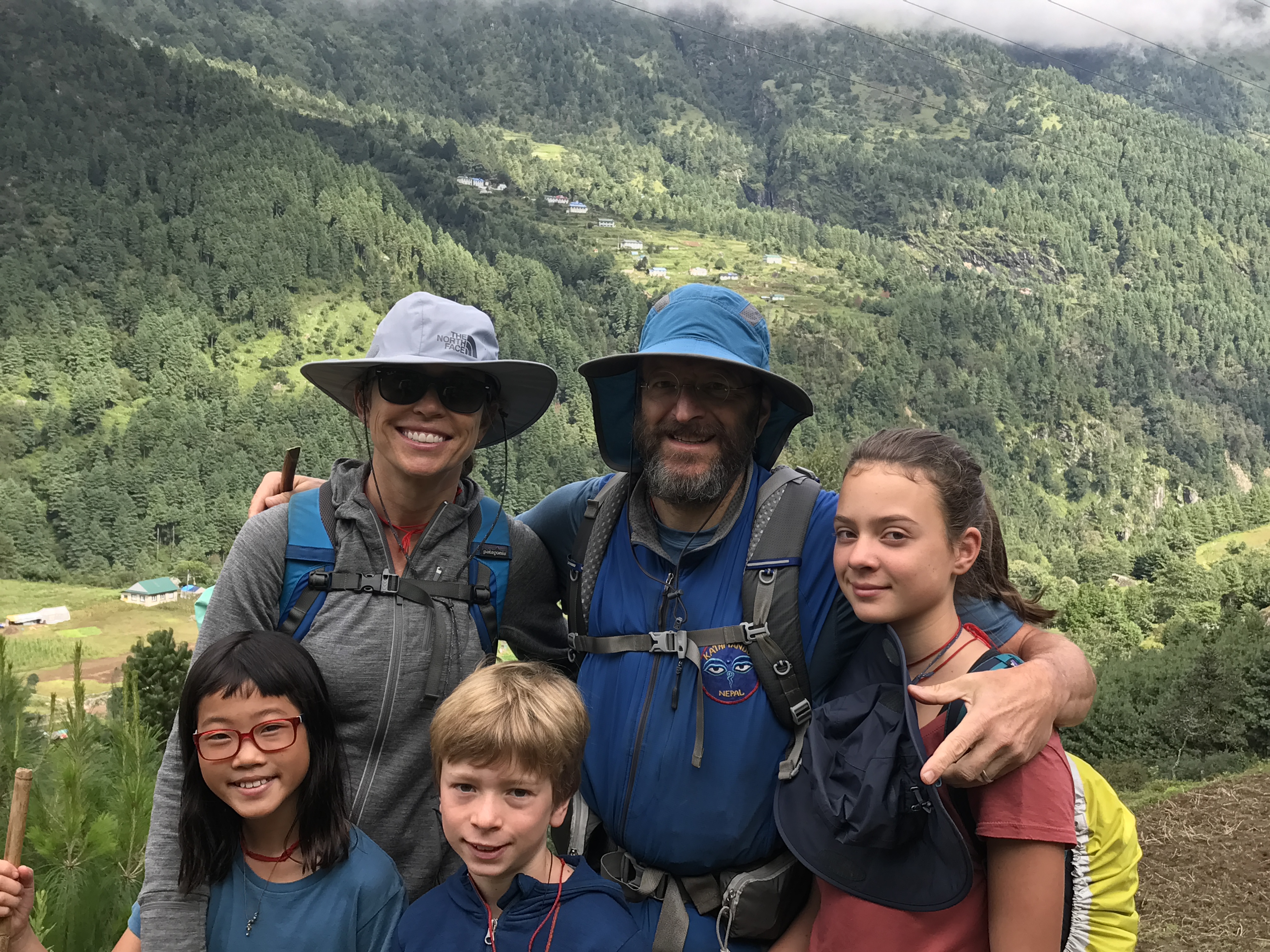
By Lorna Paradise, twelve years old, contributing to her family travel blog.  These are her impressions of Nepal after roadschooling and spending two months in Kathmandu, Solukhumbu and the tropical lowlands.

Nepal is not a very big country. In fact, the state of Colorado is bigger than the country of Nepal. But, Colorado does not feel very big to me, because I’ve driven around a lot of it. But, to me, Nepal feels much bigger, because I’ve walked across a lot of it. And, to walk across it, you have to walk up, up, up, cross a pass, then walk down, down, down. One day we walked over a twelve thousand-foot pass, and slept at four thousand feet. I personally think that’s kind of depressing. You feel so amazing for climbing over this pass, then you sleep lower then you started.  Here is a post about trekking with kids and another about our Sherpa homestays.family travel, Everest, tween blogger

Nepal is an amazing country in a lot of ways:

  • Nepal is sandwiched between two giants, and has been for more than two hundred years. It’s still its own country, somehow, without a stable government.
  • No matter what Nepali people have to give, they give it.
  • On one side of Nepal, you have the Terai at sea level: jungle, tigers, like India. On the other side, at nine thousand feet and up, you have villagers who are extremely lucky to go to school, mountains, yaks, suspension bridges, (I can say a lot more about this area cause I went here.) But these two extremely different places are within two hundred miles of each other.

    Khumjung, travel blog,

    We spent five nights here in Khumjung at 12,000 ft.

  • Somehow the villagers live with no fruit and very little veggies. To the extent that once we get back to Kathmandu, we eat all their fruit, all their fruit juice, and all their veggies.
  • the average Nepali knows 4 languages. 1)their ethnic group language,2) Nepali,3) English,4) Hindi. (For TV.)
  • Somehow doctors are allowed to go on strike.
  • The clothing is so colorful! Who cares about matching?
  • It has a ton of World Heritage Sites!
  •  It has so many cultures within its borders, all of which are celebrated with gusto ( that sounds really dumb, but I don’t know how else to say it)

We travel to China in 5 days. Nepal went by fast!! I loved it here, and now have some weird recommendations. (If you go to Namche Bazaar, stay at Nirvana Home Guest House.)

family travel, Namche, duo

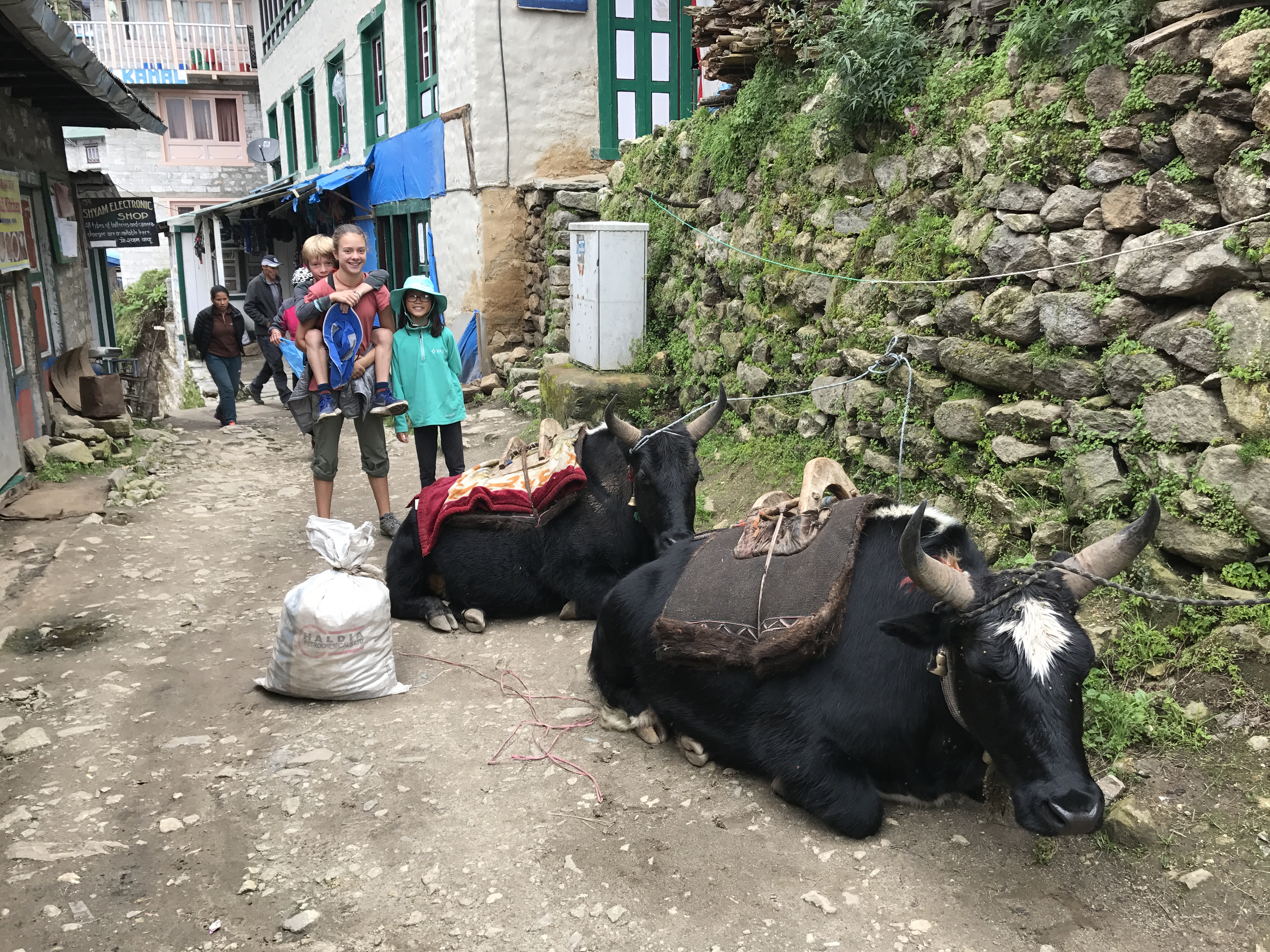
These are dzo’s (a cross between a yak and a cow). They carry the really heavy stuff to the market.

I REALLY miss friends, and things that are anything like home, but I’ve been so busy I haven’t had much time to think about it. My birthday is coming up. I’ll have it in China. Somehow I don’t think it’s gonna be anything like previous birthdays… I got to go paragliding in Pokhara as an early birthday present! That was awesome! Ive never had a birthday present quite like that before.

I’m ready to travel to China, and exited to see Kai and Lucy’s reaction to the fish market that neither of them remembers. You can also read about my first impressions of Nepal.

tween blogger, family travel, Nepal

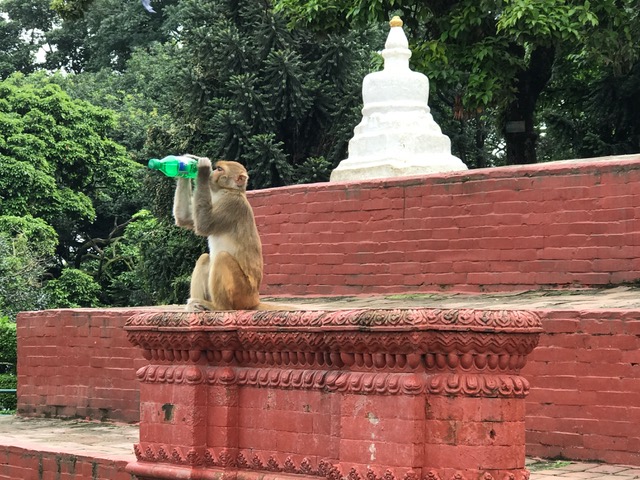
This monkey grabbed my drink right out of my hands and then bit a hole into the bottom to drink it!

When we pulled into Nirvana Home guesthouse in Namche Bazaar, I was most excited for a hot shower, a latte and some wifi.  But the true gem of our time in Namche was spending time with the presiding grandfather of the guesthouse, the Kancha Sherpa.  Truth be told, we had no concrete plans about places to stay.  We just followed our friend, Pasang Lama, to his old classmate’s place.

At first Kancha Sherpa impressed me because he is the last surviving member of the 1953 Hillary-Norgay summit of Everest.  (Around the Khumbu, you can’t swing a cat without a statue or reference to Sir Edmund Hillary and THE expedition that started it all.) Kancha waited with one other guy on the South Summit, just out of view of the tippy-top, for the two headliners to return.

At 85 years old, he is a bit of a local legend.  We gathered around the dining room’s “chimney” to warm up with some story time from grandfather.  The kids were into it.  This was road schooling at its best: learning from the source something that cannot be taught in a classroom.

Namche Bazaar, Kancha Sherpa, Everest

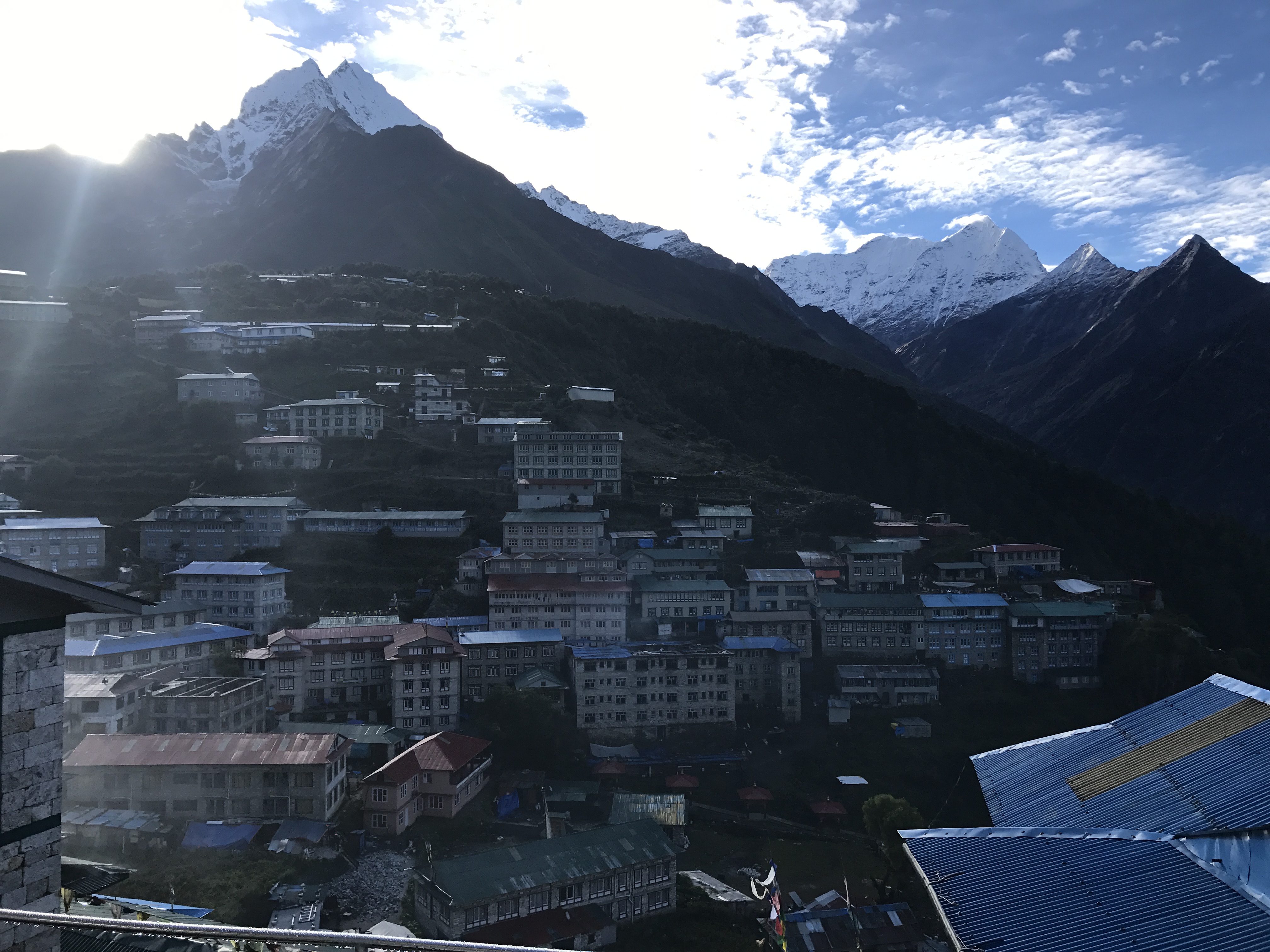
Namche Bazaar in 2017.

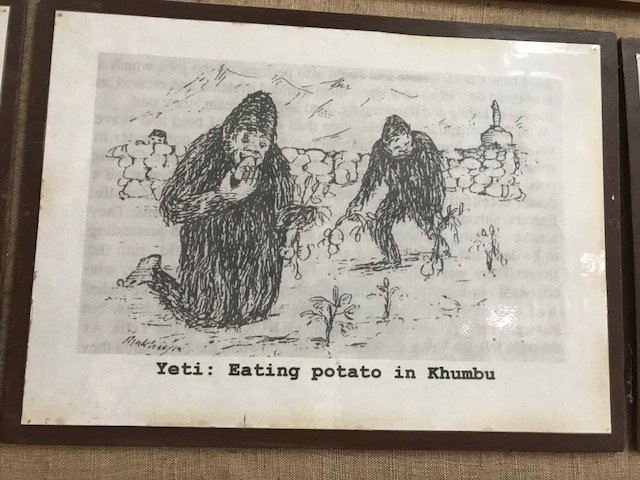
When Kancha was a child, there were just six houses in Namche and they would all band together, for fear of bears, to walk down to the stream for water.  When asked what other animals were plentiful back then, he said the yeti.  A “yeti” is like a extra-hairy big foot and many people in the Khumbu know someone who has seen one or been attacked by one.  Down in Kathmandu the yeti is more of a mascot – the symbol of airlines and silly tourist T-shirts.  But up high, he’s more real. There is even a yeti scalp you can see at a local monastery (for a fee).

yeti, Kancha Sherpa, Namche,

police sketch of a mischief-making yeti

As a young man Kancha Sherpa ran away from home to Darjeeling, India, in search of  work and an adventure.  Once in India, Kancha found his old Khumbu friend Tenzing Norgay, who hooked him up with a temporary job and eventually got him named on the Hillary Expedition.  The expedition walked with their gear from India, across Nepal and up toward Everest Base Camp – nothing like today’s quick flight to Lukla followed by a seven day walk.

His first impression of Hillary was: TALL, very tall.  But mostly, people revere Hillary because he never forgot the Sherpa people and spent the rest of his life as an ambassador of Nepal and, more specifically, the Sherpa ethnic group.  He funded the first school in the area, the hospital, most major building projects and more. (By the way, “Sherpa” refers to an ethnic group, not people who carry bags.  Those people prefer to be called “porters”.)

Kancha Sherpa, Namche, Everest, Hillary Expedition

Lorna with Kancha Sherpa

The girls and I stayed in a triple room up on the third floor of Nirvana and I thought we were the only ones staying up there… until the blowing of the conch shell down the hall on the first morning.  Then there was a drum.  Then there was someone pacing the floor with a mumble.  As I put my ear to the door, it was a low, “om mani padme om.”  I cracked my door to see him shuffle along counting his prayers on his prayer beads.  Over the five nights we stayed there, he did this ritual each morning and each evening.  He walked in a sacred circle around the town each day, praying for the freedom from suffering for all sentient beings.  Kancha showed the kids and I his prayer room, let us try out the drum and admire the letters from the Queen of England and the Nepali dignataries that were pinned to his wall.  Above and below the royal letters were the many photos of his wife, and some of his kids.  His daily routine included special prayers for his wife who passed just two years before.  He prayed for her safety and welcome in the spiritual realm.  He daily changed the water of seventeen bowls as an offering.  He had a tall daily to-do list and it was all truly for others.

Soon, he will spend the cold months with his son in Kathmandu and I wondered that he could still make the walk.  But no, he just tells the helicopter companies that he needs a lift and they get him the next free seat heading down.  His reputation (or all the good karma?) has earned him a VIP frequent flyer status.  Sometimes logistics can be that simple.

Kancha Sherpa, Namche Bazaar, Everest

One of the posters in the Nirvana Home Guesthouse

Just meeting a human, like Kancha Sherpa with one humble foot in the past and a mind so focused on the spiritual future, I was just as “roadschooled” as my kids.  The elderly here have a purpose – not a token value – but a true purpose.  They have the time and inclination to slow down and pray for us all, to remind us what it is all about from the perspective of age.

We loved our de facto homestays with Pasang’s grandparents.  First, in Thumbuk and then later in Khumjung.  We spent a total of ten days between the two villages with loads of trekking in between.  The kids voted Thumbuk the most peaceful.  Most exciting and Peace Corps-esque were the squat toilets, bucket showers and hand laundry.  Laundry, and getting it dry in the monsoon, was a group endeavor.

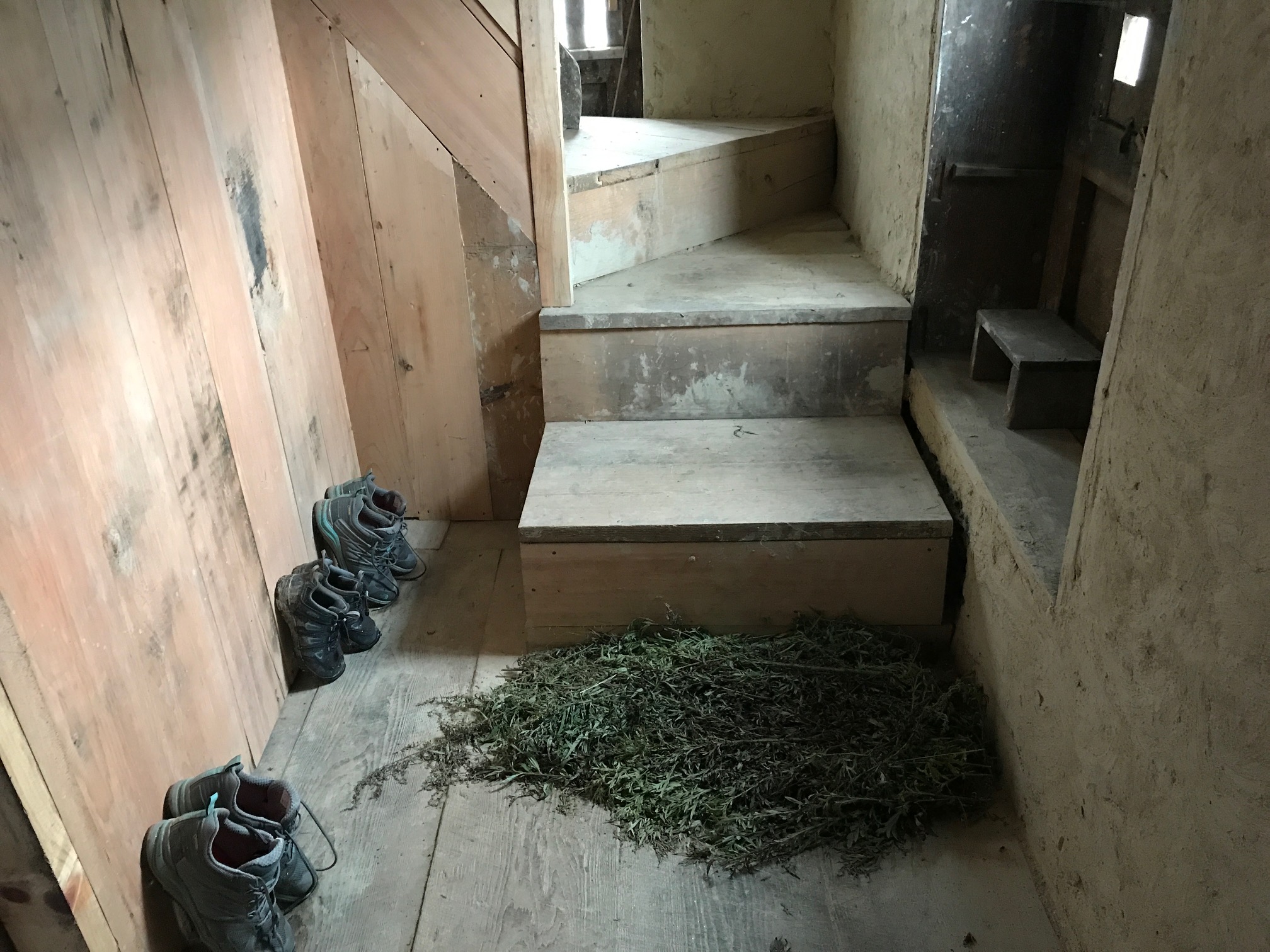
Sherpa doormats

The ingenious door mat is fragrant, compostable and locally made.

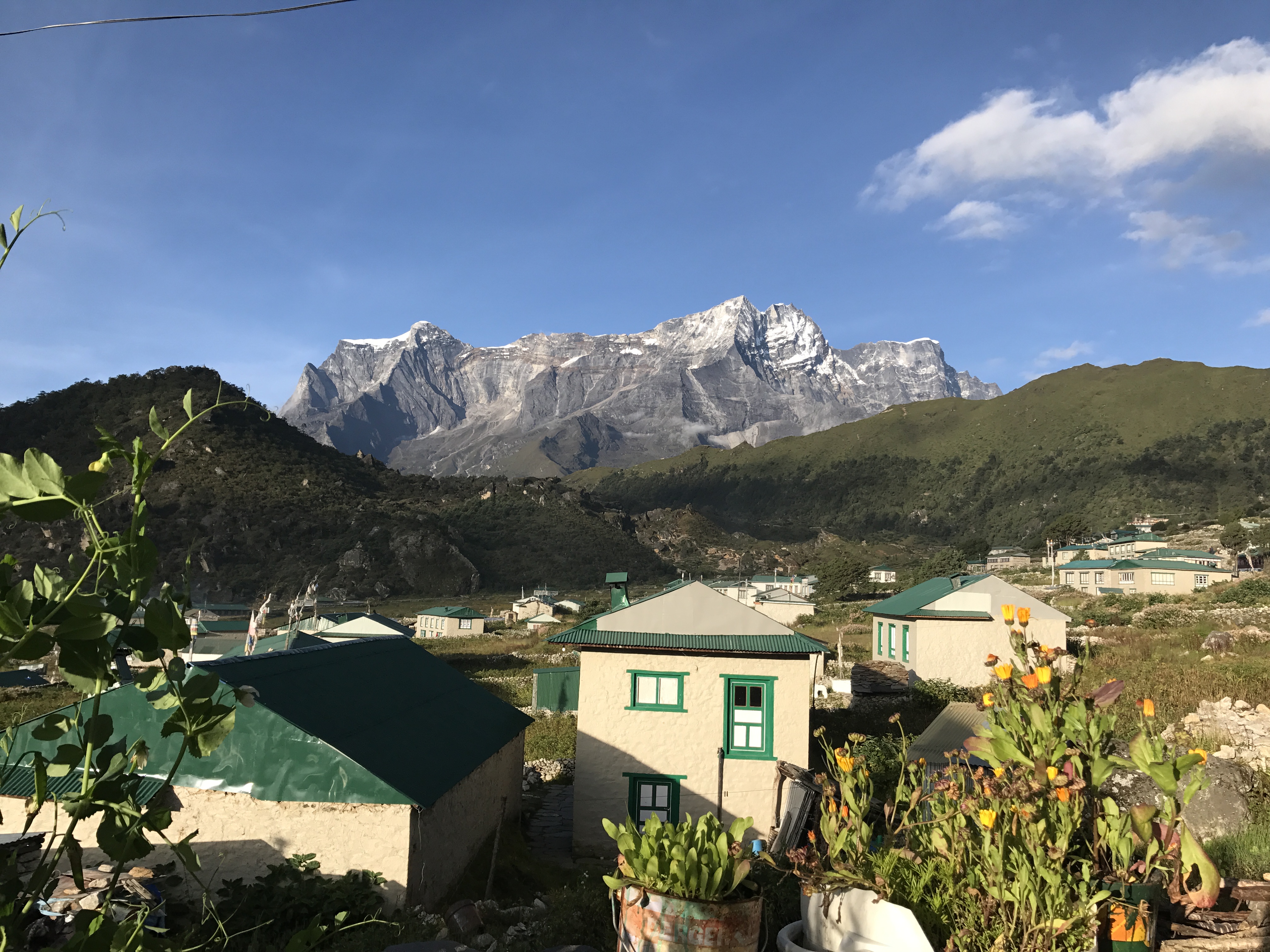
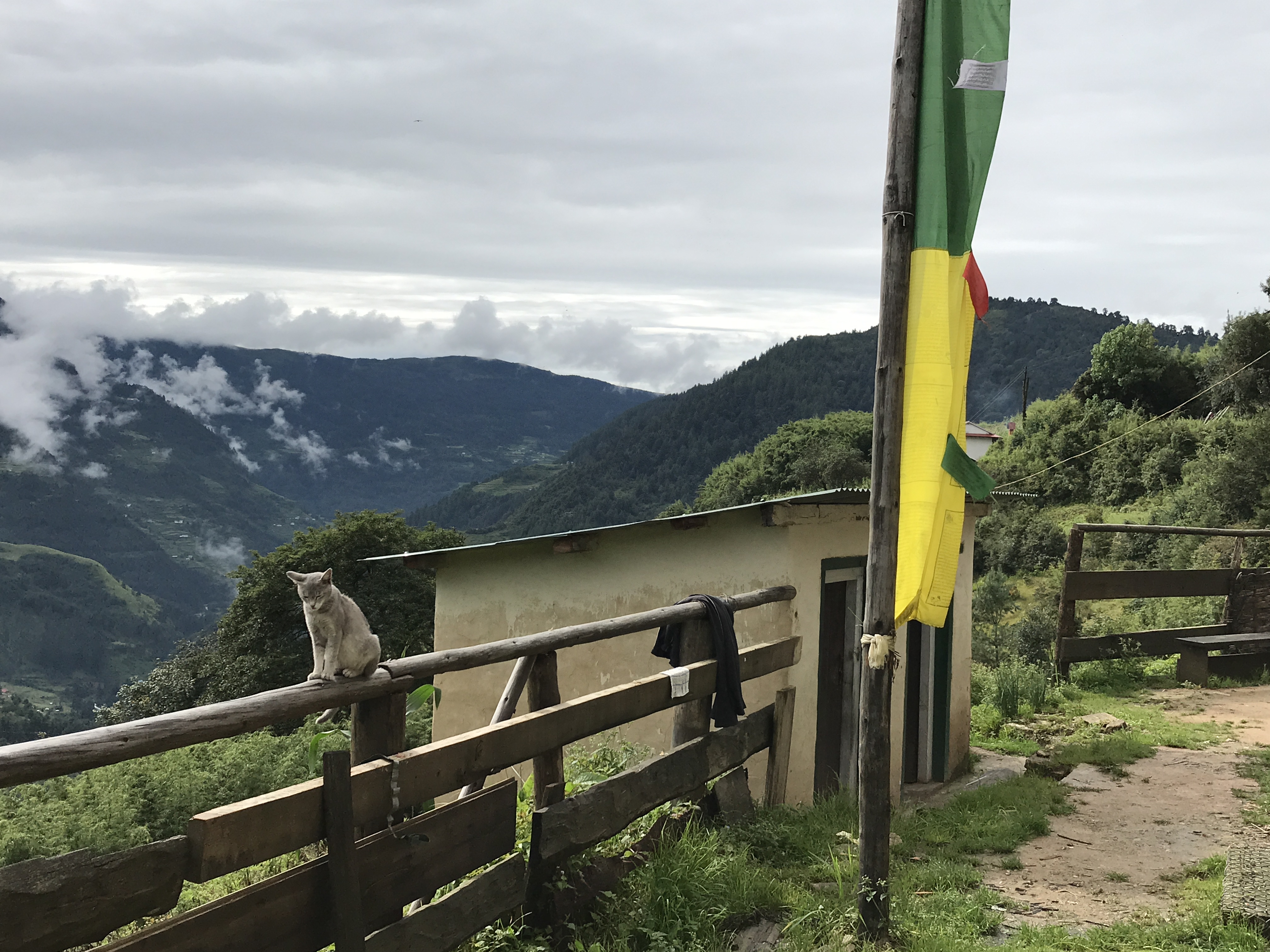
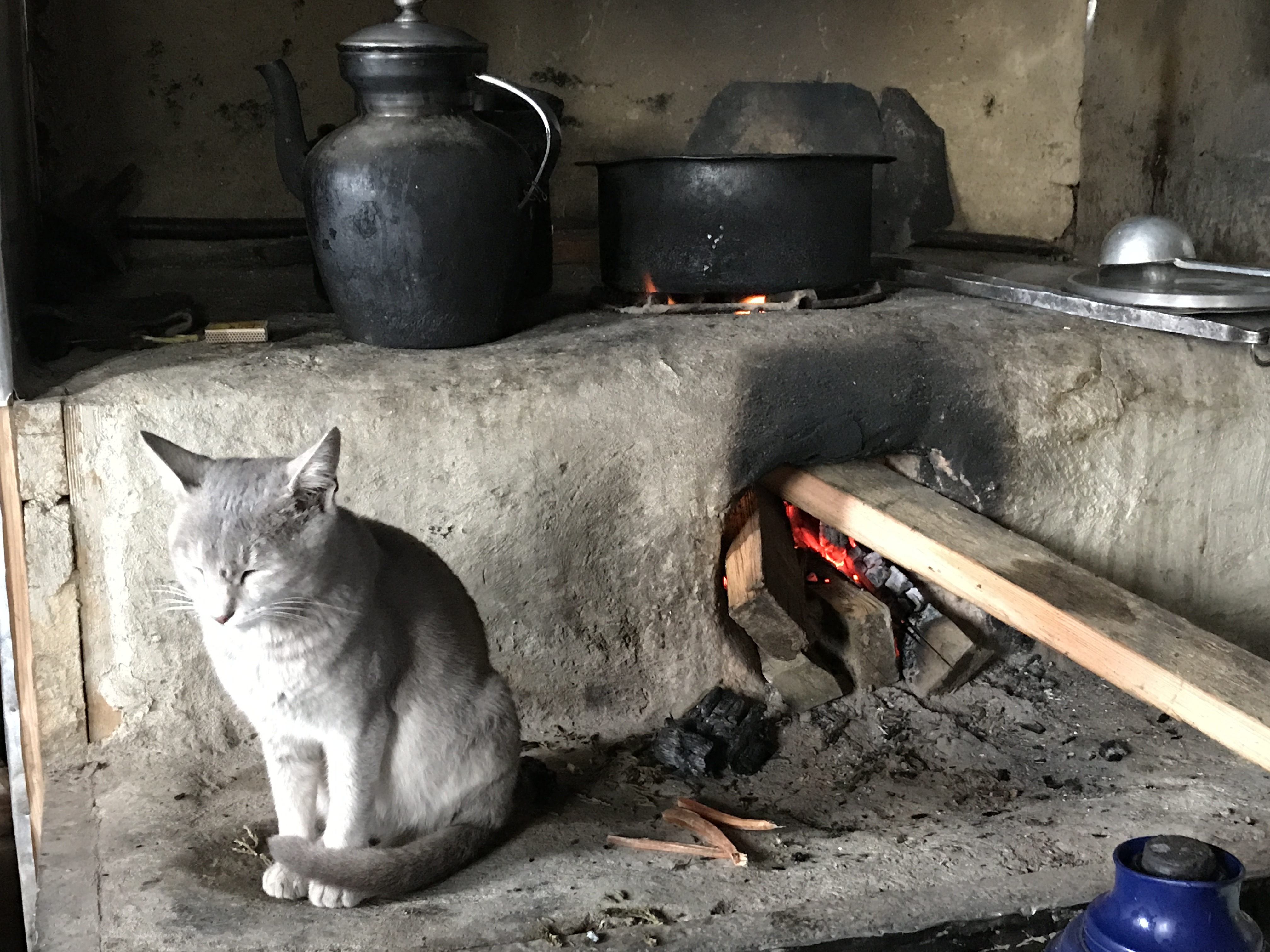
Sherpa homes have some distinctive qualities: colorful window frames, potato fields and blue or green roofs.  Some of my favorite touches were the gray cats curled up on the earthen stoves, the fantastic meals cooked from the simplest kitchens, the hired monks to bless the fresh-monthly prayer flags, the daily incense, the fragrant door mats but the absolute tell-tale sign is the tall Sherpa flags in the front yards.

Sherpa home

View down the valley from the front door. The defining Sherpa flag pole out front and the detached bathroom.

Pasang’s father’s family lived in Thumbuk which is a small village with a gompa, monastery and a small K-4 school.  There is no wifi, no road, nor store to buy staples, but they do have wild pepper tress, pines and herb gardens making any walk through the village an aromatic adventure.  The 2015 earthquake caused significant damage here and our adoptive grandparents in Thumbuk spent a year living under a tarp and wood shed until their house could be rebuilt.

travel with kids Nepal

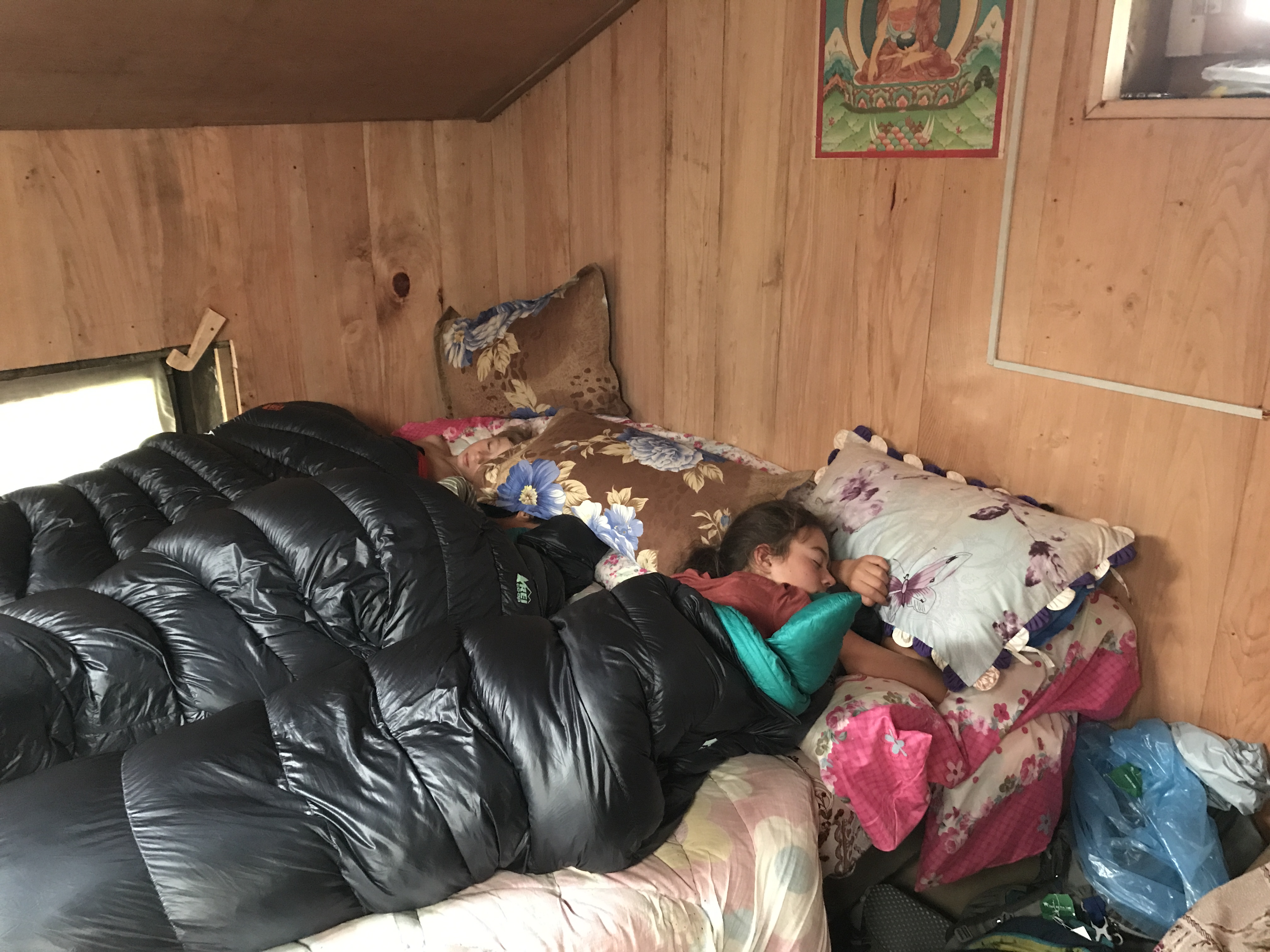
Our cozy upstairs quarters.

Most meals are farm-to-table at their finest.  We helped grandmother dig some potatoes and had them boiled up with chili-pepper sauce for dinner.  Garlic chives, cilantro and wild pepper season just about every meal. (These local peppers are a mix of our black pepper and spicy pepper and more than a quarter teaspoon with make your mouth totally numb for about five minutes.  Will and I were slightly obsessed and urged each other on with the pepper sauce.)  The whole wheat flour is grown locally, milled locally, and helped make our chapatis, momo’s and dumplings for Sherpa stew.  Bring on the gluten!

Sherpa travel with kids

Chimi, the cat, always staying warm by the stove.

All this time without connectivity, mirrors, stores or roads is some of what Will and I were hoping from this gift of a year away.  The daily simplicity of our Sherpa home is what so many Americans crave.  There’s an excuse to be unresponsive on email and the only to-do list is taking care of what’s important: food, family, friends and maintaining health.