
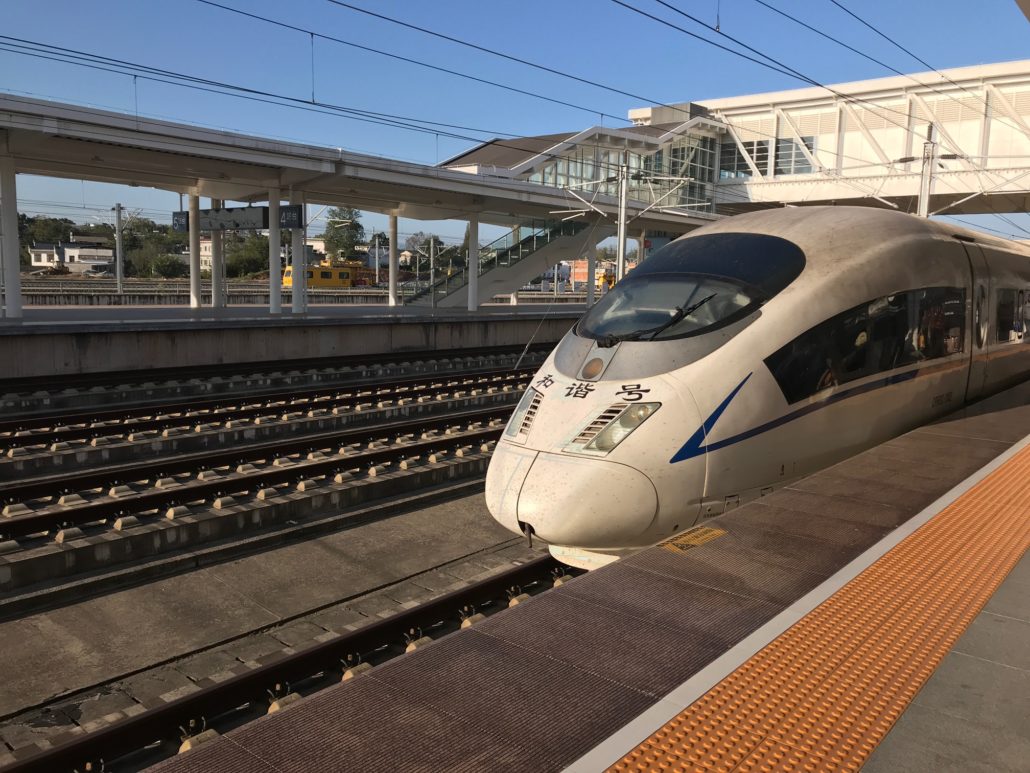
We officially love the train as a mode of transport and took five extended train trips to kris-cross China. By taking different types of trains, we could interact with the different socio-economic groups in China and see more of the countryside than we could have in a plane.
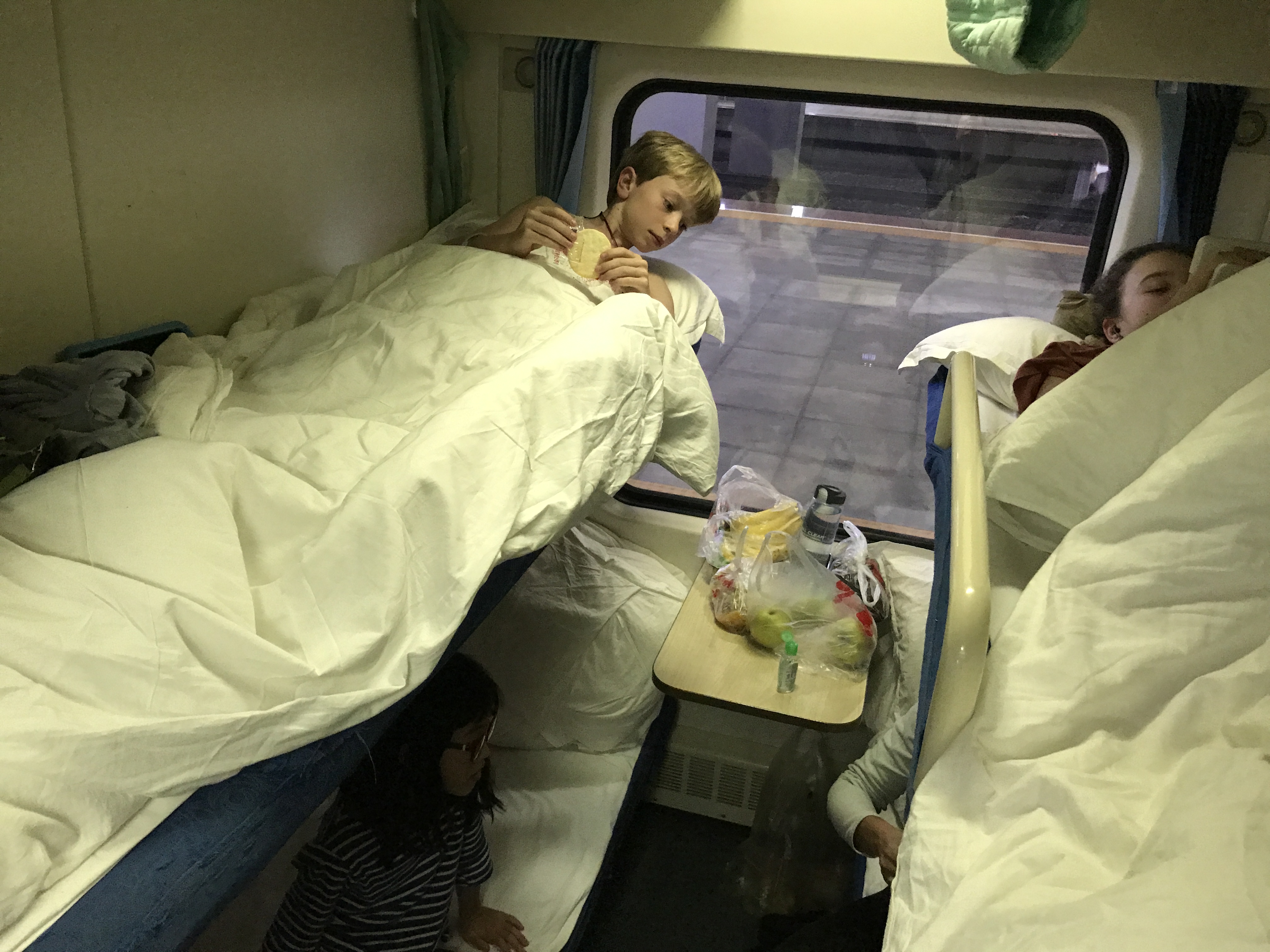
Waking up on the overnight train: lots to learn about Chinese geography just by looking out the window.
Overnight Train
From Chengdu to Beijing, we took a 23-hour overnight train. That sounds long, but actually, it was quite painless. Fun even. We all had a bunk with sheets, pillow and comforter. Everyone slept soundly. We did our roadschool math, journaling and even had some time for reading, movies and card games. Squat toilets on a jostling surface is a bit like surfing but with more intense consequences.
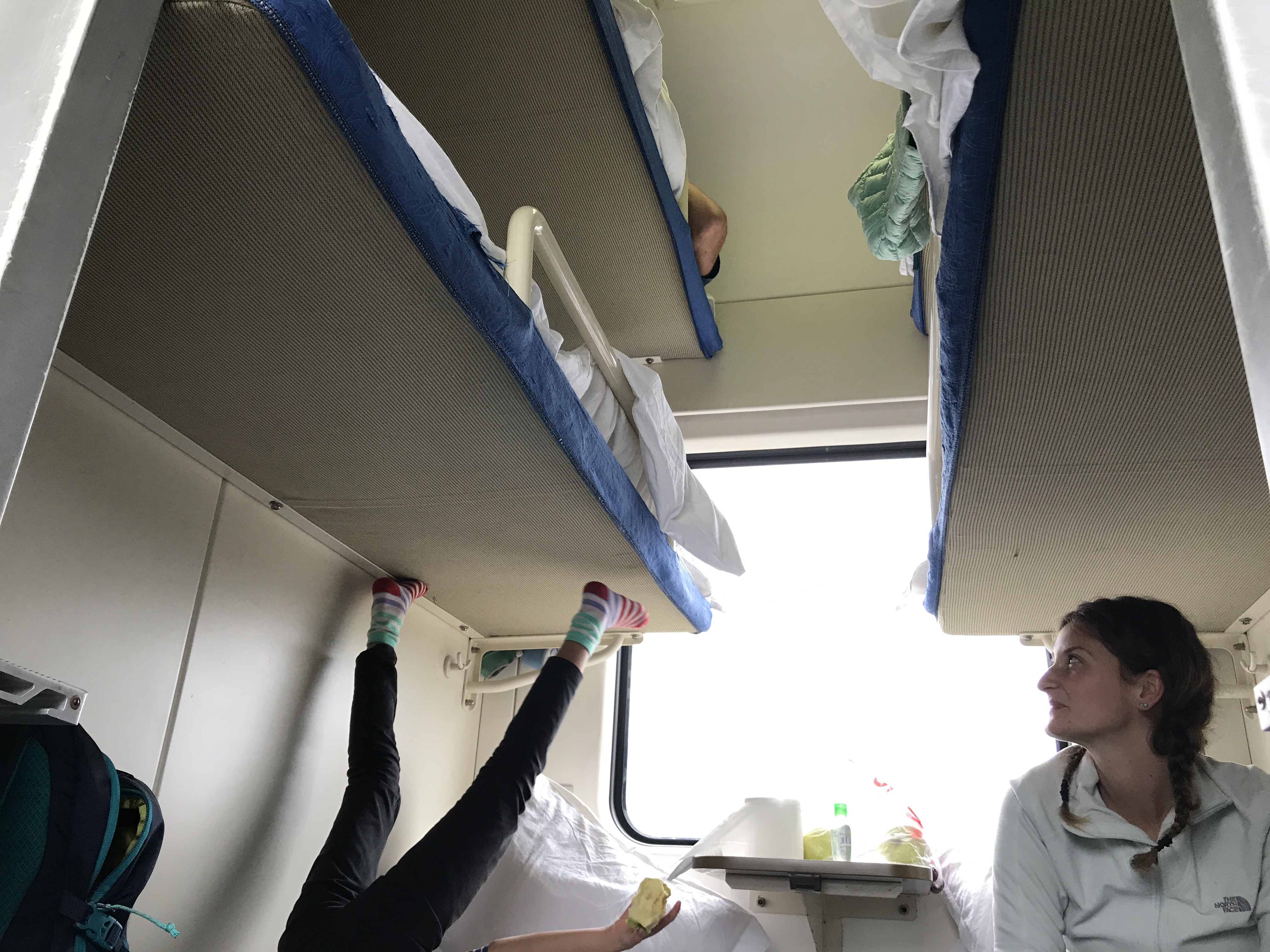
Six bunks in one compartment without a closing door, but we all slept well, felt safe and stayed healthy!
High Speed Trains
For the rest of our time in China, the kids asked to take another slow overnight train, but mostly we took the high-speed trains which had few stops and maxed out at 304 km/hr. (186mph). Our first high-speed train, from Beijing to Shanghai, had clean sit-down toilets, toilet paper and only took 4.5 hours. This felt like a huge step up from the slower and more basic train service. From Anhui Province, back to Guangzhou we had a large group of Cantonese speakers in front of us and the volume at which they spoke was insane! I was sure they were in an argument.
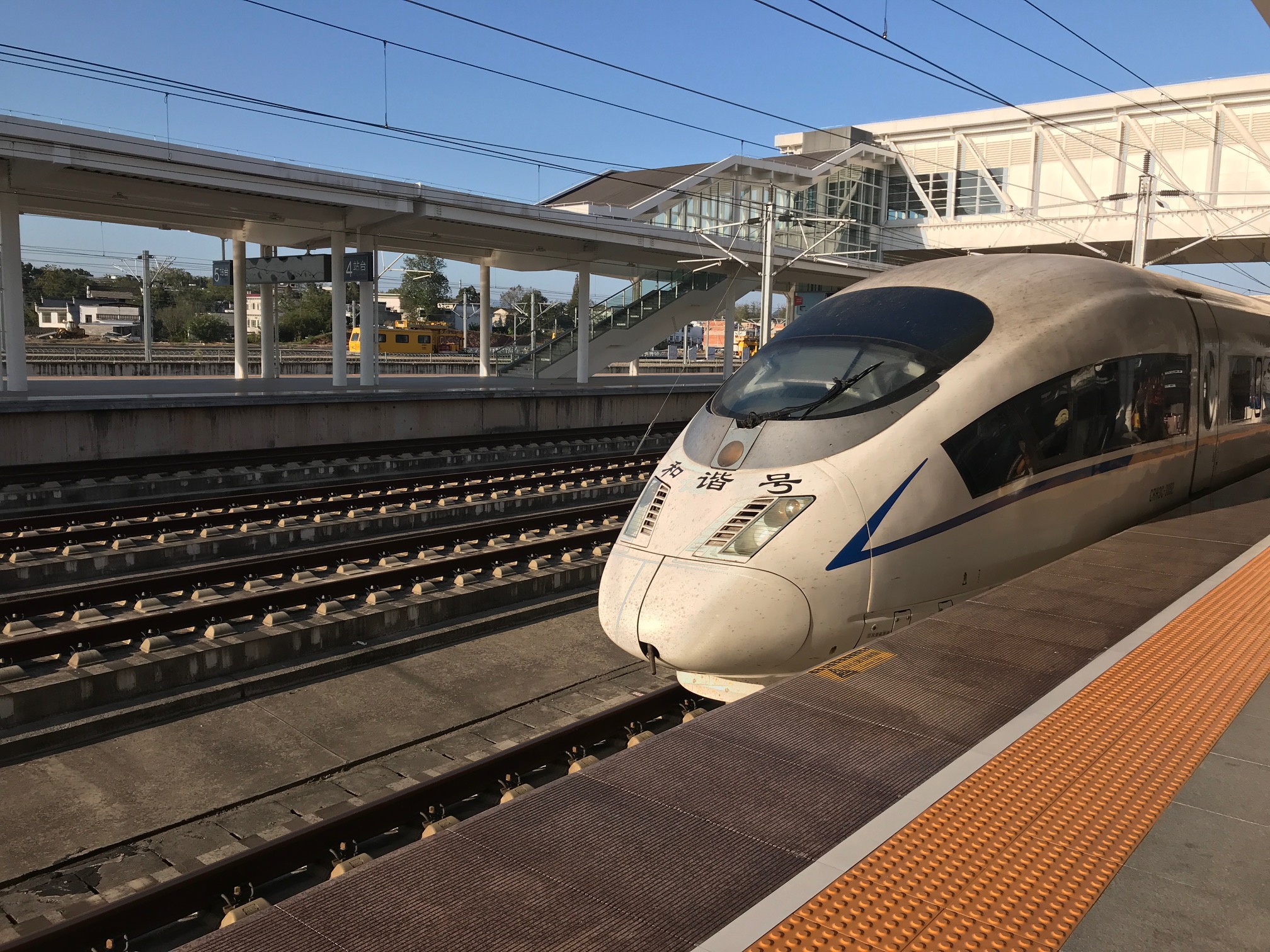
This speedy train goes close to 200 mph!
Security
There is a security check point similar to an airport to get onto a train with X-rays. If there is any water in your water bottle, they ask you to take a sip while they watch. You are screened once again when you get off the train. Once seated, they come and check tickets and passports again; we even had a special policeman enter our cabin to go through all our luggage by hand. (Probably because this coincided with the five-year Communist Party meeting and there was extra scrutiny.) You also need to present your valid ticket to exit the train station.
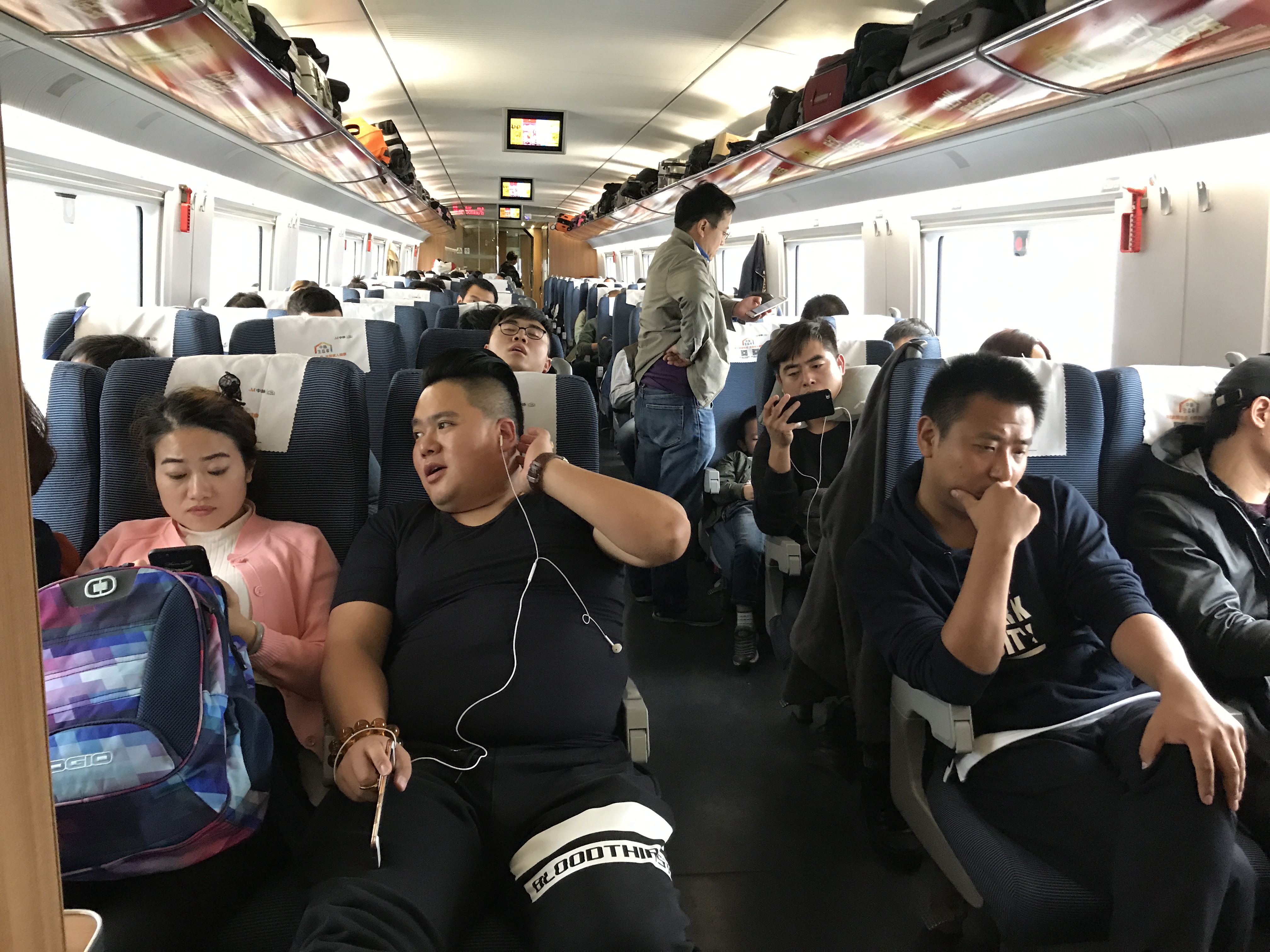
The interior of a high-speed train. There’s free Wi-Fi if you have a Chinese phone number.
Train snacks
This is a huge part of the Chinese train experience. People load up on snacks to bring and once, we even saw an old couple with a bamboo pole between them loaded with plastic bags of snacks. Most popular snacks include: noodle soup, sunflower seeds, endless cookies/crackers and chicken feet. Other crazy ones are dried squid, meat bones eaten with plastic gloves, Peking-Duck-in-a-Bag, and pomelos (like a grapefruit, but almost the size of a volleyball here.)
We had offers of train snacks from others and we offered ours – a great way to break the ice. The end of each hall has hot water on tap for the thermoses of green tea or to use as drinking water. This was another line-up and place to interact. Much to my dismay, good coffee is nowhere to be found.
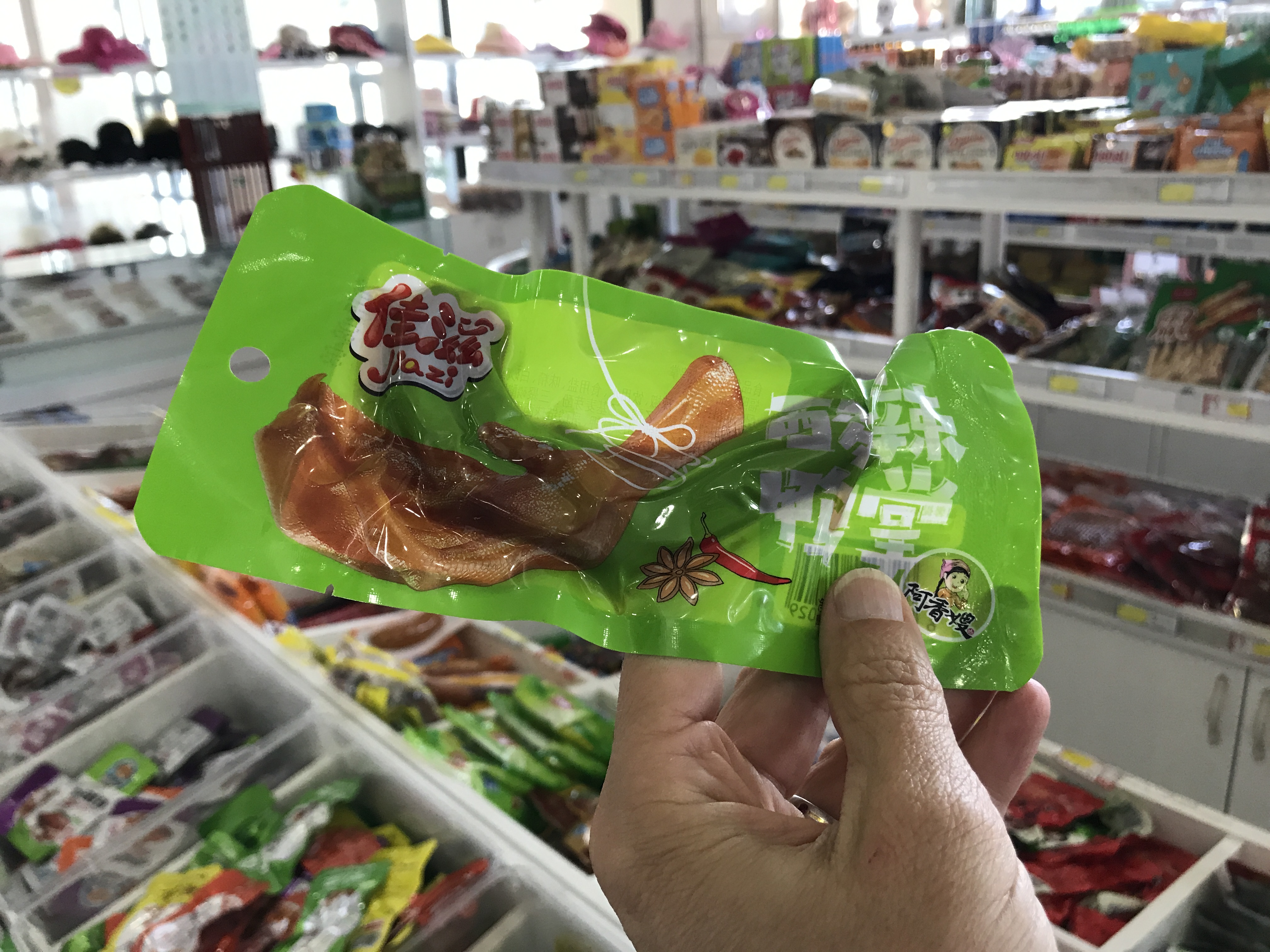
Chicken feet are a super-popular train snacks, especially for women. They believe that sucking out the tiny bits of meat from the bone helps promotes collagen.
Train Roadschooling
It’s sometimes difficult to get kids to look out the window, so you can make a Bingo Board or scavenger hunt list in your kids’ journal. (Popular prizes / bribes include an ice cream cone or train snack of choice.)
- Train Bingo: draw a BINGO board in their journals ahead of departure and make it age/ability appropriate: a Chinese Flag, a bicycle, farmer in the fields, Western-looking model in an ad, construction crane, demolished building, tunnel, hydro project, a bird, a boat, drying laundry, a building taller than 30 stories, etc.
- For a scavenger hunt: describe the most exciting train snacks you see, find five products that are being advertised inside the train, describe the differences between the old houses you see and the newer houses.
- To really learn something about the agriculture you might need to ask for help: find five different kinds of vegetables being grown in view of the train tracks.
- And our required acitivity on each train trip was to do a free journal entry and thirty minutes of math. (Don’t glue the train ticket in the journal until after you get off. You will need it to exit the train station.)
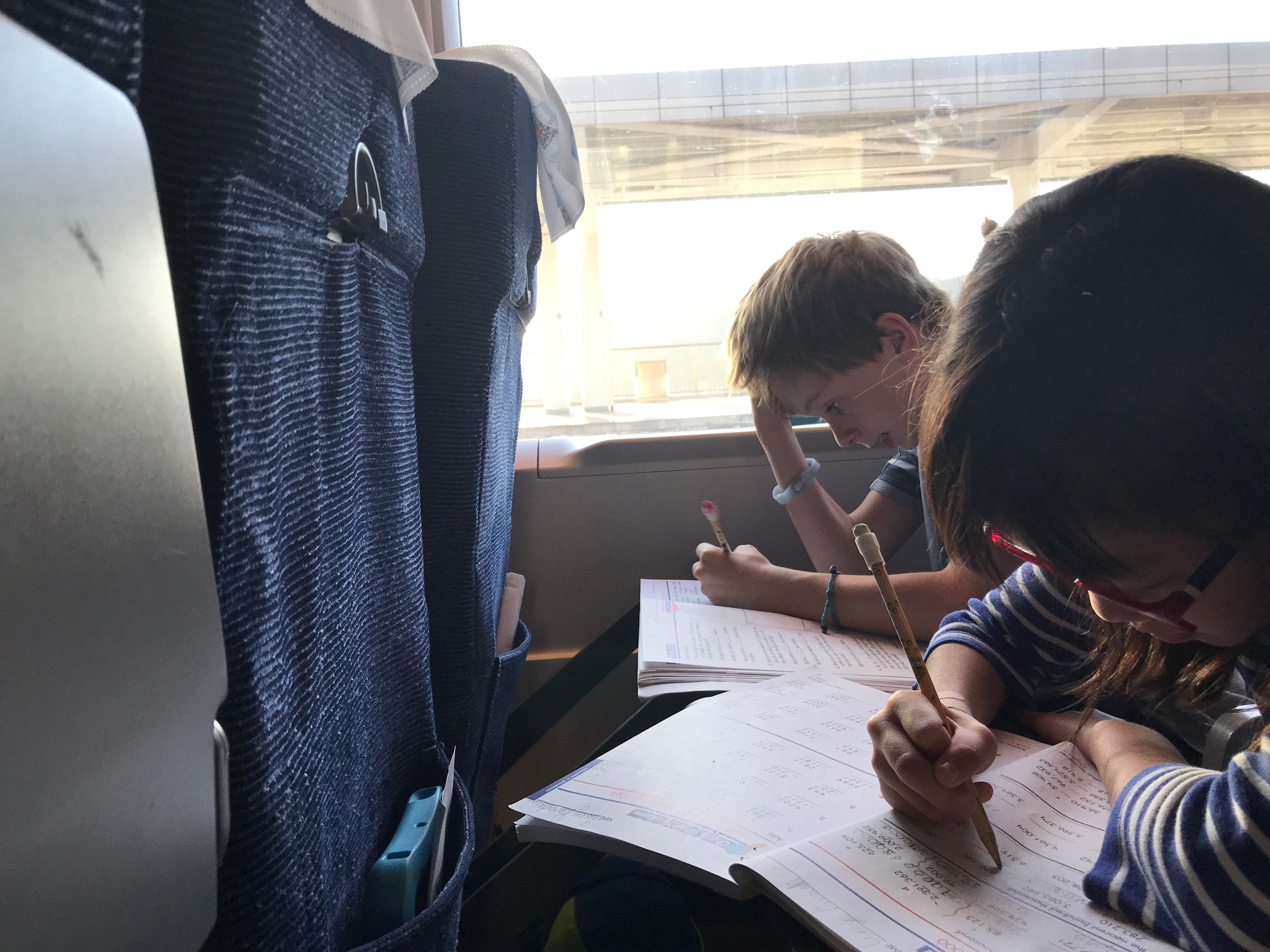
Train trips are the perfect classroom to get math work done before journaling and reading.

