Thailand is an exotic, culturally rich and family-friendly destination.  The distance and heat can be daunting but with some forward planning, these family travel hacks can create an unforgettable trip to Siam and the “Land of Smiles”.  As a mom, former Southeast Asian Travel Guide, and US Peace Corps Volunteer this is my list of Do’s and Don’ts when planning a family trip to Thailand and could easily apply to all of Southeast Asia.

Here’s a link to my travelogue about our recent trip.https://travelswithparadise.com/thailand-coming-home/

This list assumes that you will arrive into Bangkok but you can easily adapt the ideas if you land in Chiang Mai or Phuket.

Chao Praya River, long tail boat, family travel, Thailand, Bangkok

Kai, 9 years old, drives the long tail boat in Bangkok on our first day in Thailand.

Do

Prepare For Jetlag

If you are traveling to Thailand from the United States, you are looking at over twenty hours in the sky and a twelve-hour time difference.  Prepare for it and even use it to your advantage.  On day one, stay up as late as possible and do these four easy, gentle safe activities.  1) Visit Wat Pho which is less hectic than the Grand Palace but will still wake you up to the fact that you are now in the Kingdom of Siam. 2) Take a canal tour – you can rent a private boat at the pier (Tha Thien) behind Wat Pho for less than $30 for two hours, taking you along the canals of this “Venice of the East”.  There just may be a floating saleswoman to sell you some snacks and the kids may be invited to drive the boat.  3) Get a foot massage near your hotel and 4) Grab some fruit at fruit stand and try some wonderful new fruit.  There will be some you’ve never seen before.  Some fruit sellers will cut it right on the spot. Fruit cutting is an art form here and is a mandatory subject in public schools.  If you find your family up at odd hours, go out and enjoy the early morning. Look for the monks on their alms rounds. It still happens between 6-8am.  (Please keep a respectful distance.) Or take a late night tuk-tuk ride. See below. Or explore mall life that doesn’t fade until 10pm. (See below) Don’t go out past 10pm with kids though – especially near Soi 21 or Patpong neighborhood where your kids may have a LOT of tough questions.

thailand, family travel, worldschool, worldshcooling

All of a sudden, I was the only one awake!

Splurge for a Pool

Thailand is hot and humid.  Your body will need some time to acclimatize and end of the day swim can be the difference between happy campers and cranky kiddos.  Many hotels or Airbnb’s have pools where your kids can cool down and meet some other kids.  Make you’re sure your accommodations look kid-friendly to avoid the annoyed honeymooners.  Or, if you don’t have a place with a pool, shower often.  The locals usually shower morning and night.

Prepare for prickly heat

“Prickly heat” is a skin rash that commonly happens to foreigners arriving here usually in the first few days before they acclimatize to the heat and humidity.  It’s a harmless but uncomfortable rash and kids are more susceptible. Again, get in the habit of showering often to help prevent this. I highly recommend buying some powder either before you leave or after you arrive.  And even if you don’t get the rash, the powder is fantastic after a shower. Here’s a link to the best one. Prickly Heat Powder

Thailand, Ayuthaya, bicycle, family travel, worldschool

Renting bikes in Ayuthaya. It was hot and the brakes were iffy, but it was by far the best way to tour the ruins.

Find activity outlets

My kids have a hard time calmly listening to a tour guide without being able to move.  We enjoyed using bikes to explore.  My kids on a bike in a city of 8 million, what?I thought the same thing, but the bike tours are usually on safe, back alleys and not in the center of the city.  Many companies use tag-a-longs or child seats.  We especially enjoyed Grasshopper Tour Company.  Their Bangkok tours include a shadow puppet show and their bicycles and helmets are properly fitted and perfectly maintained.  On a Grasshopper tour, your kids will learn a ton with lots of physical exercise in between.  There are many independent cycle rentals at the ruins of Ayuthaya and Sukhothai but the maintenance may be dodgy at best.

Shopping is a cultural experience – embrace it

Thai people view shopping as something like a national sport. From local markets to megamalls, trade and commerce is alive and well here.  If you know the numbers or like to use a calculator for translation, anyone outside of a mall appreciates and expects you to bargain.  If you are in a modern mall with a price tag, it is fixed price. Our favorite shopping places are the weekend market, Chatuchuk, in the north of Bangkok, Terminal 21 (especially the food court on the top floor that has great a great vegan stall) on Soi 21 and EmQuartier on Soi 35.  EmQuartier has 2.5 million square feet of retail space and a five story waterfall.

Bangkok, mall, travel with kids, Thailand, world school, road school

Here is a build-your-own flip-flop shop in EmQuartier. These mega malls will blow your mind and great for ‘tween travelers.

Embrace the Eating

One of the best reasons to visit Thailand is the food. On the well-worn tourist path, you can eat pizza and pasta for every meal.  But I hope you don’t. Here are some local, kid-friendly options.  First, try pad thai for real.  It will probably taste different from the pad thai at home.  Second, try mien kam.  You’ve probably never seen this, but it’s super fun for adults and kids alike.  You put little pieces of toasted coconut, shallot, ginger, dried shrimp on a broad leaf; top it with some sweet sauce, then bundle it up and pop it in your mouth.  YUM. And the third must is khao niew ma muangor mangoes and sticky rice: mangoes ripen all year round now and I wouldn’t be bashful to buy these right off a street seller.  And lastly, kanom krok: a coconut dessert that is cooked on the street in a massive skillet with small half-moon divots, like a smaller sized egg poacher.  If you’re lucky, they will still hand it to you warm in a banana leaf.  If you start looking, you will see these treats everywhere. (All of the above can easily be vegan and gluten-free.)

Mien Kham, Thailand, Thai food, family travel, Bangkok, Laos, road school

Here is Mien Kham! Put the pieces you want into a leaf, bundle it up and pop it into your mouth. Kids love it and a great way to eat healthy food!

Visit a Thai temple like a pro (link coming soon!)

Take an overnight train

The best ones go from Bangkok to Chiang Mai or Bangkok to Trang in the South.  They are safe, clean and a great experience.  Definitely bring eye shades as they don’t turn the lights off and the top bunk can be intense.  You can buy tickets online from these two reputable ticket sellers.  www.asia-discovery.com or www.thailandtrainticket.com. You can book ahead, and they will deliver your tickets to you in BKK.  Definitely a highlight for my kids.

Plan down time

Thailand is a sensory experience and some planned down time will help your little ones digest all that they have seen and experienced. If you are at the beach or up in the mountains, you can just spend a day swimming, writing in journals, reading a book and eating great food.  Down days can include trying some Thai massage.  You should always be in an open room, fully clothed for traditional Thai massage.  It’s fun and kid-friendly.

Seek out alternatives to the packaged tours

This can be hard without someone who speaks the language, but you will see a more gentle, more authentic side of Thailand if you forego the packaged tours.  Find a boat driver and ask him to take you to some islands or find a private guide.  Maybe your hotel can help arrange it.  Thai people are their least charming on large packaged tours.

Krabi, Thailand, Longtail boat, family travel, road school, worldschool

Our long tail boat to Railay and snorkel Chicken Island in Krabi. We paid under $100 for a …three hour tour.

Ride a tuk-tuk at night

Your kids will be begging you to ride a tuk-tuk and you should; they’re fun.  But stuck in traffic on a hot day, they are not fun.  Try doing this later at night when a good driver will make this better than any ride at Disneyland.  Be warned: there are no seat belts, nor helmets and kids should be on the inside, with parents on the outside of the tuktuk.  Do this at your own risk, but if you’re up for an adventure, I highly recommend you do it.

Count spirit houses as a way to pass the drive time

It can be a challenge to help kids with their boredom in a long car ride.  And with their nose in a book there is so much they are missing outside their window.  I started asking them to count spirit houses and it turned into a great game; one that the whole family could get into from both sides of the car / taxi.  Once you know what to look for, spirit houses are everywhere.  You may even pass spirit house stores and need to use some estimating skills as you zoom by.  Thai people erect spirit houses just outside their homes as a way to keep wandering ghosts from entering their homes.  They are made to look enticing and always have fresh water, flowers and food.  This is not a Buddhist tradition but one that predates Thai Buddhism.

spirit house, Thailand, family travel

This is a Bangkok spirit house with fresh offerings.

Don’t

Don’t plan lots of outdoor activity for the middle of the day

You and your kids will enjoy more of Thailand in the morning or evening. Mid-day is hot and sweaty.  Plan your day around it.  Do like the locals and use your umbrella to make your own personal shade.

Don’t try to drive a car

Driving is the most dangerous thing you will do in Thailand.  Accidents happen. Download the app, Grab.  It’s a Thai Uber. We took one all the way to Ayuthaya, an hour and a half from Bangkok for slightly more money than the train.  Take a taxi, train, skytrain, or fly.  Try to avoid the white van ridesand don’t drive yourself. Outside of the beaten path, signage will only be in Thai.

Don’t ride and elephant or pet a tiger

Read Lorna’s blog post.  Elephants perform because they are forced to perform.  Wild elephants don’t paint pictures with their friends in the forest and tigers don’t like to be pet like kitties.  Ask yourself if this seems like normal behavior for a wild animal before deciding to visit such places.  Do some searching on Youtube.  There are plenty of sanctuaries where you can enjoy and help the animals of Thailand at the same time.

elephant nature park, Chiang Mai, Thailand, family travel, world school, road school,

Elephant Nature Park in Chiang Mai will let you get up close and personal to rehabilitating elephants. Kids will love to care for them and won’t miss the ride.

Don’t be scared of the Monsoon

School holidays will align with Thailand’s rainy season or “monsoon”.  In the past few years the season’s timing is less reliable, and you may miss it entirely.  Some link this variability to climate change, but who knows.  Bring umbrellas (or buy them there) and plan to get wet. It’s less crowded in monsoon.  It’s also cooler, more exotic and you can watch the ways in which this corner of the world adapts to lots and lots of water. Typically, the rain happens in the afternoon so plan your flights for the morning.  It won’t rain solidly, I promise.

Ockpoptok, Luang Prabang, Laos, weaving, loom, family travel, world school

Here is Lorna and OckPopTok in Luang Prabang. In two days and with the help of her private instructor, she made silk place mats on this authentic loom.

Favorite spots in Thailand

Bangkok – the best big city in the world!

Ride bikes Ayuthaya or Sukhothai

Krabi: find the boat pier and ask for your own three island long tail ride that includes Chicken Island

Trang Islands

Elephant Nature Park in Chiang Mai

Mae Hong Son

Nong Kai

Ockpoptok in Luang Prabang (actually that’s Laos but PLEASE include it in your itinerary)  You can catch a flight from Chiang Mai, BKK or Phuket, OR take the slow boat from Chiang Rai.

And finish in BKK on the weekend to buy your final souvenirs at the Chatuchuk weekend market and visit the vegetarian restaurant there run by the Buddhist community, Santi Asoke, just ask around.  We gave the kids each $20 to buy some fun stuff.  You can buy nearly everything you see around Thailand at -some say – this largest market in Asia…  Lots of blogs our there written about it.
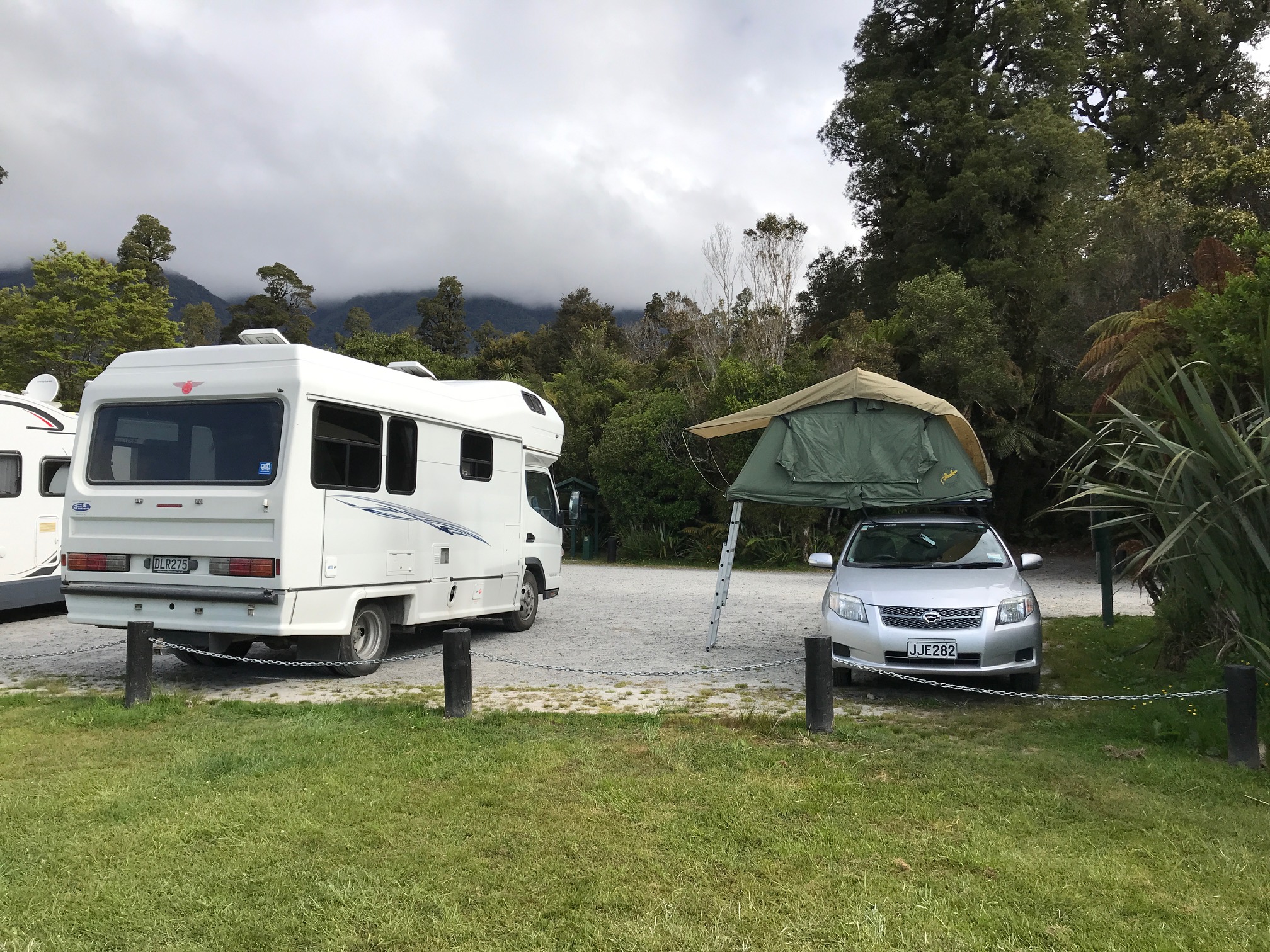
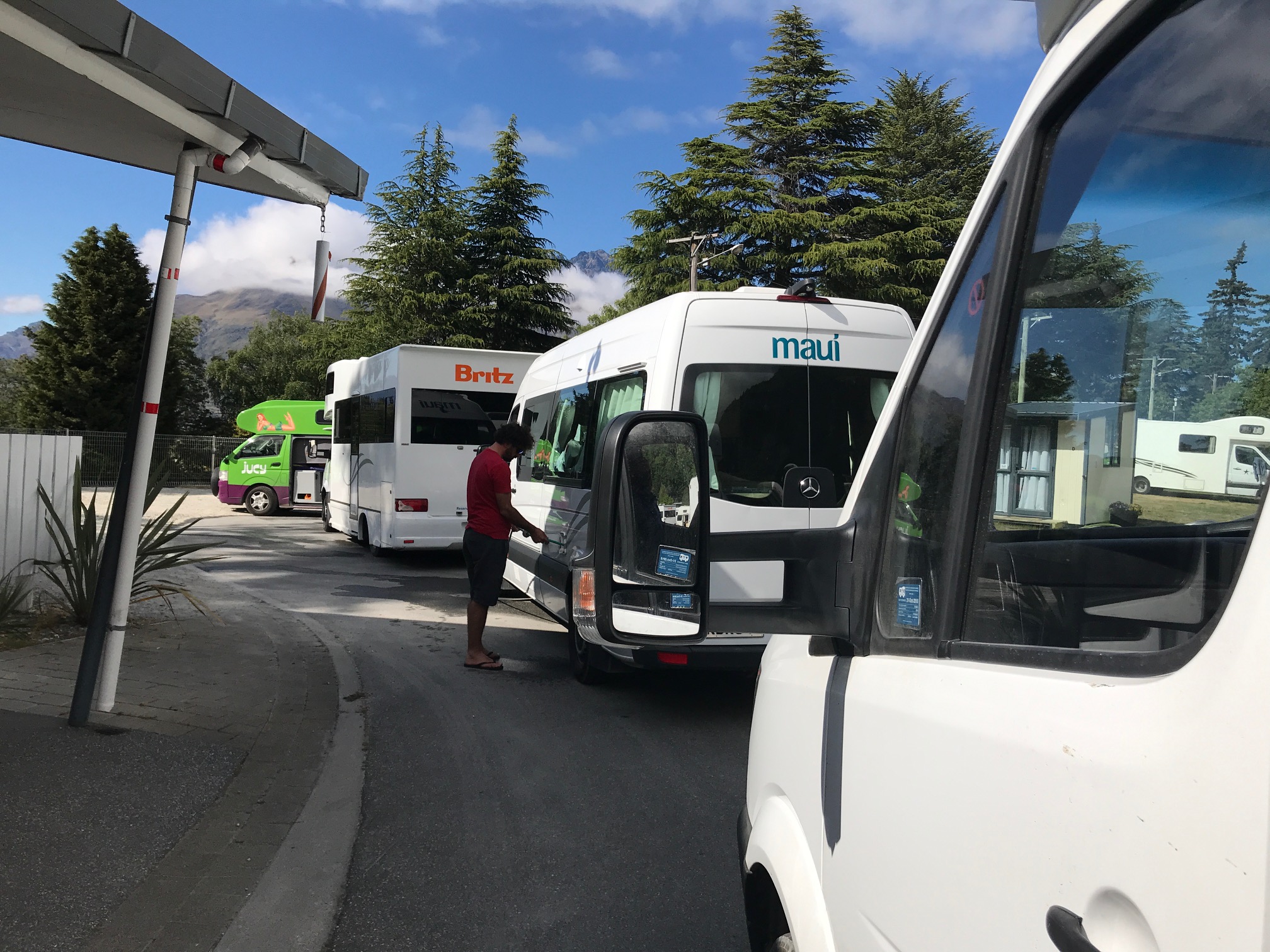
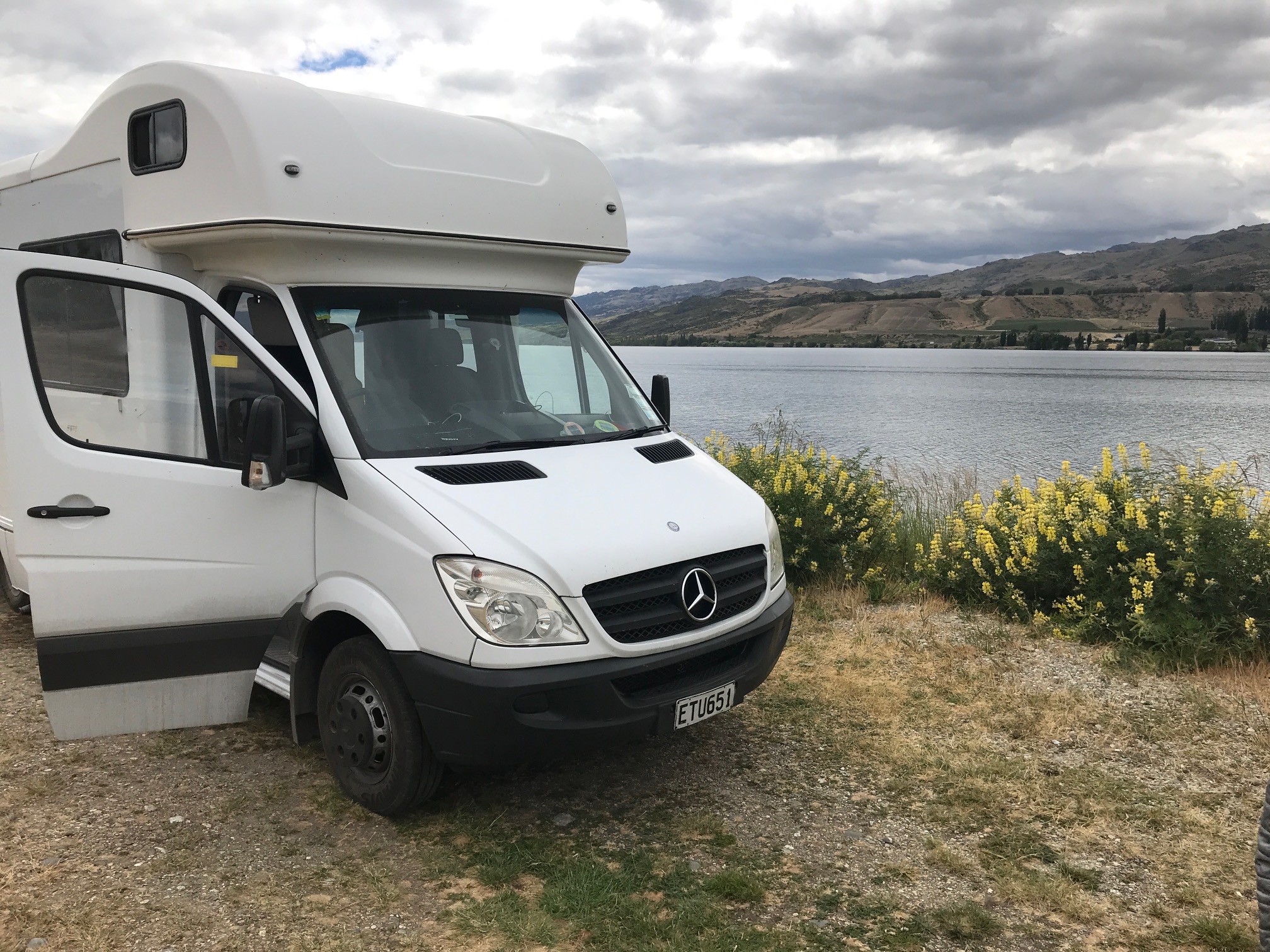
Camping, caravanning, glamping or tramping goes by many names in New Zealand. But whatever you call it, the rest of the world has a lot to learn. From the sheer amount of rented campervans on the road, to the number of parked vans in the cities, my educated guess is that New Zealand probably has more campervans per capita than any other place in the world.  Camping is a national identity and they know how to do this right.  There are free camping app’s that list dump sites, water sources, and up-to-the-date user-contributed postings as to the cleanliness of the toilets, the toilet paper supply or the road conditions.  After spending one month in a six-sleeper campervan touring the South Island of New Zealand, I am already inspired to camp more at home.

I envied these smaller, more nimble cars, but it might get exciting on a windy night.

With Christmas Season coming in the summertime (and it is “Christmas”, no “Happy Holidays” here), many families camp for Christmas and have used the same sites for generations.  Santa can visit the site by boat to give out presents and Christmas lights and fireworks are part of the packing list.  Just another reason that Christmas is less commercial here, who would want to schlep all the trappings to a DOC campsite?

waiting for the free dump and fill station.

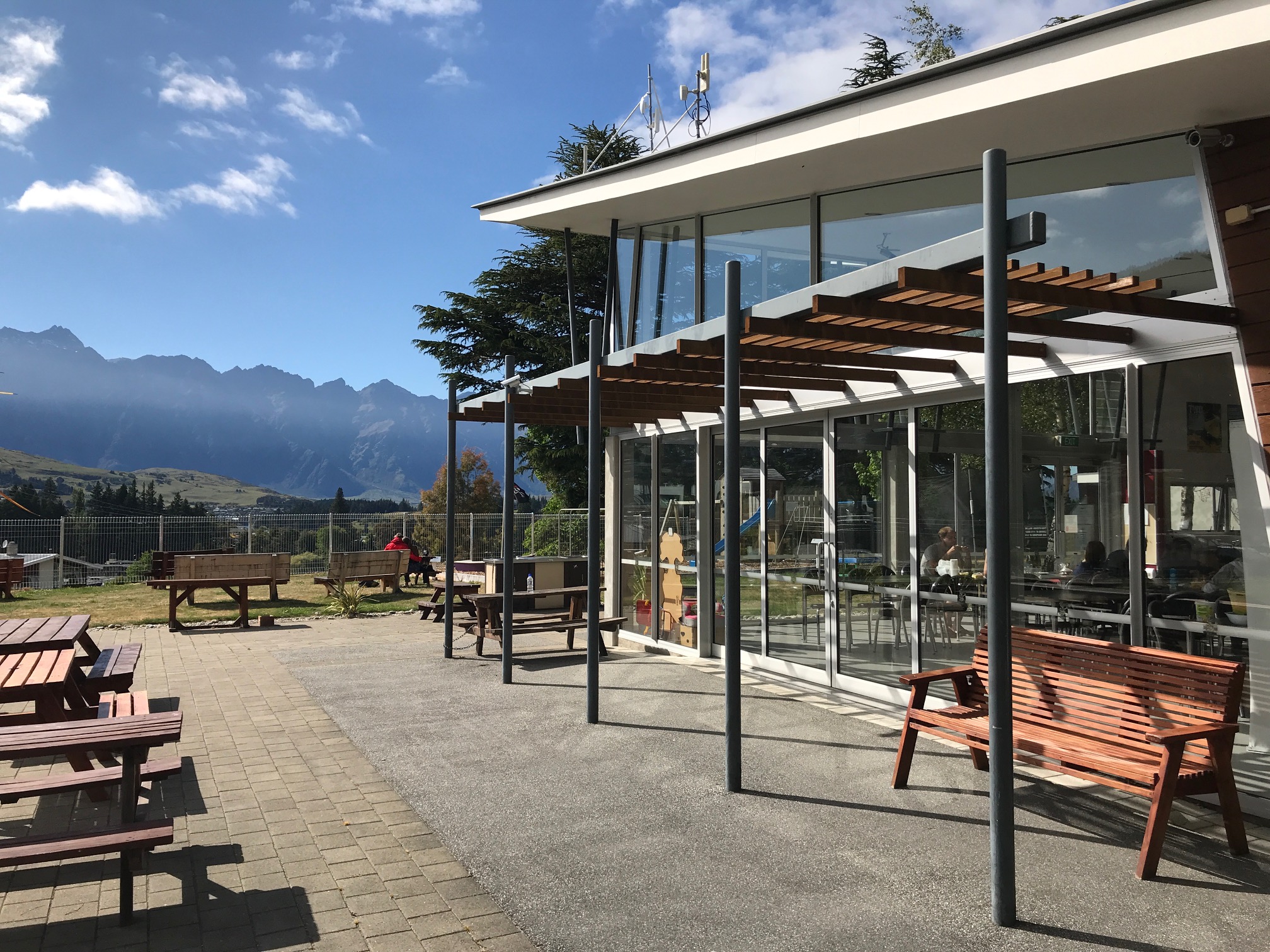
When I come home from a camping trip in the US, there’s that pioneering feeling of having “roughed” it.  But here, camping includes chilled wine, Wi-Fi and level ground.  It includes tricked out Mercedes bases and architecturally-designed canteen kitchens at your campsite with a million dollar lake view.  And nightly sites span the range between free government-approved pull-outs for self-contained vehicles all the way up to $100/night (for a family of five) powered sites with amenities such as private hot tubs, unlimited Wi-Fi and a kids’ “jumping pillow”.

Queenstown, Top10, Campervan, New Zealand

The view from Queenstown Top10, a powered site with a million-dollar view.

Back in Colorado, the older camper set seems to be buttoned up in massive RV’s.  It feels like there is a divide between the tent-ers and those sequestered inside their fortresses next to us.  But here in New Zealand, the campers span all ages and the vehicles have more in common with one another than not, with most people staying in some form of a converted van.  This perhaps levels the camping field and makes interaction among the campers feel easier.  In most sites, we met our neighbors, learned a bit about them, publicly apologized for Trump and then moved on to quality conversation.  Our kids met other kids on the playground or other shared areas.

Converted kitchen off the back of the van, that stows away while driving.


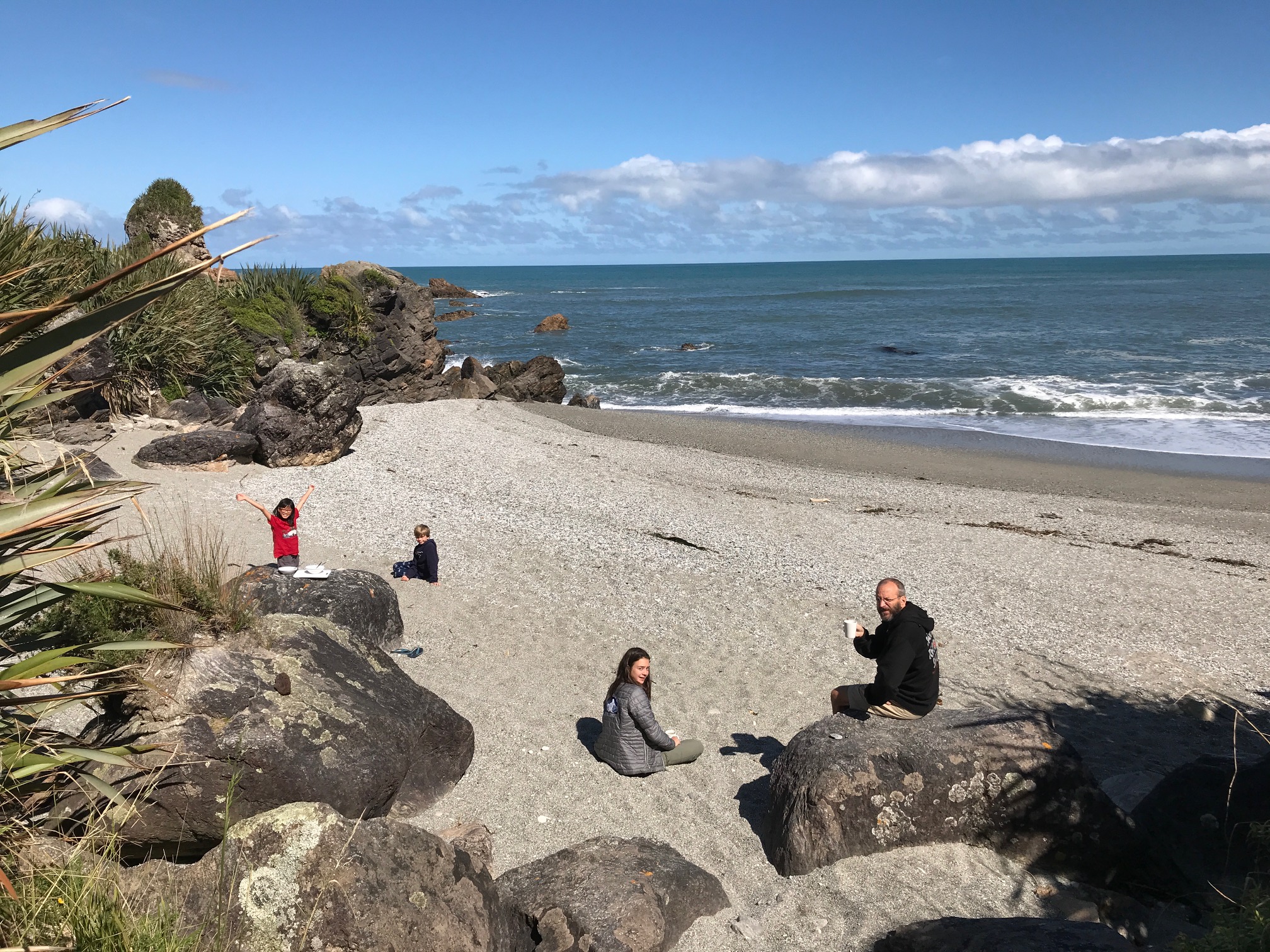
With darkness coming about 9:30pm, we were on the late-to-sleep, late-to-wake routine.  (One of the very fun rules to break on this year abroad.) Oftentimes, we would wake, do the basics to turn our sleeping vehicle into a driving vehicle and find a picturesque spot for breakfast still in our jammies.  Food is very expensive in New Zealand and breakfast out for a family of 5 can easily be $60 USD or more. Pulling over to whip up a quick snack for kids is the ideal way to break up the driving, save on the money and hunt out the perfect picnic spot before the others arrive.

Breakfast spot on the beach – we had this cove to ourselves!

However you do it, just “glampervan” with your family in New Zealand.  There are no predators in New Zealand: no poisonous snakes, no bears, no mountain lions, just really aggressive sand flies.  The entire South Island is the real soul of what amusement parks are trying to capture.  It’s just real – one massive play park.  We spent one month and we could easily have spent two.  And if you’re looking for specific tips, click here.


If you get the opportunity to travel New Zealand in a campervan with your kids, here are some tips to maximize the fun and minimize the headaches.  These are ten tips from the Paradise Family who traveled with their three ‘tweeners in November of 2017.

  1. Don’t go far on Day One It’s daunting to pull out of the campervan parking lot with a large, heavy vehicle, drive on the left, maneuver narrow roads and single lane bridges and navigate where you want to go.  The last thing you need is pressure to be at a certain place because you have a reservation.  You may very well push yourself past your instinct for safety.

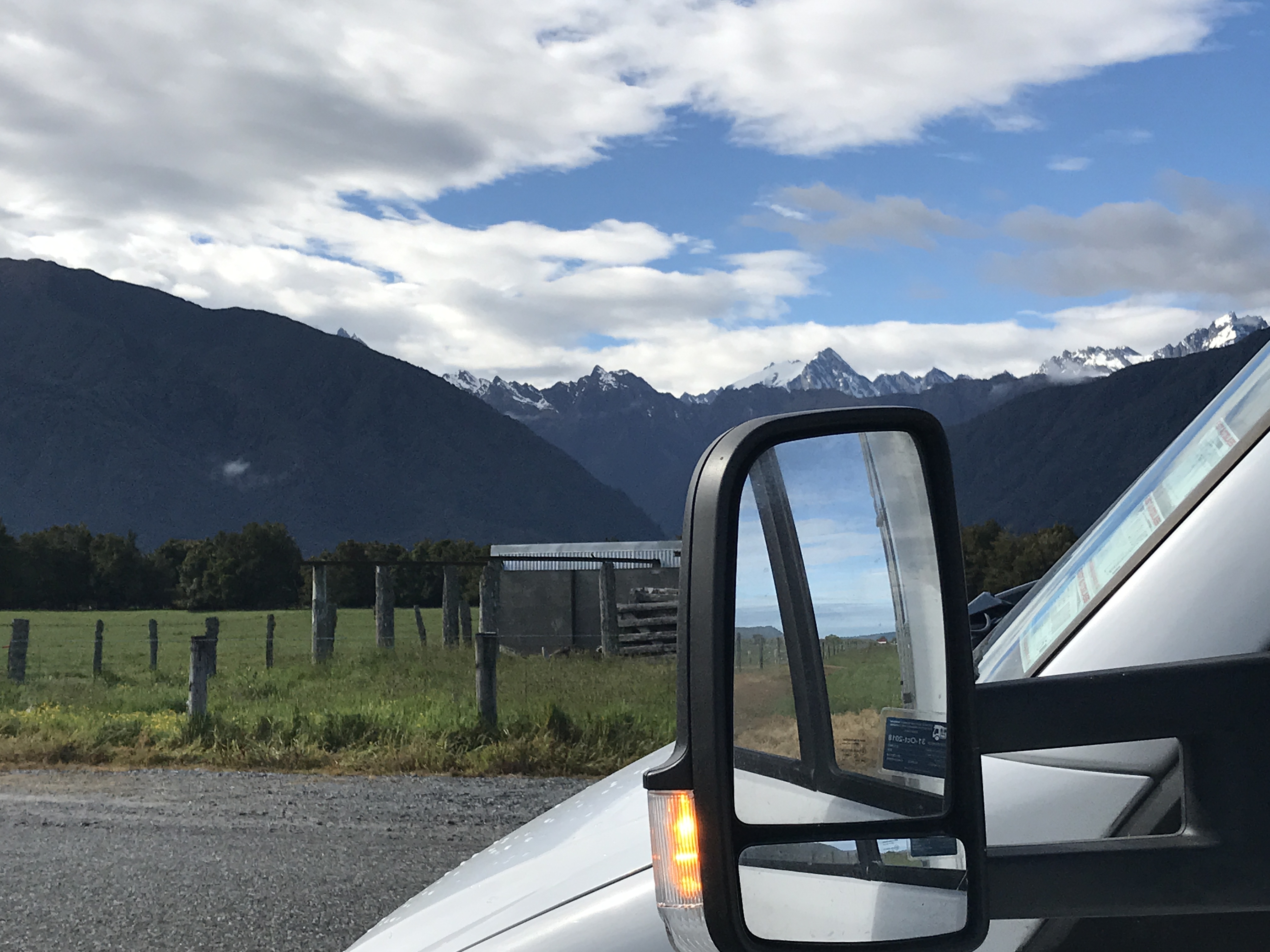
    You can enjoy views like this and stop whenever you need to stretch your legs.

  2. Driving is a two-person job One person needs to be the co-pilot: a second set of eyes, a reminder to stay left and navigate.  Copilot also gets the lovely job of entertainer (arbitrator) of the kids, if they’ve come along.
  3. Stay connected Get a local SIM card for your phone. I got the $19 rollover card from Spark and used it once or twice a day to book places while driving, keep in touch with fellow travelers or to call the rental company with various campervan mysteries (deflating tires and missing knobs, etc.). Seriously consider the mobile wifi unit that your rental company will offer you.  They work wherever you can get cell service and it’s so nice to be able to read the NYT while drinking the morning coffee.  It takes the whole experience from camping to glamping.

    Another perfect and free camping spot.

  4. Structure There’s a dance between leaving space for the spontaneous event, like swimming with dolphins, and having a set itinerary. On the one hand, last minute bookings for activities and campgrounds may be impossible and on the other hand, who wants to be stressed out to stay on schedule when you’re on a vacation. This is all personal preference, but what worked best for us was to reserve the “bones” of the trip:  heli-hike on Fox Glacier, the cruise on Milford Sound the Thanksgiving dinner with cousins in Dunedin the powered camp sites; and then be as fluid day-to-day as possible.  A few times, I called to change the reservations without consequence, but the really popular spots do book up.
  5. Solar Bring solar chargers for your devices. We are not big tech people, but even our few devices were hard to keep charged when you’re only powering up every three or four days.  Our two solar chargers were great to keep phones and readers with a minimum charge for navigation, reading and a few email check-ins.  We kept them going on the dashboard all day and out on the picnic tables while we were at camp.  Here are our favorites.
  6. Bug protection! Make sure you have spray and long sleeve / pants.  The sandflies are vicious outside of the cities (which is where you’re most likely headed in the South Island.)
  7. Download the Apps It’s a modern world and the easiest way to navigate is by the internet… when you can get the internet… and keep your devices charged.  Campermate is THE app.  I also toggled between Rankers Camping NZ and FreedomCampingNZ.  On these sites, you can get up-to-the-day user suggestions and comments, like another social media avenue.  You can get the pin drops for google map directions to trail heads or make dinner reservations.  If a dump station is not maintained, other campers will let you know.  Incredibly useful.  And you won’t need to get the extra GPS navigation gizmo’s like Tom-tom or Garmin that the rental company will offer you.
  8. Check online for current road conditions We did our initial research for the driving itinerary from books and (apparently) out-of-date online sources.  A major earthquake near Kaikoura had recently closed the entire access to the Northeast coastal route we quickly realized in talking with people and confirmed with the Campermate app.  If your time is limited, you will want to know these things before you leave home.

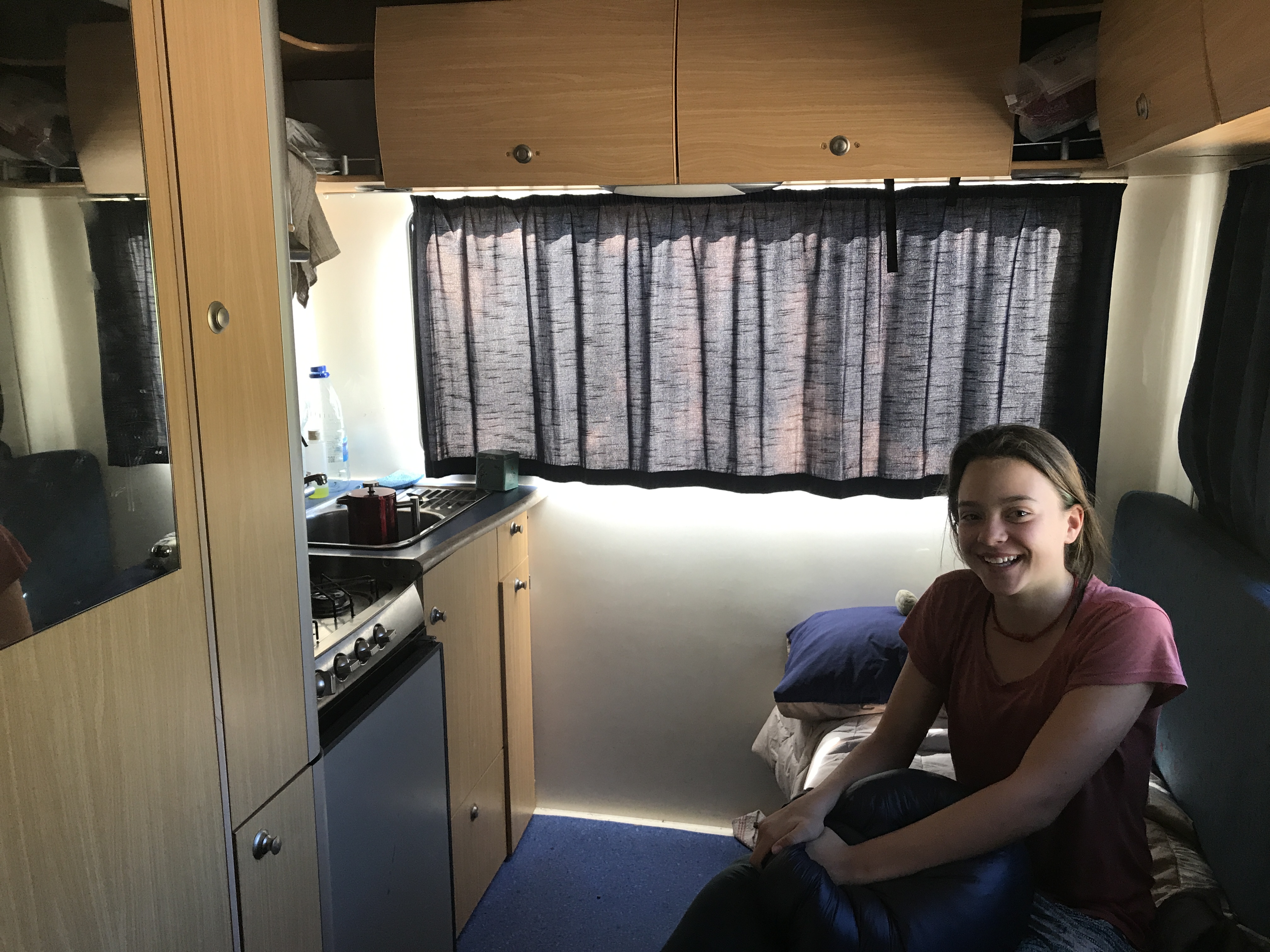
    Kitchen, otherwise known as Lorna’s bedroom

  9. Pack for All Weather We traveled in November and we had all kinds of weather: hot, cold, rain, wind.  The Kiwis we met all said that their weather is totally unpredictable the last few years so plan for all four seasons of weather – no matter the season you’re going.  We were mostly in camping clothes, but it was also nice to spiff up a bit for the city or a nice dinner out.  If you want to have some nice dinners, perhaps pack a top that will make you feel as if you’re not camping for the night.
  10. Consider a Three-Hour/Day Driving Goal We had a LONG driving day on our fourth day out and the kids never let us forget that that was too long.  It’s great to break up the driving so that there’s just a bit each day.  It seemed that the rear-facing seats and the sway to the larger vehicle make it more difficult to take the motion for long periods.  Our three kids had strict daily rotation plans so that they all got to sit in each seat.

But whatever you do, do it.  These are days you will remember.  Here are our highlights and road schooling plans.

All three of our kids have been Waldorf kids since kindergarten and a big part of that Waldorf curriculum is “handwork”.  Handwork includes: knitting, hand sewing, crocheting and woodwork.  This is absolutely, an unofficial rationale of Waldorf handwork pedagogy, but instead what I’ve gleaned from years of parent nights: learning to make things with one’s hands connects the children with confidence to the world around them as they learn how things are made; knitting also encourages hands to “cross midline” which helps prepare the young minds for reading; and, the manual dexterity and pattern recognition fires up all kinds of learning centers and helps to improve handwriting.  Once the kids know what to do, the Waldorf handwork classroom usually looks like kids silently knitting or crocheting while the teacher reads them a story.


Two of my three kids LOVE handwork and felt that the biggest downside to this year of travel and road schooling was to miss their regular handwork class for a year.  Aside from knitting and hand sewing, I am clueless.  The idea of being a year-long handwork teacher, makes me sweaty.  How could we pack light and keep this up?  In no way can I reproduce their school’s wonderful curriculum, with purposefully chosen projects for each grade.

family travel, handwork, Waldorf

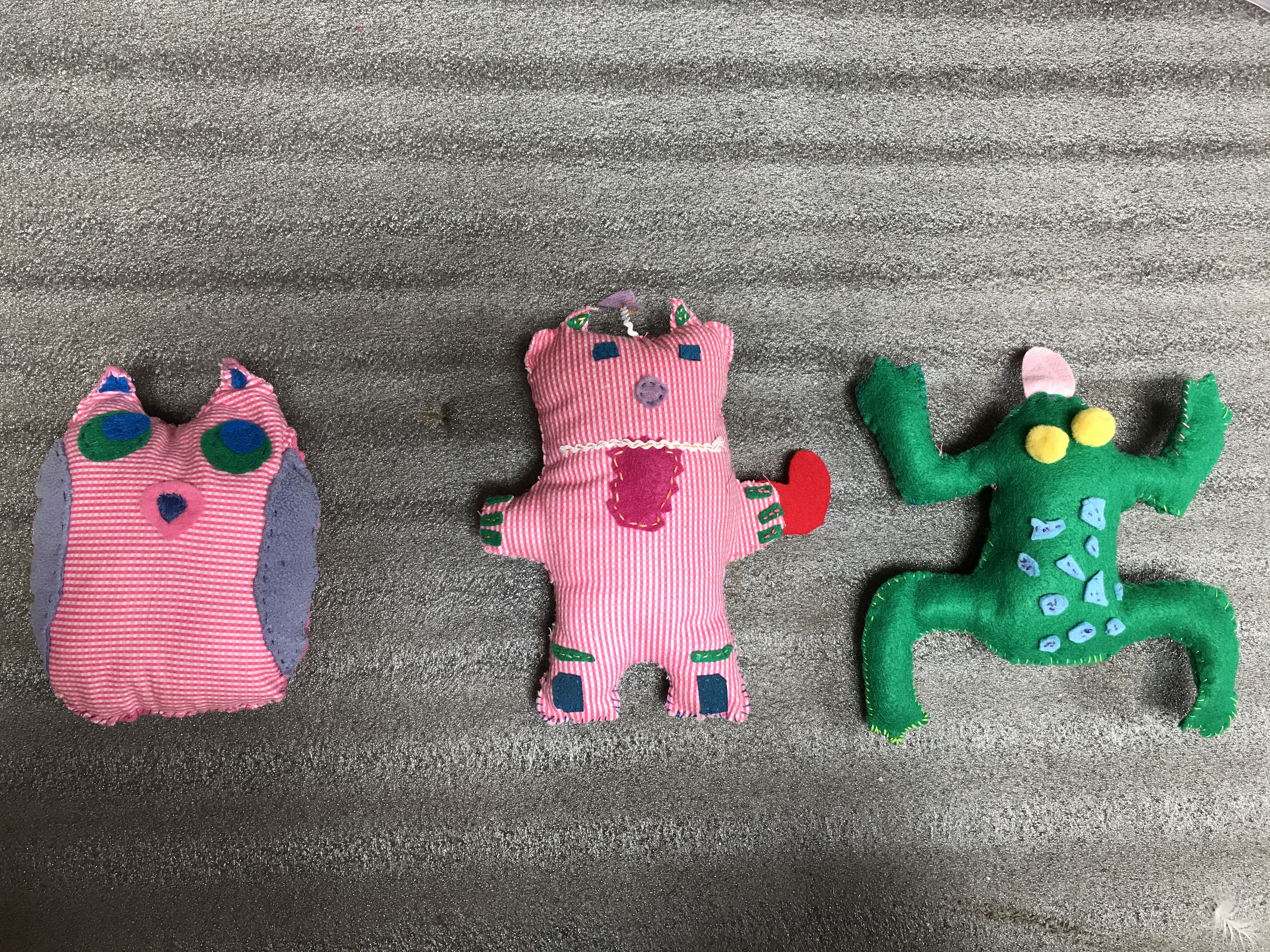
So we brought three sewing kits that the kids had gotten for Christmas.  They were wonderful gifts, but with our busy lives in Boulder the kits had been pushed to the back of the craft cabinet, waiting for a snow day that never came.  All the materials were neatly packed away to make three plush toys: an owl, a monster and a frog.  At the last minute, I threw them in a suitcase.


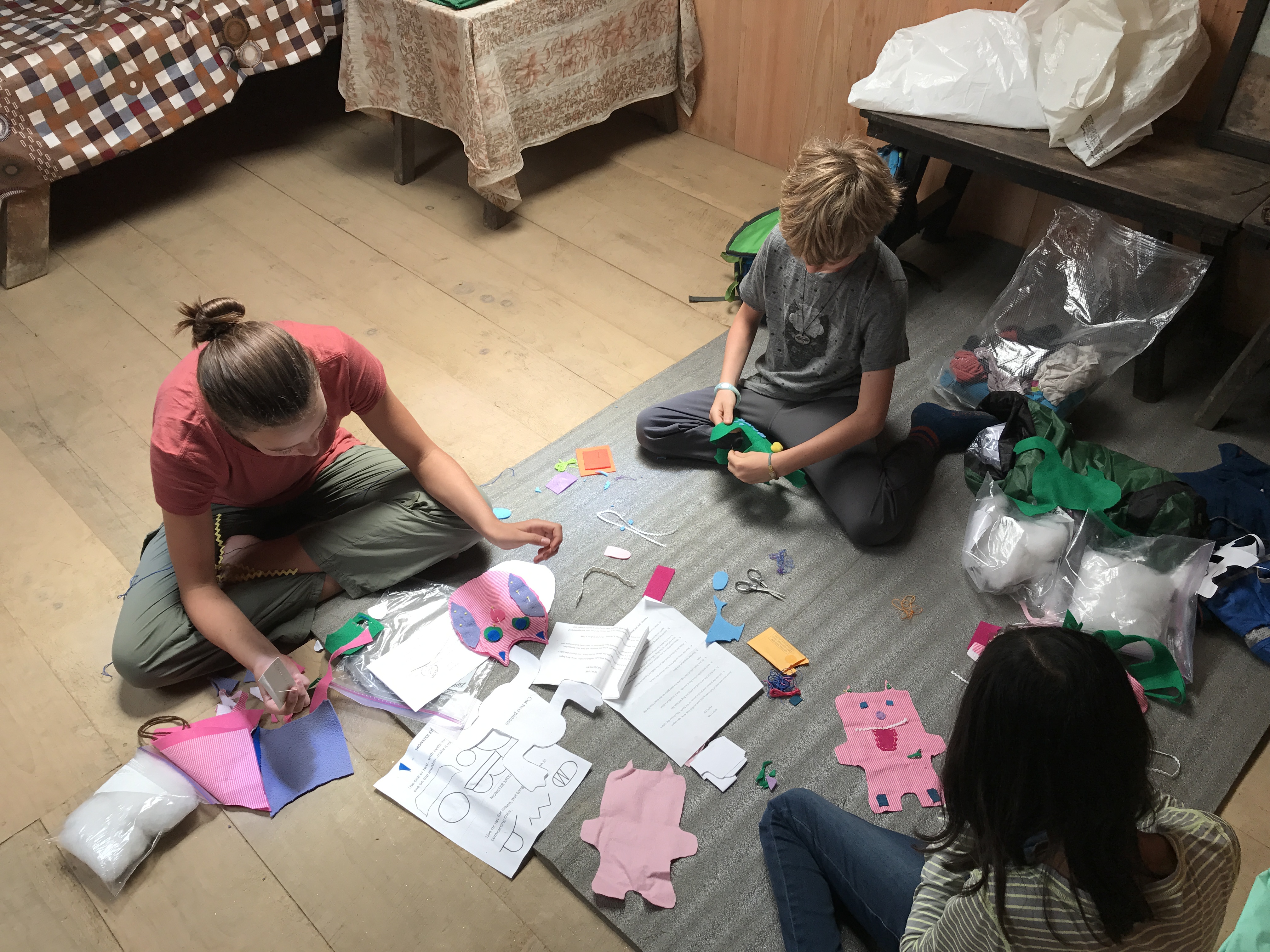
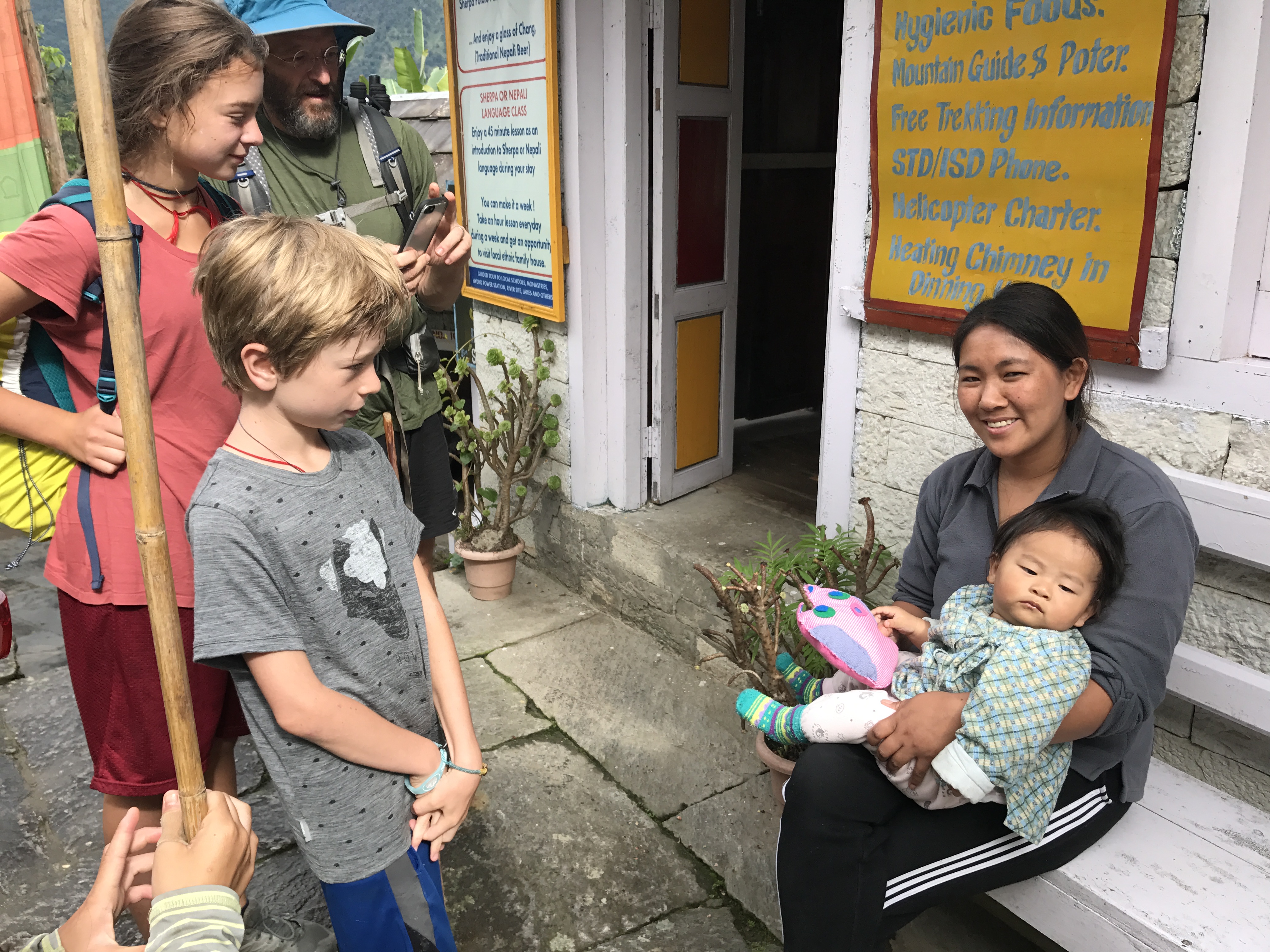
During our Sherpa homestay we broke them out on a few rainy afternoons and the kids happily got to work and were proud of their personalized creations.  The kids were really excited to give them away.  Everywhere we looked in Nepal, there were local kids with few toys to play with.  Kai had the easiest time and gave it to a guesthouse owners’ young child on the first day.  As far as we could tell, they were very happy with the gift and Kai was happy to see the young child with a “lovie” like the one he slept with each night.  Lorna similarly gave hers away a few days later, happy that she had created something that would make another child happy.  These kids have so few possessions.

family travel, handwork, Waldorf

Constructing the “lovies” took three rainy afternoons


Lucy has brought hers all the way to Everest region and back, about six weeks since she created it.  It was harder for her to separate with her creation.  I didn’t want to force her, but I also know that this is part of the lesson.  She has a stuffed bunny who she sleeps with each night and has never been interested in cuddling with her “monster” but it’s also hard to say goodbye to something that she created.  I could easily psychologize about reasons why, but her gifting ended up being the sweetest of all.

handwork, family travel, Waldorf, road schooling

Lorna giving her creation away…

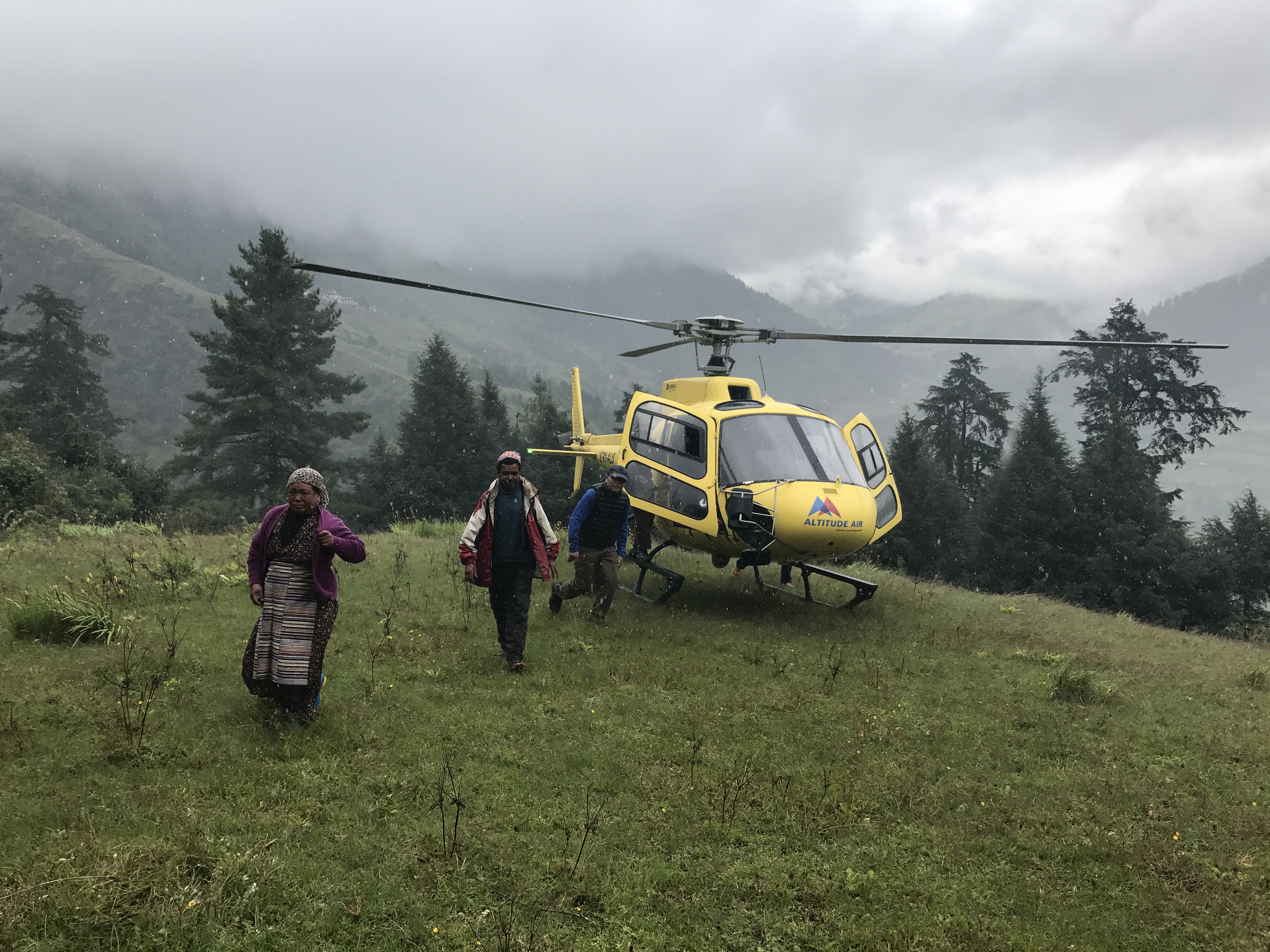
Back in August, our Nepali family’s grandfather was sick and needed to be helicoptered out of the village.  This is the house we stayed in for a week.  Grandfather, eight-five years old, was barely able to come to the kitchen and was moaning in pain.  How do elderly people survive in villages with no roads and no access to healthcare?  Well, they have family that can afford and finagle a helicopter airlift to Kathmandu.  (It would have been extremely difficult to carry him to the road and then it would have been an eight-hour jeep ride! This man needs to lay down.)

Helicopter arriving in Thumbuk. Monsoon clouds make it tough to find.


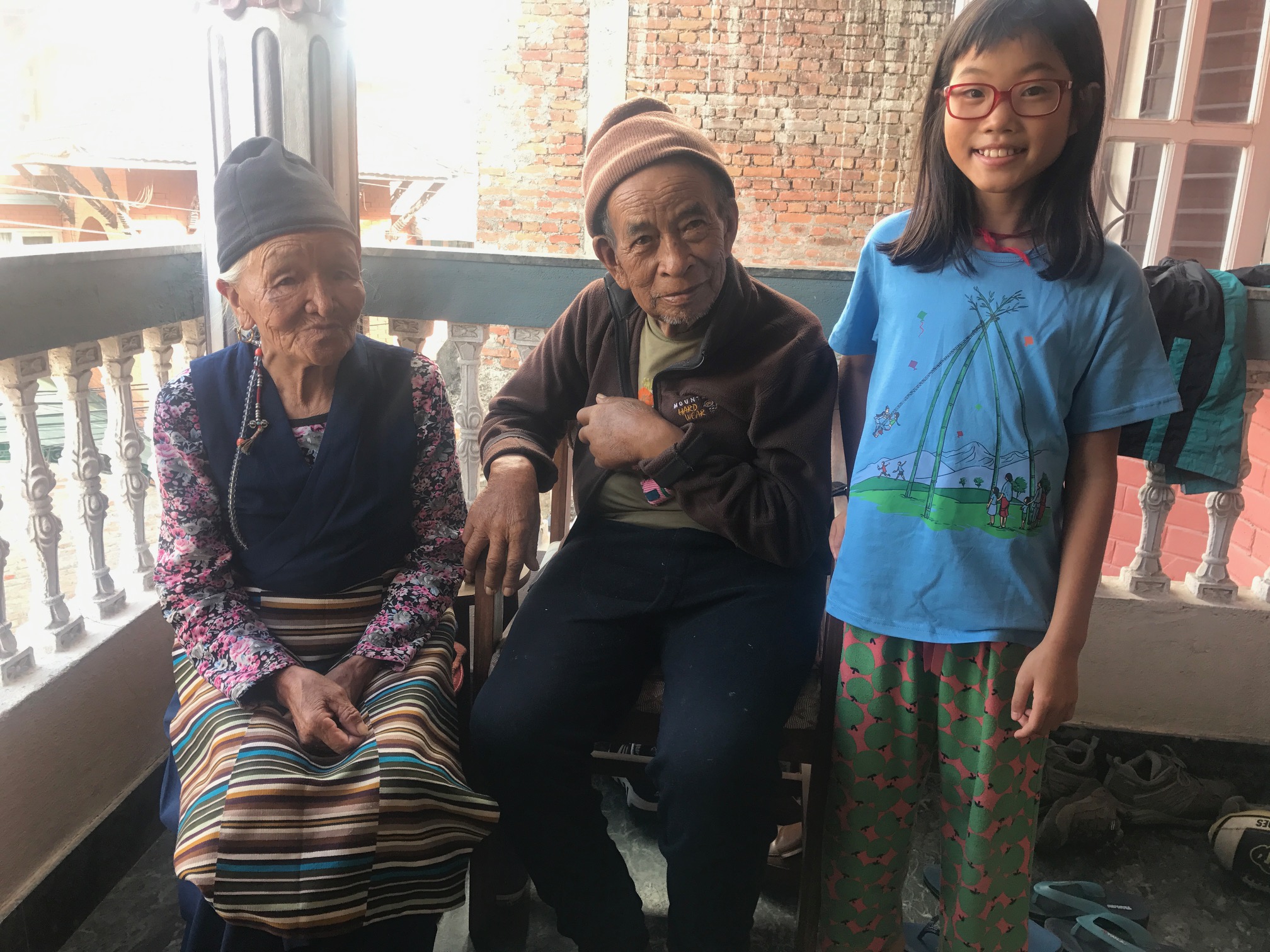
We all waited patiently in Thumbuk for the weather to clear and the helicopter to locate the field by GPS.  I stood in the clearing with a red umbrella and we lit a smoky fire.  Grandfather, Grandmother and Lhakpa flew with him to Kathmandu where he saw a doctor to relieve his pain and got further testing.  Spending time with Grandfather back in Kathmandu a month later, meant the world to the kids. You could tell that Grandfather was feeling better and interacted more with the children.  And watching the mountain helicopter rescue will be a clear memory for years.


Lucy gave her lovie to Grandfather just two days before leaving Nepal.  Grandfather took it, smiled and then quickly tucked it under his jacket, close to his heart.  Another reminder that it’s best to let Lucy lead.  And the best reason for us all to learn handwork is to create something of meaning to give.  It can mean so much more than a store-bought token of caring.family travel, handwork, Waldorf

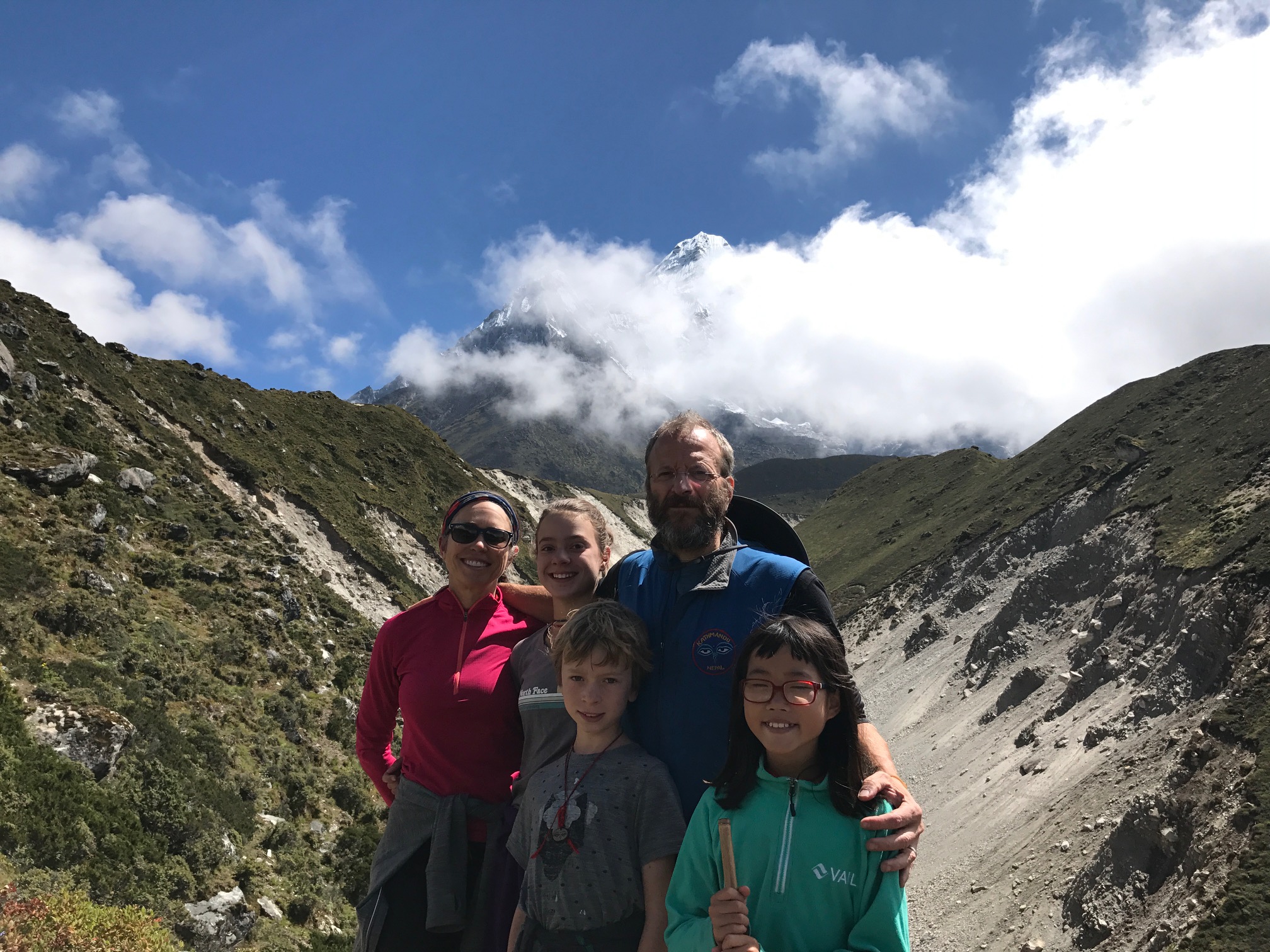
Back in the 90’s, as a single kid-less backpacker, I passed a French family trekking with kids around the Annapurna Circuit in Nepal.  One child was in a porter’s basket singing a Nepali song and the other was holding her mom’s hand.  It, apparently, made an impression and planted a seed.  Now twenty-plus years later, we actually took our three kids ages nine, ten and twelve, trekking for more than fourteen days and up over 15,000 ft. along the SoluKhumbu, or Everest, region.  Not only can it be done, but it can be fun.  Nobody got sick!  No headaches that a bottle of water couldn’t cure and no tummy upsets.  Here are our tips for making it fun for kids, and therefore, by parents.

  1. Take Your Time  We passed lots of people who were on tight schedules to get up to Everest Base Camp and get back to Kathmandu for their international flight back home.  If they got an altitude headache, they simply took the high altitude pharmaceutical, Diamox.  (Can’t imagine that’s good for little, or big, bodies.) If they were tired, they pressed on.  If you’re a parent, you will know that kids simply don’t work that way. Don’t attempt to do this unless you have time or destination flexibility.  Go slow. Smell the flowers. Stop often and acclimatize naturally.

    trekking Nepal kids

    Amadablam Basecamp

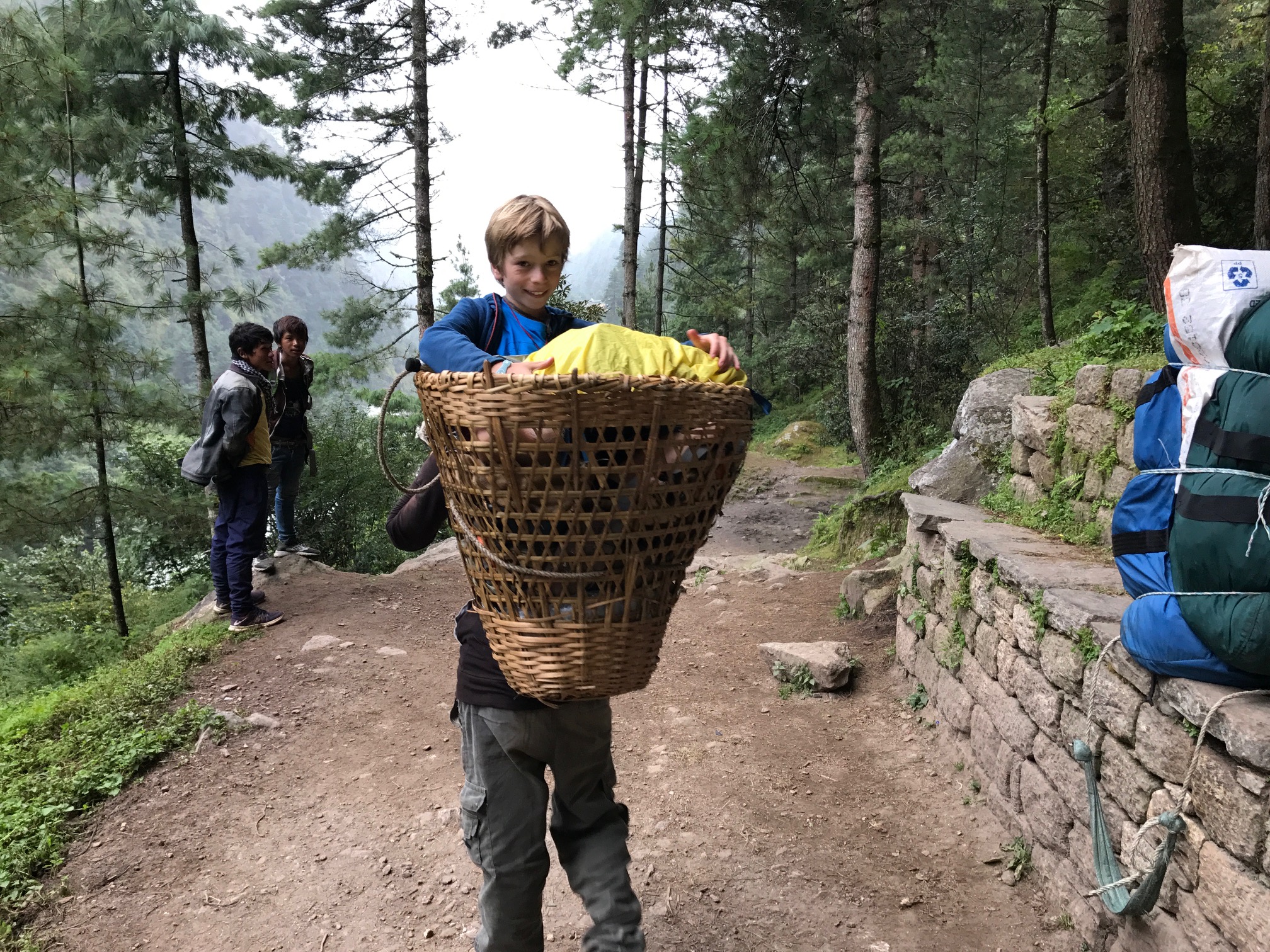
  2. Hire a Porter with a Basket  Your kids will love it; they will get a break when you don’t need one; and you’re providing great employment for the locals.  It also gave peace of mind on some of the more dangerous sections to know my more squirrel-y kid was attached to someone more sure-footed.  Our kids always got out to walk themselves across the suspension bridges.  Our nine and ten year-olds switched off in roughly 20-30 minute intervals while our twelve year-old did the whole thing with a light daypack.

    Trekking Nepal kids

    Believe it or not, this load is very light for a Himalayan porter.

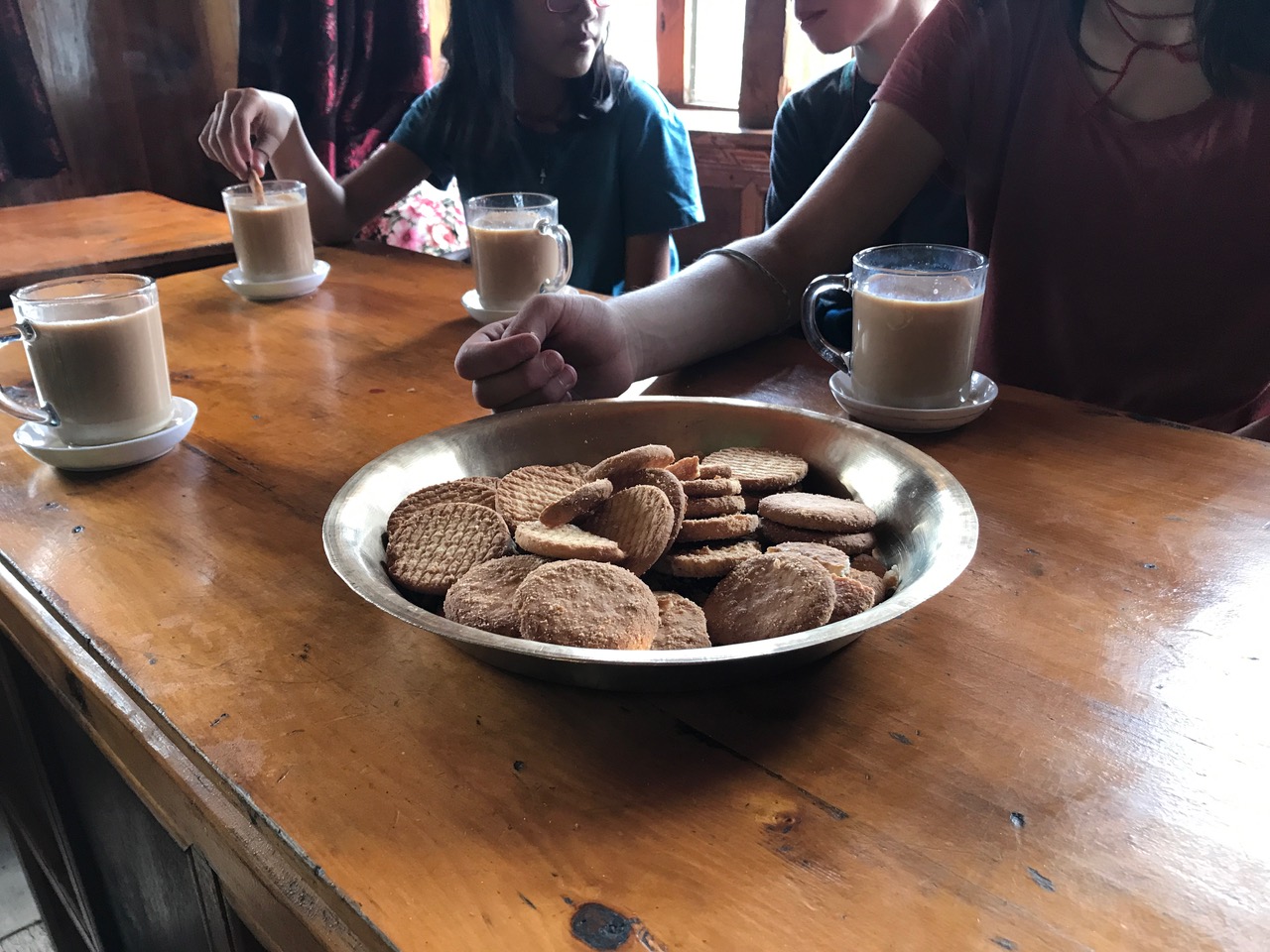
  3. Tea and Biscuit Breaks Every day on the trek, we stopped for a mid-morning pot of milk tea and a sleeve of cookies (biscuits).  When you’re burning that many calories, it’s a great reward/bribe.  Our kids never get to eat so many cookies at home!  And it’s a great reason to stop and rest.

    trekking, Nepal, kids, biscuits

    A daily ritual

  4. Be Aware of the Guest House Dining Rooms My kids probably heard the most swear words of their lives in the Guesthouse Dining Room.  Most Western trekkers are in their 20’s and are a bit unaware that there are young ears listening.  We went on the off-season so we were rarely with the crowds but when we were, I wanted to shuffle them away quickly.  Most trekkers on the trail, gave the kids a big high five, but in the evening after a beer, it was a different story.
  5. Find Ways to Interact with Other Kids We found our way into classrooms and soccer (aka: football) games.  Make sure your family has a song ready to share with a class if you get invited inside.  Ours was “Head, Shoulders, Knees and Toes” – always an interactive crowd-pleaser.  Other favorites are: “America, The Beautiful” or “This Land is Your Land”.  Most classrooms will know “Twinkle, Twinkle” so you can sing it together.  Soccer and “Catch” are the international language of kids.  Once you bring a ball out, the kids will come.  We wished we brought a travel kite.  Best ball to bring is below…

    trekking Nepal kids

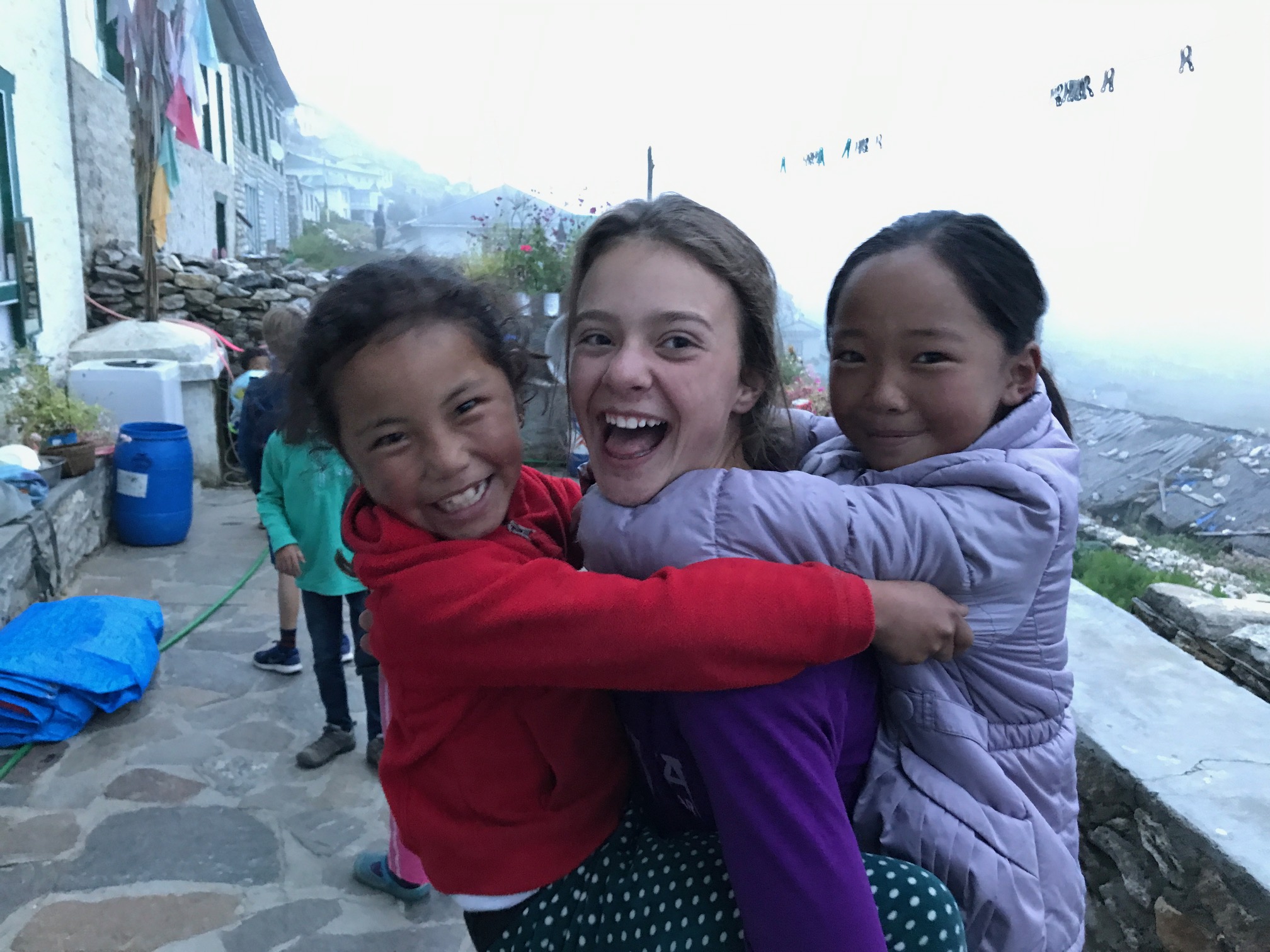
    Kids naturally gravitate toward kids…

  6. Bring a Blow Up Globe I got this idea years ago from Catie Agras.  It invites other kids to come play with you and you can show them where you’re from.  These are great gifts to give away when you meet friends along the way.  We had an enthusiastic dog chasing and puncturing our ball, but someone came up with electrical tape and we were all good.  Click here for our favorite world beach ball.
  7. Bring Post-trekking Activities  Our kids had about eight books downloaded on their iPads and they were happy to curl up in their sleeping bags and get some reading done as soon as we unpacked for the night.  We also had card games, journals and simple handwork projects.

    trekking, Nepal, kids

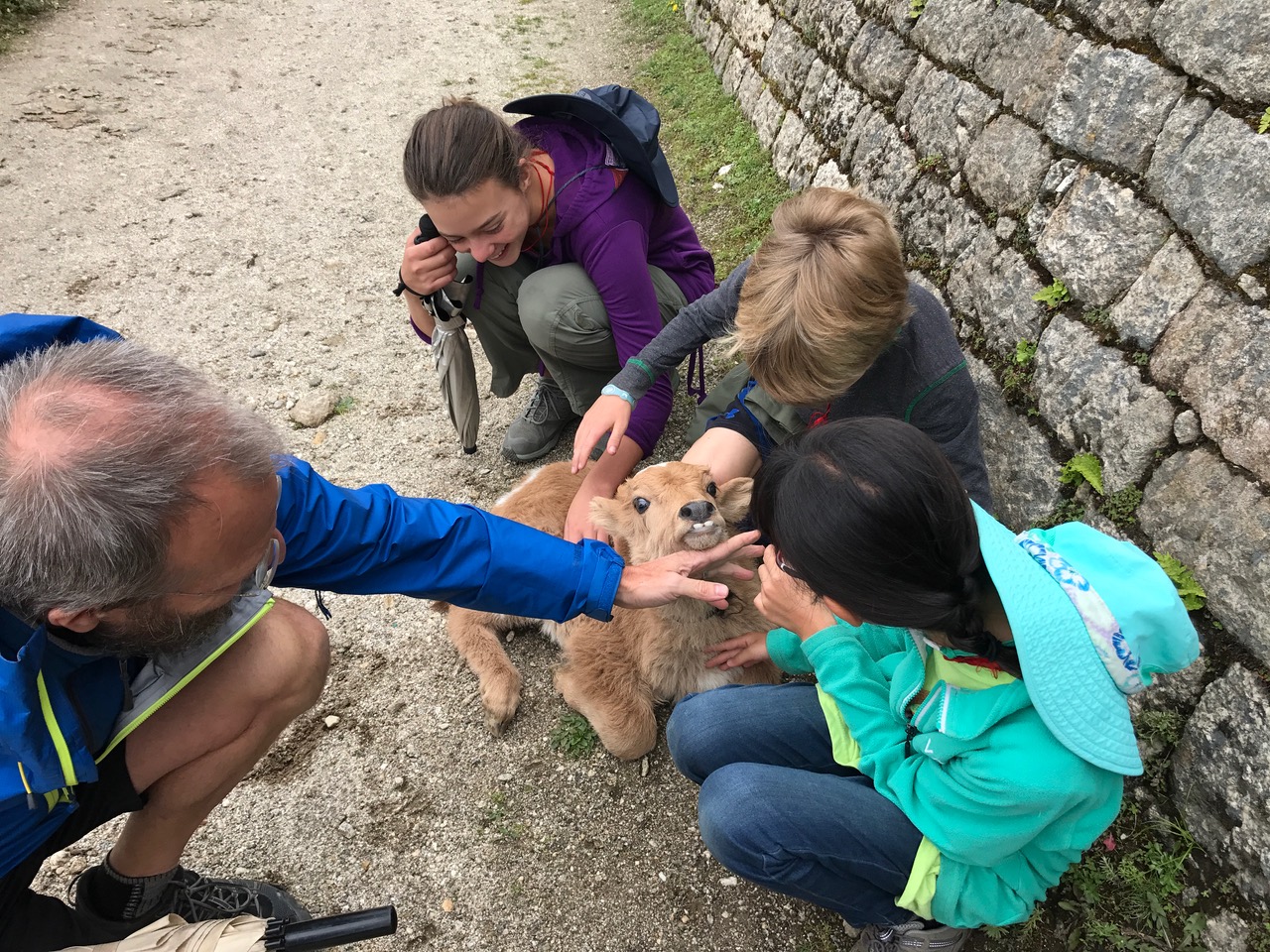
    We all went crazy for this calf’s underbite.

  8. Your Kids Will Touch Animals There will be all kinds of animals along the way and your kids will want to touch them.  Come up with a plan.  Dogs, Cats, Cows, Calves, Dzos, Yaks, Naks, Baby Goats… you name it and kids won’t be able to resist.  Our rules were: no touching a bloody animal; no touching animals while eating; and wash hands after petting.  If there’s no soap around, make sure you have some strong hand sanitizer.  Know when animals are getting too rough.  Kai had a puppy get so excited that he clamped down on his leg.  The threat of a stick was enough to get him away without any broken skin, and just some healthy fear from then on.

    trekking Nepal kids

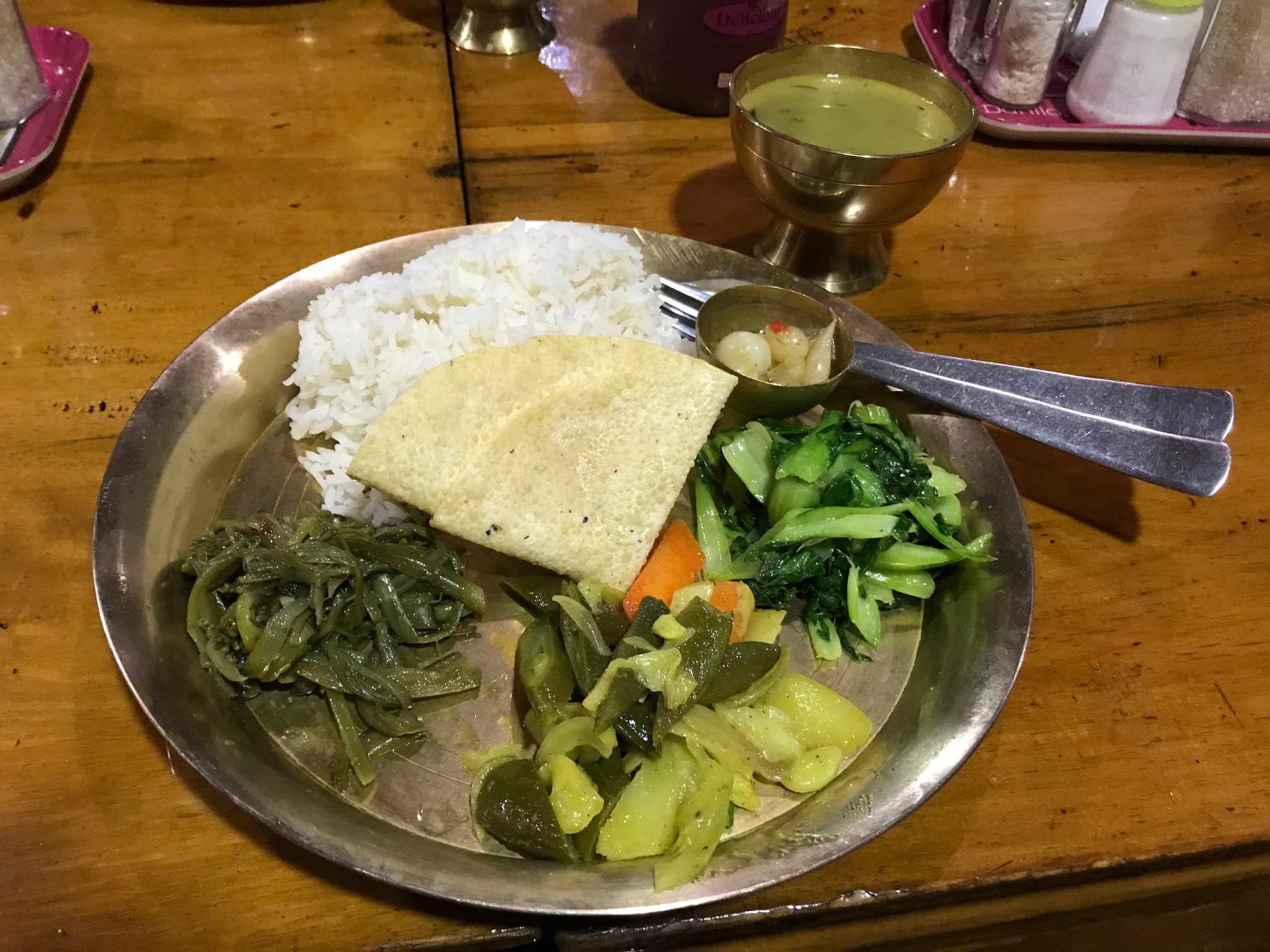
    You can never go wrong with dal bhat: it’s the perfect, kid-friendly trekking food.

  9. Eat the Local Food Our kids – even our pickiest kid – ate very well and no one got a tummy bug.  Stick with what the locals can do well, like dal bhat (rice and lentils), chapatis, momos, veggie chow mein, boiled potatoes or noodle soup.  Stay away from menu items like “pizza”, which is usually little more than a chapati smeared with ketchup and a sprinkle of yak cheese.  We are vegetarian and I heard rumors that most travelers get sick from eating the meat.  So probably best to become a vegetarian for the trek, at least.  The kids had a lot of “omelets” for breakfast.
  10. Invest in Good Equipment The last thing you want is to have cold kids at night, so a sleeping bag rated to 20 degrees Fahrenheit is a must.  Also good hiking shoes, jackets, wool socks will make everyone happy campers.  Gear is fun… and maybe a bit like a bribe.  My twelve year-old split my set of trekking poles with me and would have happily had her own set.  Spend some time at REI or wherever you like to shop.  Tourist areas, like Thamel and Lukla, have everything for the adult trekker but there’s nothing in kid sizes.

Following the post that lists all the reasons NOT to go, here is the list of all the reasons that, of course, we should go on our year-long adventure.

So here is our “Big Trip” mission statement:

  1. FUN. Probably not every moment, but as a whole, we expect to have fun.
  2. Show, don’t tell, the kids that they are in the 1% of this world. They are lucky and not entitled to the endless luxuries that they will expect as they venture out into the world. I don’t want to lecture my kids about how privileged they are, leaving them to grapple with an abstract concept of gratitude.
  3. Seize time together as a family before their peers overshadow our influence.
  4. Experiential learning is unparalleled because it sticks.
  5. We can’t surf in Boulder.
  6. It’s a great excuse to declutter the house.

For one year, we will be untethered. Today’s to-do list today is crazy long because my to-do list next year will be hopefully blank. (Am I kidding myself?) Is it possible to get back to the non-existent to-do list of my twenties?  In my mind, we will be living spontaneously moment after moment without the tedium of dentist’s visits, music lessons with the swim schedules.  I picture that we will unplug from this scheduled life, but I wonder if it’s possible anywhere.. anymore.  I want to have a different relationship to time, stretch it out, enjoy it rather than feel the tick-tock.

Shots!  And Momma-fear

It’s a hotly polarizing parental topic: vaccinations.  It’s one thing to make the decision against vaccinations while sheltered within the US, or even to forego them for overseas travel as an educated adult.  But it’s a weighty responsibility to make those decisions for your innocent kids.  Ultimately, my decision to go ahead with the shots was because I would never forgive myself if they got any one of those preventable diseases of the developing world.  All travel vaccinations are legally optional these days and the CDC recommendations are extremely conservative so we had to use our best judgment and weigh it with our past travel know-how.

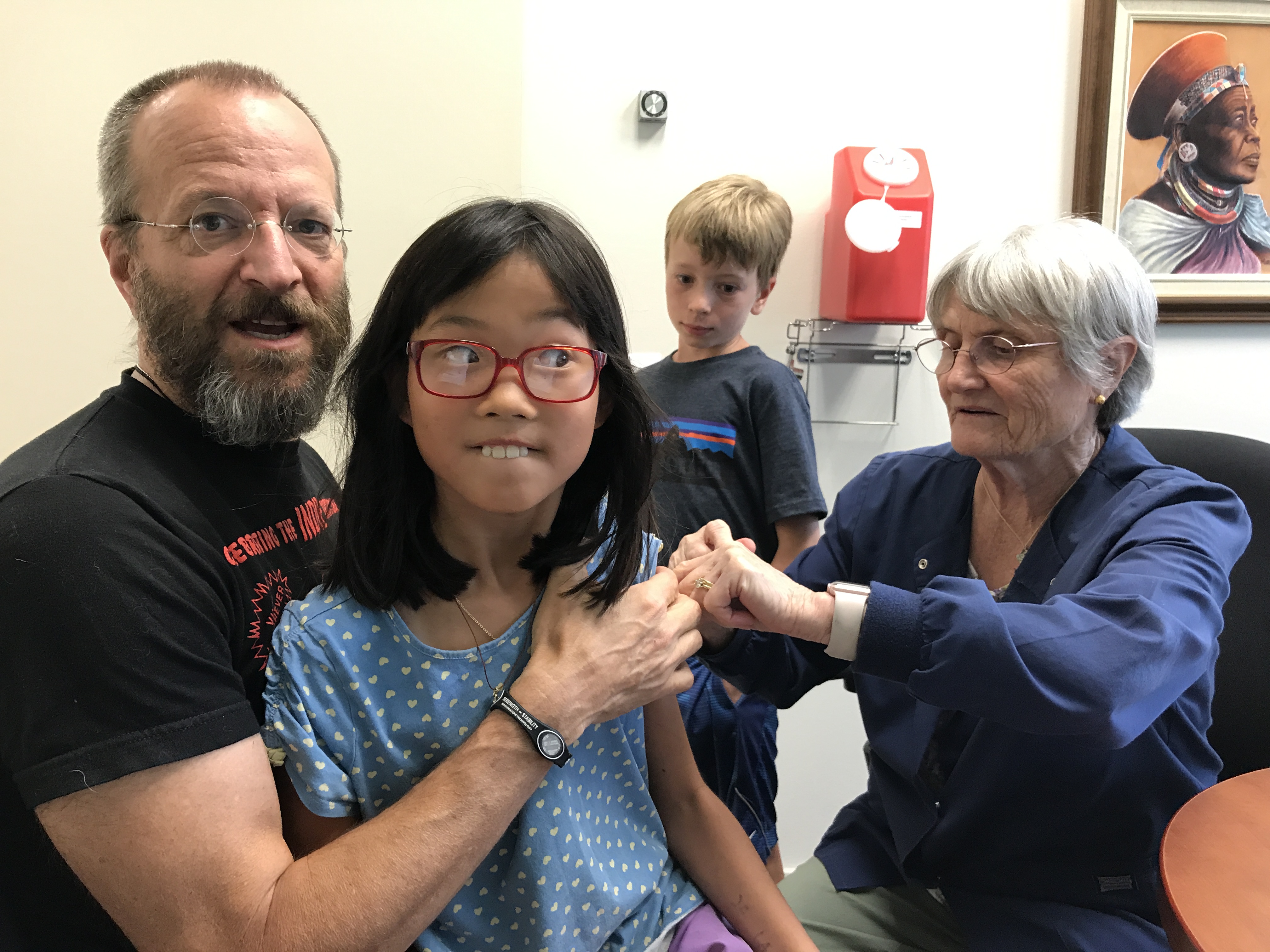
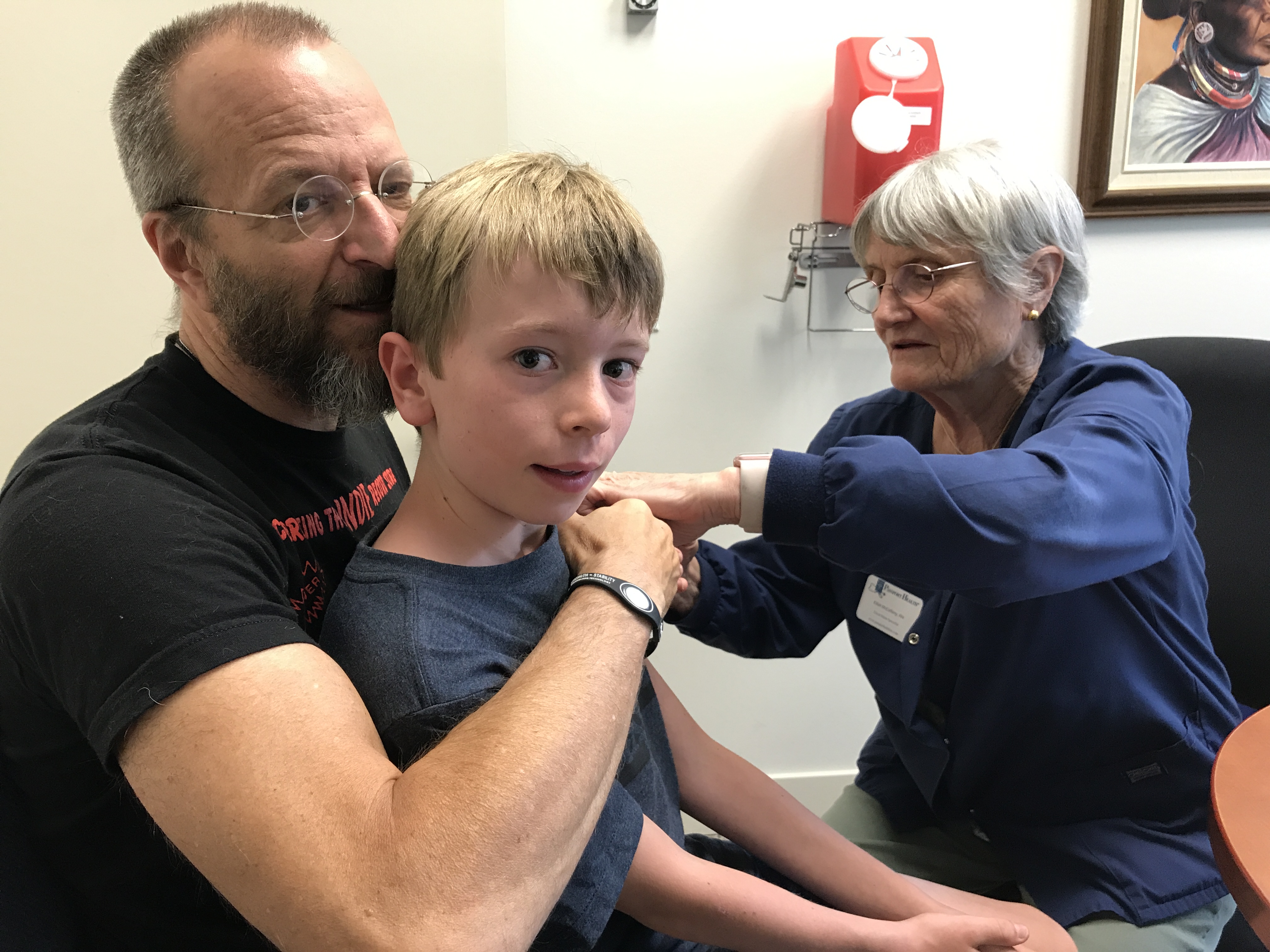
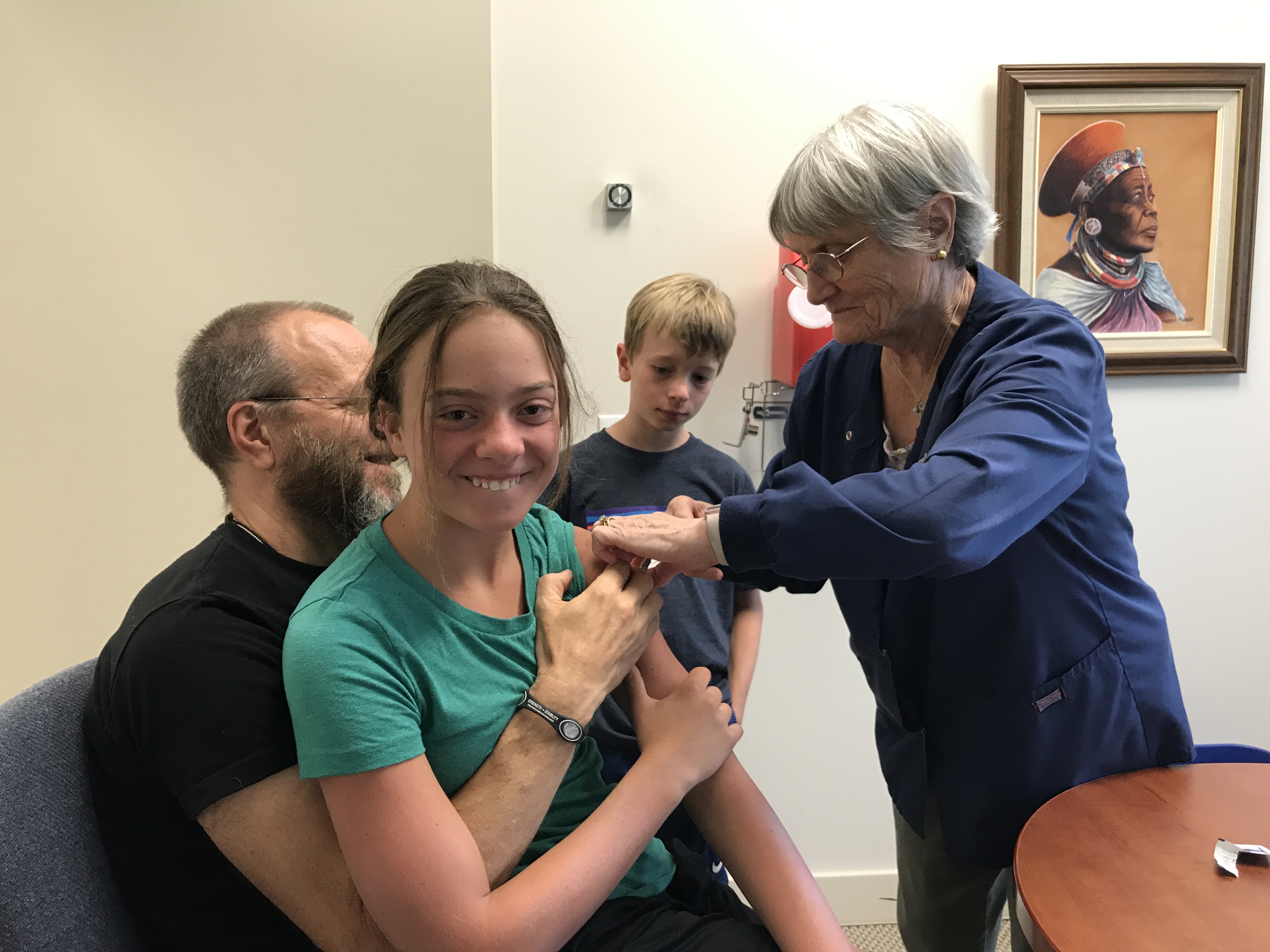
Oh my goodness, I didn’t realize until late June that shots are no joke.  We spent $4500 on shots for our family of five and that’s with the intentional foregoing of malaria meds.  None of this is covered by insurance because it’s elective travel.  Three shots for each of us, but different ones for Will and me.  I’m one of the few moms in North Boulder who vaccinated her kids, so the kids only had to add Typhoid, Rabies and Japanese Encephalitis.  The rabies vaccine is crazy-expensive but 40% of travel rabies cases are for kids 15 and under.  I think Americans smell especially foreign and they go for the littlest legs.  (The vaccine is good for life, so thanks to Peace Corps, I’m off the hook.) The process takes three visits for Rabies and two for Japanese Encephalitis.  We had sore arms, some headaches and the first of our adventure stories to bond us.

Getting “stuck” in the private travel clinic, the kids were great and our Irish nurse was jolly but the whole experience gave me pause.  Deciding to forego malaria means that we need to be vigilant with mosquito protection in Thailand and maybe helps make the decision not to go to southern Nepal.  I started to remember all the random fevers and rashes that were just part of living in Asia, but my anxiety started ramping up when I thought about their little bodies.  And I started to plan the med kit I will take with me and wondering what Where There Be Dragons puts in their kits these days.

Travel Immunizations

But fear came up.  And fear is a big deal as a mom – way bigger than as a single, young traveler.  It’s primal and makes you want to put your “tweeners” back in a five-point harness with a helmet. If Momma-fear and I will be traveling together soon, we need to find that healthy balance between “informed-adventure-mom” and “Nervous-Nelly-mom”.  I mean really, we’re talking about the threat of a nuclear war with North Korea, a kid from Boulder got a shark bite standing in the water in Florida last spring – what is safety anyway?  Fear is not going to drive this bus.

10 ways to minimize your environmental impact when traveling with kids