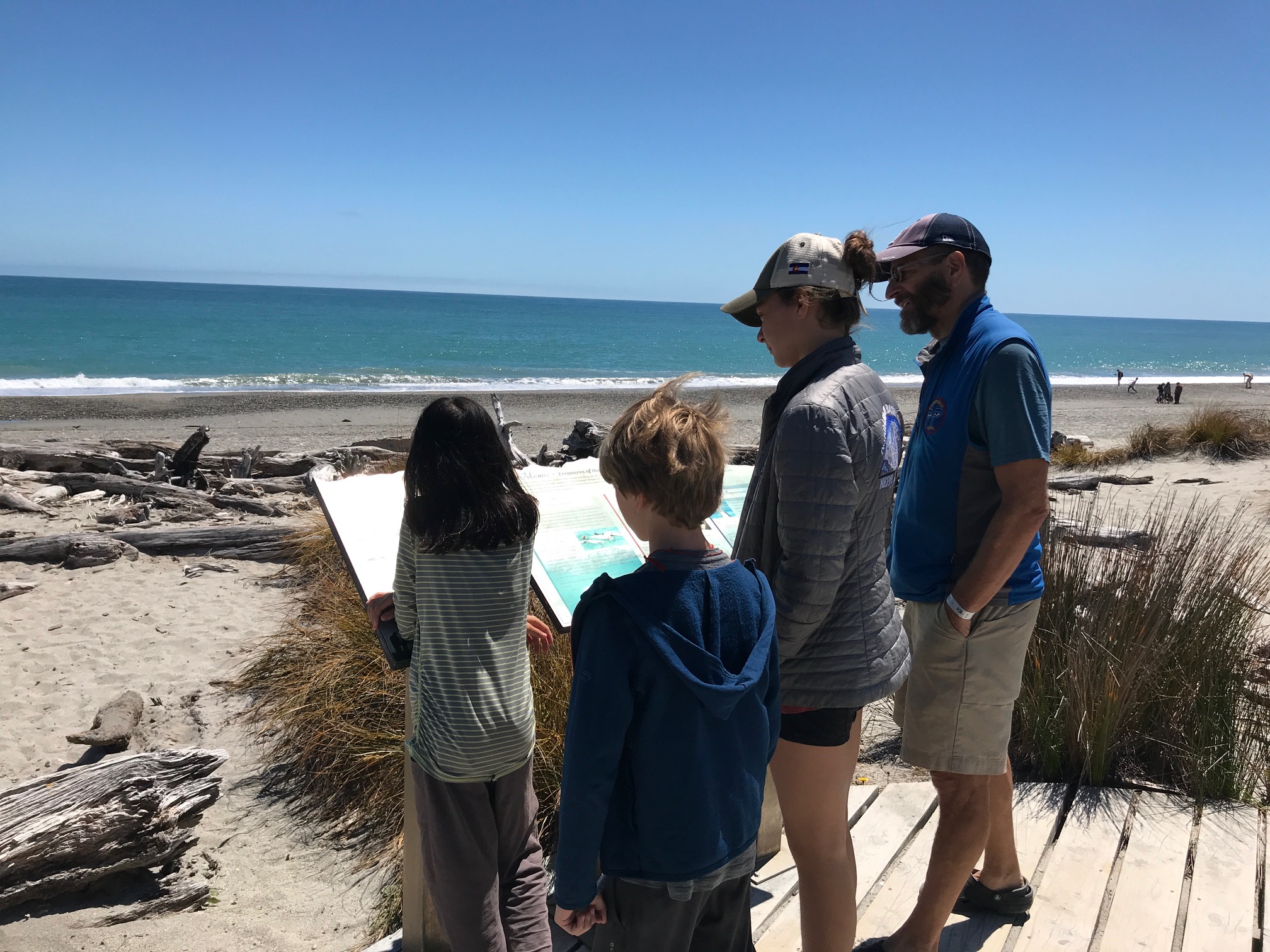
If you get the opportunity to travel New Zealand in a campervan with your kids, here are some tips to maximize the fun and minimize the headaches. These are ten tips from the Paradise Family who traveled with their three ‘tweeners in November of 2017.
- Don’t go far on Day One It’s daunting to pull out of the campervan parking lot with a large, heavy vehicle, drive on the left, maneuver narrow roads and single lane bridges and navigate where you want to go. The last thing you need is pressure to be at a certain place because you have a reservation. You may very well push yourself past your instinct for safety.
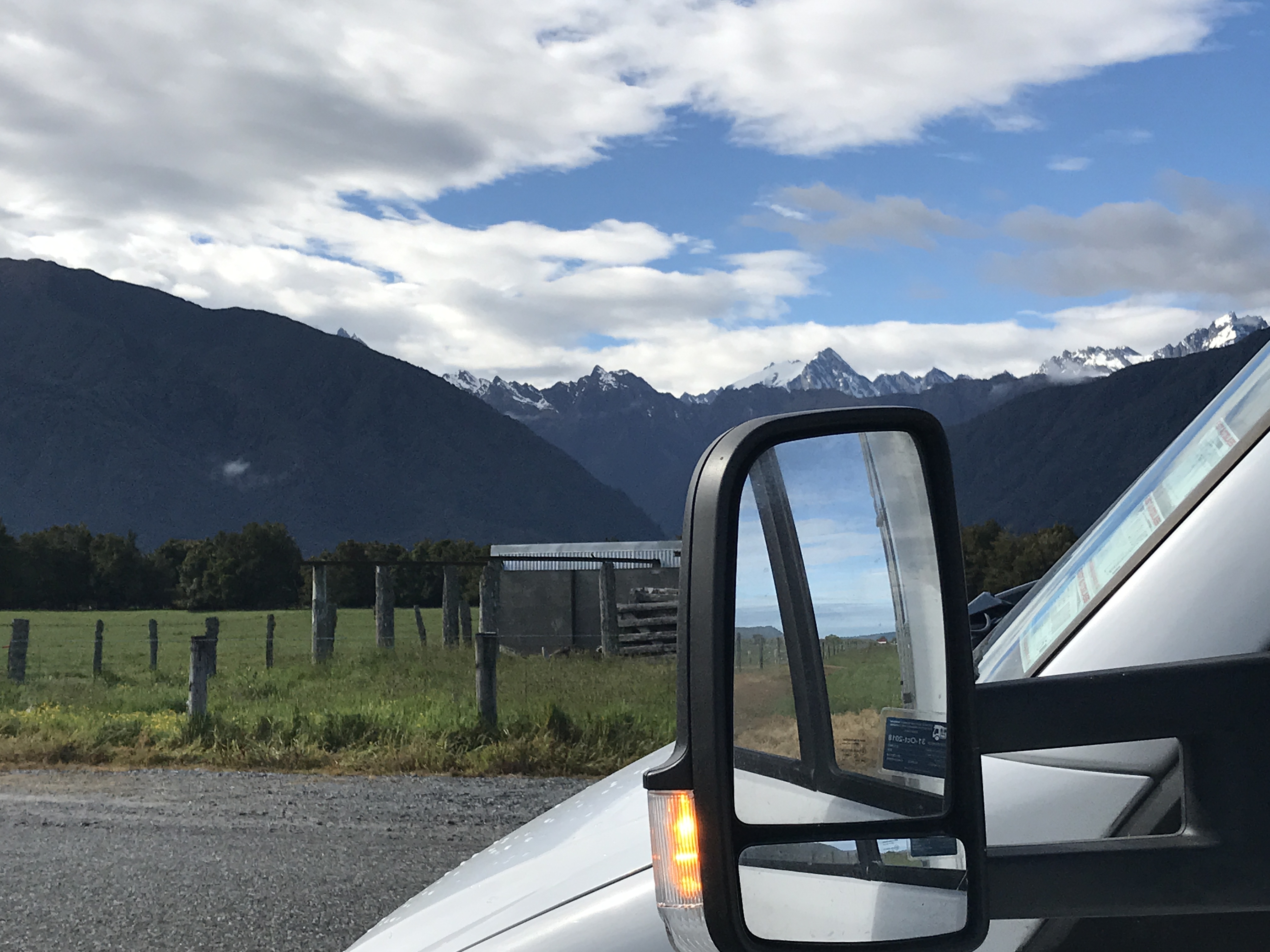
You can enjoy views like this and stop whenever you need to stretch your legs.
- Driving is a two-person job One person needs to be the co-pilot: a second set of eyes, a reminder to stay left and navigate. Copilot also gets the lovely job of entertainer (arbitrator) of the kids, if they’ve come along.
- Stay connected Get a local SIM card for your phone. I got the $19 rollover card from Spark and used it once or twice a day to book places while driving, keep in touch with fellow travelers or to call the rental company with various campervan mysteries (deflating tires and missing knobs, etc.). Seriously consider the mobile wifi unit that your rental company will offer you. They work wherever you can get cell service and it’s so nice to be able to read the NYT while drinking the morning coffee. It takes the whole experience from camping to glamping.
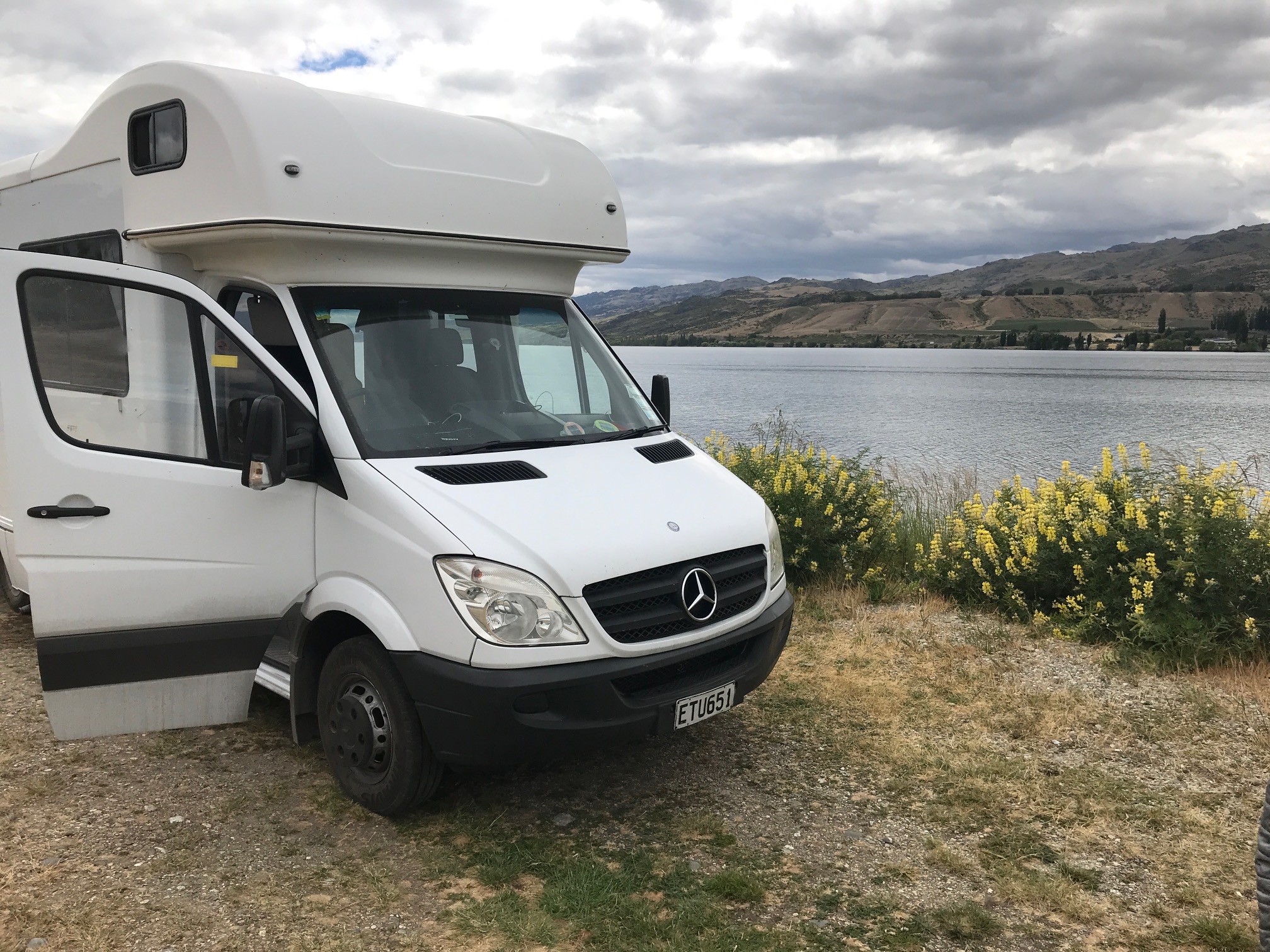
Another perfect and free camping spot.
- Structure There’s a dance between leaving space for the spontaneous event, like swimming with dolphins, and having a set itinerary. On the one hand, last minute bookings for activities and campgrounds may be impossible and on the other hand, who wants to be stressed out to stay on schedule when you’re on a vacation. This is all personal preference, but what worked best for us was to reserve the “bones” of the trip: heli-hike on Fox Glacier, the cruise on Milford Sound the Thanksgiving dinner with cousins in Dunedin the powered camp sites; and then be as fluid day-to-day as possible. A few times, I called to change the reservations without consequence, but the really popular spots do book up.
- Solar Bring solar chargers for your devices. We are not big tech people, but even our few devices were hard to keep charged when you’re only powering up every three or four days. Our two solar chargers were great to keep phones and readers with a minimum charge for navigation, reading and a few email check-ins. We kept them going on the dashboard all day and out on the picnic tables while we were at camp. Here are our favorites.
- Bug protection! Make sure you have spray and long sleeve / pants. The sandflies are vicious outside of the cities (which is where you’re most likely headed in the South Island.)
- Download the Apps It’s a modern world and the easiest way to navigate is by the internet… when you can get the internet… and keep your devices charged. Campermate is THE app. I also toggled between Rankers Camping NZ and FreedomCampingNZ. On these sites, you can get up-to-the-day user suggestions and comments, like another social media avenue. You can get the pin drops for google map directions to trail heads or make dinner reservations. If a dump station is not maintained, other campers will let you know. Incredibly useful. And you won’t need to get the extra GPS navigation gizmo’s like Tom-tom or Garmin that the rental company will offer you.
- Check online for current road conditions We did our initial research for the driving itinerary from books and (apparently) out-of-date online sources. A major earthquake near Kaikoura had recently closed the entire access to the Northeast coastal route we quickly realized in talking with people and confirmed with the Campermate app. If your time is limited, you will want to know these things before you leave home.
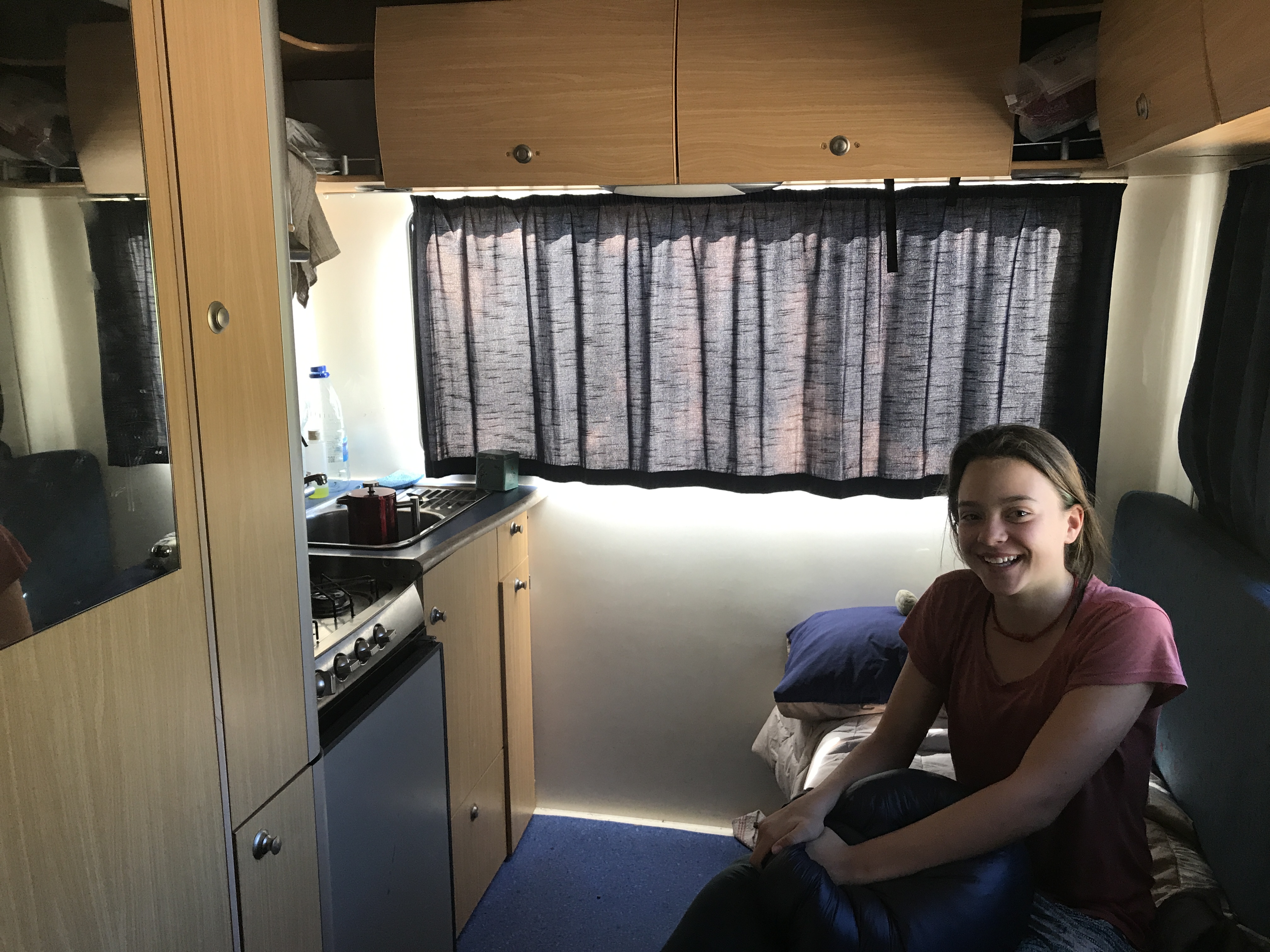
Kitchen, otherwise known as Lorna’s bedroom
- Pack for All Weather We traveled in November and we had all kinds of weather: hot, cold, rain, wind. The Kiwis we met all said that their weather is totally unpredictable the last few years so plan for all four seasons of weather – no matter the season you’re going. We were mostly in camping clothes, but it was also nice to spiff up a bit for the city or a nice dinner out. If you want to have some nice dinners, perhaps pack a top that will make you feel as if you’re not camping for the night.
- Consider a Three-Hour/Day Driving Goal We had a LONG driving day on our fourth day out and the kids never let us forget that that was too long. It’s great to break up the driving so that there’s just a bit each day. It seemed that the rear-facing seats and the sway to the larger vehicle make it more difficult to take the motion for long periods. Our three kids had strict daily rotation plans so that they all got to sit in each seat.
But whatever you do, do it. These are days you will remember. Here are our highlights and road schooling plans.