
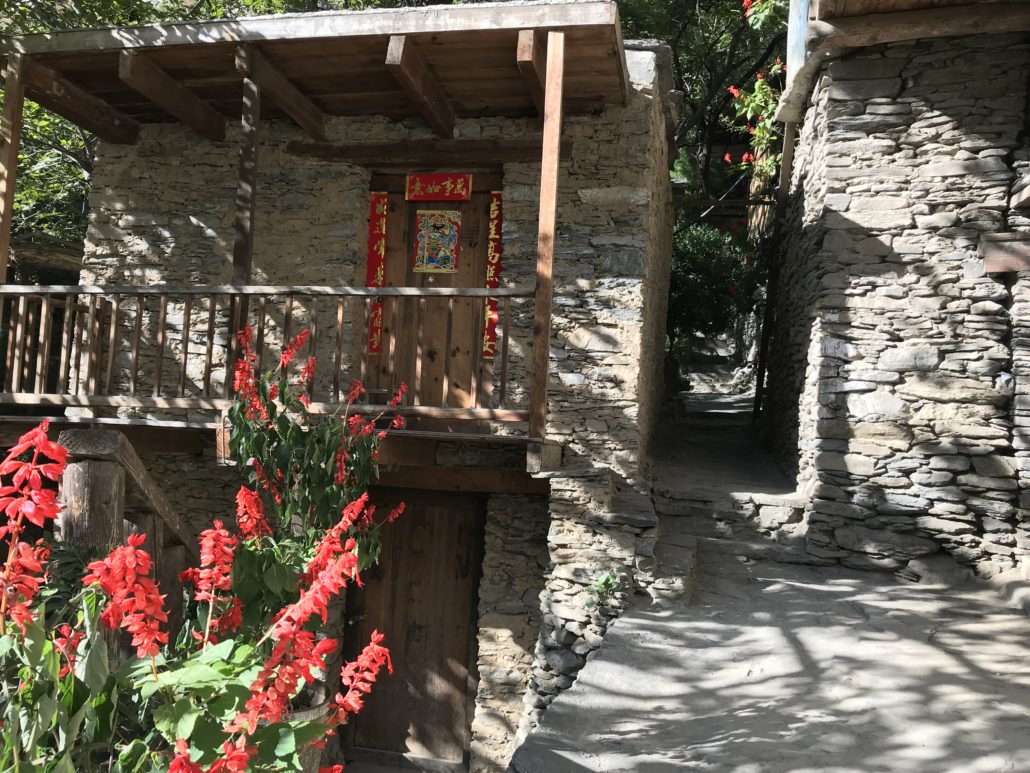
From Chengdu, we took a van for about three hours to Muka, a “minority” village. China is 94% Han Chinese. But that leaves approximately 69 million people who fall into the category of “minority”: Tibetans, Southeast Asian Hilltribe, Uigurs, and many more. This village is home to the Qiang ethnic group who were neither Buddhist nor Muslim, but had their own belief system before the Cultural Revolution. This Qiang village had a few guesthouses, but no large large hotels. We never saw other Western tourists in our three-night stay.
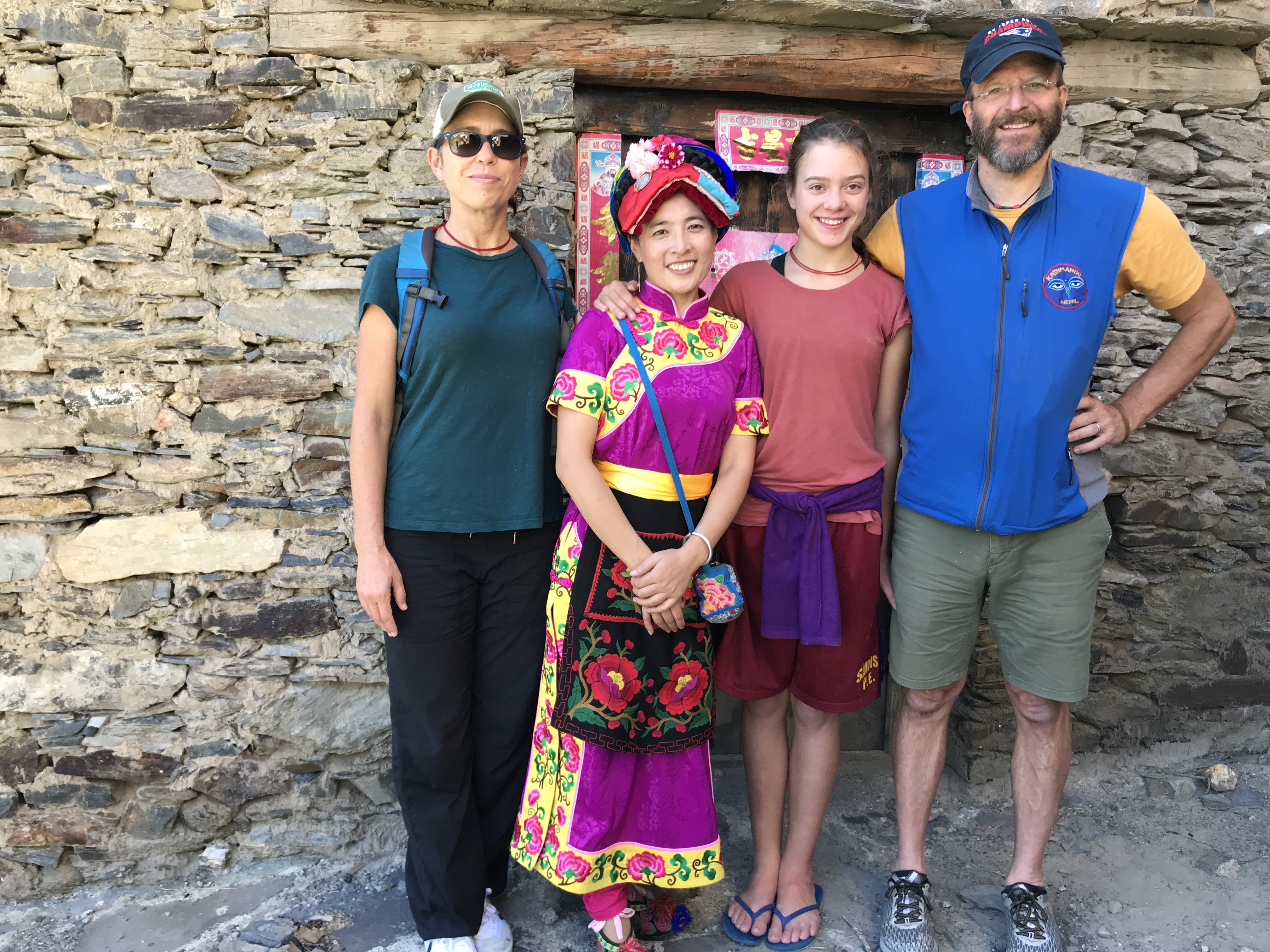
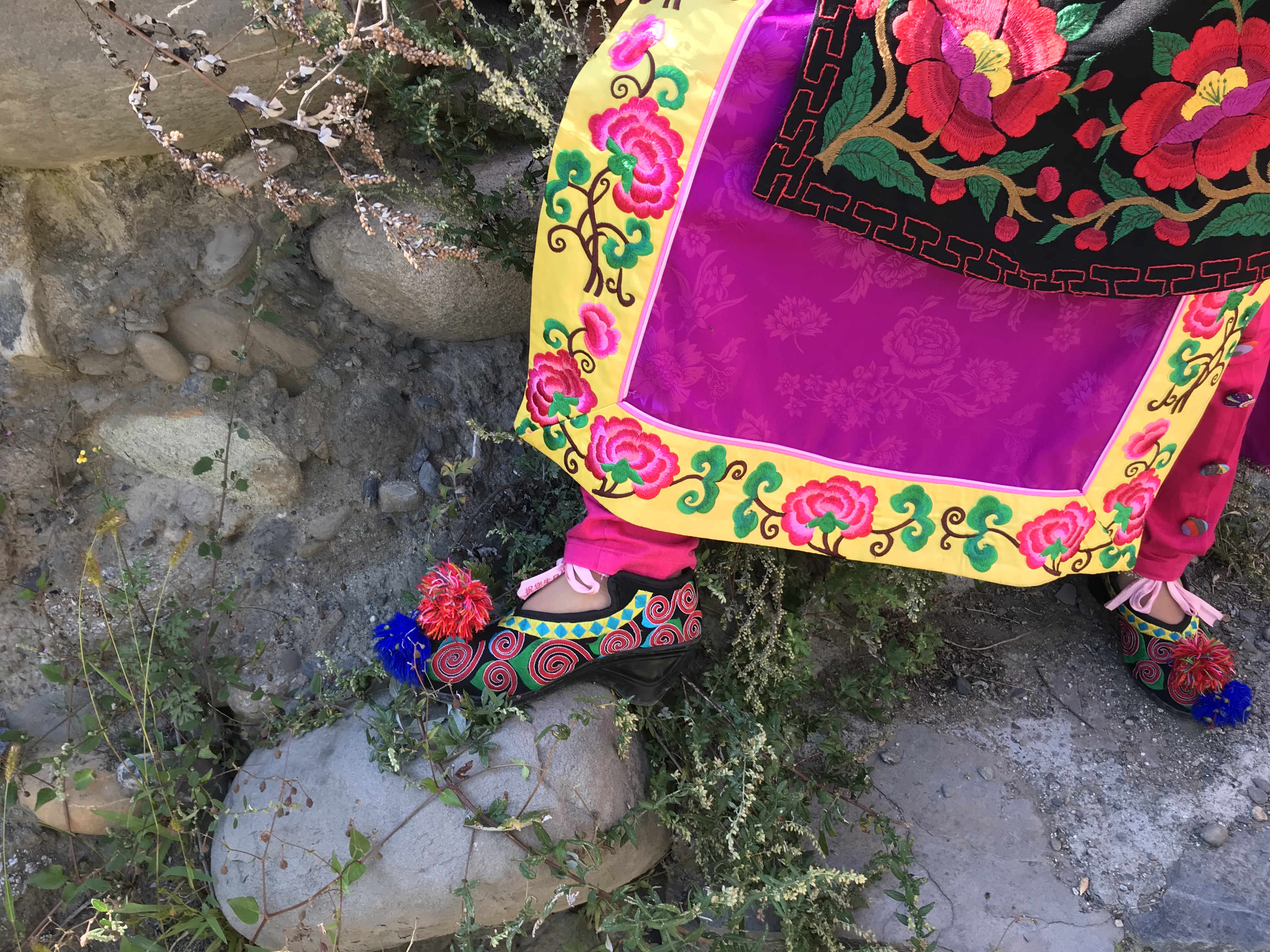
I want those shoes! Who’s with me?
The drive from Chengdu was surprisingly easy. The road was new and very well-maintained. This area was the epicenter of a massive earthquake in 2008, so that may answer why there had been so much money poured into it. I kept seeing mountains and wondering how Lucy’s tummy would fare, and then bup! into a tunnel. Tunnels through mountains: a novel concept after months in Nepal. In this Qiang area there are loads of hydro projects, irrigation canals and tunnels.
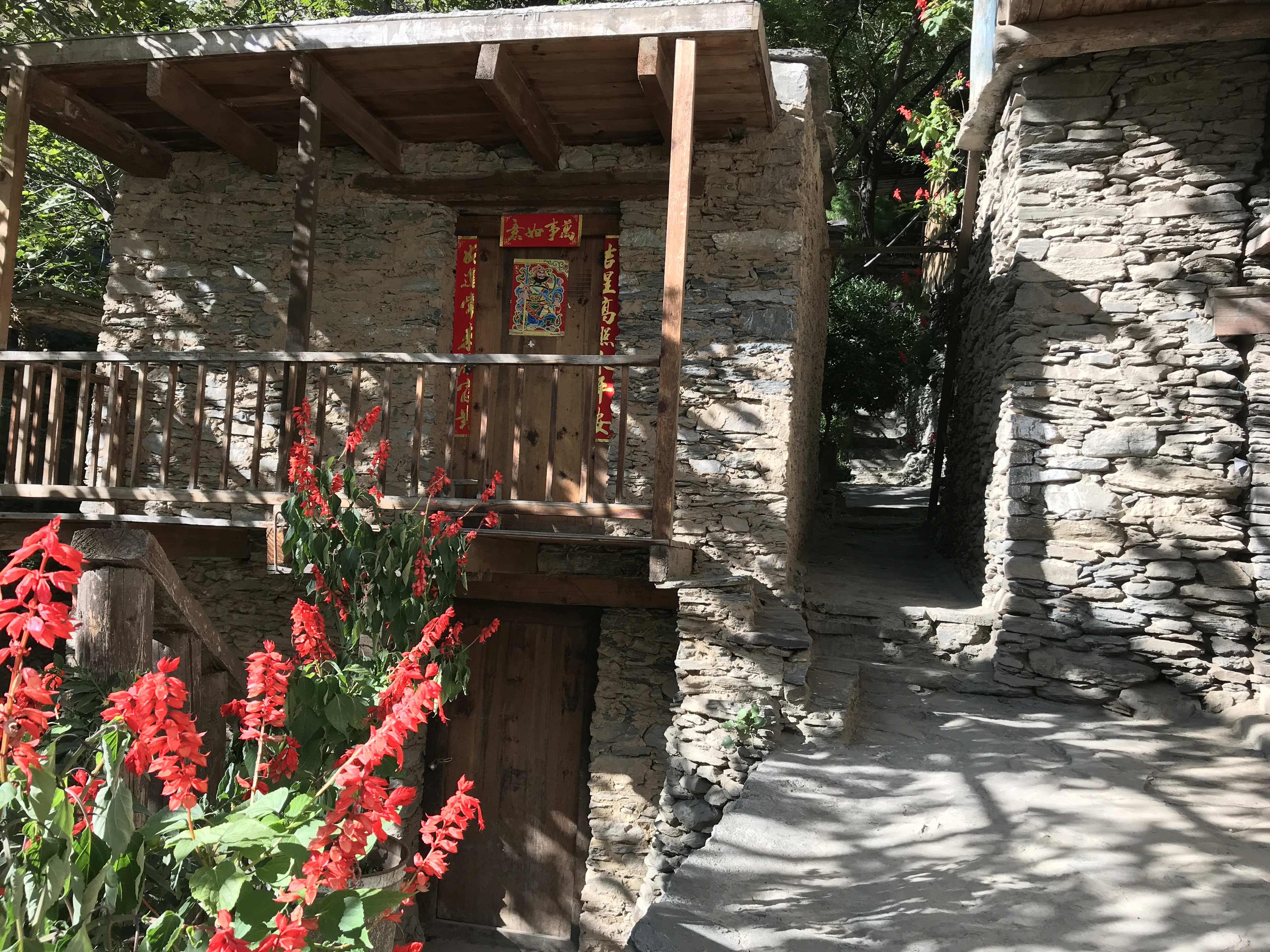
Not your stereotypical China. Grateful to off the tourist circuit and seeing some diversity!
The Qiang are known for their stone houses (not a great mix in earthquake country), embroidered shoes and fascinating hats. The womens hats look like a folded dinner napkin on the top of the head and then held into place by two braids, Heidi-style. Like most places in the world, it seems, the grandparents are still wearing the traditional clothing and anyone under thirty is wearing the mono-cultural Western attire.
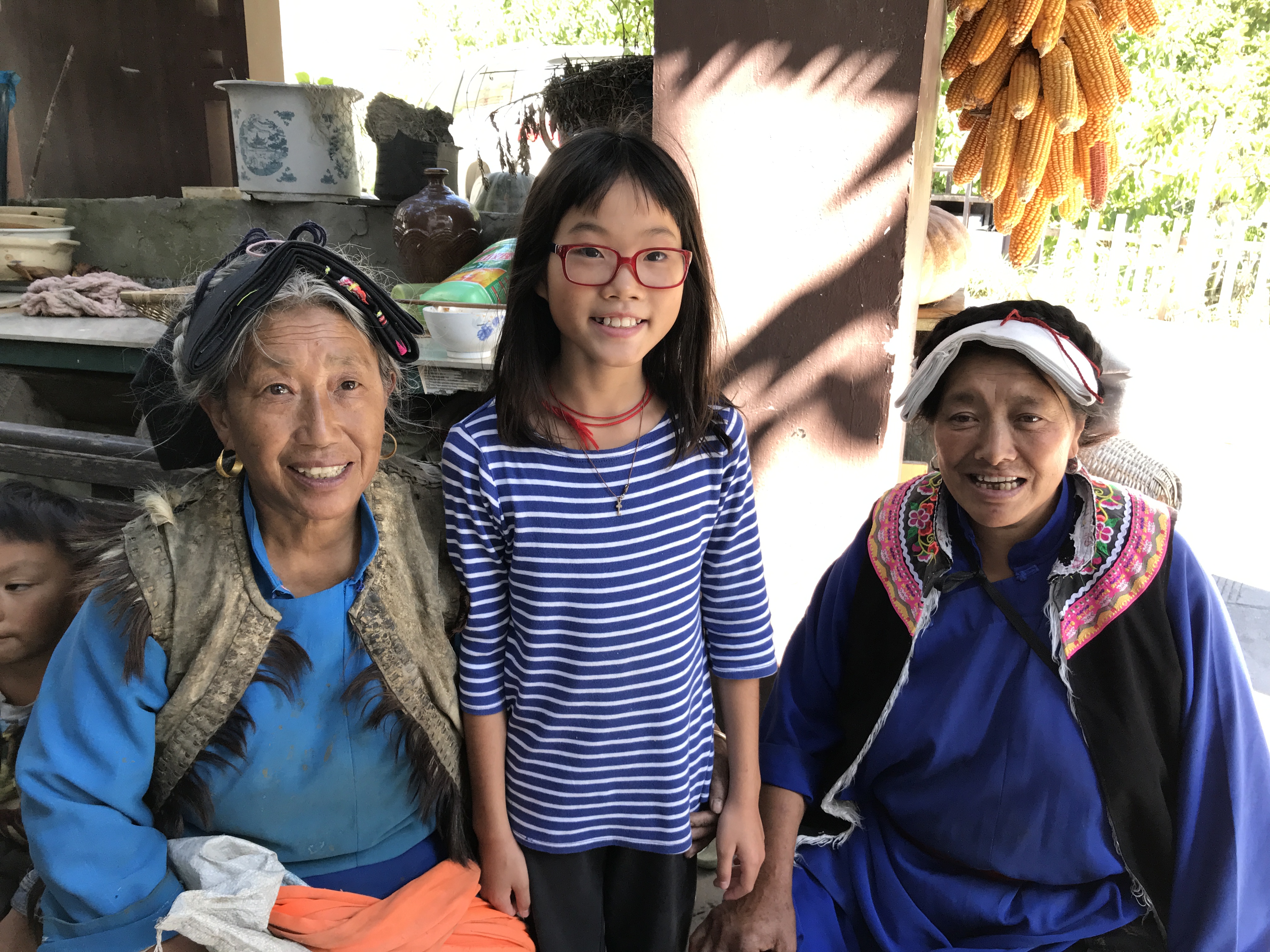
Qiang grandmas doting on Lucy. We loved their hats.
We looked around the old village a bit and found a home that Julie had stumbled upon before. We walked right in and looked around. A doorway is more of a suggestion than a fixed boundary and the TV-watching man of the house, beckoned us in to look around. The kitchen could be a feature in Sunset Magazine. A fern-covered stone trough for a sink with a constant flow of water. It had an open ceiling and led to a courtyard with stone table and benches. I couldn’t place myself – American Southwest? Big Sur? Xinjiang? Mexico? There were cactuses and oaks, pomegranate trees and grape vines, roses and gingko trees, hanging chilis and drying corn, live ferns and pet chipmunks.
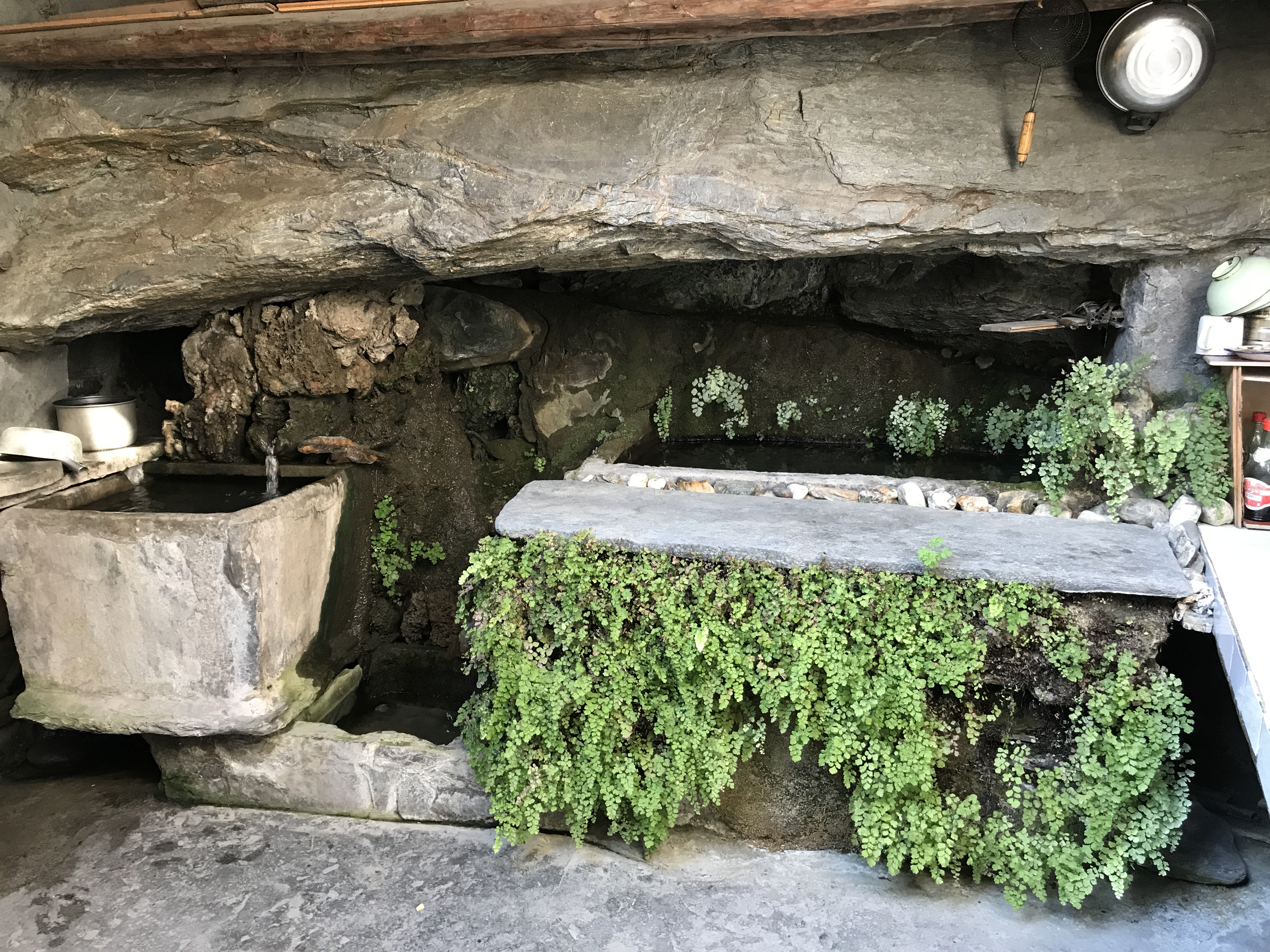
This just may show up in Sunset Magazine, mark my words.
We all sat, mesmerized by this most-cool house and I wonder what Kai, Lucy and Lorna will remember of this place? Will they wake in the morning one day at forty years old, wondering if this place were real or a dream? Will they be inspired to follow design as an adult and incorporate some of these foreign, natural concepts that will seem to simply come to them as inspiration? I wonder what these remote places will mean to the adults my kids will become.
There is absolutely no way that we could have the moxie and foresight to come to a place like this without Julie. (I found here through the alumni board of Where There Be Dragons, a student travel company where we have both worked.) No one speaks a lick of English and your guesthouse serves your meals which need to be ordered up ahead, especially our vegetarian preferences. There are so many interesting things happening around us and Julie’s language, cultural knowledge and patience can answer our constant questions.

