
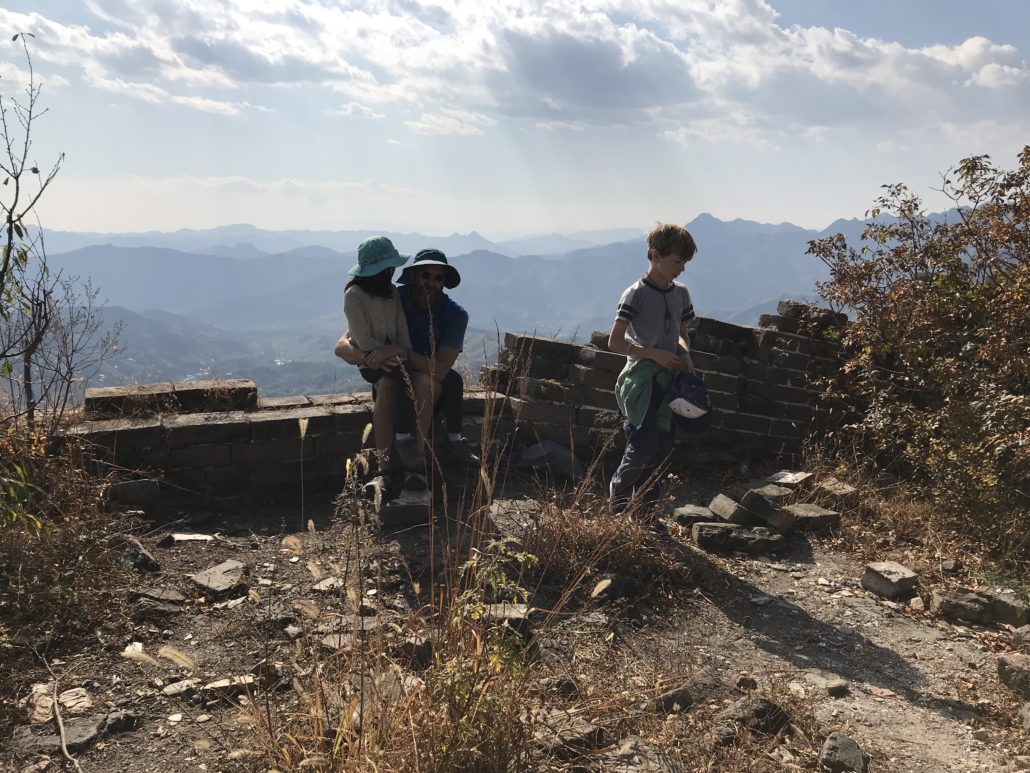
My daughter, Lucy, has been slightly obsessed by The Great Wall of China for years. We have read lots of books on The Great Wall and even watched some travel videos about it, but we were unprepared for just how cool it is. The most famous and trafficked section of The Great Wall has a McDonald’s and a chair lift at its base. This is the section made famous by Mao himself, but there are many uncrowded sections of the Wall to visit if you have the ability to get off the main track.
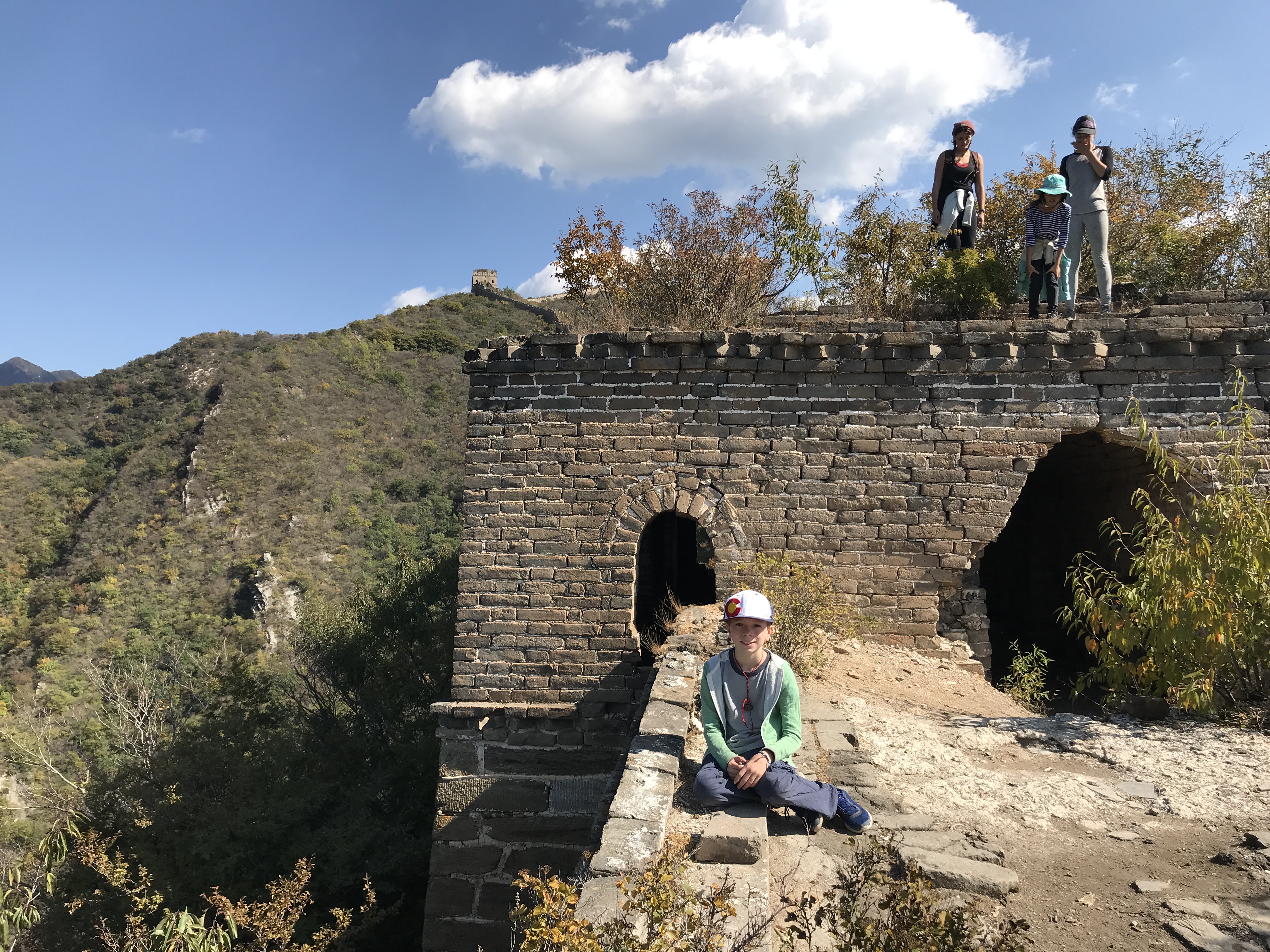
Watchtower exploration on The Great Wall.
We were lucky enough to go the Xiangshui Lake Area for three nights – just two hours from downtown Beijing but it felt like worlds away. We hiked through fall colors for six miles along this remote section; we never passed another person although the path was easy to follow. Some watchtowers were easy to climb and others looked too unstable to attempt. This part of the wall had no signs or warnings, and we really felt like explorers finding our way and judging safety for ourselves. Lucy and I had read about the many, many people who died in the building of the Great Wall and it all made sense when we could see the steepness of some sections. The hand-etched lines on the bricks against the magnitude of the wall, made us stop and feel the generations and generations that it took to build this architectural masterpiece. Without any fellow tourists to bring us back to the present, there was an intimacy and timelessness to exploring this worldly wonder.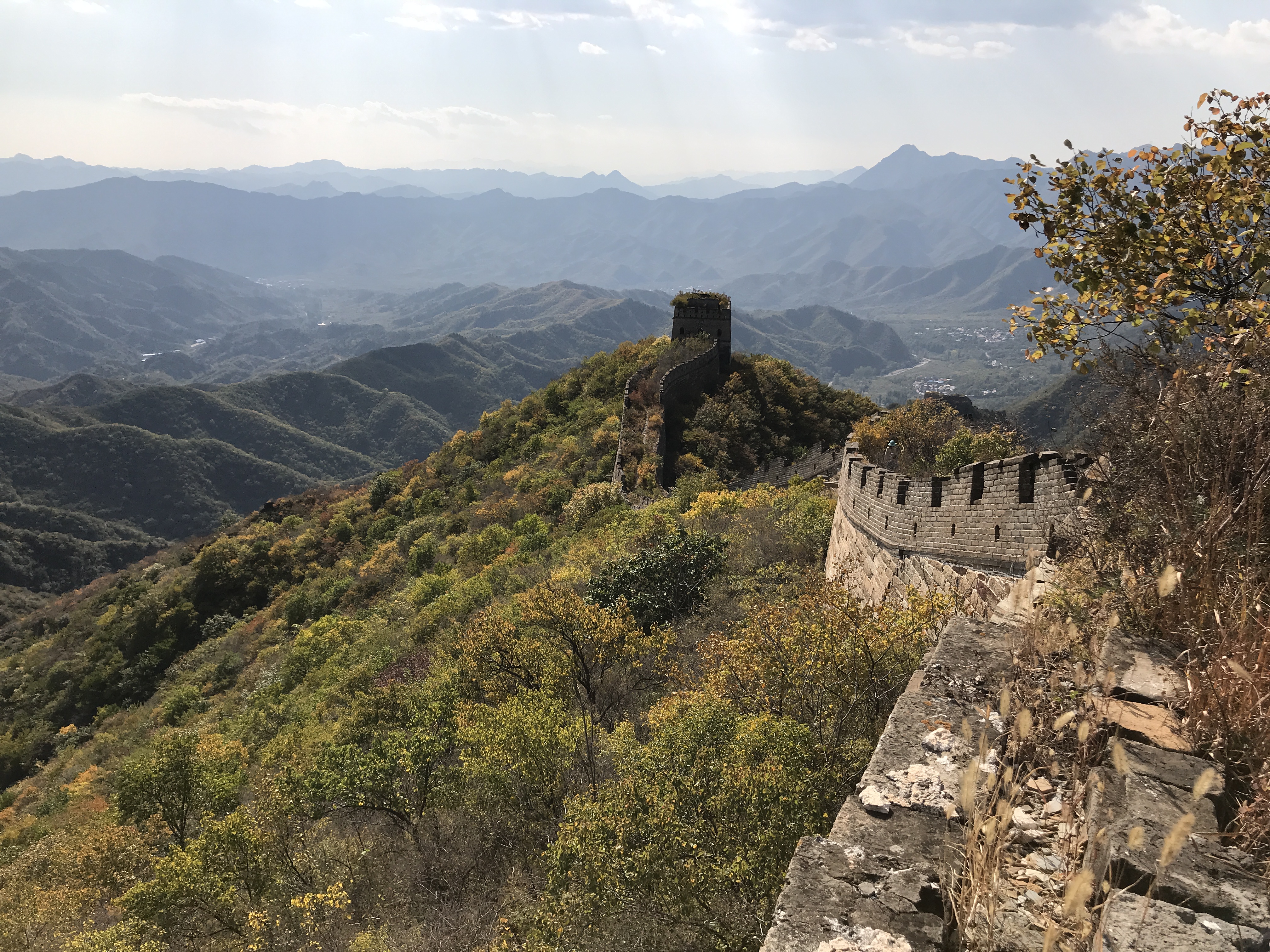
This is road schooling at its best. History becomes alive and real to a child when you have an opportunity to tangibly experience a link to the ancient past. And as Lucy was born in China, there is a sense of her heritage and the power of her lineage that likely explains her attachment to the Great Wall. We had quiet moments to imagine what it might have been like as a soldier waiting for the possible Mongol invasion. Or, the difficulty for the Mongol invader to actually scale this wall.
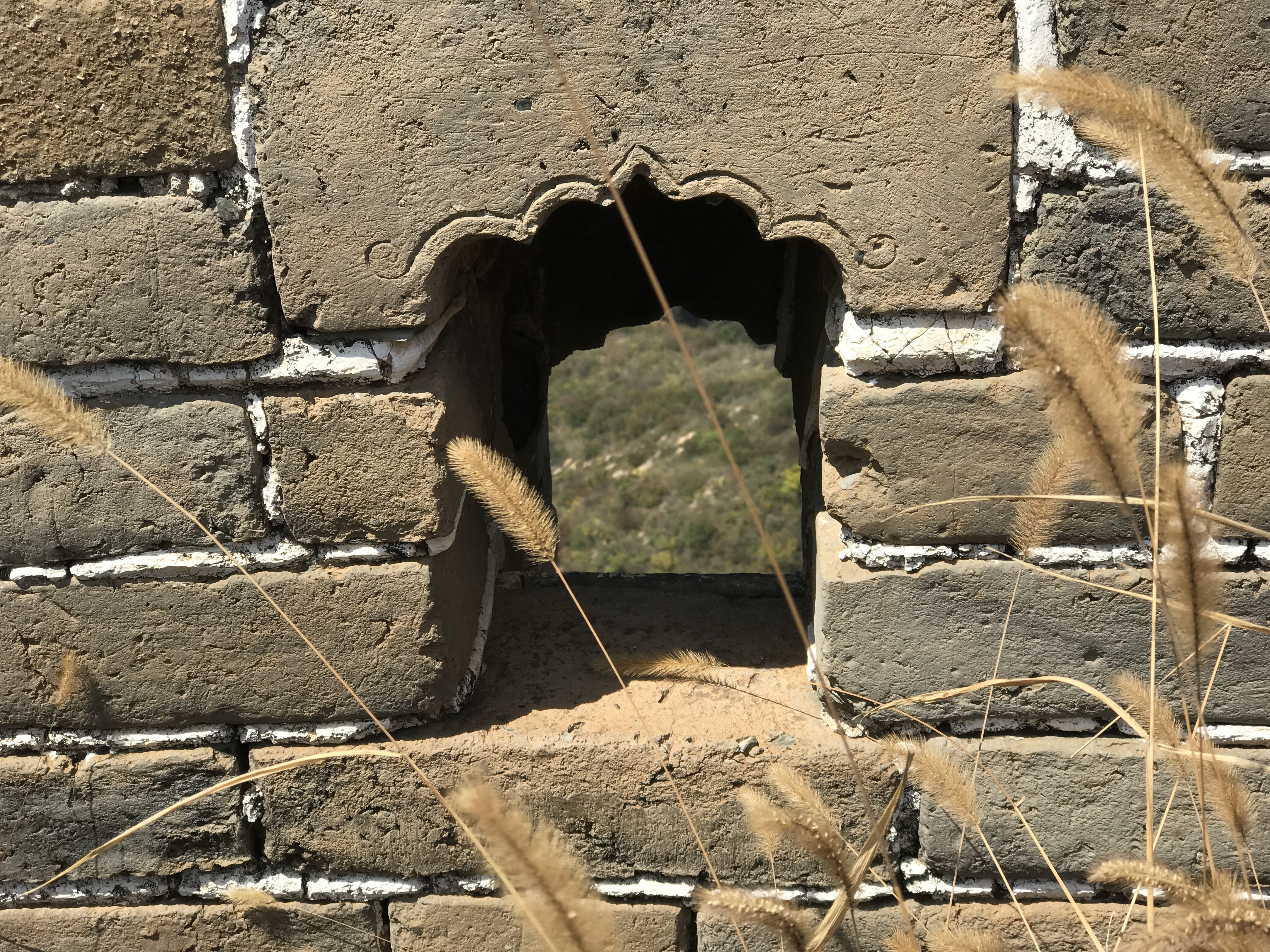
The arrow-shooting hole has a simple artistic detail and angles down toward the invaders who might try to scale The Wall.
The town of Xiangshui Lake offers official homestays in the farmhouses around town – which seems like an excellent way for the local farmers to have some extra income and keep the Chinese tourist mega-hotels at bay. We loved the quiet feel of this town, but a stay there would be tough if no one in the group spoke Mandarin. Where There Be Dragons has frequented Farmhouse 69 for seven or more years and we could see why. Our hosts gave us a warm welcome, incredible vegetarian food and some cooking demos. Greens, like bok choi and cabbage, grow in every square inch of this town, like all small towns in China, and the persimmons and chestnuts were just coming ripe.
We loved our “hotbed” or khang bed, which are typical to the cooler north: there is literally a fire lit under the platform bed in the evening and the warm coals keep your bed toasty warm all night. Why heat the whole room, when you really just need a cozy bed? Ours also had a large, shallow bowl that doubled as a water kettle – helping to heat, humidify and create the perfect place for the yeasted bread to rise…ingenious!
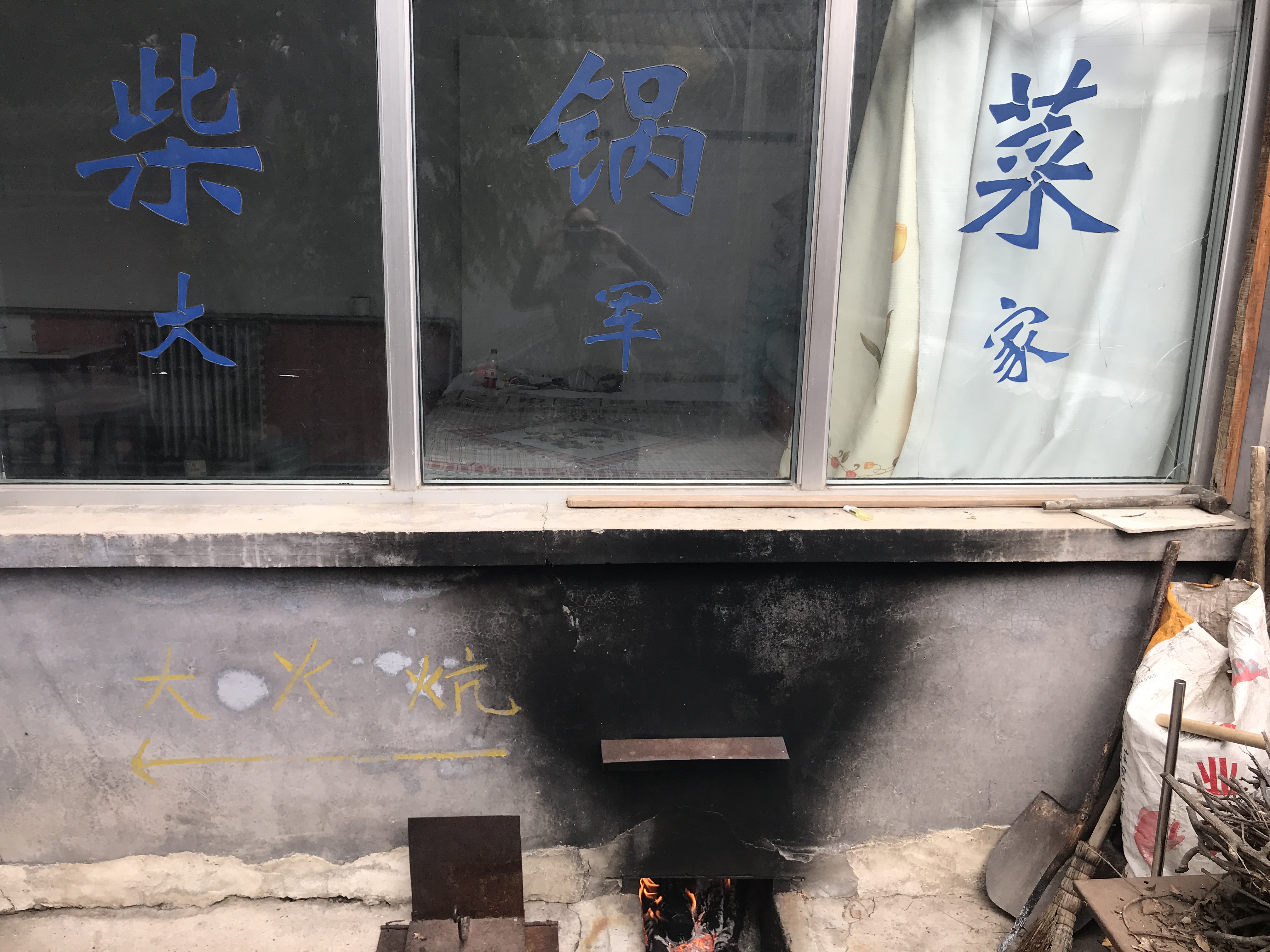
The new style of “Khang Bed” will keep you cozy warm through a cold night.
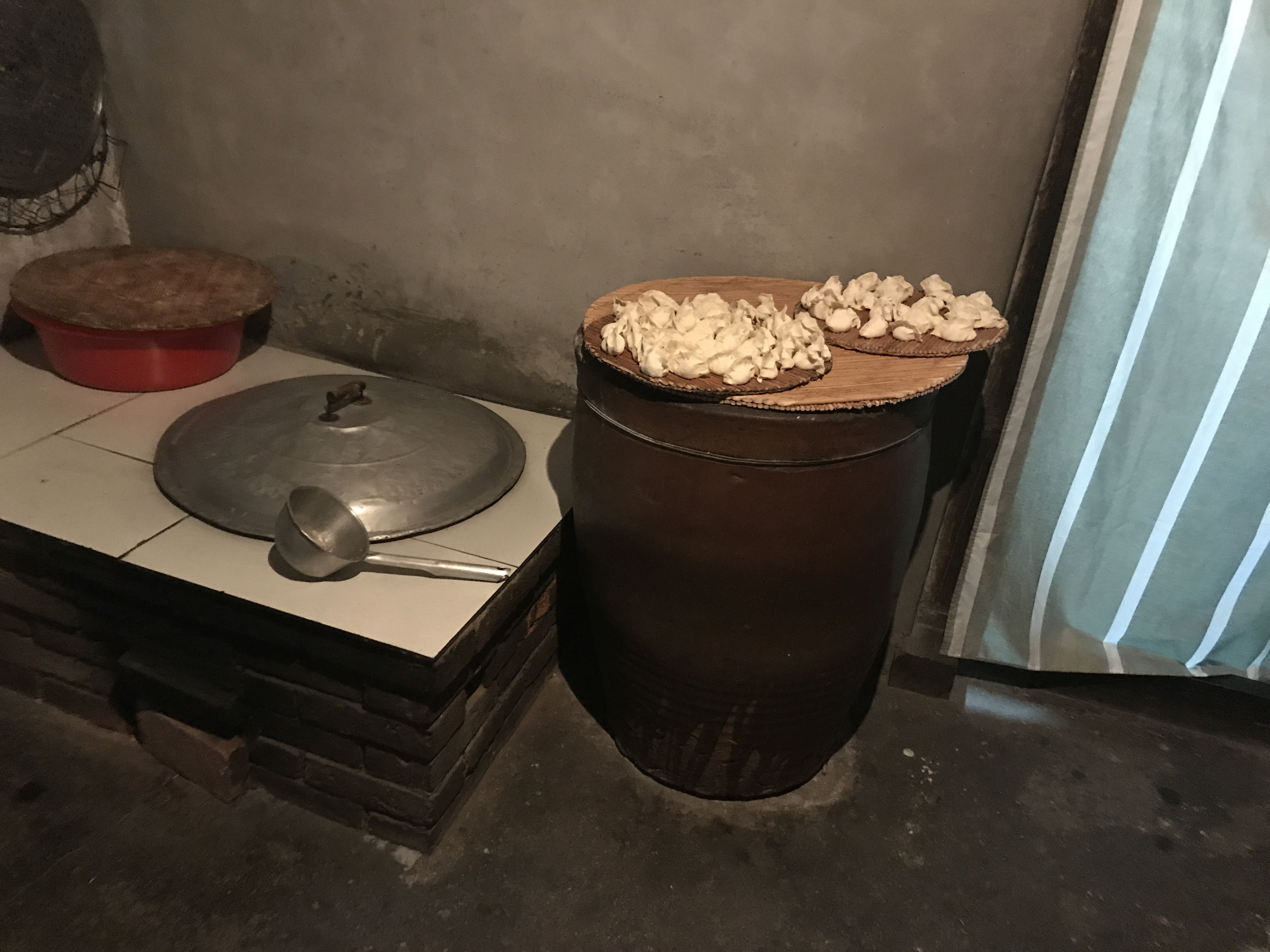
Old-style khang bed with a kettle of water over the warming fire. Our bed was just on the other side of this wall. Chinese style dumplings (momos) ready for steaming.
In the center of Xiangshui Lake, there was another entrance to a restored Wall section and accessed by a large gate and golf carts. Massive tour buses whizzed in and out, ferrying hundreds of Chinese tourists but no one ventured just off the path to our section. We never went through this popular, preserved section. The wildness and privacy of the our remote segment of The Great Wall made it all the more memorable.
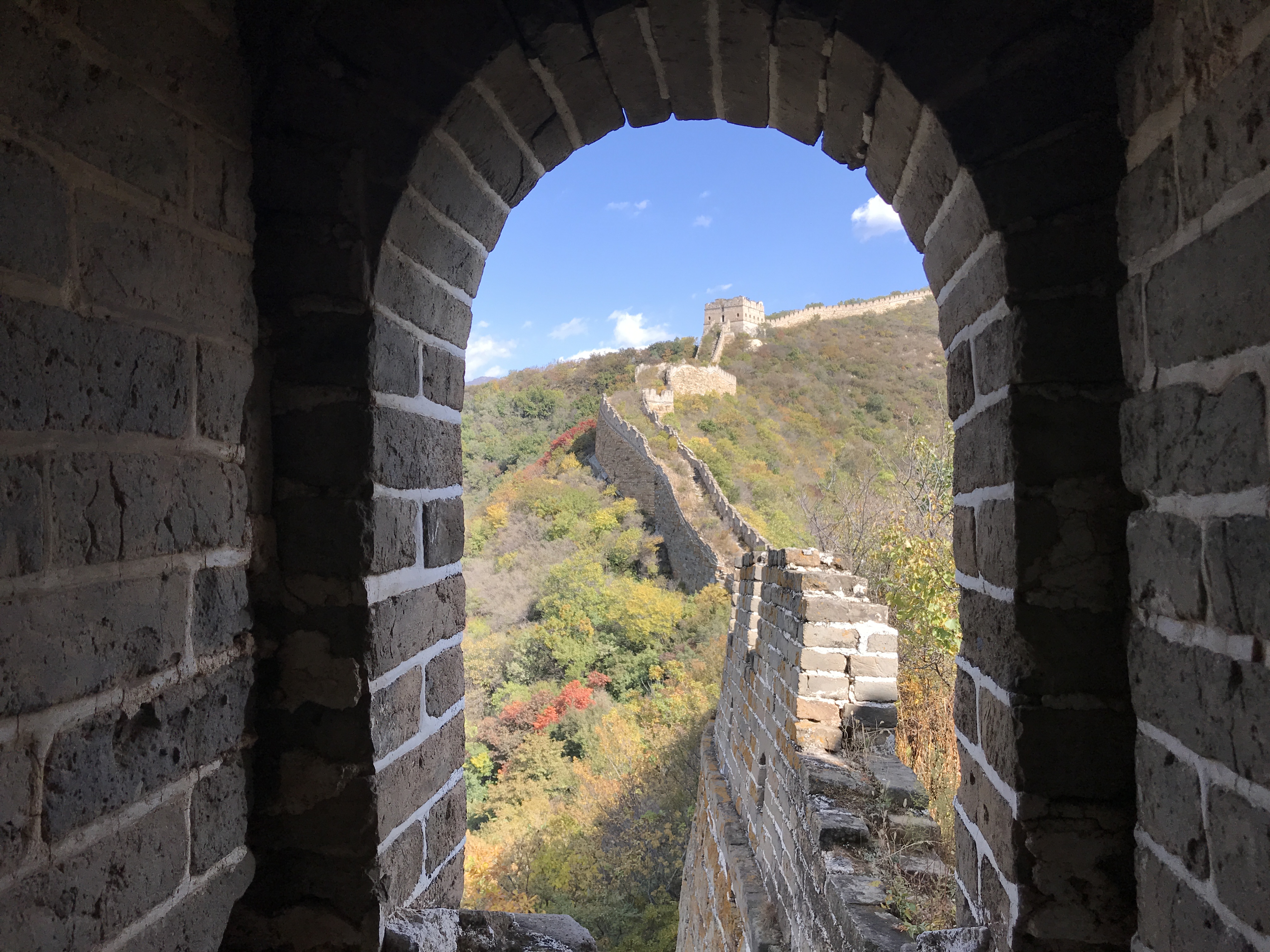
Fall colors 2017

