
Camping, caravanning, glamping or tramping goes by many names in New Zealand. But whatever you call it, the rest of the world has a lot to learn. From the sheer amount of rented campervans on the road, to the number of parked vans in the cities, my educated guess is that New Zealand probably has more campervans per capita than any other place in the world. Camping is a national identity and they know how to do this right. There are free camping app’s that list dump sites, water sources, and up-to-the-date user-contributed postings as to the cleanliness of the toilets, the toilet paper supply or the road conditions. After spending one month in a six-sleeper campervan touring the South Island of New Zealand, I am already inspired to camp more at home.
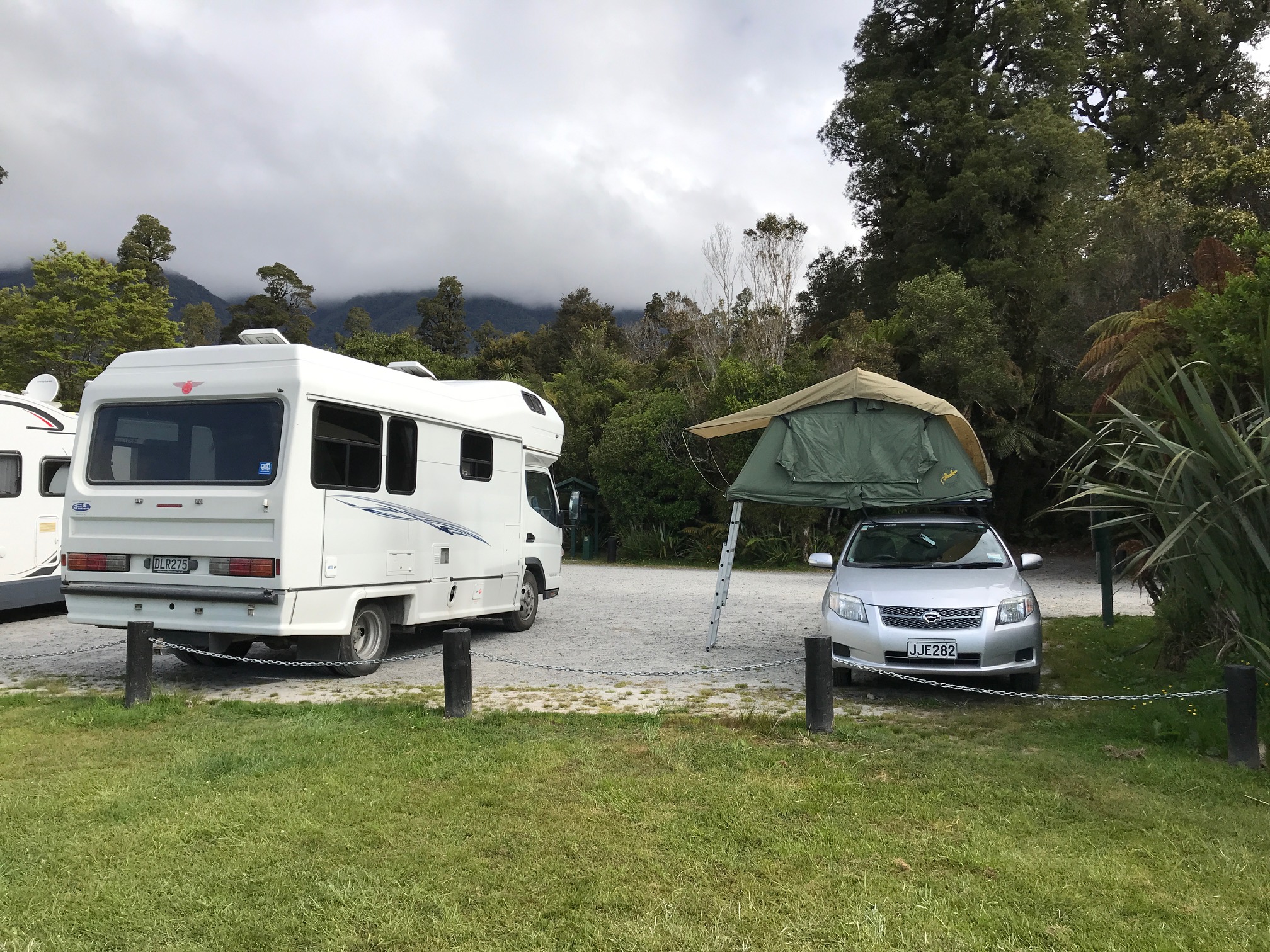
I envied these smaller, more nimble cars, but it might get exciting on a windy night.
With Christmas Season coming in the summertime (and it is “Christmas”, no “Happy Holidays” here), many families camp for Christmas and have used the same sites for generations. Santa can visit the site by boat to give out presents and Christmas lights and fireworks are part of the packing list. Just another reason that Christmas is less commercial here, who would want to schlep all the trappings to a DOC campsite?
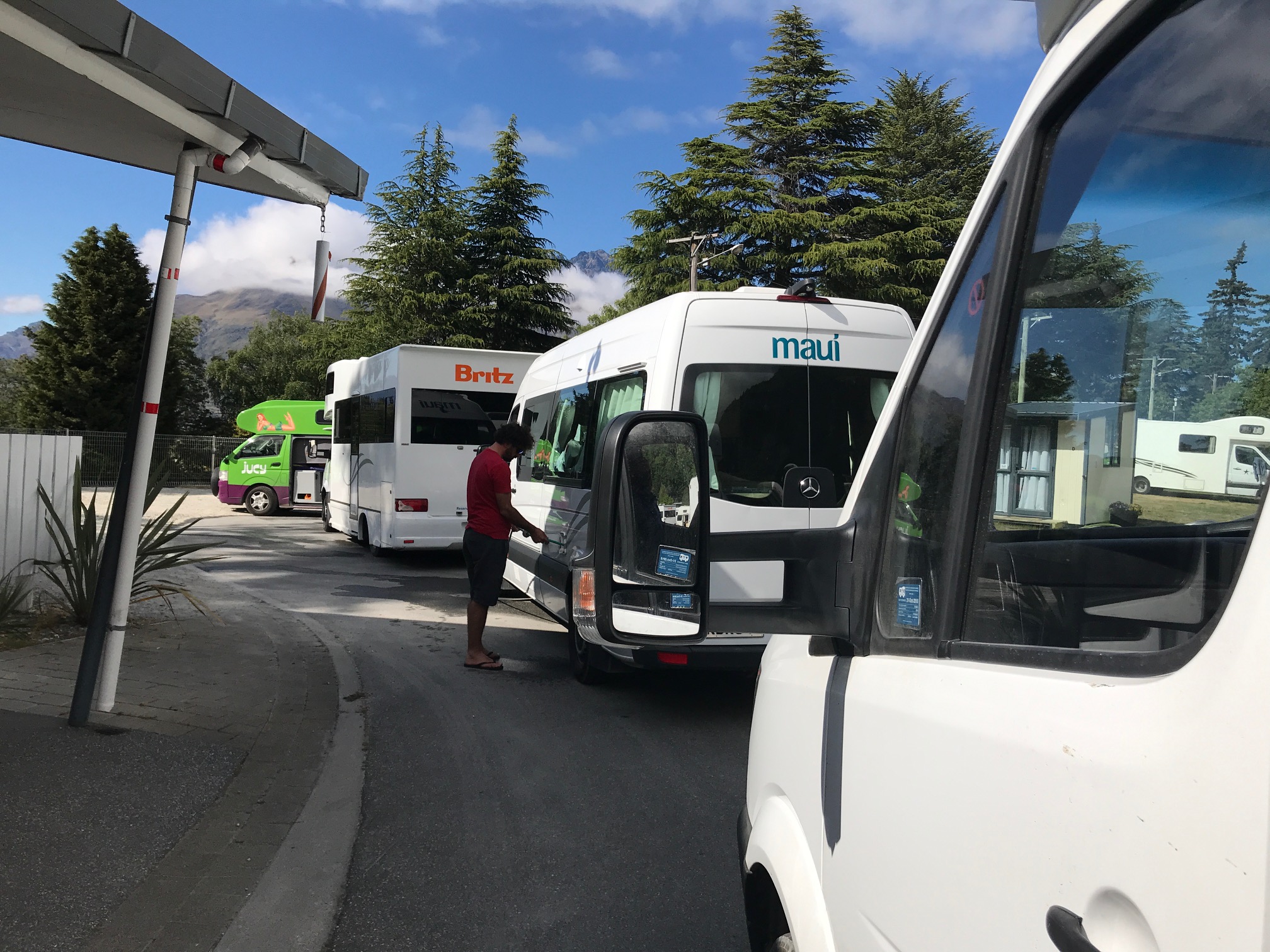
waiting for the free dump and fill station.
When I come home from a camping trip in the US, there’s that pioneering feeling of having “roughed” it. But here, camping includes chilled wine, Wi-Fi and level ground. It includes tricked out Mercedes bases and architecturally-designed canteen kitchens at your campsite with a million dollar lake view. And nightly sites span the range between free government-approved pull-outs for self-contained vehicles all the way up to $100/night (for a family of five) powered sites with amenities such as private hot tubs, unlimited Wi-Fi and a kids’ “jumping pillow”.
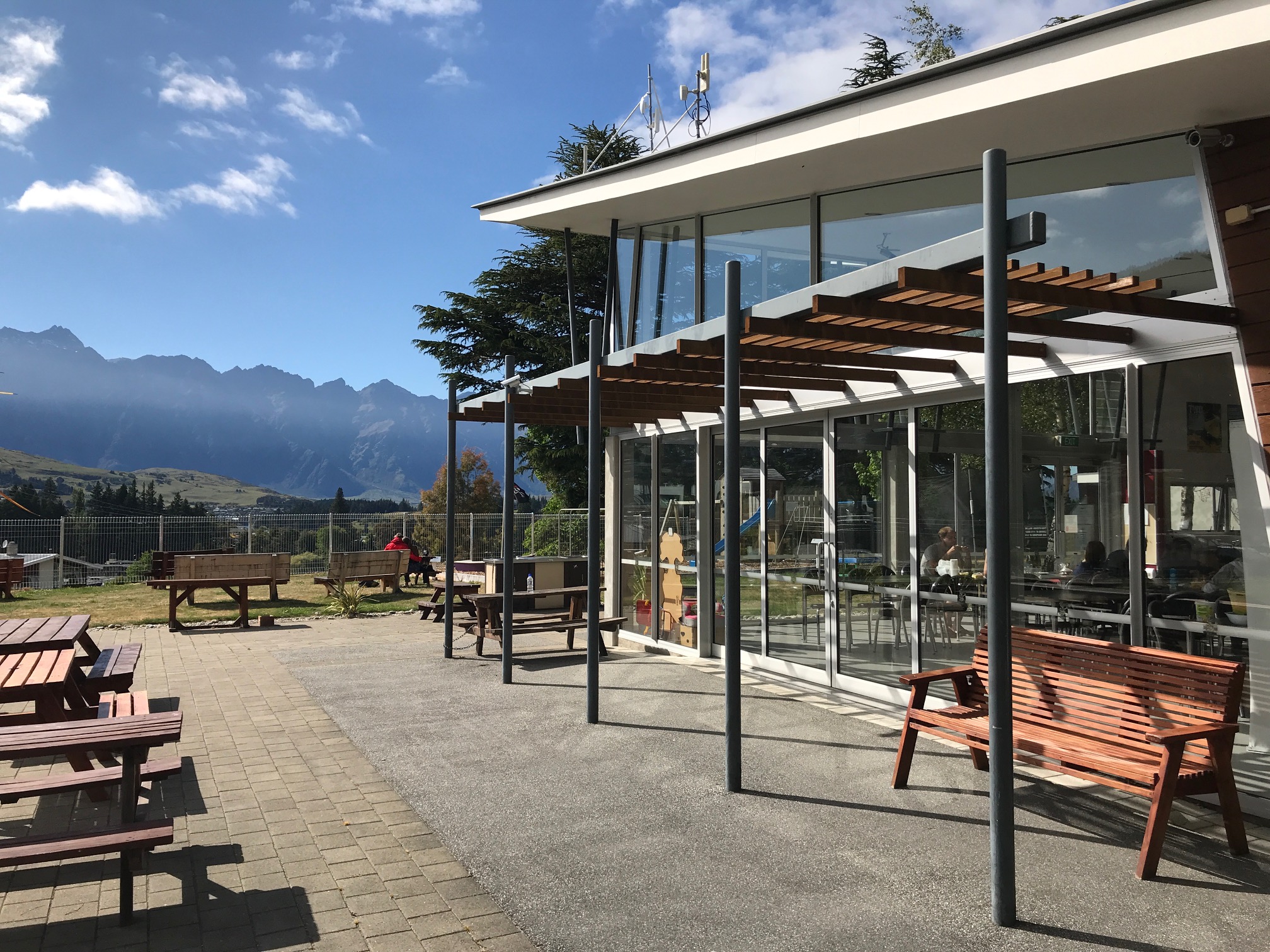
The view from Queenstown Top10, a powered site with a million-dollar view.
Back in Colorado, the older camper set seems to be buttoned up in massive RV’s. It feels like there is a divide between the tent-ers and those sequestered inside their fortresses next to us. But here in New Zealand, the campers span all ages and the vehicles have more in common with one another than not, with most people staying in some form of a converted van. This perhaps levels the camping field and makes interaction among the campers feel easier. In most sites, we met our neighbors, learned a bit about them, publicly apologized for Trump and then moved on to quality conversation. Our kids met other kids on the playground or other shared areas.

Converted kitchen off the back of the van, that stows away while driving.
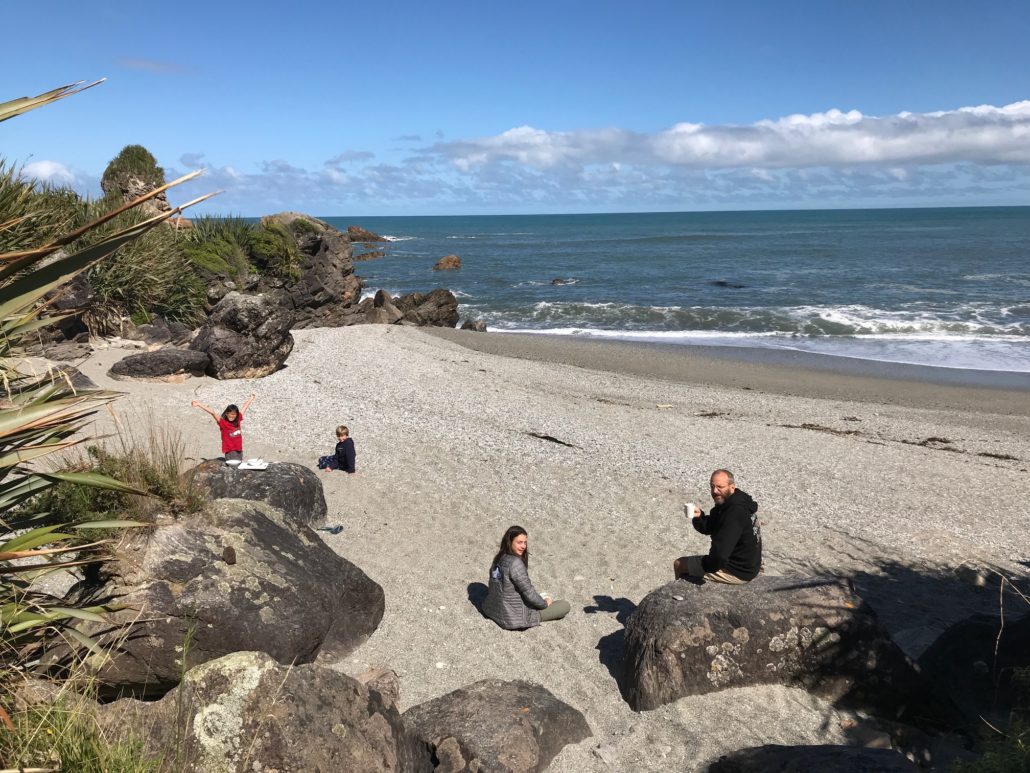
With darkness coming about 9:30pm, we were on the late-to-sleep, late-to-wake routine. (One of the very fun rules to break on this year abroad.) Oftentimes, we would wake, do the basics to turn our sleeping vehicle into a driving vehicle and find a picturesque spot for breakfast still in our jammies. Food is very expensive in New Zealand and breakfast out for a family of 5 can easily be $60 USD or more. Pulling over to whip up a quick snack for kids is the ideal way to break up the driving, save on the money and hunt out the perfect picnic spot before the others arrive.
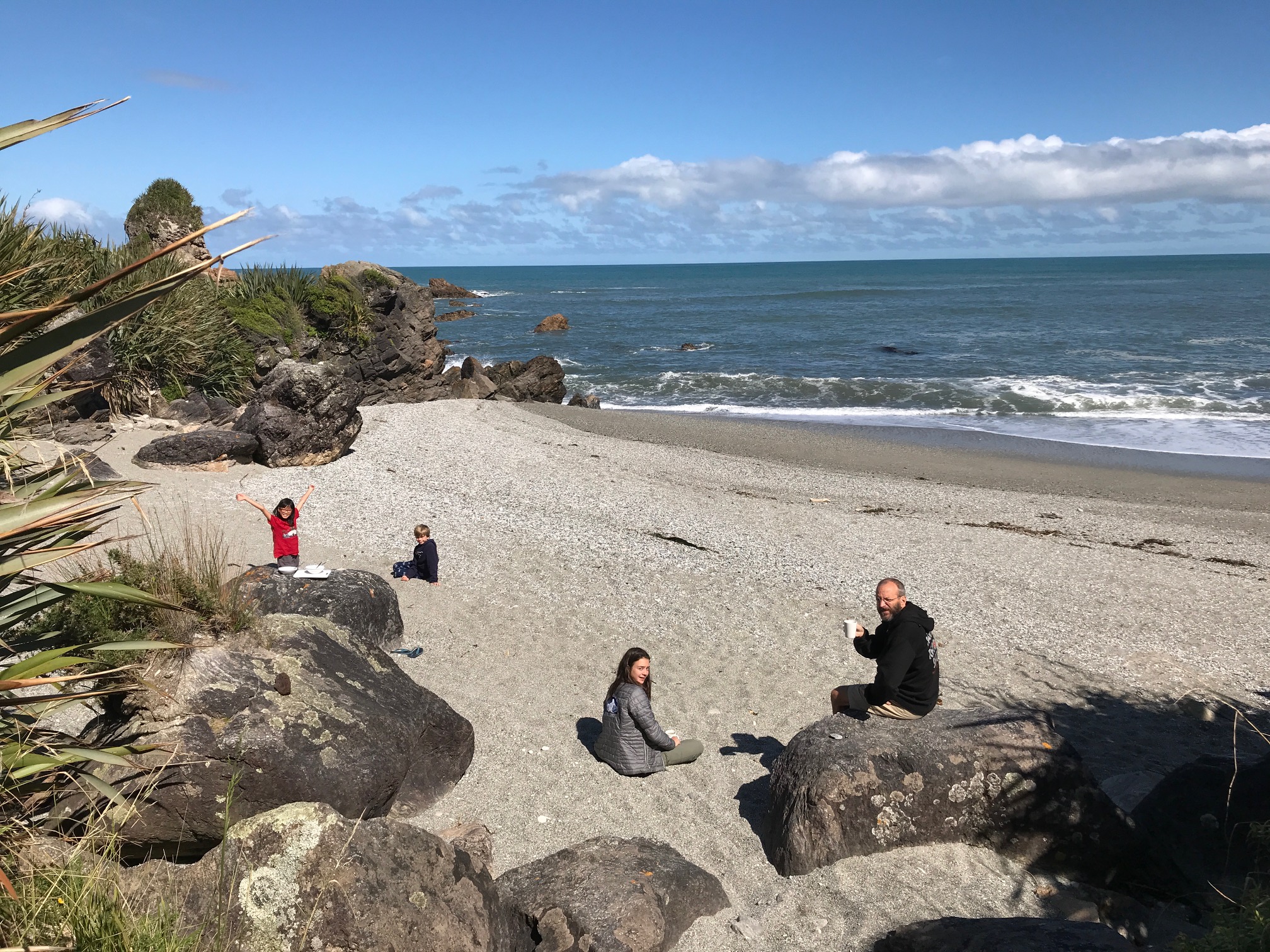
Breakfast spot on the beach – we had this cove to ourselves!
However you do it, just “glampervan” with your family in New Zealand. There are no predators in New Zealand: no poisonous snakes, no bears, no mountain lions, just really aggressive sand flies. The entire South Island is the real soul of what amusement parks are trying to capture. It’s just real – one massive play park. We spent one month and we could easily have spent two. And if you’re looking for specific tips, click here.

