This is the real reason we came to China: to bring Lucy back to the place she spent the first three years of life. Seven years ago, we met our daughter, Lucy, in the Social Welfare Office of Guangzhou, not in the Maoming Orphanage five hours away. On this return trip, we hoped that we could volunteer at the orphanage: do dishes, play with kids, mop floors – whatever was helpful. But the Chinese government doesn’t want any of that. The best we could get was a $300 half-day permit, given by the provincial capital in Guangzhou. And the best timing for our visit would be the tail end of our month-long stay in the country.
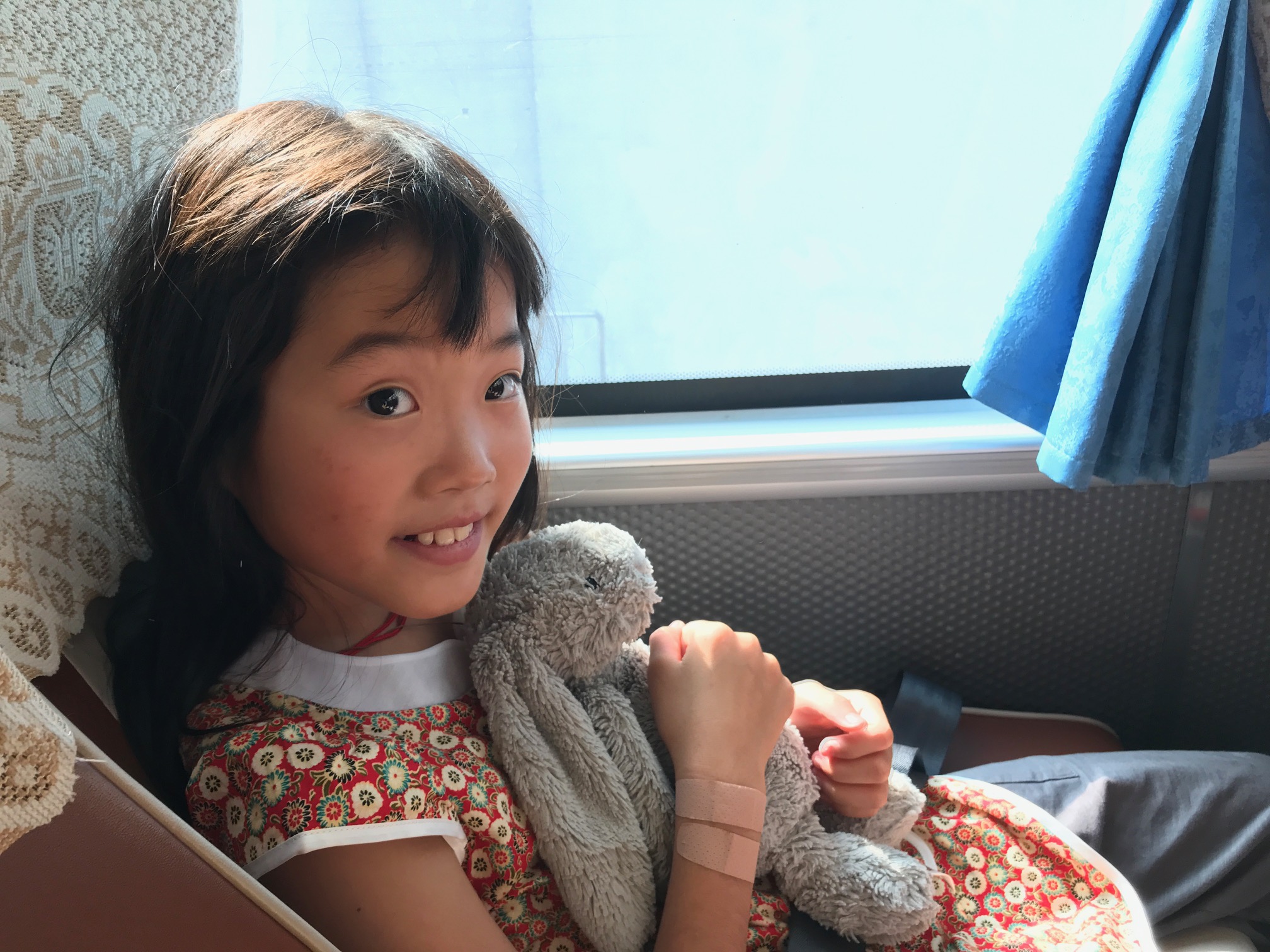
A bit nervous and bit excited on the way to Maoming.

The facts: Lucy was born with a large hole in her heart. Lucy was left at the entrance to a large park in Maoming, China when she was one month old. Lucy spent three years in the Maoming Orphanage. Lucy still had a large hole in her heart when she visited a Chinese cardiologist in February 2010. Lucy was matched with our family and came to Colorado in early June 2010. Lucy’s hole had closed spontaneously by the time we visited Denver Children’s Hospital in late June 2010. “A medical miracle”, the pediatric cardiologist pronounced.

There’s a hurt in Lucy that I can never totally understand but it comes out, sometimes, as anger that she was thrown away, or discarded because she was born a girl. It’s so tricky to explain the nuances of China’s one-child policy to a child; to explain that Chinese parents had one shot to have a traditional heir; that her heart condition at birth may have forced her parents’ hand in finding the best medical care for their infant girl, even if that care could only come from an orphanage.
Maoming, Maoming SWI, Maoming Orphanage,

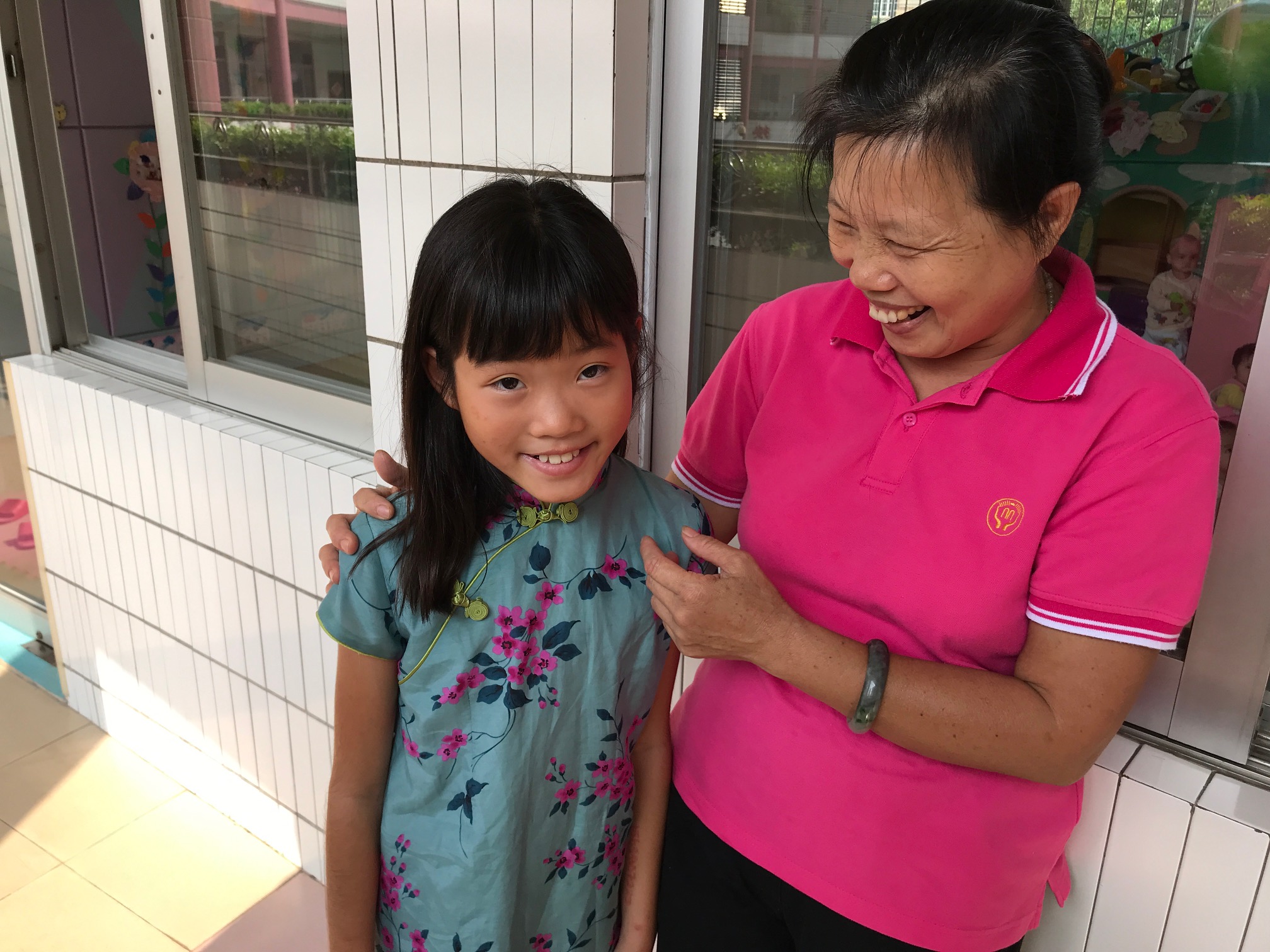
Lucy’s reunion with her caregiver. This woman made her an incredible baby book and wrote about her with such affection that I couldn’t wait to show her my gratitude! We are connected on social media now!

I was anxious about our visit to Maoming Orphanage. We all were. What if they were cold and formal? Or what if they didn’t remember much about Lucy? What if the conditions of the orphanage were depressing and hard for our kids to see? But instead, when the gates opened for us at 9:30 am on October 26th, they rushed forward for hugs and had a “Welcome Xin Feng” electronic banner flashing across a screen. We stayed through lunchtime, visiting her old playroom, bedroom and touring the facility. We clung to the stories of Lucy as a baby and toddler, soaking up all the details. They wanted to know how her heart was now and happily heard the tale. They made Lucy a heart ornament with her embroidered Chinese name to hang in her room. Lucy said that the visit made her feel “very popular” and we made lifelong connections with these incredible, loving caregivers.
Maoming SWI, Maoming orphanage, Maoming

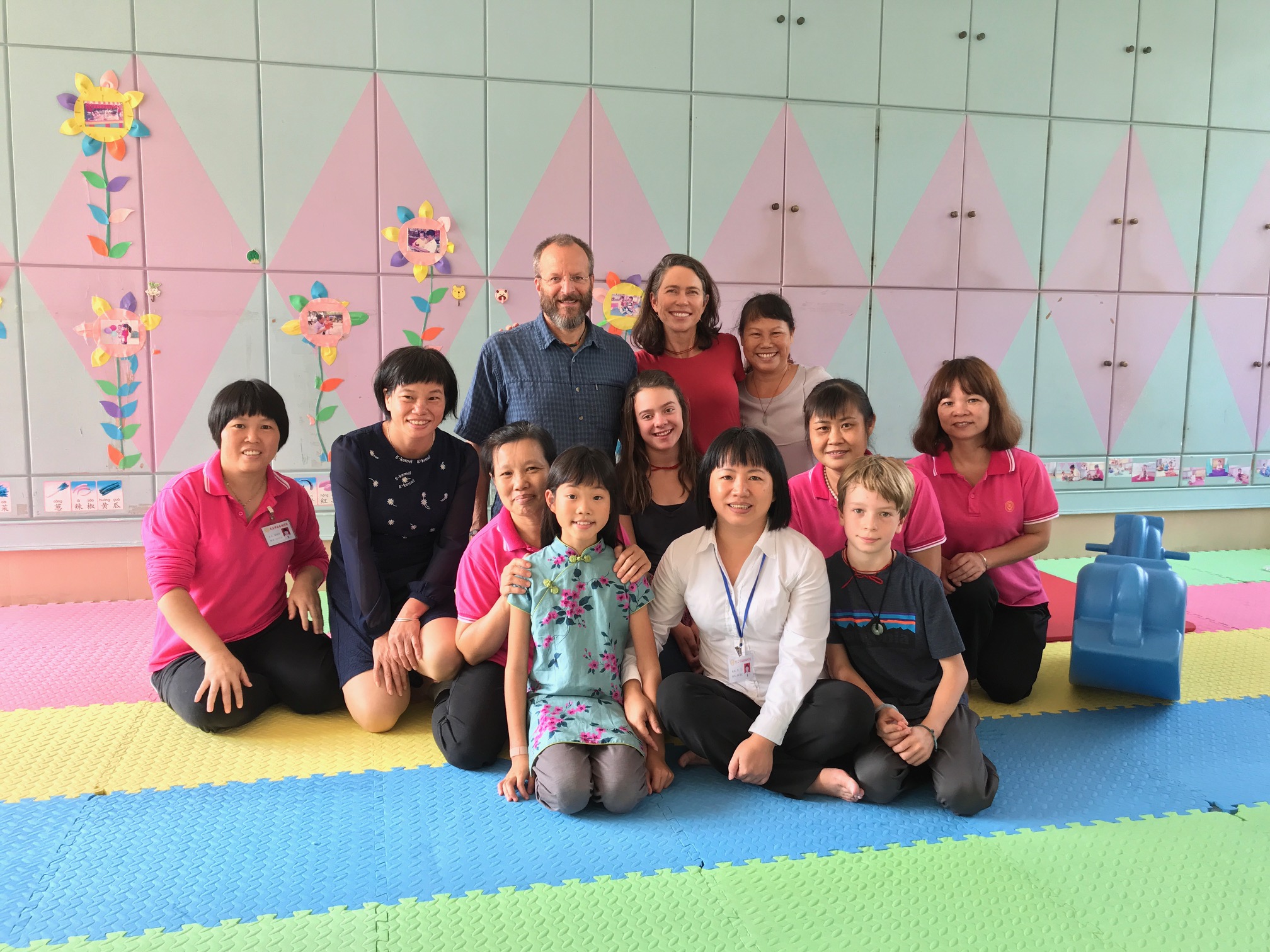
Lucy was the star of the show. All these women were ecstatic to see her. Their devotion to the children is inspiring.

When we walked out the orphanage gates, two of her biggest fans followed us for final hugs. They were tearful and stood watching us leave; stood until we got to the end of the block watching and waving. What must these women feel after loving so many children, finding them homes, and then wondering how they are faring overseas?  I am so glad that we could answer some of their questions too.
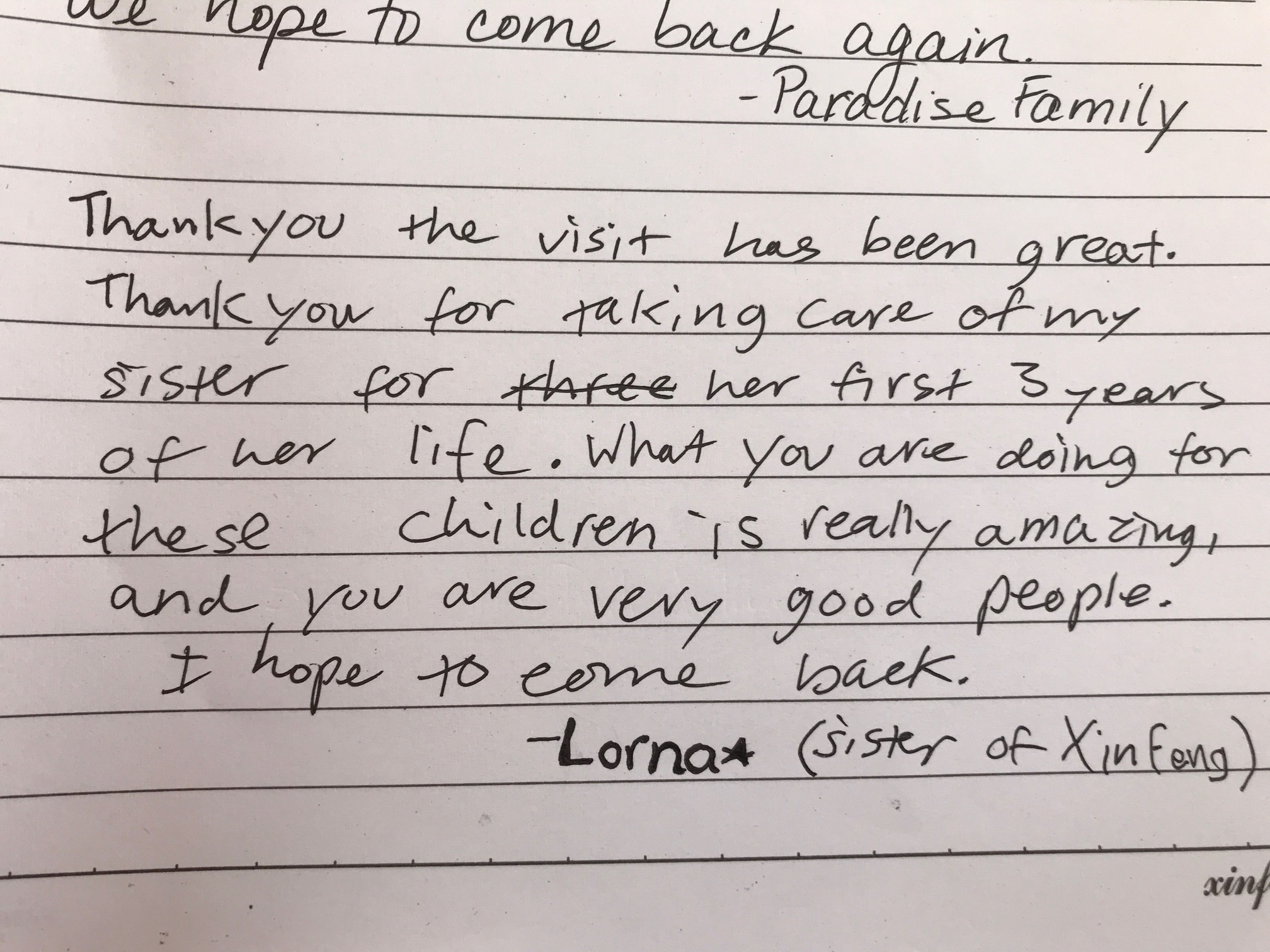
Lorna’s entry to the visitor book. The dedication of these women made huge impression on the kids.

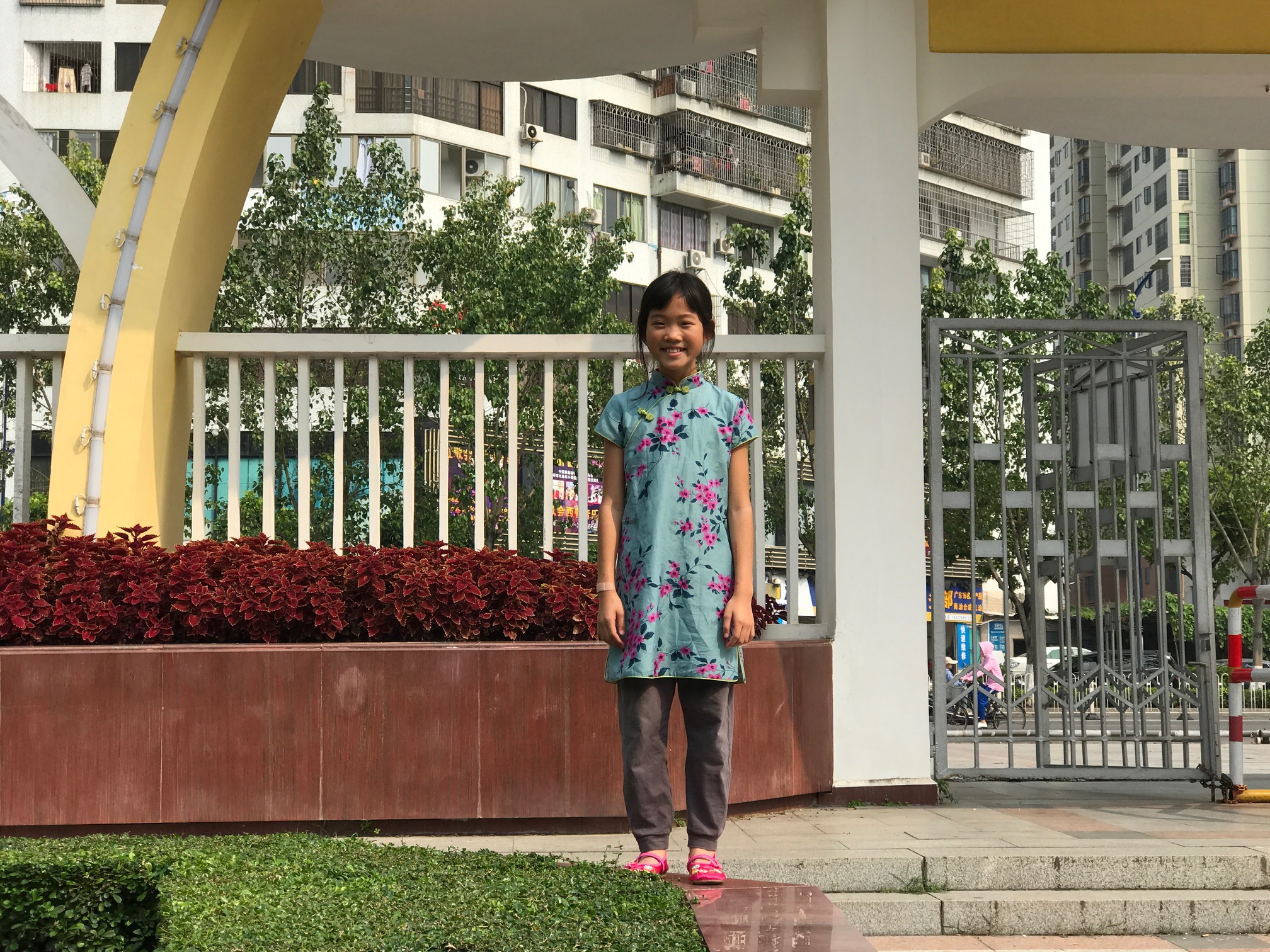
From the orphanage, we walked to the park nearby, where she was “found” ten years ago, wrapped in a white cloth, with a birthdate written on a torn edge of a red envelope. Many adoptees write about the power of revisiting their “finding place” and I thought this might be another emotionally charged moment. Instead, Lucy triumphantly posed for a photo in her spot.
Maoming, Finding Place, China Heritage Trip, China Adoption, Family Travel

This is the spot where Lucy was placed at one month of age. No victim here – she is proud and she is loved.

The facts of her early years, when stated as a stark list, sound sad. But being here to feel the love of Lucy’s caregivers, the warmth of the Chinese people toward her – wherever we traveled – and the magnificence of this country, have turned a sad set of facts into triumph, acceptance and a source of pride. The holes were filled with love.  I wonder if this month in China rewrote a story, solved some unanswered questions and helped that heart heal just a little bit more. By naming it her “finding” spot, it implies that she was lost. My Lucy, that face in the photo, has never been lost in her life.  These women will now always be part of her finding her way in this world – of finding love, courage and connections.
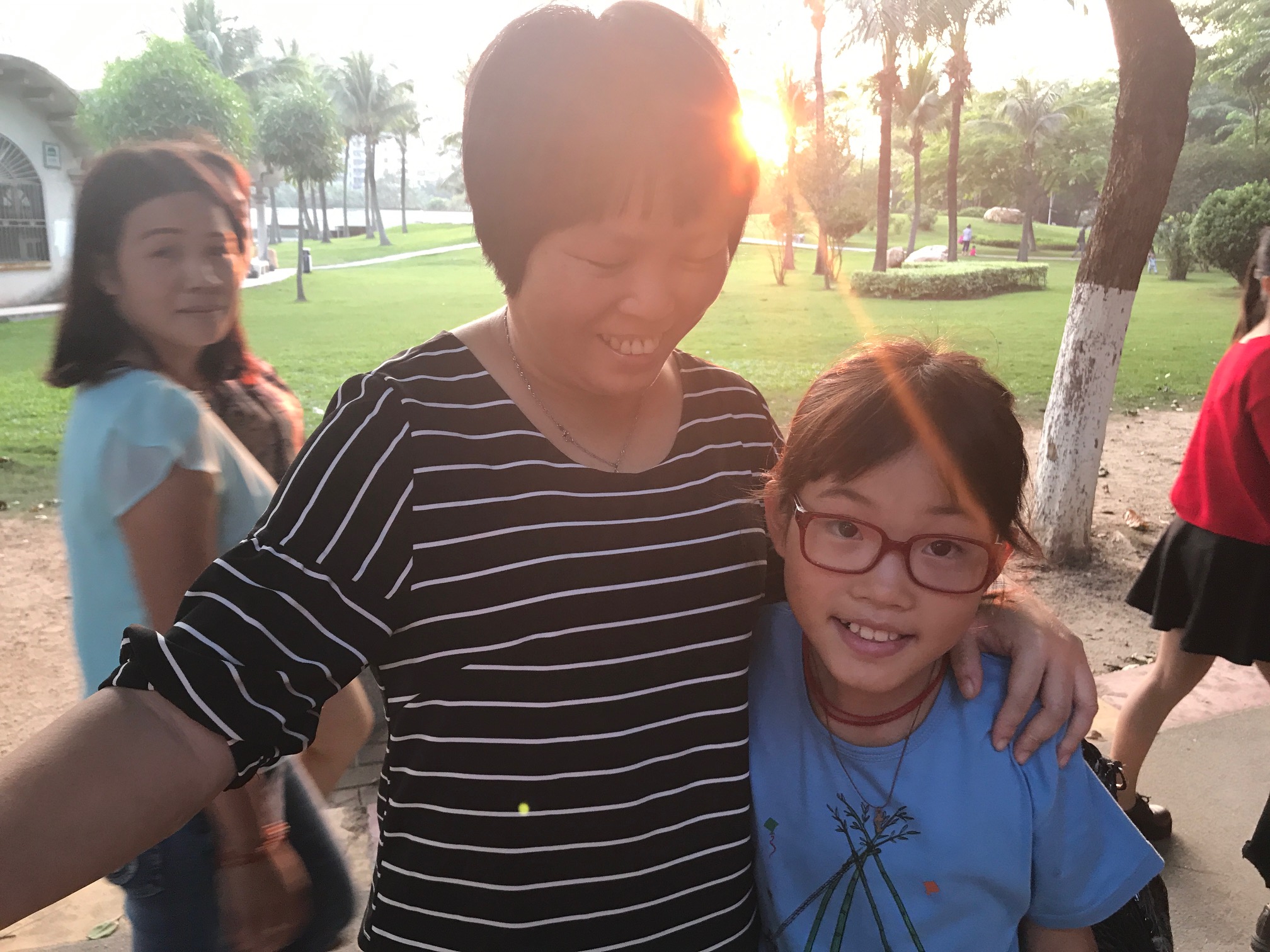
After the intensity of the orphanage, we explored the coast for two nights and then returned to Maoming for just 18 hours.  On a quick trip to the park, we randomly crossed paths with the orphanage director who ran up to us and hugged Lucy some more.  We all felt like a bit like locals, a bit like we’d found a place where we were loved, like this was our place too.  Now we just need to learn to speak their Cantonese dialect, called Maomingese…
Coming to China was kind of a shock. Imagine taking a time-machine all the way back to the Middle Ages in Nepal, then going twenty years or more years into the future – that’s what landing in Guangzhou was like. There were a few places in Nepal that we stayed that had no running water. Sure, there were plenty of streams, but no faucets. Then you come to China: everyone’s on a cellphone; there are subways that go everywhere in all the major cities; and the pollution levels are crazy.

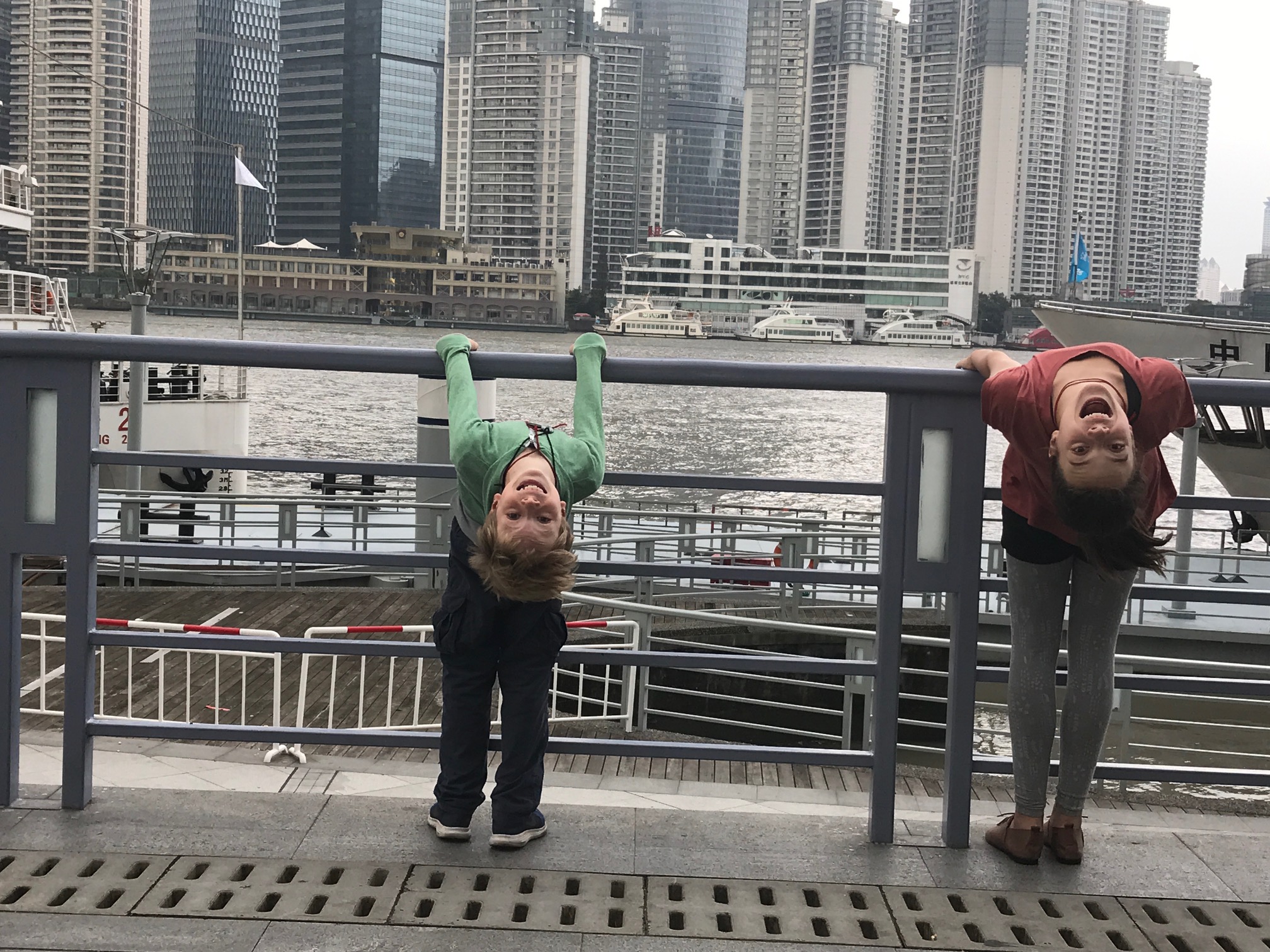
shanghai skyline, family travel, road schooling

Hangin’ in downtown Shanghai.

Right now the pollution level is at two hundred, and in California they cancel PE if the pollution is at fifty. The highest pollution level ever recorded was in Beijing, and it was at one thousand! In Maoming, it’s hard to see the buildings that are like fifteen blocks down, yet in the distance you see smoke stacks just pouring smoke into the atmosphere. And it gets me thinking: it’s pretty likely that Lucy’s birth parents are migrant factory workers, and could be working in the factories I’m looking at. I pass a woman on the street, is that Lucy’s birth mom? Our hotel maid, is that Lucy’s birth mom? The woman selling us bananas? The man trying to sell us fish? The woman sweeping up leaves? You just never know.

The Great Wall of China, China, family travel

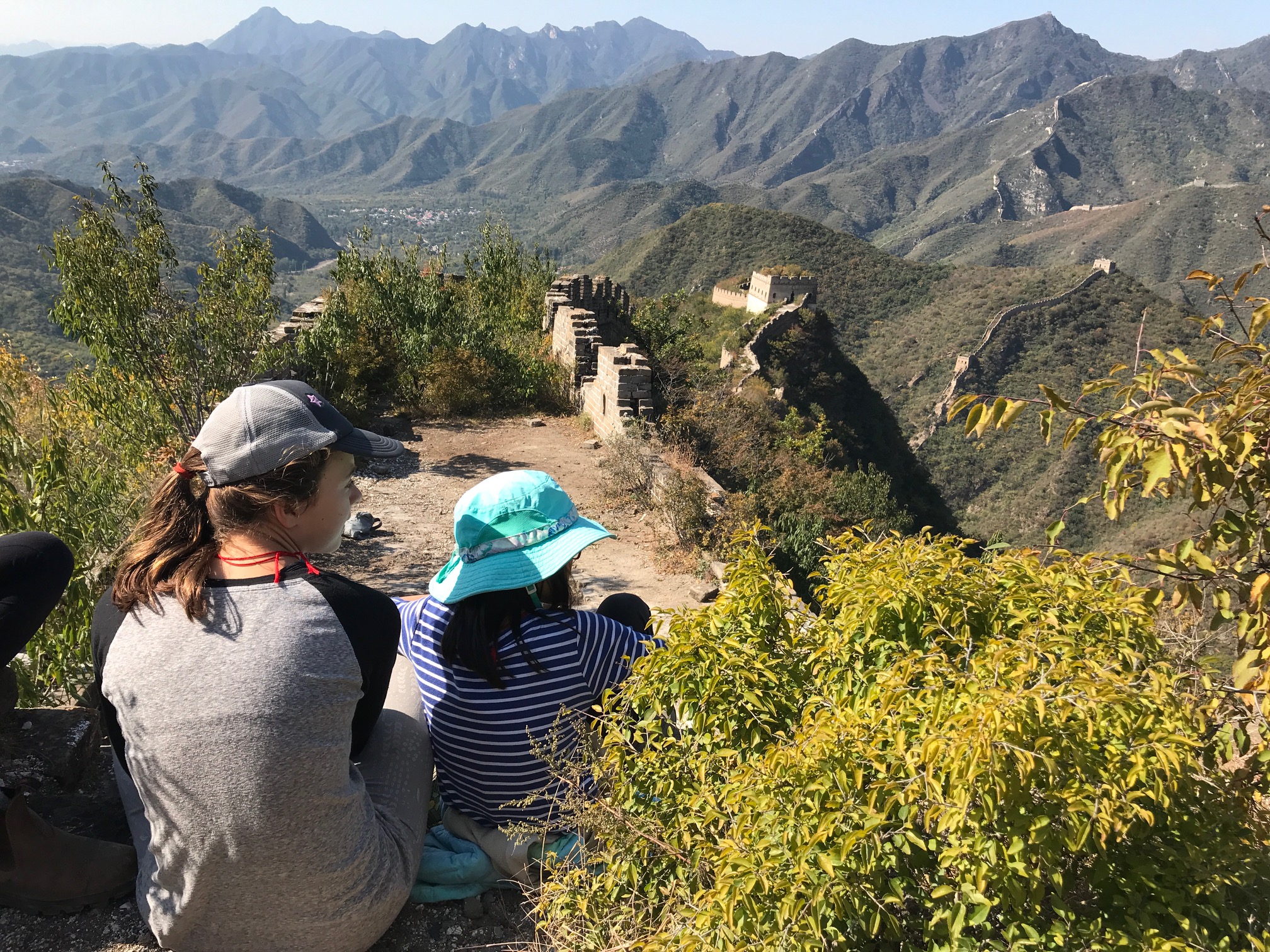
On The Great Wall of China with my sister. The air was so clear up there!

When I see those smoke stacks at first it’s like, why do they just keep pouring smoke into the already over-polluted air? Then you have to realize, it’s ’cause people like me want our plastic shovels. We want our stupid water guns. We want our plastic throw-away dishes and plastic spoons and forks (and chop sticks if we’re talking China) if we’re throwing a party. We need our plastic wrap. We need our plastic bags to put our vegetables in at the grocery store. We need our plastic containers to put lunch stuff in for school, and if you care less about the environment, plastic sandwich bags for lunch stuff too. It’s a serious reality check. We are all part of a huge problem thats killing the ocean, and polluting Planet Earth. When you walk into a lot of restaurants here, your dishes are wrapped in plastic to ensure sanitarity. (That’s not a real word; I made it up.) In pretty much all the restaurants the chop sticks are wrapped in plastic, again, to ensure sanitarity. This is insanitary!

Meat market, Maoming, China,

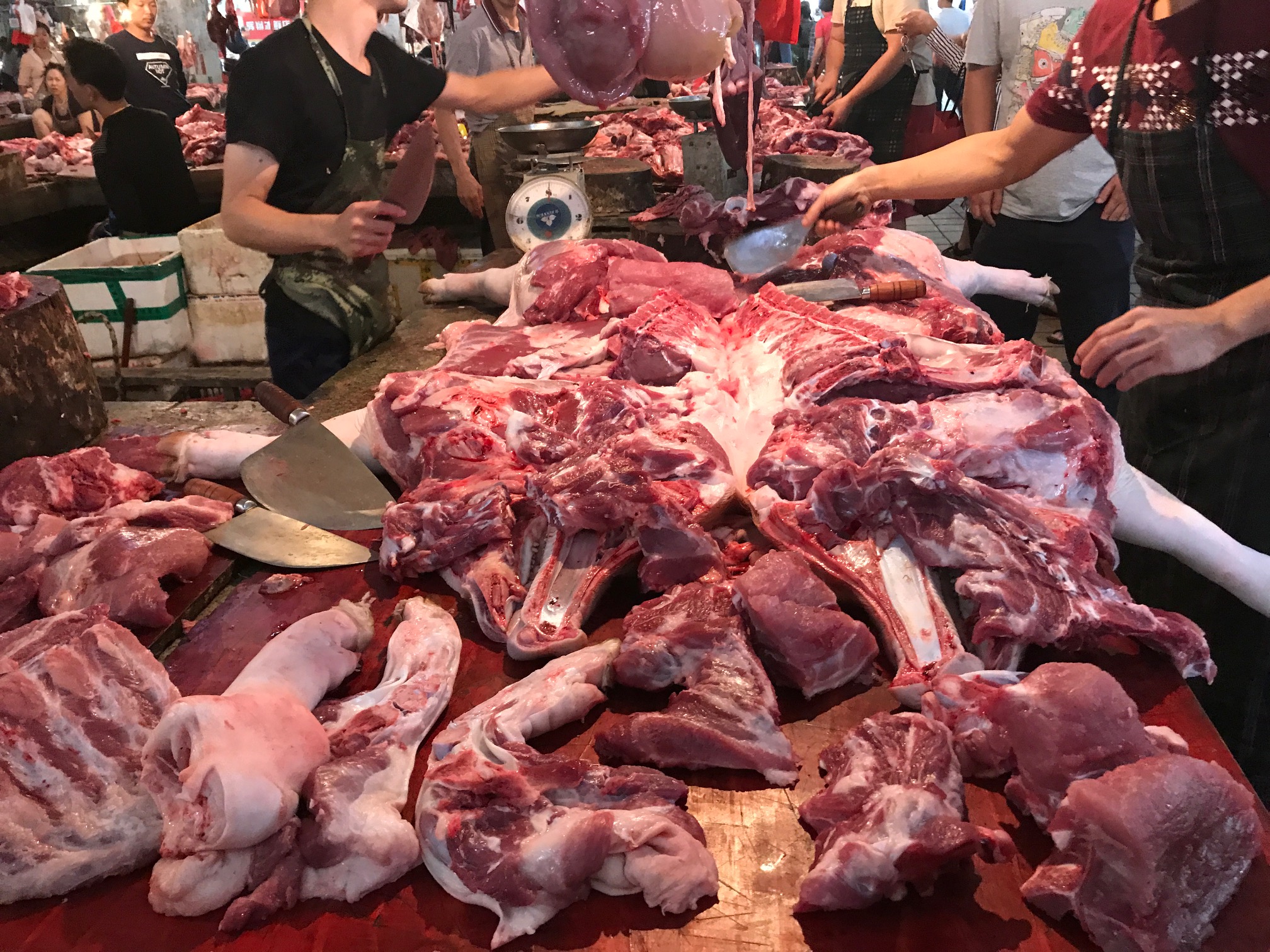
Pork sold at the market. Every part of the animal is used.

We visited Lucy’s orphanage yesterday. It was really sweet, and heartbreaking. All the women when they saw Lucy were like, “Xin Feng! Xin Feng!” And hugging her. It was really different then when just me and my dad (and Kelsey) visited seven years before. There are much nicer sleeping spaces, and a whole new building. I also learned that if you don’t get adopted by the time you are fourteen, which means you probably have a major physical or mental disability, you spend your whole life at the orphanage! We saw fifty and sixty year olds! And everyone seemed to remember Xin Feng. (The first bit means heart, and the last part means wind bird, or Phoenix.) All of her old nannies were there, except one. We asked them if it was really hard to let kids go. Those nannies are the ones that took care  of Lucy from when she was one month old to when she was two and three quarters. Through Julie (our guide and friend), they told us that it was ‘cause they are like parents to those kids. But they had to remember that the child was going somewhere that would have more food, more possibilities, and most importantly, a family.

green eggs, Chinese food

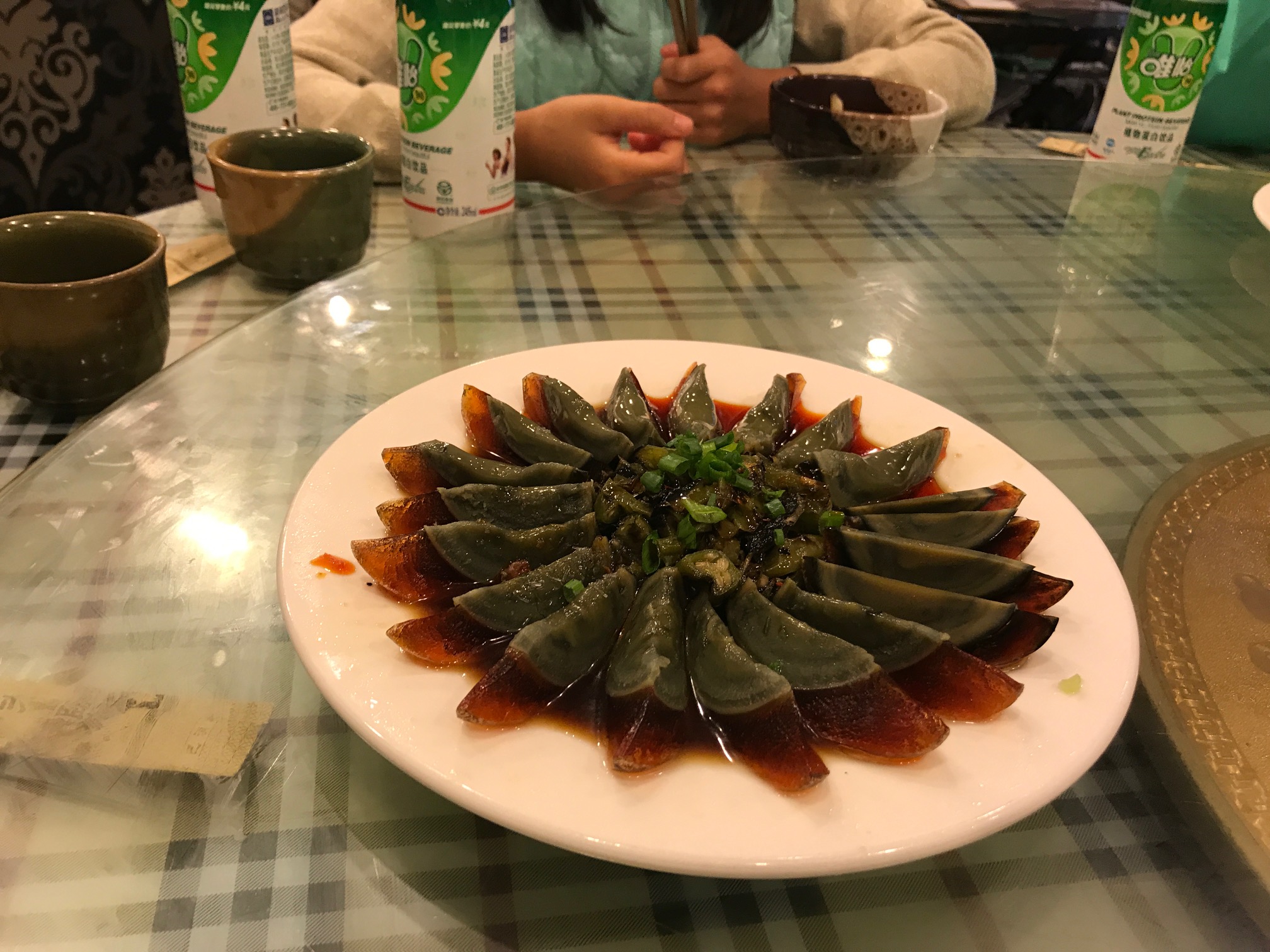
Green eggs, not with ham. These are called “buried eggs”

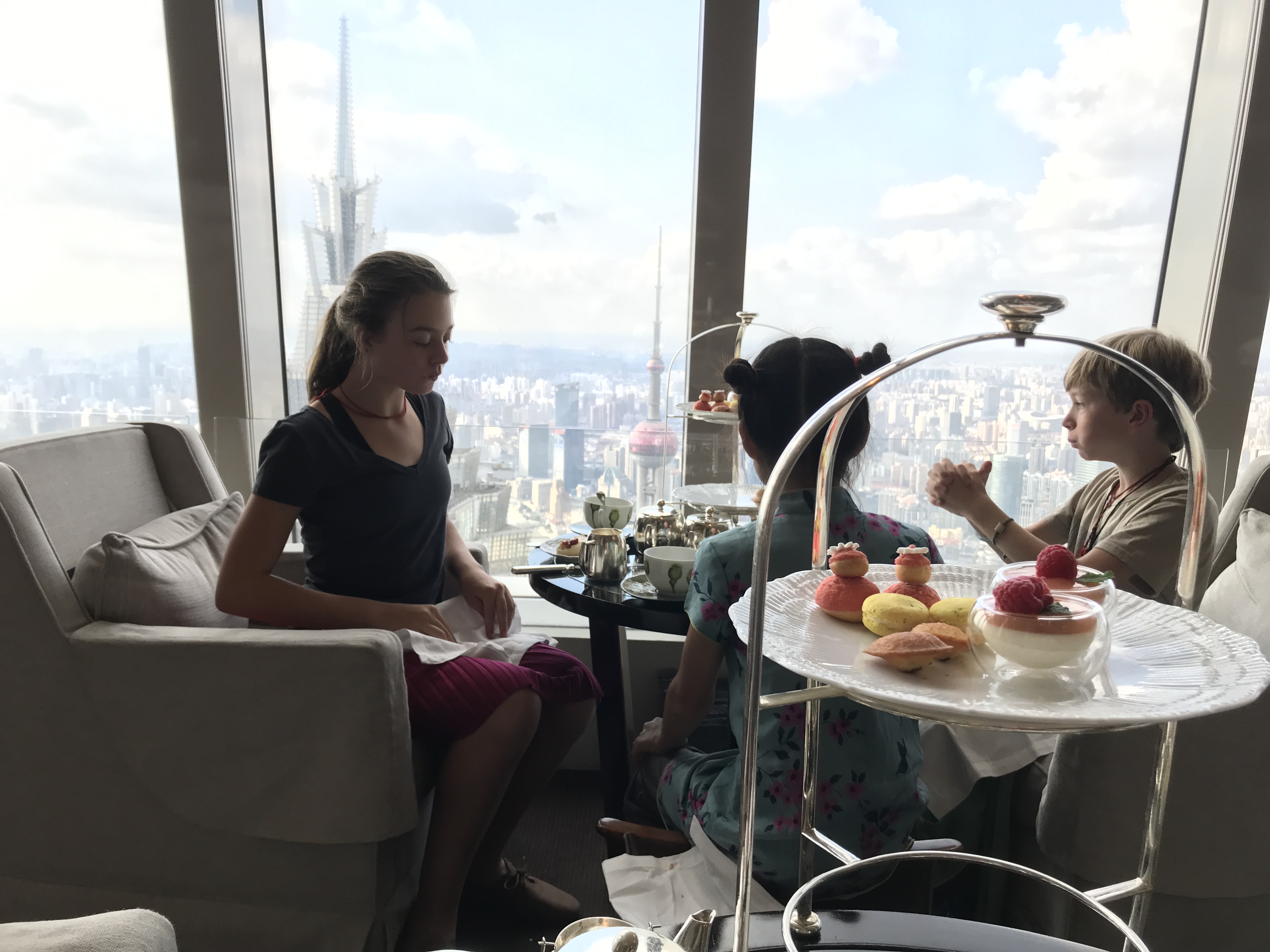
It is very hard to get around China if you don’t speak the language. We have been to some wild markets, and eaten crazy food (like buried eggs). We have also eaten a lot of crazy good food! We have walked on the Great Wall, had high tea on the eighty seventh floor of the seventh-tallest building in the world, (for my bday) and gone shoe shopping in Shanghai (also for my bday). China has been really great, especially the food. I really miss friends, but modern communication is keeping me updated. My birthday was really awesome, and I think I will always remember my thirteenth birthday.

family travel

High tea in Shanghai for my 13th birthday!

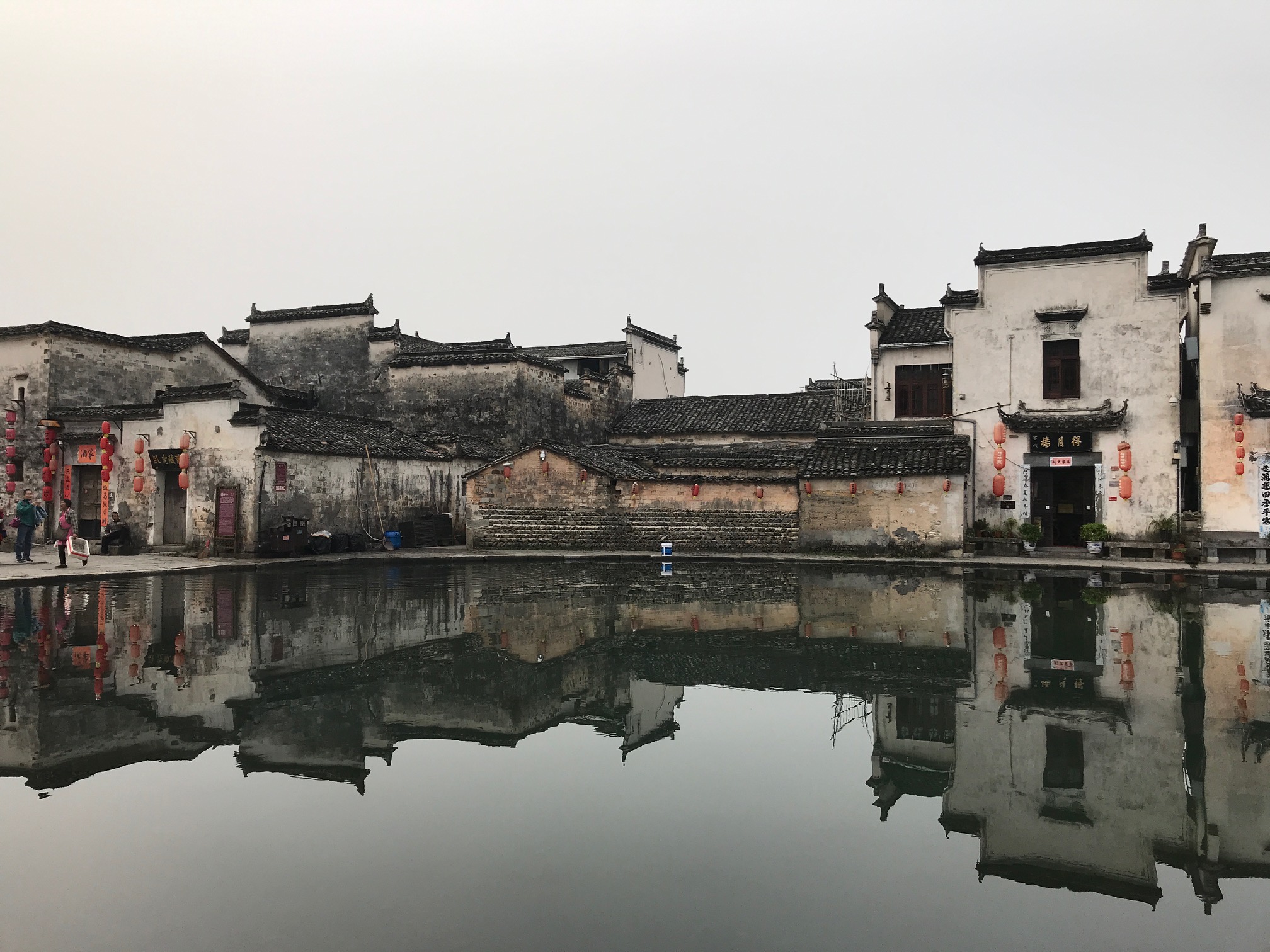
The Huangshan area of Anhui province is the misty mountain landscapes and red-lanterned villages of Asian paintings.  It’s the water buffalo in rice paddies and the farmers with conical hats picking chrysanthemum flowers for tea.  Every vista is postcard-worthy.  Our original draw to this area was to visit Master Zhou, a Chi Gong and Chinese Medicine practitioner and friend-of-a-friend.  Many Westerners travel to the city of Tunxi to get treatments from him and he has come to the US to teach and treat.  Our friend put us in touch with Master Zhou’s interpreter and we planned our stay around an introduction to the Master.

Hongcun, Huangshan, Family Travel, Roadschooling

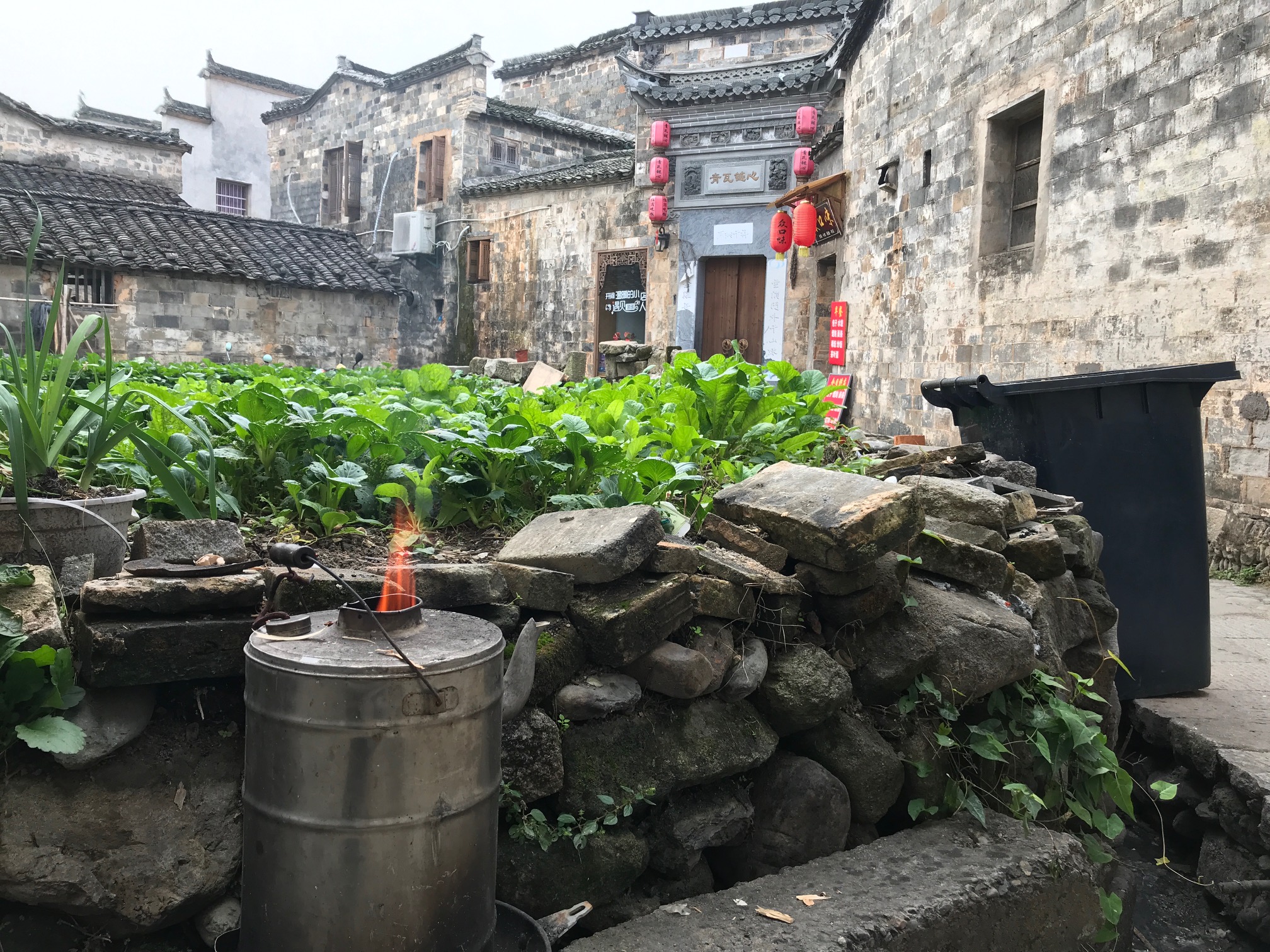
A quiet section of Hongcun – outdoor kettle and greens growing in every corner.


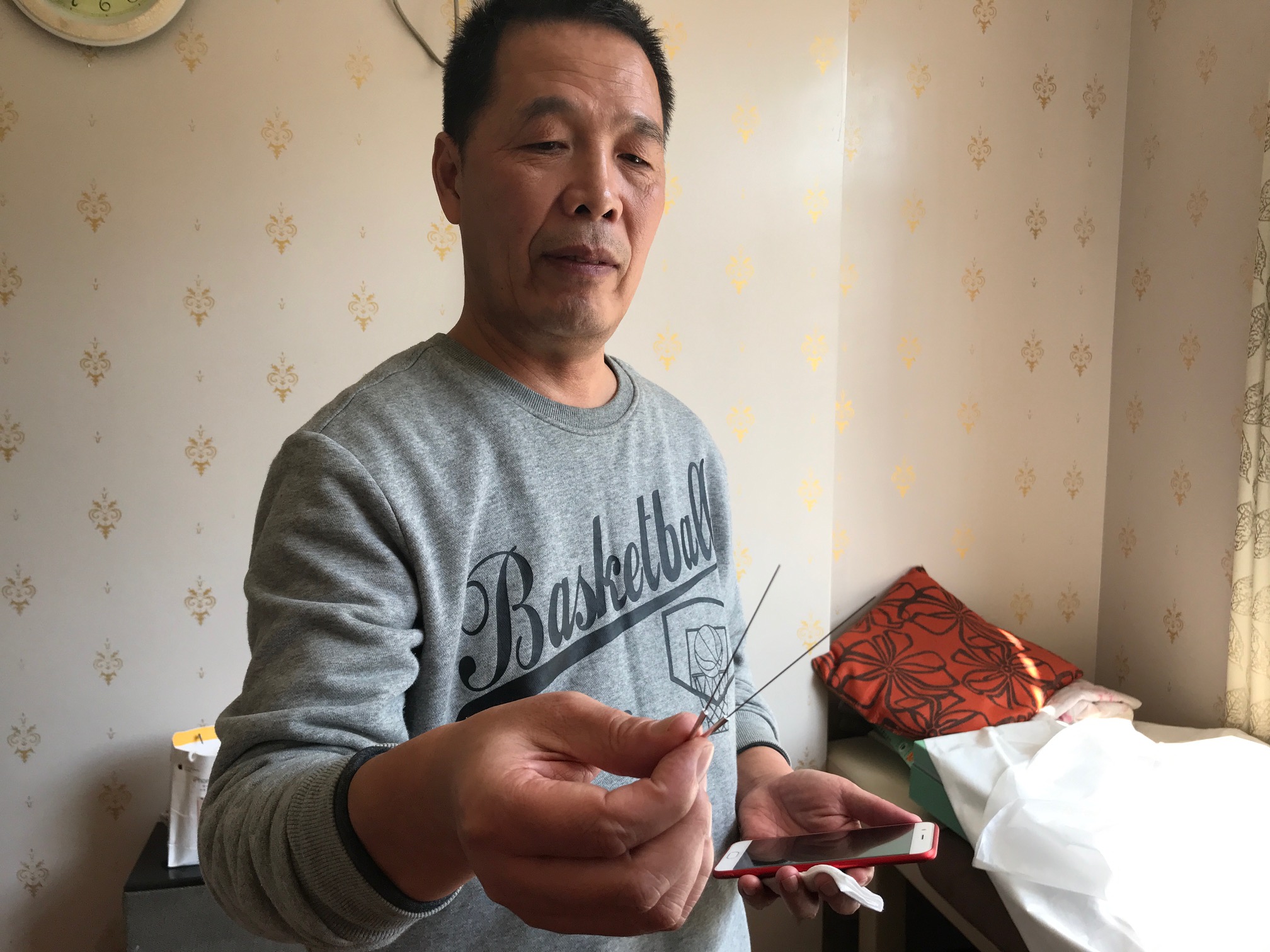
We had some Chi Gong movement demonstrations and even saw the master do a “trick”.  (You’ll have to wait for the YouTube.) The kids each had a private session with the Master and the three adults each had two treatments.  This is not whimpy needling.  His needles are an inch and a half long and he delights in showing you just how deep he went in each session.  When he described his technique, he said that you need to “chop up the blockages, like with a knife”.  And even before this was translated to us, his enthusiastic hacking motions made it plain for all to see what would be translated.  Master Zhou’s family took in a Shaolin Master during the Cultural Revolution and Zhou became his apprentice from a young age, preserving a lineage that spans eight generations of Traditional Chinese Medicine.

Tunxi, Master Zhou, road schooling, Huangshan

Master Zhou proudly presenting his healing tools.

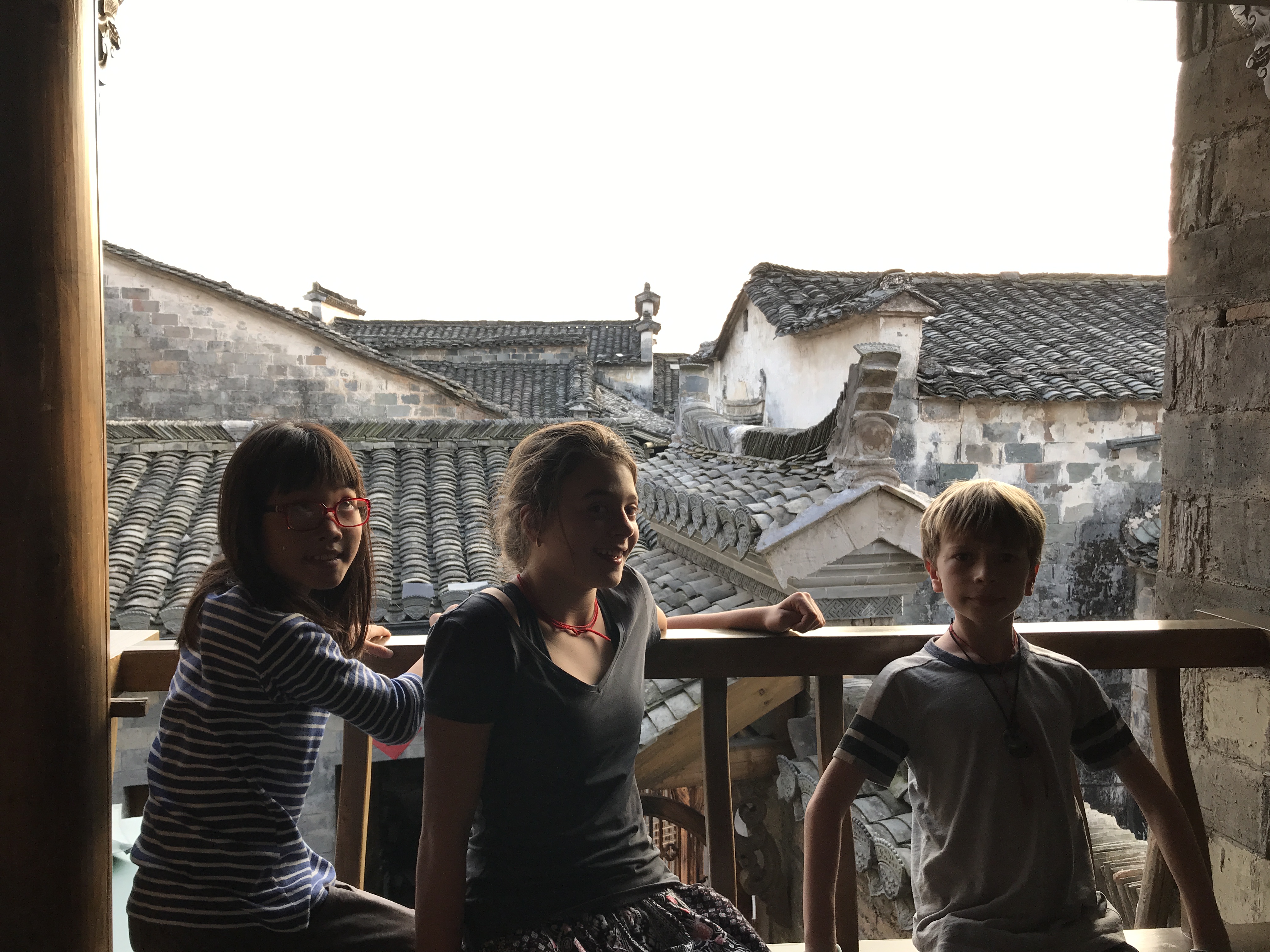
We stayed near Tunxi, in the well-preserved ancient village of Hongcun.  The town was full of selfie-taking Chinese tourists, art students sketching and locals, beeping their scooter horns in frustration at the crowds.  The movie Crouching Tiger, Hidden Dragon was filmed here and we could imagine the rooftop fight scenes.  Grand halls and intricate drainage systems traced back the 1400’s.  Vibrant green vegetables grow in every available piece of real estate.  We remind Lucy (adopted from China) often, that while Europe was wallowing in plague and mud, China was thriving – creating sophisticated art, philosophy and architecture.

Hongcun, Huangshan, family travel, road schooling

The rooftops of Hongcun, where Crouching Tiger, Hidden Dragon was filmed.

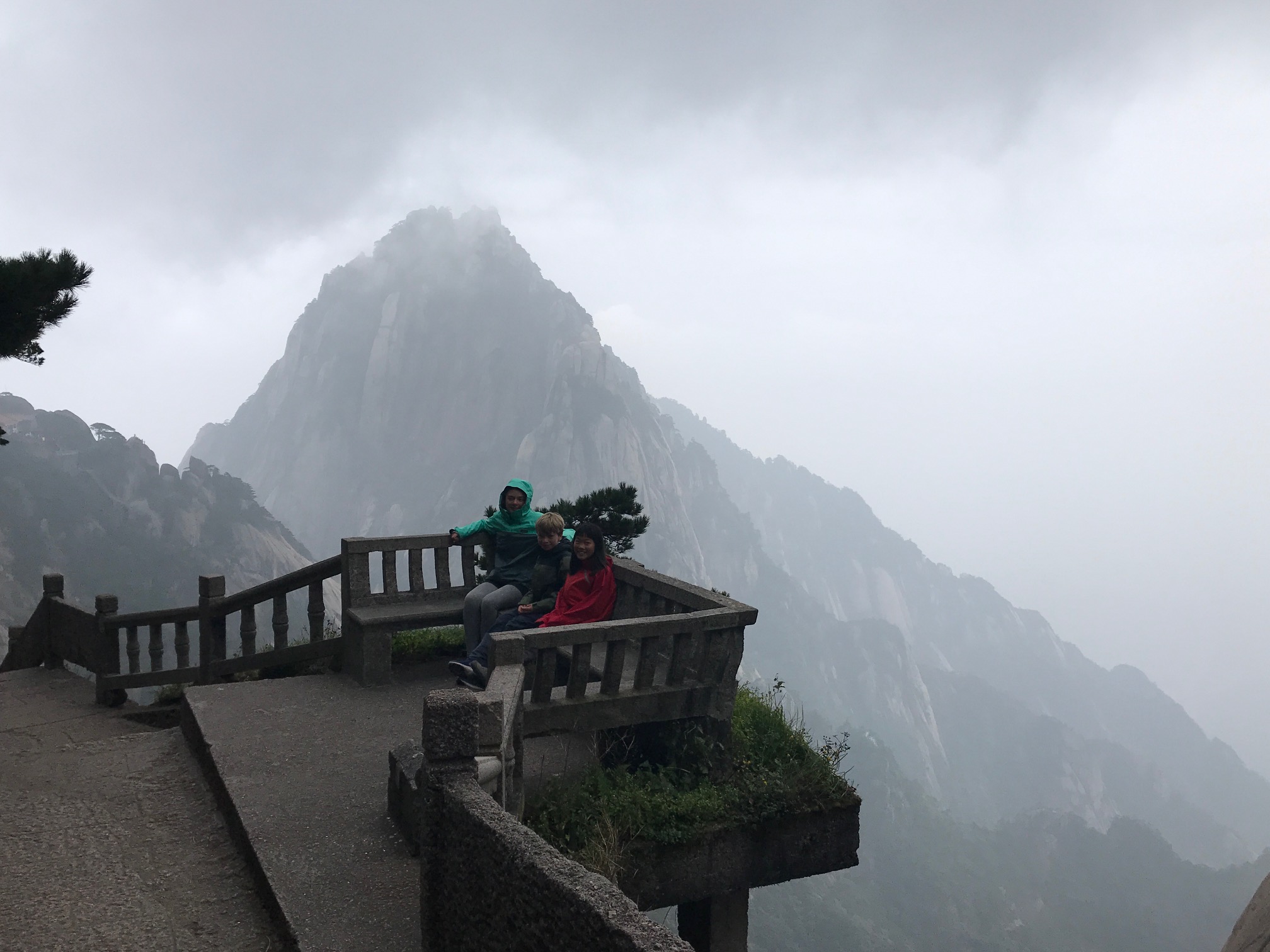
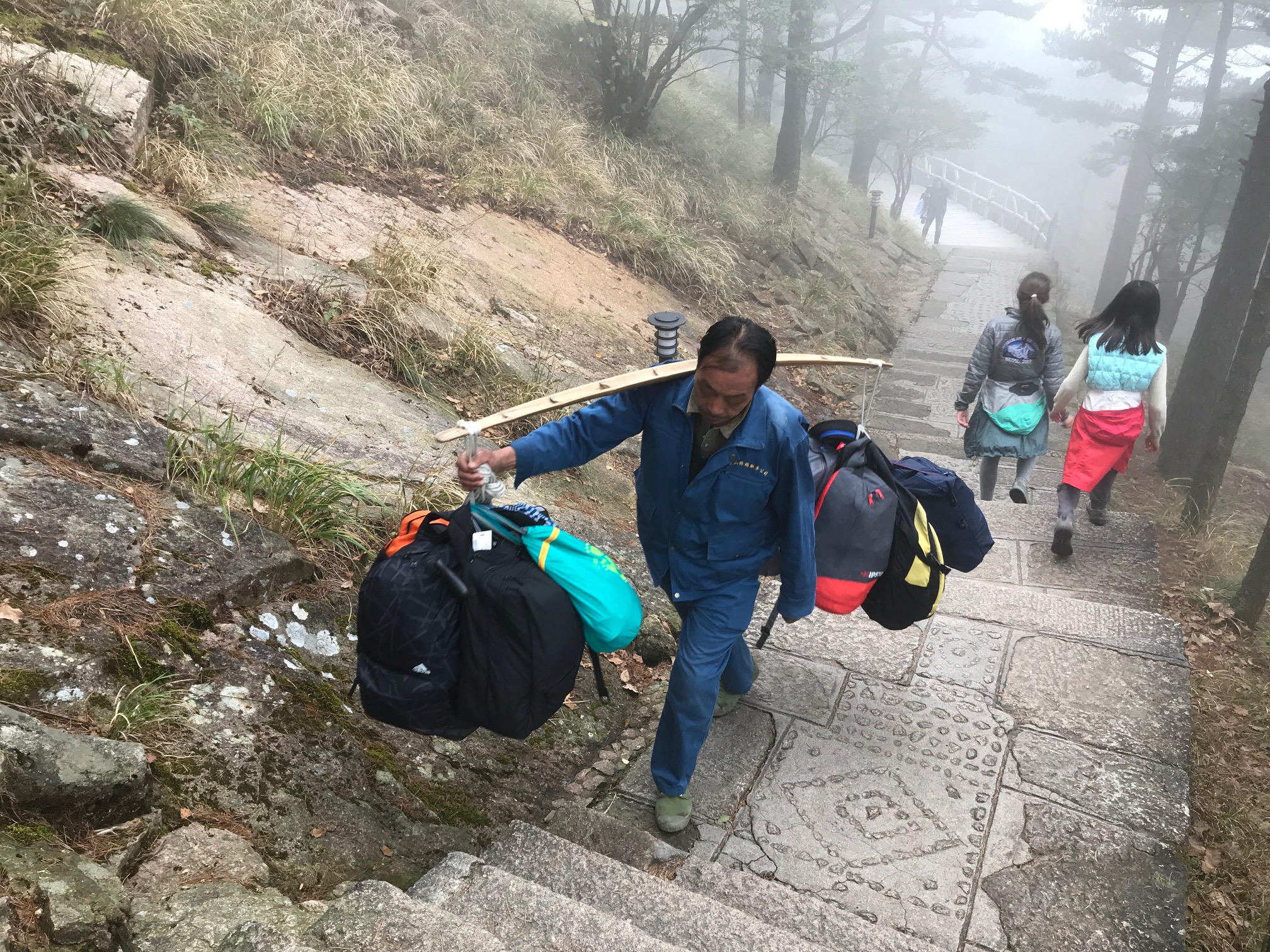
On the off day between acupuncture treatments we hiked in the Yellow Mountain area of Huangshan.  It was a cold day, which I think kept the crowds at bay; but, it was still a popular spot.  We clocked 21,000 steps that day and that included a tram ride up and a gondola down.  The paths are cement with perfect steps cut into the hillside.  Although it was beautiful, the mountains felt like a cross between a national park and Disneyland.  Six hotels and snack stops peppered the mountain park, requiring porters to carry food, laundry and other supplies.  These porters not only carried leg-wobbly weight, but had to navigate their bamboo poles through the packs of tour groups.

Huangshan Mountains, family travel, road schooling, Yellow Mountains

Cloudy day hiking in Huangshan added to the area’s mystique.

Yellow Mountains, Huangshan, family travel, road schooling

Porter balancing impossible load.


The area is picturesque and the clean mountain air was wonderfully refreshing but the word is out, and you will share the Huangshan area with many, many other people.

And one more of Hongcun…
My daughter, Lucy, has been slightly obsessed by The Great Wall of China for years. We have read lots of books on The Great Wall and even watched some travel videos about it, but we were unprepared for just how cool it is. The most famous and trafficked section of The Great Wall has a McDonald’s and a chair lift at its base. This is the section made famous by Mao himself, but there are many uncrowded sections of the Wall to visit if you have the ability to get off the main track.

The Great Wall, watchtower

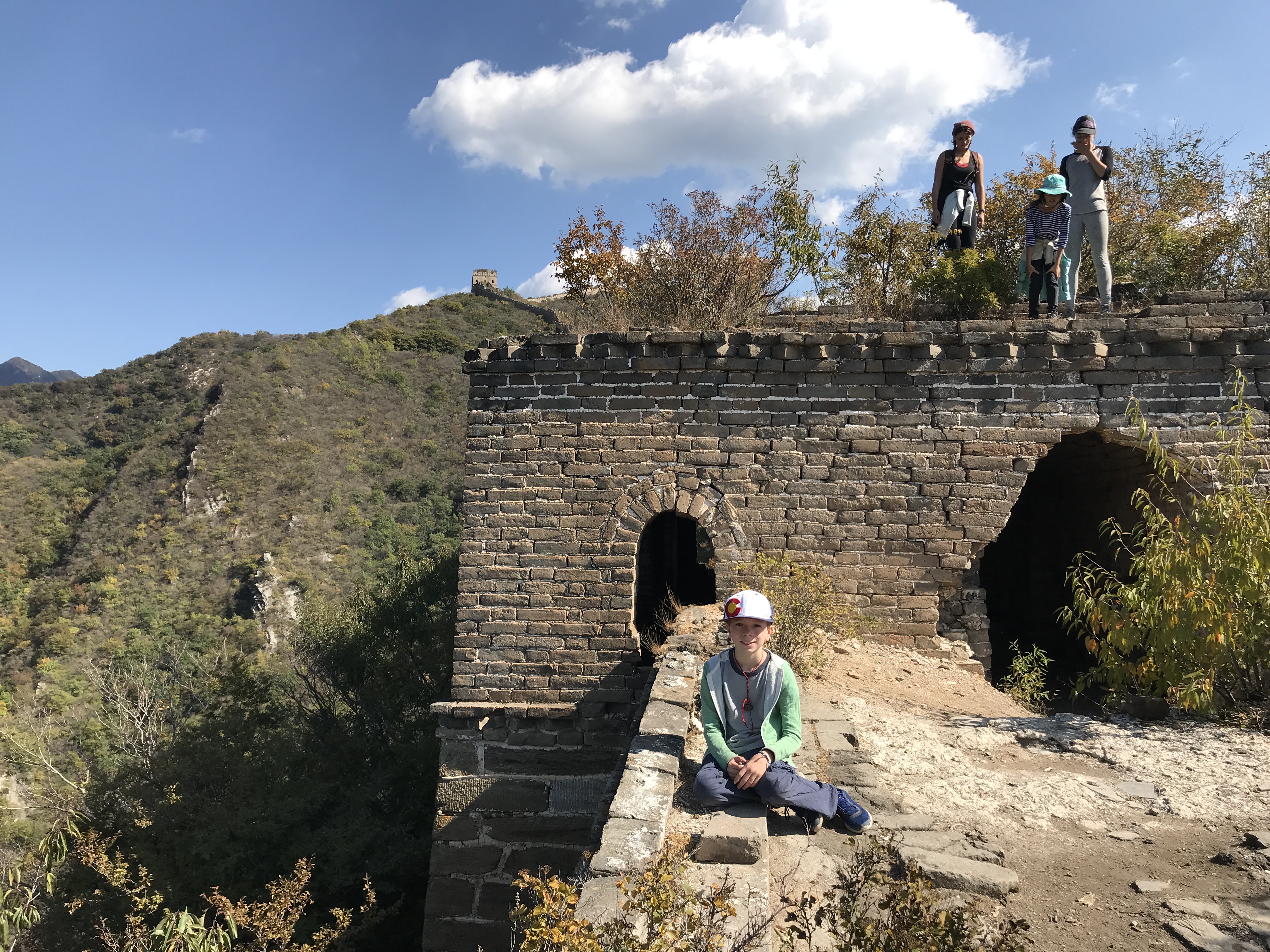
Watchtower exploration on The Great Wall.

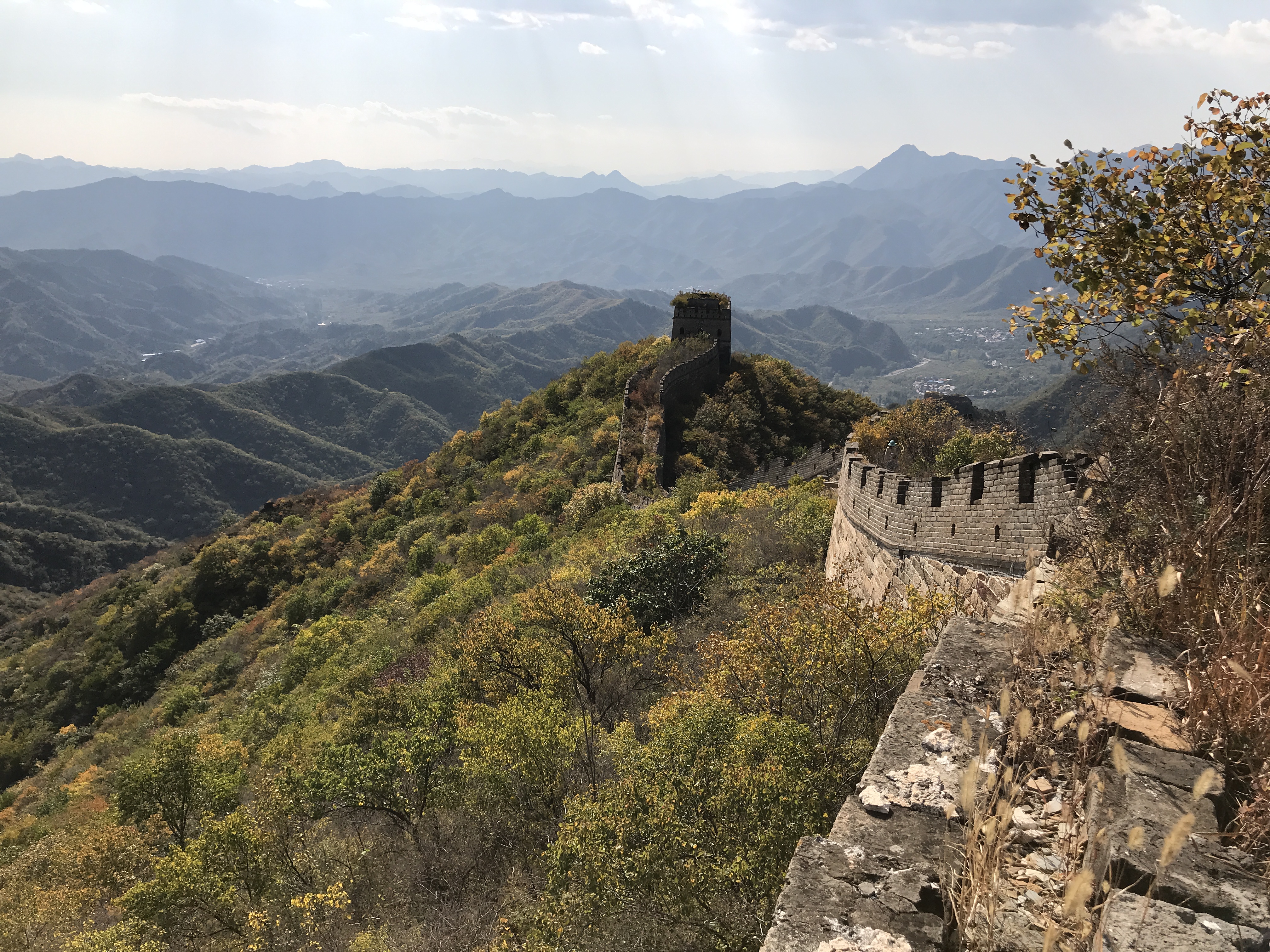
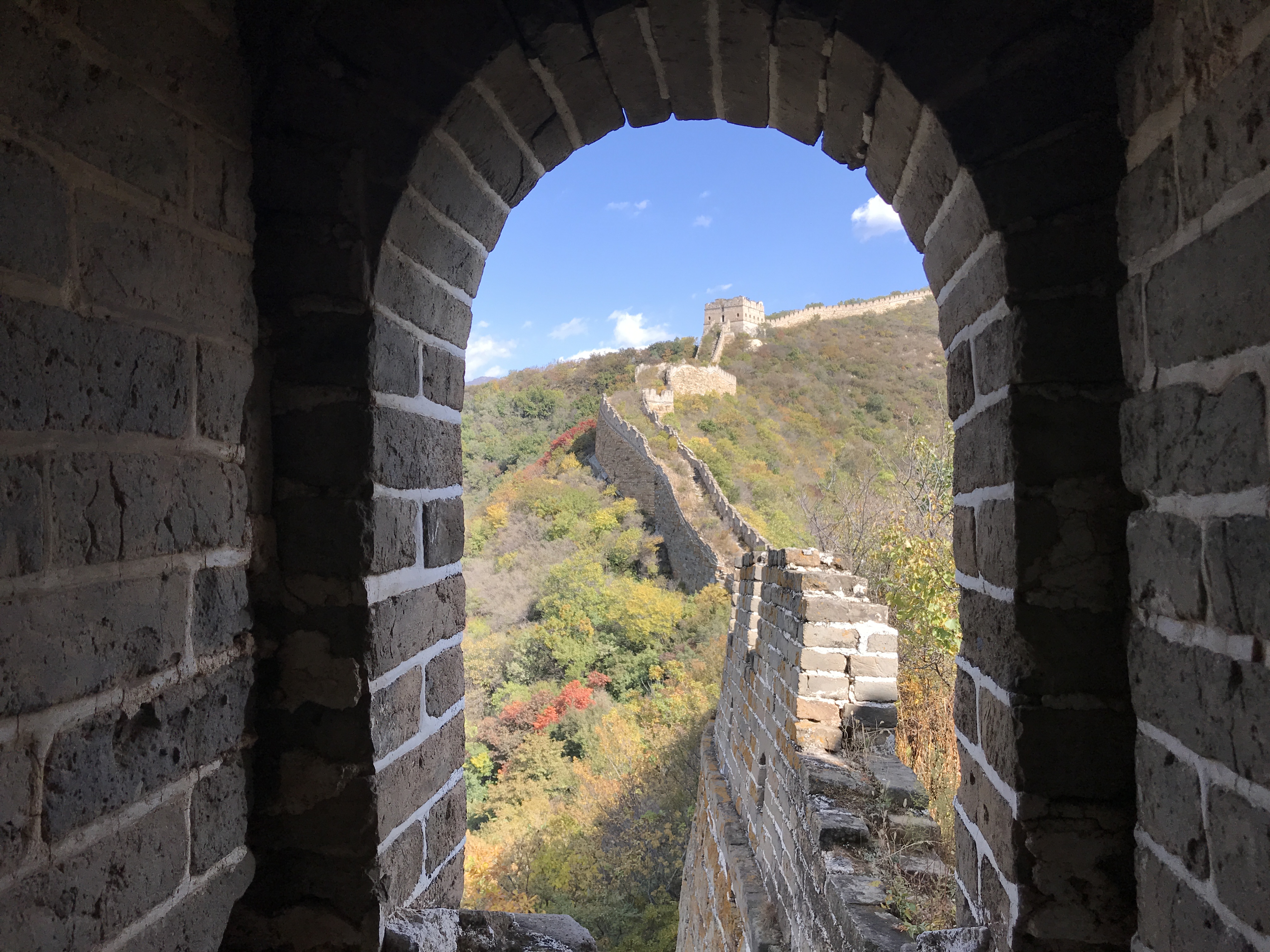
We were lucky enough to go the Xiangshui Lake Area for three nights – just two hours from downtown Beijing but it felt like worlds away. We hiked through fall colors for six miles along this remote section; we never passed another person although the path was easy to follow. Some watchtowers were easy to climb and others looked too unstable to attempt. This part of the wall had no signs or warnings, and we really felt like explorers finding our way and judging safety for ourselves. Lucy and I had read about the many, many people who died in the building of the Great Wall and it all made sense when we could see the steepness of some sections. The hand-etched lines on the bricks against the magnitude of the wall, made us stop and feel the generations and generations that it took to build this architectural masterpiece. Without any fellow tourists to bring us back to the present, there was an intimacy and timelessness to exploring this worldly wonder.The Great Wall, Xiangshui Lake

This is road schooling at its best.  History becomes alive and real to a child when you have an opportunity to tangibly experience a link to the ancient past.  And as Lucy was born in China, there is a sense of her heritage and the power of her lineage that likely explains her attachment to the Great Wall.  We had quiet moments to imagine what it might have been like as a soldier waiting for the possible Mongol invasion.  Or, the difficulty for the Mongol invader to actually scale this wall.

The Great Wall of China, road schooling, arrow hole, watchtower

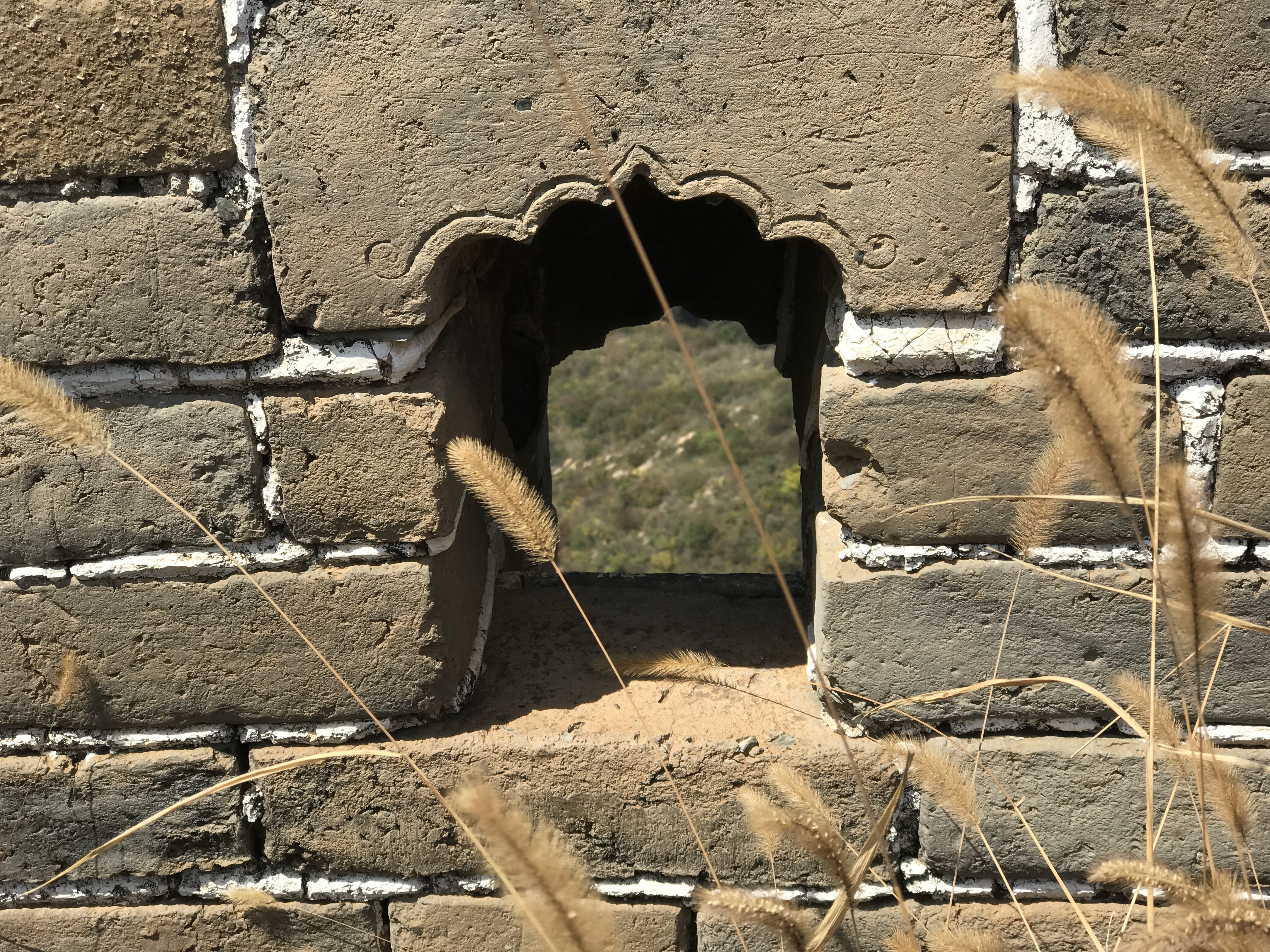
The arrow-shooting hole has a simple artistic detail and angles down toward the invaders who might try to scale The Wall.

The town of Xiangshui Lake offers official homestays in the farmhouses around town – which seems like an excellent way for the local farmers to have some extra income and keep the Chinese tourist mega-hotels at bay. We loved the quiet feel of this town, but a stay there would be tough if no one in the group spoke Mandarin. Where There Be Dragons has frequented Farmhouse 69 for seven or more years and we could see why. Our hosts gave us a warm welcome, incredible vegetarian food and some cooking demos. Greens, like bok choi and cabbage, grow in every square inch of this town, like all small towns in China, and the persimmons and chestnuts were just coming ripe.

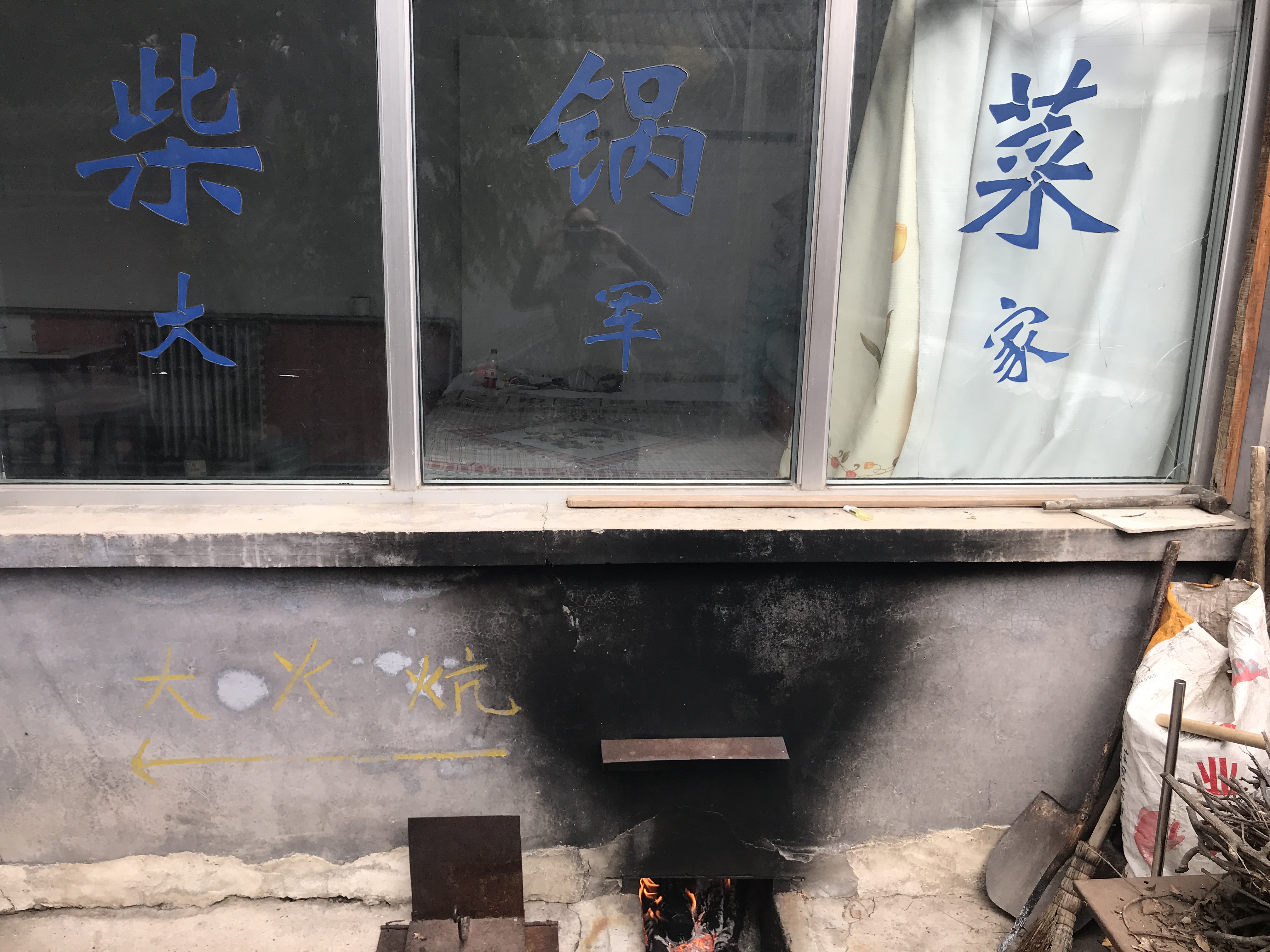
We loved our “hotbed” or khang bed, which are typical to the cooler north: there is literally a fire lit under the platform bed in the evening and the warm coals keep your bed toasty warm all night. Why heat the whole room, when you really just need a cozy bed? Ours also had a large, shallow bowl that doubled as a water kettle – helping to heat, humidify and create the perfect place for the yeasted bread to rise…ingenious!

Khang bed, Xiangshui Lake, The Great Wall

The new style of “Khang Bed” will keep you cozy warm through a cold night.

Khang bed, The Great Wall

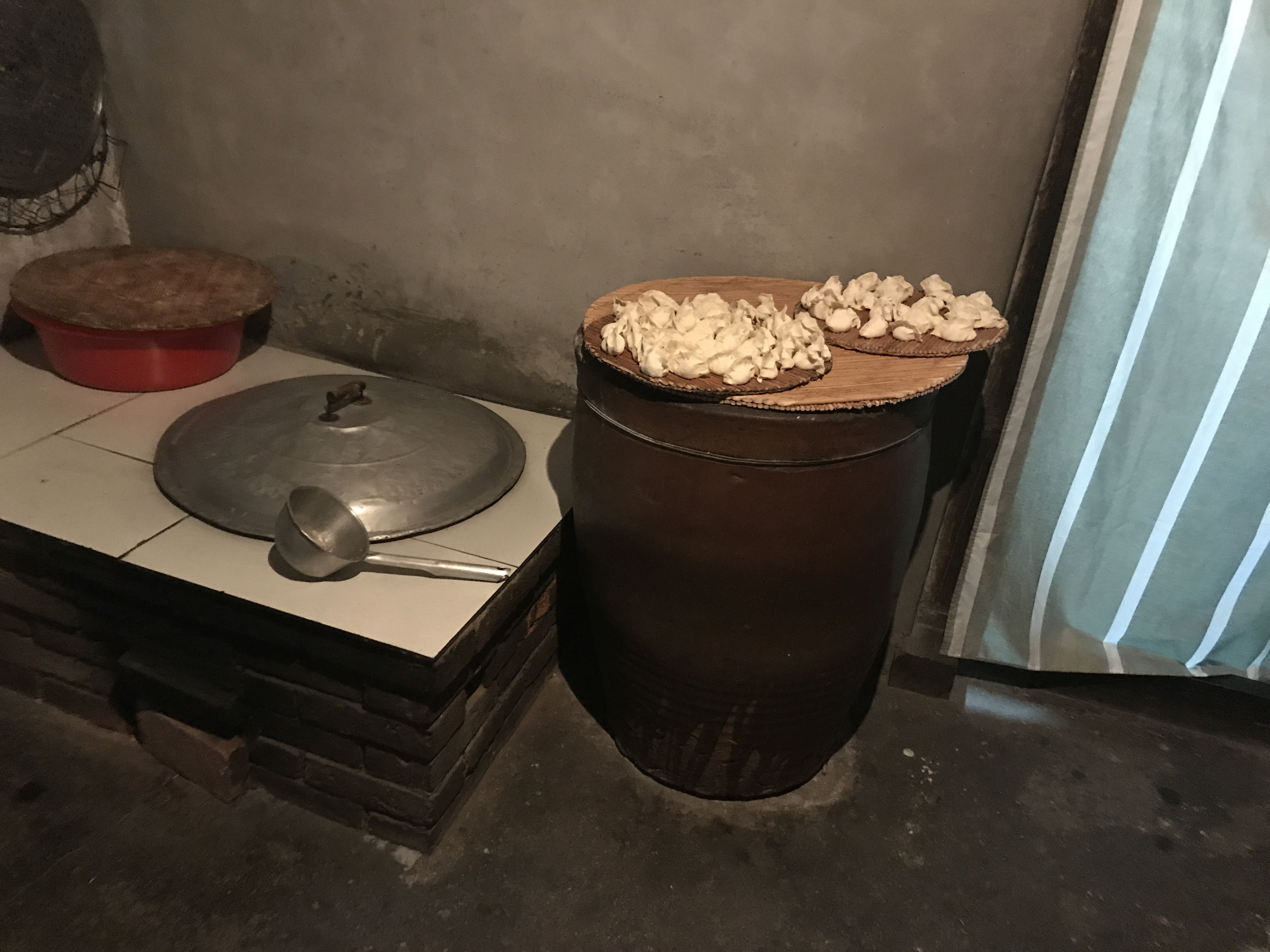
Old-style khang bed with a kettle of water over the warming fire. Our bed was just on the other side of this wall. Chinese style dumplings (momos) ready for steaming.

In the center of Xiangshui Lake, there was another entrance to a restored Wall section and accessed by a large gate and golf carts. Massive tour buses whizzed in and out, ferrying hundreds of Chinese tourists but no one ventured just off the path to our section. We never went through this popular, preserved section. The wildness and privacy of the our remote segment of The Great Wall made it all the more memorable.

The Great Wall

Fall colors 2017

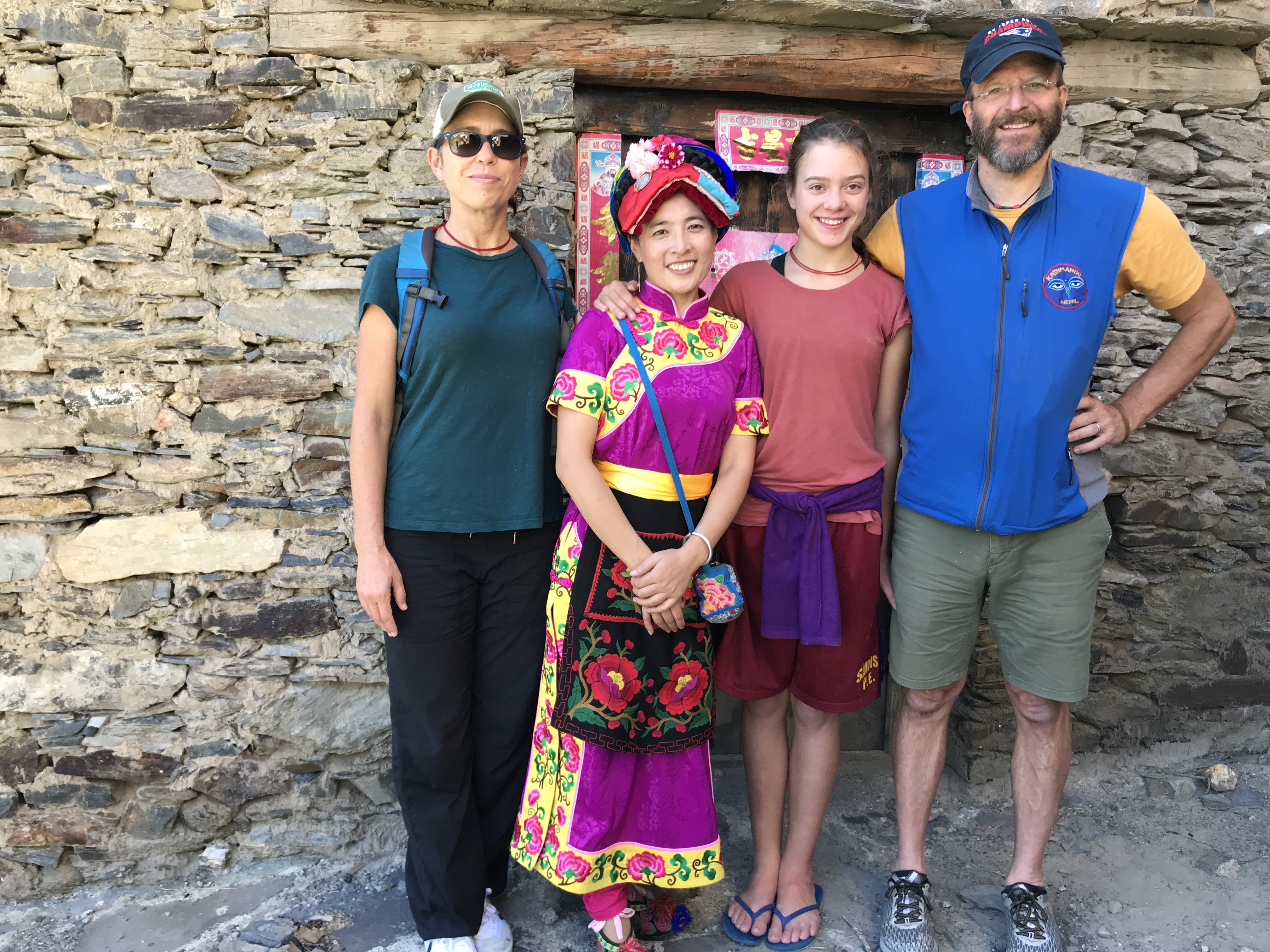
From Chengdu, we took a van for about three hours to Muka, a “minority” village. China is 94% Han Chinese. But that leaves approximately 69 million people who fall into the category of “minority”: Tibetans, Southeast Asian Hilltribe, Uigurs, and many more. This village is home to the Qiang ethnic group who were neither Buddhist nor Muslim, but had their own belief system before the Cultural Revolution.  This Qiang village had a few guesthouses, but no large large hotels.  We never saw other Western tourists in our three-night stay.

Qiang, Sichuan, family travel

Qiang, Sichuan travel, family travel

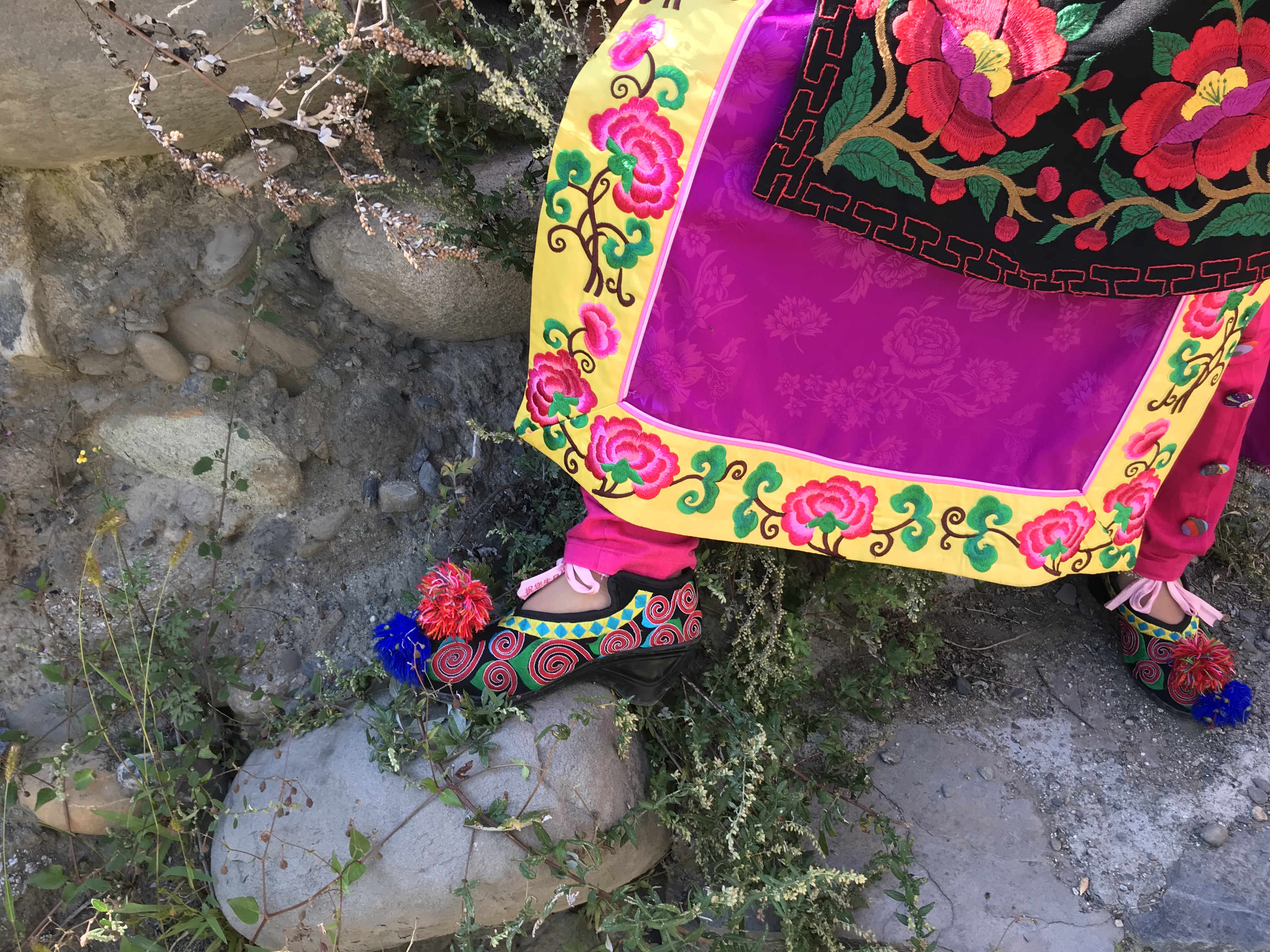
I want those shoes! Who’s with me?

The drive from Chengdu was surprisingly easy. The road was new and very well-maintained. This area was the epicenter of a massive earthquake in 2008, so that may answer why there had been so much money poured into it. I kept seeing mountains and wondering how Lucy’s tummy would fare, and then bup! into a tunnel. Tunnels through mountains: a novel concept after months in Nepal.  In this Qiang area there are loads of hydro projects, irrigation canals and tunnels.

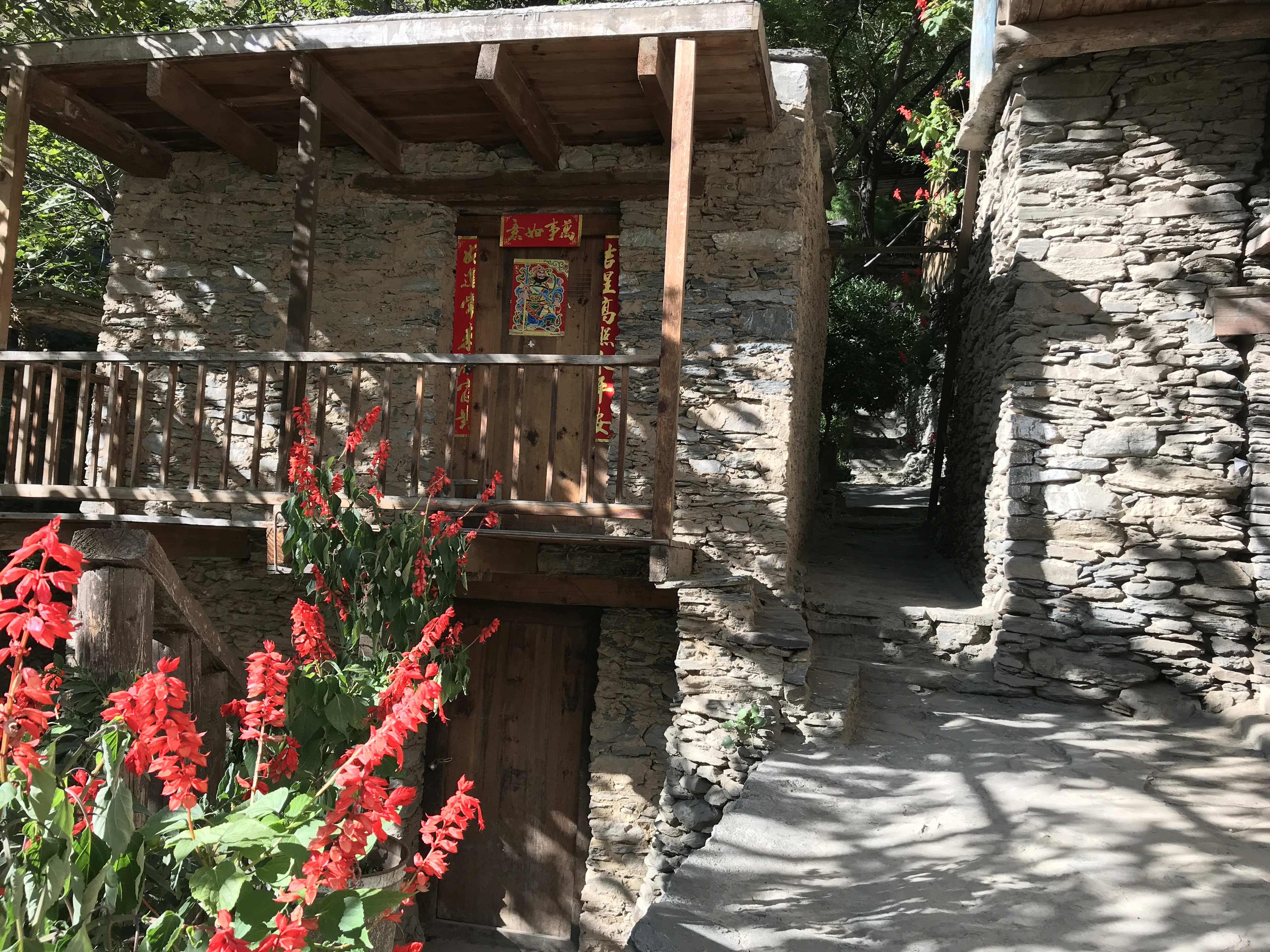
Qiang, stone houses, Sichuan

Not your stereotypical China. Grateful to off the tourist circuit and seeing some diversity!

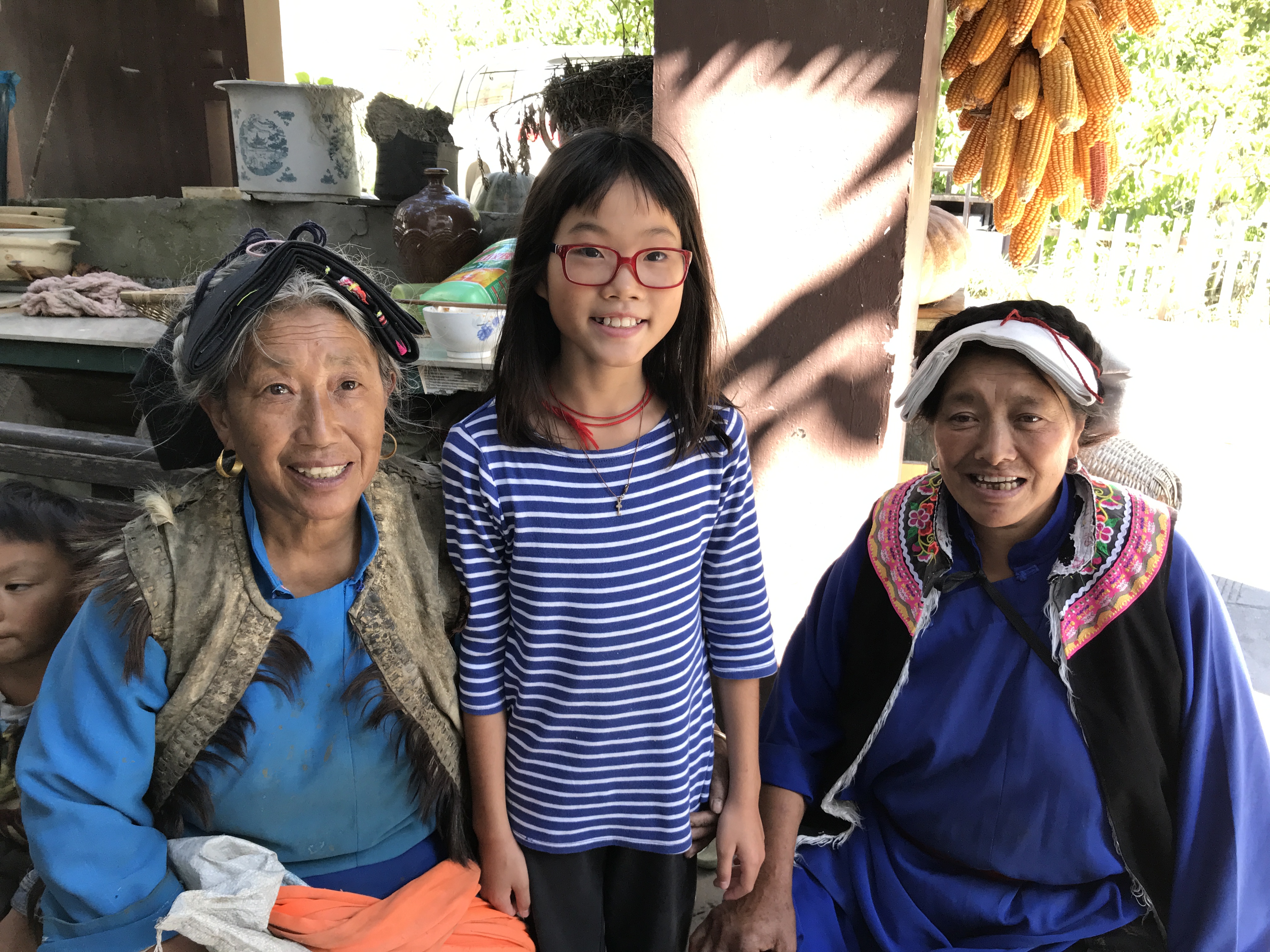
The Qiang are known for their stone houses (not a great mix in earthquake country), embroidered shoes and fascinating hats. The womens hats look like a folded dinner napkin on the top of the head and then held into place by two braids, Heidi-style. Like most places in the world, it seems, the grandparents are still wearing the traditional clothing and anyone under thirty is wearing the mono-cultural Western attire.

Qiang, family travel, road schooling

Qiang grandmas doting on Lucy. We loved their hats.

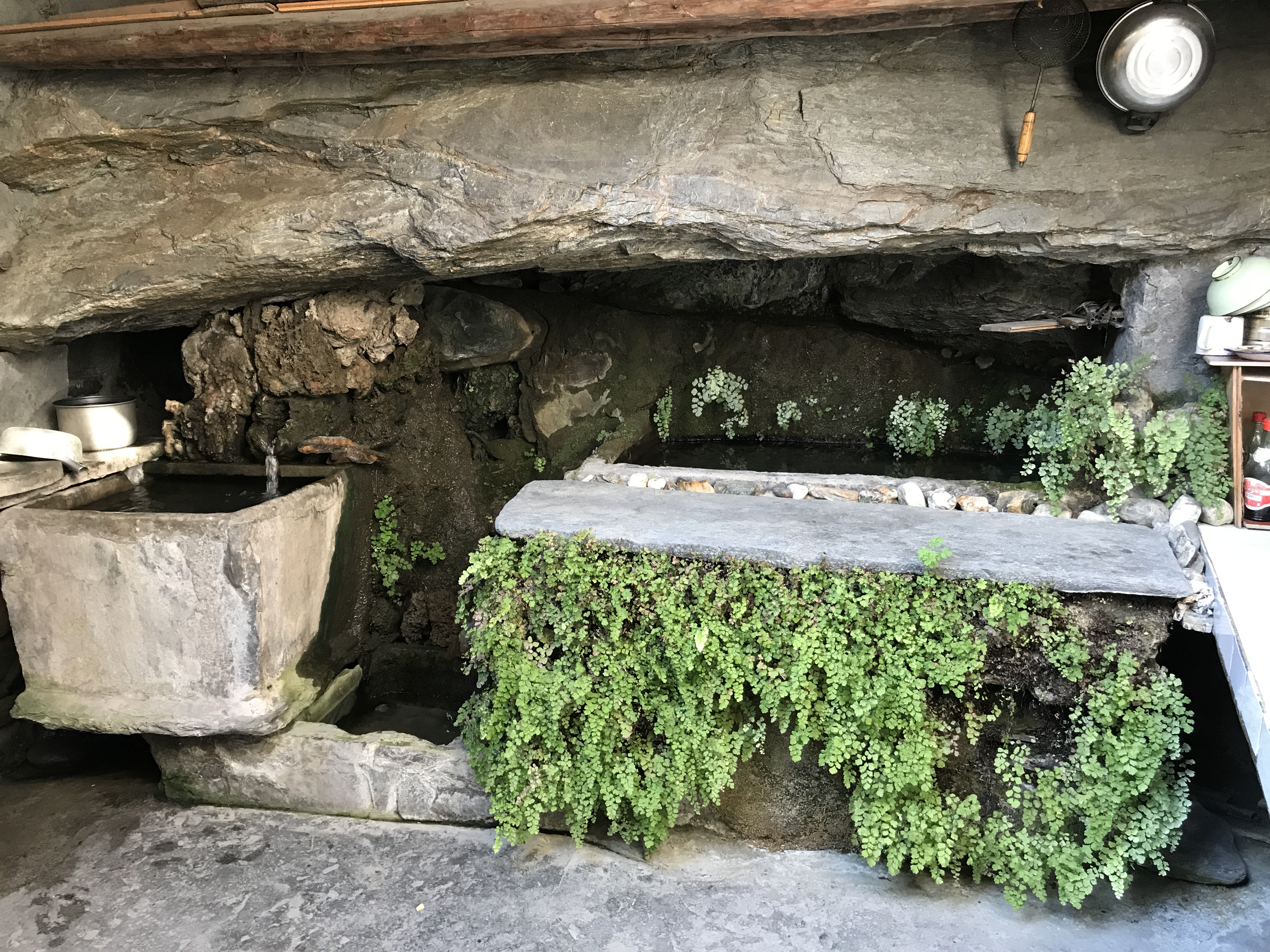
We looked around the old village a bit and found a home that Julie had stumbled upon before. We walked right in and looked around. A doorway is more of a suggestion than a fixed boundary and the TV-watching man of the house, beckoned us in to look around. The kitchen could be a feature in Sunset Magazine. A fern-covered stone trough for a sink with a constant flow of water. It had an open ceiling and led to a courtyard with stone table and benches. I couldn’t place myself – American Southwest? Big Sur? Xinjiang? Mexico? There were cactuses and oaks, pomegranate trees and grape vines, roses and gingko trees, hanging chilis and drying corn, live ferns and pet chipmunks.

This just may show up in Sunset Magazine, mark my words.

We all sat, mesmerized by this most-cool house and I wonder what Kai, Lucy and Lorna will remember of this place? Will they wake in the morning one day at forty years old, wondering if this place were real or a dream? Will they be inspired to follow design as an adult and incorporate some of these foreign, natural concepts that will seem to simply come to them as inspiration? I wonder what these remote places will mean to the adults my kids will become.

There is absolutely no way that we could have the moxie and foresight to come to a place like this without Julie. (I found here through the alumni board of Where There Be Dragons, a student travel company where we have both worked.) No one speaks a lick of English and your guesthouse serves your meals which need to be ordered up ahead, especially our vegetarian preferences. There are so many interesting things happening around us and Julie’s language, cultural knowledge and patience can answer our constant questions.

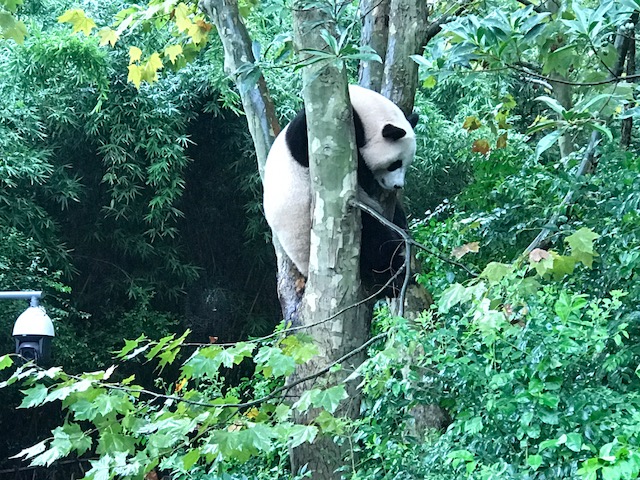
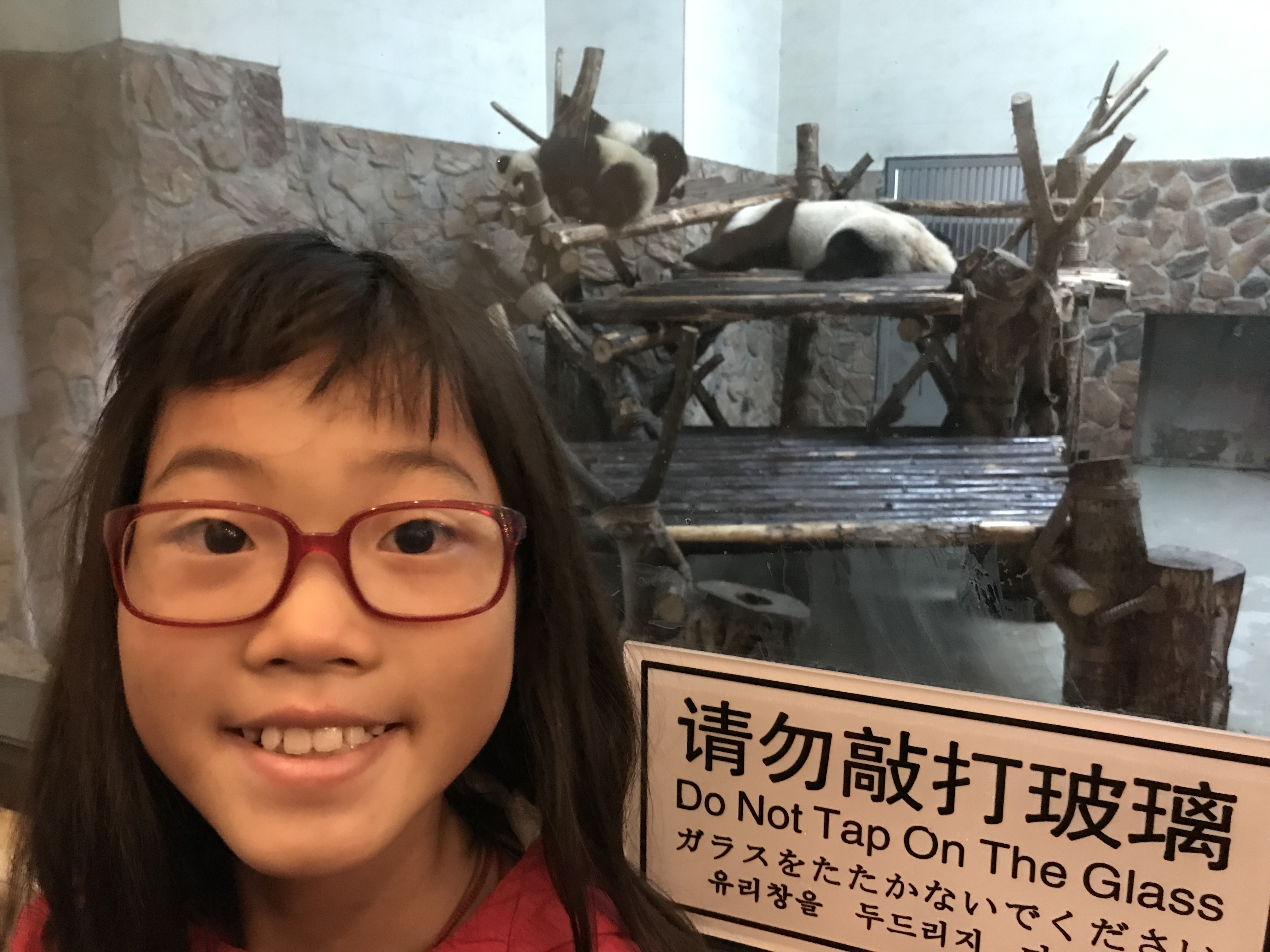
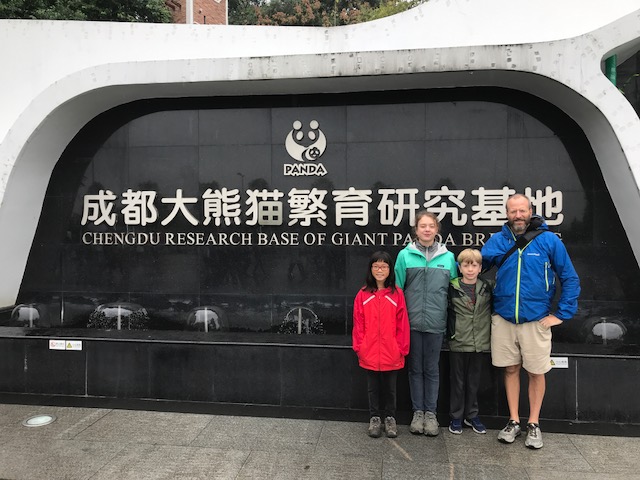
On a cold and rainy October day, we visited the Panda Sanctuary in Chengdu. Fat Pandas snoozing in trees make me happy. The big, cuddly guys find a fork in the tree, wedge themselves in, flop over and doze off. It takes a lot of energy to digest nine hours of bamboo eating.

Chengdu, Panda Sanctuary

If you don’t know what to look for, you could miss these guys!

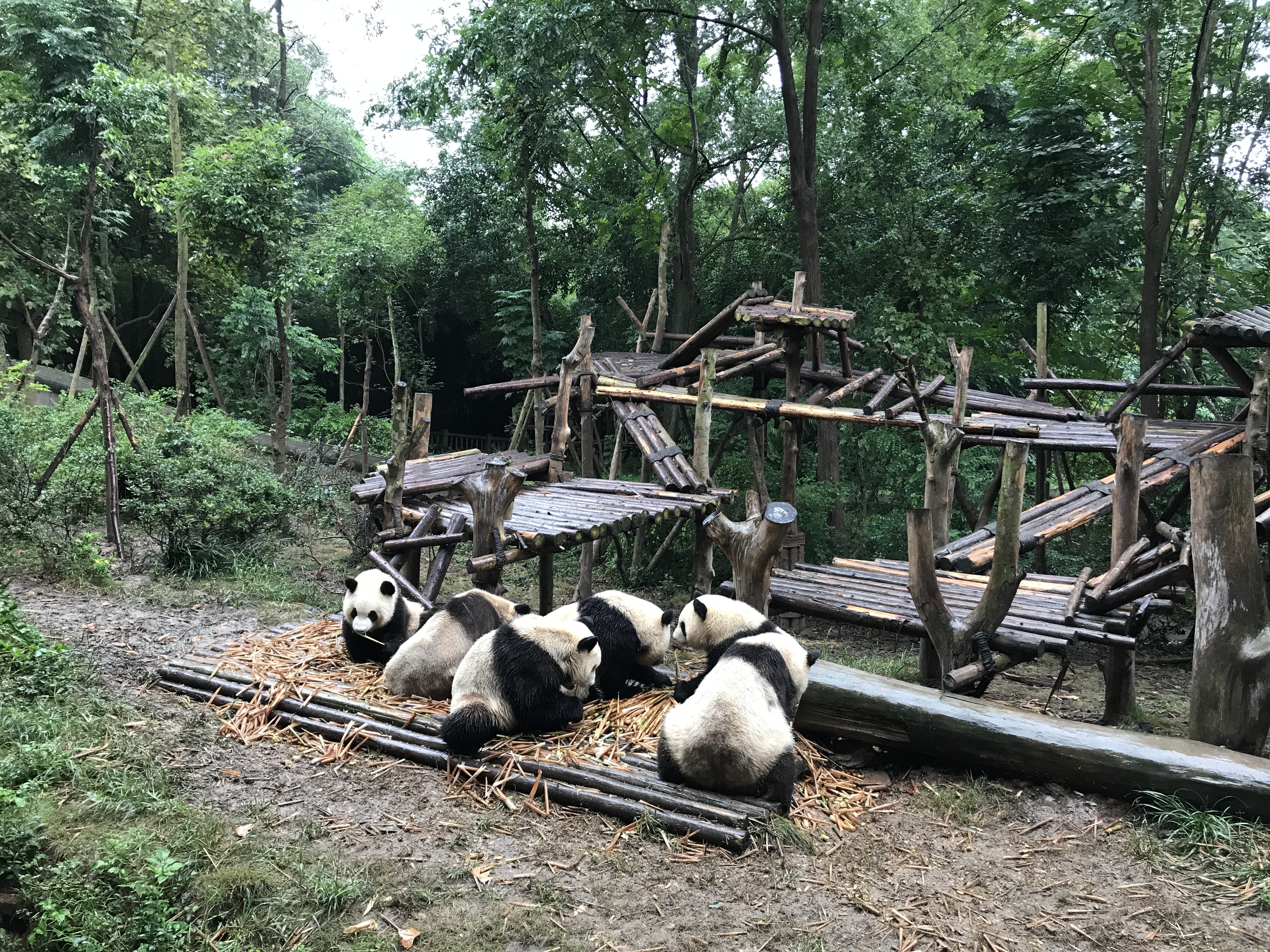
There’s a reason panda’s popularity is so unwavering. They are objectively adorable and there’s nothing scary. They maneuver bamboo with big paws, roll around and snooze in trees. What’s not to love?

Eating Pandas

The Panda Sanctuary has birthing facilities for both the red and giant pandas as well as veterinarian centers and research buildings.  For the many bamboo-lined miles of walking, there are tea houses and bus lines to help make a day of the visit.  For our October visit, there were very few Western visitors but crowds of Chinese tourists.  We were told that the pandas are more active in the colder weather and that it keeps most tourists away so we were glad for the cool day.

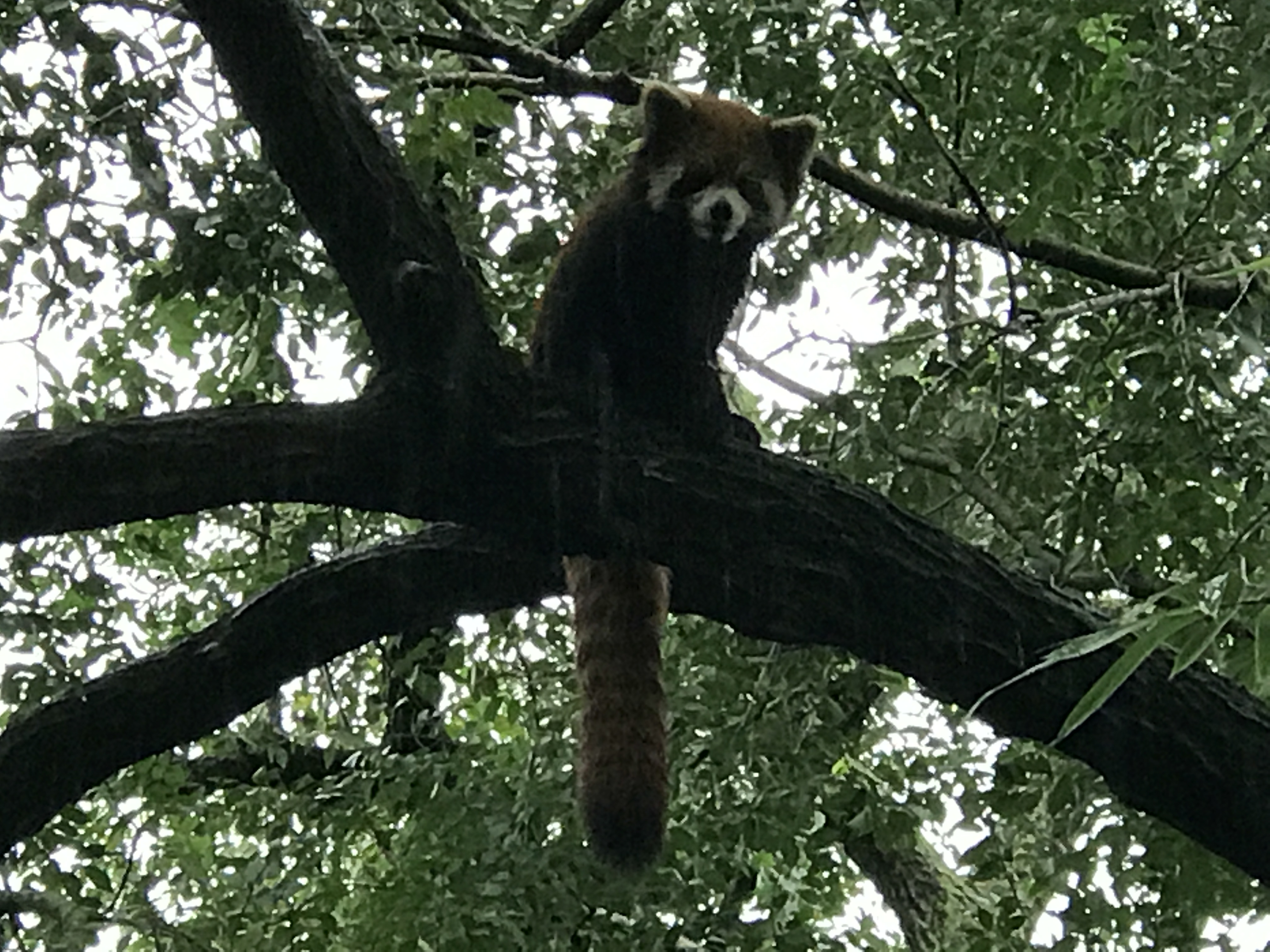
Red Panda, Chengdu

Red Pandas too! There are still some of these guys in the wilds of China, Nepal and India.

Chengdu, though the Panda Sanctuary, is home to the movement to reintroduce them into the wild. “Panda” is the city’s logo and you can feel the pride of ownership to this movement. The current guess is that there are ten or less pandas living in the wild, so you cannot simply release pandas born in captivity into the wild to reintegrate with the others. They need to find enough food, water and open space to find a mate and raise their young. How can they learn these things if not from other pandas? Do they have predators? (Besides humans?)Panda Sanctuary, Chengdu

We saw a film about the protected wilderness just outside the city limits where researchers are trying to reintroduce them. There are actually humans dressed in panda suits (think high school mascot suit) who are acting out what pandas should do and where to go. It’s, at first, funny to watch, then it starts to feel pathetic – a kind of groveling to the wildness we once knew. Maybe it’s more like complete dedication? I just hope it works because it’s sad to think that these gentle creatures won’t survive without such extreme intervention. And what happens to the mascot people in mating season?

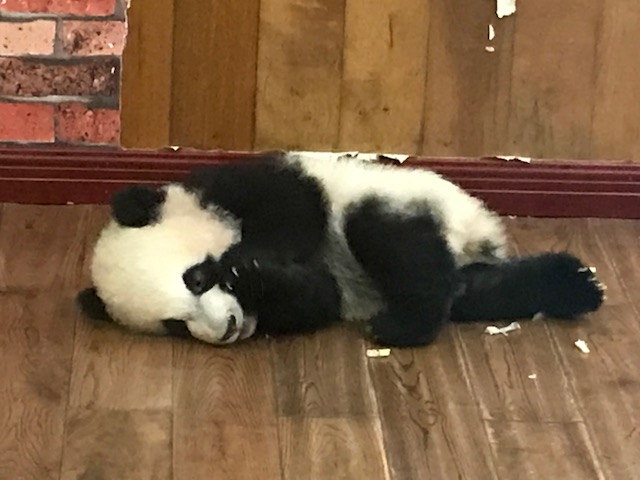
Baby Pandas in the nursery

The Paradise Family happily stood in the drizzle to watch them snooze peacefully. We all giggled in wonder. Even Will. And that’s saying something. The kids walked away asking, “What can we do?” “How can we help?” (The best kind of road schooling!) And I guess the answer is the same as it is for most environmental issues: reduce, reuse, recycle and don’t eat meat. Meat consumption, and the need for grazing lands, is the leading cause of wildlife habitat destruction. Through our time at the Panda Sanctuary and their educational kiosks, our kids really saw the connection of it all.  Kids will grow into adults who will protect what they love.  And we definitely love the pandas.

Panda Sanctuary, Chengdu

On October 1, after spending two months in Nepal, we flew from Kathmandu to Guangzhou.The last time we were here was seven and a half years ago to meet Lucy and bring her home. There are so many emotions and memories that floated around us when we arrived in Guangzhou, China’s third largest city.  Shamian Island, a quiet enclave within this massive city, is where the American Consulate was located, so all the adopting families needed to stay here while their paperwork processed. All the streets near the old consulate had stores filled with clothing and shoes for little girls, laundry by the kg, a Starbucks and necklaces that said, “mother” and “daughter” in Chinese characters.

Shamian Island

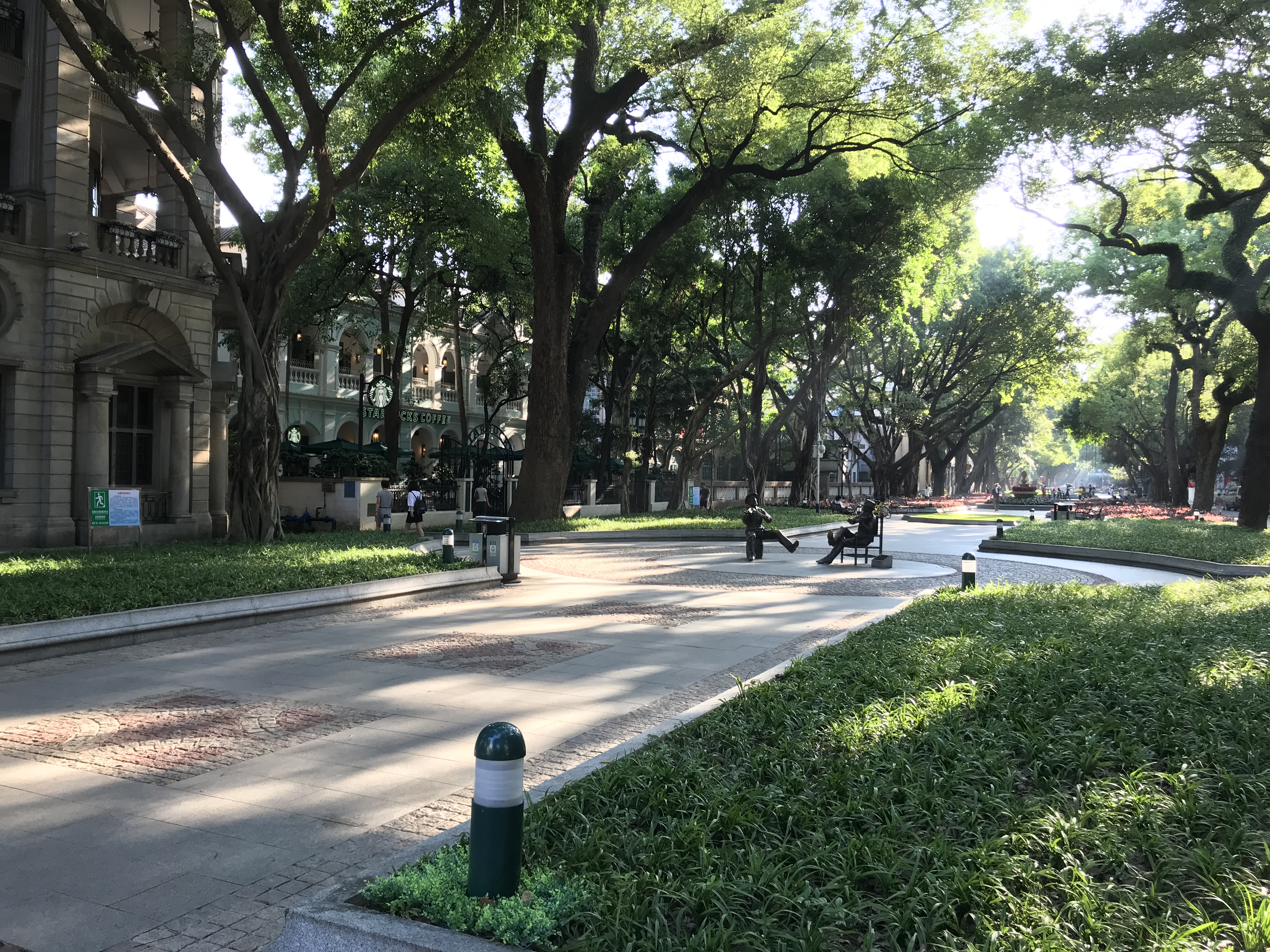
Early morning peace on Shamian Island

On this trip we wanted to again stay at The White Swan Hotel because we stayed there for two solid weeks for the adoption process. Back in 2010, I remember asking the adoption service travel person if she could send us three hotel options to choose from and her response was something like, “You adopt? You stay White Swan. Everyone stay White Swan.” And indeed, the hotel was totally set up for families adopting from China. When we checked in, the clerk gave us an “Adoption Barbie” by Mattel. Barbie was blonde and she had an Asian baby in her arms. There was a play room, pool, American doctor on staff and a breakfast buffet with both croissants and congee, or other familiar foods from an orphanage.

Chinese adoption, Shamian Island, the White Swan

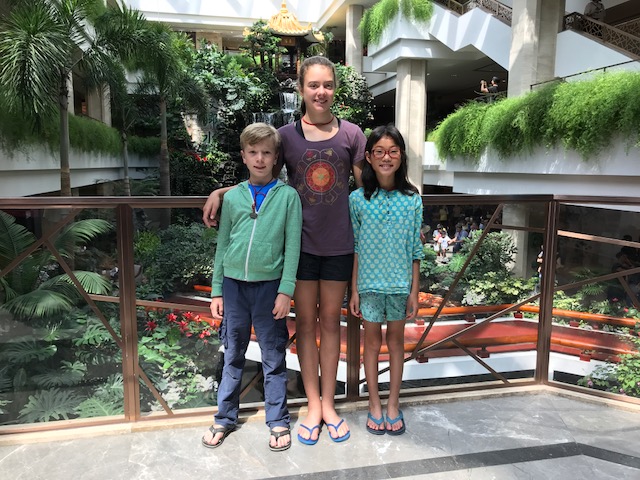
The inside of the White Swan

The consulate has since moved to Beijing and the amount of adoptions has drastically dwindled so The White Swan, like the rest of China, has completely transformed itself in the last seven years. (Actually, China has probably transformed itself twice since we were here last.) We arrived on National Day and the hotel was packed with Chinese tourists – we only saw one other Western customer the whole three-day stay.  There was not a trace of the adoption system left at the White Swan, only a few of the old neighborhood shops still remained but they looked like business was slow.

Shamian Island, Jenny's Place

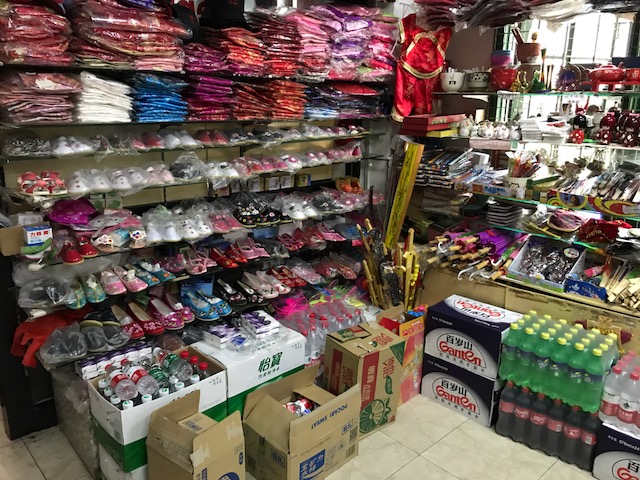
Shamian Island shops still offer shoes and clothing for newly adopted girls.

I’m behind on blogging but we are so glad that we decided to include China in this itinerary. Already Lucy has said that she is proud to be Chinese. Done. Everything has been worth it.

First impressions of China:

  • We are not in Kathmandu any more.
  • The sheer number of people and size of the city is incomprehensible.  The ride from the airport was 45 minutes and we were in a city for the whole time.
  • People here smoke.  My taxi driver was smoking, while texting, while driving to the hotel.
  • The modern dress and affluence of the people.
  • China feels like it has leap-frogged in infrastructure. (We read in Evan Osnos’ book, The Age of Ambition that during the 2008-10 downturn, China invested 50% of its GDP into infrasctructure!)  Everywhere you look, there is a tunnel, massive bridge, irrigation canal or hydro project.  There are cranes and massive building sites in every view and piles of rubble where something outdated has come down.
  • Everyone has a smartphone and they’re using it constantly.  Even more than the US.  Not all phones are iPhones or Samsung’s. There are millions of other brands I’ve never seen before.
  • The selfie stick was a bad invention. They are EVERYWHERE.
  • China feels way more high-tech than the US. People pay at convenience stores with their phones, they board planes through kiosks, the airport luggage carts have screens so people can play video games or watch TV.  This is not your parents’ China.
  • Outside the tourist areas, virtually no one speaks English.
  • People speak to Lucy in Chinese and are confused when she cannot speak back to them.
  • Random people want to take photos with us.
  • Advertisements use Western models or Western-looking Chinese people.
  • Public transportation is clean, easy to use and cheap.
  • Why isn’t Chinese food served in the US restaurants nearly as good as the food people actually eat in China?

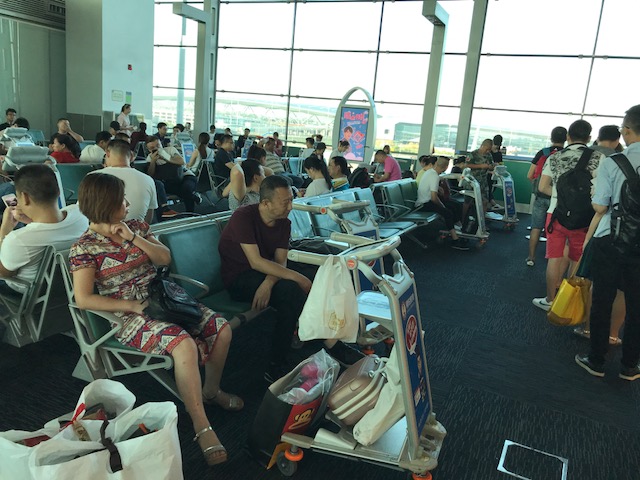
    Guangzhou Airport

    Look closely to see how many people are playing video games on their luggage carts…

Before this year-long educational odyssey of fun and adventure, I created my own brand of curriculum for my kids. I thought of books to read, projects to enjoy and fantacized about all the real-world learning that would happen for my kids. But Nepal schooled me too. Here is my listicle for the ten lessons I learned from Nepal.

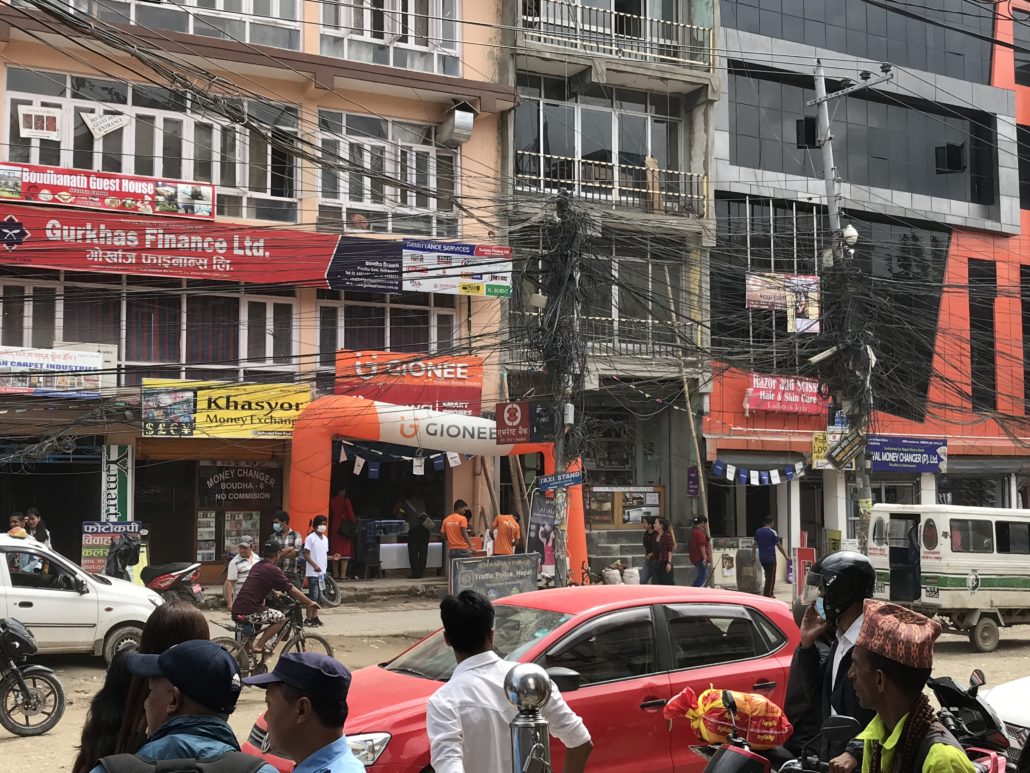
1. Bureaucracy ain’t that bad Boulder’s building codes and seemingly arbitrary development restrictions used to drive me crazy, but after witnessing a real laxity of rules, from snarls of wires to newly built homes that crumbled in the earthquake, I have a newfound respect for red tape.

Kathmandu, Nepal,

Wires and Traffic…

2. Generosity Yes, Nepal has a free market economy, but the people don’t really think that way. There is a collective happiness mode of thinking that is absent in the US. People, even the poorest of the poor, will offer whatever they have to Patagonia-clad travelers. I had people offering me corn, or biscuits or tea… lots of tea. It will boggle you.

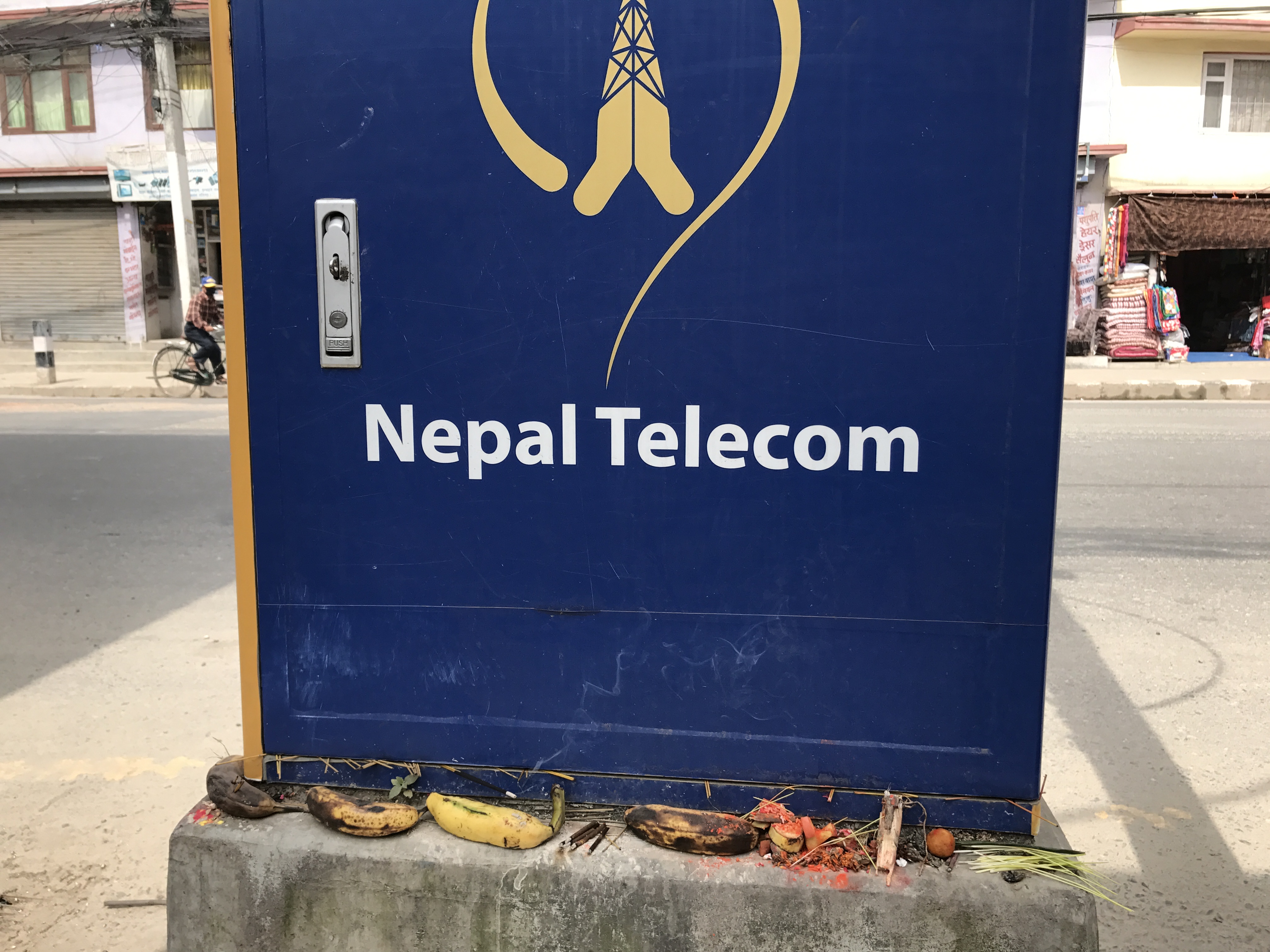
3. Spirit Worship is in Every Vista Prayer flags, altars, statues, stupas, chortens, even these tiny offerings on the floor of a tea shop that went unnoticed through the first month or so before I realized where to look. There are little altars to the spiritual world everywhere. The bathrooms in most of Nepal (not ours) are not nearly as clean as the US, but there’s a different sense of where to put your efforts. As a traveler, you notice the grime before you notice what takes its place. And what takes its place is, ultimately, more important than a sparkly potty. I hope to create more of these gestures to spirit when I return… and have a clean bathroom.Altars on the phone box

4. We are Preoccupied with Safety After the first few days in Kathmandu, I gave up on seatbelts. Crossing the street, I gave a wide berth to oncoming traffic and then realized we would never cross the street. So, we just started to cross and indeed, we stayed safe. As a mom, I am wired to scan the situation for potential hazards, but watching moms cradle newborns in one arm while balancing, helmetless, on the back of a motorbike through potholed traffic, rejiggered my sense of what is safe. There was no sense of safety’s ground zero. And isn’t the cocooning of our American children a bit more about frivolous lawsuits and consumerism than actual statistics? I still will have a hard time being too lax but it really makes you think.

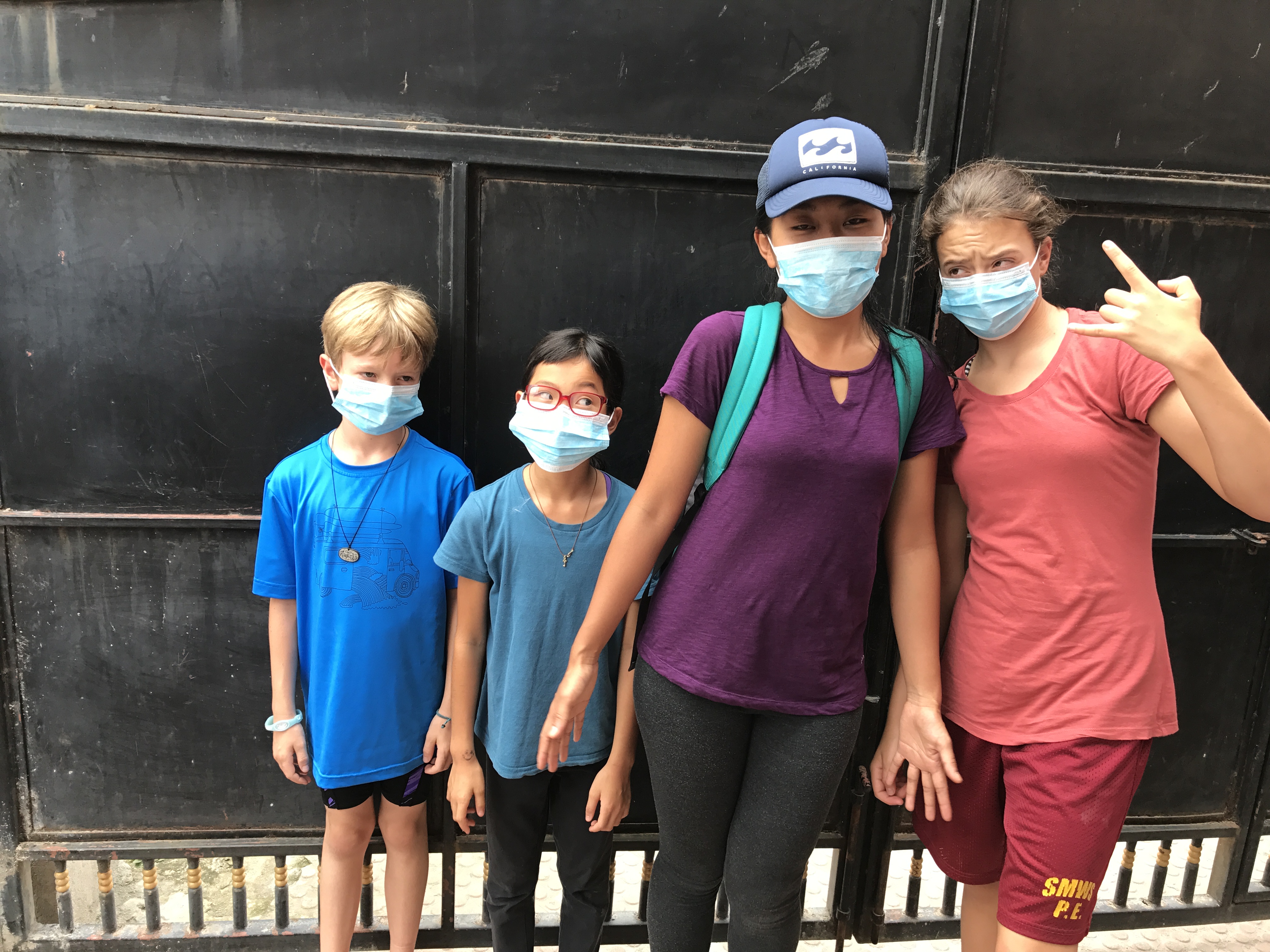
5. Clean Air I really don’t think I can live long-term in a place that requires me to wear a pollution mask. I love Nepal, love Kathmandu, but I have a new-found appreciation of the air of Colorado and look forward to no grit in the eyes and teeth at the end of the day.Masks for the road

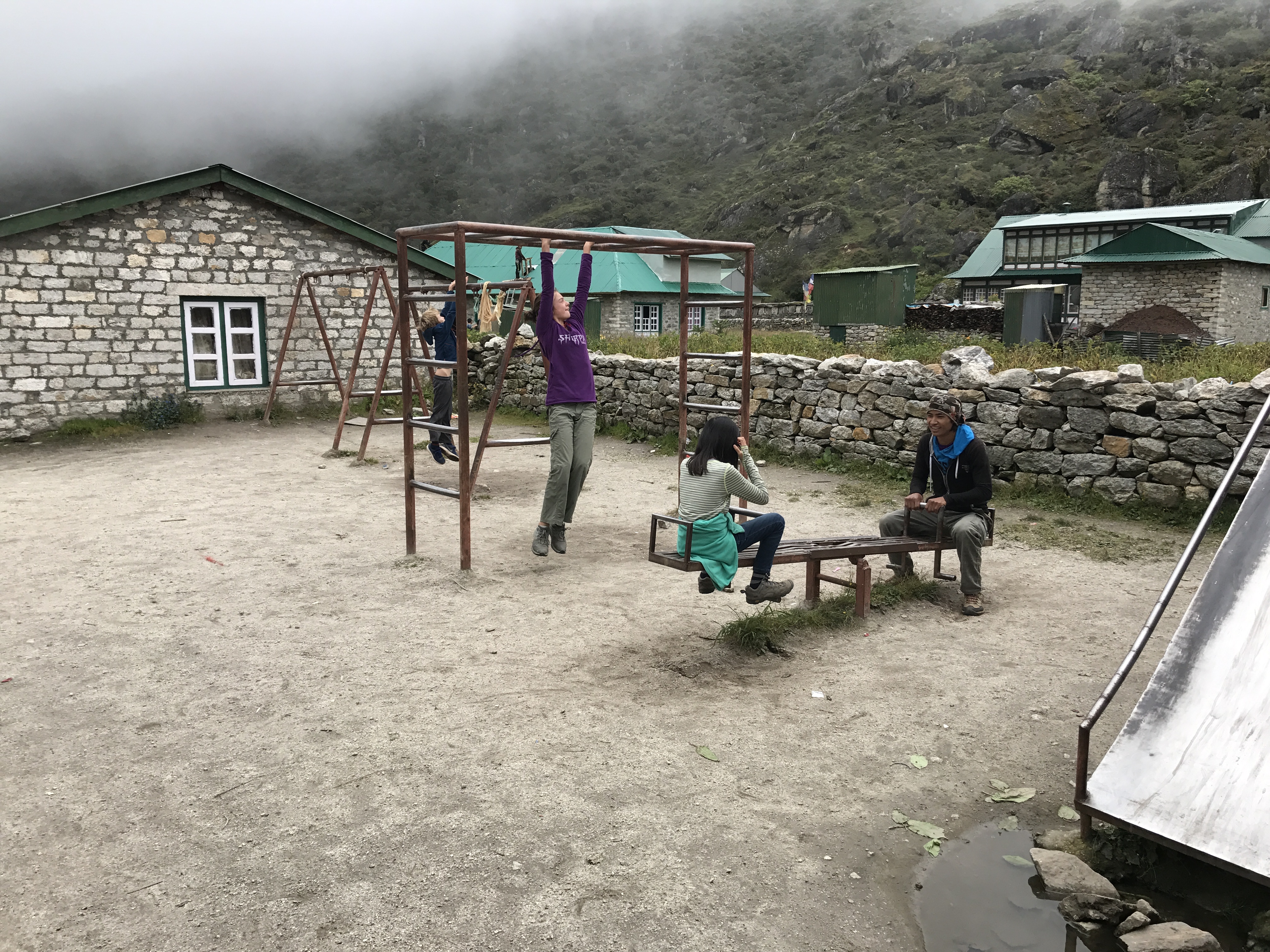
6. Kids Need Space I love the parks and open space for kids in the US. Kids need a safe place to run and be physical. Kai played soccer of the roof terrace and threw the football in the street, but cars came and wires were overhead. And it often went into the neighbors’ yards. We spent three afternoons at hotel pools so the kids could swim and splash and run on the big, expansive lawns. They were going stir-crazy without a place to run.

Khumjung, Hillary School, Nepal, Solukhumbu

We co-opted the playground at the Hillary School in Khumjung.

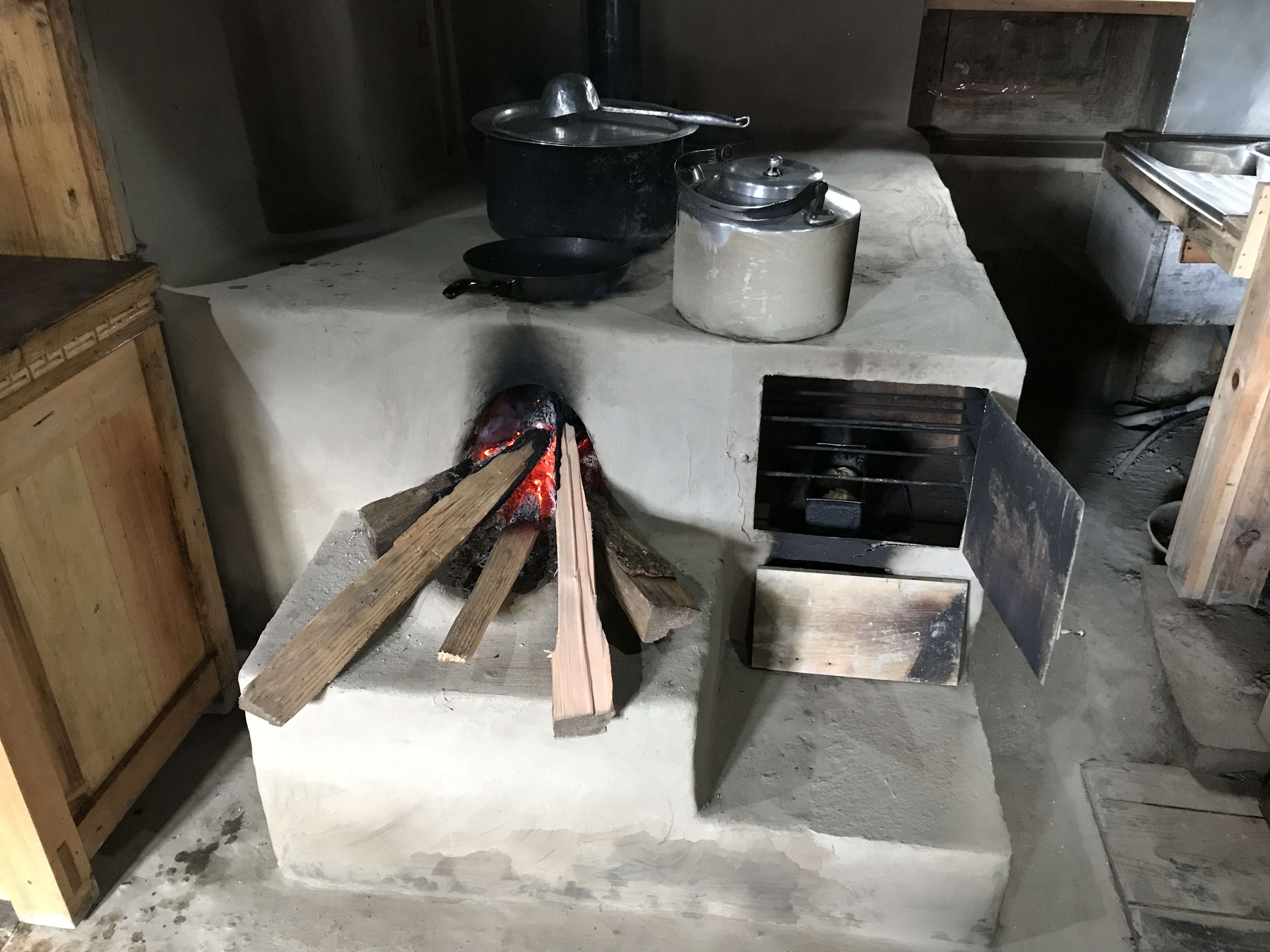
7. Women Juggle Work and Family The World Over It isn’t a Western woman’s balancing act, it’s a worldwide issue. Many guesthouse owners were moms who put their kids in front of the TV or video game to make us dinner or tend to the guesthouse. Professional working moms in Kathmandu were happy for job shares or three-quarter time opportunities. Women want and/or need to work outside the home and balancing family care is tricky wherever you are. But here cooking and housework, seems to be less automated and there is no alternative to slow food.

A typical Sherpa kitchen. Dinner starts with procuring firewood.

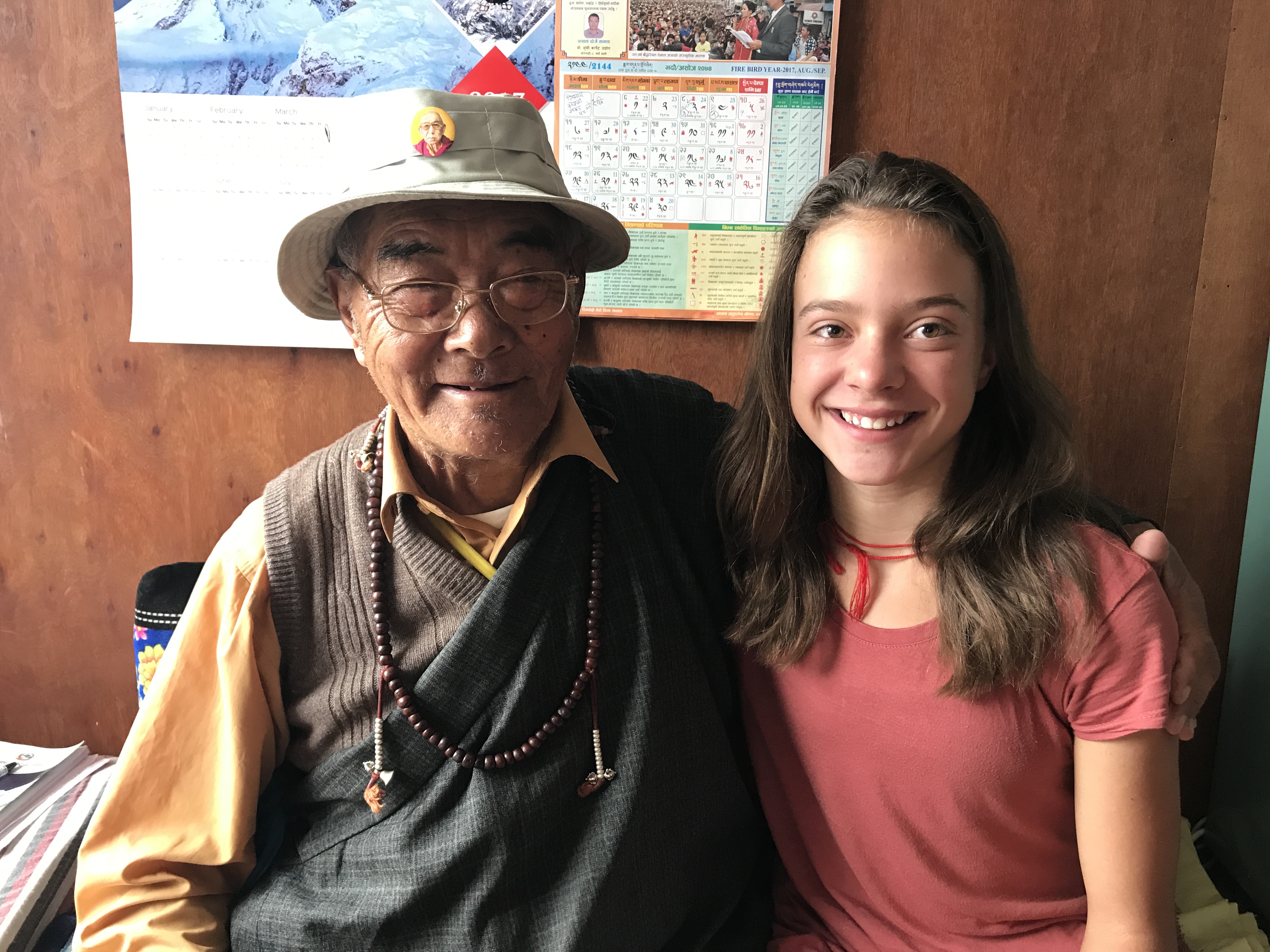
8. The Elderly Have a Purpose in Our Society I learned that life is richer when the elderly are enfolded into daily life. Actually, I relearned this from my time living in Thailand. I have so little interaction with older people in Boulder; I simply forget the calm and wisdom gained from spending time with a grandma or grandpa. The elderly in this country are visible and spend so much of their day in prayer.  Read here about Kancha Sherpa.

Lorna with Kancha Sherpa

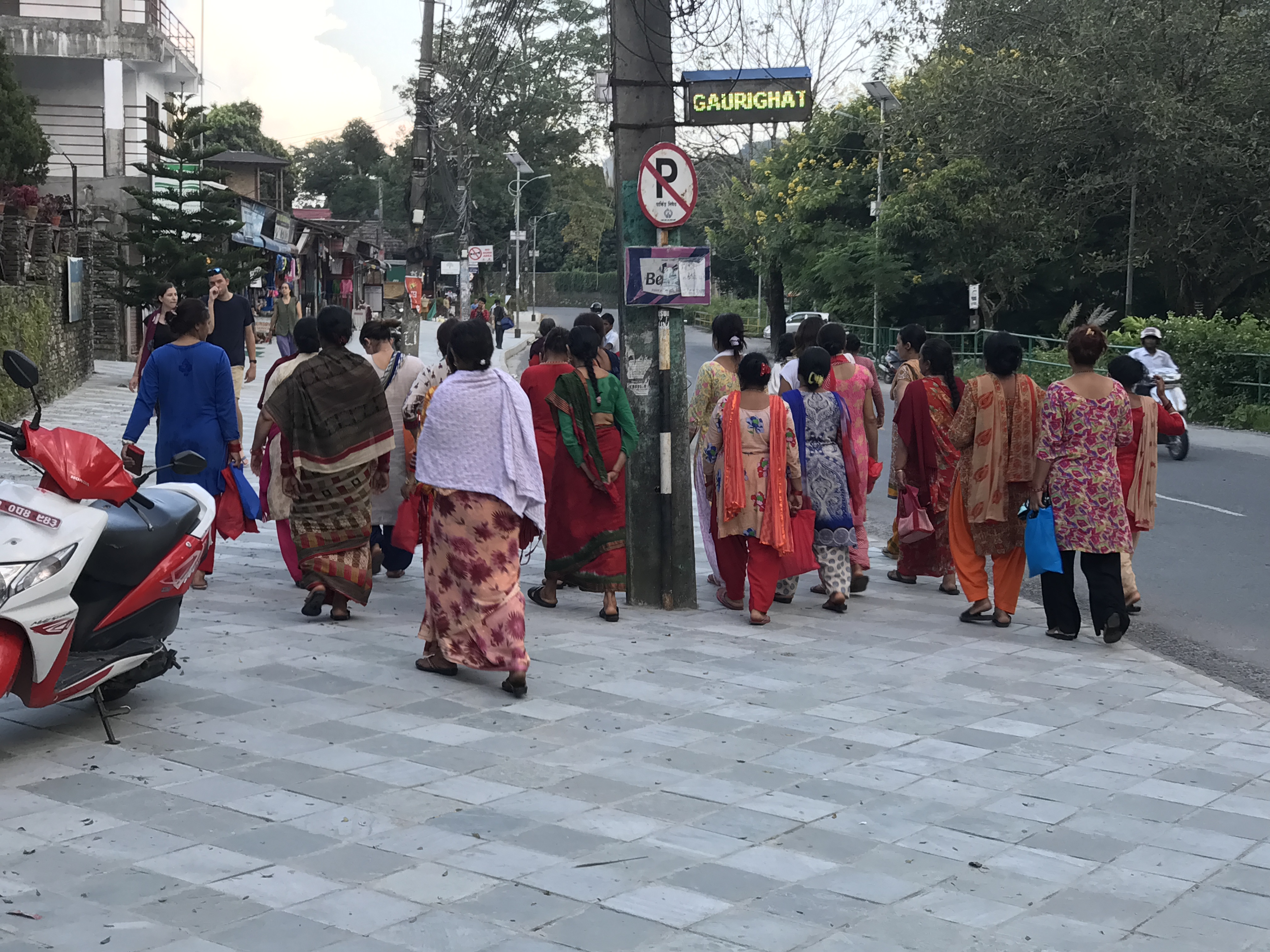
9. Commit to Color Nepali women don’t go half way with color. Their comfy cotton Punjabis are bright with surprising contrasts. There’s very little gray, or black or navy in the typical Nepali wardrobe. There are more and more people wearing Western dress and that lack of color does stand out. Why not live life more colorfully?

A group of colorful women out for a stroll in Pokhara

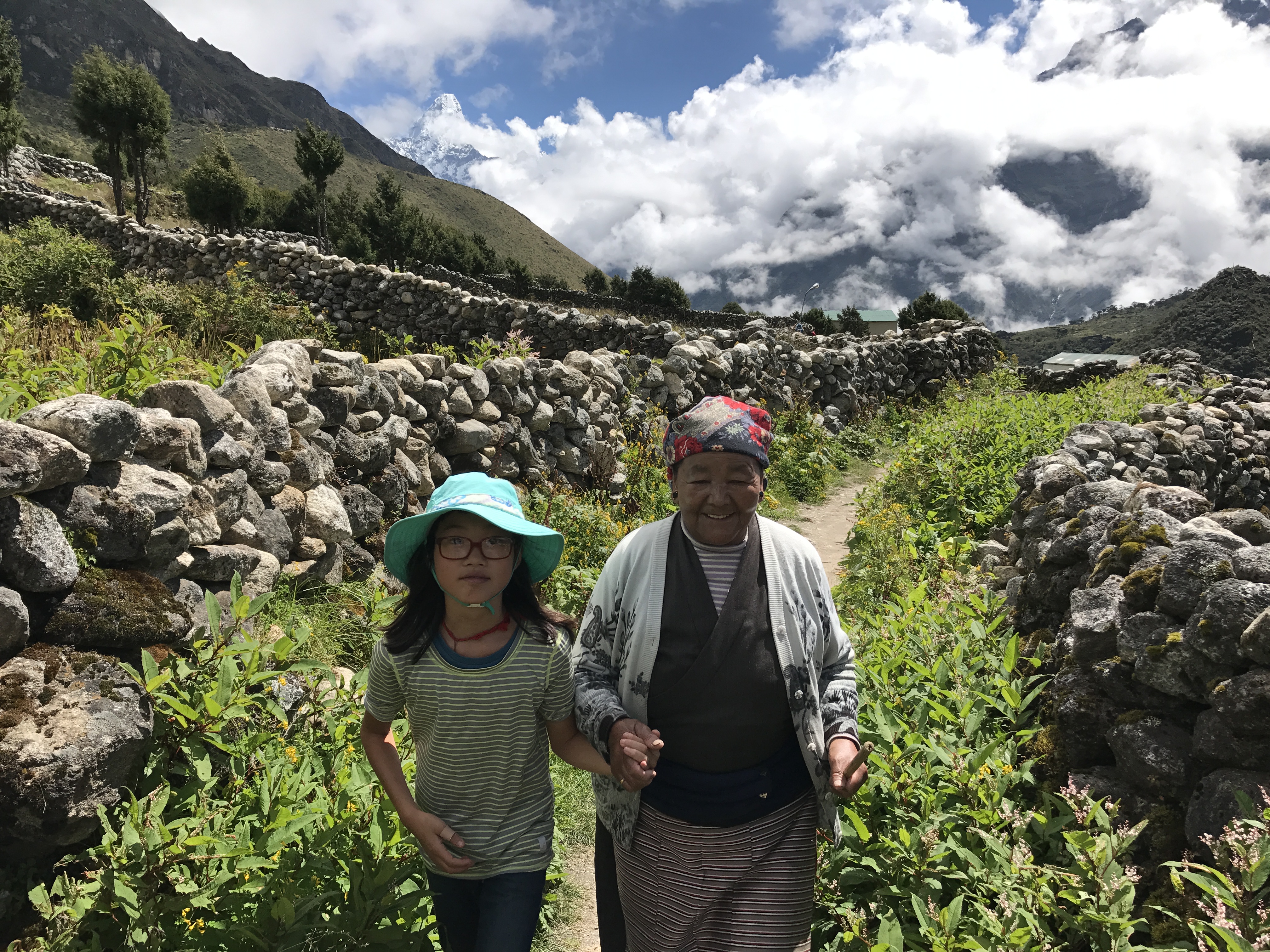
10. Walking and A Whole Foods Diet Help You Live a Long Healthy Life And in spending more time with older people, I was amazed at how fit and healthy the older people are. They walk (because their generation simply doesn’t drive) and they eat a whole foods diet – no prepared or fast food. One of our adopted 72 year-old grandmothers walked with us up to 13,000 ft. Another leaped to the potato patch in front of us and hoed up enough for dinner in five minutes. (We fumbled around with her and could admire her technique.) Keep walking and cook your food.

Solukhumbu, Nepal, grandmothers

This grandma can climb over 13,000 ft and chops her own wood.

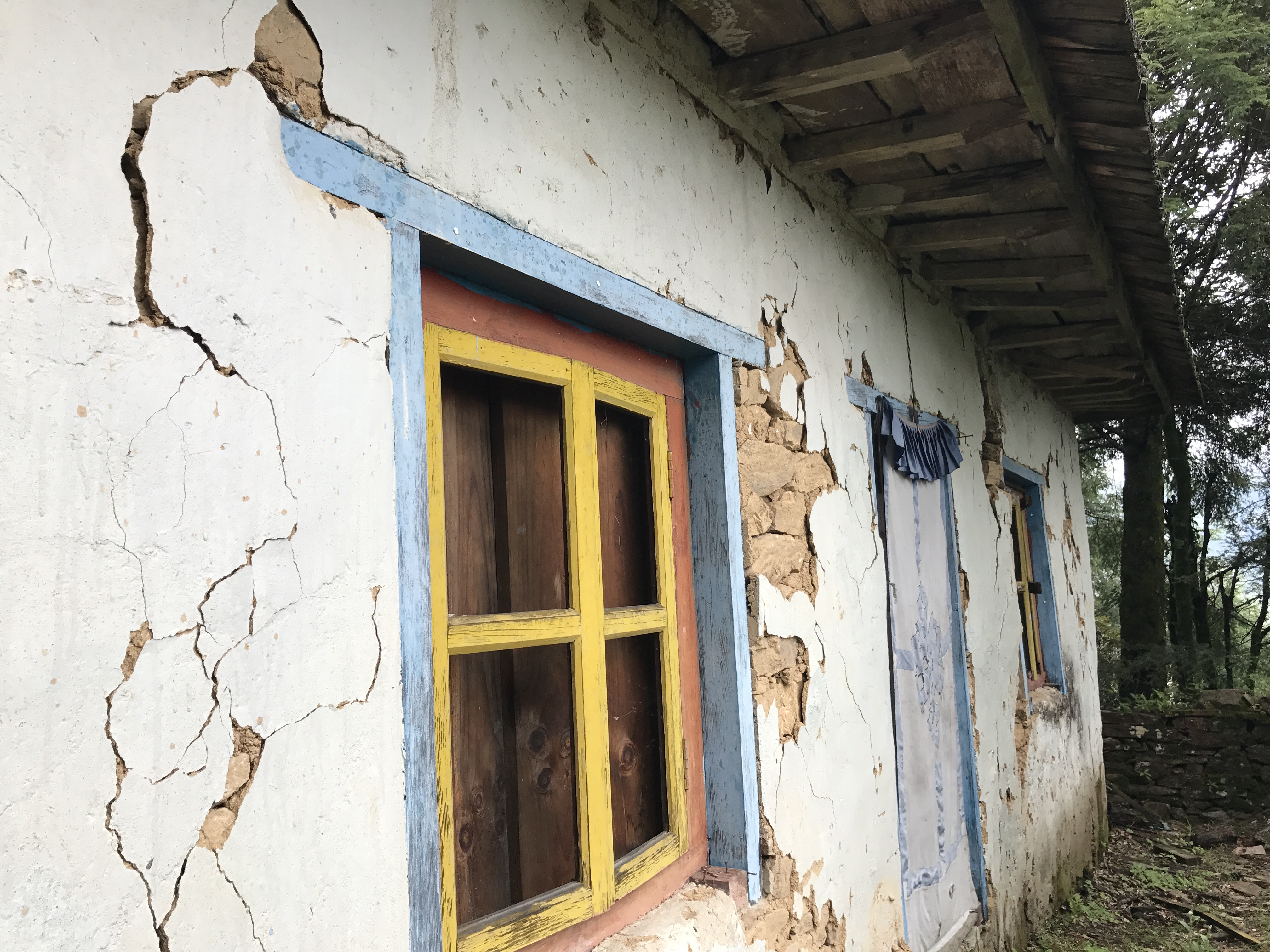
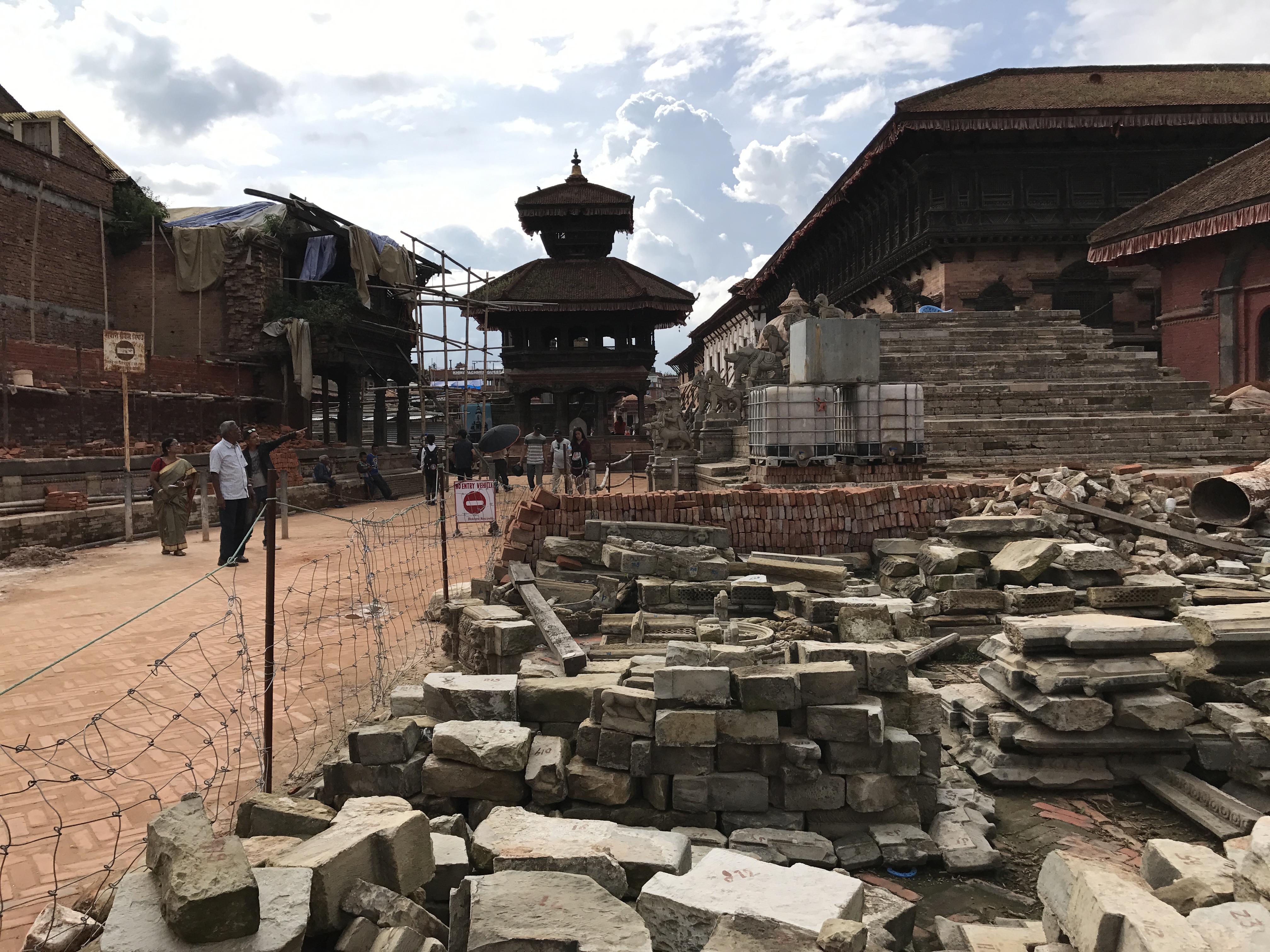
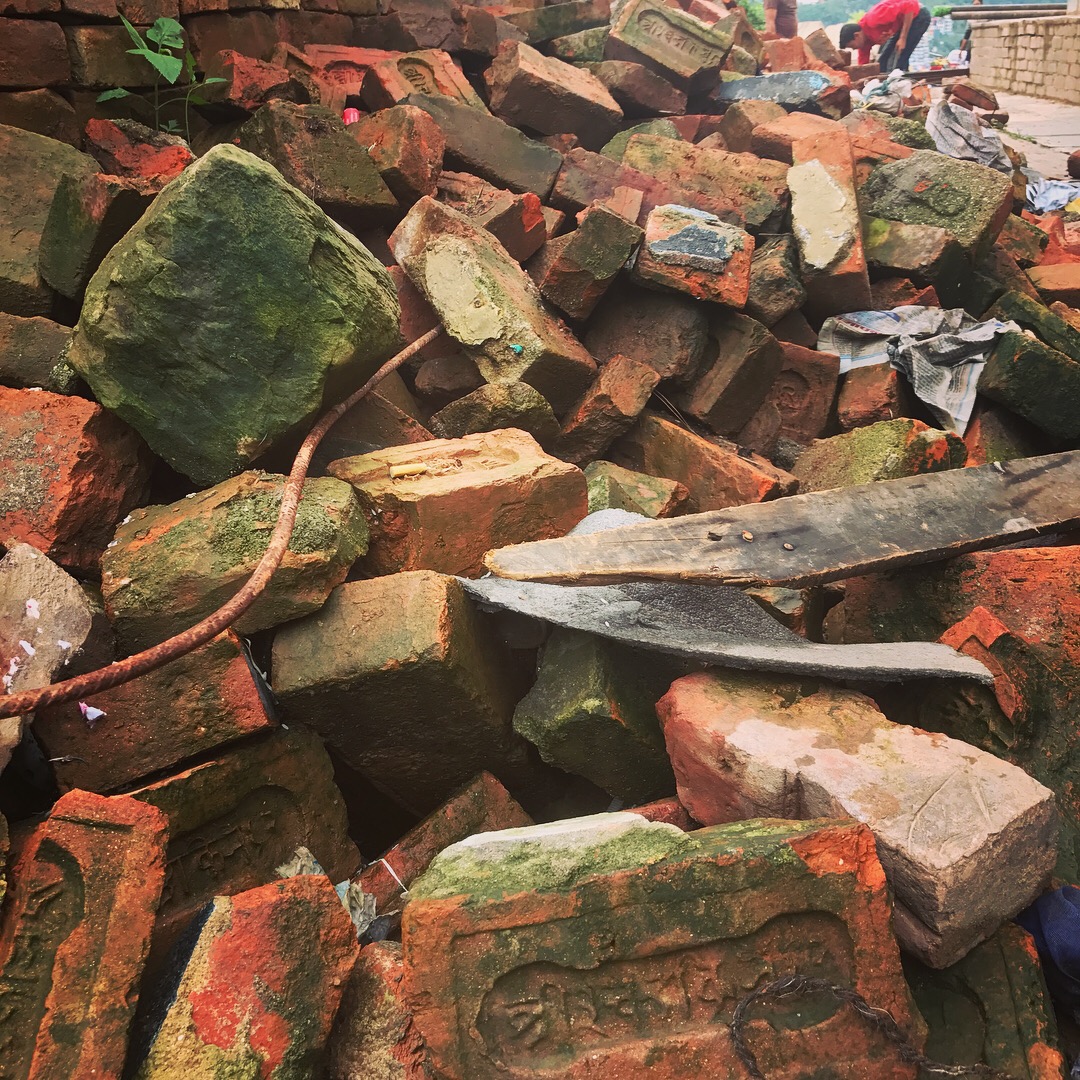
It will break your heart. Everywhere you trek in the Solukhumbu (Everest) region you will see signs of THE earthquake. Everyone you speak with in Pokhara and Kathmandu has a story of the earthquake, maybe even lost a loved one.  Every town you come through, you can hear the construction noise of rebuilding efforts. Other towns simply have a donation collection station to get ready to begin the rebuilding efforts. Since 2015, this country is still recreating itself. The earthquake is ever-present and the country is reemerging but still living within the collective PTSD.

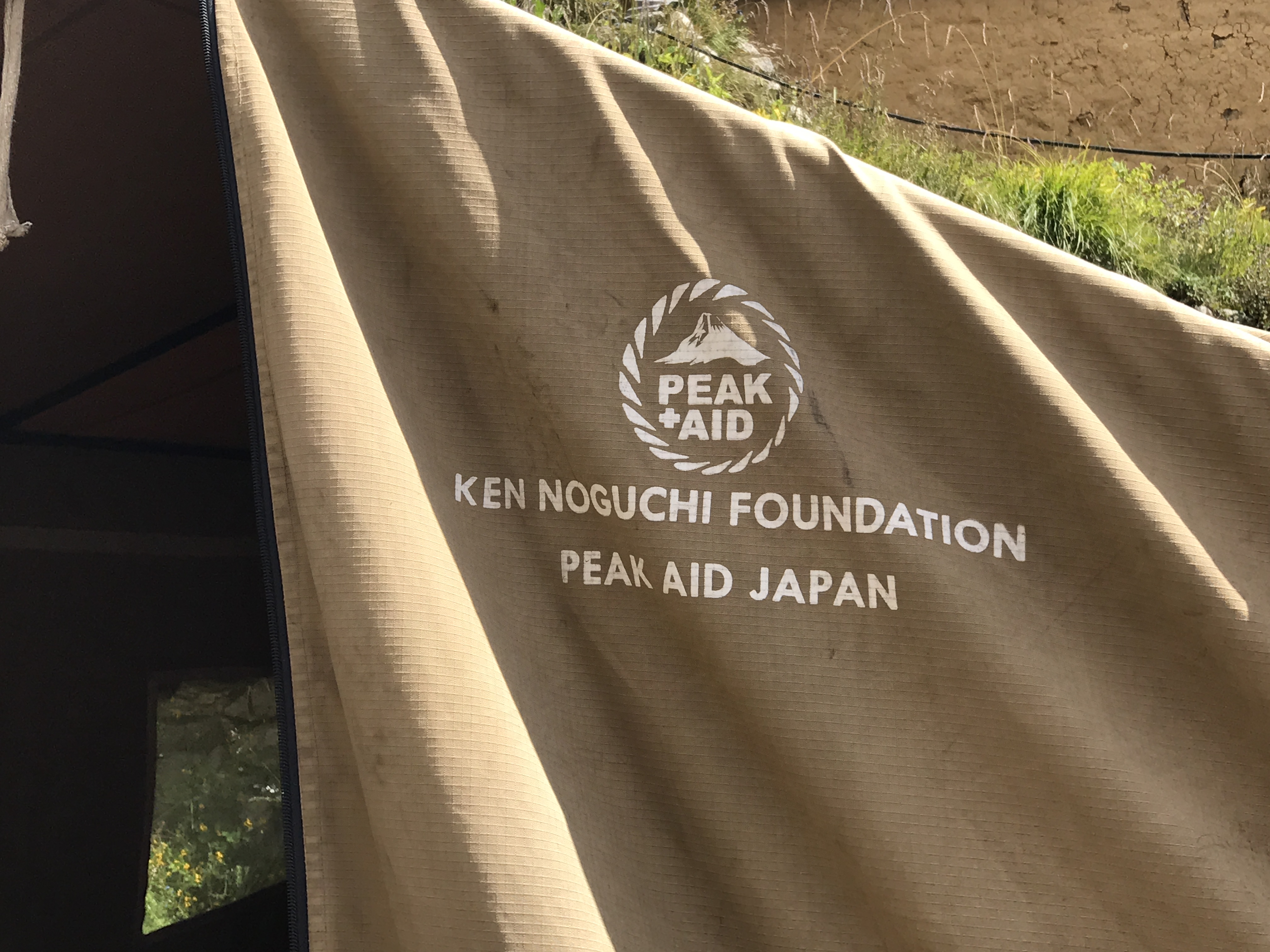
In the early days post-earthquake, the world was sending tarps to use as temporary shelter until rebuilding could start. Those tarps are no longer used as shelter but have been repurposed for other things – but they’re everywhere! I saw some from USAID, Pakistan, Germany, Japan and more. These ubiquitous tarps feel like a sweet worldly reaction to wrap a blanket around Nepal’s shoulders.

But some places are simply beyond repair. Kathmandu’s Durbar Square, once a central Kathmandu hangout, with buildings that dated back to the 15th century, is just rubble. This visit, we purchased an expensive ticket to wander across it, but were happy that our ticket price was contributing to the rebuild effort. Bhaktapur, another city in the Kathmandu Valley dating back to a similar era, was less damaged but looked like a giant-sized puzzle with the pieces unscrambled and ready for reassembly. Many stupas and lesser buildings are simply propped up and waiting for a rebuild effort.Bhaktapur

We left Nepal in the midst of the most important Hindu festival of the year – Deshain. In this festival people travel back to their villages (few people are actually FROM Kathmandu or Pokhara). One man whom we met in Pokhara explained that his parents were both killed in the earthquake and his birthhome destroyed so there was no point to go home this year. This was his new home and thankfully his wife and kids were all safe. I thought how many more similar stories were out there – of people missing their loved ones this holiday.Swayambunath

I wonder if this earthquake is analogous to our shadow of 9/11… Yes, it hangs over us and changed the country forever within my generation’s lifetime, but as a percentage, not many of us actually lost family, friends or homes directly. Nepal is smaller than the state of New York, so perhaps the earthquake is to Nepal, as 9/11 is to New Yorkers. The rest of the world has moved on from Nepal’s earthquake, but the rebuilding effort, in one of the world’s poorest countries, is still in great need.

Mingma, our hostess, is a Nepali working mom.  Being paid for her work with Radio Nepal, she also spends four hours in her home kitchen each morning getting all the food cooked for breakfast and lunch and prepped for dinner.  There’s not prepared foods in Nepal like we have in the US; everything is made from scratch.  And most shopping is done from multiple locations.  The men in the house help a ton, but Mingma is still the leader of the band.  She is a working mom who spends the equivalent of a part-time job in her family kitchen.  I got to tag along with Mingma to her side-gig at Radio Nepal one afternoon to see what her paying job entailed.

Radio Nepal, Nepal, Family Travel

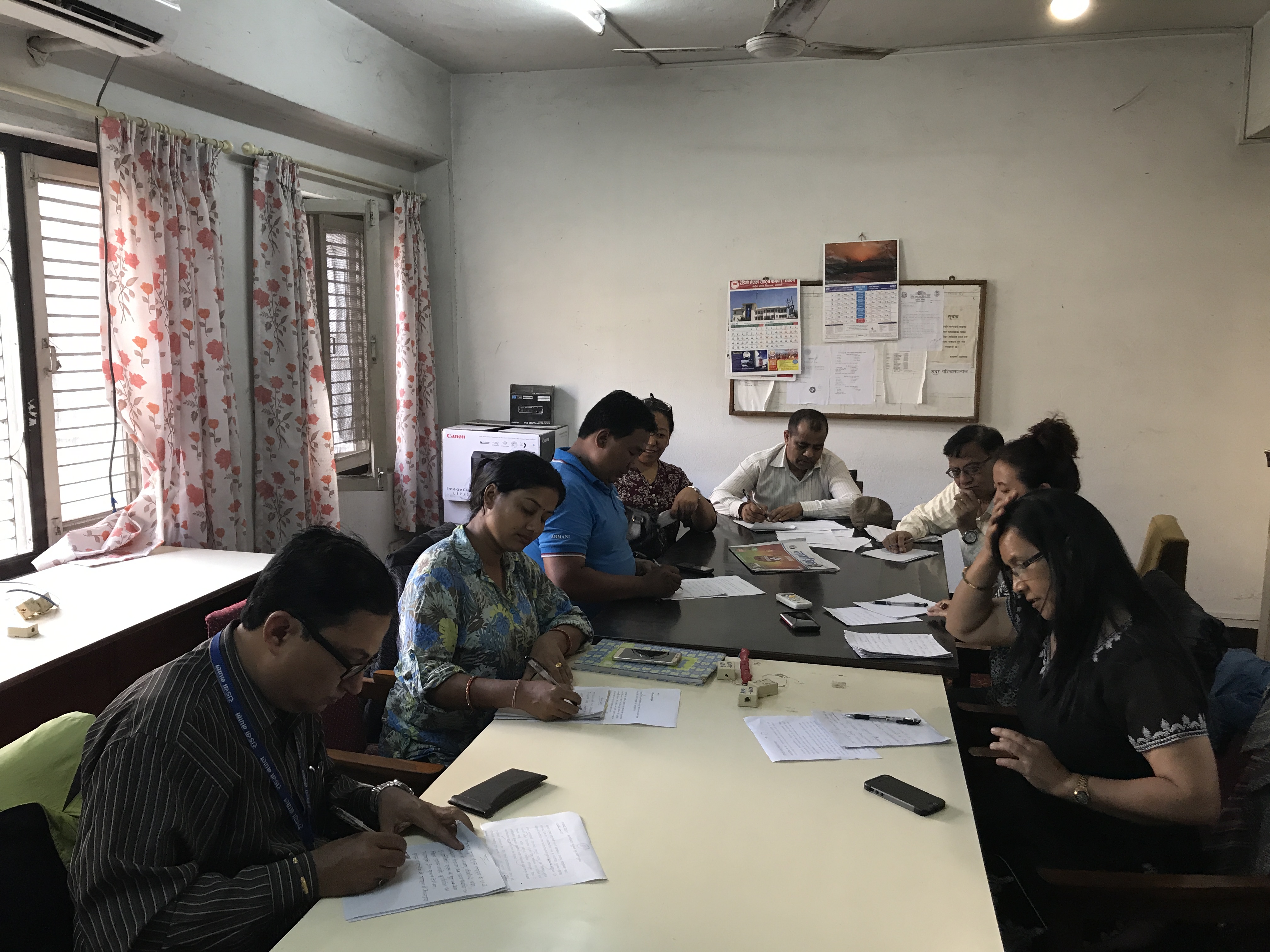
The table of translators

Her job is to translate the news into the Sherpa language and then broadcast it live.  She job-shares with another Sherpa speaker and her hours are 11:30am – 6pm.  My tagalong day started with a scooter ride through downtown and into the government compound.  (The scooter ride itself was one of my Nepal highlights.) The compound encompasses the equivalent of all the major elements of Washington, D.C. and concentrates into about 5 acres of heavily-secured offices.  She showed her government I.D. badge and I brought along my passport and guest pass to the checkpoint.  Once inside, the Kathmandu hustle and bustle is replaced by quiet order, parking spaces and manicured office parks.

Radio Nepal, Sherpa Radio, Kathmandu, Sherpa

Government Office Park

Radio Nepal has three buildings, but Mingma and I went into just two of them.  In the first one, she sat at a table and took the salient news stories that were on half or full sheets of paper and translated the stories, by hand, from Nepali into Sherpa.  Her co-workers who shared the table were fluent in other minority languages and did the same.  They have some leeway into which stories are relevant to their respective geographical areas.  I was struck by the fact that half or more of the translators were female.  Most were dressed in punjabis of fantastically bright colors and there was lots of comeraderie and discussion amongst them.

Nepal has a literacy rate of 66%, making the radio a crucial avenue for Nepali people to get their news.  I never saw anyone reading a newspaper the whole two months I was there – probably most people read their news online these days.  So access to information is limited to those who are literate and own a computer.  Add to the mixture that there are twenty-one semi-official languages in Nepal.  No other country I can think of needs radio news like Nepal.

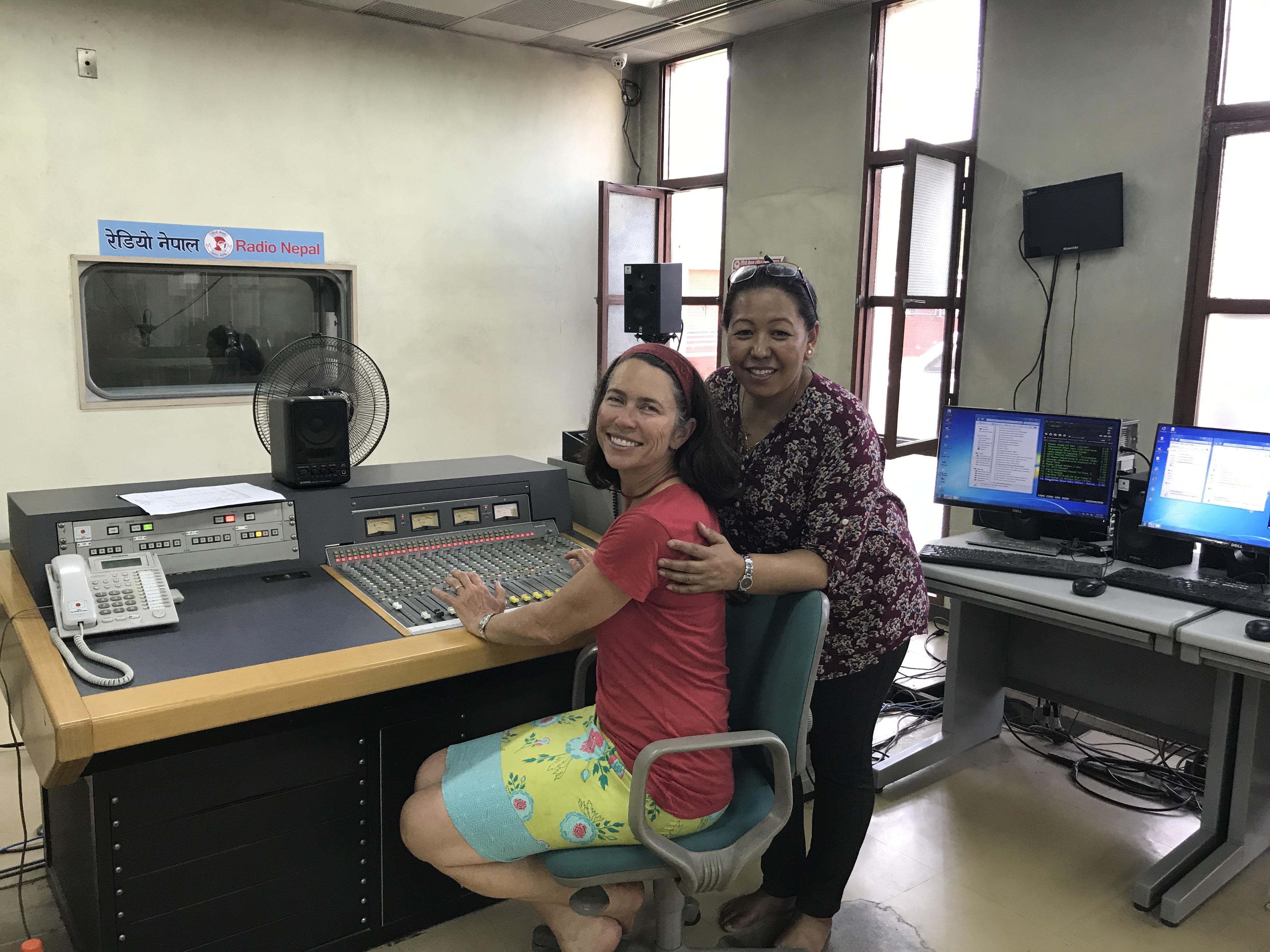
When Mingma’s allotted spot for Sherpa Radio was nearing air time, we walked into another building which housed the technical broadcast equipment and various sound studios.  This building was donated by the Japanese government and was specifically designed to withstand an earthquake up to 9.0.  And indeed the broadcast building was unharmed in the April, 2015 earthquake and Radio Nepal broadcast vital uninterrupted news and information during the earthquake and the months of subsequent aftershocks.

family travel, Sherpa Radio, Radio Nepal

Mingma: Getting it done!

In the sound studio, we met the technicians who were also all female.  Again, there was no drab work clothes but bright fuchsia and turquoise outfits.  Mingma let me come into the actual sound studio and I stood stock-still while she delivered her news in Sherpa (willing myself not to sneeze or cough).  I imagined all those Sherpa people tuning in their radios up in SoluKhumbu to hear the day’s news.Radio Nepal, Nepal, Family Travel

Like modern women all over the world, there is that personal balance between home and career; so many women who do the essential work with, and without, pay to keep our countries running.  The 3/4-time positions with options for job sharing are coveted the world over and it was wonderful to be in these Nepali women’s presence.  One of the things I miss most of all in this year away is my girlfriends; I coveted my time with Mingma and loved learning more about her.